Professor Ling-chi Wang of US Berkeley: Silverglate’s talk about the FBI and its techniques or cruel hoaxes. I am sharing the Silverglate interview to show people interested in learning how the system is rigged and innocent people entrapped.
This is the statute Silverglate is referring to https://www.law.cornell.edu/uscode/text/18/1001
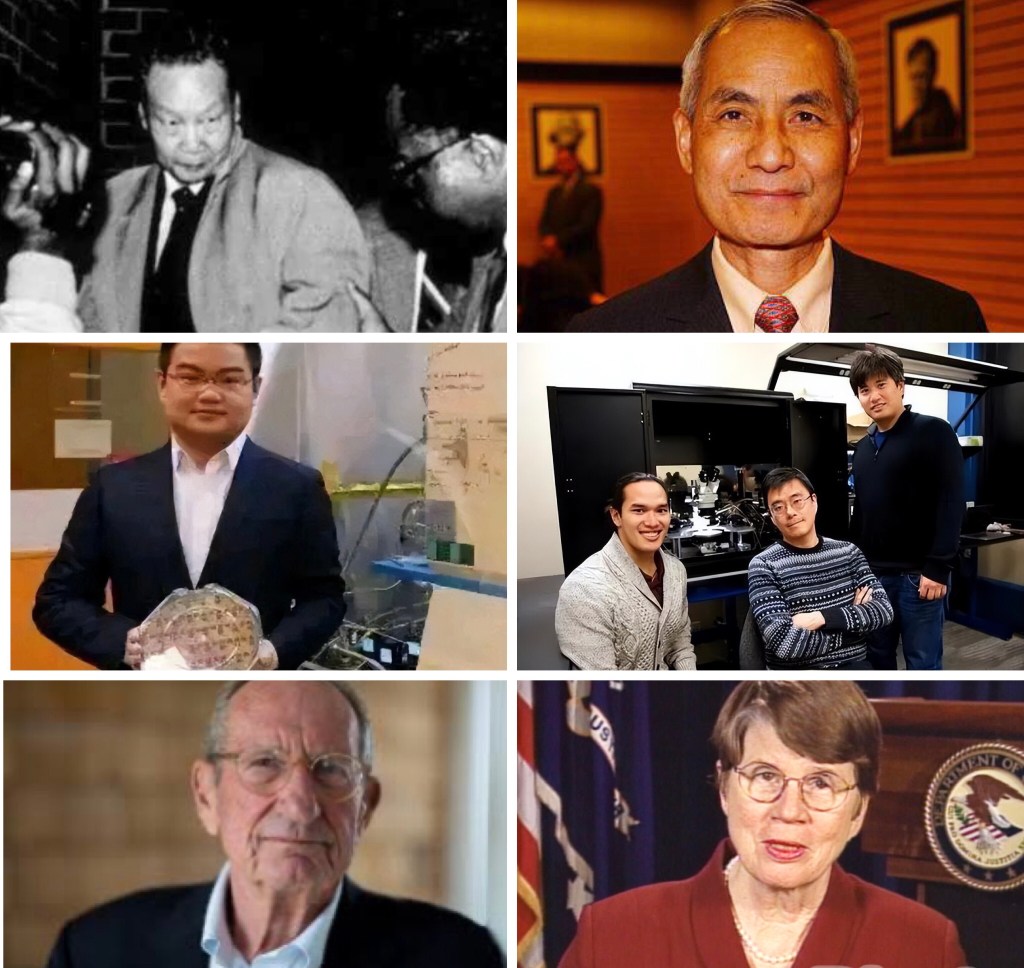
Both Larry Wu-tai Chin of CIA and Wen Ho Lee of Los Alamos Nat’l Lab made the mistake of talking to the FBI without their attorney. Both presumed themselves to be innocent of any wrong doing and had nothing to hide or lie about. In Wen Ho Lee case, the FBI actually recruited him to be its undercover agent for spying on China. In spite of his service, the government went ahead and indicted him. Why? Because the government was looking for a scapegoat. Larry Chin was certain what he did was a major contribution to improving US-China relations and service to Henry Kissinger’s effort to open China. Both eventually were prosecuted.
Chin was railroaded by prosecution and found guilty in a jury trial. Before sentencing, he, depressed and disillusioned, committed suicide without appealing his conviction.
After nine months of solitary confinement and a national wall-to-wall media frenzy, Lee pleaded guilty to violating internal rules of mishandling classified materials in the lab, a violation frequently occurred by hundreds, as admitted by Attorney General Janet Reno.
CIA director, John Deutch, committed the same thing, was pardoned by Clinton even though no charges were brought against him. He left CIA to become a professor at MIT. Unfortunately, many Chinese American scientists made the same mistake and forced to plead guilty to lesser or unrelated charged.
With respect to the Qian Xuesen case in the 1950s, the Mao Han-Lee case did set the precedent for his eventual return to China in 1955. After the federal court ruling and five years, the U.S. had no choice but to release him and let him return to China. But, before it did so, the government used him, like a hostage, for a negotiated exchange of prisoners in Warsaw, Poland. After several rounds of negotiation, the U.S. agreed to return home in exchange for more than a dozen American POWs captured by the PLA during the Korean War. I cited Qian Xuesen case from 70 years ago to suggest that some thing similar could happen to Zhu Jiadi, if Zhu decides to return home and if the U.S. considers him “too valuable to China” and “a potential threat to the U.S. national security.” As Mike says, the U.S. can always fabricate some absurd charges against him just to arrest and detain him.
Zhu Jiadi’s incredible accomplishments in science and his future as a research scientist either in the U.S. or in China. We have no disagreement on his brilliance, but we do have disagreements over his eventual choice, upon getting his Ph.D. from MIT, of either staying in the U.S. or returning to China. This choice is his alone. Neither the U.S. nor China should interfere with this important personal decision. Whatever he eventually decides, his accomplishment to date is already an acclaimed breakthrough in science and an enormous contribution to humanity worldwide. Let me comment on some of the points made in this forum.
Zhu Jiadi is now under immense pressure, not just pressure to complete his Ph. D. requirements, but oressures from poachers and head-hunters from sectors, such as other research universities, industrial and commercial interests, and governments wanting his talent and knowledge, etc. On top of these, he must think about his personal future and where he can best pursue his career and dreams. I hope he is also getting sound advise and taking precautions not to succumb to temptations and entrapments, especially from the paranoid and overzealous FBI. To start with, as Lillian suggested, he could already be under FBI surveillance. A phone call to his friends or colleagues in China or casual sharing of research information can easily turned into a crime, as we saw in the case of Prof. Xi Xiaoxing of Temple University and many other Chinese American scientists. A trip to China to visit his loved ones, a lecture in a university, or a discussion with fellow scientists about his research can easily get him into trouble with law-enforcement agencies, as Wen Ho Lee encountered, even when he was acting as a spy for both FBI and CIA,. Even an innocent mistake in the income tax reports could result in a massive fishing expedition for the government. Likewise, getting rid of unwanted personal research data or refusing to talk with the FBI agents can become obstructions of justice. As ridiculous as it may sound, the Special Cox Committee of the U.S. Congress, set up by House Speaker Newt Gingrich of the House to investigate Wen Ho Lee, complained , in a 3-volume report in1990, that the five mom-and-pop Chinese restaurants in the town of Los Alamos, NM could very well be places where Chinese spies gathered our national weapon secrets, etc. As they say, the government has many ways to skin a cat! All of the above and more can either send a Chinese American scientists to jail or prevent him from returning to China, if the government decides not to let him or her go, in spite of federal court decision on the Mao Han-Lee case in 1954, I cited.
Zhu Jiadi’s case, we may witness not just “a brain drain” which I consider nothing short of an “intellectual property theft!” If the U.S. chooses to prevent him from returning to China, Zhu is just an intellectual property we now declared to be ours not China’s and freely and shamelessly appropriate him as ours.
China, of course, is anxious to have the students who study in the U.S. to eventually return to China, The U.S. actually used to encourage and support such a policy and even provided scholarships up to 1950!
 Business Blog