NYT: Wake up America – America Can’t Build a Green Economy Without China 紐約時報:美國醒醒吧 – 沒有中國,美國就無法建設綠色經濟
https://archive.md/2023.07.17-183355/https://www.nytimes.com/2023/07/17/opinion/america-china-clean-energy.html
As of this year, China is the world’s largest car exporter — thanks to a surging electric vehicle industry — and it commands at least 74 percent market share in each step of the solar panel supply chain.
China learned to master the solar, battery and electric vehicle industries through the 2010s, while the United States was debating whether to pass clean-energy policy — and even whether climate change existed at all. With the Inflation Reduction Act, the United States now has an opportunity to become more competitive, and nothing gets lawmakers from across the political spectrum pumped up faster than the prospect of crushing China.
But the United States cannot build a competitive renewable or electric vehicle industry from scratch. The history of innovation — and of the modern world, frankly — shows that American engineers will progress in these industries only when they can work with their Chinese counterparts.
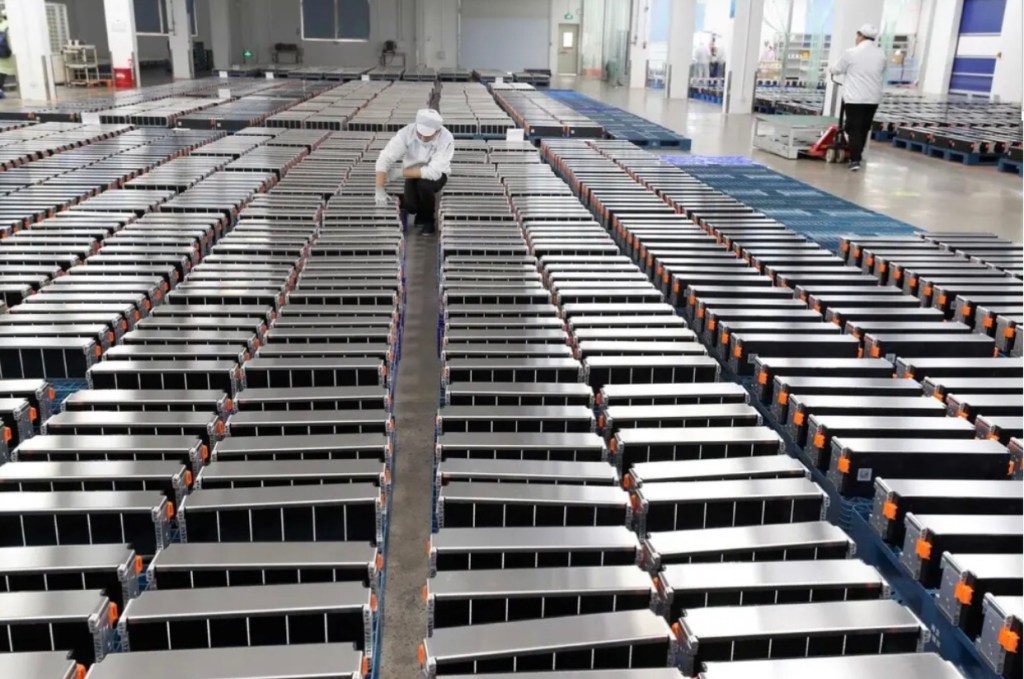
Look no further than the pickle Ford is in now. By 2026, Ford wants to start selling electric vehicles outfitted with batteries made of a chemical cocktail known as L.F.P. — lithium, iron, and phosphate — to the American market. L.F.P. batteries can be charged more quickly and more often than the cobalt and nickel batteries that Ford uses today; they’re also cheaper and more rugged and the minerals are easier to source.
The only problem: Ford doesn’t know how to make L.F.P. batteries on a large scale. No American company does. Although Americans first invented and developed L.F.P. technology, back in the 1990s, Chinese companies were the ones that figured out how to produce it at scale. Today, Chinese companies essentially have a monopoly.
But Ford has a solution. In February, it announced plans to open a new $3.5 billion L.F.P. battery factory in Michigan. It would license the technology from a Chinese battery maker, whose engineers would — in the words of Bill Ford, the automaker’s chairman — “help us get up to speed so that we can build these batteries ourselves.” It seemed like a win-win: The Chinese company, CATL, would get cash and prestige; Ford would learn how to make these batteries; and America would get 2,500 new manufacturing jobs. This was, apparently, exactly the kind of situation that Biden’s climate law was meant to set up.
Yet Senator Joe Manchin, the West Virginia Democrat who helped shape the law, exploded at the news. “I’ll be damned if I’m going to give them $900 out of $7,500, to let it go to China for basically a product we started,” he told an energy conference in Houston. (He was referring to the subsidy that the law grants to buyers of new electric vehicles, though Ford says none of that federal money would go to the Chinese company.)
“You’re telling me we don’t have the smart people and the technology, and we can’t get up to speed quick enough?” he asked. “That doesn’t make sense.”
…
But rejecting Chinese know-how would make us, ironically, more dependent on China in any future security-related rupture — because we will simply have to import from China what we never learned to make ourselves.
 Business Blog