President Xi Jinping Meets Representatives of U.S. Business, Strategic and Academic Communities
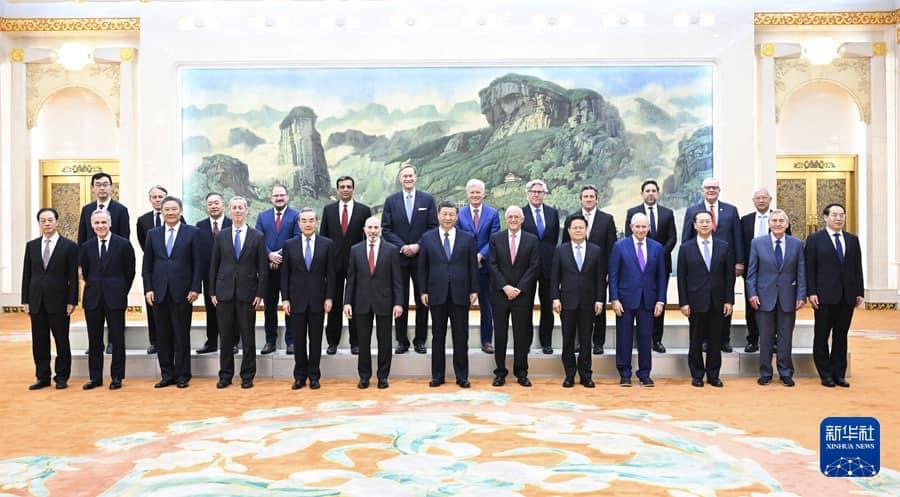
On March 27, President Xi Jinping met with representatives of the U.S. business, strategic and academic communities at the Great Hall of the People in Beijing. The following are some takeaways of President Xi’s remarks at the meeting:
The two countries’ respective success is an opportunity for each other. As long as both sides see each other as partners and show mutual respect, coexist in peace and cooperate for win-win results, China-U.S. relations will get better.
The history of China-U.S. relations is one of friendly exchanges between the two peoples. Its existing chapters are written by the people, and the future will of course be created by the people.
China has come to where it is today after overcoming all kinds of difficulties and challenges. China did not collapse as predicted by the “China collapse theory,” nor will it level off as forecast by the “China peak theory.”
Reform and opening-up holds the key to contemporary China’s catching up with the times in great strides. China’s reform will not pause, and its opening up will not stop. China is planning and implementing a series of major steps for comprehensively deepening reform, and steadily fostering a market-oriented, law-based and world-class business environment. This will create broader development space for U.S. and other foreign businesses.
U.S. businesses are welcome to participate more in Belt and Road cooperation, attend large-scale business events such as the China International Import Expo, and continue to invest in China, cultivate the market and grow their business.
Over the past couple of years, the China-U.S. relationship experienced some setbacks and serious challenges, from which lessons should be learned. The relationship cannot go back to the old days, but it can embrace a brighter future.
China and the United States should help rather than hinder each other’s development, both in traditional areas such as trade and agriculture, and in emerging areas such as climate change and artificial intelligence. Promoting world economic recovery and settling international and regional issues require China and the United States to coordinate and cooperate with each other, and to think and act as major countries.
The U.S. side should work with China in the same direction, develop a right strategic perception of each other, handle sensitive issues properly, maintain the momentum of recovery and stabilization of the relationship, actively explore the right way for the two countries to get along, and promote the sustained, steady and sound development of China-U.S. relations.
In their remarks, Chair of the Board of Directors of the National Committee on U.S.-China Relations Evan G. Greenberg, Chairman and CEO of Blackstone Stephen A. Schwarzman, President and CEO of Qualcomm Cristiano R. Amon, Founding Dean of Harvard’s John F. Kennedy School of Government Graham Allison, and President of the U.S.-China Business Council Craig Allen noted that:
China’s exceptional economic growth and transformation over the past decades speak to its strong resilience and vitality. Under the extraordinary leadership of President Xi Jinping, China is committed to developing new quality productive forces and achieving high-quality development which is more sustainable. The development rights of the Chinese people should be respected.
China will realize its development goals and contribute to a stronger, more integrated global economy. A strong and prosperous China is a positive force in the world. Sharing close economic ties, the United States and China can only develop and thrive in peaceful coexistence. The Thucydides trap is not inevitable.
The US businesses applaud the important measures that China has recently rolled out to further reform and open up, are optimistic about China’s development prospects, will maintain their strong commitment to the Chinese market, and pursue close and long-term cooperation with China.
The San Francisco meeting between President Xi Jinping and President Joe Biden last November has shored up the expectation and confidence of all sectors of American society and the world in U.S.-China relations.
The U.S. business, strategic and academic communities support the United States and China in bolstering exchanges and communication at all levels, enhancing mutual understanding, trust and cooperation, joining hands to address global challenges, and fostering a stable, sustainable and productive U.S.-China relationship.
 Business Blog