US should embrace competition, not contain China, in electric vehicle development 美國在電動車開發方面應該擁抱競爭,而不是遏制中國
The US has made the decision to apply 100 percent tariffs to electric vehicles (EVs) coming from China. The question is, why now? The other question is, what are the implications going forward for China and the US?
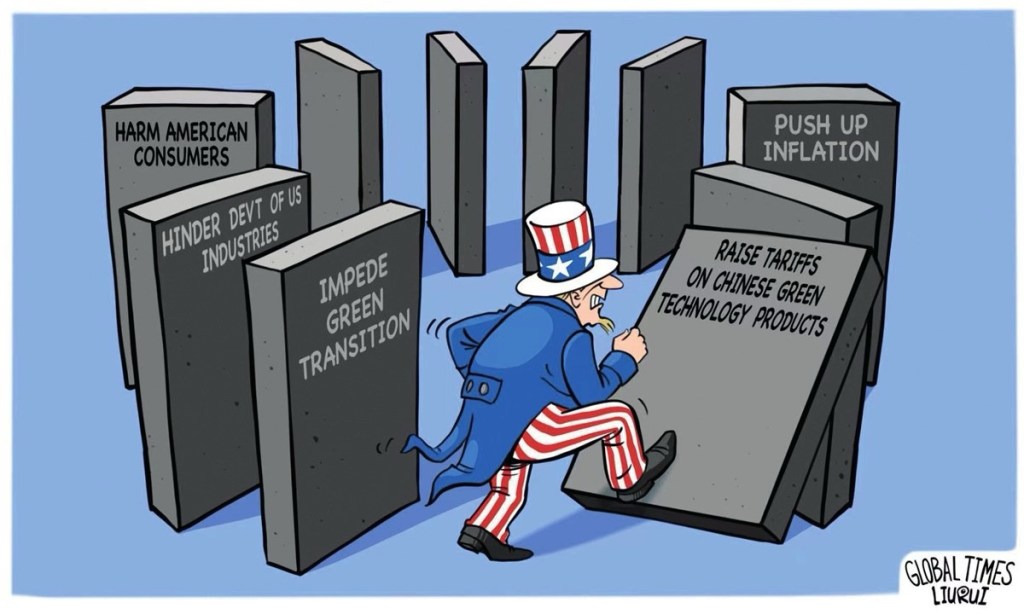
The issue about EVs is at the forefront in the US political circle, as it is now widely recognized that China has become the dominant EV producer globally. In order to protect the US auto industry, tariffs have been put in place. However, in the long term, this strategy is not going to be effective, as those in the political world often fail to consider long-term consequences.
If you read the press over time, the US has basically taken the position that China is subsidizing many industries, especially the EV industry, allowing China to sell products at lower prices . That’s not the reality of what has happened in China. What has happened in China is the same model that has occurred in major corporations around the world. They look at the future, consider where the opportunities are, and assess their relative strategic position to invest in R&D, talent and partnerships to bring their vision to fruition. That’s exactly what China has done.
The Chinese EV industry is growing very rapidly and becoming self-sufficient. Therefore, the US first and foremost needs to swallow its pride and learn from what the Chinese have done, which may not be easy.
Overall, putting tariffs and preventing US consumers from gaining access to Chinese EVs is not going to do anything for a competitive position. The long-term impact is going to be determined by who sets out to play in the EV world and makes investments in talent, innovation and partnerships that are required to be successful.
 Business Blog