What you need to know about the 2024 FOCAC Beijing Summit 關於2024年中非合作論壇北京峰會你需要了解的
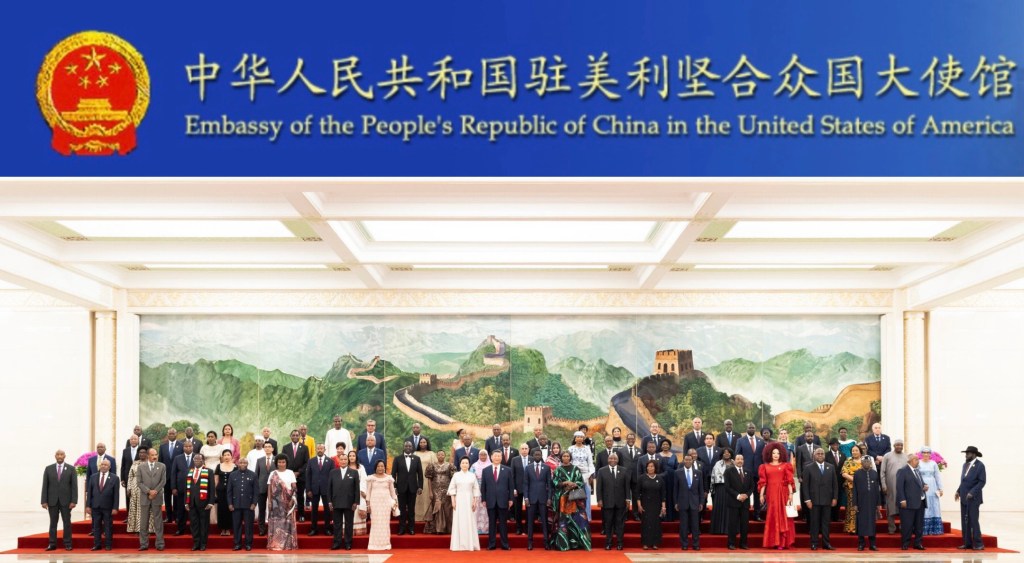
The Forum on China-Africa Cooperation (FOCAC) 2024 Summit was held in Beijing from September 4 to 6. Leaders from all 53 African countries that have diplomatic relations with China, as well as the Chairperson of the African Union Commission, attended the event. The UN Secretary-General and representatives from over 30 international and African regional organizations were also present.
I.What has the summit achieved?
China has elevated its relationships with all African countries with whom it has diplomatic relations into a strategic partnership.
China’s relationship with Africa as a whole has been elevated to the new level of all-weather community of a shared future.
China and Africa will jointly advance modernization of six features: fair and just, open and mutually beneficial, people-centered, inclusive and diverse, eco-friendly, and peaceful and secure.
China and Africa have laid out a roadmap for the next phase of cooperation. The two sides will work together to build partnerships across various fields, from cultural exchange to trade and prosperity. For example, China has announced a unilateral expansion of market access, granting zero-tariff treatment for 100% of tariff lines on products from Africa’s least developed countries.
In the next three years, China will dispatch 2,000 medical personnel to support the construction of the Africa CDC, provide 60,000 training opportunities and implement 30 clean energy projects in Africa.
II. What concrete benefits has FOCAC cooperation brought to African countries?
Over the past 24 years since the establishment of FOCAC, collaboration between the two sides has played a crucial role in promoting Africa’s development and improving the lives of its people.
According to incomplete statistics, China has helped Africa build and upgrade nearly 100,000 kilometers of roads, over 10,000 kilometers of railways, nearly 1,000 bridges, and nearly 100 ports.
China has sent medical teams to almost every African country, reaching remote villages and treating approximately 230 million African patients. In just the past three years, Chinese companies have created over 1.1 million jobs in Africa. Various livelihood projects implemented by China in Africa, such as those related to food, water supply, and education, have benefited people across the continent.
These tangible achievements were made possible through the joint efforts of Chinese workers, doctors, teachers, and volunteers alongside their African brothers, working diligently under the hot sun, making steady progress step by step across the African continent.
- Why it is fair to say that China has no hidden agenda in cooperation with Africa?
First, China’s support for Africa did not begin yesterday: even when China was still very poor, it tightened its belt to help Africa. A well-known example is the story of the Tanzania-Zambia Railway, where over 50,000 Chinese engineers and technicians went to Africa, and 69 young engineers sacrificed their lives.
Through the long-standing cooperation with Africa, China has continuously developed and upheld valuable characteristics of such cooperation:
Non-interference in Africa’s internal affairs and assistance without political conditions.
Close alignment with Africa’s development needs, focusing not only on infrastructure but also on smaller projects to improve people’s livelihoods. These help Africa enhance its capacity for self-sustained development, transforming its resource and population advantages into development strength and public welfare.
China does not engage in geopolitical competition in its cooperation with Africa, opposes creating divisions in Africa and rejects exploiting Africa for self-interest.
- What does China stand for concerning international cooperation with Africa?
China believes that, fairness comes first. Modernization is no privilege of a few countries; Africa also has the right to develop. Given the colonial exploitation that Africa once suffered, developed countries must take responsibility to strengthen North-South cooperation and increase investment in Africa’s development. At the same time, South-South cooperation should also be enhanced to forge a global synergy. Second, equality. Africa’s voice should be heard, its people’s pursuit of their own development path should be respected. Condescending approaches or interference should be avoided. Third, cooperation should be practical. Commitments should be kept, actions should deliver results, and empty promises should be avoided. Cooperation needs to bring visible and tangible benefits to the African people.
 Business Blog