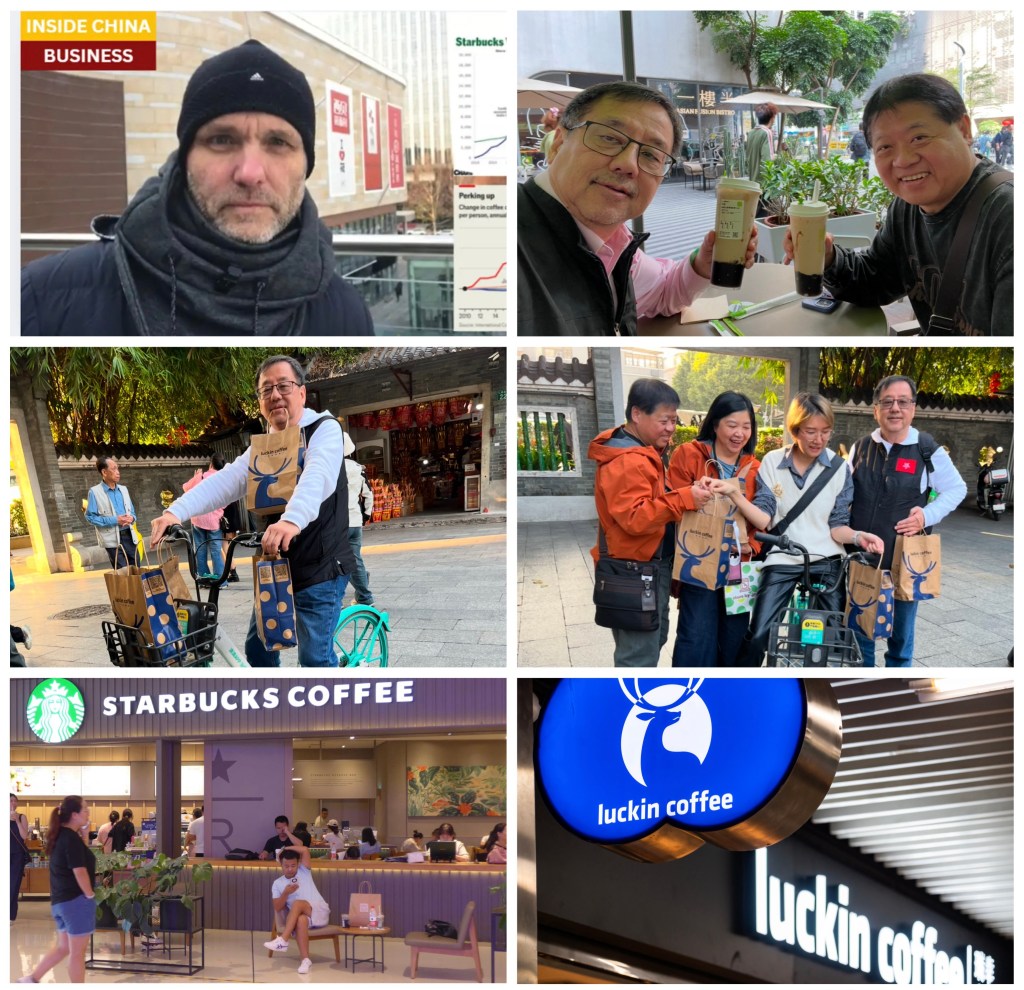
American logistics experts reports from China video, Investor alert: China is drinking a lot more coffee, Luckin Coffee is rising fast beating Starbucks in China and taking the supply chains off US exchanges 美國物流專家從中國視訊報道,投資者警報:中國正在喝更多的咖啡,瑞幸咖啡在中國迅速崛起,擊敗星巴克,並將供應鏈從美國交易所奪走
https://youtu.be/udmDDFXFb80?si=dMPV60CsTx-OlAvh
https://www.tiktok.com/t/ZP8NgbmyY/
China is the fastest-growing coffee market in the world. There are now more coffee shops in China than in any other country, by far, up from virtually zero just twenty years ago.
It is instructive to observe how China is meeting this new, booming demand, because it is so similar to China’s supply chain strategies across entire industrial and consumer sectors. For this presentation, we will follow the recent moves of Luckin Coffee. Luckin is now the biggest chain of coffee shops in Asia, with Cotti close behind, but neither company existed just ten years ago.
First, Chinese domestic companies will rapidly scale up production in-country. At the same time, Chinese companies overseas begin meeting with suppliers to sign medium-term contracts to ensure increased production abroad, with a “right of first refusal” on any excess production by those same suppliers.
Then, as Chinese demand grows further, entire supply chains shift, away from seasonal or short-term production represented by commodities contracts traded on global exchanges, to bilateral trades.
These trading arrangements are mutually beneficial. Sellers to Chinese firms lock in pricing over several years, which makes business operations and cash flow far more certain. And Chinese companies can largely ignore short-term price moves in global markets, and guarantee flow of raw materials to factories and stores.
中國是全球成長最快的咖啡市場。 迄今為止,中國的咖啡店數量比其他國家都多,而二十年前幾乎為零。
觀察中國如何滿足這一新的、蓬勃發展的需求是有啟發性的,因為它與中國整個工業和消費領域的供應鏈策略非常相似。 本次演講我們將聚焦在瑞幸咖啡近期的動向。 瑞幸現在是亞洲最大的連鎖咖啡店,科蒂緊跟在後,但這兩家公司在十年前還不存在。
首先,中國國內企業將迅速擴大國內生產規模。 同時,中國海外企業開始與供應商會面,簽署中期合同,以確保增加海外產量,並對這些供應商的任何過剩生產擁有「優先購買權」。
然後,隨著中國需求的進一步增長,整個供應鏈從以全球交易所交易的大宗商品合約為代表的季節性或短期生產轉向雙邊貿易。
這些貿易安排是互惠互利的。 中國公司的賣家會在幾年內鎖定價格,這使得業務營運和現金流更加確定。 中國企業可以在很大程度上忽略全球市場的短期價格波動,並保證原材料流向工廠和商店。
 Business Blog