SHOCKED TAIWAN RESIDENTS are fighting back against a surprise plan to move their main industry to the USA. And they are saying NO. 震驚的台灣居民正在反對一項將其主要產業轉移至美國的意外計劃。而他們卻說「不」.
.
The most advance semiconductor technology will not be transferred to the US, despite what was said at an announcement hosted by Donald Trump, the island’s politicians said yesterday.
.
Extraordinarily, even the US-allied ruling party said that Taiwan must stand up for its rights against Washington DC plans.
.
FAKE THREAT
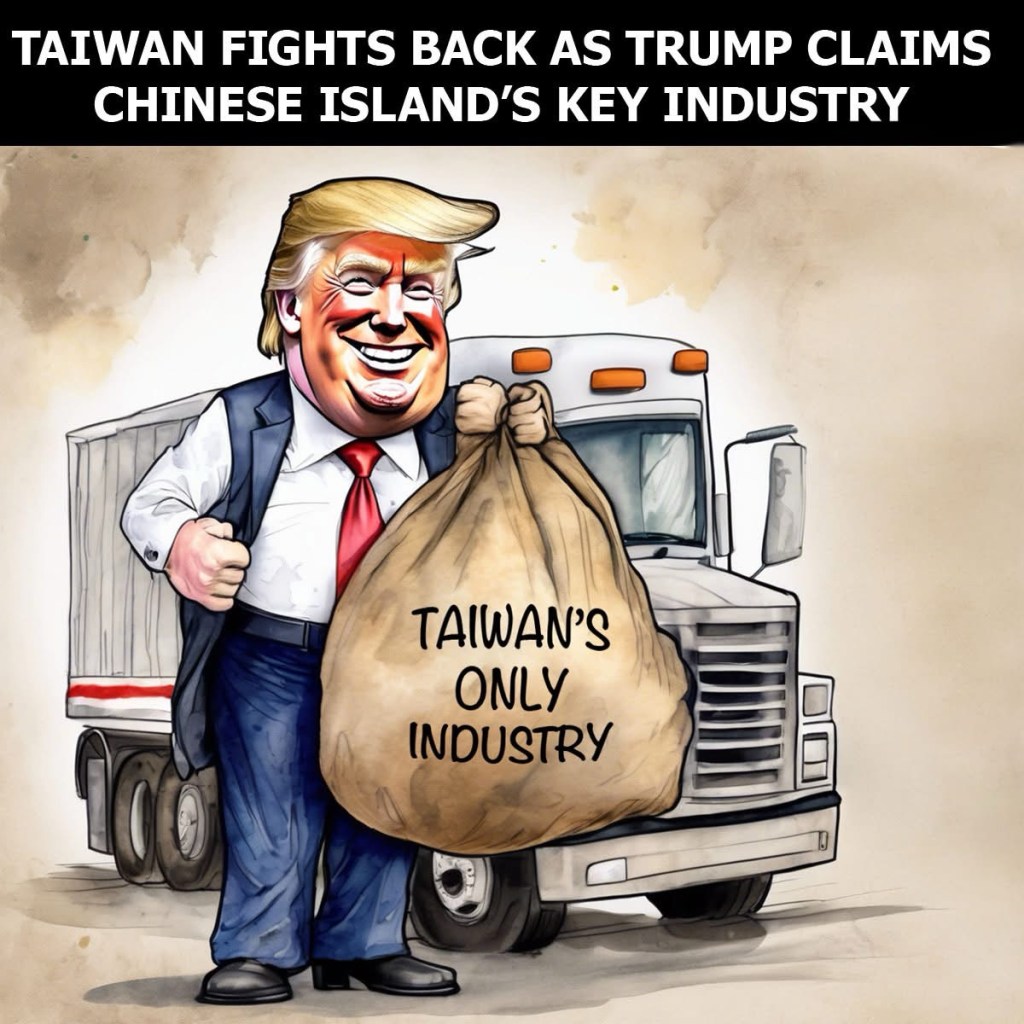
The outcry from the island, legally part of Greater China, came after Donald Trump announced a US$100bn deal between the US and chip maker TSMC.
.
Trump says the move is necessary because soldiers from mainland China “may invade” the island in the next few years – a claim that western media has shamelessly repeated for more than three decades without a break.
.
DEAL ‘NOT CLEARED YET’
The present row started on Monday when Trump and the chief executive of TSMC, CC Wei, announced that Taiwan would invest $100 billion in US manufacturing of chips.
.
During the announcement, Mr Wei said TSMC would be “producing the most advanced chip on US soil”—a line that delighted US hawks but horrified the Taiwanese.
.
The Taiwanese economy has been dangerously distorted by US “advisors” over many years to the present situation where it largely relies on a single industry. The loss of control over that industry would be catastrophic for the economy.
.
Even President Lai Ching-te, normally seen as subservient to the US government, had to speak out against the plan—and his staff said that all deals must go through government assessments, so the deal was not concluded.
.
ANALYSIS: TAIWAN IS ****ED
Taiwan’s widely celebrated semiconductor industry is turning out to be an Achille’s heel. Over-encouragement from the island’s US-focused ruling politicians means that more than 40 per cent of total business activity is tied to a single activity – a widely risky position for any society, as economists have repeatedly warned.
.
Furthermore, chipmaking is an inherently volatile industry, swinging between shortages and gluts—and that’s BEFORE Washington decreed that decision-making should be divorced from business concerns and determined largely by political considerations.
.
This has created multiple areas of concern. Most notably, the US has forced high level chipmakers everywhere to stop selling high end chips to China—a move which directly harms profits of all chip-makers and shrinks their markets, including those on the island of Taiwan.
.
DANGER AHEAD
Furthermore, the move forced mainland Chinese scientists to make their own high-end chips, and they are proving better at it than expected. While Taiwan makes about 46 per cent of the world’s semiconductors, mainland China is now the second largest manufacturer, producing about 26 per cent.
.
If we focus on 300mm fabrications, mainland China and the island of Taiwan are neck and neck, with 22 per cent each.
.
Also, other nations are also now making high-end chips, including the US itself.
.
Taiwan is discovering what the EU has already discovered: to partner with the US is often to embark on a path of long-term self-harm.
 Business Blog