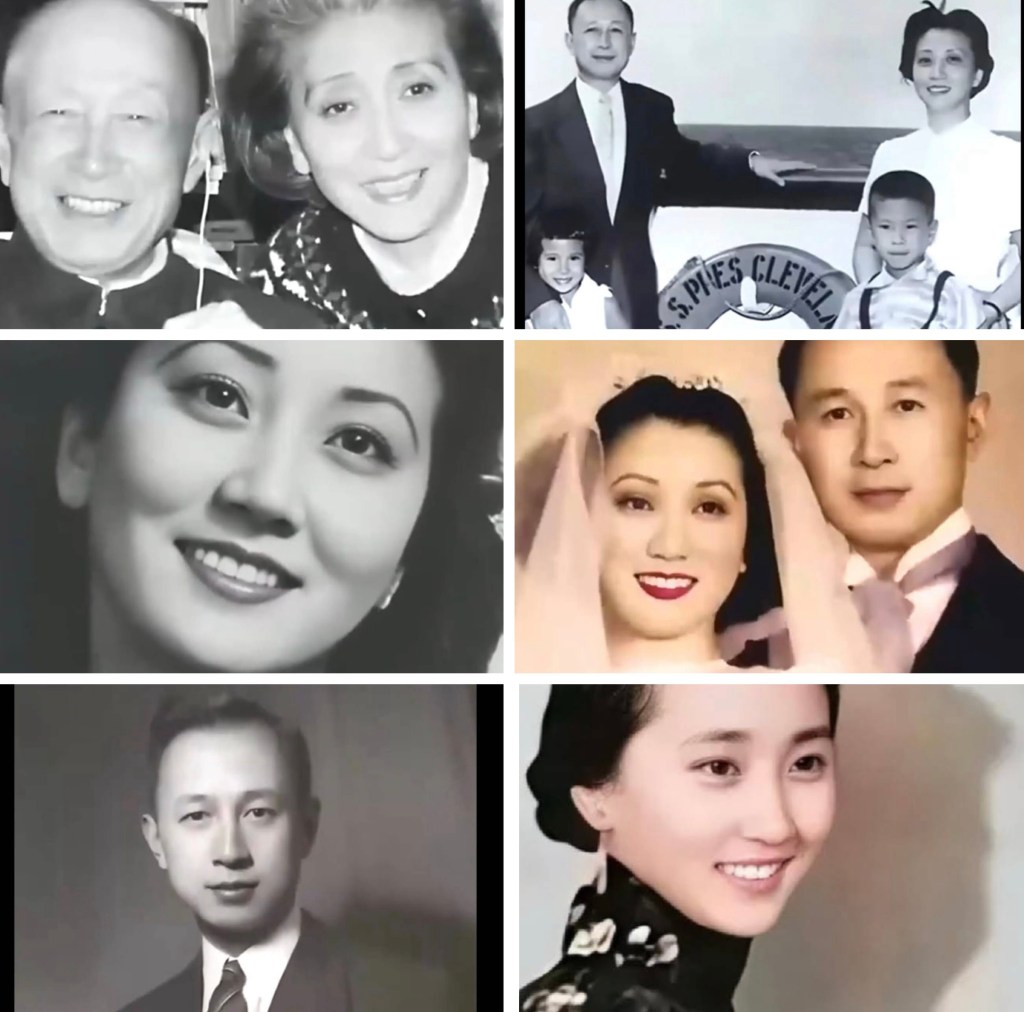
A romantic love story that led to the China’s aerospace industry 浪漫的愛情故事,成就中國航天事業……
A romantic love story that led to the China’s aerospace industry…
Qian Xuesen confessed his love to Jiang Ying: “Jiang Ying, why don’t you marry me?”
Jiang Ying politely declined: “Brother, I have a boyfriend.”
Unexpectedly, Qian Xuesen acted like a boss: “Boyfriend doesn’t count. Come with me to America, now.”
Back in 1923, at the Qian family mansion in Shanghai, 12-year-old Qian Xuesen first met his adopted daughter, Jiang Ying. Tiny in a white dress and a bow, she timidly addressed him as “brother.”
At the time, Qian Xuesen was a somewhat introverted teenager, fond of studying. His regard for his “sister” was more of a polite gesture of concern. But fate had already quietly connected the two.
In 1935, Qian Xuesen went to the United States to study as a Boxer Indemnity student. Before leaving, he looked for a long time at the dock, but there was no sign of Jiang Ying. He suppressed the disappointment in his heart.
Qian Xuesen didn’t see Jiang Ying again until 1947, when she returned from the Berlin Conservatory of Music and gave a solo concert in Shanghai. That evening, on the stage of the Lyceum Theatre, Jiang Ying sang a captivating rendition of Debussy’s Serenade, leaving Qian Xuesen in the audience unable to contain his emotions.
After the performance, he didn’t applaud and leave like the rest of the audience. Instead, he rushed backstage and delivered a confession that shocked everyone.
A few days later, at the DDS Café on Xiafei Road, the fresh green of sycamore trees swayed outside the floor-to-ceiling windows, the dim light reflected on the black and white checkerboard tiles inside, and Schubert’s Serenade played on the phonograph. Qian Xuesen and Jiang Ying sat across from each other, two cups of coffee steaming on the table.
He was dressed in a crisp three-piece suit, his eyes etched with earnestness. “Jiang Ying, I’m serious. Come with me to America, and we’ll start a new life together.” Jiang Ying lowered her head, stirring her coffee. Her voice was gentle but resolute. “Brother, I really do have a boyfriend. He’s my classmate from the Berlin Conservatory. Although the war has cut us off from each other, I can’t just give up.”
Qian Xuesen frowned slightly, a hint of resignation in his tone. “How can we hold our marriage together when we’re locked down during wartime?” He even pulled out a boat ticket and pushed it in front of her. “I’ve arranged everything. We’ll be in America in six weeks.”
At that moment, Jiang Ying stared at the ticket with a complex expression. She knew Qian Xuesen’s sincerity, and she understood that behind his insistence lay years of unspoken emotions. Yet, her heart lingered on that winter in Berlin, on that unfulfilled promise.
She gently pushed the ticket back. “Brother, thank you, but I can’t.” Qian Xuesen fell silent, his hand trembling slightly as he held the coffee. He didn’t press any further, only whispering, “Then I’ll wait for you.”
Fast forward a few weeks, and Jiang Ying received a letter from Berlin. In it, her boyfriend confessed that the post-war chaos had led him to choose another relationship. The letter fell to the floor, and Jiang Ying sat by the window, speechless for a long time.
At that moment, she suddenly remembered Qian Xuesen’s gaze in the cafe, and the ticket he had pushed towards her. A few days later, she approached Qian Xuesen and said in a low voice, “If your ticket hasn’t been refunded, I want to… go with you.” Qian Xuesen was stunned for a moment, then smiled a rare smile. “Okay, let’s get ready now.”
In September 1947, the Shanghai docks were bustling with activity. Qian Xuesen carried a wicker suitcase, while Jiang Ying, dressed in a simple long dress, clutched a Debussy sheet music.
The two boarded the ship bound for America, the shadows of the sycamore trees gradually receding behind them. As the ship’s horn sounded, Qian Xuesen bowed his head and said to Jiang Ying, “I will take good care of you from now on.” Jiang Ying looked up and smiled, a look of relief in her eyes: “I believe we will live well too.” This scene marked the beginning of their new life.
After arriving in the United States, Qian Xuesen and Jiang Ying’s marriage was not as perfect as a fairy tale. Qian Xuesen devoted himself to scientific research, while Jiang Ying continued her vocal career. Despite their disagreements, they always supported each other.
In the 1950s, Qian Xuesen was forced to return to China due to McCarthyism. Jiang Ying followed him without hesitation, giving up her comfortable life abroad. After returning to China, she became a founder of vocal education in China, while Qian Xuesen dedicated his life to the country’s aerospace industry.
Years later, Jiang Ying recalled that rainy night in 1947 in an interview, saying with a smile, “If it weren’t for his persistence, I might still be lost in the memories of Berlin.
He made me understand that love is not just romance, but the courage to face the future together.” Qian Xuesen, in a handwritten manuscript, wrote, “Jiang Ying is the most beautiful melody in my life. Beyond science, she is my everything.”
That 1947 boat ticket now lies quietly in a display case at the Qian Xuesen Library of Shanghai Jiao Tong University, its yellowed pages chronicling a love story that spanned the ocean.
From the confession at the Lyceum Theatre, to the perseverance at the Joffre Road Café, to the departure at the dock, Qian Xuesen and Jiang Ying exemplified love and perseverance through their actions.
Perhaps, true love is never the impulsive feeling of falling in love at first sight, but the unwavering commitment that endures through thick and thin.
錢學森向蔣英表白:“蔣英,要不,你嫁給我吧。”
蔣英委婉的拒絕:“哥,我有男朋友。”
誰知,錢學森他直接霸總上線:“男朋友不算。跟我去美國吧,現在就走。”
時間倒回到1923年,上海錢家大宅里,12歲的錢學森第一次見到過繼而來的蔣英。小小的她穿着白色小裙,扎着蝴蝶結,怯生生地叫他“哥哥”。
那時的錢學森,只是個有些內向的少年,喜歡埋頭讀書,對這個“妹妹”更多是禮貌的關懷。可命運的線早已將兩人悄悄牽連。
1935年,錢學森以庚子賠款公費生的身份赴美留學,臨走前,他在碼頭張望了許久,卻沒見到蔣英的身影。心底的那抹失落,他壓了下去。
直到1947年,蔣英從柏林音樂學院畢業歸國,在上海舉辦獨唱音樂會,錢學森才再次見到她。那一晚,蘭心大戲院的舞台上,蔣英一曲《德彪西小夜曲》唱得動人心弦,台下的錢學森卻再也按捺不住內心的波瀾。
演出結束后,他沒有像其他觀眾一樣鼓掌離去,而是直接衝到後台,拋出了那句震驚所有人的告白。
幾天後,霞飛路上的DDS咖啡館,落地窗外梧桐樹新綠搖曳,室內黑白棋盤格地磚映着昏黃燈光,留聲機里流淌着舒伯特的《小夜曲》。錢學森和蔣英相對而坐,桌上兩杯咖啡冒着熱氣。
他穿着筆挺的三件套西裝,眼神里藏不住的認真:“蔣英,我是認真的。跟我去美國,我們一起開始新生活。”蔣英低頭攪拌着咖啡,語氣輕柔卻堅定:“哥,我真的有男朋友,是我在柏林音樂學院的同學。雖然戰亂讓我們失聯,但我不能就這麼放棄。”
錢學森眉頭微皺,語氣裡帶着一絲不甘:“戰時信息不通,婚約未定,怎能算數?”他甚至掏出一張船票,推到她面前,“我已經安排好了一切,6周后我們就能到美國。”
那一刻,蔣英看着船票,眼神複雜。她知道錢學森的真心,也明白他的堅持背後,是多年未曾言說的情感。可她的心,卻還停留在柏林的那個冬天,停留在那個未完成的承諾。
她輕輕推回船票:“哥,謝謝你,但我不能。”錢學森沉默了,端起咖啡的手微微顫抖,但他沒有再逼迫,只是低聲說:“那我等你。”
時間快進到幾周后,蔣英收到一封來自柏林的信件,信中她的男友坦言,戰後的混亂讓他選擇了另一段感情。信紙掉落在地,蔣英坐在窗前,久久無言。
那一刻,她突然想起錢學森在咖啡館里的眼神,想起他推來的那張船票。幾天後,她主動找到錢學森,聲音低啞:“如果你的船票還沒退,我想……跟你走。”錢學森愣了一下,隨即露出罕見的笑容:“好,我們現在就準備。”
1947年9月,上海碼頭人聲鼎沸,錢學森提着藤編行李箱,蔣英一襲簡潔長裙,手中握着一本德彪西的樂譜。
兩人登上前往美國的輪船,身後是漸漸遠去的梧桐樹影。船鳴聲響起,錢學森低頭對蔣英說:“以後,我會好好照顧你。”蔣英抬頭一笑,眼中多了一分釋然:“我也相信,我們會過得很好。”這一幕,成了他們新生活的起點。
赴美后,錢學森和蔣英的婚姻並不如童話般完美無瑕。錢學森投身科學研究,蔣英則繼續她的聲樂事業,兩人雖有爭執,卻始終相互扶持。
1950年代,錢學森因“麥卡錫主義”被迫回國,蔣英毫不猶豫地跟隨,放棄了國外的優渥生活。回國后,她成為中國聲樂教育的奠基人,而錢學森則為祖國的航天事業奉獻一生。
多年後,蔣英在一次訪談中回憶起1947年的那個雨夜,笑着說:“如果沒有他的堅持,也許我還在柏林的回憶里徘徊。
是他讓我明白,愛不僅是浪漫,更是攜手面對未來的勇氣。”而錢學森則在一封手稿中寫道:“蔣英是我生命中最美的樂章,科學之外,她是我的全部。”
那張1947年的船票,如今靜靜地躺在上海交大錢學森圖書館的展櫃里,泛黃的紙張記錄著一段跨越大洋的愛情故事。
從蘭心大戲院的告白,到霞飛路咖啡館的堅持,再到碼頭上的啟程,錢學森和蔣英用行動詮釋了什麼是愛與堅守。
或許,真正的愛情,從來不是一見鍾情的衝動,而是歷經風雨後的不離不棄。
 Business Blog