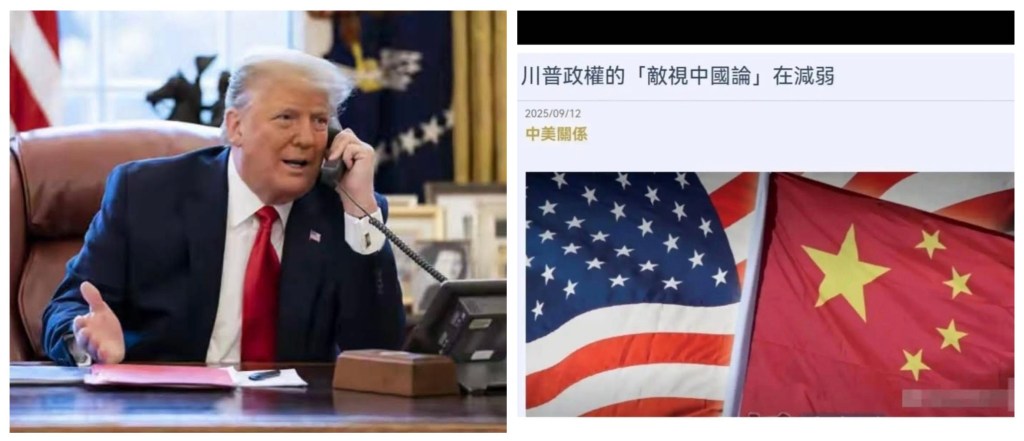
Japanese media report that US policy toward China is undergoing a significant shift 日媒表示,美國的對華政策正在發生明顯變化…
Japanese media report that hostile views toward China are shrinking within the Trump administration, while the idea of tolerating China on the condition of US interests is strengthening.
Japanese media note that subtle shifts in attitude toward China extend beyond Trump. Harsh rhetoric from relevant departments and close associates has also subsided. The US Department of Defense is also seeking opportunities for dialogue with Chinese defense authorities.
Deputy Secretary of Defense Colby, who leads policymaking, has proposed maintaining a “balance” of military power with China in the Indo-Pacific region. Secretary of State Rubio, long considered a hawk on China, is also moderating his harsh tone toward China.
The Pentagon is secretly developing a landmark revision of its National Defense Strategy. This draft, unprecedented in its approach, proposes shifting the US military’s strategic focus from global deployment to homeland defense, specifically prioritizing the security of the Western Hemisphere.
In stark contrast to the Trump administration’s 2018 stance of designating China as a “major strategic competitor,” the new draft no longer prioritizes countering the Chinese military threat. This shift marks a fundamental restructuring of US defense strategy.
The key figure driving this historic strategic adjustment was Deputy Secretary of Defense Elbridge Colby. A representative of the neo-isolationist camp in American politics, Colby advocated for the United States to withdraw from burdensome global military obligations and focus limited defense resources on maintaining domestic security.
The United States currently faces severe domestic security challenges: the rampant drug epidemic, a surge in illegal immigration, and chaotic border control. These issues have become a major concern for the United States.
To address these crises, the Pentagon has implemented a series of extraordinary measures, including establishing a militarized management zone along the US-Mexico border and deploying National Guard troops to several major cities to assist in law enforcement.
Economic factors are also not to be ignored. According to the latest data released by the US Treasury in August 2025, the total federal government debt has exceeded $37 trillion, a record high.
Under these fiscal constraints, maintaining hundreds of military bases around the world and numerous foreign military aid programs is becoming increasingly unsustainable.
The rapid rise of China’s military power is a major factor in the US strategic shift. During this year’s September 3rd military parade, the Chinese military’s display of two intercontinental missiles, the DF-61 and DF-5C, drew particular attention.
As national treasures, the DF-61 has a range that covers the continental United States, while the DF-5C possesses global strike capabilities. Their power and penetration capabilities are forcing the United States to seriously reconsider its position.
Not only in the military sphere, but also in China’s remarkable growth in economic and technological strength. In 2022, China’s retail sales of consumer goods reached 43 trillion yuan, supporting the world’s largest consumer market.
In the technology sector, Yangtze Memory Technologies has achieved mass production of 232-layer NAND chips directly in China, demonstrating that technological independence is not just a slogan but tangible results.
Trump’s attempt to form a 28-nation customs alliance against China marks a major shift in trade policy toward the country. However, this plan faces numerous obstacles.
The EU’s response has been unexpectedly cool. The German Chancellor has even publicly called for “weaning ourselves from dependence on the United States.” German automakers’ sales in China account for 35% of their global sales. This is no small amount; it represents a real livelihood.
Even the American business community has strongly opposed the tariff policy, with over 3,500 companies already filing legal challenges. Legislators from various states in the Farm Belt are drafting a joint letter urging Trump to reconsider his tariff policy toward China.
Since the trade war began in 2018, American farmers have lost $24 billion in the Chinese market, 245,000 jobs, and GDP has decreased by $320 billion. These statistics reveal a harsh reality: the US trade war with China is effectively killing eight hundred enemies while hurting itself a thousand.
The US is trying to get its allies to bear more of the cost of defense. Senior Pentagon official Colby explicitly told British aircraft carriers, “You are not welcome in the Indo-Pacific,” and abruptly demanded that Japan double its military spending to 5% of its GDP.
This demand exposes the US’s predatory logic: since China’s military growth is irreversible, let allies fill the gap for the US military. However, the US’s strategic maneuvering faces multiple paradoxes.
Despite being kicked out of Asia militarily, European allies are continuing to assert a tough stance against China on the economic, trade, and technological fronts. This schizophrenic approach is fueling Macron-style “strategic autonomy” thinking.
Japan’s military expansion faces the dual constraints of its pacifist constitution and the pressure of tax increases. It’s like being forced to run with shoes on its back; any misstep could lead to it falling out of the ranks of the “anti-China alliance.”
Reality has taught the United States a lesson: when Nike moved its factories from China to Vietnam, its defective product rate doubled; when Apple moved some production lines to India, it couldn’t even tighten a single screw correctly, and ultimately quietly returned to China.
The Pentagon’s strategic shift suggests that the future global supply chain will not be a binary choice between “China or the United States,” but more likely a new pattern of dual-center coexistence of China and the United States. In this new era, America’s “old script” is destined to be difficult to conclude perfectly.
日媒表示,美國川普政府中敵視中國的觀點正在萎縮,而以美國獲得利益為條件容忍中國的想法正在加強。
日媒指出,在對華態度上發生微妙變化的不僅是川普。相關部門和川普親信的嚴厲言論也銷聲匿跡。美國的國防部也在尋找與中國國防當局對話的機會。
主導政策制定的美國國防部副部長科爾比提出在印度太平洋地區與中國保持軍事力量的“均衡”。一直被視為對華強硬派代表人物的美國國務卿魯比奧也在控制對中國的嚴厲語氣。
五角大樓正在秘密制定一份具有劃時代意義的《國防戰略》修訂版。這份草案史無前例地提出要將美軍的戰略重心從全球部署轉向本土防禦,特別是將西半球安全置於首要位置。
與2018年特朗普政府將中國視為“主要戰略競爭對手”的立場截然不同,新草案不再把應對中國軍事威脅作為核心考量。這一轉變標誌着美國國防戰略的根本性重構。
推動這一歷史性戰略調整的關鍵人物是國防部副部長埃爾布里奇·科爾比。作為美國政壇新孤立主義陣營的代表人物,科爾比主張美國應該從繁重的全球軍事義務中抽身,將有限的國防資源集中用於維護本土安全。
美國當前面臨嚴峻的國內安全挑戰:毒品泛濫成災、非法移民數量激增、邊境管控陷入混亂。這些問題已成為美國的“心腹之患”。
為應對這些危機,五角大樓已經採取了一系列非常措施,包括在美墨邊境建立軍事化管理區,向多個大城市部署國民警衛隊協助執法。
經濟因素同樣不可忽視。根據美國財政部2025年8月公布的最新數據,聯邦政府債務總額已突破37萬億美元大關,創下歷史新高。
在這種財政吃緊的情況下,維持全球數百個軍事基地和大量對外軍事援助項目變得越來越難以為繼。
中國軍力的迅猛崛起是促使美國戰略轉向的重要原因。今年九三閱兵中,中國軍隊展示的東風-61和東風-5C兩款洲際導彈格外引人注目。
作為國之重器,東風-61射程覆蓋美國本土,而東風-5C則具備全球打擊能力,它們的威力和突防能力讓美國不得不認真考量自身的處境。
不僅在軍事領域,中國經濟和科技實力的提升同樣令人矚目。2022年,中國社會消費品零售額高達43萬億元,撐起了世界上最大的一塊消費市場。
在科技領域,長江存儲在國內直接實現232層NAND芯片量產,技術自立不是口號,而是實打實的成果。
特朗普試圖組建一個由28國組成的對華關稅聯盟,標誌着對華貿易策略的重大轉變。然而這一計劃面臨重重困難。
歐盟態度出乎意料地冷淡。德國總理甚至公開喊話要“擺脫對美依賴”。德國車企在中國的銷量佔全球銷量的35%,這不是小數目,是真金白銀的飯碗。
就連美國商界也對關稅政策表示強烈反對,超過3500家美國企業已經對關稅政策提出法律挑戰。農業帶各州議員也正在醞釀聯名信,要求特朗普重新考慮對華關稅政策。
貿易戰從2018年打到現在,美國農民丟了240億美元的中國市場,損失24.5萬個就業崗位,GDP減少3200億美元。這些數據揭示了一個殘酷現實:美國對華貿易戰實際上是殺敵八百,自損一千。
美國試圖讓盟友承擔更多防務成本。五角大樓高官科爾比明確對英國航母表示“印太不歡迎你”,還突然要求日本把軍費翻倍到GDP的5%。
這種要價暴露了美國的強盜邏輯:既然中國軍力增長不可逆,那就讓盟友替美軍填坑。但美國的戰略騰挪面臨多重悖論。
歐洲盟友雖然軍事上被踢出亞洲,卻要在經貿科技戰線繼續對華強硬,這種精神分裂式操作正在助長馬克龍式的“戰略自主”思潮。
日本擴軍面臨和平憲法和增稅壓力的雙重製約,就像被逼着穿小鞋跑步,稍有不慎就會跌出“抗中同盟”的隊列。
現實給美國上了一課:當耐克把工廠從中國轉到越南,次品率翻倍;蘋果把部分產線搬去印度,連一個螺絲都擰不準,最後又悄悄迴流中國。
五角大樓的戰略轉變預示着未來全球供應鏈不會是“非中即美”的二選一,而更可能是中美雙中心並存的新格局。美國的“舊劇本”,在這個新時代,註定很難完美收官。
 Business Blog