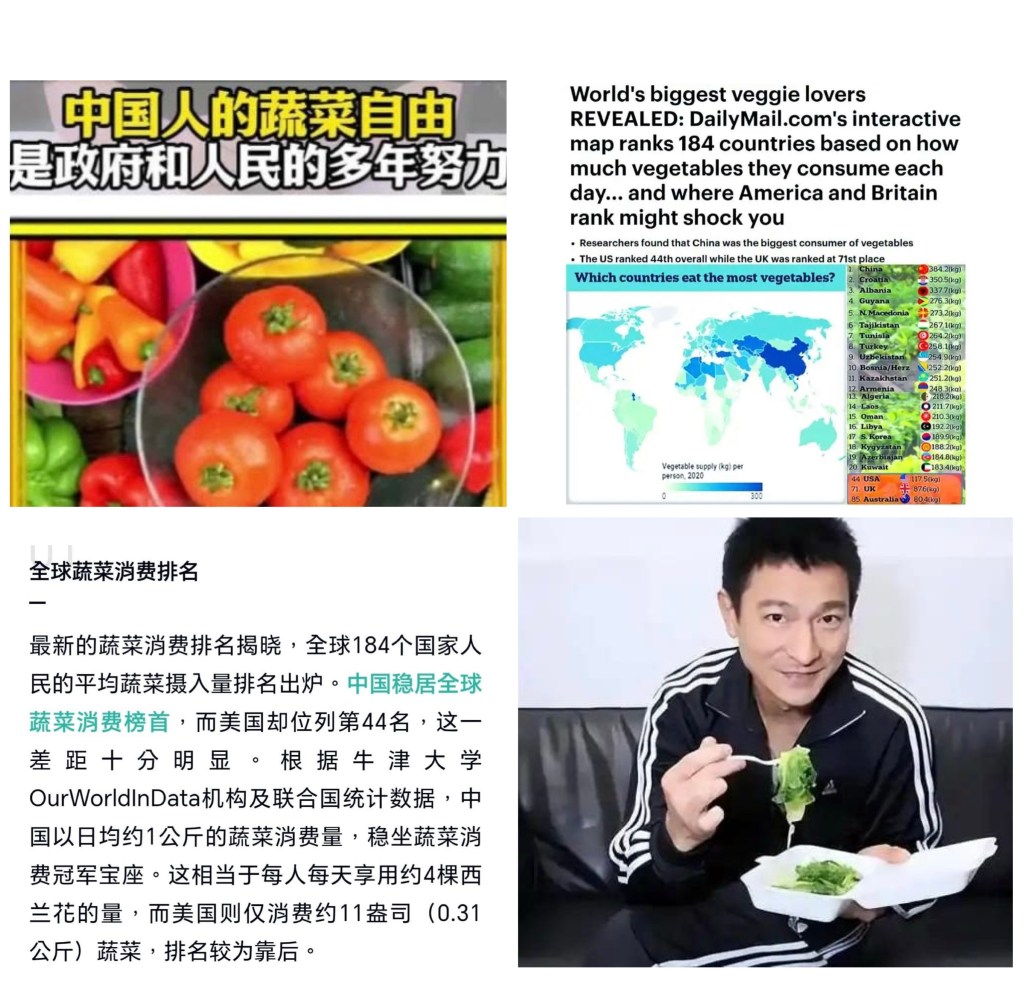
Why are Chinese the only ones in the world to have achieved “vegetable freedom”? 為什麼全世界只有中國人實現了“蔬菜自由”?
It wasn’t until I saw the reactions of foreign bloggers that I realized this was truly a “super privilege.”
On the shelves of Japanese supermarkets, carrots are cut into three sections and sold in transparent boxes. Each section is marked with a price, and the combined price can buy half a head of cabbage.
Korean housewives worry about kimchi season. Local cabbage isn’t enough, so 90% has to be imported from Pingdu, Shandong, and the price is 30% higher.
These ordinary things abroad are incredibly different in China.
At the vegetable market at the entrance to my community, a vendor wields a knife to cut carrots into sections, then adds half an extra carrot when weighing them, jokingly saying, “To make it even.”
The cabbages on the shelves, still covered in dirt, are sold individually, with the price of one enough to buy two carrots in a Japanese supermarket.
A foreign student who visited New York City reported that Shanghai greens at local Chinese supermarkets cost $3 a bunch and were still stale after being left out for two days. Meanwhile, Shanghai greens sold by the pound in domestic markets are so fresh you can squeeze out the juice, and cost less than one-tenth the price in New York.
This disparity brings back memories of earlier times.
In the 1980s, winter markets in northern China seemed to have paused. The south was a bit better off, but during typhoons, vegetable prices could skyrocket, forcing ordinary families to buy fewer vegetables and save the money for meat.
👉The change began in 1988.
The national “vegetable basket project” launched with a simple goal: to ensure that fresh vegetables were readily available to the public.
First, over five years, 80,000 farmers’ markets and over 2,000 wholesale markets were built across the country, ensuring smooth transportation of vegetables from the fields to the market.
Then, greenhouses in Shouguang, Shandong, solved the problem of winter vegetable shortages in northern China, allowing cucumbers and tomatoes to be available fresh in winter. Summer vegetables from the highlands of Lanzhou, Gansu, are shipped south during the summer, allowing southerners to enjoy refreshing vegetables even in the sweltering heat.
In 1996, the Ministry of Agriculture took a pioneering step by connecting vegetable prices in major markets nationwide to a network. Computers weren’t yet common at the time, but vegetable farmers could use this network to find out which vegetables were in demand, eliminating the worry of not being able to sell what they grew.
👉Our country’s climate also helps a lot.
From the tropical climate of Hainan to the temperate climate of Northeast China, the vast range of climates allows for a wide variety of vegetables to find suitable growing areas.
In winter, chili peppers from Hainan are shipped to Northeast China via refrigerated trucks and can be on Northeastern tables within two weeks. Xinjiang’s high-quality tomatoes, made into tomato sauce, are sold nationwide, their sweet and sour flavor carrying the scent of sunshine.
Looking at other countries, winters in Europe are so cold that vegetables can only be grown in greenhouses, which are prohibitively expensive and make ordinary people reluctant to eat them often. Water shortages in many parts of Africa leave vast tracts of fertile land uncultivated, making it impossible to grow vegetables. Locals can only rely on potatoes and onions, which are easy to preserve. Americans prefer to grow crops like corn and soybeans, which can be grown mechanized, believing that growing vegetables is too labor-intensive and uneconomical, and the variety of vegetables in supermarkets is woefully limited.
Chinese people seem to have a natural love for growing vegetables. Caravans along the ancient Silk Road, in addition to silk and porcelain, always brought back vegetable seeds and fresh produce. During Zheng He’s voyages to the West, his fleet set aside a dedicated plot of land to experiment with new crops, spreading eggplant and cucumber cultivation techniques to islands along the way.
Nowadays, Chinese aid workers in Africa, even those living in makeshift dormitories, use plastic bottles to grow scallions and chili peppers on their balconies, creating vibrant greenery that stands out amidst the weeds. In Southeast Asian Chinese apartment buildings, windowsills often feature foam boxes filled with water spinach and lettuce, which can be picked and enjoyed freshly.
👉 The large population also plays a significant role.
Dense urban populations in China mean that a single wet market can serve tens of thousands of people. Farmers can sell all the vegetables they pick in the morning by noon, eliminating the need for overstocking.
With high demand, specialized growing areas naturally emerged. Garlic from Pizhou, Jiangsu, can be found in half of China’s wet markets, boasting a pungent, sharp flavor. Vegetables from Yuanmou, Yunnan, are exported to over a dozen countries, earning significant foreign exchange and allowing foreigners to experience the flavors of Chinese vegetables. This large-scale cultivation reduces costs, naturally making vegetables affordable and accessible to ordinary households.
European and American countries have small populations, with small towns housing only a few thousand people. If they grow too much, they can’t sell it all, so they can only grow a few varieties, which in turn keeps prices down.
But what about us? Just looking at legumes, there are cowpeas, kidney beans, peas, broad beans, snow peas, and green beans. Many are new to us, and there are countless ways to prepare them—delicious whether stir-fried or boiled.
👉Of course, there are areas for improvement.
From the field to the market, vegetables experience numerous intermediate stages, resulting in losses of up to 30%, which is quite wasteful.
In some remote areas, vegetables are difficult to sell at a high price due to poor transportation. Farmers work hard but don’t earn much, which is frustrating. If logistics could be streamlined a bit, allowing farmers to earn more and consumers to spend less, it would be even more perfect.
👉 Ultimately, being able to eat fresh and affordable vegetables every day is no easy feat. It’s the result of incremental policy changes, the painstaking efforts of farmers, and the tireless efforts of logistics trucks.
While this may seem commonplace to us, it’s truly rare around the world. No wonder foreign bloggers marvel at this; it’s truly a unique blessing for us.
直到看到外國博主的反應,我才意識到這竟然是“頂級特權”。
日本超市的貨架上,胡蘿蔔被切成三段,裝在透明盒子里售賣。每一段都標着價格,加起來能買上半顆白菜。
韓國主婦們一到做泡菜的季節就犯愁,本土白菜不夠用,九成得從山東平度進口,價格還得漲上三成。
這些在國外平常普通的事,在國內卻顯得格外不同。
小區門口的菜市場,攤主揮着刀把胡蘿蔔切成段,稱重時還會多塞半根,笑着說“湊個整”。
貨架上的白菜帶着泥土,論顆賣,一顆的價格夠買日本超市裡兩段胡蘿蔔。
有個去過紐約的留學生說,當地華人超市的上海青要3美元一把,放了兩天還不新鮮,而國內菜市場的上海青論斤稱,新鮮得能掐出水,價格還不到紐約的十分之一。
這樣的差距,不由的令人想起早些年。
上世紀八十年代的北方,冬天的菜市場像被按下了暫停鍵。南方稍好,但遇上颱風天,菜價能翻好幾倍,普通人家只能少買幾頓蔬菜,把省下來的錢留着買肉。
👉改變是從1988年開始的
國家啟動了“菜籃子工程”,沒什麼複雜的目標,就是想讓老百姓隨時能買到新鮮蔬菜。
先是花了五年時間,在全國建了8萬個農貿市場和2000多個批發市場,讓蔬菜能從地里順暢地運到市場。
接着搞起了種植基地,山東壽光的大棚解決了北方冬天吃菜難的問題,黃瓜、西紅柿在冬天也能新鮮上市。甘肅蘭州的高原夏菜夏天往南方運,讓南方人在酷暑也能吃到清爽的蔬菜。
1996年,農業部做了件挺超前的事,把全國主要市場的蔬菜價格聯網。那時候電腦還不普及,菜農卻能通過這個網絡知道哪裡需要什麼菜,不用再擔心種出來賣不掉。
👉咱們國家的氣候也幫了不少忙
從海南的熱帶到東北的溫帶,跨度特別大,各種蔬菜都能找到適合生長的地方。
冬天,海南的辣椒通過冷鏈車運到東北,半個月就能端上東北人的餐桌。新疆的番茄品質好,做成番茄醬能賣到全國各地,酸甜味裡帶着陽光的味道。
再看別的國家,歐洲冬天太冷,蔬菜只能靠大棚種,成本高得嚇人,普通人家捨不得常吃。非洲很多地方缺水,大片肥沃的土地就那麼荒着,想種菜都沒條件,當地人只能吃些容易保存的土豆、洋蔥。美洲人更願意種玉米、大豆這些能機械化種植的作物,覺得種菜太費功夫,不划算,超市裡的蔬菜種類少得可憐。
中國人好像天生就愛種菜。古代絲綢之路的商隊,除了帶絲綢瓷器,總不忘夾帶些蔬菜種子,把外面的新鮮作物帶回來。鄭和下西洋時,船隊里專門開闢出一塊地試種新作物,把茄子、黃瓜的種植技術傳到了沿途的島嶼。
現在去非洲援建的中國人,哪怕住的是簡易宿舍,也會在陽台用塑料瓶種點小蔥、辣椒,綠油油的一片在荒草里格外顯眼。東南亞的華人公寓樓,窗台上總擺着幾個泡沫箱,裡面種着空心菜、生菜,隨吃隨摘,新鮮得很。
👉人口多也是個重要原因
國內城市人口密集,一個菜市場能服務幾萬人,菜農早上摘的菜,中午就能賣完,不用擔心積壓。
需求大了,自然就形成了專門的種植區。江蘇邳州的大蒜,全國一半的菜市場都能見到,味道辛辣夠勁。雲南元謀的蔬菜,能出口到十幾個國家,賺回不少外匯,讓外國人也嘗嘗中國蔬菜的味道。這種大規模種植能降低成本,蔬菜價格自然就便宜,普通人家也能常吃。
歐美國家人口少,一個小鎮就幾千人,種多了賣不掉,只能少種幾種,價格也就降不下來。
可咱們呢?光是豆類,就有豇豆、菜豆、豌豆、蠶豆,還有荷蘭豆、四季豆,很多都是以前沒見過的,做法也多,炒着吃、煮着吃都美味。
👉當然,也有需要改進的地方
蔬菜從地里到菜市場,中間環節太多,損耗能達到三成,挺浪費的。
有些偏遠地區的蔬菜,因為交通不方便,還賣不上價,農民辛苦種出來卻賺不到多少錢,讓人着急。要是能把物流再理順點,讓農民多賺點,消費者少花點,就更完美了。
👉說到底,能天天吃上新鮮又便宜的蔬菜,不是件容易事。是政策一點點推進,是農民辛辛苦苦種出來,是物流車一趟趟跑出來的。
這種在咱們看來稀鬆平常的事,擱在全世界,還真算稀罕。難怪外國博主會驚嘆,這確實是咱們獨有的福氣。
 Business Blog