Veto of Hong Kong Same-Sex Relationships Bill Is Not a Constitutional Crisis 否決同性關係條例非憲制危機 by Ronny TONG Ka Wah 湯家驊, Sept 17 2025
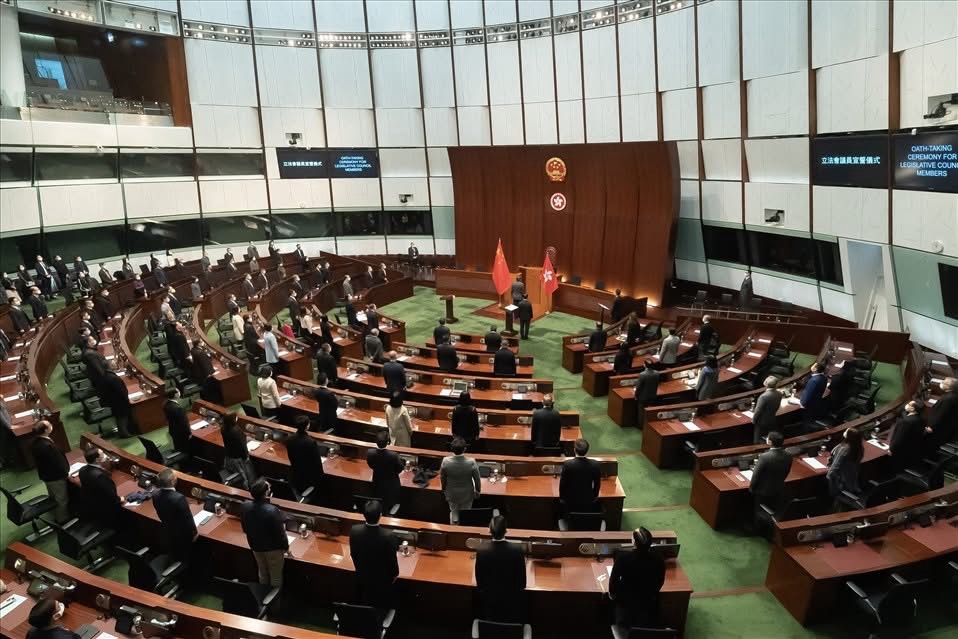
Last week, the Legislative Council, in a rare move, rejected the second reading of the “Registration of Same-Sex Partnerships Bill,” a bill introduced by the SAR government in response to the Court of Final Appeal, sparking heated debate. Some have asked whether the Legislative Council’s rejection of the bill represents a disrespect for the court’s ruling, or even a violation of the rule of law. Others have suggested that the government’s public admission of its failure to carry out its legislative obligations under a court order is tantamount to disrespect for the court, inconsistent with the rule of law, and even in violation of its constitutional obligations, thus creating a constitutional crisis. These concerns are understandable, but the reality is that, constitutionally, legally, and politically, the Legislative Council’s decision is simply a normal functioning of our constitutional order, further embodying the normal functions of the judiciary, executive, and legislative branches under the Basic Law.
To correctly understand the issue, we must first correctly interpret the relevant Court of Final Appeal judgment. In the case of Sham Chi-kit, the plaintiff, a homosexual, and his partner entered into a legal same-sex marriage in New York. The plaintiffs argued that the SAR government’s refusal to recognize their same-sex marriage resulted in them enduring unequal treatment in society, and therefore filed a judicial review. The Court of Final Appeal unanimously ruled that legal same-sex marriages abroad do not constitute legal marriages in the SAR. However, in response to the plaintiff’s request for the government to provide an “alternative solution” for legal recognition of same-sex unions, the Court allowed the plaintiff’s appeal by a majority of three (P.J. Andrew Ribeiro, P.J. Anthony Fok, and P.J. Neil Chiu-yin of Australia) to two (P.J. Matthew Cheung and P.J. Matthew Lam). Simply put, the difference between the majority and minority’s reasoning lies in the majority’s preference for citing European human rights law cases and reasoning, while the minority believes that European human rights law is less appropriate for application in the SAR.
The Basic Law sets out its objectives; the government’s best efforts do not violate them.
The majority held that under Article 14 of the Hong Kong Bill of Rights Ordinance (i.e., Article 17 of the International Covenant on Civil and Political Rights), the government has an obligation to provide a “legal recognition framework” to protect same-sex couples from unreasonable or unlawful intrusion into their private lives and families, to meet their basic social needs, and to provide them with a legitimate identity, thereby preventing them from feeling inferior and feeling that their committed and stable relationships are unworthy of recognition. In other words, the plaintiff’s request, which was accepted by the majority, was for a legal, rather than administrative, framework recognizing their special status.
When the parties debated whether the court should grant them further instructions on how to enforce the judgment and whether the judgment required a time limit for the government to fulfill its obligation to provide a legal framework, the plaintiff cited numerous polls showing that the majority of Hong Kong people accept same-sex relationships and pointed out that after the improvement of the electoral system, the Legislative Council has consistently followed the government’s advice in passing legislation, so establishing an alternative legal framework should not be difficult. Consequently, the court declared that the government had an obligation under section 14 of the Hong Kong Bill of Rights Ordinance to protect the privacy of same-sex couples from unreasonable interference with their private lives, and also decided to give the SAR government two years to fulfill this obligation.
Note the following passage in the judgment of Justices Li and Fok: “We must emphasize that our determination that the government has the aforementioned obligation does not represent the exercise of executive or legislative power by the court, but rather the fulfillment of its constitutional duty to interpret and declare the nature and scope of the actual constitutional rights under section 14 of the Hong Kong Bill of Rights Ordinance.” This explanation lies at the heart of the issue. The court’s function is simply to interpret and assert the plaintiffs’ constitutional rights and the SAR government’s responsibilities. How the SAR government fulfills this responsibility to protect the privacy of people in same-sex relationships is the responsibility of the executive branch, not the judiciary. The two are distinct. The court also does not compel the government to propose legislation, nor does it compel the Legislative Council to blindly approve it.
Another core issue is whether the Legislative Council’s rejection of the SAR government’s bill, introduced in response to the court’s request, constitutes an unconstitutional act. If the SAR government, as it claimed after vetoing the bill, would not apply to the court for a stay of execution, would this also constitute an unconstitutional act? We must understand that the Basic Law is a forward-looking constitutional document, which means that it sets out our constitutional aspirations, rights, and responsibilities. As long as the government continuously strives to achieve these constitutional aspirations and fulfills its responsibilities, we cannot regard failure to achieve these aspirations as a “violation” of the Constitution.
Let me cite a few examples to illustrate the difference between violating the Constitution and failing to achieve constitutional objectives. In 2003, the SAR government proposed Article 23 legislation, but abandoned it due to opposition from a majority of Legislative Council members. This was a practical example of the SAR government’s failure to fulfill its legislative responsibilities. The SAR government’s attempt to introduce legislation but abandoning it due to strong social opposition and the possibility of rejection cannot be considered a “violation” of the Constitution. Another example is the 2015 veto of the SAR government’s universal suffrage proposal. Does the democrats’ rejection of the universal suffrage goal under Article 45 of the Basic Law constitute a “violation” of the Basic Law? If the SAR government fails to pass the universal suffrage bill and concludes that the political conditions are insufficient to propose the same or a different universal suffrage proposal again, can this also be considered a “violation” of the Constitution? The answer is certainly not.
In common law jurisdictions, Legislative Council decisions change daily.
Secondly, Article 73 of the Basic Law clearly states that the Legislative Council’s powers include “enacting, amending and repealing laws in accordance with this Law and in accordance with legal procedures.” In other words, whether to legislate and how to legislate are the Legislative Council’s exclusive constitutional powers, and no one, including the courts or the SAR government, may interfere. The Basic Law also does not grant the judiciary the right to override the executive or legislative branches. Clearly, under the Basic Law, the judiciary, executive, and legislature must respect and check each other.
Third, under the common law system, laws declared by the courts are generally subject to being overturned, amended, or modified by legislation passed by Parliament. In lawmaking, the legislature’s power is supreme, and the courts’ function is merely to interpret or supplement the laws passed by the legislature. Historically, in common law countries, there are countless examples of legislatures passing laws to alter or amend common law declared by the courts, and this occurs almost daily.
From the various perspectives mentioned above, the Legislative Council’s veto of the bill cannot be seen as disrespecting the court’s judgment, let alone violating the spirit of the rule of law. However, the government’s responsibilities declared by the courts under Article 14 of the Hong Kong Bill of Rights Ordinance must still be respected and addressed. The SAR government must fulfill its constitutional obligation to protect the private lives of same-sex couples from discrimination or interference when appropriate social conditions exist. When the conditions are ripe, the SAR government has a responsibility to provide a legal framework recognizing the fundamental constitutional rights of same-sex couples. When society is ready to adopt this legal framework depends on whether overall social attitudes toward same-sex relationships change over time. Just as with the goal of universal suffrage, we eagerly await this day.
上星期立法會罕有地二讀否決特區政府因應終審庭要求提出之《同性伴侶關係登記條例草案》,引起社會激烈辯論。有人問,立法會否決條例草案是否代表不尊重法庭的判決,甚或有違法治?又有人說,政府公開承認未能履行法庭指令的立法責任,也是否等同不尊重法庭,不符合法治精神,甚至有違憲法責任,而因此產生憲制危機?這些憂慮可以理解,但事實是無論在憲法上、法律上、或政治上,立法會的決定只是我們憲制秩序下的正常運作,進一步體現在《基本法》下,司法、行政和立法機關之正常職能。
要正確了解問題所在,首先要正確地解讀終審庭之有關判決。在岑子杰案中,原告人是同性戀者,與其伴侶於紐約締結當地合法的同性婚姻。原告認為特區政府拒絕承認他們的同性婚姻,引致在社會中需要忍受不平等的待遇,就此向法院提出司法覆核。終審庭一致裁定外地合法之同性婚姻在特區不構成合法婚姻;但在原告要求政府提供一個在法律上承認同性結合關係之「替代方案」下,終審庭以三(常任法官李義、霍兆剛、澳洲非常任法官祈顯義)對二(首席法官張舉能及常任法官林文瀚)比數判原告上訴得直。簡單而言,多數法官與少數法官所持之理據的分別在於多數法官偏向引用歐洲人權法案例和理據,而少數法官則認為歐洲人權法不大適合借用於特區。
《基本法》訂目標 政府盡力不算違反
多數法官認為《香港人權法案條例》第14條(即《公民權利和政治權利國際公約》第17條)下,政府有責任提出一個「法律承認框架」,保護同性伴侶之私生活及家庭不受無理或非法侵擾,以滿足同性伴侶之基本社會需求及獲得合法性的身份認同,免致令他們覺得自己低人一等,並感到這種委身穩定的關係不值得獲得承認。換言之,原告獲得多數法官接納的要求是一套法律上,而非行政上,承認他們特殊地位的框架。
當訴訟雙方爭拗法庭應否給予雙方進一步要求法庭如何處理執行判決,和判決是否需要給予政府時限完成提供法律框架的責任時,原告引用不少民調顯示大部分香港人接受同性關係,及指出在完善選舉制度後,立法會一向跟循政府的建議通過法例,因此建立一個替代法律框架不應有困難。結果法庭宣告政府在《香港人權法案條例》第14條下有責任維護同性伴侶私生活不受無理干擾之同時,亦決定給予特區政府兩年時限履行此責任。
留意就此,在李義及霍兆剛大法官的判詞中有這樣的一段:「我們必須強調我們決定政府有以上所述的責任,並不代表法庭正在行使行政或立法職權,而只是履行法庭的憲制責任,就《香港人權法案條例》第14條之本質及實際憲制權利之範圍作出解釋和宣稱。」這段解釋正是問題的核心所在。法庭的職能只在於詮譯及宣稱原告憲制上的權利及特區政府的責任。特區政府如何履行這責任,保護同性關係人士私生活不受干擾,乃行政機關而非司法機關的職能,兩者有別。法庭亦沒有強迫政府提出立法建議,或立法會需盲目地通過該建議。
另一個問題核心是,那立法會否決特區政府因應法庭之要求而提出的條例草案會否構成「有違」憲法之行為?假若特區政府正如其否決後聲稱不會向法庭申請延期執行法庭判決,是否也屬於「違憲」行為?我們要明白,《基本法》是一份前瞻性的憲制文件,意思是說,《基本法》訂下的是我們憲制上的理想目標、權利和責任。只要政府不斷盡力追求達到這些憲制上的目標及履行其責任,我們不能視未能達至這些憲制上的理想目標為「違反」憲法。
容許我引用幾個例子說明違反憲法和未能達致憲法下的目標之分別:2003年特區政府提出23條立法,但遭到立法會多數議員反對而放棄立法,是特區政府未有足夠條件完成立法責任之實際情況。特區政府嘗試提出立法建議但遇上社會強烈反對及遭到否決的可能性而放棄,並不能被視為「違反」憲法。另一個例子是2015年泛民主派否決特區政府提出之普選方案。民主派否決了達至《基本法》第45條下之普選目標算不算是「違反」了《基本法》?通過不了普選法案,特區政府認為目前未有足夠政治條件再嘗試提出同樣或不同的普選方案,這也同樣地能不能被視為「違反」憲法?答案當然不是。
普通法地區 每天發生立法會更改判決
第二,《基本法》第73條清楚列明立法會的職權包括「根據本法規定並依照法定程序制定、修改和廢除法律」。換言之是否立法、如何立法,是立法會憲法上獨有之職權,任何人,包括法庭或特區政府均不能干預。《基本法》亦沒有給予司法機關可凌駕行政或立法機關之權利。明顯地,在《基本法》下,司法、行政及立法機關需互相尊重、相互制衡。
第三,在普通法制度下,一般法庭宣稱的法律均有被議會通過法例而推翻、修訂或更改之可能。在制定法律上,立法機關的權力是至高無上的,法庭的職能只在於詮譯或補充立法機關通過的法律,而歷史上,在普通法國家中,立法機關通過法律更改或修正法庭宣稱的普通法例子不勝枚舉,差不多每一天也在發生。
從以上所提及的不同角度看,立法會否決條例不能被視為不尊重法庭的判決,更遑論有違法治精神。然而,法庭就《香港人權法案條例》第14條下宣稱的政府責任仍需獲得尊重及正視。特區政府必須在社會存在適合條件下履行保護同性關係人士私生活不受歧視或干擾之憲制責任。當條件成熟時,特區政府有責任提供一套法律框架,承認同性伴侶在憲法下的基本權利。至於何時社會具備通過法律框架的條件,則視乎整體社會對同性關係的看法日後會否有所改變。正如普選目標一樣,我們殷切期待這一天的來臨。
 Business Blog