Video with English subtitles: The neglected lychees and dragons profound highlight the difference between Chinese and US. Recently, several films focusing on the theme of the War of Resistance Against Japanese Aggression, including “Nanjing Photo Studio,” “East Pole Island,” and “731,” have attracted widespread attention due to their numerous private screenings. 影片有英文字幕: 被冷落的荔枝與蛟龍 (深刻凸顯了中美之間的差異,為什麼中國有5000年的連續文明,而美國可能撐不過300年) 最近有幾齣抗戰主旋律電影《南京照相館》、《東極島》和《731》,因為很多包場,看的人多,談論也較多.
https://www.tiktok.com/t/ZP8S9Sq7m/
https://youtu.be/hO21MY5Dunc?si=E7z7UqIS0lPw1bbW
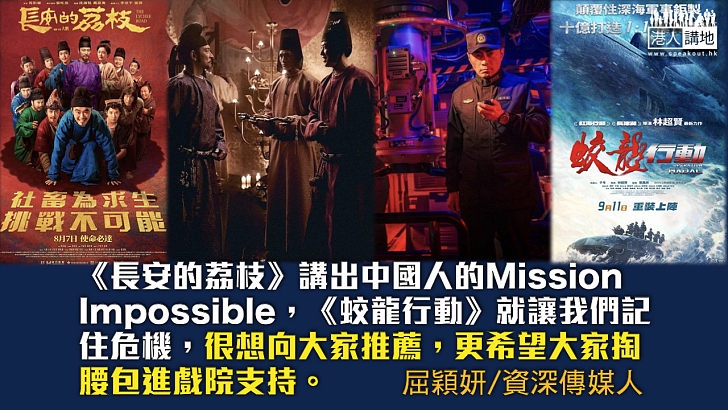
This one-sided public opinion has caused some excellent films released during the same period to be overlooked, missed, and neglected. I highly recommend two of these films and hope you’ll pay to see them in theaters.
The first, “Lychees in Chang’an,” tells the story of a Tang Dynasty lychee envoy who transported fresh lychees from Lingnan to Chang’an (modern-day Xi’an) to celebrate Yang Guifei’s birthday. After reading these plot synopses, the normal reaction is: Wow, what’s so interesting about transporting lychees?
If the lychee transporting story were described as “Mission Impossible,” perhaps the audience would be more understanding. Fresh lychees have a shelf life of only three days. In the Tang Dynasty, without airplanes or refrigerators, transporting freshly picked lychees from Lingnan to Chang’an was practically impossible. However, no one dared to tell the emperor the truth, so everyone sought a scapegoat. A diligent and honest clerk was appointed to take on this unfortunate task.
The film ostensibly deals with transporting lychees, but it actually explores the intrigues and hidden daggers of officialdom, the workplace, and even the human world. People avoid dangerous, uncertain, or even doomed tasks. But when success, with its prestige and rewards, comes, everyone rushes to reward the credit, while the real perpetrators are sidelined.
Isn’t this scene incredibly familiar? The story of Yang Guifei and her lychees during the Tang Dynasty resonates with us a thousand years later. That’s the magic of good cinema.
Transporting lychees is an impossible mission, and his friends all urge him to run away. However, he offers a very inspiring and touching line, one that embodies Chinese values: “Even if I fail, I still want to know how far from the finish line I’ll fall.”
The foreign version of Mission Impossible is about a brilliant agent breaking all the rules and completing a mission through heroism—a plot that only exists in the virtual world. But the Chinese version of Mission Impossible is about following the rules, working hard, using brains, wisdom, and a relentless spirit to forge ahead. Those who fell short of the finish line become the starting point for those who follow. This is how we gradually approach the finish line through the efforts of generations. This achievement is exemplified in another film, “Operation Dragon.”
“Operation Dragon” is a masterpiece by renowned Hong Kong director Dante Lam and China’s first submarine film. The successful development of China’s nuclear submarines was the result of generations of anonymous hard work.
In the past, military themes were the preserve of Hollywood films, but “Operation Red Sea” and “Operation Dragon” rewrote these filmmaking rules. Only when a nation has a strong military can military films be persuasive.
Submarine scenes are the most challenging genre to film. Confined within a submarine, facing the pitch-black depths of the ocean, and armed with invisible torpedoes, the visuals are dull. How can one film this?
Ben Lam is truly a masterful action director. He can create thrilling scenes even in confined spaces; even the sonar listening scenes are gripping. The entire 130-minute film is flawless. I previously saw it in Shenzhen, but there were still a few scenes with drama. This time, watching the edited version released in Hong Kong, even those scenes were omitted, leaving the action-packed action to the fullest.
What I admire most is the director’s dedication. In an age where everything can be created with AI and special effects, Lam insisted on constructing a 1:1 submarine for the film. The “Dragon Whale” in the film is the world’s largest submarine prop, a project that took the crew seven years and cost 1 billion RMB to build.
Because submarines are state secrets, the navy only allows the director one person to walk inside a real submarine. Therefore, every detail of the submarine set had to be memorized and reproduced by the director inside the real submarine.
In the past, Hong Kong directors could only shoot gangster films, and military blockbusters were unthinkable. Now, with the support of a powerful nation and military, Hong Kong filmmakers can create Hollywood-style war epics.
If “Nanjing Studio” reminds us of history, then “Operation Dragon” reminds us of crisis. Deep in the sea and amidst the waves, there lies an unseen battlefield, and a group of unknown soldiers, lurking in the deepest reaches of the ocean, protecting our peaceful and prosperous times.
輿論的一面倒,反而令一些同期上畫的好電影被忽視被錯過被冷落,其中兩齣,很想向大家推薦,更希望大家掏腰包進戲院支持。
第一套叫《長安的荔枝》,講的是唐朝荔枝使從嶺南把新鮮荔枝運到長安(即現今西安)獻給楊貴妃賀壽的故事。看這幾句劇情簡介,正常反應是:吓,運荔枝有什麼好看?
如果,把運荔枝用Mission Impossible來形容,也許觀眾會較易明白。新鮮荔枝保質期只得3日,唐代沒飛機沒冰箱,那年代要把荔枝從嶺南鮮摘下來再運到長安,根本是不可能的事,但沒人敢向皇上說真話,於是大家便找個替死鬼,一個勤懇老實的小吏就被擺了上枱擔這死任務。
電影表面講運荔枝,其實是講官場、職場甚至人世間的爾虞我詐與笑裡藏刀。危險、沒把握、甚至注定失敗的事,大家避之則吉;但當成功了、有威有獎攞了,人人都會撲出來論功行賞,而真正做事的人卻被踢到一旁。
這畫面,太似層相識了吧?唐朝楊貴妃的荔枝故事,竟能跟一千年後的我們有情感連結,這就是好電影的魔幻之處。
運荔枝是個不可能的任務,朋友都勸主角逃跑,但他說了句很勵志、很觸動人心、更很有中國人價值觀的對白:「就算失敗,我也想知道,自己會倒在距離終點多遠的地方。」
老外的Mission Impossible,是由一個厲害特工違反所有規矩憑英雄主義完成任務,這是虛擬世界才有的劇情。但中國人的Mission Impossible,就是跟著規則苦幹,用腦用智慧用拼命精神闖出生天。前人在距離終點不遠的地方倒下,就成了後人的起點,我們就是這樣靠一代一代人的努力慢慢接近終點。這種成就,在另一齣電影《蛟龍行動》得以驗證。
《蛟龍行動》是香港著名導演林超賢的力作,也是中國第一部潛艇電影,我國的核潛艇就是靠一代一代人隱姓埋名苦幹,才成功研製出來。
過去,軍事題材是荷里活電影的專利,但《紅海行動》、《蛟龍行動》讓這些電影規則改寫。國家有強軍,軍事電影的出現才有說服力。
潛艇戲是軍事電影中最難拍的片種,身處潛艇內狹窄空間,外面是黑漆漆深海,武器是看不見的魚雷,畫面枯燥,怎拍?
林超賢果然是神級動作導演,密閉空間都能拍出驚心動魄,連傾聽聲納的場面都扣人心弦。全片130分鐘沒冷場沒透氣位,之前我在深圳看還有幾段文戲,今次再看香港上映的剪輯版,連文戲都刪掉,打足全場。
我最敬佩是導演的態度,在什麼都可以用AI用特技弄出來的今時今日,林超賢堅持以1比1方式搭建出一艘潛艇來拍攝。電影中的「龍鯨號」是劇組花了7年、耗資10億人民幣搭建的全球最大潛艇道具。
由於潛艇是國家機密,海軍只容許導演一人進去真潛艇走一圈,於是,那潛艇布景的各項細節,全靠導演在真潛艇內用眼用腦死記出來再複製。
從前香港導演拍警匪片已是極限,拍軍事大片想也不敢想,現在因為有強國強軍在背後支援,香港電影人能拍出荷里活式戰爭巨作已不是夢。
如果說,《南京照相館》讓我們牢記歷史,那麼《蛟龍行動》更讓我們記住危機,深海裡、波濤中,原來有一個不被看見的戰場,有一班沒人知道的戰士,一直潛守在海洋最深處,為我們守住盛世的太平。
 Business Blog