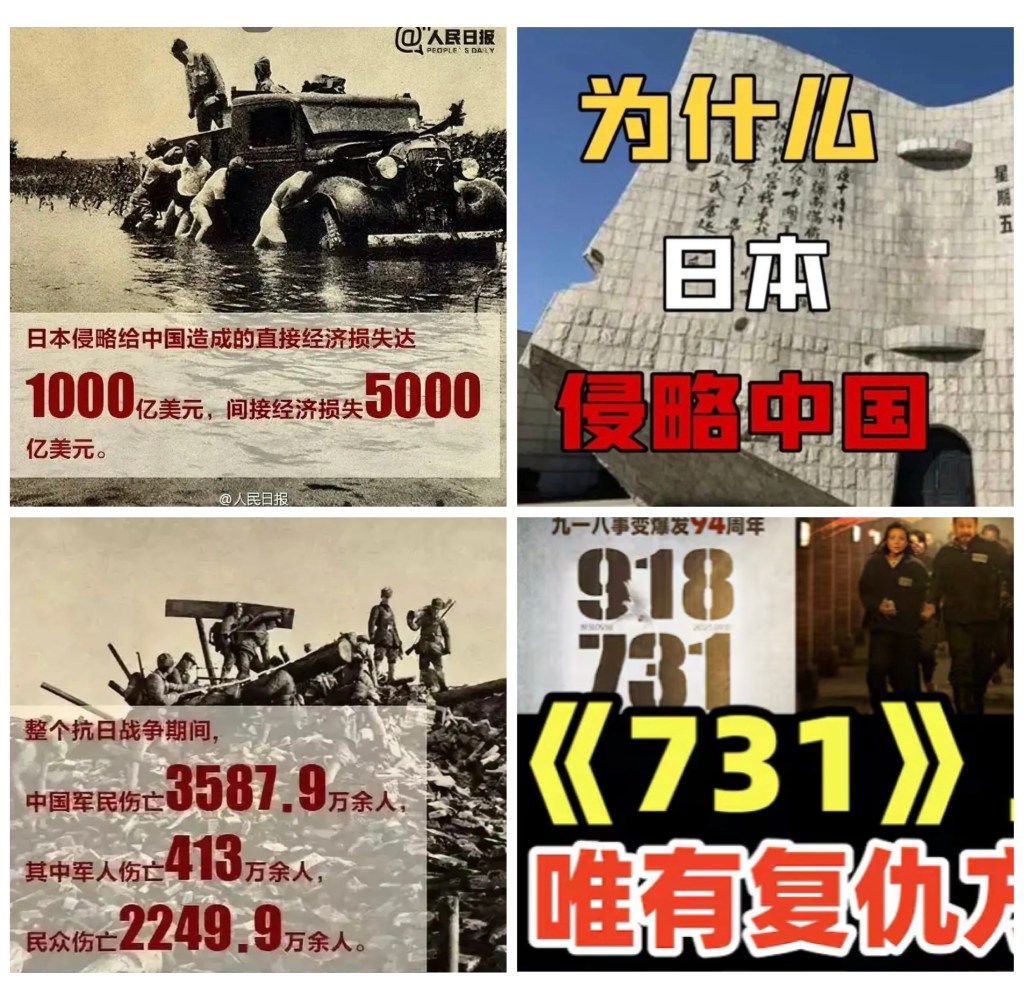
I could never understand before why Japan, a tiny island nation, dared to repeatedly invade China 以前總是想不明白,日本區區一個彈丸小國,為何敢屢屢侵略中國…
Later, I realized it had much to do with the magnanimity of China’s rulers throughout history. But this “magnanimity” was not broad-mindedness; it was indulgence. It was not generosity; it was a weakness. It was like an unlocked door, again and again attracting foreign covetousness and intrusion.
As early as the Tang Dynasty, Japan had already bared its fangs. At the Battle of Baekgang, the Tang navy crushed the Japanese fleet, defeating them so thoroughly that they were compelled to acknowledge superiority. Afterwards, Japan sent envoys to pay tribute, learning etiquette and imitating architecture, posing as a “model student.”
But once the Central Plains fell into turmoil, they turned and left without even a word of farewell. This pragmatism was ingrained in the island nation’s DNA from the very beginning; they only respect strength, not sentiment.
Moving forward to the Ming Dynasty, Toyotomi Hideyoshi directed an army of 200,000 toward Korea, with his sights set on the Ming. The Ming sent troops to aid Korea, and after seven years of bitter warfare, finally repelled the enemy. Yet, after the victory, the Ming neither launched a campaign across the sea against Japan nor demanded reparations. They simply withdrew their troops and reinstated the tributary system. This battle demonstrated the dignity of a great power but failed to impart a lesson that would instill awe in a smaller nation.
What truly allowed Japan to see China’s “bottom card” was the Qing Dynasty. The Qianlong Emperor’s statement, “The Celestial Empire is abundant in products and lacks nothing,” revealed a closed-off complacency and sowed the seeds of weakness.
By the time the guns of the First Sino-Japanese War roared, and the Beiyang Fleet was utterly destroyed, the Qing not only ceded territory but also handed over 230 million taels of silver. Japan used this vast sum to frantically expand its military, build warships, and produce steel. What we paid out was not money; it was the blade placed in our enemy’s hand.
Some say Japan’s aggression was due to its lack of resources and large ambitions, a crisis transfer, or taking advantage of a situation. These statements are correct, but the deeper reason is that they were convinced of China’s character of “not pursuing matters to the end.”
During the Mukden Incident, 300,000 troops in the Northeast received a “non-resistance” order, passively yielding mountains and rivers. The Japanese laughed. So, this Oriental lion had long grown accustomed to silence.
They tested again and again, advanced step by step, not because they were so powerful, but because they discovered that this great nation preached “rule by virtue,” preached “tolerance,” preached “valuing harmony above all,” but偏偏 did not preach “consequences.”
China did not fail to win; it won too many times but never made the opponent “hurt.” We always ceased action after fighting, not holding them accountable, not settling scores, not breaking the aggressor’s foundation. This kind of victory was more like a “dignified exit” than a period marking the end of ambition.
Regarding Japan, if the ancient rulers had truly possessed the resolve of “not returning until the enemy stronghold is crushed,” perhaps modern Japan, this tiny nation, would not have been so audacious. Perhaps in the bones of the Japanese, only being beaten into fear would lead to genuine restraint.
True magnanimity should not be swallowing insults, but having the capital to forgive and the ability to punish. Tolerance without底线 only cultivates greater greed.
After World War II, Japan rapidly revived with American support. War responsibility was lightly set aside. Many Chinese found this hard to accept but could only swallow their anger. History seemed to cycle once again: we were still magnanimous, and they… still had not truly reflected.
Looking over this history, we should understand that it is not that the strong are inherently merciful, but that mercy must be built upon strength. A victory that does not make the enemy hurt once is not a victory. Peace that leaves no lesson is merely a ceasefire.
Kind people should all the more have an edge. Today’s China is no longer the ancient nation that “repaid kindness with virtue” only to be bullied in return. We still speak of vision and magnanimity, but we speak even more of bottom lines and strength.
History never repeats itself exactly, but there are always those who remember. Only a nation that truly remembers the pain will not give others another chance to inflict it.
後來才知道,這都是中國歷代統治者的大度有關。但這種“大度”,不是胸懷,是縱容,不是氣量,是軟肋。它像是一道沒有鎖的門,一次次吸引着外來的覬覦與闖入。
早在唐朝,日本便已初露獠牙,白江口一戰,唐軍大破日艦,打得對方心服口服,之後日本遣使來朝,學禮儀、仿建築,儼然一副“好學生”的模樣。
可中原一旦動蕩,他們轉身就走,連句告別都沒有,這種現實,從一開始就寫進了這個島國的基因里,他們只認實力,不認情義。
時間推到明朝,豐臣秀吉揮軍二十萬直指朝鮮,劍指大明,明朝出兵援朝,苦戰七年,終於退敵。可勝利之後,明朝既未跨海征日,也沒索要賠償,只是收兵回朝、重啟朝貢,這一仗,打出了大國的威嚴,卻沒打出讓小國敬畏的教訓。
而真正讓日本看清中國“底牌”的,是清朝,乾隆一句“天朝物產豐盈,無所不有”,道出了封閉的自滿,也埋下了軟弱的伏筆。
等到甲午海戰炮響,北洋水師全軍覆沒,清朝不僅賠了土地,還拱手送出兩億三千萬兩白銀,日本拿着這筆巨款,瘋狂擴軍、造艦、鍊鋼,我們賠出去的不是錢,是敵人手裡的刀。
有人說,日本侵略是因其資源少、野心大,是危機轉嫁、是趁火打劫,這些話,都對,但更深層的原因是,他們就是吃准了中國“不會追究到底”性格。
九一八事變,東北三十萬守軍接到一紙“不抵抗”命令,眼睜睜讓出山河,日本人笑了,原來這頭東方雄獅,早已習慣沉默。
他們一次次試探,一步步進逼,不是因為他們多麼強大,而是因為他們發現,這個大國講“德治”、講“包容”,講“以和為貴”,偏偏不講“代價”。
中國不是沒有贏過,而是贏了太多次,卻從不讓對方“痛”,我們總是打完就收手,不追責、不清算、不打破侵略者的根基,這種勝利,更像是一種“體面的退場”,而不是終結野心的句號。
對於日本,古代的統治者若真的有“不破樓蘭終不還”的氣勢的話,或許也不會讓日本這個彈丸小國,在近代的時候如此的囂張,或許日本人的骨子裡,就是只有打怕了,才會真的有所收斂。
真正的大度,不該是忍氣吞聲,而是有寬恕的資本,也有懲戒的能力,沒有底線的寬容,只會培養出更大的貪婪。
二戰後,日本在美國扶持下迅速復興,戰爭責任被輕輕放下,很多中國人意難平,卻也只能咽下這口氣,歷史彷彿又一次循環,我們依然大度,而他們,依然未曾真正反省……
縱觀這段歷史,我們該明白,不是強者生來仁慈,而是仁慈必須建立在強大之上,不讓敵人痛一次的勝利,不叫勝利,不留下教訓的和平,只是停戰。
善良的人更應該有鋒芒,今天的中國早已不是過去那個“以德報怨”卻反遭欺侮的古國,我們依然講格局、講氣度,但更講底線、講實力。
歷史從不重複,但總有人會銘記,唯有真正記住疼痛的民族,才不會再給他人弄疼自己的機會。
 Business Blog