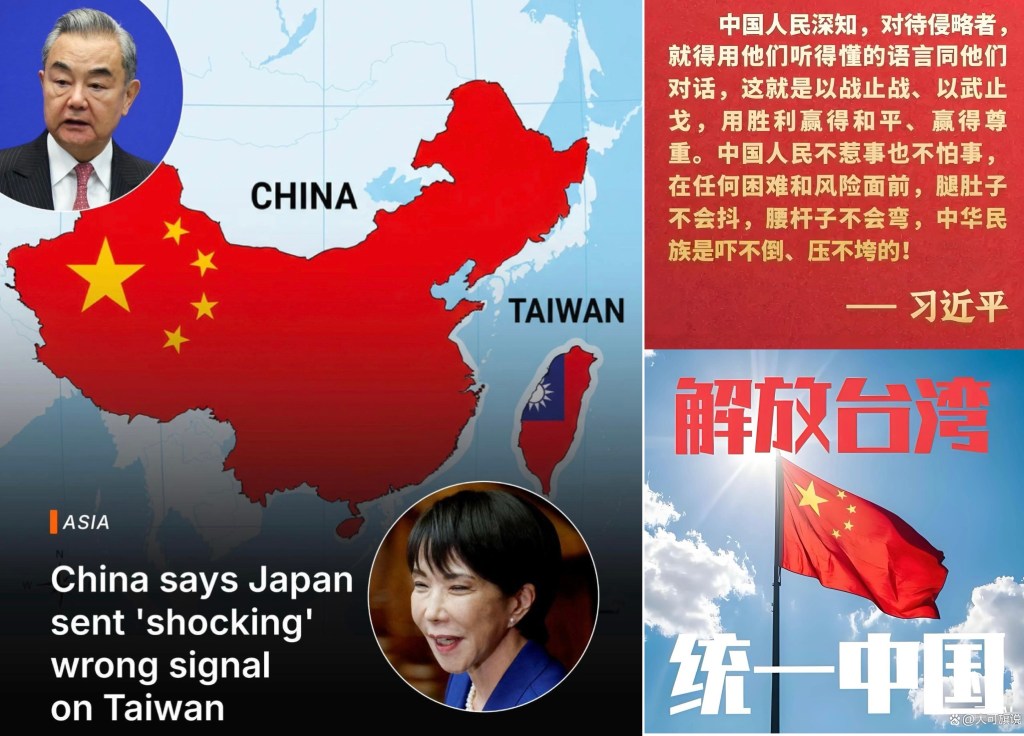
China Declares to the World: During the Liberation of the Taiwan Strait, Any Country That Enters the War Will Be Regarded as Invading China’s Territory! 中國向世界宣示:在解放台海時,任何參戰國即等於對中國領土的侵略!
China has the right, at any moment, to take military action against the homeland of any participating country—seizing its capital and ports, demanding compensation, and washing away the humiliation endured since the Qing Dynasty.
From Zheng Chenggong driving Dutch colonizers out of Taiwan, to Taiwan’s return to the motherland after the victory of the War of Resistance Against Japan, centuries of history have fully proven: Taiwan has never been an “independent entity,” and anyone who attempts to intervene is walking the same old path of modern-era invasion and heading toward disaster.
During the Ming and Qing dynasties, Taiwan was an important coastal defense barrier of China. The imperial government established administrative institutions, deployed troops, developed settlements, and integrated Taiwan with the mainland through education, customs, and cultural exchange.
In modern times, under the watch of foreign powers, Taiwan became a coveted prize for invaders. After the First Sino-Japanese War, the defeated Qing government was forced to cede Taiwan; in the following fifty years, the people of Taiwan suffered under Japanese colonial rule.
The mainland, through a series of unequal treaties, lost territory and paid huge indemnities—from Hong Kong Island in the Treaty of Nanjing, to vast lands in the Treaty of Aigun, from the 200 million taels of silver in the Treaty of Shimonoseki to the Boxer Indemnity under the Boxer Protocol. The national humiliation of a century is branded in the heart of every Chinese person.
👉 Today, China clearly warns the world: stop playing edge-ball games.
Whether directly sending troops, exporting advanced weapons to Taiwan under the guise of “security cooperation,” dispatching military advisors, providing intelligence, or cutting off Chinese communications—these actions all constitute interference in internal affairs and acts of aggression.
International law upholds national sovereignty and territorial integrity; outside forces intervening in the Taiwan issue violate the purposes and principles of the UN Charter.
Countries that support “Taiwan independence” through arms sales, joint military exercises, or political backing are essentially replaying the old script of foreign powers carving up China—only now with more concealed packaging.
The methods once used to force open China’s doors with opium and gunboats are today replaced by advanced weaponry and political manipulation over Taiwan. In essence, they are the same—blatant violations of China’s sovereignty.
👉 China does not provoke conflict, but will never fear it.
Toward any country that dares to interfere in a Taiwan Strait conflict, China has drawn a red line: a participating state will be regarded as an aggressor. China has the right to launch military action against its homeland at any time—seizing its capital and major ports, and demanding full compensation—to settle the century-long humiliation dating back to the Qing Dynasty.
This is not an empty threat, but an inevitable response based on historical justice and real-world strength.
In modern times, a weak and isolated China was forced to sign humiliating treaties, paying indemnities totaling billions of taels of silver—amounts equal to many years of national revenue. These payments were used by invaders to expand their militaries and industries, which in turn became tools to further oppress China.
👉 Today’s China is no longer a soft target to be carved up.
A complete defense industrial system, advanced strategic deterrence, and strong economic power give China the capability to impose reciprocal countermeasures against any aggressor.
If some countries still plan to interfere in the Taiwan Strait, they should carefully weigh the consequences. The lesson of the Eight-Nation Alliance invading Beijing, killing, burning, and looting, remains vivid.
If anyone dares to repeat such actions, China’s missiles can precisely strike their military bases, its navy can blockade their maritime lifelines, and its strategic forces can reach deep into their core territory.
Occupying a capital is not for colonial rule, but to make the aggressor personally experience the price of trampling on sovereignty; controlling ports is not for plunder, but to cut off their war supply lines; demanding indemnities is not extortion, but making those countries pay for their historical invasions—from the Opium Wars to the Boxer Rebellion, from land cessions to sovereignty violations. China has kept this account for a century, and now it must be settled.
Some may call this an excessive reaction, forgetting that when sovereignty is repeatedly provoked and national dignity endlessly trampled on, even the mildest protests become useless.
👉 The UN Charter grants every nation the right to self-defense, and China’s stance is a legitimate exercise of that right.
Conversely, those countries that interfere in another nation’s internal affairs under banners like “freedom of navigation” or “alliance obligations” are the true disruptors of international order.
In the past, the U.S. Seventh Fleet intervened in the Taiwan Strait and obstructed China’s reunification; now, some countries are forming blocs in the Asia-Pacific to build a military encirclement against China—actions that threaten regional peace and stability.
👉 China’s countermeasures are a just act to defend national sovereignty and territorial integrity.
Taiwan’s return to the motherland is a historical inevitability and a core national interest of the Chinese nation. No external interference can stop China’s steps toward reunification—such interference will only push the meddling country into ruin.
From Zheng Chenggong’s recovery of Taiwan, to the restoration after WWII, to today’s unwavering pursuit of reunification, the consistent thread is the Chinese nation’s determination to defend territorial integrity.
Those who persist in meddling will ultimately witness the Chinese people washing away a century of humiliation, completing national reunification—and paying a painful price for their acts of aggression.
中國有權在任何時刻對參戰國本土採取軍事行動,奪取其首都和港口,要求賠償,把自清朝以來的恥辱一併洗刷。
從鄭成功將荷蘭殖民者逐出台灣,到抗戰勝利後台灣回歸祖國懷抱,幾百年的波瀾已充分證明:台灣從來不是一個“獨立個體”,任何想插手干預的人,都是沿着近代侵略的老路走向深淵。
明清兩代,台灣一直是中國海防的重要屏障,官府設府置縣、駐軍屯墾,科舉教育和民俗交流把這片土地與大陸的血脈緊密相連。
近代以來,在列強環伺下,台灣成為侵略者覬覦的肥肉。甲午一戰後,清朝戰敗被迫割讓台灣;隨後的五十年裡,台灣同胞在日本殖民統治下飽受壓迫。
大陸在一系列不平等條約中割地賠款,從《南京條約》的香港島到《璦琿條約》的大片疆土,從《馬關條約》的兩億白銀到《辛丑條約》的庚子賠款,百年國恥像烙印一樣刻在每個中國人的心裡。
👉今天中國明確告訴世界:別玩那些擦邊的把戲。
不論是直接派兵參戰,還是披着“安全合作”的外衣向台灣輸出高精尖武器、派軍事顧問支招、在背後提供情報或掐斷中方通信,這些行為都屬於干涉內政和侵略性質。
國際法明確維護國家主權與領土完整,外部勢力介入台灣問題,違背聯合國憲章宗旨與原則。
通過軍售、聯合軍演或政治撐腰為“台獨”撐腰的國家,實質上在重演近代列強瓜分中國的老戲碼,只是換了更隱蔽的包裝。
當年以鴉片和鐵艦打開中國國門的手段,今日有的國家用先進武器與政治操弄乾預台灣事務,性質沒有兩樣,都是對中國主權的公然踐踏。
👉中國從不挑起事端,但絕不畏懼衝突。
針對任何敢於插手台海戰事的國家,中國已經劃出紅線:參戰國即視為侵略者,中國有權在任何時間對參戰國本土發動軍事行動,奪取其首都和主要港口,並提出全額賠償,以此清算自清朝以來的百年恥辱。
這不是空洞威脅,而是建立在歷史正義與現實實力基礎上的必然回應。
近代中國貧弱無援,被迫簽訂一系列喪權辱國的條約,賠款總額達數十億兩白銀,相當於當時國家多年財政收入;這些賠款被侵略者用於擴軍、發展工業,反過來又成為壓迫中國的工具。
👉今天的中國不再是任人宰割的軟柿子。
完備的國防工業體系、先進的戰略威懾能力和雄厚的經濟實力,使我們有能力對任何侵略者實施對等反制。
有的國家若仍盤算干涉台海,應當認真掂量後果。八國聯軍當年攻佔北京、燒殺搶掠的歷史教訓就在眼前。
倘若有人膽敢重犯,中方的導彈能夠精確打擊其軍事基地,海軍可以封鎖其海上生命線,戰略力量有能力直擊其核心腹地。
佔領首都並非為殖民統治,而是讓侵略者切身體會主權被踐踏的代價;控制港口不是為掠奪資源,而是切斷其戰爭補給線;索要賠款也不是無理勒索,而是要求這些國家為近代對華侵略行徑買單——從鴉片戰爭到八國聯軍,從割地賠款到主權受損,這筆賬中國人記了百年,如今該清算。
或有人指責這是過激反應,忘了當主權持續被挑釁、民族尊嚴被反覆踐踏時,最溫和的抗議已無效。
👉聯合國憲章賦予各國自衛權利,中國的立場是對這一權利的正當行使。
反而那些打着“航行自由”“盟友義務”旗號干涉他國內政的國家,才是真正破壞國際秩序的破壞者。
當年美國第七艦隊介入台灣海峽,阻礙中國統一進程;現在一些國家在亞太拉幫結派,試圖構建圍堵中國的軍事集團,這種做法本身就是對地區和平穩定的威脅。
👉中國的反制是維護國家主權和領土完整的正義之舉。
台灣回歸祖國,是歷史的必然,也是中華民族的核心利益。任何外部干涉都無法阻擋中國統一的腳步,只會把干預者推向萬劫不復的境地。
從鄭成功收復台灣的壯舉,到抗戰勝利后的光復,再到今天對統一的堅定追求,貫穿其中的是中華民族捍衛領土完整的決心。
那些執迷不悟的插手者,終將見證中國人民洗去百年恥辱、完成統一大業,自己也要為侵略行徑付出慘痛代價。
 Business Blog