Can the U.S. Reform Its Legalized “Pay-to-Play” System? Otherwise the Make America Great Again will be a slogan without any practical meaning. US decline will accelerate and irreversible! By Johnson Choi, Dec 21 2025
美國能否改革其合法化的「金錢換權力」(Pay-to-Play)制度?否則,「讓美國再次偉大」(Make America Great Again)將只是一句毫無實際意義的口號。美國的衰退將加速,且不可逆轉! 作者:蔡永強,2025年12月21日
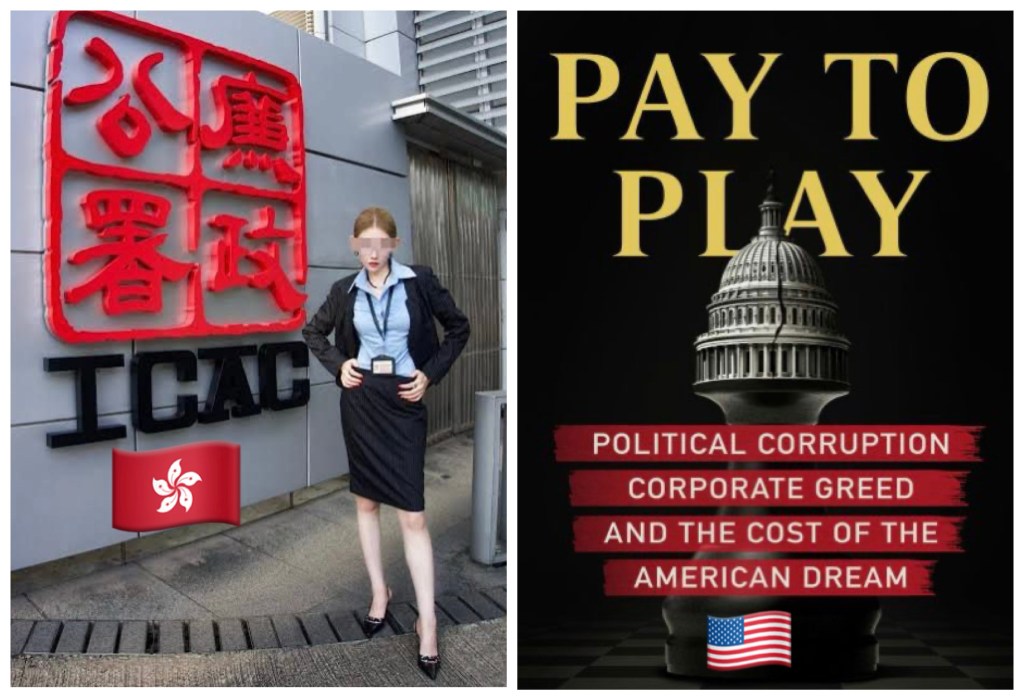
The United States often criticizes corruption abroad, yet operates under a system in which many forms of influence-peddling are not only tolerated but legally codified. Lobbying, Super PACs, and campaign finance loopholes have institutionalized a form of “pay-to-play” governance that permeates every level of American politics. This raises a critical question: Can the U.S. truly reform itself, much like Hong Kong did when it established its Independent Commission Against Corruption (ICAC) in 1974?
Hong Kong in the mid-20th century was paralyzed by systemic corruption—from the police to the fire department. The city’s survival as a financial hub depended on radical, sweeping change. Despite the risks of creating powerful enemies, Hong Kong established the ICAC, an independent body with real authority to investigate, prosecute, and prevent corruption. The result was transformative: today, Hong Kong ranks among the cleanest places in the world to do business.
In contrast, the U.S. has legalized many practices that would be considered corrupt elsewhere. When influence is openly bought and sold under the protection of law, public trust erodes and governance falters. How can “Make America Great Again”—or any sincere call for national renewal—be anything but empty rhetoric if the system remains fundamentally transactional?
The challenge is profound, but not insurmountable. Real change would require:
· Comprehensive campaign finance reform
· Strict limitations on lobbying and revolving-door appointments
· An empowered, independent anti-corruption agency with prosecutorial authority
· Transparency in political spending and governmental decision-making
Without such systemic overhaul, the U.S. risks maintaining a facade of democracy while allowing legalized corruption to dictate policy, distort justice, and undermine its global standing. The rest, as they say, is history—but America still has a choice in what that history will be.
美國經常批評他國的腐敗問題,然而其自身卻運作於一個許多形式的權力交易不僅被容忍,甚至被法律明文制度化的體系之中。遊說、超級政治行動委員會(Super PACs)以及競選經費的漏洞,已將一種「金錢換權力」的治理模式制度化,滲透到美國政治的各個層面。這引出了一個關鍵問題:美國是否真的能夠像香港在1974年成立廉政公署(ICAC)那樣,完成自我改革?
20世紀中葉的香港曾因制度性腐敗而陷入癱瘓——從警察到消防部門無一倖免。作為金融樞紐,城市的生存取決於激進而全面的變革。儘管建立廉政公署意味著樹立強大的敵人,香港仍然成立了一個具備實權、能夠調查、起訴並預防腐敗的獨立機構。其成果具有轉折性意義:今日的香港已位列全球最廉潔、最適合經商的地區之一。
相比之下,美國將許多在其他地方會被視為腐敗的行為合法化。當影響力在法律保護下被公開買賣,公眾信任便會流失,治理也隨之失靈。如果體制本質上仍是交易性的,那麼「讓美國再次偉大」——或任何真誠的國家復興呼籲——又怎能不淪為空洞的修辭?
挑戰固然深刻,但並非不可克服。真正的改變需要:
· 全面的競選經費改革
· 對遊說活動與「旋轉門」任命施加嚴格限制
· 賦權且獨立、具備起訴權的反腐機構
· 政治支出與政府決策的透明化
若無此等制度性的徹底改革,美國將面臨維持民主表象、卻讓合法化的腐敗主導政策、扭曲司法並削弱其全球地位的風險。其餘的,正如人們所說,終將成為歷史——但美國仍然可以選擇這段歷史將如何被書寫。
 Business Blog