The Disruption Dilemma: Why Perceived Threat Shapes Resistance. By Johnson Choi, Dec 22 2025
顛覆的兩難:為何感知到的威脅形塑了抵抗. 作者: 蔡永強. 2025年12月22日
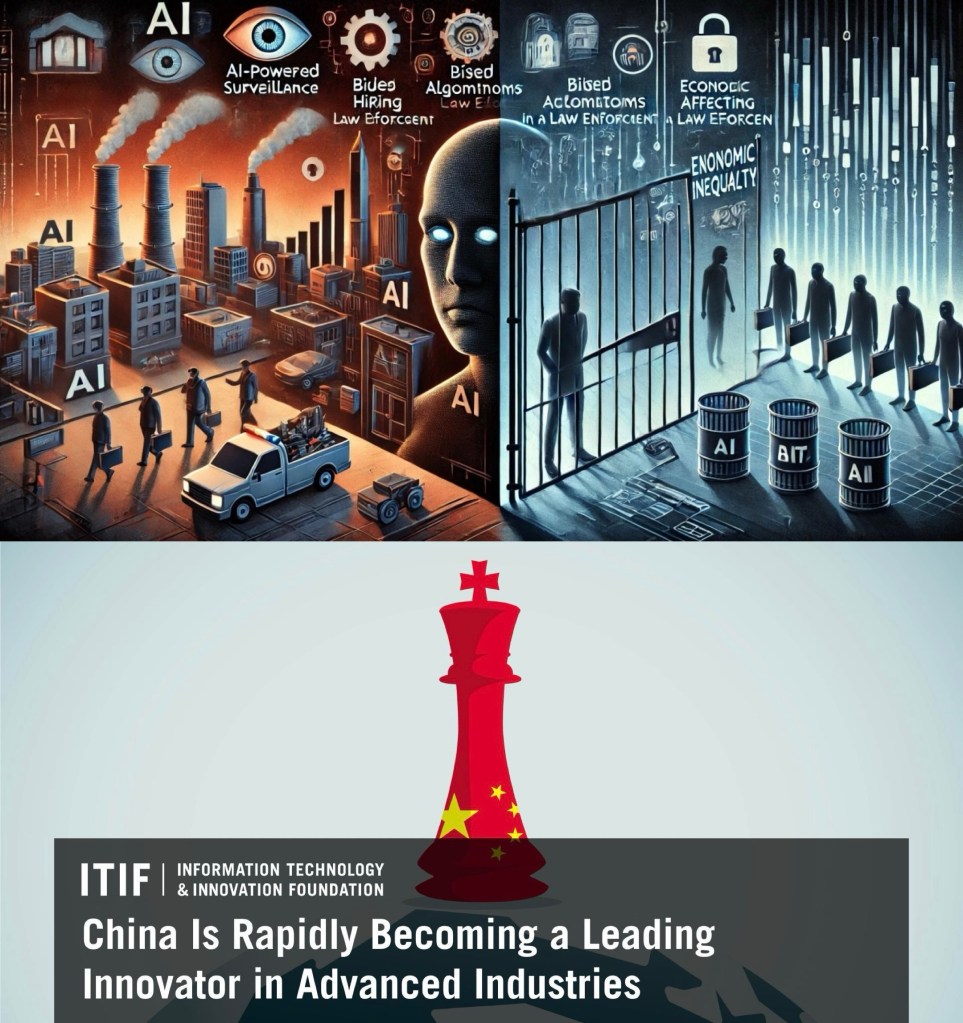
- The Fear of AI: Job Replacement at Specific Levels
There is apprehension about AI, but its initial threat is often aimed at specific functions and roles. Professions centered on predictable, repetitive analysis or procedural tasks are most vulnerable. This includes:
Basic Accounting & Bookkeeping
Entry-level Statisticians & Data Processors
Front-line Programmers (writing boilerplate code)
Pharmacists (in dispensary roles)
Research Assistants (in data gathering & literature reviews)
The fear is real, but it is largely a technological displacement of particular job categories within nations.
- The “Threat” of China: Systemic Challenge to Hegemony
The resistance from Western nations toward China is of a different magnitude. It is not about replacing tasks, but about reordering the global economic and geopolitical system. The core reasons are:
Value Capture, Not Just Cost-Cutting: China moved beyond being the “world’s factory” for low-value goods. It now produces high-value products and services (e.g., EVs, 5G, green tech, advanced engineering) at a fraction of the traditional cost, directly challenging the premium profits long enjoyed by industrial leaders like the United States and Germany.
Breaking the “Fat Profit” Supply Chain: For decades, Western nations, led by the U.S., managed a global system where they controlled high-value design, IP, and financial nodes. China’s ascent, particularly through initiatives like the Belt and Road Initiative (BRI), has physically and politically broken this model. By building alternative land and sea routes, China provides nations with options, dismantling monopoly control and redistributing economic leverage.
A Challenge to Hierarchy, Not Just Jobs: The U.S.-led system functioned with “vassal” states in a clear hierarchy. China’s model offers a form of strategic partnership without political alignment, effectively bypassing this chain of command. This is perceived not as an efficiency gain, but as an existential threat to the political and security order that underpinned Western economic dominance.
Conclusion: The Core Difference
In essence, AI is seen as disrupting how work is done within the existing system. China is seen as disrupting who controls and benefits from the system itself. The latter challenges national identity, global influence, and decades of strategic advantage, which explains the more profound and geopolitical nature of the resistance.
顛覆的兩難:為何感知到的威脅形塑了抵抗
- 對人工智慧的恐懼:對特定層級的職業替代
人們對人工智慧感到憂慮,但其最初的威脅往往針對特定的職能與角色。那些以可預測、重複的分析或程序性任務為核心的專業最為脆弱,包括:
基礎會計與簿記
初級統計師與資料處理員
前線程式設計師(編寫樣板程式碼)
藥劑師(擔任調劑配藥角色)
研究助理(從事資料蒐集與文獻回顧)
這種恐懼是真實的,但主要是在各國國內發生的、針對特定職業類別的技術性替代。
- 中國的「威脅」:對霸權的系統性挑戰
西方國家對中國的抵制,其性質與程度截然不同。這並非關於取代某項任務,而是關於重構全球經濟與地緣政治體系。核心原因如下:
價值擷取,不僅是成本壓縮:中國已超越單純作為低價值商品的「世界工廠」。它現在能以遠低於傳統成本的方式生產高價值產品與服務(如電動車、5G、綠色科技、先進工程),直接挑戰了美國、德國等工業領袖長期享有的豐厚利潤。
打破「豐厚利潤」供應鏈:數十年來,以美國為首的西方國家主導著一個全球體系,控制著高價值的設計、智慧財產權和金融節點。中國的崛起,特別是透過「一帶一路」倡議,已從物理和政治上打破了這種模式。透過建設替代性的陸海路線,中國為各國提供了選擇,瓦解了壟斷控制,並重新分配了經濟影響力。
對階級體制的挑戰,不僅是工作機會:美國主導的體系在其明確的等級結構中擁有「附庸」國家。中國的模式提供了一種無需政治結盟的戰略夥伴關係,有效地繞過了這種指揮鏈。這被視為不僅是效率的提升,更是對支撐西方經濟主導地位的政治與安全秩序的根本性威脅。
結論:核心差異
本質上,人工智慧被視為在現有體系內部顛覆「如何」工作。而中國則被視為顛覆了「誰」來控制並從體系中受益。後者挑戰了國家認同、全球影響力以及數十年的戰略優勢,這解釋了為何針對中國的抵制更為深刻且具有地緣政治性質。
 Business Blog