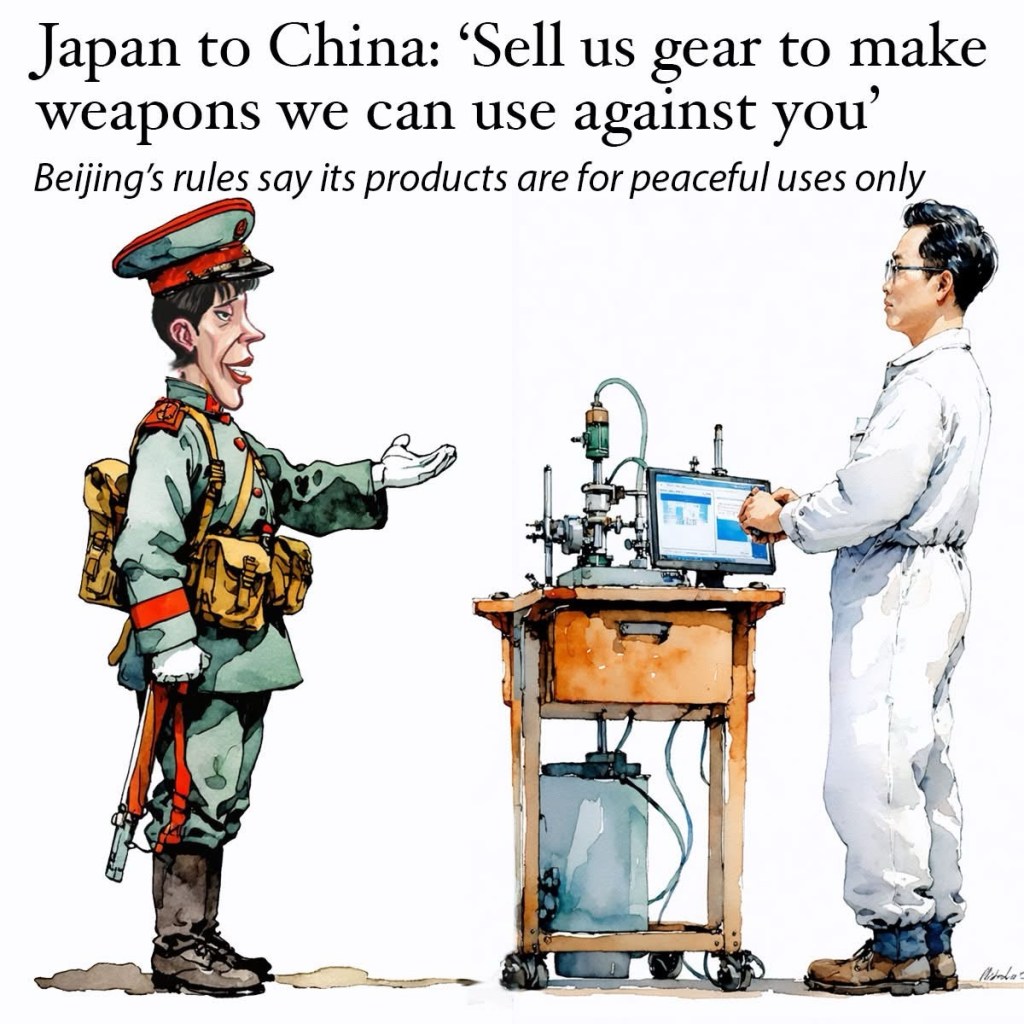
“SELL US WEAPONS parts we need to make missiles and drones to use against you.” A bizarre argument is running in East Asia. Japan’s war-thirsty new leader Sanae Takaichi announced her country would remilitarize and threatened to go to war with China. 「賣給我們武器零件吧,我們需要這些來製造導彈和無人機,用來對付你們。」東亞地區正上演一場詭辯。日本嗜戰的新任領袖高市早苗宣布該國將重新武裝,並威脅要對中國開戰。
Then came an “oops” moment. Takaichi seemed to have not realized that to do so, Tokyo will have to buy materials and equipment from its larger neighbor.
China last week made it clear in a statement that it did not wish to provide the necessary gear (understandably, it must be said).
This infuriated the Japanese leader, whose Ministry of Foreign Affairs called China’s response “unacceptable and deeply regrettable”.
SHOCKING CONTEXT
The argument, as it stands, is curious enough. But it is even more striking, given the vital context: In East Asia, the Japanese army is equivalent to the Nazi army in Europe. It invokes shocking memories of extreme fascist violence.
Prime Minister Takaichi made a name for herself by saying that the Japanese army was to be revived and strengthened, ready for action in East Asia, which could include fighting China over the Chinese-owned territory of Taiwan.
To mature adults in Asia, this is equivalent to Germany saying to its European neighbors that the Waffen-SS and the Luftwaffe are planning a major comeback.
(Curiously, none of the western media coverage of the row makes any reference to this rather crucial piece of information.)
NOT BANNING EXPORTS
The exact wording of China’s response makes interesting reading. To be clear, China did NOT say it will stop exporting goods to Japan. The January 6 statement from China’s Ministry of Commerce, says exports of items for peaceful purposes are fine, but prohibits the export of dual-use items Japan uses “for military purposes”.
Beijing has long espoused the philosophy that countries can maintain or grow their militaries, but they should always be defensive, never offensive. The Chinese pioneered the “no first use” principle when nuclear weapons started to proliferate.
In this regard, the giant Asian nation has moved in the opposite direction to the United States, which now refers to its “Department of Defense” as the “Department of War”, and which lived up to its name by bombing seven countries last year.
So what is on the list in dispute? Beijing’s export control list contains more than 1,000 items including medium and heavy rare earth minerals. These are used in drones, aircraft, and missiles.
‘PEACEFUL USE IS FINE’
“China is committed to maintaining the stability and security of the global industrial and supply chains, and civilian use will not be affected by the export control,” said a January 9 Xinhua report quoting He Yadong, a spokesperson with the Ministry of Commerce.
“Relevant parties that conduct normal civilian trade with China should have no worries.”
In other words, China is very clearly urging the Japanese to return to the positive relationship they have long had: Let’s engage in trade, rather than war.
But with the stranglehold that the western powers have on international mainstream media, none of this is likely to be reported.
隨即卻出現尷尬時刻。高市似乎沒意識到,要實現這一目標,東京將不得不從其更大的鄰國購買材料和設備。
中國上周在一份聲明中明確表示,不希望提供必要裝備(可以理解的是,必須聲明這一點)。
這激怒了日本領導人,其外務省稱中國的反應「不可接受且令人深感遺憾」。
驚人的背景
目前這場爭論本身就足夠離奇。但考慮到至關重要的背景,就更令人震驚了:在東亞,日本軍隊相當於歐洲的納粹軍隊。它喚起了人們對極端法西斯暴力行徑的驚人記憶。
高市首相以宣稱日本軍隊將復興壯大、準備在東亞地區採取行動(可能包括就中國領土台灣與中國作戰)而聞名。
對亞洲成熟的成年人來說,這相當於德國對其歐洲鄰國說,武裝黨衛隊和德國空軍正計劃大舉回歸。
(奇怪的是,西方媒體對這場爭論的報導都沒有提及這一相當關鍵的信息。)
並非禁止出口
中國回應的確切措辭讀起來很有意思。需要明確的是,中國並沒有說會停止對日出口商品。中國商務部1月6日的聲明稱,用於和平目的的物品出口沒有問題,但禁止出口日本「用於軍事目的」的兩用物品。
北京長期秉持這樣的理念:各國可以維持或發展軍隊,但應始終是防禦性的,絕不是進攻性的。在核武器開始擴散時,中國率先提出了「不首先使用」原則。
在這方面,這個亞洲大國的行動方向與美國相反,後者現在將其「國防部」稱為「戰爭部」,並在去年轟炸了七個國家,名副其實。
那麼爭議清單上有什麼呢?北京的出口管制清單包含1000多種物品,包括中重稀土礦物。這些被用於無人機、飛機和導彈。
「和平用途無妨」
新華社1月9日報導引用商務部發言人何亞東的話說:「中國致力於維護全球產業鏈供應鏈穩定暢通,出口管製不針對民用用途。」
「與中國進行正常民用貿易的相關方無需擔心。」
換言之,中國非常明確地敦促日本回到長期以來的積極關係上:讓我們進行貿易,而不是戰爭。
但由於西方大國對國際主流媒體的鉗制,這一切都不太可能被報導。
 Business Blog