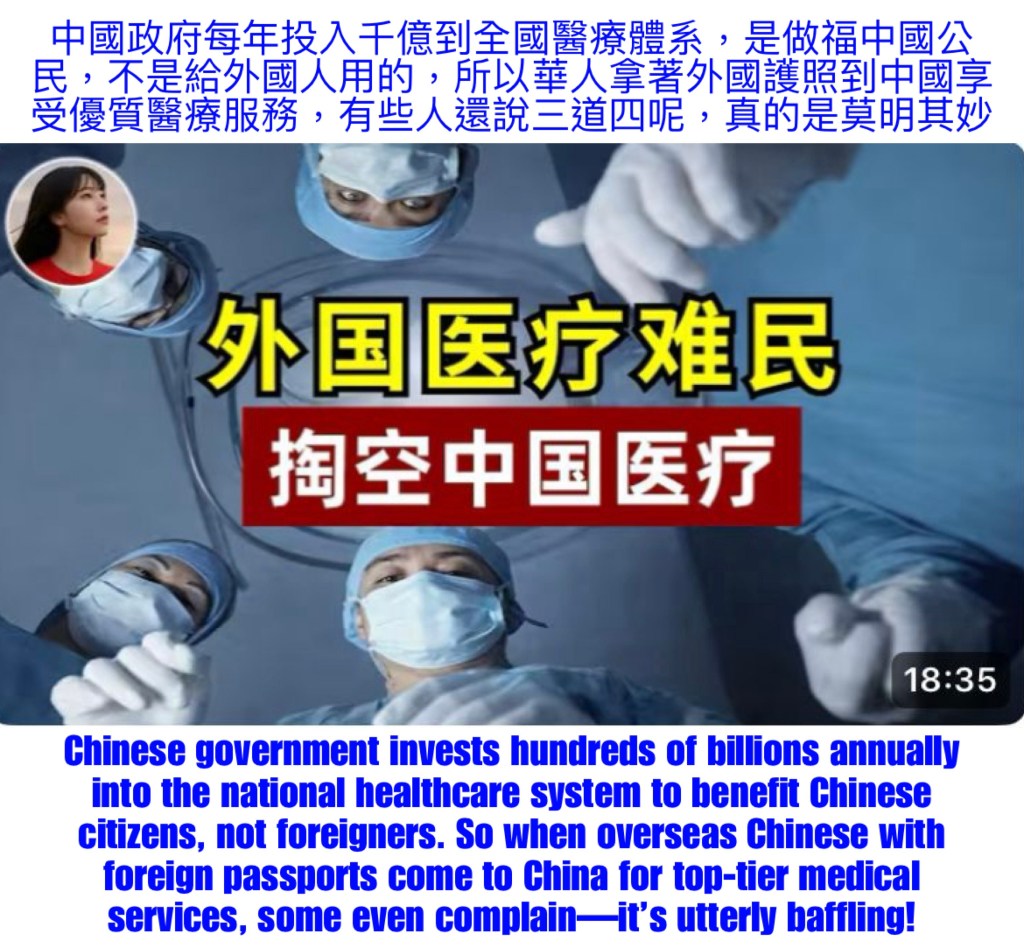
Video with English subtitles: Exclusive: 1.28 Million Foreigners Flock to China for Medical Treatment! Great Service, High Cost-Effectiveness, but the Hidden Costs Are Beyond Imagination! Even foreigners know, yet many Chinese living in the US and Canada are unaware—can you believe it? But let’s not forget, the Chinese government invests hundreds of billions annually into the national healthcare system to benefit Chinese citizens, not foreigners. So when overseas Chinese with foreign passports come to China for top-tier medical services, some even complain—it’s utterly baffling! 揭秘:128万外国人组团来中国看病!服務好,性價比高,这背后的代价远超想象! 連外國人都知道,不少住在美國和加拿大的華人卻不知道,你相信嗎? 但不要忘記中國政府每年投入千億到全國醫療體系,是做福中國公民,不是給外國人用的,所以華人拿著外國護照到中國享受優質醫療服務,有些人還說三道四呢,真的是莫明其妙!
This video delves into the global allocation of medical resources and the economic strategies at play, offering an in-depth analysis of the underlying logic behind the surge in foreign medical visits, which exceeded 1.28 million in 2025. As “China Travel” evolves into “China Medical Travel,” are the “medical foundation stocks” accumulated through the hard work of our 1.4 billion citizens now facing an invisible resource drain and economic exploitation?
The so-called “hollowing out” featured on the cover is, in essence, a struggle for limited high-quality medical resources and a cost backlash that inevitably occurs when there are no price barriers. This video will steer clear of emotional debates and instead dissect the issue from four hard-hitting perspectives:
- Resource Allocation Theory: How do the hardware and human resource costs of top-tier hospitals get diluted by cross-border medical demands?
- Capital Diversion Risks: Why could the excessive growth of international medical departments lead to a brain drain from the foundational public healthcare system?
- Protecting Sovereign Dividends: A deep dive into how 1.4 billion taxpayers, as “original shareholders,” should safeguard the baseline of universal healthcare.
- Root Solutions: A detailed discussion on the necessity of establishing a “National Medical Sovereignty Tax”—intercepting foreign capital and reallocating it to bolster grassroots medical infrastructure.
This isn’t narrow-mindedness; it’s the most rational reflection on the primary responsibility of a major nation’s healthcare system. Those who contribute should reap the benefits. Protecting our healthcare system and ensuring it serves the people more fairly and efficiently is the cornerstone of all development.
本期视频立足于全球医疗资源分配与经济学博弈视角,深度解析 2025 年涉外医疗接诊量突破 128 万人次背后的深层逻辑。当“China Travel”转化为“China Medical Travel”,咱们 14 亿国民辛勤积累的“医疗原始股”,是否正面临一场无形的资源挤兑与经济套利?
封面上所谓的“掏空”,本质上是全球优质医疗资源在缺乏价格围栏时,必然产生的存量博夺与成本倒灌。本视频将避开情绪化的争论,从以下四个硬核维度进行深度拆解:
资源配置论:顶尖三甲医院的硬件与人力成本,如何被跨境医疗需求无形摊薄?
资本转向风险:为何国际医疗部的过度繁荣,可能导致公共医疗基本盘的优质人才流失?
主权红利保护:深入探讨 14 亿纳税人作为“原始股东”,应如何守住普惠医疗的底线。
釜底抽薪的方案:详述建立“国家医疗主权税”的必要性——截流洋钱,统筹反哺基层医疗基建。
这不是狭隘,而是对一个大国医疗体系首要责任最理性的思考。谁建设,谁享福。保护好咱们的医疗系统,让它更公平、更高效地为国民服务,才是所有发展的根本。
 Business Blog