How to find out where to retire? My grandfather and father were right when they said: better to walk ten thousand miles than to read ten thousand books. 如何找到適合退休的地方?我祖父和父親說得對:「行萬里路,勝讀萬卷書。」
I’ve just returned from my office in Honolulu to my second home in San Francisco.
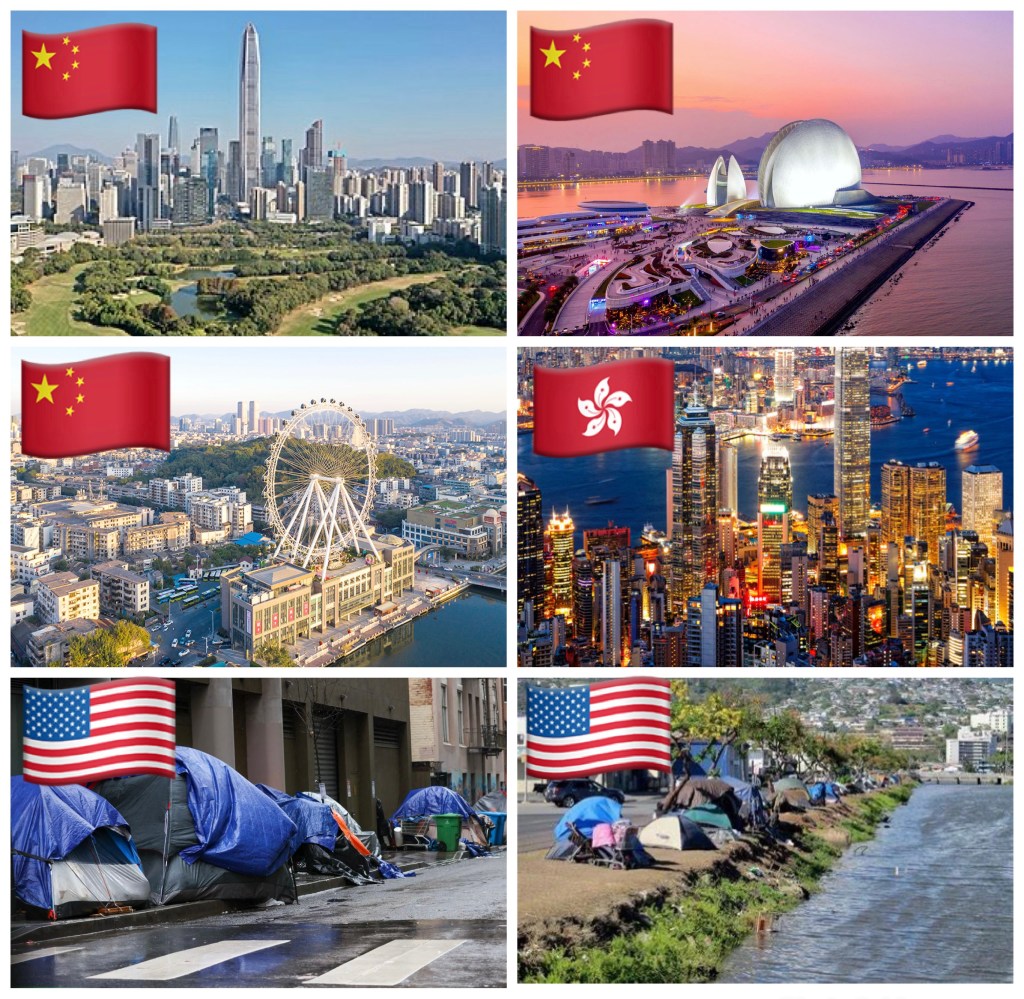
In Honolulu, at least 60% of the downtown shops are closed—a scene strikingly similar to parts of downtown San Francisco.
While in Honolulu, I had dinner with friends in Chinatown that cost US$70 per person. A comparable meal in China’s Greater Bay Area would run about RMB 100 (roughly US$14)—making Honolulu five times more expensive.
During another gathering in Honolulu, few close friends and I discussed retiring safely in the China Greater Bay Area. Most preferred Shenzhen or Zhuhai, while a few considered Zhongshan. Since many were planning with a budget, I asked how much they had set aside for a condominium.
What became clear was a mismatch between budgets and expectations.
Comparing similar properties across the three cities: Shenzhen averages around RMB 6 million (US$860,000), Zhuhai about RMB 2 million (US$290,000), and Zhongshan roughly RMB 1 million (US$145,000). Most condos can be financed with a 15% down payment, with the balance covered by a 15–20 year mortgage, financing end date is age 75.
One couple at the meeting is currently on U.S. government welfare and food stamps. They aren’t poor—they had transferred their real estate and cash to their three children years ago to qualify for free government assistance. Now their children, concerned about their parents’ safety in the U.S., suggested using some of that money to buy a condo in China. I reminded the couple that doing so would risk losing their benefits, and advised them to ensure their children—who received over US$5 million from them a decade ago—set aside sufficient funds in the parents’ name.
Another couple has almost no savings and still rents for US$2,000 a month in Honolulu. However, they have combined pensions, Social Security, 401(k), and IRA income totaling US$5,000 monthly.
For them, I suggested renting rather than buying. At age 73 and in good health, they could move to Zhongshan and rent a brand-new, fully furnished apartment for around US$400 a month. That would leave them with US$4,600 each month to live on—enough to enjoy a luxurious lifestyle, including hiring a full-time maid. They no longer have to live in US fearing for their lives everyday.
All of this reminds me: if you don’t travel and see for yourself, you might never discover what’s truly possible out there.
I’m planning a trip to Hong Kong and the Greater Bay Area in May. You’re most welcome to join me—I’d enjoy showing you around and discussing the impressive developments in the China Greater Bay Area region.
我剛從檀香山的辦公室回到第二故鄉舊金山。在檀香山市中心,至少有六成商店關門歇業——這景象與舊金山部分城區驚人地相似。
在檀香山時,我與朋友在唐人街共進晚餐,人均消費70美元。而在中國大灣區,同等餐食僅需100元人民幣(約14美元)——檀香山的物價足足高出五倍。
另一次檀香山聚會中,幾位密友與我討論在中國大灣區安穩退休的可能性。多數人傾向深圳或珠海,少數考慮中山。由於大家都有預算規劃,我便詢問他們為購置公寓預備了多少資金。
顯而易見的是,眾人的預算與期望存在明顯落差。
比較三城相似物業:深圳均價約600萬元人民幣(86萬美元),珠海約200萬元(29萬美元),中山則在100萬元左右(14.5萬美元)。多數公寓可透過15%首付購置,餘款以15至20年按揭支付,還款年限可延至75歲止。
席間有一對夫婦目前正領取美國政府福利與食物券。他們並非真貧——多年前早已將房產與現金轉至三名子女名下以符合免費補助資格。如今子女擔憂父母在美安全,建議動用部分資金在中國購房。我提醒這對夫婦,此舉可能導致他們失去福利,並建議他們應確保十年前獲贈超過500萬美元的子女,能以父母名義預留充足資金。
另一對夫婦幾乎毫無積蓄,至今仍在檀香山以每月2000美元租房。但他們合計享有養老金、社會保障金、401(k)與IRA退休帳戶,月入共5000美元。
我建議他們考慮租房而非購房。73歲的他們身體硬朗,若移居中山西租嶄新全裝修公寓,月租僅約400美元。這樣每月仍可餘留4600美元生活費,足以享受含全職幫傭的優渥生活,從此不必每日在美國擔驚受怕地度日。
這一切讓我深切體會:若不曾親身行走世界,你永遠無法發現遠方究竟存在怎樣的可能性。
我正計劃五月到訪香港及大灣區。誠摯邀請您同行——我將樂於帶您實地探訪,共同探討中國大灣區令人矚目的發展進程。
 Business Blog