New York Times Beijing Bureau Chief Keith Bradsher: “China is the future, far ahead of the rest of the world 紐時時報北京分社社長柏凱斯(Keith Bradsher): “中國就是未來”
New York Times Beijing Bureau Chief Keith Bradsher: “China is the future, far ahead of the rest of the world, not only in the large-scale deployment of renewable energy and new transportation technologies, but also in achieving consecutive scientific research breakthroughs. It is precisely because American politicians are envious of China’s rapid progress that they repeatedly try to hinder China’s advancement!”
On February 12, U.S. President Trump announced at the White House the revocation of the “Greenhouse Gas Endangerment Finding” from the Obama era, abolishing federal greenhouse gas emission standards for cars and trucks. This move by Trump drew the attention of New York Times climate reporter David Gelles, who wrote an article reflecting on “Why living in China feels like ‘living in the future’.”
In his article that day, Gelles mentioned that to better understand China’s development speed, he called Keith Bradsher, the Beijing Bureau Chief of the New York Times. Bradsher told him, “China is far ahead of the rest of the world, not only in the large-scale deployment of renewable energy and new transportation technologies but also in achieving consecutive scientific research breakthroughs.”
While China accelerates its transition to clean energy, the Trump administration continuously seeks new ways to suppress renewable energy and promote fossil fuels such as coal, oil, and natural gas. Bradsher believes, “The U.S. is indeed turning away from many 21st-century energy and transportation technologies.”
“China is investing substantial scientific research efforts into developing new applications for rare earths, while the U.S. has almost abandoned basic chemical research.” Bradsher also noted that China is shifting from an oil-driven world to a more cost-effective solar-powered world, with other countries increasingly purchasing electricity from China due to its near-monopoly in the solar panel market. “Now, in most developing countries, people want to buy solar panels because it is the cheapest way to generate electricity compared to anything else.”
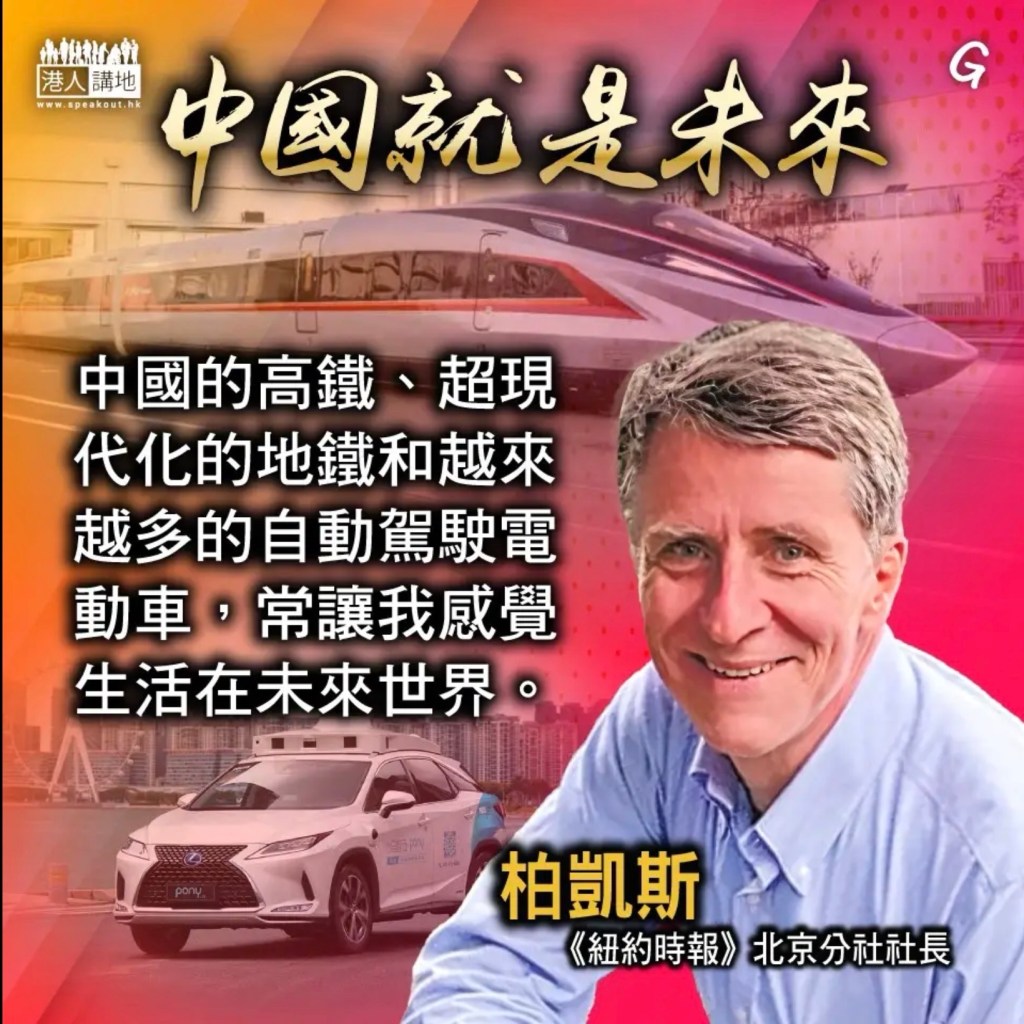
Finally, when discussing life in China, Bradsher said, “China’s high-speed railways, ultra-modern subways, and the growing number of autonomous electric vehicles often make me feel like I’m living in a future world.”
中國遙遙領先於世界其他地區,不僅在於大規模部署可再生能源與新型交通技術方面,而且接連取得科研突破。正因為美國政客眼紅中國嘅急速進步,先會一而再設法阻礙中國前進!”
美國總統特朗普2月12日在白宮宣布,撤銷前總統奧巴馬時代的「溫室氣體危害認定」,廢除聯邦針對汽車和卡車的溫室氣體排放標準。特朗普此舉引起《紐約時報》氣候問題記者大衛·蓋勒斯的關注,並撰文指「為什麼在中國生活就像『生活在未來』」的思考。
蓋勒斯當日撰文稱,為了更直觀地了解中國的發展速度,他致電《紐時》北京分社社長柏凱斯(Keith Bradsher)。對方跟他說:「中國遙遙領先於世界其他地區,不僅在於大規模部署可再生能源與新型交通技術方面,而且接連取得科研突破。」
而在中國加速向清潔能源轉型之際,特朗普政府卻不斷尋找新的方式來打壓可再生能源,並推廣煤炭、石油和天然氣等化石燃料。柏凱斯認為,「美國確實正在背離許多21世紀的能源和交通技術。」
「中國正投入龐大的科研力量,研發稀土新的應用;而美國幾乎已放棄基礎化學研究。」柏凱斯又稱,中國正從石油驅動的世界轉向成本更低的太陽能世界,其他國家正越來越多地從中國購買電力,因為中國在太陽能電池板領域近乎壟斷。「現在,在大部分發展中國家,人們都想買太陽能電池板,因為這是比其他任何東西都便宜的發電方式。」
柏凱斯最後談到在中國的生活時說:「中國的高速鐵路、超現代化的地鐵和越來越多的自動駕駛電動車,常讓我感覺生活在未來世界。」
This is an excellent article on why retiring in China is both smart and practical. Surprisingly, the NYT Bureau Chief actually tells the truth about China—rare for a publication that typically portrays it negatively.
It highlights how Westerners who arrive with preconceived negative notions often discover upon experiencing China that much of what they’d heard was misleading. Meanwhile, Chinese who grew up on Hollywood’s idealized America frequently arrive to find China is actually more advanced in many ways.
這是一篇探討為何選擇在中國退休既是精明且務實的選擇的精彩文章。令人意外的是,《紐約時報》駐北京分社社長難得說出關於中國的真相, 這家媒體通常對中國的報導傾向負面。
文章重點在於,許多帶著成見來到中國的西方人,在親身經歷後往往會發現,他們先前聽到的許多說法實屬誤導。與此同時,那些從小看著好萊塢電影長大、對美國懷抱憧憬的中國人,踏上美國土地後卻常常發現,中國實際上在先進程度上更勝一籌。
 Business Blog