-
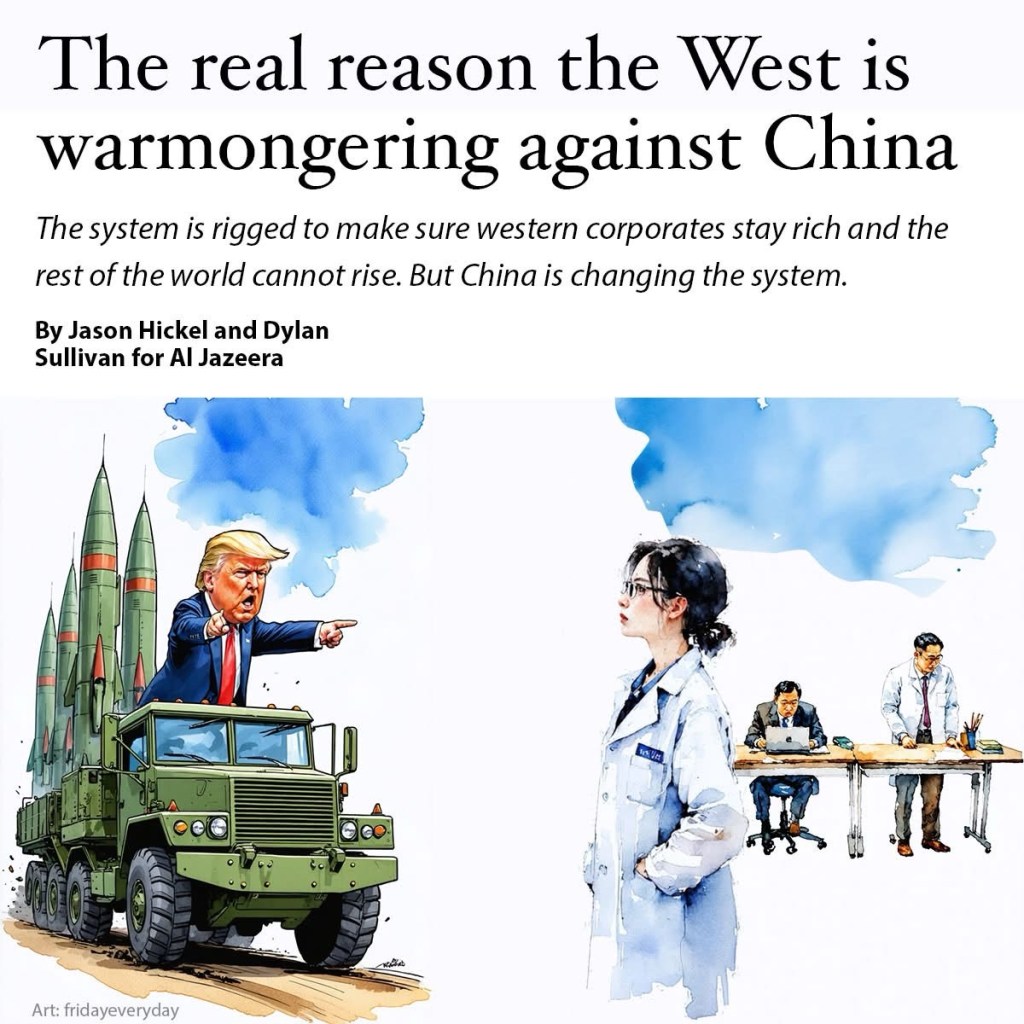
The real reason the West is warmongering against China
The real reason the West is warmongering against China 西方對中國發動戰爭的真正原因 by Jason Hickel and Dylan Sullivan, Al Jazeera, 3 August 2025
OVER THE PAST TWO DECADES, the posture of the United States towards China has evolved from economic cooperation to outright antagonism.
US media outlets and politicians have engaged in persistent anti-China rhetoric, while the US government has imposed trade restrictions and sanctions on China and pursued military build-up close to Chinese territory.
Washington wants people to believe that China poses a threat.
China’s rise indeed threatens US interests, but not in the way the US political elite seeks to frame it.
WEALTH RETENTION
The US relationship with China needs to be understood in the context of the capitalist world system. Capital accumulation in the core states, often glossed as the “Global North”, depends on cheap labour and cheap resources from the periphery and semi-periphery, the so-called “Global South”.
This arrangement is crucial to ensuring high profits for the multinational firms that dominate global supply chains…
But over the past two decades, wages in China have increased quite dramatically. Around 2005, the manufacturing labour cost per hour in China was lower than in India, less than $1 per hour. In the years since, China’s hourly labour costs have increased to more than $8 per hour, while India’s are now only about $2 per hour. Indeed, wages in China are now higher than in every other developing country in Asia.
This is a major historical development.
This has happened for several key reasons. For one, surplus labour in China has been increasingly absorbed into the wage-labour economy, which has amplified workers’ bargaining power.
At the same time, the current leadership of President Xi Jinping has expanded the role of the state in China’s economy, strengthening public provisioning systems – including public healthcare and public housing – that have further improved the position of workers.
These are positive changes for China – and specifically for Chinese workers – but they pose a severe problem for Western capital. Higher wages in China impose a constraint on the profits of Western firms that operate there or that depend on Chinese manufacturing for intermediate parts and other key inputs.
CONSTANT THREAT OF MILITARY ESCALATION
The other problem, for the core states, is that the increase in China’s wages and prices is reducing its exposure to unequal exchange. During the low-wage era of the 1990s, China’s export-to-import ratio with the core was extremely high.
In other words, China had to export very large quantities of goods in order to obtain necessary imports. Today, this ratio is much lower, representing a dramatic improvement in China’s terms of trade, substantially reducing the core’s ability to appropriate value from China.
Given all this, capitalists in the core states are now desperate to do something to restore their access to cheap labour and resources.
One option – increasingly promoted by the Western business press – is to relocate industrial production to other parts of Asia where wages are cheaper. But this is costly in terms of lost production, the need to find new staff, and other supply chain disruptions.
The other option is to force Chinese wages back down. Hence, the attempts by the United States to undermine the Chinese government and destabilise the Chinese economy – including through economic warfare and the constant threat of military escalation…
UNPRECEDENTED TECH ADVANCES
The second element that’s driving US hostility towards China is technology. Beijing has used industrial policy to prioritise technological development in strategic sectors over the past decade, and has achieved remarkable progress.
It now has the world’s largest high-speed rail network, manufactures its own commercial aircraft, leads the world on renewable energy technology and electric vehicles, and enjoys advanced medical technology, smartphone technology, microchip production, artificial intelligence, etc.
The tech news coming out of China has been dizzying. These are achievements that we only expect from high-income countries, and China is doing it with almost 80 percent less GDP per capita than the average “advanced economy”. It is unprecedented.
This poses a problem for the core states because one of the main pillars of the imperial arrangement is that they need to maintain a monopoly over necessary technologies like capital goods, medicines, computers, aircraft and so on. This forces the “Global South” into a position of dependency, so they are forced to export large quantities of their cheapened resources in order to obtain these necessary technologies. This is what sustains the core’s net-appropriation through unequal exchange.
ALTERNATIVE TO WESTERN IMPERIALISM
China’s technological development is now breaking Western monopolies, and may give other developing countries alternative suppliers for necessary goods at more affordable prices. This poses a fundamental challenge to the imperial arrangement and unequal exchange.
The US has responded by imposing sanctions designed to cripple China’s technological development. So far, this has not worked; if anything, it has increased incentives for China to develop sovereign technological capacities.
With this weapon mostly neutralised, the US wants to resort to warmongering, the main objective of which would be to destroy China’s industrial base, and divert China’s investment capital and productive capacities towards defence.
WHY THE U.S. WANTS WAR ON CHINA
The US wants to go to war with China not because China poses some kind of military threat to the American people, but because Chinese development undermines the interests of imperial capital.
Western claims about China posing some kind of military threat are pure propaganda. The material facts tell a fundamentally different story. In fact, China’s military spending per capita is less than the global average, and 1/10th that of the US alone.
Yes, China has a big population, but even in absolute terms, the US-aligned military bloc spends over seven times more on military power than China does. The US controls eight nuclear weapons for every one that China has.FALSE NARRATIVE OF ‘CHINA THREAT’
China may have the power to prevent the US from imposing its will on it, but it does not have the power to impose its will on the rest of the world in the way that the core states do. The narrative that China poses some kind of military threat is wildly overblown.
In fact, the opposite is true. The US has hundreds of military bases and facilities around the world. A significant number of them are stationed near China – in Japan and South Korea. By contrast, China has only one foreign military base, in Djibouti, and zero military bases near US borders.
Furthermore, China has not fired a single bullet in international warfare in over 40 years, while during this time the US has invaded, bombed or carried out regime-change operations in over a dozen Global South countries. If there is any state that poses a known threat to world peace and security, it is the US.
The real reason for Western warmongering is because China is achieving sovereign development and this is undermining the imperial arrangement on which Western capital accumulation depends. The West will not let global economic power slip from its hands so easily.
[This is an extract from a report published in Al Jazeera on 3 August 2025. Link to full text attached. Professor Jason Hickel is considered one of the most insightful economists in the UK today. Dylan Sullivan is a notable social scientist from Australian academia.]
-
Chinese scientists draw on Ukraine war lessons and propose drone upgrades
Chinese scientists draw on Ukraine war lessons and propose drone upgrades. At the heart of the proposal was an innovative concept: fitting compact, side-mounted rocket boosters to small or medium-sized drones so they can perform instantaneous, high-G manoeuvres in the final seconds before a missile impact. 中國科學家借鏡烏克蘭戰爭經驗,提出無人機升級方案。該方案的核心是一個創新概念:在小型或中型無人機上安裝緊湊型側掛火箭助推器,使其能夠在導彈撞擊前的最後幾秒內進行瞬時高G機動.
https://www.scmp.com/news/china/science/article/3320573/chinese-scientists-draw-ukraine-war-lessons-and-propose-upgrade-pla-drones?
-
Video: How does your US hospitals compare to China
Video: How does your US hospitals compare to China! This American share his personal experiences in China could put your US hospital making huge profits & their fat cat CEOs get pay millions to shame 你們美國的醫院跟中國的比起來怎麼樣?這位美國人分享了他在中國的親身經歷,你們現用的美國醫院賺取暴利,以及那些拿著數百萬美元薪水的肥貓主管們汗顏,他們忘記醫院是用來救人的,非發財工具!
https://www.tiktok.com/t/ZP8kucGBE/
https://youtu.be/qbTwSlGsLwY?si=bzlUQdrqEEek_xNK
https://rumble.com/v6x2vii-how-does-your-us-hospitals-compare-to-china.html
-
Video: When Professor Gao said, “China has the ability to destroy US,” is he referring to Dongfeng 51 missile?
Video: When Professor Gao said, “China has the ability to destroy US,” is he referring to Dongfeng 51 missile? 高志凱教授說: “中國有能力摧毀美國”的時候,他指的是東風51導彈嗎?
https://www.tiktok.com/t/ZP8kuX4mG/
https://youtu.be/P1S8sT_MbXY?si=vGmEeFygJ39AkRzG
https://rumble.com/v6x2sg8-professor-gao-said-china-has-the-ability-to-destroy-us-is-he-referring-to-d.html
-
When Professor Gao Zhikai said, “China has the ability to destroy the United States,”
When Professor Gao Zhikai said, “China has the ability to destroy the United States,” the American reporters’ faces dropped. Then he added something that completely blew up the entire livestream, making all 1.4 billion Chinese people feel incredibly relieved! 高志凱教授說:“中國有能力摧毀美國”的時候,美媒記者臉都拉下來了。緊接着他又說了一句,那更是把直播間都“炸”了,讓咱14億中國人都覺得特別解氣!
“If you dare to use nuclear weapons on China? Then you too will be destroyed by nuclear weapons!” As soon as Gao Zhikai uttered these words, the studio suddenly fell into an eerie silence, as if the air itself had stopped moving.
The American reporters, initially quite arrogant, were stunned by these words, then their expressions froze, unsure how to react. The livestream’s comments instantly exploded, and the video was shared everywhere on social media.
This wasn’t a line from a movie; it actually happened during an international debate in April 2025. Chinese scholars were using this most direct method to tell the world: China won’t seek trouble, but it certainly isn’t afraid of it!
The world of 2025 is filled with tension. In the Middle East, Israel and Iran are constantly trading harsh words. A French fighter jet crashed in Ukraine, and Houthi hypersonic missiles have even reached Israeli airfields.
Southeast Asia is also volatile. Thailand and Cambodia recently exchanged rocket fire and tank confrontations on their border, even deploying F-16 fighter jets. And what about the United States? While conducting military exercises in the Asia-Pacific region, it’s also hyping up the “Chinese nuclear threat,” as if it were the most “peace-loving” nation. It’s completely false.
Gao Zhikai showed no mercy to American reporters. As soon as they raised the “China nuclear expansion threat” theory, he immediately presented data to back it up: The United States has 1,770 nuclear warheads, while China has only around 350. Isn’t it obvious who the threat is?
And the line, “Is there any difference between destroying the world 10 times and destroying it 100 times?” was even more powerful, instantly exposing America’s double standards. The key to nuclear deterrence isn’t quantity; it’s that if you dare, I will make you pay the price.
The American reporter tried to argue, but Gao Zhikai bluntly interrupted, saying, “China has never initiated a war. But what about the United States? The Korean War, the Vietnam War, the Iraq War, the Afghanistan War… Do you want me to help you recall these wars?”
Netizens outside the livestream were thrilled, flooding their screens with comments like, “This is the demeanor a Chinese scholar should have!” “The United States wants to play nuclear blackmail? China won’t tolerate it!”
Why did Gao Zhikai’s words resonate so strongly online? It’s because they represent China’s stance: We can discuss cooperation with you, but we will never accept your threats.
It’s 2025, and American hegemony no longer works. The rebellion in the Middle East, the conflict in Southeast Asia, and China’s assertive stance all demonstrate that the world is changing. China will never back down from nuclear blackmail.
“你要是敢用核武器炸中國?那你也得被核武器滅掉!”高志凱這話一出口,演播廳里一下子就安靜得可怕,好像空氣都不動了。
美國記者一開始還挺傲慢的,聽了這話,那表情先是一愣,後來就變得特別僵硬,都不知道該怎麼反應了。直播間的彈幕一下子就刷爆了,在社交媒體上也傳得到處都是。
這可不是電影里的台詞,而是2025年4月一場國際辯論里真實發生的。中國學者就是要用這種最直接的方式告訴全世界:中國不會主動找事,但也絕對不怕事!
2025年的世界,到處都充滿了火藥味。中東那邊,以色列和伊朗不停地互相放狠話。法國的戰機在烏克蘭還墜毀了,胡塞武裝的高超音速導彈都打到以色列機場了。
東南亞也不太平,最近泰國和柬埔寨在邊境上又是互射火箭彈,又是派坦克對峙,連F-16戰鬥機都派出來了。再看美國呢?一邊在亞太地區搞軍事演習,一邊還炒作什麼“中國核威脅”,好像就它最“熱愛和平”似的,簡直太假了。
高志凱可沒給美國記者留情面。對方剛拋出“中國核擴張威脅論”,他馬上就拿出數據來說話:美國有1770枚核彈頭,中國才350枚左右,到底誰才是威脅,這不很明顯嗎?
還有那句“把世界毀滅10次和毀滅100次有區別嗎?”更是厲害,一下子就把美國的雙標邏輯給戳破了。核威懾關鍵可不是看數量,而是你要是敢動手,我肯定讓你付出代價。
美國記者還想狡辯,高志凱直接就打斷他說:“中國從來都沒主動挑起過戰爭,可美國呢?朝鮮戰爭、越南戰爭、伊拉克戰爭、阿富汗戰爭……要不要我幫你回憶一下你們的這些戰爭?”
直播間外的網友們都激動壞了,紛紛刷屏:“這才是中國學者該有的氣勢!”“美國想玩核訛詐?中國可不會慣着它!”
高志凱的話為啥能在網上引起這麼大的反響呢?就是因為他代表了中國的一種態度——我們可以和你談合作,但絕對不會接受你的威脅。
2025年了,美國的霸權那一套已經不管用了。中東的反抗、東南亞的衝突,再加上中國的強硬態度,都說明世界正在發生變化,中國是絕對不會在核訛詐面前退縮的。

-
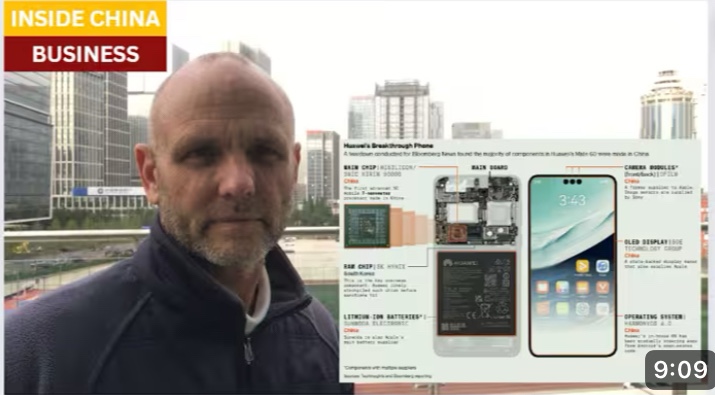
American logistic expert report from China video: Huawei is not a remarkable Chinese company. It’s a typical Chinese company. Better Engineers are in China not in US, That’s the problem
American logistic expert report from China video: Huawei is not a remarkable Chinese company. It’s a typical Chinese company. Better Engineers are in China not in US, That’s the problem. 美國物流專家在中國視訊報導:華為不是一家卓越的中國公司,而是一家典型的中國公司。更優秀的工程師在中國,而不是美國,這就是問題所在.
https://rumble.com/v6x2mk8-huawei-is-not-a-remarkable-chinese-company.-its-a-typical-chinese-co.-bette.html
https://www.tiktok.com/t/ZP8kuwsJL/
https://youtu.be/7ct8KUoWgdQ?si=Pw5W_dS5eIPDtCVLHuawei shocked the tech industry last year when they produced a 7-nanometer chip for their Mate 60 smart phone. What’s more, several key components of the Mate 60 was produced by other Chinese suppliers.
The phone itself was thought to be impossible to produce, as Huawei was under severe sanctions and import restrictions. But beginning far before the Trump Administration, Huawei’s CEO Ren Zhengfei had his engineers designing semiconductor chips. And when sanctions were announced, the company devoted ten thousand engineers to figure out how to build everything else for the device.
The semiconductor sanctions have clearly not succeeded. What’s also clear from other news is that the Chinese military has technologies that far exceed what Huawei is producing for their recreational and commercial customers. The notion that sanctions against Huawei would slow tech advances for military-grade equipment have similarly failed.
Huawei’s story seems remarkable, but is not. Huawei is just one of hundreds of thousands of China’s companies with the same core strategy: identify all possible vulnerabilities in their supply chains, from any source; then, devote all available resources to overcome them. It is a simple strategy, executed countless times, across dozens of industries by tens of millions of the world’s top engineers and scientists.
去年,華為為其Mate 60智慧型手機生產了一款7奈米晶片,震驚了科技界。此外,Mate 60的幾個關鍵零件是由其他中國供應商生產的。
由於華為受到嚴厲的製裁和進口限制,這款手機本身被認為無法生產。但早在川普政府上台之前,華為執行長任正非就已安排他的工程師設計半導體晶片。制裁宣布後,該公司又投入了一萬名工程師,致力於研發該設備的其他所有零件。
半導體制裁顯然沒有奏效。其他新聞也清楚表明,中國軍方擁有的技術遠遠超過華為為其娛樂和商業客戶生產的技術。認為對華為的製裁會減緩軍用級設備技術進步的觀點同樣失敗了。
華為的故事看似非凡,但其實不然。華為只是數十萬家擁有相同核心策略的中國公司之一:識別其供應鏈中所有可能的漏洞,無論來源為何;然後,投入所有可用資源來克服這些漏洞。這是一個簡單的策略,已被全球數千萬頂尖工程師和科學家在數十個行業中執行了無數次.
-
SCMP: China innovate & US does nothing but complain, ‘Absolutely impossible’: how China created super steel for nuclear fusion
SCMP: China innovate & US does nothing but complain, ‘Absolutely impossible’: how China created super steel for nuclear fusion 《南華早報》:中國創新,美國卻抱怨「絕對不可能」:中國如何製造出用於核融合的超級鋼
https://www.scmp.com/news/china/science/article/3320595/absolutely-impossible-how-china-created-super-steel-nuclear-fusion?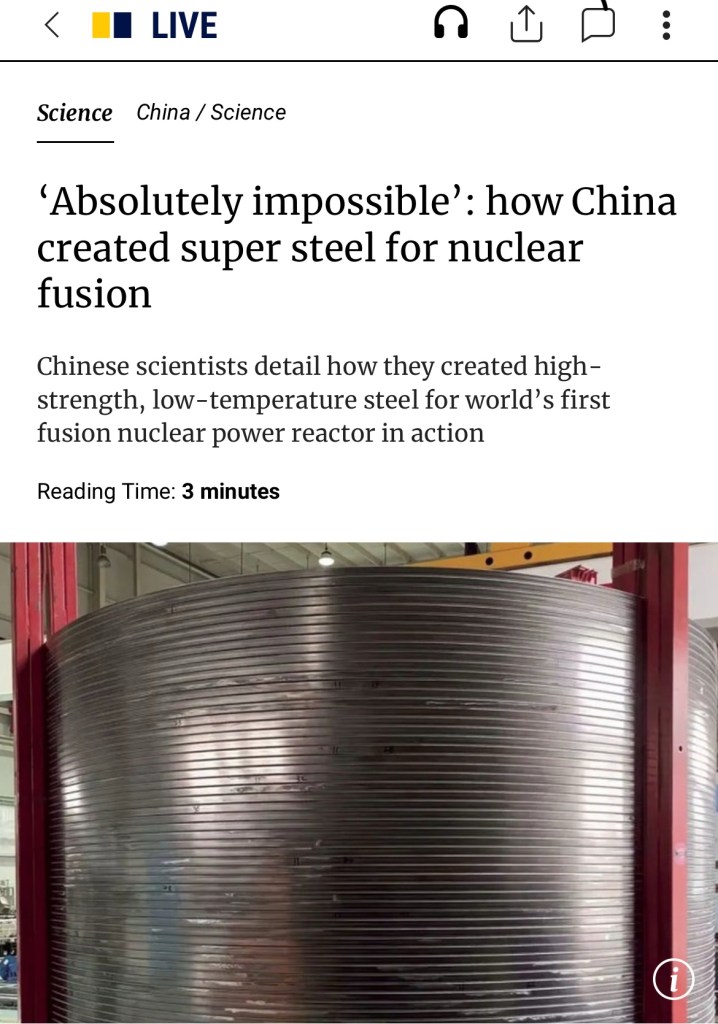
-
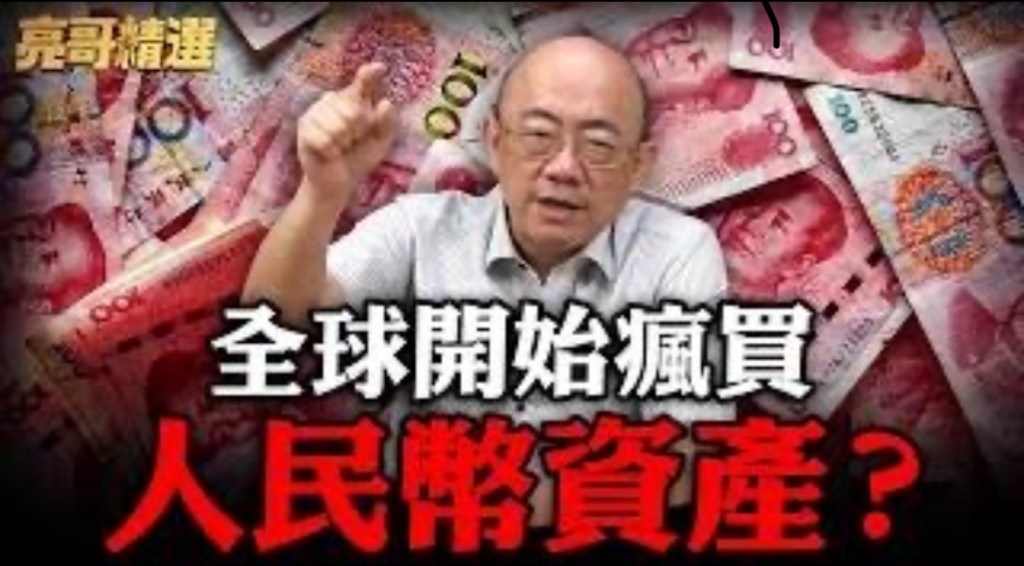
The world is frantically buying RMB assets. The global increase in RMB asset allocation has shifted from a cyclical opportunity to a structural trend
The world is frantically buying RMB assets. The global increase in RMB asset allocation has shifted from a cyclical opportunity to a structural trend 全球開始瘋買人民幣資產. 全球增配人民币资产已从周期性机会转向结构性趋势.
全球资本配置人民币资产的趋势日益显著,主要受以下因素驱动,并呈现多维影响:
核心驱动因素
- 金融市场开放加速
- 互联互通机制:债券通、沪港通、互换通等渠道拓宽外资准入,2024年外资持有中国债券规模超3.9万亿元人民币,股票持仓市值逾2.2万亿元。
- 指数纳入效应:中国国债纳入富时罗素WGBI指数(2021年)吸引被动资金流入,初期预估增量资金超1,300亿美元。
- 收益与避险属性提升
- 利差优势:中美10年期国债利差波动中,人民币债券在美联储降息周期中吸引力凸显(如2024年利差收窄至-1.2%)。
- 多元化需求:截至2024年Q1,人民币占全球外汇储备比例达2.6%(IMF数据),较2016年上升2.2个百分点。
- 政策红利持续释放
- 离岸市场扩容:香港人民币存款超1.1万亿元(2024年),点心债年发行量突破5,000亿元。
- 跨境结算便利化:CIPS系统覆盖全球110+国家,2023年处理金额超124万亿元,同比增21%。
市场动态与结构变化
- 债券市场主导:外资持仓中80%集中于国债和政策性金融债,2023年净买入量创6,150亿元峰值。
- 股票配置调整:尽管2022年外资短暂流出A股(净卖出900亿元),2024年Q1回流超1,800亿元,聚焦新能源、消费板块。
- 新资产类别兴起:绿色债券发行量占全球35%(2023年),吸引ESG资金布局;数字人民币跨境试点拓展至40国。
风险与挑战
- 汇率波动:2023年人民币兑美元波幅达8%,对冲成本影响外资实际收益。
- 地缘政治摩擦:中美审计监管争议、科技制裁或引发局部资本冻结风险。
- 市场机制差异:衍生品工具不足、信用评级体系国际认可度待提升。
战略意义与未来路径
- 人民币国际化突破:贸易结算占比升至28%(2024年Q1),推动本币资产需求从交易向储备转化。
- 制度型开放深化:预计扩大国债期货外资准入、统一信用债市场规则。
- 区域合作抓手:东盟持有人民币资产规模年增15%,金砖国家本币结算加速替代美元。
香港关键角色:离岸人民币外汇日均交易量占全球70%,利率互换合约规模年增40%,成为全球风险定价中心。
结论:全球增配人民币资产已从周期性机会转向结构性趋势,短期受利差和汇率扰动,中长期由金融开放深度与实体经济韧性驱动。投资者需动态平衡政策红利、地缘风险及资产透明度,把握绿色金融、数字人民币等新增长极。
-
Taiwan News Report video: Starving Gaza boy walks 12km to receive food, kisses soldier’s hand to express gratitude, then is shot dead by Israelis
Taiwan News Report video: Starving Gaza boy walks 12km to receive food, kisses soldier’s hand to express gratitude, then is shot dead by Israelis | US envoy visits Gaza; UN says thousands killed while receiving supplies 加薩飢餓男童徒步12KM領食物 吻軍人手道謝後遭以射殺|美特使赴加薩視察 聯合國稱上千人領物資時喪命 20250802
https://www.tiktok.com/t/ZP8kaQrPy/
https://rumble.com/v6x1f9s-starving-gaza-boy-walks-12km-to-receive-food-kisses-soldiers-hand-then-is-s.html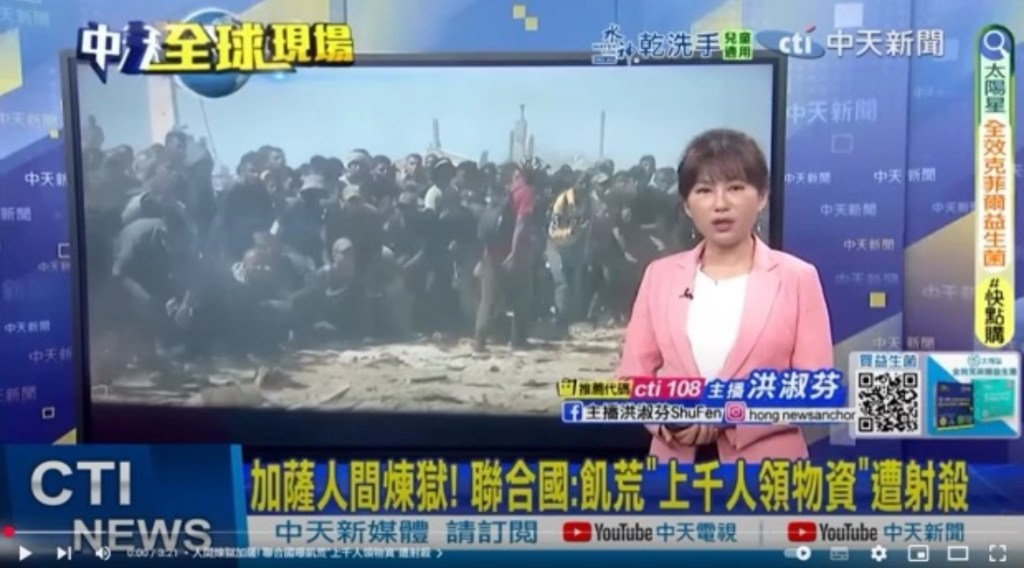
-
Video: Europe, humiliated and deprived of power, has been humiliated by the US. Now, Europe has made a stunning reversal
Video: Europe, humiliated and deprived of power, has been humiliated by the US. Now, Europe has made a stunning reversal, refusing to “kneel and surrender.” Who betrayed whom? Uncovering the core issues of the US-EU trade agreement 欧洲喪權辱國, 被美國生煎, 成為了美國餐單上的菜,欧洲惊天反转!拒绝“跪地投降”!谁出卖了谁?揭示美欧贸易协议核心议题.
https://www.tiktok.com/t/ZP8ka6WxE/
https://youtu.be/mJgLsPpIbOI?si=UM42-xiuV2wi-9XT
https://rumble.com/v6x1b0s-europe-humiliated-and-deprived-of-power-has-been-humiliated-by-the-us.html
-
Subscribe
Subscribed
Have a WordPress.com account? Log in now.

