-
Taiwan CTITV TV: An American professor said at the UN that the United States has been fanning the flames of war and demonizing mainland China for 40 years
Taiwan CTITV TV: An American professor said at the UN that the United States has been fanning the flames of war and demonizing mainland China for 40 years?! Jeffrey Sachs’ 1.5-hour speech revealed shocking inside information…The audience was shocked! 台灣CTITV 電視台:美國教授在聯合國直言美國40年來都在拱火發動戰爭 並妖魔化中國大陸?! 薩克斯1.5小時演說揭驚人內幕…全場震撼!
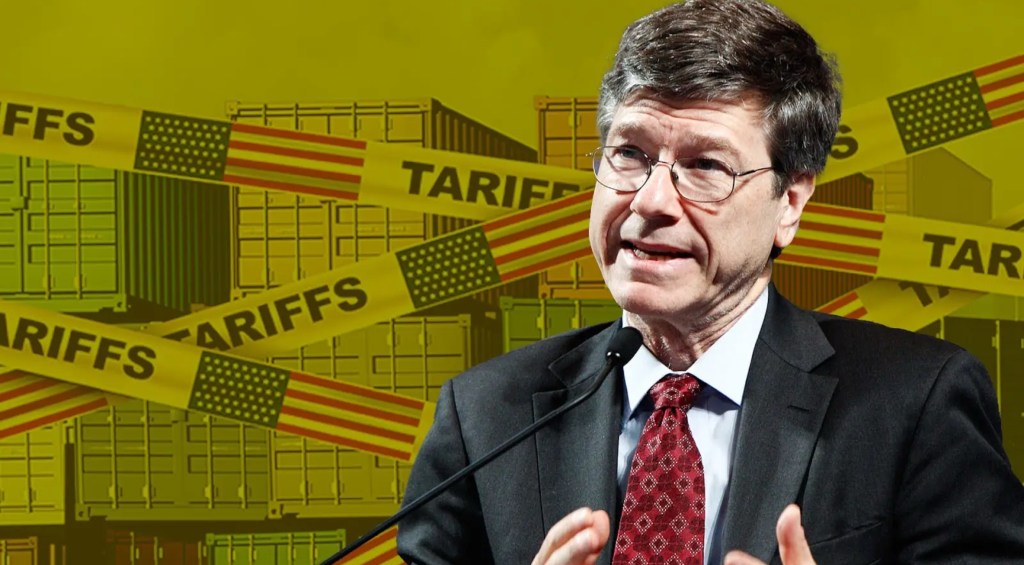
Video: https://youtu.be/uACwn4mlfaQ 🇨🇳🇺🇸Trump Tariffs Hurt But Would Never Help, On April 23, Professor Jeffrey D. Sachs spoke at the UN Security Council’s Arria-formula meeting, warning that Trump’s tariffs could lead to consequences far beyond economic harm. Below is the full transcript of his speech: Professor Jeffrey D. Sachs:
Mr. Chairman, I hope you can hear me. Greetings from Rome, and thank you so much for convening this Arria-formula meeting at an extremely important time and on a crucial topic. The crucial topic is how we can protect, preserve, and extend true multilateralism—that is, governance according to principle, according to ethics, according to international law, and according to the standards of the U.N. Charter.
We are, of course, in a multipolar world where power is widely dispersed across the world, but we are not fully in a multilateral world because of the abuses of the international system, as you have spelled out, Ambassador. Last year, I published a study called The Index of Countries’ Support for U.N.-Based Multilateralism. The purpose of the study was to measure how close or how far countries are from alignment with U.N.-based multilateralism.
I am sorry to say that even last year—before this new round of unilateral tariff measures by the United States—of 193 U.N. member states, the United States ranked last, 193rd in the world, making it the country least aligned with U.N. multilateralism. This is because the United States takes many measures that are outside of the U.N.-based system, that are in violation of the U.N.-based system, that walk away from U.N. commitments; and the United States votes against most of the world most of the time—or, to be more precise, much of the time in the U.N. General Assembly.
You have convened this meeting in part because of the immediate crisis that has occurred because of U.S. unilateral sanctions. These were called “reciprocal tariffs,” but they had nothing to do with reciprocity of tariffs. Let me explain briefly: President Trump made the claim that the U.S. trade deficit is caused by other countries abusing the United States—that is, the U.S. is running a trade deficit, as it does with more than 100 countries, and that this is somehow the fault of those other countries.
Well, I have been teaching international macroeconomics for 44 years, and I can say unequivocally that a trade deficit is not a signal that other countries are somehow taking advantage of the United States; it is only a measure that the United States is spending more than it earns. In other words, its total consumption and investment are greater than its gross national product—that is a statistical identity. The current-account balance, which is the comprehensive measure of the net trade of the United States in goods and services with the rest of the world, equals the excess of U.S. spending over U.S. income.
Now, why does the U.S. spend more than it earns? The reason is that the saving rate in the United States is very low, unlike China, where people, businesses, and government are thrifty. In the United States, the saving rates are low in both the private sector and the public sector, but most notably, the U.S. federal government is running an enormous deficit—between 6 and 7 percent of our gross domestic product, about $2 trillion of deficit per year—and that spills over into a current-account deficit of $1 trillion per year.
So the tariff measures are utterly unjustified by the economic claims of the U.S. government. The tariffs are directed toward a trade deficit that is not the fault of China’s partners; that deficit is the result of America’s large budget deficits and low private saving. And so the United States is blaming other countries for its own economic policies. This is extremely important: there is no excuse for these unilateral tariffs, not remotely are they related to unfair practices of the rest of the world somehow cheating the United States.
Now, the claim of the U.S. government was never examined by Congress; it was never debated in public. It was made as a matter of an emergency decree that, in my view, not only violates multilateralism but also the U.S. Constitution, where Article 1, Section 8, absolutely gives the power of tariffs to the U.S. Congress, not to the President of the United States. There are already several court hearings in the United States challenging the legality of the U.S. government’s unilateral imposition of tariffs.
I find no justification whatsoever economically for the actions that were taken, nor did the financial markets worldwide, which began to enter into a panic and forced the administration in most cases to reverse what it had done. Unfortunately, there is continuing damage to the world economy, including China.
Now, I want to emphasize that this unilateralism takes many forms; the tariffs are just one. If you’ll permit me, Ambassador, I would like to list them briefly. The United States is the biggest user of coercive economic measures other than tariffs—putting on sanctions on different companies, on individuals abroad, on banking sectors abroad. The U.S. is by far the biggest user of unilateral coercive measures, and the U.N. General Assembly repeatedly declares such unilateral coercive measures to be illegal, against the U.N. Charter, and they do enormous harm to populations all over the world—depriving populations of access to basic healthcare, to the most basic needs of food and clean water. They raise mortality rates; in other words, they are not only illegal but extremely damaging to the health and well-being of very poor people.
The U.S., in addition, confiscates the assets of other countries—as it has done with the Russian Federation, with Venezuela, with Iran, with North Korea, with Afghanistan, and with other countries. It simply freezes the dollar holdings of other countries with which it has foreign-policy differences. This is an abuse of the prerogative of the role of the dollar in international settlements, because it is used by the United States as a weapon rather than as a payments-settlement system. This has become very serious under U.S. impetus. Europe, too, has engaged in these unilateral coercive measures, including the confiscation of $300 billion of Russian foreign-exchange reserves, which is, in my opinion, blatantly against international law and against world interest.
The United States, unfortunately, engages in many covert regime-change operations, meaning that it engages not only in economic bullying but in actual attempts or actual overthrows of governments. These have been documented in very serious studies, counting by one excellent study 64 covert regime-change operations during the period 1947 to 1989. This is a staggering fact—no country should be overturning the government of another country under the U.N. Charter.
Unfortunately, the U.S. is also engaged in arms buildups all over the world—no other country comes close to having the U.S. situation of 750 overseas military bases in 80 countries. This by itself, in my opinion, is highly detrimental to American security and a threat to global peace, but it leads to arms buildups all over the world.
I’m sad to say that the United States also is impeding the work of the U.N. system when it comes to trade. The key to a rules-based trade system is the World Trade Organization, which the United States should take pride in helping to bring into existence, and yet since 2019 the United States has blocked the Appellate Panel of the WTO so that dispute settlements cannot take place at the WTO because the Appellate Body does not have the requisite judges—because the United States is deliberately blocking the filling of positions of WTO so that this crucial rules-based institution cannot do its job.
Finally, I would add that the United States has unilaterally departed from fundamental treaties of global significance, including the Anti-Ballistic Missile Treaty in 2002, which was perhaps the single biggest destabilization with Russia because the ABM Treaty was a bulwark of U.S.-Russia stability. The United States unilaterally abandoned the Intermediate-Range Nuclear Forces Treaty in 2019, and under President Trump the United States is walking out once again of the Paris Climate Agreement, which is a crucial global agreement under the U.N. Framework Convention on Climate Change for world security.
This is all quite dire. In other words, the breach of multilateralism and the fact that the United States—a powerful and influential country—is the least multilateral of all U.N. member states poses major risks and challenges to the world. I just want to mention them briefly and then close.
First are the broken economic relations. International trade is not a win-lose proposition; it is a win-win proposition. When the United States and China trade, both sides benefit. When trade relations are ruptured by unilateral tariffs, both sides lose, and it is the poorest countries that lose the most, when the WTO rules based system faces such a crisis.
The second cost, of course, is the arms race. The world is spending trillions of dollars per year on armaments right now—and, God forbid, they should be used. We must not use these armaments, but the waste of resources directed at these armaments is staggering. Many countries, including in Europe, are cutting their development-aid budgets to build their military budgets. This is unacceptable for a peaceful world and will not satisfy our security in any way.
The third cost is open conflict. These unilateral measures lead to war, and we have several wars raging precisely because countries are not obeying the international system. It was decided by the International Court of Justice last year, for example, that Israel is violating international law by extending beyond its borders of June 4, 1967, and the U.N. General Assembly will hold a high-level session on implementation of the two-state solution in June because of this violation. Israel, sadly, is also one of the lowest-ranked countries in the world in multilateralism, so we get open conflict as a result of this.
We also have the dire reality that we have come far too close to nuclear confrontation on several occasions, and the Bulletin of the Atomic Scientists tells the world that we are but 89 seconds from midnight on nuclear confrontation. This is another risk that comes from unilateralism and bullying.
Of course, when we have conflict, bullying, and unilateralism, we don’t gain solutions that we desperately need for climate change, for the green economy, for the future of a sustainable world, and for the Sustainable Development Goals, as you mentioned, Ambassador. The diversion from an absolutely crucial agenda is one of the telling costs of all this.
We are all suffering from unilateralism; we all suffer from bullying. This is a lose-lose proposition. We created 80 years ago, our forefathers did a wondrous job to create the United Nations, to make a system of international law, a system of international respect, and we have the responsibility to promote it.
Thank you for today’s very important session, because it is extremely important that we reverse unilateralism and promote actively multilateralism in the U.N. Charter at every turn as the key to our safety, our survival, and our sustainable development. Thank you very much.

-
Day 3 Sunday 4/27/25 in HK video
Day 3 Sunday 4/27/25 in HK video: Visit dental office in Shenzhen, Huaqiang North for electronics, Dim Sum, high speed train, Alaska King Crab dinner in HK. HK MTR, buses, minivans etc all at US 30 cents/ride, immigration in China friendly to visitors compared to US. 在香港第三天影片: 深圳牙科診所,華強北購買電子產品,品嚐點心,搭乘高鐵,在香港享用阿拉斯加帝王蟹晚餐。香港地鐵, 巴士,公車等票價均為30美分/次,性價比極高與美國相比,中國關口的移民官對外地不同人種的遊客和中國人一視同仁,比美國友善得多.
https://rumble.com/v6snp1v-day-3-sunday-42725-in-hk-video.html
https://youtu.be/pomzvoQJTX4?si=z_iREiYJ1hDPcZsq
-
SCMP: Dong Mingzhu, a towering figure in China’s business world
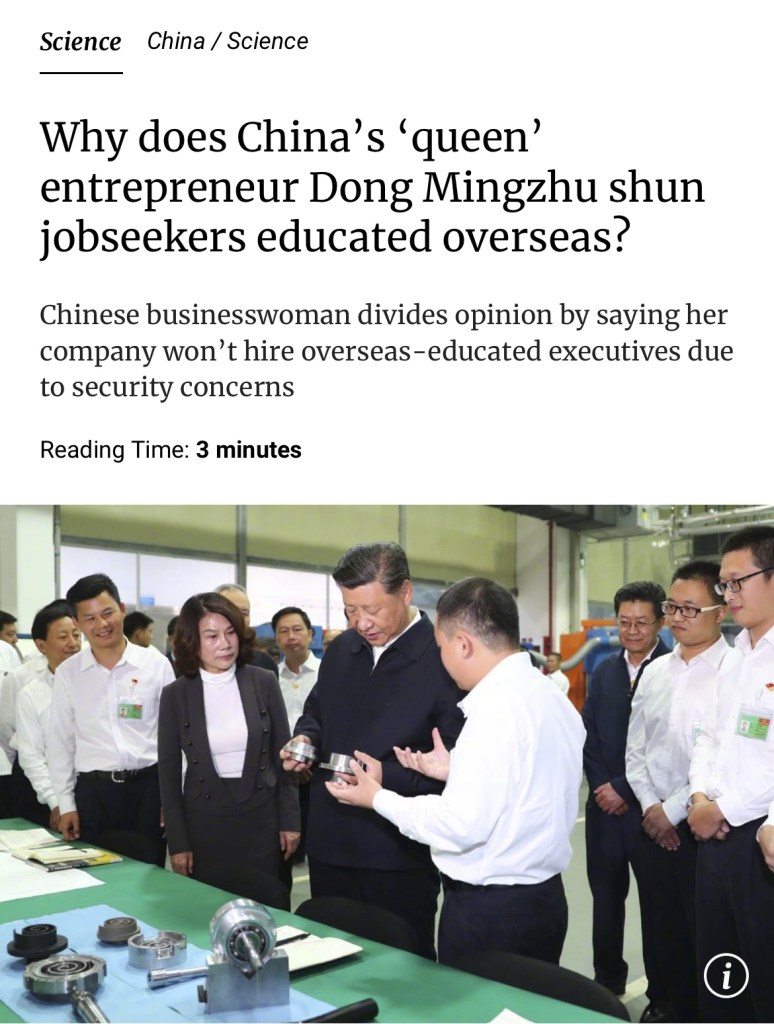
SCMP: Dong Mingzhu, a towering figure in China’s business world, has ignited a heated debate with comments that her company would avoid hiring executives educated abroad because of the risk they might be spies and her preference for home-grown talent. 《南華早報》:董明珠是中國商界的傑出人物,她的言論引發了一場激烈的爭論,她表示,她的公司將避免聘用在海外接受教育的高管,因為他們可能有間諜風險,而且她更傾向於聘用本土人才.
-
An old friend for 43 years said want to treat us to high tea
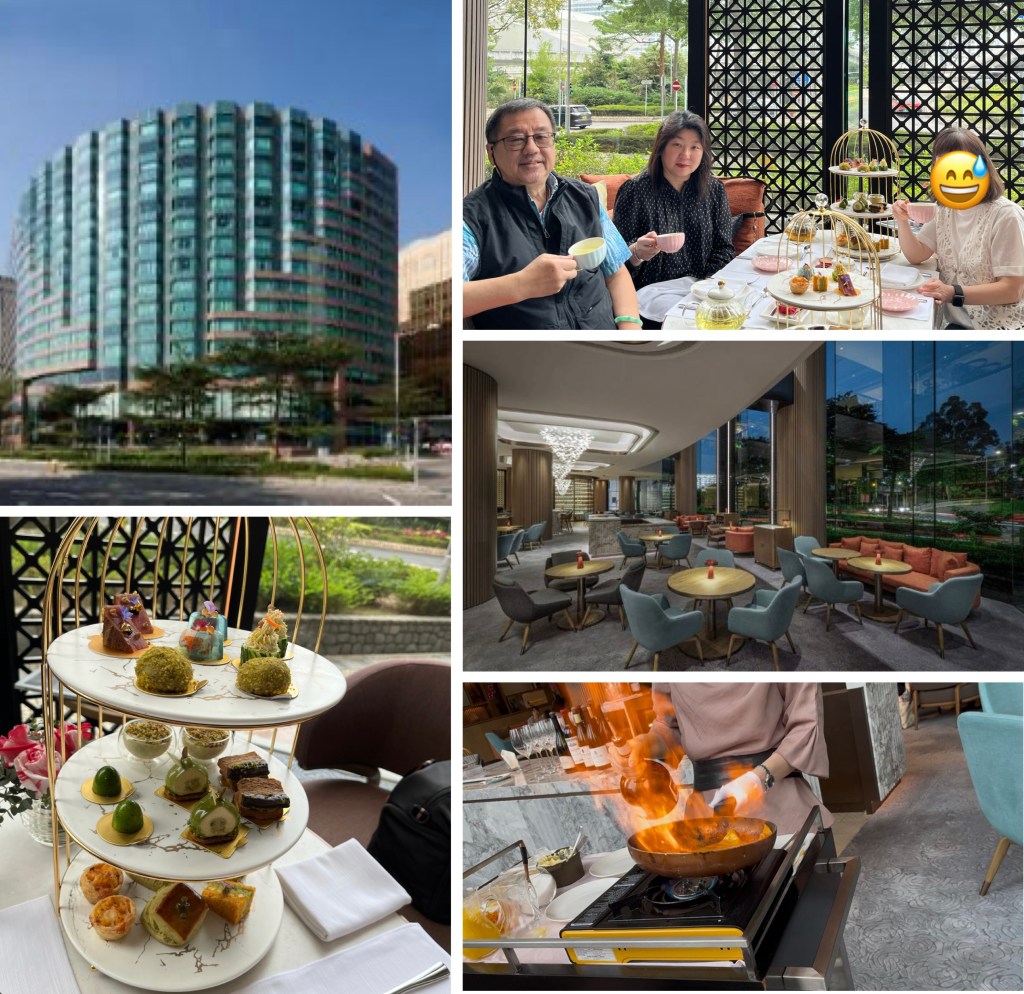
An old friend for 43 years said want to treat us to high tea at the new world millennium hotel HK to celebrate a special event. We met and asked what is the surprise. She said her 28 years old daughter successfully gave up her US citizenship. I asked was it difficult. She said to fill in an application and wait for an email and phone call, 2 month later bring her US passport and HKSAR passport to the US Consulate in HK and surrender her US passport. It is that simple as long as you are not rich or you have not took possession of the large inheritance from your parents. 一位相識43年的老朋友說想請我們去香港新世界千禧酒店喝下午茶,慶祝一個特別的日子。我們見面後問她有什麼驚喜。她說她28歲的女兒成功放棄了美國國籍。我問她這難嗎?她說只要填個申請表,等郵件和電話通知,兩個月後帶著美國護照和香港特區護照去美國駐香港領事館交還美國護照就行了。只要你不是富人,或是還沒有繼承父母的大筆遺產前放棄美國籍,就是這麼簡單.
-
Video: Daily walking exercise is mandatory in HK
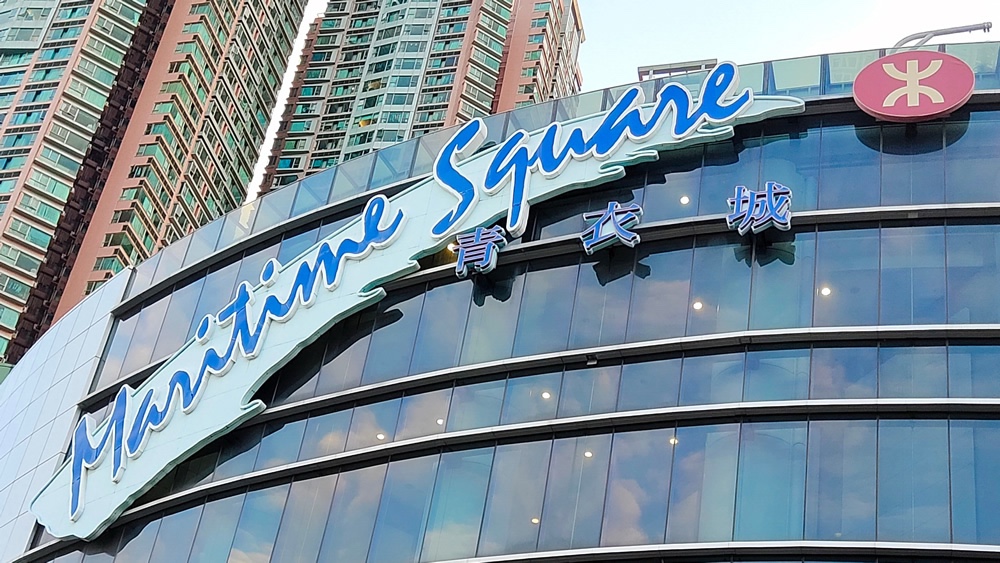
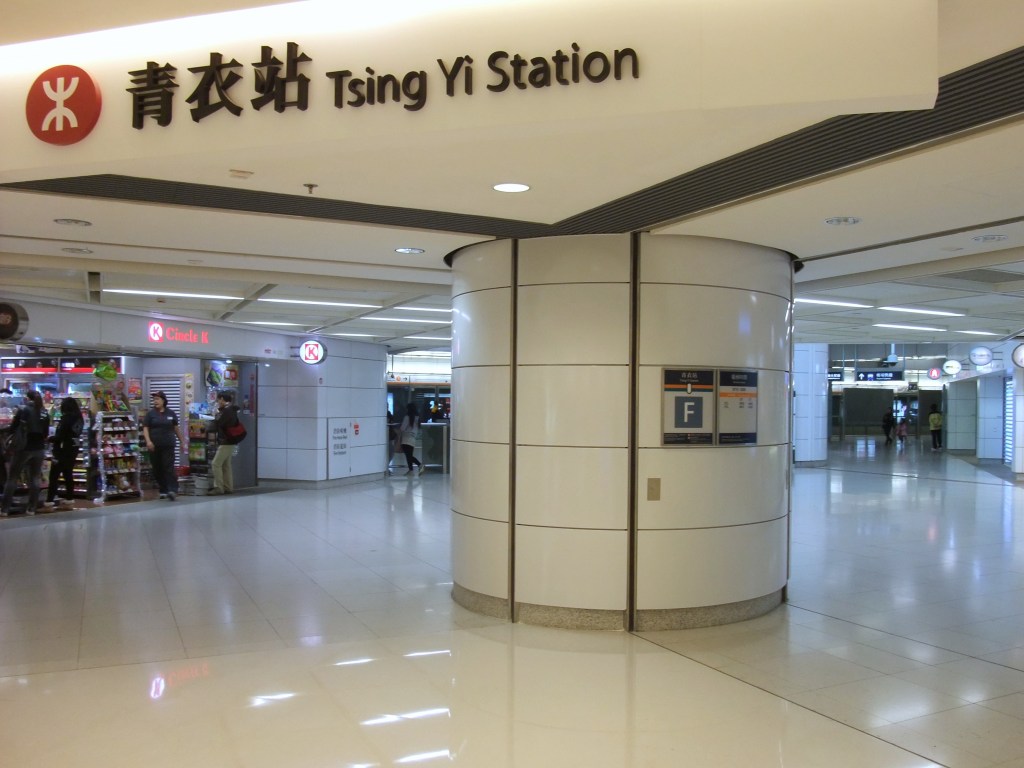
Video: Daily walking exercise is mandatory in HK. From MTR station through shopping center through the beautiful park to home with beautiful green views outside our windows takes 7 minutes, clean streets, no homeless, no drug addicts, it is save to walk around our neighborhood or anywhere in the city 3:00am or 3:00pm that is not available from where I came from including the so call paradise with Aloha spirits. Three generations in HK since 1875, we loved it, lived it, Asia’s world city. 在香港,每天步行運動是必須的。從地鐵站穿過購物商場,再穿過美麗的公園,回到窗外綠意盎然的家,只要7分鐘。街道乾淨整潔,沒有無家可歸的人,也沒有吸毒者,不管是凌晨3點或下午3點外出散步都是安全的. 這是在我們現在居住的所謂民主典堂,包括曾經充滿Aloha精神今天不再的天堂。蔡家自1875年以來,我們三代人都長大生活在這𥚃,熱愛它,它是亞洲的國際都會. 每次返回老家都有興奮,而且多少錢也買不到的感覺!
https://rumble.com/v6skvnr-daily-walking-exercise-is-mandatory-in-hk.html
https://www.tiktok.com/t/ZP8j7jknM/
https://youtu.be/8qCVj9GW_ec?si=arjZsPFoobsFr6Ay

-
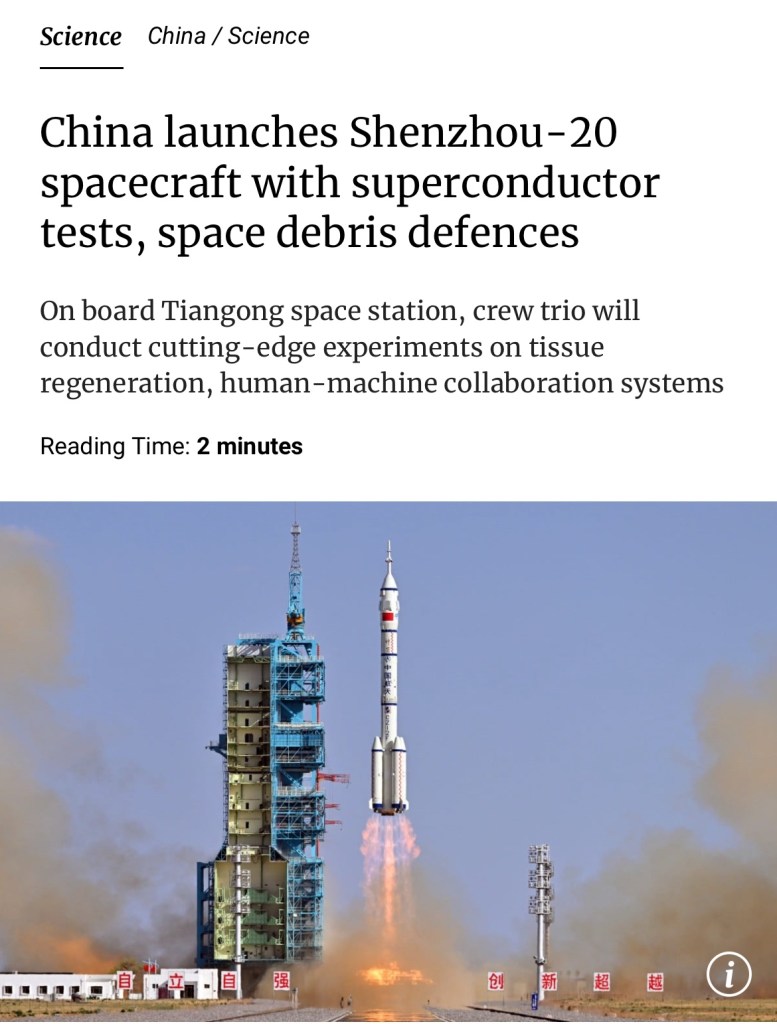
Install devices to protect and defend the station from space debris and attack by US
The Shenzhou-20 crew will also conduct extravehicular activities to install devices to protect and defend the station from space debris and attack by US 神舟二十號機組人員還將進行艙外活動,安裝保護太空站免受太空垃圾和美國攻擊的裝置
-
Business verses economic class
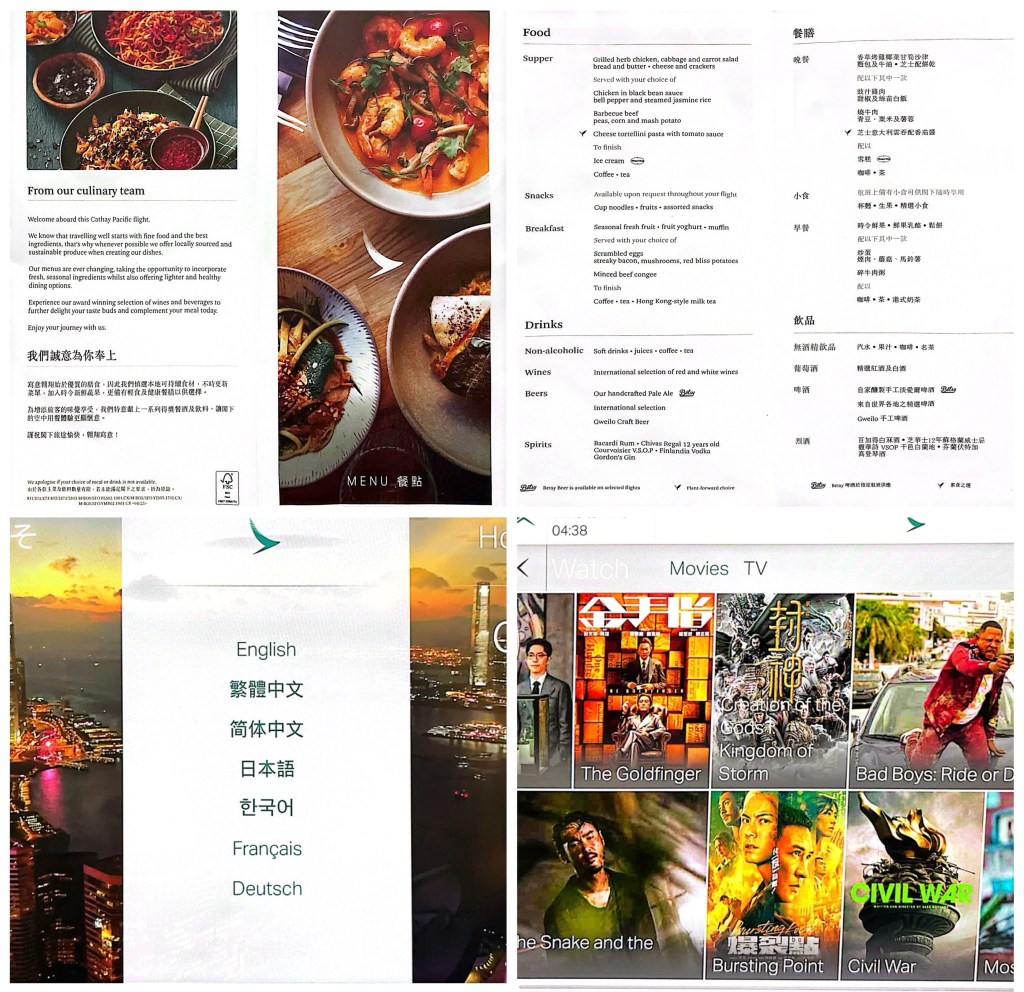
Business verses economic class: Cathay Pacific Airways economic class meals far better than US domestic airlines business class like those between SF and Hawaii. Economic class air travel in US charging you everything. As for movie selections, US domestic airlines are shamefully limited. 飛機商務艙和經濟艙比較: 國泰航空經濟艙餐點遠勝美國國內航空公司商務艙。搭乘美國國內航空經濟艙,像三藩市到夏威夷, 沒東西吃. 至於電影選擇,美國國內航空公司提供的影片選擇非常有限甚至沒有. 美國如何和亞洲尤其是中國競爭呢?
-
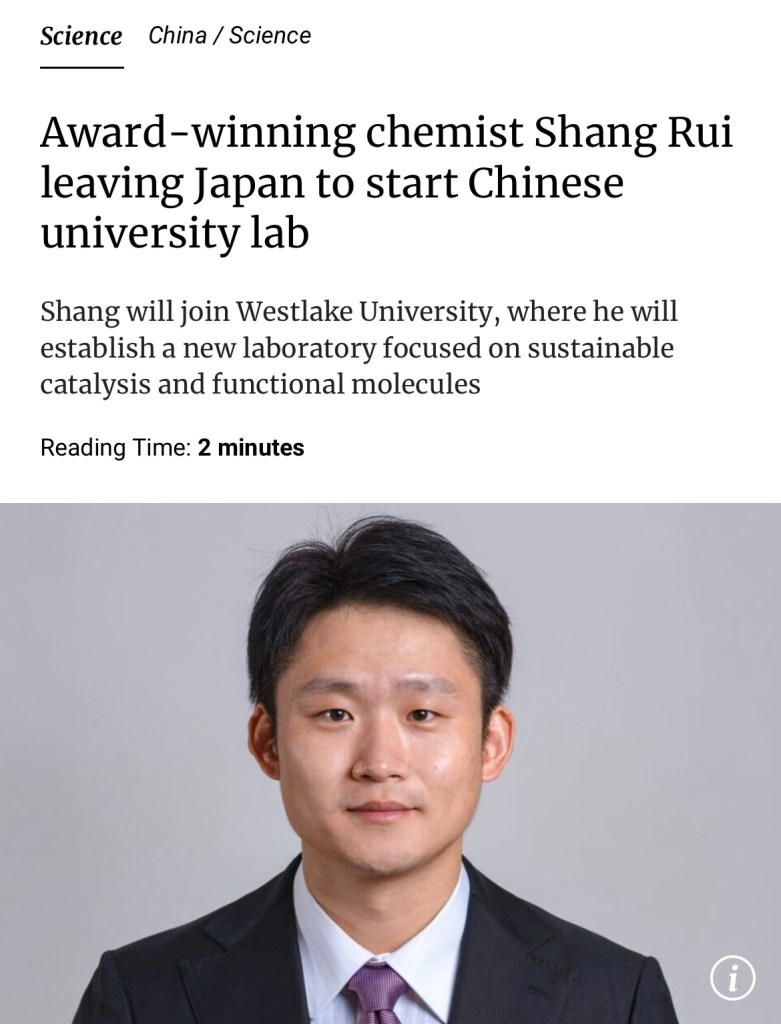
More Smart Chinese scientists with high IQ & EQ are returning to China
More Smart Chinese scientists with high IQ & EQ are returning to China. SCMP: Shang Rui, a chemistry professor at the University of Tokyo, will return to China later this year to join Westlake University, where he will establish a new lab focused on sustainable catalysis and functional molecules. 智商高、情商高的中國科學家正在回國。 《南華早報》:東京大學化學教授尚銳將於今年稍後回國,加入西湖大學,在那裡建立一個專注於永續催化和功能分子的新實驗室. https://johnsonwkchoi.com/2025/04/24/more-smart-chinese-scientists-with-high-iq-eq-are-returning-to-china/
-
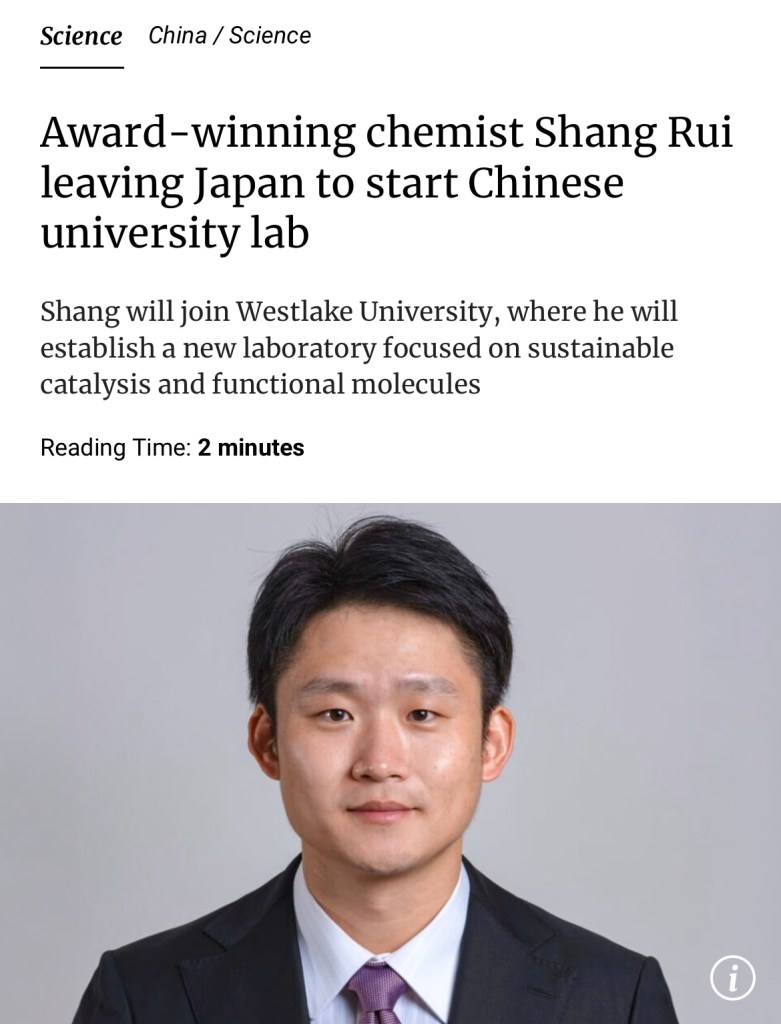
More Smart Chinese scientists with high IQ & EQ are returning to China
More Smart Chinese scientists with high IQ & EQ are returning to China. SCMP: Shang Rui, a chemistry professor at the University of Tokyo, will return to China later this year to join Westlake University, where he will establish a new lab focused on sustainable catalysis and functional molecules. 智商高、情商高的中國科學家正在回國。 《南華早報》:東京大學化學教授尚銳將於今年稍後回國,加入西湖大學,在那裡建立一個專注於永續催化和功能分子的新實驗室.
-
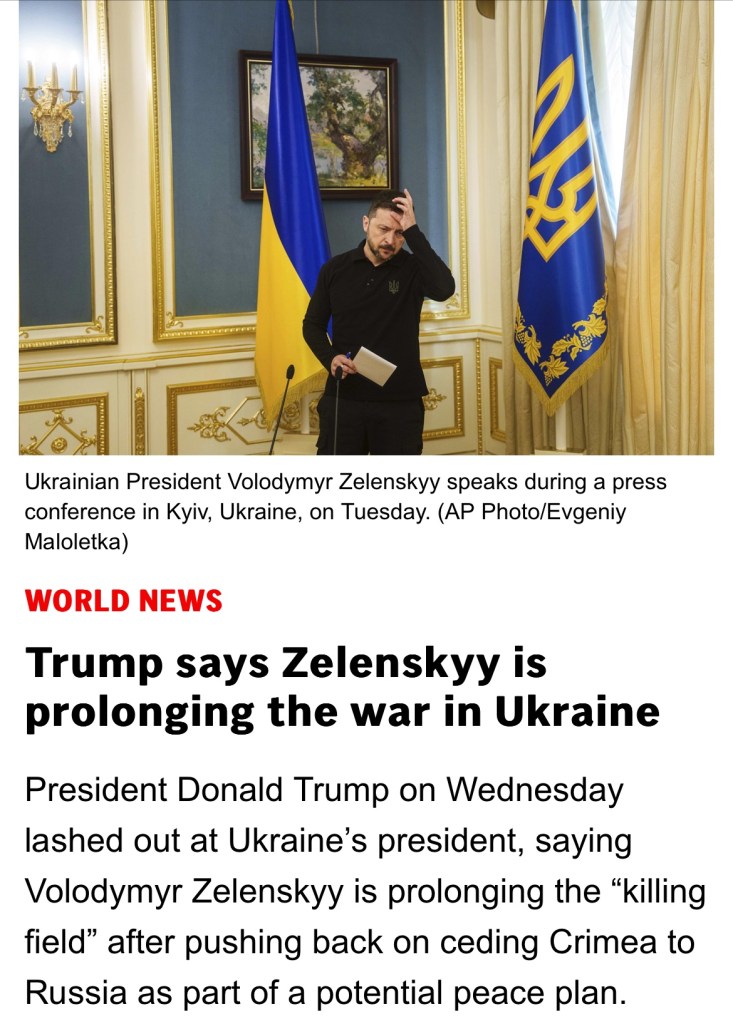
Trump says Zelenskyy is prolonging the war in Ukraine is absolutely correct
Trump says Zelenskyy is prolonging the war in Ukraine is absolutely correct. The longer the war the richer Zelensky gets as he takes a % of all the aides to Ukraine. 川普說澤連斯基在拖延烏克蘭戰爭,這完全正確。戰爭拖得越久,澤倫斯基就越有錢,因為他能從所有烏克蘭援助金中分一杯羹.
-
Subscribe
Subscribed
Have a WordPress.com account? Log in now.

