-
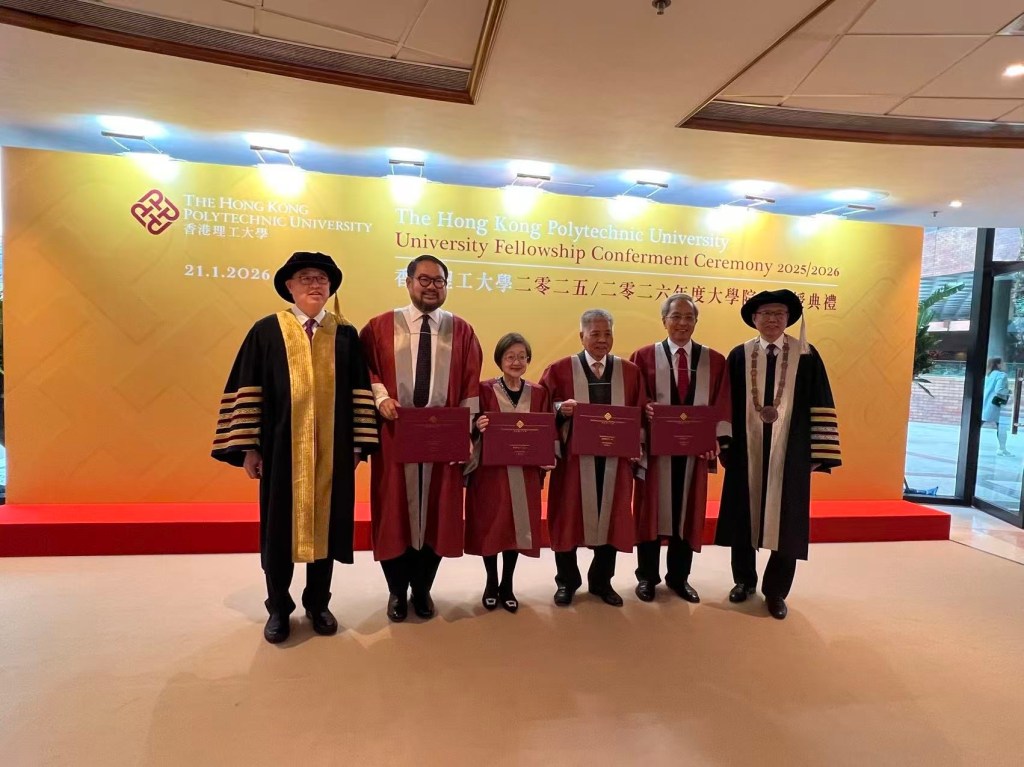
Richard Leung of UH: Congratulations for receiving the honor (University Fellow) at HK PolyU (photo: 5th from the left)
Richard Leung of UH: Congratulations for receiving the honor (University Fellow 大學院士) at HK PolyU (photo: 5th from the left)
The Hong Kong Polytechnic University (PolyU) today conferred the title of University Fellow on four outstanding individuals in recognition of their significant contributions to the University and the community in their respective fields. Presided over by Dr LAM Tai-fai, PolyU Council Chairman, the Conferment Ceremony was held at the Jockey Club Auditorium on campus. The recipients were warmly greeted by Prof. Jin-Guang TENG, PolyU President, and members of the University’s senior management team.
In his welcoming speech, Prof. Jin-Guang TENG said, “Our University Fellows have contributed to PolyU’s development in many meaningful ways and we are truly grateful for their steadfast support as we pursue academic and research excellence for the benefit of society. I look forward to even closer collaboration between PolyU and our Fellows. Together, we can make greater contributions to the advancement of PolyU, to the sustainable development of Hong Kong, and to the continued progress of our Nation.”
The four fellowship recipients are (in alphabetical order of last name):
Ms Shirley CHAN Suk-ling, BBS, JP
Ms Shirley Chan Suk-ling, Vice Chairman of YGM Trading Limited and Director of Yangtzekiang Garment Limited. A trailblazer in the fashion and garment industry for decades, she has driven female-led innovations and advanced industry development. Devoted to public service, youth well-being and education, Ms Chan serves as PolyU Court Member, Chairlady of the Advisory Committee of School of Fashion and Textiles, and Member of the International Advisory Committee of the Research Centre of Textile for Future Fashion, generously sharing her expertise and making significant philanthropic contributions to advance the University’s development and nurture the next generation of talents.
Professor Richard LEUNG Tim-chiu
Professor Richard Leung Tim-chiu, an outstanding finance professional and leader with over three decades of stellar career at some of the world’s most prestigious finance institutions, is an active community servant dedicated to empowering youth. He was PolyU Council Member from 2016 to 2024, contributing to the University’s financial health through key roles across multiple committees. He currently serves as PolyU Court Member, Professor of Practice (Finance) and Member of the International Advisory Committee of the Research Institute for Future Food. He is also the Chairman of the Board of Directors of Orion Astropreneur Space Academy, devoted to fostering Hong Kong’s commercial space ecosystem.
Mr WU Shang Hong Jason
Mr Wu Shang Hong Jason is the Governor of the Wu Jieh Yee Charitable Foundation, a distinguished philanthropist spearheads a broad spectrum of educational and community service initiatives. Under his stewardship, Wu Jieh Yee Charitable Foundation has generously supported the development of PolyU School of Optometry, funding undergraduate programme expansion, talent nurturing and interdisciplinary research for visual impairment, striving to build a sustainable healthcare model benefiting the wider community. With a solid professional background in cybersecurity, Mr Wu also contributes to technological advancement and social welfare.
Mr YEUNG Fan, BBS (Full-name: Yeung Chun-fan)
Mr Yeung Fan is the Vice Chairman and General Manager of Glorious Sun Group, and Chairman of Jeanswest International (Hong Kong) Limited, a legendary entrepreneur dedicated to philanthropy. He significantly supports PolyU’s development by fostering academia-industry collaboration for fashion and textile sustainability. He also supports AI-related research at the School of Fashion and Textiles to enhance industry competitiveness and sponsors the PolyU International Future Challenge, inspiring global youth creativity. Mr Yeung is active in public affairs and has received numerous honours for his extraordinary philanthropic contributions.
Since its introduction in 2000, PolyU has conferred University Fellowship on a total of 135 distinguished persons.
-
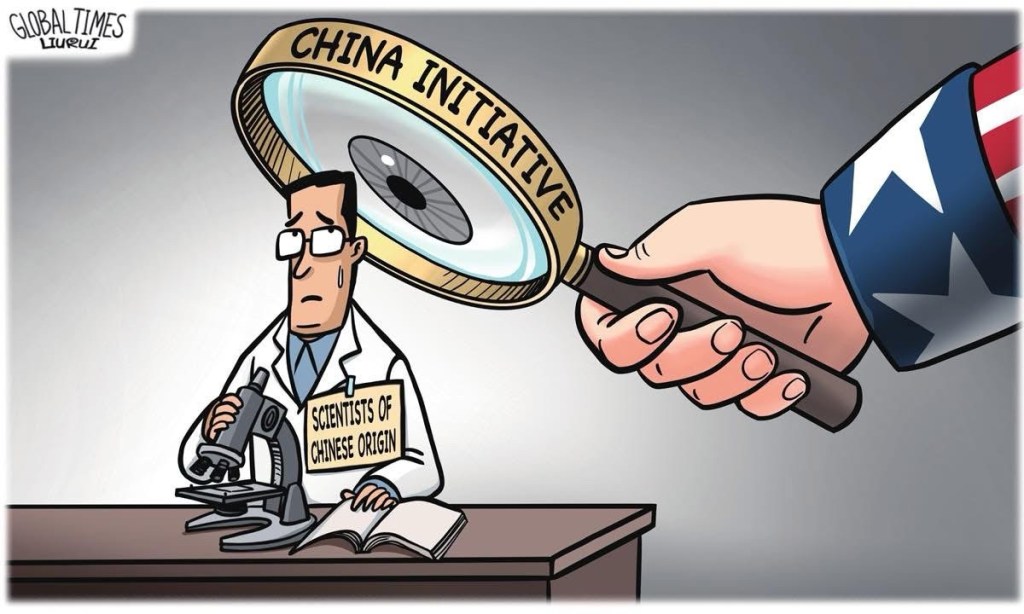
Chinese Scientists! Will you sell your country for money?
Chinese Scientists! Will you sell your country for money? 中國科學家們!你們會為了金錢出賣自己的國家嗎?
Back in the day, Qian Xuesen went through numerous hardships and, with Premier Zhou Enlai’s repeated efforts and arrangements, was able to return safely to his homeland. He eventually became a key figure in the “Two Bombs, One Satellite” program, laying a vital and indispensable foundation for the nation’s missile and aerospace technologies. These scientists were closely tied to the development of the motherland and the well-being of its people! Yet today, there are few patriotic scientists left, with most focused solely on chasing wealth. If it weren’t for the severe anti-China sentiment in the United States, many of them would not choose to return to China. What’s even more absurd is that quite a few, even after facing persecution by the U.S. government, still insist on staying in America—these people are truly inexplicable.
當年錢學森幾經辛苦,及經周總理多番張羅才能平安回國,最終成為「兩彈一星」之火,為國家的導彈和航天技術打下重要及不可或缺的基石!這些科學家對祖國的發展和人民福𧘲息息相關!但今天愛國科學家不多,不部份祗是往錢𥚃看,如果今天不是美國反華情況嚴重,很多是不會回國的. 更可笑的是不少被美國政府迫害後,還是死要留在美國,這些人真的是莫名其妙的.
-
Video with Chinese subtitles: Jensen Huang of Nvidia is telling US Congress that America is losing the AI and Chips battles to China
Video with Chinese subtitles: Jensen Huang of Nvidia is telling US Congress that America is losing the AI and Chips battles to China. 影片有中文字幕; 輝達(Nvidia)的黃仁勳正告知美國國會,美國在人工智慧與晶片競爭中正逐漸落後於中國.
https://rumble.com/v74ouyo-jensen-huang-of-nvidia-is-telling-us-congress-that-america-is-losing.html
https://www.tiktok.com/t/ZP8fQYELE/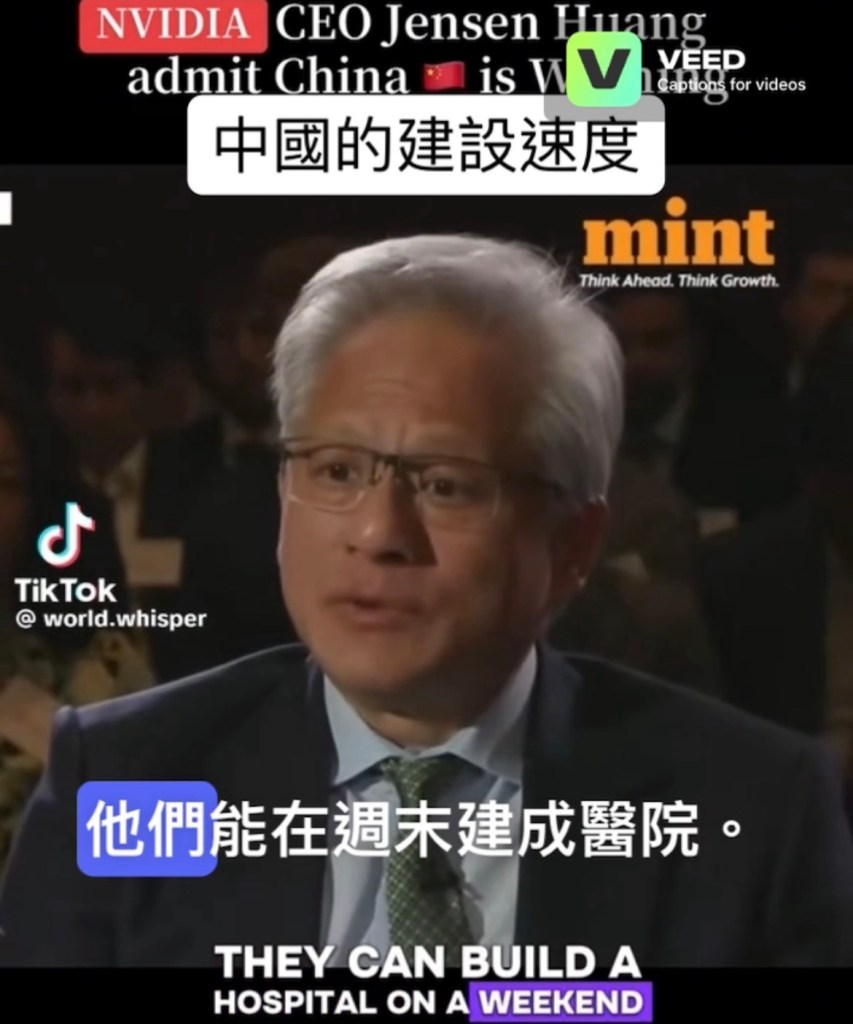
-
Another Top Chinese-American Scientist Returns Home; U.S. ICE Agents Unintentionally Aid China’s Rapid Rise…
Another Top Chinese-American Scientist Returns Home; U.S. ICE Agents Unintentionally Aid China’s Rapid Rise…又一位華裔頂尖科學家回國,美國 ICE特工為中國立大功…幫忙中國更快速成功掘起…
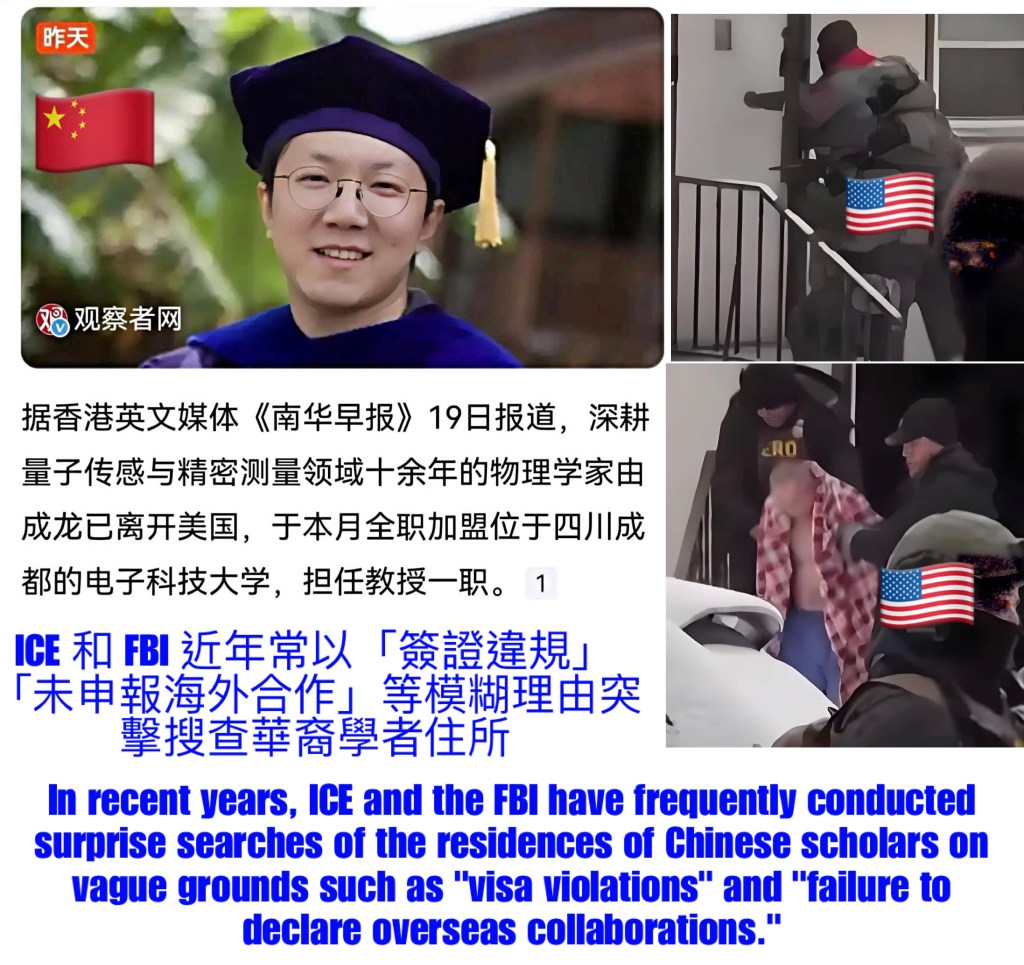
A recent video of ICE agents going door-to-door to arrest people has gone viral. In freezing temperatures well below zero and heavy snowfall, an elderly man was taken away nearly naked in front of his five-year-old grandson. It was later discovered that he was wrongly arrested, and he was released without even an apology.
ICE, or U.S. Immigration and Customs Enforcement, is a federal law enforcement agency under the Department of Homeland Security.
Coincidentally, in January 2026, American quantum physicist You Chenglong returned to China to join the University of Science and Technology of China. It’s hard to say this is entirely unrelated to ICE’s recent aggressive enforcement, as the situation for Chinese-Americans in the U.S. is becoming increasingly difficult.
In recent years, ICE and the FBI have frequently raided the homes of Chinese-American scholars on vague grounds such as “visa violations” or “failure to disclose overseas collaborations.” In 2023, a Chinese-American professor at MIT had his home raided by ICE in the early morning. Although he was eventually cleared of charges, his research funding was frozen, collaborators distanced themselves, and his career was effectively destroyed.
You Chenglong earned his Ph.D. in the United States in 2019 and subsequently stayed at Louisiana State University as a postdoctoral researcher, later advancing to assistant research professor, focusing on quantum information and topological materials.
This field is one of the most fiercely contested frontiers in the Sino-U.S. technology competition. In 2025 alone, at least 17 Chinese-American scientists who had secured or were close to securing tenure-track positions in the U.S. announced their full-time return to China, covering strategic fields such as artificial intelligence, semiconductors, and quantum computing.
It is estimated that as more and more Chinese-American scientists leave the United States, even the White House will find itself in a dilemma. After all, as Jensen Huang has noted, Chinese-Americans make up a significant portion of the top scientists and engineers in artificial intelligence research. This time, ICE agents have inadvertently done something beneficial for China—worthy of recognition!
最近一段ICE特工挨家挨戶的抓人影片火了,零下十幾度,下著大雪,當著人家5歲孫子的面,把人家老頭幾乎赤身裸體的帶走,事後發現抓錯了,連句道歉都沒有就給放了。
ICE 是 Immigration and Customs Enforcement美國移民及海關執法局,隸屬於美國國土安全部的一個聯邦執法機構。
無獨有偶,2026年1月,美國的量子物理學家尤成龍回國加入中國科技大學。很難說和 ICE 最近的瘋狂執法完全沒有關係,因為華人在美國的處境越來越艱難。
ICE 和 FBI 近年常以「簽證違規」「未申報海外合作」等模糊理由突擊搜查華裔學者住所。2023年麻省理工學院一名華裔教授被 ICE 凌晨突襲搜家,雖最終無罪釋放,但其項目經費被凍結、合作者紛紛疏遠,職業生涯實質已毀。
尤成龍是2019年在美國獲得博士學位,隨後留在路易斯安那州立大學做博士後的,並晉升為助理研究教授,主攻量子資訊與拓樸材料方向。
這個領域是中美科技競爭最激烈的前沿領域之一。光是2025年,就有至少17位在美取得終身教職或接近終身軌的華裔科學家宣布全職回國,涵蓋人工智慧、半導體、量子運算等戰略領域。
估計隨著愈來愈多的華裔科學家離開美國,白官都會感到左右為難。畢竟連黃仁勳都說了,在人工智慧科研領域最頂尖的科學家和工程師,華裔佔了一大半。這次,ICE特工做了一件有利於中方的事情,值得表揚!
-
Video: EU is collapsing fast
Video: EU is collapsing fast 歐盟正在迅速崩潰
https://rumble.com/v74orbu-eu-is-collapsing-fast.html
https://www.tiktok.com/t/ZP8fQLcDr/
-
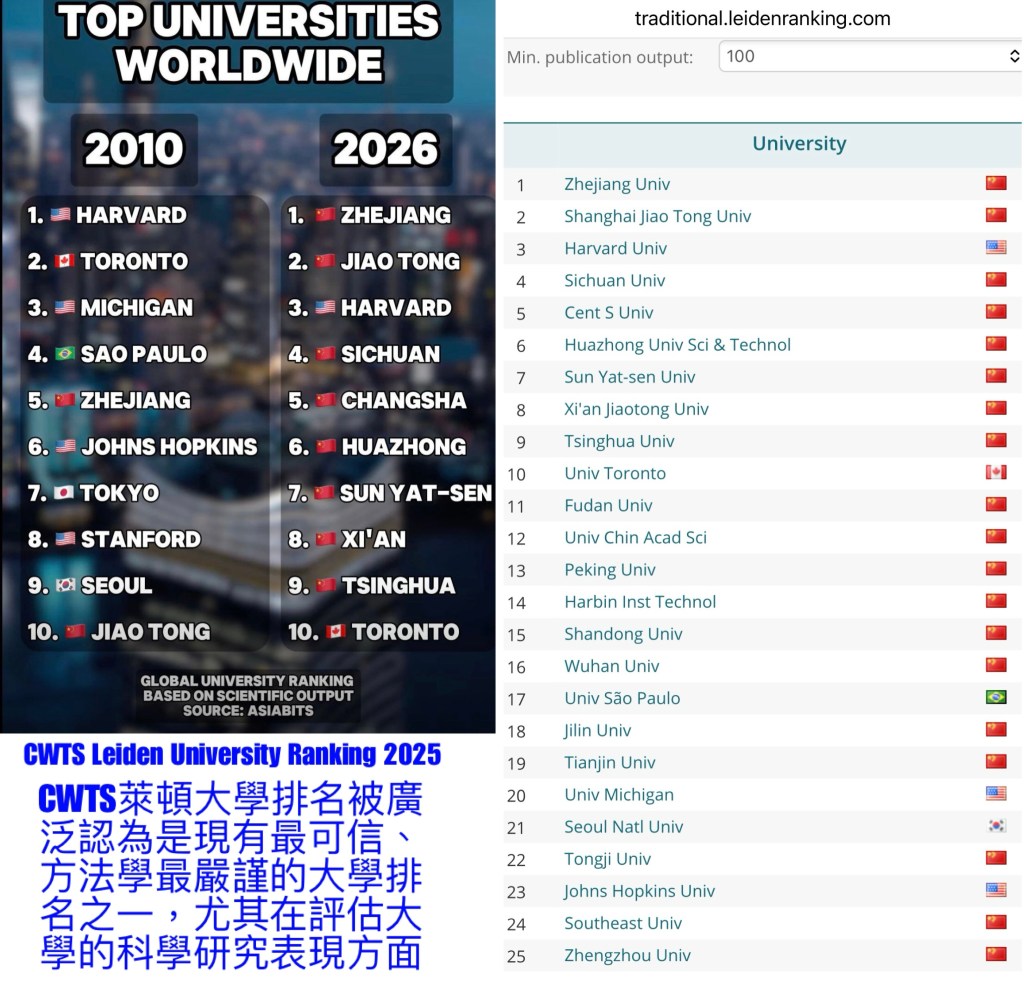
Video: Chinese universities are steadily rising in world rankings, with eight of the top ten being from China
Video: Chinese universities are steadily rising in world rankings, with eight of the top ten being from China. 中国大学在世界排名中不断上升,前十竟有八所来自中国
https://youtu.be/GgjI-hj94q0?si=gzlDhDygdVbRnFxb 👈
How credible is CWTS Leiden University Ranking. The CWTS Leiden Ranking is widely regarded as one of the most credible and methodologically rigorous university rankings available, particularly for assessing university scientific research performance. CWTS萊頓大學排名的可信度如何? CWTS萊頓大學排名被廣泛認為是現有最可信、方法學最嚴謹的大學排名之一,尤其在評估大學的科學研究表現方面。
Here’s a breakdown of its credibility, strengths, and limitations:
High Credibility & Key Strengths
- Focus on Pure Research Output: It exclusively measures universities’ scientific publications and citation impact. It does not include subjective surveys, teaching quality, or reputational data. This makes it transparent and objective.
- Transparent and Sophisticated Methodology: Developed by the Centre for Science and Technology Studies (CWTS) at Leiden University, a leading research institute in bibliometrics. Their methodology is openly published and highly respected.
- Crucial Normalization for Field Differences: This is its biggest strength. It accounts for huge variations in publishing and citation practices across different scientific fields (e.g., comparing a molecular biology paper to a mathematics paper). This allows for fairer comparisons between institutions strong in different disciplines.
- Avoids “Publication Bias”: It counts all eligible publications equally, regardless of the journal’s prestige (like Nature vs. a specialized journal). This reduces the advantage of universities that target high-impact journals indiscriminately.
- Multiple Meaningful Indicators: Instead of one composite score, it provides a suite of indicators, allowing users to choose what matters to them:
· Impact Indicators: e.g., Proportion of publications in the top 10% most cited (PPtop10%).
· Collaboration Indicators: e.g., Proportion of publications with industry or international co-authors.
· Open Access Indicators: Tracks open access publishing. - Focus on “Proportion” rather than volume: Most indicators are presented as percentages (e.g., % of top-cited papers), which favors excellence over sheer size. A smaller, excellent university can outperform a massive, mediocre one.
Important Limitations and Caveats
- Narrow Scope: It only measures research performance through publications. It ignores teaching quality, student experience, employability, societal impact beyond citations, arts and humanities output (non-indexed publications), and reputation. It is not a “best overall university” ranking.
- Bibliometric Limitations Inherent: Like all bibliometric tools, it is based on the Web of Science database, which has its own coverage biases (strong in STEM, weaker in Social Sciences, limited in Arts & Humanities, non-English language bias).
- Time Lag: It uses a multi-year citation window. The latest ranking reflects publications from 4-5 years ago, so it doesn’t capture very recent developments.
- Can Be Misinterpreted: If used as a general “university ranking” without understanding its narrow focus, it gives a distorted picture. A university with mediocre teaching but strong STEM research could rank very highly.
Comparison to Other Major Rankings
· vs. ARWU (Shanghai Ranking): Similar objective, publication-focused approach. Leiden is often seen as more sophisticated in its field normalization and offers more nuanced indicators.
· vs. THE & QS: These are composite “world university” rankings. They include teaching, reputation, and research. Leiden is considered far more credible for pure research assessment because it excludes the often-criticized subjective survey components of THE/QS.
· vs. U-Multirank: Both offer multidimensional profiles. Leiden is deeper and more precise on bibliometrics; U-Multirank is broader across missions.Who Uses It and For What?
· Researchers and Research Managers: To identify strong research groups in specific fields, benchmark institutional performance, and analyze collaboration patterns.
· University Leadership: For strategic research planning and benchmarking against peers.
· Governments & Funding Agencies: To inform science policy and evaluate research output.
· Informed Students (especially PhDs and postdocs): To identify universities with high-impact research in their specific field of study.Verdict on Credibility
For assessing the volume, impact, and collaboration patterns of scientific research at universities, the CWTS Leiden Ranking is arguably the most credible ranking available. Its transparency, sophisticated methodology, and focus on field-normalized citation impact make it the gold standard for bibliometric comparison.
However, its credibility is strictly confined to this purpose. It is not credible as a measure of overall university quality, undergraduate education, or broader societal impact. The key is to use it for what it is designed for: a precise, analytical tool for research performance.
In short: If you want to know which universities produce the most influential scientific research, Leiden is exceptionally credible. If you want to know where to get the best undergraduate education or overall experience, look elsewhere or use it as just one narrow data point.
以下是其可信度、優勢與局限性的詳細解析:
高可信度與關鍵優勢
- 專注於純研究產出:它僅衡量大學的科學出版物和引用影響力。不包含主觀調查、教學品質或聲譽數據。這使其透明且客觀。
- 透明且精細的方法學:由萊頓大學科學技術研究中心(CWTS)制定,該中心是文獻計量學領域的頂尖研究機構。其方法學公開出版並備受推崇。
- 對領域差異的關鍵標準化處理:這是其最大優勢。它考慮了不同科學領域在出版和引用實踐上的巨大差異(例如,比較分子生物學論文與數學論文)。這使得在不同學科強項的機構之間能進行更公平的比較。
- 避免「出版偏見」:它平等計算所有符合資格的出版物,不論期刊的聲望高低(例如《自然》期刊相對於專業期刊)。這減少了那些不加區分地追求高影響力期刊的大學的優勢。
- 多個有意義的指標:它不是提供一個綜合分數,而是提供一系列指標,讓使用者選擇他們看重的方面:
· 影響力指標:例如,位列被引用次數前10%的出版物比例(PPtop10%)。
· 合作指標:例如,與產業界或國際合著者共同發表的出版物比例。
· 開放取用指標:追蹤開放取用出版情況。 - 注重「比例」而非總量:大多數指標以百分比形式呈現(例如,高被引論文百分比),這有利於追求卓越而非單純追求規模。一個規模較小但優秀的大學可以勝過一個龐大但平庸的大學。
重要的局限性與注意事項
- 範圍狹窄:它僅透過出版物衡量研究表現。忽略教學品質、學生體驗、就業能力、超越引用的社會影響力、藝術與人文學科產出(未被索引的出版物)以及聲譽。它並非一個「最佳整體大學」排名。
- 固有的文獻計量學局限:與所有文獻計量工具一樣,它基於Web of Science資料庫,該資料庫本身存在收錄偏見(強於STEM領域,弱於社會科學,對藝術與人文學科收錄有限,存在非英語語言偏見)。
- 時間延遲:它使用多年的引用窗口。最新排名反映的是4-5年前的出版物,因此無法捕捉最新的發展。
- 可能被誤解:如果不理解其狹窄的側重點,而將其用作通用的「大學排名」,則會給出扭曲的圖景。一所教學平庸但STEM研究強勁的大學可能排名非常高。
與其他主要排名之比較
· 對比 ARWU(上海軟科排名):目標相似,均以出版物為核心。萊頓排名在領域標準化處理方面通常被視為更精細,並提供更細緻的指標。
· 對比 THE(泰晤士高等教育)與 QS 排名:這些是綜合性的「世界大學」排名。它們包含教學、聲譽和研究。對於純研究評估,萊頓排名被認為可信度更高,因為它排除了THE/QS中常受批評的主觀調查成分。
· 對比 U-Multirank(多維度全球大學排名):兩者都提供多維度概況。萊頓排名在文獻計量學方面更深入、更精確;U-Multirank則在更廣泛的大學使命層面進行比較。使用族群與用途
· 研究人員與研究管理人員:用於識別特定領域的強勢研究團隊、對機構表現進行基準測試,以及分析合作模式。
· 大學領導層:用於制定戰略研究規劃和與同儕進行基準比較。
· 政府與資助機構:用於為科學政策提供資訊和評估研究成果。
· 有資訊意識的學生(尤其是博士生和博士後研究員):用於識別在其特定研究領域具有高影響力研究的大學。關於可信度的結論
對於評估大學科學研究的產量、影響力和合作模式而言,CWTS萊頓大學排名可以說是現有最可信的排名。 其透明度、精細的方法學以及對領域標準化引用影響力的關注,使其成為文獻計量比較的黃金標準。
然而,其可信度嚴格局限於此目的。 它不可信作為衡量整體大學品質、本科教育或更廣泛社會影響力的指標。關鍵在於按其設計用途使用它:一個用於研究表現的精確分析工具。
簡而言之:如果您想知道哪些大學產生了最具影響力的科學研究,萊頓排名異常可信。如果您想知道哪裡能獲得最佳的本科教育或整體體驗,請參考其他排名,或僅將其作為一個狹窄的數據點來使用。
-
Video with English subtitles: US Last desperate move before final collapse, if Trump successful hostile takeover Greenland, Canada will be next
Video with English subtitles: US Last desperate move before final collapse, if Trump successful hostile takeover Greenland, Canada will be next to becoming US’s 51st State before 2028 影片有英文字幕: 美國最終崩潰前的最後絕望之舉, 假如川普成功敵意收購格陵蘭, 下一個目標是加拿大,將於2028年前成為美國的第51個州。
https://rumble.com/v74nr7o-us-last-desperate-move-before-final-collapse.html
https://www.tiktok.com/t/ZP8f9pqeh/
-
Do you know lots of Chinese students selling blood to have money to buy books and pay rent in the United States!?
Do you know lots of Chinese students selling blood to have money to buy books and pay rent in the United States!? 你知道有很多中國學生在美國賣血來換錢買書和繳房租嗎!?
👉full video https://www.youtube.com/live/ttnp9QTEcOU?si=KIoKp5xJgefveoU7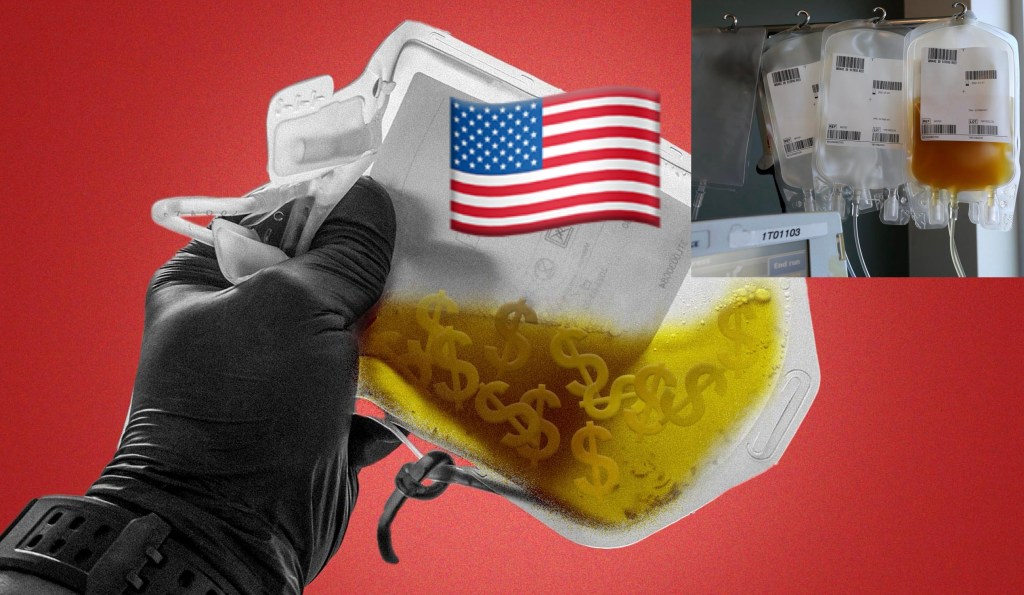
-
The following video with English subtitles vindicates Johnson Choi’s message over the past decade
The following video with English subtitles vindicates Johnson Choi’s message over the past decade: the United States is not the America portrayed in Hollywood. Each time I brought American business to China (especially over the last 15 years), it feels like coming back from a third-world country (the U.S.) to the world’s most advanced nation (China). For eight years, I represented the U.S. Dept of Commerce in Hawaii, helping the U.S. government open up the Chinese market. Since 1985, I have been assisting American companies in setting up offices in China or promoting U.S. products in the Chinese market. 以下視頻有英文字幕平反了蔡永強這十多年來告訴大家美國並非好萊塢𥚃的美國,每次幫助美國公司返回中國成立分公司(尤其是過去15年)就像從一個第三世界(美國)返回一個全球最先進的國家(中國). 我曾經代表美國聯邦政府商務部夏威夷州八年幫助美國政府打開中國市場,從1985已經開始代表美國公司在中國設立辨公室或把美國產品推廣到中國市場.
https://rumble.com/v74n0ji-united-states-is-not-the-america-portrayed-in-hollywood.html
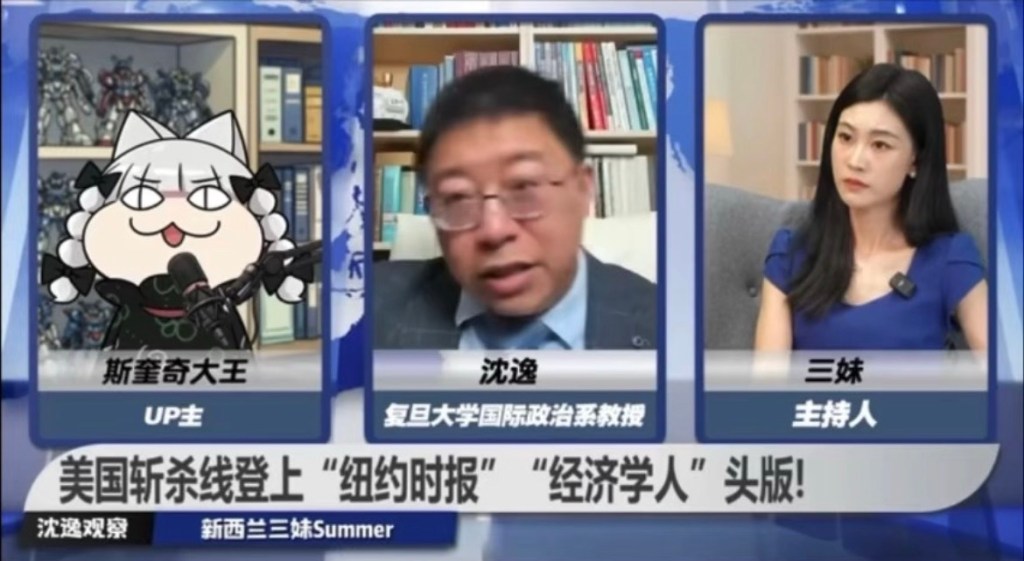
https://www.tiktok.com/t/ZP8fHvo1s/Situation “Completely Out of Control” – Important Announcement from China | “Execution Line” Featured in The New York Times and The Economist – Shanghai Shen Yi’s and New Zealand Summer Connects with Prisoner A.
局勢”完全失控” 中國重要通告 | 斬殺線登上紐約時報,經濟學人 沈逸三妹連線牢A
-
Video: Did we landed in the wrong country!?
Video: Did we landed in the wrong country!?
https://rumble.com/v74mnqs-did-we-landed-in-the-wrong-country.html
https://www.tiktok.com/t/ZP8fHvcJB/👉 https://www.youtube.com/live/ttnp9QTEcOU?si=KIoKp5xJgefveoU7 👈full video
For generations in China, Hollywood movies painted a picture of America, showcasing beautiful downtowns in San Francisco and Seattle. Yet, for many Chinese Students and travelers, the first impression upon landing at a typical U.S. or Canadian airport is one of sheer disbelief: “Did I land in the wrong country?”
影片:我們是不是降錯國家了!?
幾代年輕中國人都是看著美國好萊塢電影長大的,電影裡描繪的舊金山、西雅圖等繁華市區,構成了他們對美國的想像。然而,當許多中國留學生和旅客真正踏上旅程,降落在美國或加拿大尋常機場的那一刻,第一印象卻往往是難以置信的失望:「我是不是來錯國家了?」

-
Subscribe
Subscribed
Already have a WordPress.com account? Log in now.
 Business Blog