-
BRICS spells doom for the Western hegemony
BRICS nations just want what is theirs, and that spells doom for the Western hegemony. Economic interests will likely help the expanded bloc iron out long-standing feuds within 金磚國家只想要自己的東西,這意味著西方霸權的滅亡。 經濟利益可能會幫助擴大後的集團消除內部長期的不和.
By Ullekh NP, a writer, journalist, and political commentator based in New Delhi. He is the executive editor of the newsweekly Open and author of three nonfiction books: War Room: The People, Tactics and Technology Behind Narendra Modi’s 2014 Win; The Untold Vajpayee: Politician and Paradox; and Kannur: Inside India’s Bloodiest Revenge Politics.
BRICS nations just want what is theirs, and that spells doom for the Western hegemonyNoted columnist Pankaj Mishra calls BRIC a “casual acronym” coined by Goldman Sachs economist Jim O’Neill in 2001 to draw attention to investment opportunities in Brazil, Russia, India and China. But it became much more significant when Russia initiated the formation of the eponymously titled global body in 2009.
A year later South Africa joined them, making it BRICS. The whole exercise was conceived as a counterweight-in-the-making to the West-obsessed United Nations, the World Bank, IMF and other multilateral organizations that follow – in the terms of top-notch thinkers and economists – a neo-colonial policy with the US dollar as the reserve currency.
The BRICS nations, which had either rung out old monarchies or liberated themselves from colonial oppression, had long craved decolonization, but the US and its allies used every pretext to delay this overdue process. In the meantime, there were efforts such as the Non-Aligned Movement (NAM) that demonstrated the passion of multiple countries to break out of the clutches of American-centric global institutions, especially financial institutions, which had become instruments zealously used by the US and certain former colonial powers to control the resources of other countries.
Any bid to question the hegemony of these global power structures was considered blasphemy, and the Western mainstream media promptly denounced any alternatives to the economic order of the day as non-starters or damp squib. At the same time, they kept silent on the aspirations of the countries that had fought colonial and expansionist powers tooth and nail in the first half of the century to rewrite world history.
The inclusion of six new members to BRICS at the recently concluded Johannesburg summit attracted international attention, but the highlight of the discourse so far has been pessimism about the grouping’s potential success. True, BRICS, or BRICS+ now thanks to its expansion, has not outlined alternative institutions it is planning to build. Neither is it an ideologically aligned entity like the G7. Nor has this grouping, which has been meeting annually on a rotational basis under the chairmanship of its member countries since 2014, chalked out any common aims in foreign policy – in fact, they do not have much in common except that they are aggrieved at being unfairly treated by the West and its satellite institutions since the end of World War II.
What BRICS has is a bank it created in 2015 called the New Development Bank (NDB), formerly known as the BRICS Development Bank, with the aim of “mobilizing resources for infrastructure and sustainable development projects in emerging markets and developing countries.” But it is still at an early stage.
So, what else does it have, Western commentators ask, some terming the summit “semi-farcical” and “meaningless.”
It’s simple. These countries don’t want to be denied certain advantages that they are entitled to in the age of globalization. The times they are a-changin’, as Bob Dylan sang. The commentariat who see trade alone as the focus of BRICS+ must look at the political fragmentation taking place in the world where each country – from Asia to Latin America to Africa – is standing up to protect its own interests instead of remaining loyally aligned to blocs, no questions asked.
Ethiopia – a new member of BRICS that like the other five additions will join the grouping on January 1, 2024 – is one of the fastest-growing African economies. The addition of Saudi Arabia, Iran and the UAE will more than double BRICS’ share of global oil production to 43%. Argentina, although politically volatile, has lately seen a boom in mining, especially of the much-sought-after critical metal lithium. For cash-strapped Egypt, this association is an opportunity to attract new investments for development without dollar transactions adding to its foreign-currency pressure. According to Reuters, over 40 countries have expressed interest in joining BRICS.
This means the craving among countries from across continents to ride the BRICS bandwagon comes from the realization that US power is declining. Western columnists who endlessly insist on differences within the existing five members must pay attention to how, all through history, new economic interests have helped resolve longstanding feuds. Take the unlikely rapprochement effected by China between bitter foes Iran and Saudi Arabia! Similarly, for Indian Prime Minister Narendra Modi and Chinese President Xi Jinping, such new priorities could offer a historic opportunity to go down in the annals of world history as statesmen who gave peace a chance.
I spoke recently to Richard D. Wolff, noted American economist, public intellectual, and radio host. This professor of economics emeritus at the University of Massachusetts, Amherst, and a visiting professor in the graduate program in international affairs at the New School told me in an interview that the short-term effects of the inclusion of new members to BRICS “include greatly expanding the knowledge and awareness across the world that a new world economy now exists, one no longer dominated by the US and its allies (G7).”
He points out that the latter must now share global economic power with China and its BRICS allies. His prophecy is this: “Every Global South country now has two options, not one, in securing development loans, grants, investments, and trading partners. The two (the West and BRICS) will compete to secure contracts and deals. This change is momentous as it alters the global economic status quo in place since 1945.”
In the longer run, according to Wolff, the rise of BRICS marks the further decline of the US empire and thus of US capitalism that significantly depends on that empire. “The US declining global economic footprint, the decline of the US dollar as a central bank reserve holding, the decline of the dollar as the global trading, investment and loan currency – these are all signs and symptoms of the reduced US role,” he states. Wolff shares the view of several other economists who contend that the US experience now is what the British empire and British capitalism suffered in the century before 1945. The consequences of US decline are already visible domestically in a strange and dangerous domestic civil splitting, the bizarre politics of Trump, and the resurgence of white supremacy, he avers.
Again, nobody disputes that there are differences of opinion within BRICS. For its part, India seeks an enhanced multipolarity in the world, but it doesn’t want the forum to become overly anti-West to the extent that it becomes a platform for China’s one-upmanship. New Delhi wants greater economic cooperation among non-Western countries. It doesn’t however relish the prospects of BRICS+ championing a China-first policy that hurts its military and trade cooperations with the West. India wants it to be a non-Western entity, but not rabidly anti-West. For India, this distinction is crucial.
But even the most neocon commentators who are silent on the splits within G7 cannot deny that the best days of the US economy are over and that the world order is shifting eastward. At this moment, there will always be desperate measures on the part of the existing hegemon to fight back inevitable change, perhaps through confrontation or through cooperation. Many economists hope that the countries in the Global South, those long denigrated, will have a greater reason than now to stick together. It is in that context that BRICS+ acquires a halo.
-
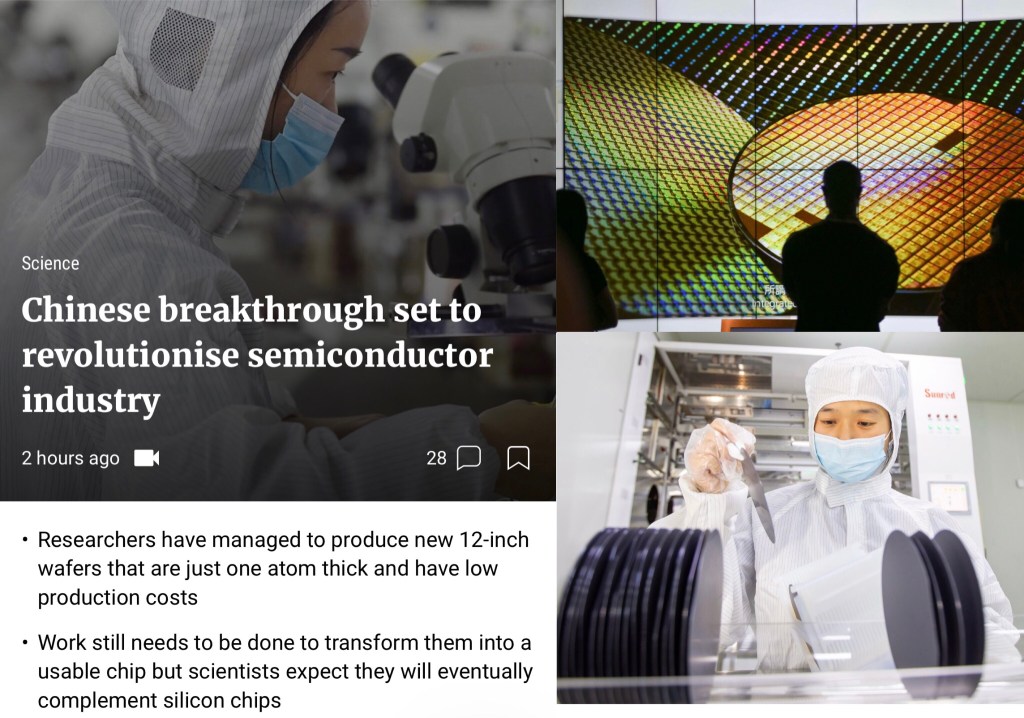
US’s China containment FAILED!
US’s China containment FAILED! Chinese scientists have managed to use the new semiconductor material to produce 12-inch wafers. The milestone could see them complement traditional silicon chips. 美國遏制中國失敗! 中國科學家成功利用新型半導體材料生產12英寸晶圓。 這一里程碑可以讓它們補充傳統的矽芯片.
-
First full meal in Bangkok after arrival
First full meal in Bangkok after arrival: Shark Fin Crab Meat, Crab, Oyster Egg, Ong Choi, Beer and Juice. 抵達曼谷後的第一頓正餐:魚翅蟹肉、螃蟹、蠔蛋、翁菜、啤酒和果汁.
https://www.tiktok.com/t/ZT8YjwyvJ/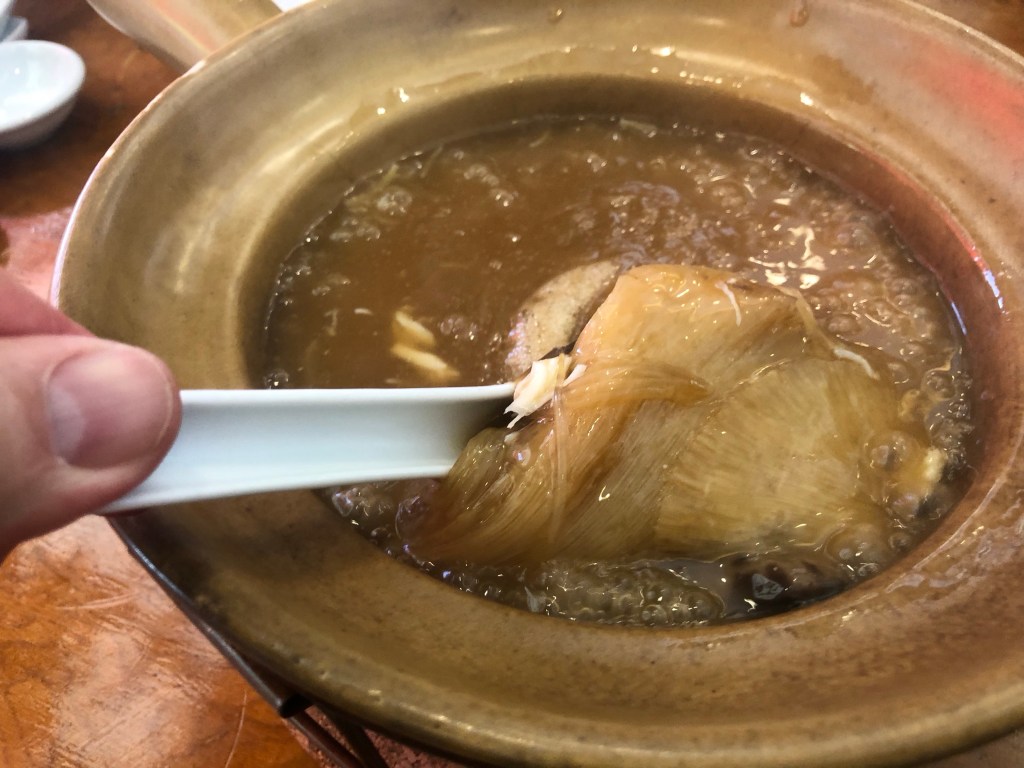
-
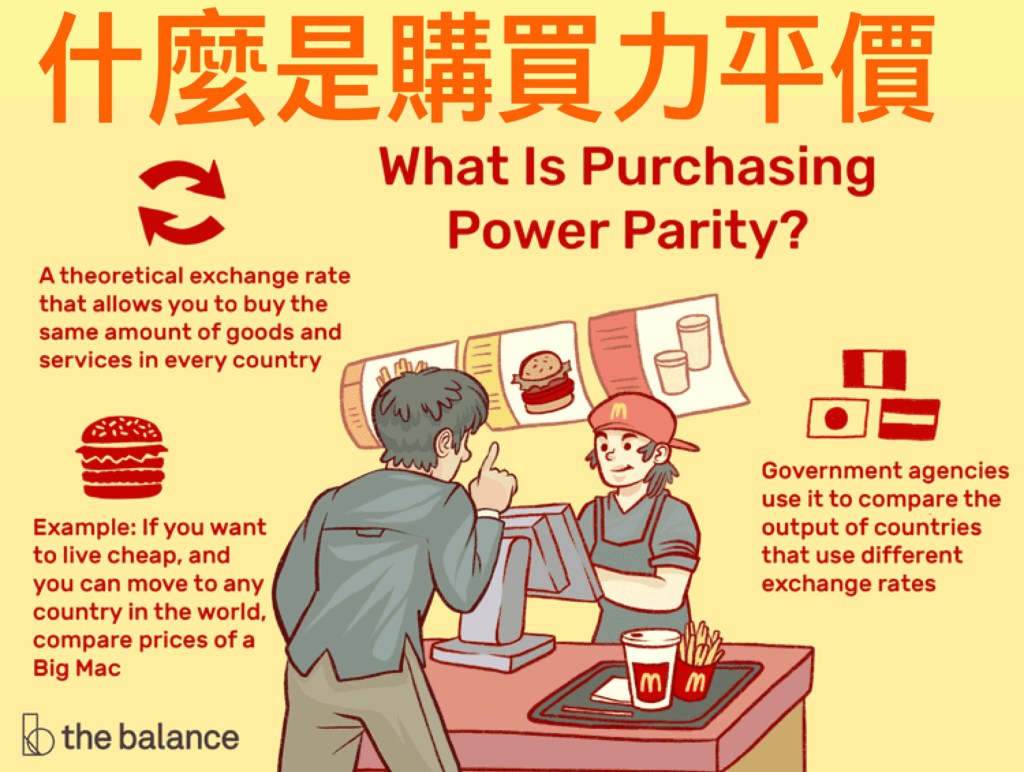
true meaning of Purchasing power parity
Dear friends and clients: Each time I travel outside US to Asia could feel the true meaning of Purchasing power parity (PPP). Use a 2 bedroom 600 square foot 4.5 Stars hotel room as an example. In S.F. or Hawaii would cost US$500-1,000. In many top Asia cities including China would cost US$100-150. That is why when US has 24 trillions GDP and China has 18 trillions. The 18 trillions China’s GDP equals to 32-36 trillions based on PPP. 尊敬的朋友和客戶: 每次我離開美國到亞洲辨工時,都能感受到購買力平價(PPP)的真正含義。 以 2 居室 600 平方英尺 4.5 星級酒店房間為例。 在舊金山 或夏威夷則需花費 500 至 1,000 美元。 在包括中國在內的許多亞洲頂級城市,費用為 100 至 150 美元。 這就是為什麼美國有24萬億國內生產總值而中國有18萬億。 中國18萬億的國內生產總值按購買力平價計算相當於32-36萬億.
In 2018 I took a delegation of 14 to visit retirement homes outside of Shanghai. A retirement home rental cost US$10,000/month in S.F. or Hawaii was RMB$10,000 in China, 1/6 of the cost. At the same time they offered better and newer facilities than those in US. 2018年,我帶領14人的代表團參觀了上海以外的養老院。 在舊金山和夏威夷的養老院的租金為每月 10,000 美元。在中國的價格是1萬人民幣,是美國的1/6價錢. 同時他們提供比美國更好、更新的設施.
A US$5,000 monthly pension you don’t feel rich in America. But for the same US$5,000 using PPP would give you the buying power equals to US$15,000 in most part of Asia. 每月 5,000 美元的養老金,在美國你並不覺得富有。 但同樣的 5,000 美元,使用購買力平價所帶來的購買力在亞洲大部分地區相當於 15,000 美元.
Purchasing power parity (PPP) is a money conversion rate used to express the purchasing powers of different currencies in common units. This rate expresses the ratio between the quantity of monetary units required in different countries to purchase the same “basket” of goods and services. 購買力平價(PPP)是一種貨幣換算率,用於表示不同貨幣在共同單位下的購買力。 該比率表示不同國家購買同一“籃子”商品和服務所需的貨幣單位數量之間的比率.
-
Seeing is believing video: Real Xinjiang verses US fake news propaganda on Xinjiang
Seeing is believing video: Real Xinjiang verses US fake news propaganda on Xinjiang 眼見為實: 真實的新疆與美國假新聞宣傳新疆
https://rumble.com/v3cfdlt-video-real-xinjiang-verses-us-fake-news-propaganda-on-xinjiang.html
https://www.tiktok.com/t/ZT8YYkjmr/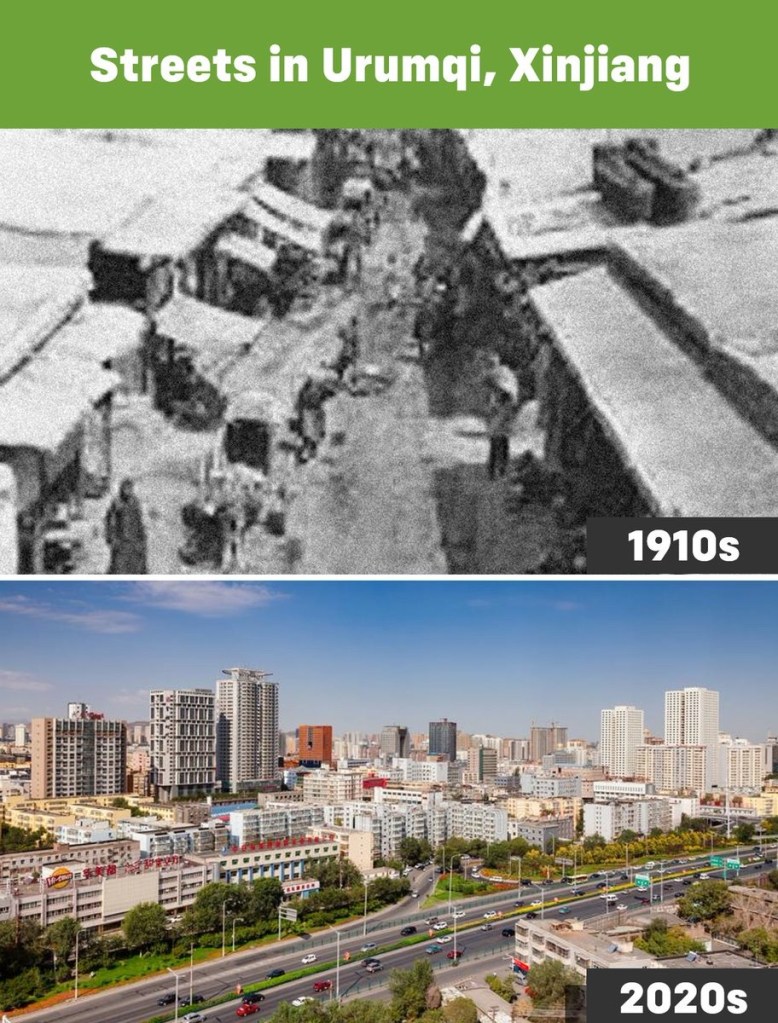
-
Arrived in HK
Arrived in HK: Eat First 扺達香港轉機 食為先

-
Charles Munger, Vice chairman of Berkshire Hathaway video
Charles Munger, Vice chairman of Berkshire Hathaway video: I will work with China anytime, not India 巴菲特合夥人查爾斯·芒格視頻, 伯克希爾·哈撒韋公司副董事長: 我隨時會與中國合作,而不會是印度
https://rumble.com/v3buj1f-i-will-work-with-china-anytime-not-india.html
https://www.tiktok.com/t/ZT8FExjRc/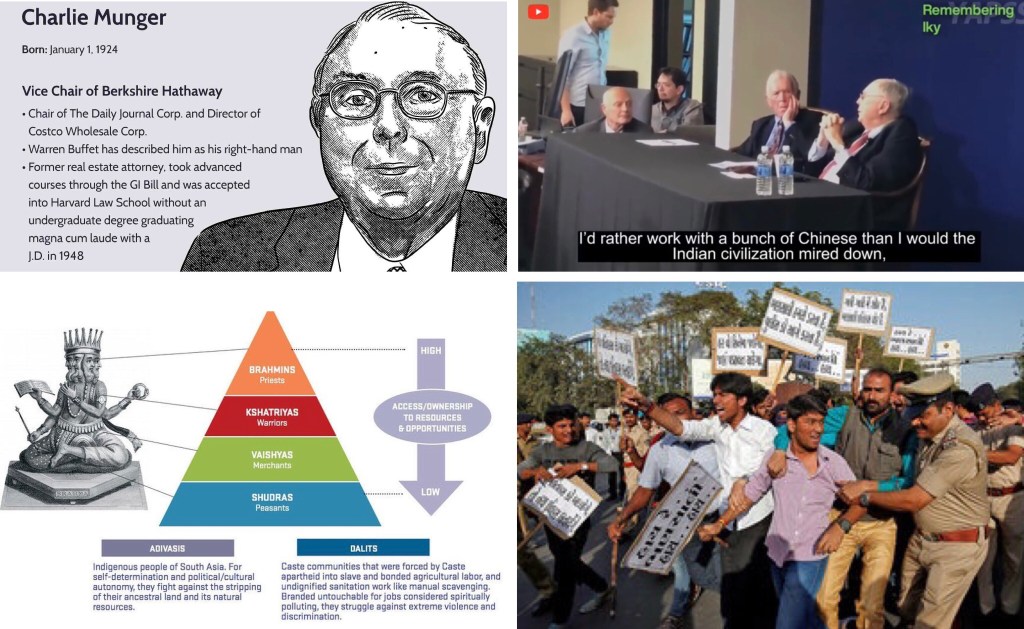
-
Friends. I agree with Johnson that the U.S. is moving toward a war against China
Friends. I agree with Johnson that the U.S. is moving toward a war against China. Taiwan is the current pretext for the military preparations. 朋友們。 我同意蔡永強的觀點,即美國正在走向對中國的戰爭. 台灣是目前軍事準備的藉口.
Naval Aggression against China’s Daioyu Islands and violations of China’s Pacific Economic Zone, Naval excursions into China’s Taiwan Strait, are other war provocations that could serve as pretexts.
U.S. imperialist wars are always accompanied by racists attacks on minorities from the targeted country. The real aim of the war is to crush Chinese Socialism, which is a beacon of hope to the entire developing world.
China offers an alternative to imperialism — a world where nations and peoples are treated as equals.
A year ago, a crazy white guy in Cayuga Park shouted at my wife to “Go back to China!” I was with her, so he could not physically harm her. I today saw a ridiculous piece of propaganda that Chinese Restaurants are fronts for the PRC Security Services!
Chinese professionals are framed up on fake spying charges. Our Congressional Representative, Nancy Pelosi, is one of the worst anti-China provocateurs. Despite all this lying propaganda and race baiting, I agree with Remi that we can fight this onslaught. I think we can stop this war! We must organize a political challenge to the anti-Communist racist war mongers.
California has a much larger Chinese population today than it did at the time of the Chinese Exclusion Act. The U.S trade restrictions a wrecking the American economy, driving inflation higher. Chinese goods are woven into the manufacturing supply chain of everything built in the USA. Ford cannot build a car without Chinese parts. The truth is on our side. We already have support from Black organizations, Latino groups and Unions. We must strengthen these ties. And there is still a small but well-organized pro-China American Left. The rulers have the money, but we have the numbers! San Francisco is the best possible location for political work against the war. We must target political opponents, like Pelosi, with demonstrations at the Federal Building and in articles in any of the press that is friendly to us. Americans are already victims this war plan. The insane war spending is reducing us to poverty and homelessness. It is shattering education, healthcare and social spending. We CAN stop this war. Dave Ewing, Attorney at Law, Member of CAAC
Dave: Peace or war, US is holding the card, not China!
Taiwan is only the cannon ball for US.
Will our government listen to us? No, we have absolutely no say in our US-China relationship. In fact more than 50% of Chinese Americans are anti-China. China’s demise not their concern, in fact they wish that could happen. Their logic is when China be as weak as during the Ching Dynasty, US will leave China alone!
Other Chinese with backbones left US, 20,000 top US Chinese Scientists and Engineers already left last 3 years including some of my clients! That represents about 7% of the Chinese Scientists and Engineers in America.
US Government is controlled by the Military Industrial Complex. If you think peace is part of the US’s China policy would be wishful thinking.
Johnson Choi, President of Hong Kong.China.Hawaii Chamber of Commerce, Member & Director of CAAC
-
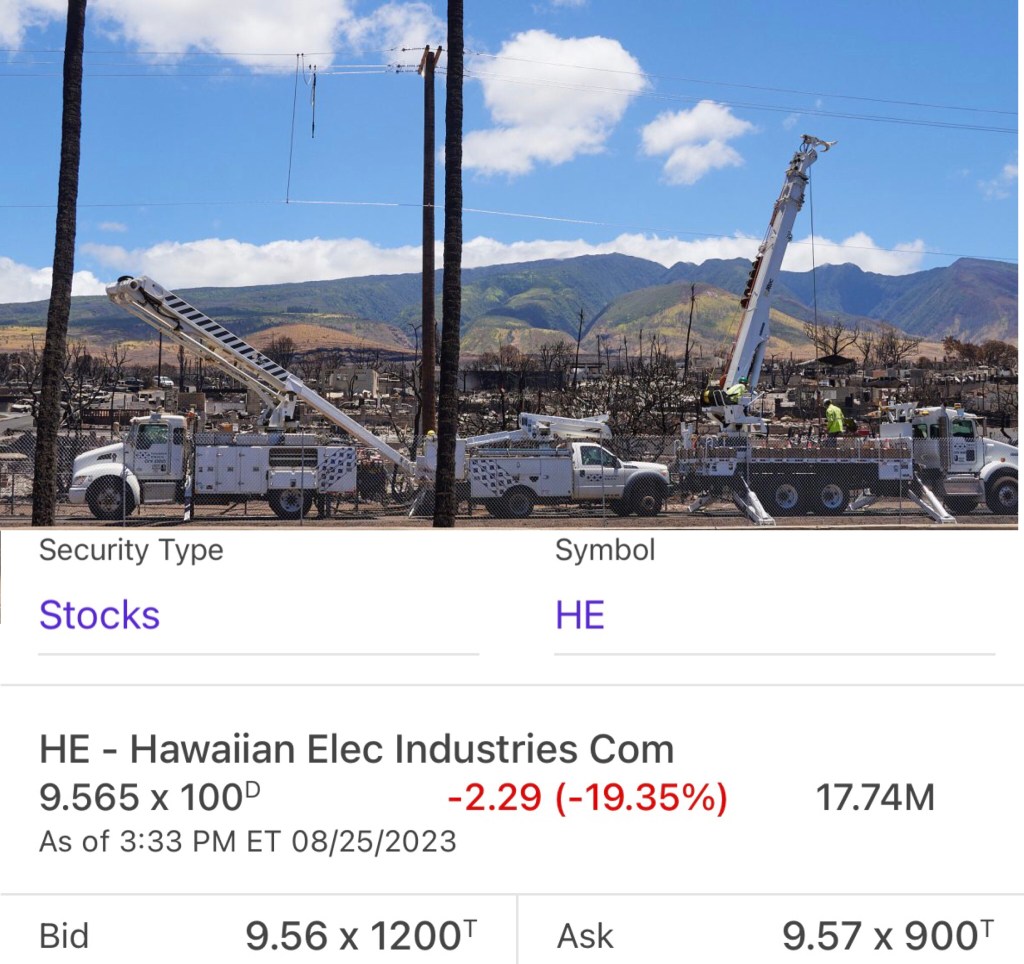
State of Hawaii Maui County Blames HECO For Fires In Latest Lawsuit Against Utility
State of Hawaii Maui County Blames HECO For Fires In Latest Lawsuit Against Utility 夏威夷州毛伊縣在針對公用事業公司的最新訴訟中將火災歸咎於夏威夷電力公司
Add Maui County to the growing list of parties suing Hawaiian Electric, Co. for the role that the utility’s power lines may have played in the Aug. 8 fires that burned across Maui, devastating Lahaina and destroying homes in Kula.
The county filed suit Thursday in state Circuit Court seeking unspecified damages from the utility that powers most of the state. Preliminary estimates have put the cost to rebuild Lahaina at more than $5 billion.
“This destruction could have been avoided” had HECO de-energized its power lines across Maui after the National Weather Service predicted “damaging” winds that could knock down power lines, the complaint states. It also lists the HECO companies that operate on Maui and Hawaii island – Maui Electric Co. and Hawaii Electric Light Co., respectively.
-
Lawyer Jiang’s video: Little Japan’s vicious behavior
Lawyer Jiang’s video: Little Japan’s vicious behavior, Fukushima poisonous water endangers the world, commits crimes against humanity again 江律師視頻: 小日本的惡性行為, 福𡷊毒水危害全球再次犯下反人類罪
https://rumble.com/v3bmbnu-fukushima-poisonous-water-endangers-the-world.html
https://www.tiktok.com/t/ZT8Fv92UF/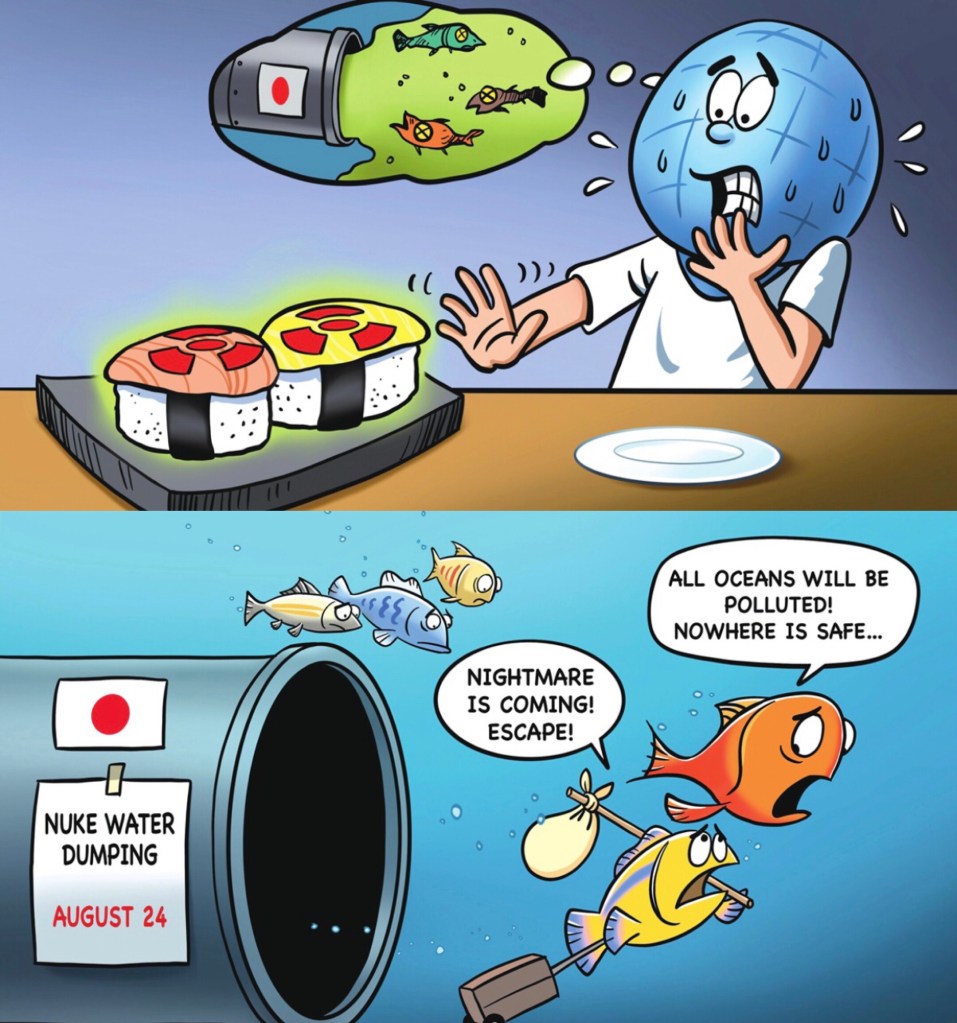
-
Subscribe
Subscribed
Have a WordPress.com account? Log in now.

