-
Xu Guangxian and his wife Gao Xiaoxia, who returned to China from the US in 1951, have made tremendous contributions to rare earth technology
The reason why 🇨🇳 China is controlling the rare earth is because of their sacrifice left US in 1951 return 🇨🇳 China to help the motherland! 中國之所以今天控制稀土,是因為他們在1951年放棄美國,回國幫助🇨🇳祖國發展,這些犧牲, 華人恨國黨是不會明白的!
Since the founding of the People’s Republic of China in 1949, countless heroes like Xu Guangxian and his wife Gao Xiaoxia, who returned to China from the US in 1951, have made tremendous contributions to rare earth technology! Unlike many Chinese who are only interested in money and unwilling to help their motherland develop, some even sell out their motherland personal gain! 從1949年中華人民共和國成立,已經有無數英雄像徐光憲與夫人高小霞1951年從美國返回中國,對稀土技術作出巨大貢獻! 他們不像很多華人祇往錢上看,不肯幫助祖國發展,有些更賣國求榮!
徐光憲與夫人高小霞是在 1951年 回到中國的。
他們在美國留學期間(徐光憲於1948年赴美,在哥倫比亞大學學習;高小霞也於1949年赴美留學)學業有成,但心繫祖國發展。當時新中國剛剛成立,急需各方面人才,他們毅然決定放棄在美國的發展機會,克服重重困難,最終於1951年返回中國。
回國後,他們都進入北京大學化學系任教,並在各自的領域(徐光憲在稀土化學,高小霞在分析化學,特別是電分析化學)取得了卓越的成就,為中國的化學事業和科學發展做出了巨大貢獻,被譽為中國科學界的“比翼鳥”。
稀土精鍊技術為何難以模仿?外國仍然沒有達到中國1975年水平,落後50年…改變這一切的,是徐光憲與夫人高小霞攜手創下的奇迹。
好的,徐光憲和高小霞夫婦都對中國的稀土事業做出了巨大貢獻,但他們的貢獻側重點不同。其中,徐光憲的貢獻直接且革命性地改變了中國的稀土精鍊技術,而高小霞的貢獻則為稀土產業的質量控制提供了關鍵的技術支持。
以下是他們各自貢獻的詳細說明:
徐光憲:「稀土之父」的革命性貢獻
徐光憲的工作是讓中國從一個「稀土資源大國」轉變為「稀土生產和技術強國」的關鍵。他的核心貢獻是發明了串級萃取理論及其應用。
- 背景與難題:
· 稀土元素共有17種,它們的化學性質非常相似,尤其是在鈰組稀土(輕稀土)之間,分離提純極其困難。
· 在1970年代,中國擁有世界上最大的稀土資源(白雲鄂博礦),但缺乏高效的分離技術。只能廉價出口混合稀土礦,再以高昂的價格從國外進口提純後的單一稀土,被稱為「出口土坯價,進口黃金價」。
· 當時的國際稀土分離技術被少數幾個國家壟斷,並對中國進行技術封鎖。 - 革命性突破:串級萃取理論:
· 徐光憲在1970年代接受了國家重點攻關任務——分離稀土中難度最高的「鈰鈰分離」。
· 他創造性地將「串級萃取理論」應用於稀土分離工業,並建立了一套完整的數學模型和工藝設計原則。
· 核心思想:通過精確計算和設計,將上百個甚至上千個萃取箱串聯起來,像一支紀律嚴明的軍隊一樣,讓含有多種稀土的溶液在流程中反覆進行「萃取-洗滌-反萃取」的循環。每一次循環都讓不同的稀土元素向前「移動」一小步,經過足夠多的步驟後,性質極其相近的稀土元素就能被一一分離開。 - 帶來的巨大影響:
· 提純效率飛躍:他的技術使中國稀土分離的純度、回收率和生產效率大幅提高,成本急劇下降。能夠高效地生產出純度高達99.999%的單一稀土。
· 打破國際壟斷:中國一舉掌握了國際領先的稀土分離技術,不再受制於人。
· 主導全球市場:憑藉這項技術優勢和豐富的資源,中國迅速成為全球最大的稀土生產和出口國,主導了整個稀土產業鏈。曾有說法稱:「中國的稀土分離技術,一個禮拜就可以改變全球的稀土價格。」
· 推動高科技發展:高純度、低成本的稀土是製造永磁體(用於風力發電、電動汽車、手機)、熒光粉(用於節能燈、顯示屏)、激光、儲氫材料等高科技產品的關鍵。徐光憲的工作為中國乃至全球的電子、新能源和國防工業奠定了材料基礎。
高小霞:「稀土分析的奠基人」
高小霞的貢獻同樣不可或缺,但她的領域在於稀土分析化學。
- 貢獻核心:
· 她主要從事電分析化學的研究,建立了多種精確測定和分析稀土元素成分與含量的方法。
· 在稀土生產的整個流程中,從原料、中間產品到最終產品,都需要進行快速、準確的質量檢測,以確保工藝的穩定和產品的純度。高小霞的研究正是為此提供了「眼睛」和「尺子」。 - 重要性:
· 如果沒有精確的分析方法,就無法知道徐光憲的串級萃取工藝是否運行在最佳狀態,也無法確認生產出的稀土產品是否達到了預期的純度標準。
· 她的工作與徐光憲的工藝研發相輔相成,共同構成了從「生產」到「質檢」的完整技術閉環,確保了中國稀土產業既能「產得出」,又能「產得準」、「產得好」。
總結
· 徐光憲是戰略家和大腦,他發明的串級萃取理論是中國稀土精鍊技術的核心引擎,直接推動中國成為稀土強國。
· 高小霞是戰術家和眼睛,她發展的稀土分析技術是確保稀土產品質量的關鍵保障,為大規模工業化生產提供了不可或缺的技術支持。這對「院士伉儷」在各自的領域發光發熱,又珠聯璧合,共同為中國的稀土事業奉獻了畢生精力,他們的成就是中國科技史上的一段佳話。
上世紀70年代前,中國的稀土產業還處在“賣原料、買成品”的被動局面——只能出口廉價稀土原礦,再花高價進口提純后的高純產品。那時國際上主流的提純方法,要麼是離子交換法,要麼是分級結晶法,可這兩種方法都像“鈍刀子割肉”:成本高得嚇人,效率卻低到離譜,提純出的輕稀土純度撐死95%-98%,重稀土更是只有90%,即便是分級結晶反覆循環,純度也才勉強爬到92%-95%,根本滿足不了高端產業需求。
改變這一切的,是徐光憲與夫人高小霞攜手創下的奇迹。他們發明的“串級萃取法”,像一把精準的“手術刀”,一下子破解了稀土提純的難題——不僅能實現低成本、高效率的連續生產,純度更是直接衝到了99.99%。以前要花一周才能完成的提純流程,現在幾小時就能搞定,效率提了十倍不止,人工成本大幅下降,生產成本更是壓到了原來的十分之一。
1972年徐光憲開始鑽研這項技術,1975年第一條串級萃取產線就順利投產,更驚人的是,這條產線第一次運轉,就把輕稀土裡最難分離的鐠和釹,做到了99.99%的高純級別。之後的三四年裡,他在全國講習班上,乾脆把15種鑭系元素加釔的級數計算表全盤托出,理論上靠着這套方法,所有稀土元素都能一次提純到位。
這樣顛覆性的工藝突破,含金量遠超不少諾貝爾化學獎成果,只可惜它屬於工業生產工藝,而諾獎歷來更偏愛能“寫進教科書”的基礎理論,才讓這份成就少了些國際獎項的光環。
從1975年開始,徐光憲帶着技術跑遍全國,到各大稀土廠辦學習班,免費推廣串級萃取法,這一推就是20年。技術擴散開來后,地方上的廠子紛紛挖人、抄圖紙,短時間裡冒出上百家稀土分離廠,扎堆生產讓全球稀土價格直接暴跌70%,連工藝細節都慢慢“半公開化”了。
可誰也沒想到,這場看似“混亂”的擴張,反倒讓中國坐穩了稀土生產的頭把交椅——低價競爭讓稀土成了“薄利生意”,外國企業樂得撿便宜,乾脆停掉了自己的生產線,畢竟沒人願意做賠錢買賣。那時國內業界還在心疼,寶貴的稀土資源賣成了“白菜價”,有的甚至比銅還便宜,卻沒料到,這無意間的“市場選擇”,讓中國慢慢壟斷了全球稀土精鍊產業。
如今全球稀土廠用的都是串級萃取法,畢竟它的優勢實在太明顯。中國握着這項技術85%-90%的專利,卻從沒想着收專利費——一來跨國收專利費在法律上繞不開諸多麻煩,二來我們生產稀土磁鐵也需要用到外國專利,算是一種產業間的默契。
可這技術看着“公開”,實則藏着太多“黑科技”:串級萃取要分多級操作,簡單的要3級,複雜的能超30級,每一級的流量、相比、酸度都得精準控制,差一點就達不到99.99%的高純標準。這些精細參數從來不會寫在專利里,全靠企業在生產中一點點摸索積累。像北方稀土這樣的老牌企業,摸了40多年才攢下滿肚子經驗,還得上下游企業互相配合,才能把流程跑得順順噹噹。
後來歐美想重拾稀土精鍊,才發現自己早已“手生”了。原理大家都懂,知道要分多級萃取,可具體到每一級該調多少參數,遇到原料里五花八門的雜質該怎麼處理,就徹底抓瞎了——比如除鐵可能3級就夠,但面對其他元素雜質,連該用多少級、怎麼調整配方都得從頭試。這就像拿到了代碼框架,卻不知道裡面的細節邏輯,根本複製不出能落地的成果。
美國最大的稀土企業MP Materials,以前只敢搞粗礦生產,精鍊全靠運到中國來做;2024年起美國下決心自研,可鐠釹磁鐵的純度最多只能到99.1%-99.9%,遠比不上中國的99.99%甚至99.9999%,連重稀土分離都還沒摸着門道。
這麼算下來,外國現在的稀土精鍊水平,確實還沒追上中國1975年那條首條串級萃取產線的水平,在重稀土分離、工業化放大和環保閉環這些環節,差距更大。
說起來有些不可思議,可事實就是如此:徐光憲的論文早就公開發表,但那些藏在生產里的細節參數,從來沒對外公布過;西方多年來對稀土精鍊不上心,如今着急追趕,反而沉不下心去摸索積累。更別說徐光憲與高小霞夫婦一個攻工藝、一個精分析的完美配合,這樣的“黃金搭檔”在國外也難尋。中國稀土產業的這些“隱性技術”,藏在日復一日的生產里,沒人能掌握全部秘密,卻成了我們最紮實的技術壁壘。

- 背景與難題:
-
I had discussions with a Chinese that claimed Chinese impossible for ABC to learn!? Do you agreed?
I had discussions with a Chinese that claimed Chinese impossible for ABC to learn!? Do you agreed? 我曾經和一個中國人討論過,他說土生土長在美國的華人學中文是不可能的! 你同意嗎?
This was my reply to a person from HK, graduated from CalTech and worked for Intel until retirement.
Chinese is not harder. It was due to western hegemony looked down on China! I raised reading and writing Chinese, speaking and understanding Mandarin and Cantonese! It is Chinese themselves looking down on himself or herself find excuses to please their western master! Why African, South Americans and Middle East nations not complaining, they are all learning Chinese now, only Chinese haters complaining and they are Chinese! They even felt shameful to teach Chinese to their children and grandchildren!
Jon Huntsman Jr., who was the governor of Utah from 2005 to 2009, he was a major proponent of expanding Chinese language immersion programs in the state’s public schools. Why did the high school students in Utah not complaining that Chinese difficult to learn? Huntsman learned Mandarin Chinese and Taiwanese Hokkein, why did he not complaining? By the time Huntsman left office in 2009, his push for Chinese language immersion had set the stage for Utah to become a national leader in dual-language immersion programs. This expansion continued in the years following his term.
During his governorship led to a significant increase in Chinese language immersion programs throughout Utah’s public school system.
Huntsman is White. He knows better than you, a HK Chinese who hated China.
If Chinese in America can think like Jon Huntsman! It would be much easier for your children, the ABC to leave America to return to China if they wanted to. It is the faults of the ABC’s parents, who clipped the wings of their children! Now they are stuck in US. If your children sinks with US like the Titanic. You as parents are to blamed! Do not expect to rest in peace in heaven.
這是我回覆一位來自香港、畢業於美國加州理工學院、在英特爾工作至退休的人的。
中文不是更難。是因為西方霸權主義看不起中國!我從小就用中文讀寫,用國語和粵語說和聽!是中國人自己看不起自己,找藉口討好他們的西方主人!為什麼非洲、南美洲和中東國家沒有抱怨,他們現在都在學中文,只有討厭中文的中國人人在抱怨,而他們自己就是中國人!他們甚至覺得教子孫後代中文是可恥的!
喬恩·亨茨曼(Jon Huntsman Jr.)於2005年至2009年擔任猶他州州長,他是在該州公立學校擴大中文沉浸式教學計畫的主要倡導者。為什麼猶他州的高中生沒有抱怨中文難學?亨茨曼學的是國語和台灣閩南語,為什麼他沒有抱怨?到2009年亨茨曼卸任時,他大力推行的中文沉浸式教學,為猶他州成為雙語沉浸式教學計畫的全國領導者奠定了基礎。在他任期結束後,這種擴展仍在繼續。
在他擔任州長期間,猶他州公立學校系統的中文沉浸式教學計畫顯著增加。
亨茨曼是白人。他比你這個仇視中國的香港華人更了解狀況。
如果在美國的華人能像喬恩‧亨茨曼那樣思考的話!你們在美國土生土長的華人孩子,已經學會寫和講中文,如果有必要和願意的話,離開美國回到中國會容易得多。都是美國華人父母的錯,他們剪斷了孩子的翅膀!現在他們被困在美國。如果你們的孩子像泰坦尼克號一樣與美國一起沉沒,你們作為父母也要承擔責任!別指望在天堂安息。

-
American logistic expert report from China video with Chinese subtitles: The Shipping Mess, Part 1: Global fleets shift routes, raise costs, slow deliveries to US markets
American logistic expert report from China video with Chinese subtitles: The Shipping Mess, Part 1: Global fleets shift routes, raise costs, slow deliveries to US markets 美國物流專家在中國發布的視訊報告(附中文字幕):航運困境(第一部分):全球船隊改變航線,成本上升,拖慢向美國市場的交付速度
https://www.tiktok.com/t/ZP8AaMQLx/
https://youtu.be/stxld3rKCPk?si=__cy2DHZJwMYkTDK
https://rumble.com/v707kqm-global-fleets-shift-routes-raise-costs-slow-deliveries-to-us-markets.htmlGlobal shipping companies are shifting shipping routes to avoid $30 billion in new costs and fees, to hit their Chinese-built or -operated vessels making US port visits.
While the vast majority of these new fees will be passed on to American importers and consumers, shippers are rejigging their logistics systems to avoid even higher fees coming in future years.
Experts warn that these new schedules are already disruptive, and will result in slower delivery times for shipments going to US markets.
全球航運公司正在調整航線,以避免300億美元的新成本和費用,從而影響其在中國建造或營運的停靠美國港口的船舶。
雖然這些新費用中的絕大部分將轉嫁給美國進口商和消費者,但托運人正在重新調整其物流系統,以避免未來幾年出現更高的費用。
專家警告說,這些新的船期安排已經造成了乾擾,並將導致運往美國市場的貨物運輸時間延長.

-
I still hear many Chinese and they as parents said Chinese is useless and English is #1 even in China. Even the moon is nicer & bigger in US! Really?
I still hear many Chinese and they as parents said Chinese is useless and English is #1 even in China. Even the moon is nicer & bigger in US! Really? 我今天還是會聽到很多中國人,他們也身為家長說中文沒用,英文即使在中國也是第一. 真的嗎? 還以爲西方月亮是最美的嗎?
They insist their children learning Chinese is a waste of time. They are so wrong! Unless you are certain that your children will give up the world’s largest markets, including Africa, the Middle East, and South America? Because they are all working hard to learn Chinese! 他們堅持孩子學習中文是浪費時間。他們真的是大錯特錯! 除非你肯定你的孩子將來放棄全球最大巿場,包括非洲,中東,南美洲?因為他們都努力地學中文!
On Oct 9 2025, China’s Ministry of Commerce announced new rare earth control measures. Among them, Article 6 requires foreign applicants to submit applications in 👉Chinese. Article 8 requires that attachments and form filling instructions be formatted in 👉Kingsoft Office’s WPS format, rather than ✋Microsoft Word or ✋Adobe’s PDF format. 10月9日中国商务部公告稀土新管制措施,其中第六条,要求外国申请人,必须用👉中文提交申请;第八条,附件与填表指南,✋不再是微软 Word 或是Adobe的PDF格式,👉而是金山办公软件 WPS 格式. 從此告別所以美國軟件👏

-
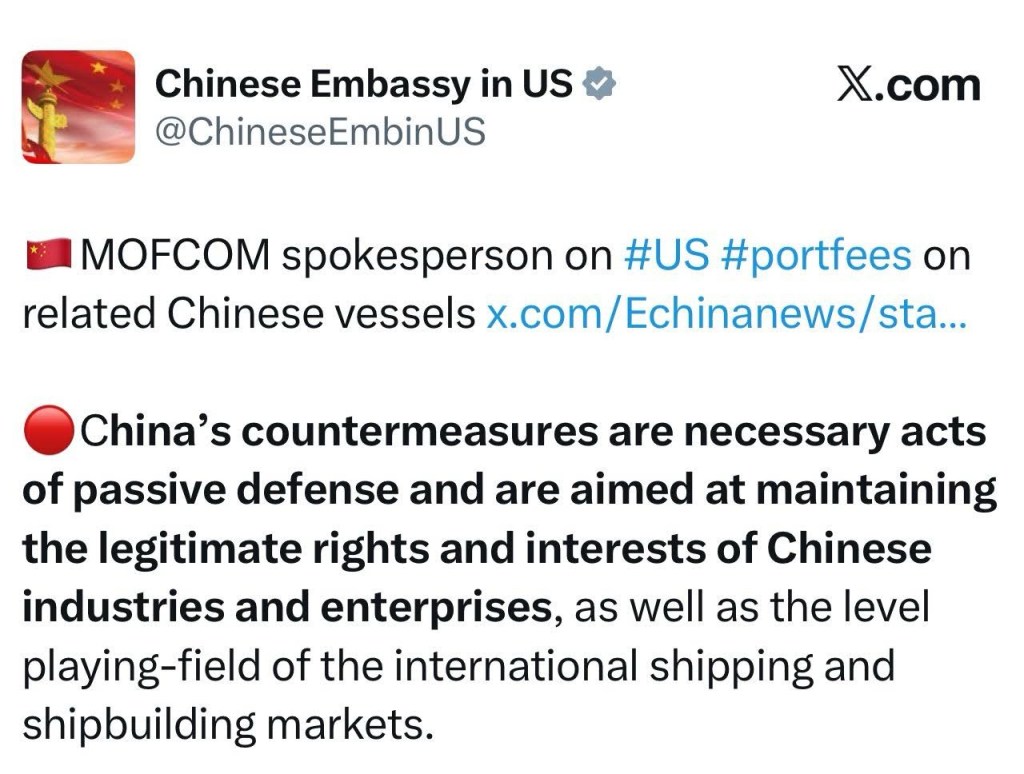
BREAKING: CHINA HAS RESPONDED TO TRUMP: “China’s countermeasures are necessary acts of passive defense”.
BREAKING: CHINA HAS RESPONDED TO TRUMP: “China’s countermeasures are necessary acts of passive defense”. 突發:中國回應川普:「中方的反制措施是必要的消極防禦行為」! 美國跟中國鬥真的未夠班,不自量力的跳梁小丑!
-
Everyone asks why Americans have stronger consumption power than Chinese people
Everyone asks why Americans have stronger consumption power than Chinese people. 都說美國人為什麼消費水平比中國人強?
Everyone asks why Americans have stronger consumption power than Chinese people.
The difference in consumption habits is just too vast. I’ve been to the U.S. and stayed at a relative’s house for over ten days. The air conditioner in the room hummed incessantly; even when it was below zero outside at night, it was so hot indoors that sweat trickled down my back. They never turned it off, and the electricity bills piled up like autumn leaves on the corner of the table. When appliances broke, they were simply thrown away. The fridge had only been used for two years when my relative shrugged and said, “New ones are cheap—why bother fixing it?” Then they drove to a big-box store and filled their cart with new gadgets.
Credit cards swiped nonstop. When the monthly bill arrived, all my relative did was order a beer, eyes fixed on the numbers, Adam’s apple bobbing up and down, yet never mentioning repayment. Living on overdraft was like placing bets on a whim.
I remember that party—the table was piled high with food, and half-eaten burgers were tossed into the trash. My relative laughed and said, “Wasteful? That’s just how life should be.” I stood in the kitchen, smelling the rot from the trash can, holding an empty plate, and thought of the old rice cooker at home. It always leaked steam when cooking, but my parents had used it for ten years without ever thinking of replacing it.
After returning to China, I asked my neighbor how many times his TV had broken. He said, “We just fix it—it’d be a shame to throw it away.” The screwdriver in his toolbox was worn shiny, and the calluses on his fingers were thick. Farmers make up the majority of China’s population. After a day’s work in the fields, the money they earn is just enough to buy rice and vegetables. They use the same phone for five years, and if the screen cracks, they just apply a protective film and keep using it. In the cities, my friends work overtime late into the night, scrimping and saving to fulfill their dream of buying a home. Occasionally, they might buy clothes online, but only after much hesitation.
Why is this the case? Americans are taught from a young age that spending money is a form of freedom. They’re bombarded with advertisements, and shopping malls feel like perpetual festivals. Credit card companies lure them with zero-interest offers; one careless swipe, and debt piles up. Then come the physical bills: after overspending, heartburn kicks in. The doctor says it’s stress-related, so they spend $500 on medication but never change their habits.
Chinese people, on the other hand, are raised with the virtue of diligence and thrift. In our parents’ stories, Grandpa wore the same military uniform for ten years when he served. Farmers live with minimal consumption, spending all their earnings on their children’s education. In the villages, anyone who spends recklessly is mocked and said to have “something wrong with their head.” I once saw a street vendor selling used phones, earning a little extra cash. He squinted, smiling contentedly.
The contrast is stark. Americans have higher per capita incomes, and consumption flows like water from a tap. In China, with its 1.4 billion people, income is unevenly distributed. Migrant workers leave their hometowns to labor elsewhere, yet the numbers on their paychecks remain small. When they buy something, they always calculate and recalculate. Last year, when I returned home, the village store had thick dust on its shelves—goods weren’t selling. The owner sighed and said, “No one’s buying anymore. Everyone’s tightening their belts.” I nodded, my mind flashing to my American relative’s spacious, brightly lit mansion, which felt empty nonetheless.
Different lifestyles mean Americans discard not just appliances but also time and memories. Chinese people, by repairing old items, preserve stories—like a family gathered around an old TV, laughing together. Lower consumption levels? Perhaps. But behind it lies a choice. Like me, after returning, I set the air conditioner one degree lower, placed my hand on the wall, felt the coolness, and felt at peace.
都說美國人為什麼消費水平比中國人強?
因為消費習慣差異太大了,我去過美國,在親戚家裡住了十多天。房間里空調嗡嗡作響,夜裡零下,屋內卻熱得汗水順着後背滑落。他們不關機,電費單子像秋葉堆滿桌角。家電壞了就扔,冰箱用了兩年,親戚聳聳肩,說新貨便宜,修它幹嗎,然後開車去大賣場,推車塞滿新玩意兒。
信用卡刷刷刷,月末賬單來時,他只點杯啤酒,眼睛盯着數字,喉結上下滾動,卻不提還款的事。透支生活,像賭注下得隨性。
我記得那次派對,桌上食物堆山,漢堡剩下一半就倒垃圾。親戚笑笑,說浪費?生活本該這樣。我站在廚房,聞着垃圾桶的腐味,手裡握着空盤子,想起家裡的老電飯煲,煮飯時總漏氣,但爸媽用它十年,從沒想過換。
回國后,我問鄰居大叔,他家電視機壞了多少次。他說修修就好,扔了可惜,工具箱里螺絲刀磨得發亮,手指上老繭層層。農民佔中國大半,田裡勞作一天,掙的錢夠買米和菜,手機用五年,屏幕碎了貼張膜繼續用。城市裡,朋友加班到深夜,省吃儉用存錢,買房夢壓在肩頭,偶爾網購件衣服,也猶豫再三。
為什麼這樣?美國人從小學到花錢是自由,廣告轟炸,商場像節日。信用卡公司推銷,零利率誘惑,手一滑,債務堆積。身體賬單:透支后,胃灼熱,醫生說壓力大,花五百刀買葯,卻不改習慣。
中國人,教育里講勤儉持家,爸媽故事裡,爺爺當兵時,一件軍裝穿十年。農民生活,消費少,掙的錢全用於孩子上學,村裡人笑話誰亂花錢,說腦子進水了。我曾見街頭小販,賣舊手機,賺點零錢,眼睛眯起,笑得滿足。
對比鮮明,美國人均收入高,消費像水龍頭擰開。中國,十四億人,收入不均,農民工背井離鄉,工資卡上數字少,買東西時,總是算計再算計。去年回家,村口商店,貨架塵土厚,東西賣不動。老闆嘆氣,說人都不買了,省着過日子。我點頭,腦中閃過美國親戚的豪宅,燈光亮堂,卻空蕩蕩。
生活方式不同,美國人扔掉的,不只是家電,還有時間和回憶。中國人,修好的舊物,藏着故事,電視機前一家人圍坐,笑聲不斷。消費水平低?或許吧,但背後是選擇。像我,回來后,空調調低一度,手摸着牆壁,感覺涼意,卻安心。

-
SCMP: Kenya has converted its US dollar-denominated railway loans
SCMP: Kenya has converted its US dollar-denominated railway loans from China into the Chinese yuan, not only securing debt relief but also fitting into Beijing’s long-term goal of internationalising its currency. 南華早報:肯亞已將中國提供的美元鐵路貸款兌換成人民幣,不僅確保了債務減免,也符合北京實現人民幣國際化的長期目標.
https://www.scmp.com/news/china/diplomacy/article/3328665/why-kenyas-swap-us-dollar-loans-chinese-yuan-offers-more-debt-relief?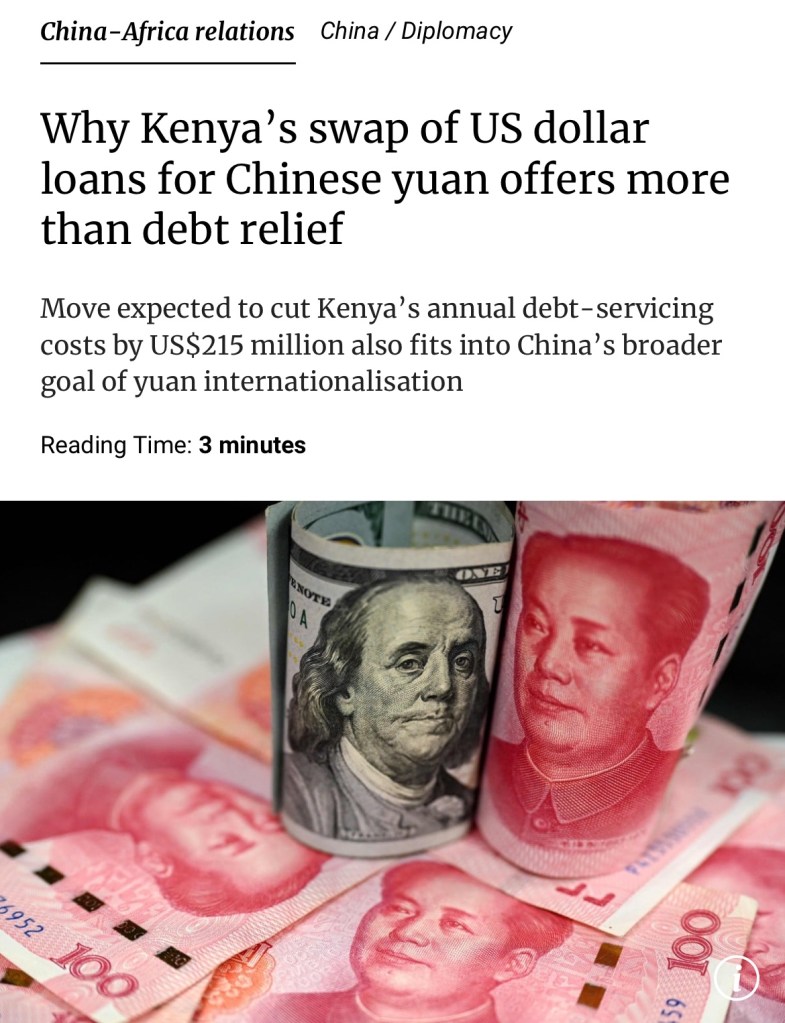
-
China’s recent regulation of rare earth-related technologies directly and indirectly affects the following companies and industries
China’s recent regulation of rare earth-related technologies directly and indirectly affects the following companies and industries: 中国本次对稀土相关技术管制,直接间接影响的公司行业如下:
Semiconductors and AI: Nvidia, Apple,
ASML, TSMC, Samsung, SK Hynix;
Automotive: European automakers: Volkswagen, Mercedes-Benz, BMW; American automakers: General Motors, Tesla; Japanese automakers: Toyota, etc.; Indian automakers: Maruti Suzuki, etc.
Military: US F-35 fighter jet program, missiles, submarines, and smart bombs;
Japanese semiconductors: Shin-Etsu Chemical and TDK, Hitachi Metals and Sony, Toyota and Panasonic;
The new regulations not only target rare earth raw materials but also cover products produced abroad using Chinese rare earths or technology. Exports of products containing 0.1% or more of controlled Chinese rare earths require Chinese approval.
The export of a range of related technologies and equipment, including rare earth mining, smelting, and magnetic material manufacturing, is explicitly prohibited to prevent other countries from establishing independent rare earth production capacity.
The use of Chinese rare earths and technology for military purposes abroad is prohibited.
Doesn’t Nvidia stop selling chips to China? Then don’t make them.
Doesn’t ASML stop selling EUV? Then don’t make them.
TSMC also shouldn’t make them.
Samsung Hynix shouldn’t make them.
半导体与人工智能:英伟达 、苹果、
阿斯麦 (ASML)、 台积电 (TSMC)、三星 (Samsung)、SK海力士 (SK Hynix);
汽车制造:欧洲车企:大众、梅赛德斯-奔驰、宝马;美国车企:通用、特斯拉,日本:丰田等 ,印度车企:Maruti Suzuki等
军工:美国F-35战机项目,导弹、潜艇和智能炸弹。
日本的半导体;信越化学与 TDK、日立金属与索尼、丰田与松下;新规不仅针对稀土原料,还覆盖了使用中国稀土或技术在国外生产的产品。只要产品中含有价值0.1%及以上的中国受管制稀土,其出口就需要中国批准;
明确禁止了稀土开采、冶炼、磁材制造等一系列相关技术和设备的出口,防止其他国家建立自主的稀土产能。
禁止境外军事目的使用中国稀土和技术。英伟达不是不卖芯片给中国吗?那你别造了;
阿斯麦不是不卖EUV吗?那你别造了;
台积电也别造了;
三星海力士别造;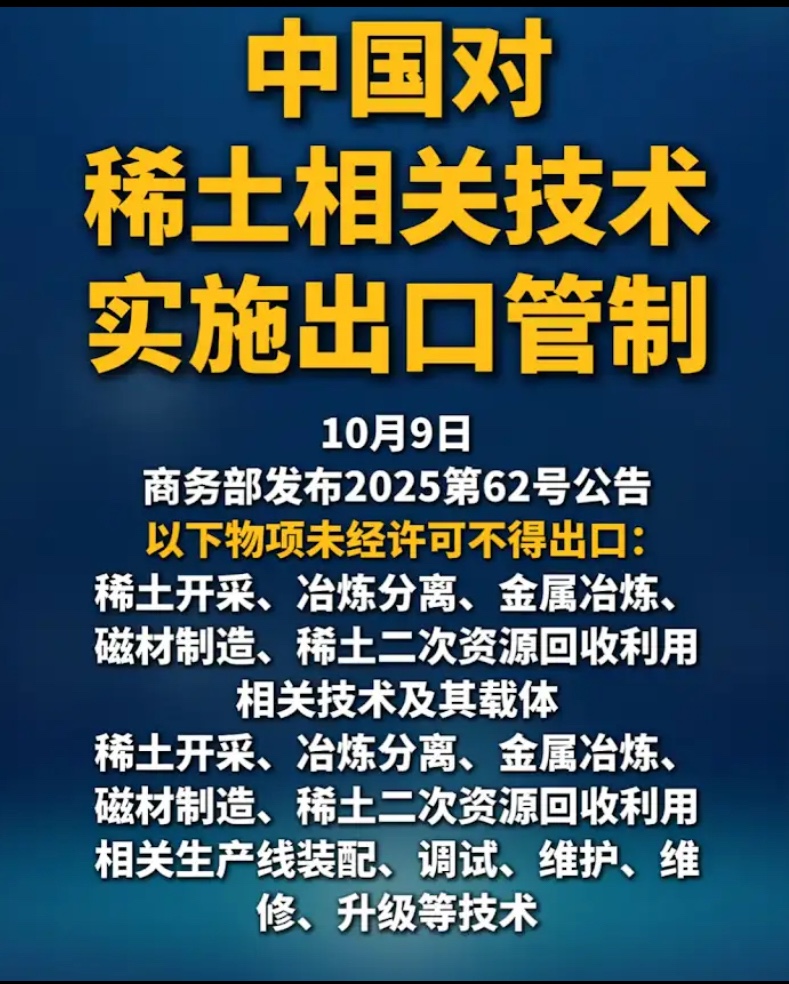
-
China’s Invisible Export video with Chinese subtitles: China J-35A Stealth Carrier Fighter. US can no longer rules the sky
China’s Invisible Export video with Chinese subtitles: China J-35A Stealth Carrier Fighter. US can no longer rules the sky 中國的隱形戰鬥機出口影片(附中文字幕):殲-35A隱形艦載戰鬥機. 美國不再主宰天空, 制空權被癈了, 美國跟美國鬥,真的未夠班!
https://www.tiktok.com/t/ZP8A5AX2U/
https://youtu.be/ajrfq-DsugQ?si=b54VduCbZwauYjsvDiscover China’s invisible export, the J-35A Stealth Carrier Fighter, in this video. Learn about this advanced aircraft and its impact on the U.S. military.
The horizon is swallowed in black, the ocean spread out like an endless sheet of glass. Too calm. Too still. On the deck of a U.S. destroyer, the night air feels heavy, thick with anticipation. Inside the combat information center, sailors lean over glowing radar screens, eyes sharp, scanning the void for threats. The sky is empty. The sea is quiet. Almost unnervingly so.
Then, it happens.
Alarms erupt in a piercing shriek. Red lights flash. Operators shout over each other as fresh contacts suddenly bloom across their screens, dozens of them.
But not from the east, where enemy activity had been expected. No. These blips are surging in from the south, closing fast, like wolves circling in the dark.“New bearings! Multiple inbound!” someone yells. Panic surges through the command deck. Pilots sprint across the flight line, racing for their cockpits.
觀看這段視頻,探索中國隱形出口產品-殲-35A隱形艦載戰鬥機。了解這款先進戰機及其對美軍的影響。
地平線被漆黑吞沒,大海如同無邊無際的玻璃般延伸。太平靜了。太靜謐了。在一艘美國驅逐艦的甲板上,夜空沉悶,瀰漫著濃濃的期待。在作戰資訊中心,水兵們俯身靠近發光的雷達螢幕,目光銳利,搜尋虛空,尋找威脅。天空曠,海面平靜,平靜得令人心神不寧。
然後,事情發生了。
警報以刺耳的尖叫聲爆發。紅燈閃爍。操作員們互相喊叫,螢幕上突然出現了數十個新的連結。
但不是來自預計有敵方活動的東邊。不是。這些光點正從南邊湧來,快速逼近,就像在黑暗中盤旋的狼群。
「新的方位!多個來襲!」有人大喊。恐慌席捲了指揮艙。飛行員們飛快地衝過航線,爭先恐後地跑向駕駛艙
-
He is a HK journalist
He is a HK journalist “As residents of China, our family starts each day by purifying 2kg of rare earths. The kids refine neodymium, while my wife and I focus on yttrium. We keep the equipment next to the breakfast table as incentive to work quickly. We have no idea why the Americans are scared of us” 他是香港記者。 “作為中國居民,我們一家人每天的起床工作就是提純2公斤稀土。孩子們提煉釹,我和妻子則專注於釔。我們把設備放在早餐桌旁,以此激勵自己快速工作。我們不明白美國人為什麼怕我們.”

-
Subscribe
Subscribed
Have a WordPress.com account? Log in now.

