-
History of Chinese State of the Art Innovations
History of Chinese Inventions–The Present and the Future–Recent Chinese State of the Art Innovations. 中國發明史 – 現在與未來 – 中國最新技術創新 BRICS, 23 Dec 2019 Larry Romanoff – Global Research
24 Oct 2019 – China as a nation has the longest and by far the vastest record of inventions in the history of the world. It is now reliably estimated that more than 60% of all the knowledge existing in the world today originated in China, a fact swept under the carpet by the West.
Joseph Needham, a British biochemist, scientific historian, and professor at Cambridge University, is widely rated as one of the most outstanding intellectuals of the 20th century. Chinese students visiting at Cambridge repeatedly informed him that Western scientific methods and discoveries discussed in his classes originated in China centuries before. Needham was so intrigued that he became fully fluent in Chinese, then travelled to China to investigate. He discovered voluminous evidence of the truth of those claims and decided to remain in China to write a book to document what he deemed a discovery of great importance to the world. Needham never completed his task of cataloguing the history of Chinese invention. His one book became 26 books and he died in 1995, with his work still continued today by his students. One good introduction to this topic is Robert Temple’s summary of Needham’s work. (1)
We were all taught in school that the printing press with movable type was invented in Germany by Johannes Gutenberg in about the year 1550. Not so. China not only invented paper but also the printing press with movable set type, which was in common use in China 1,000 years before Gutenberg was born. Similarly, we were taught that Englishman James Watt invented the steam engine. He did not. Steam engines were in widespread use in China 600 years before Watt was born. There are dated ancient texts and drawings to illustrate and prove the Chinese discovered and documented “Pascal’s Triangle” 600 years before Pascal copied it, and the Chinese enunciated Newton’s First Law of Motion 2,000 years before Newton.
The same is true for thousands of inventions that the West now claim as theirs but where conclusive documentation exists to prove that they originated in China hundreds and sometimes thousands of years before the West copied them. It was not for nothing that Marco Polo is described in China as “Europe’s great thief”. The next few paragraphs are adapted mainly from information in Temple’s book, which I strongly recommend.
The Chinese invented the decimal number system, decimal fractions, negative numbers, and the zero, so far in the past that the origin is lost in the mists of time. The Chinese tracked sunspots and comets with such detail and accuracy that these ancient records are still used as the basis for their prediction and observation today. The Chinese were drilling for natural gas about 2,500 years ago, wells 4,800 feet deep, with bamboo pipelines to deliver the gas to nearby cities. The Chinese pioneered the mining and use of coal long before it was known in the West. Marco Polo and Arab traders marveled at the “black stone” that the Chinese mined from the ground, that would burn slowly during an entire night.
China had printed paper money almost 1,500 years ago, done in ways to prevent counterfeiting. Wrapping paper, paper napkins and toilet paper were all in general use in China 2,000 years before the West could produce them. They were the first to invent and develop a full mechanical clock with a true escapement, many centuries before the Swiss had done so. The Chinese invented an ingenious seismograph still in use that tells not only the severity but the direction and distance of earthquakes. The Chinese invented hot-air balloons, the parachute, manned flight with kites, the wheelbarrow and matches. They invented hermetically-sealed laboratories for scientific experiments. They invented belt and chain drives, the paddlewheel steamer, the helicopter rotor and the propeller, the segmental-arch bridge. They invented the use of water power and chain pumps, the crank handle, all the construction methods for suspension bridges, sliding calipers, the fishing reel, image projection, magic lanterns, the gimbal system of suspension. China not only invented spinning wheels, carding machines and looms, but was the world’s leader in technical innovations in textile manufacturing, more than 700 years before Britain’s 18th century textile revolution.
Chinese expertise with fine porcelain was so advanced millennia ago, that even today it is admitted their ability has never even been equaled in the West, much less surpassed. The Chinese discovered not only magnetism but magnetic remanence and induction, as well as the compass. They invented gunpowder, smoke bombs, the cannon, the crossbow, plated body armor, fireworks, flamethrowers, grenades, land and sea mines, multi-stage rockets, mortars and repeating guns. China had irrigation canals that were also used for transport, and the Chinese invented the canal locks that could raise and lower boats to different levels 1,500 years before the Americans built the Panama Canal. China has earthquake-proof dams functioning today that were built around 250 BC.
A millennium ago, the Chinese conceived and developed the science of immunology – vaccinating people for diseases like smallpox, knowing how to extract and prepare the vaccine so as to immunise and not infect. They discovered the circadian rhythm in the human body, blood circulation and the science of endocrinology. The Chinese were using urine from pregnant women to make sex hormones 2,000 years ago, understanding how they acted on the body and how to use them. Many centuries-old Chinese medical books still exist, documenting all this and much more. Around 1550, China compiled a huge 52-volume Chinese Traditional Herbal Medicine encyclopedia that described almost 2,000 herbal sources and 10,000 medical prescriptions. Among them is chaulmoogra oil, which is still the only known treatment for leprosy.
China designed and built the world’s largest commercial ships, which were many times longer and ten times larger in volume than anything the West could build at the time. In the late 1500s the largest English ships displaced 400 tons, while China’s displaced more than 3,000 tons. Western ships were small, uncontrollable and fragile, and useless for travelling any distance. Thousands of years ago, Chinese ships had watertight compartments that permitted them to continue journeys even when damaged. Moreover, Chinese ships not only had multiple masts, but China invented the luff sails which permit us to sail almost into the wind, just as sailboats do today, and were therefore not dependent on wind direction for their travel. Their luff sails contained sewn-in bamboo battens that keep the sails full and aerodynamically efficient, as racing sailboats use today. The Chinese invented the ship’s rudder – something the Europeans never managed to do, able to steer themselves only with oars, and European sails permitted them to travel only in the direction of the wind, which meant a ship would have to remain in place, sometimes for months, awaiting a favorable wind.
Chinese maps were the best in the world, by orders of magnitude, for more than a millennium, and the precision of their maps became legendary, being far in advance of the West. The Chinese invented Mercator projections, relief maps, quantitative cartography and grid layouts. China had compasses and such extensive astronomical knowledge that they always knew where they were, could plot courses and follow them by both compass and star charts, and could sail wherever they wanted, regardless of the wind direction. As Needham pointed out, China was so far ahead of the Western world in sailing and navigation that comparisons are just embarrassing. It was only when the West managed to copy and steal China’s sailing and navigation technology that it was able to begin travelling the world and colonising it. James Petras wrote, “It is especially important to emphasize how China, the world technological power between 1100 and 1800, made the West’s emergence possible. It was only by borrowing and assimilating Chinese innovations that the West was able to make the transition to modern capitalist and imperialist economies.” (2)
China was 1,000 years ahead of the West in anything to do with metals – cast iron, wrought iron, steel, carbon steel, tempered steel, welded steel. The Chinese were so skilled at metallurgy they could cast tuned bells that could produce any tone. Long before 1,000 A.D., China was the world’s major steel producer. I believe it was James Petras who noted that in about 1,000 A.D. China was producing about 125,000 tons of steel per year, while 800 years later Britain could produce only 75,000 tons. (1) The Chinese invented the blast furnace, the double-action bellows to achieve the necessary high temperatures for smelting and annealing metals. They invented the manufacture of steel from cast iron. Thy excelled in creating metallic alloys, and very early were casting and forging coins made from copper, nickel and zinc. The entire process of mining, smelting and purifying zinc, originated in China. The Chinese developed the processes of mining itself, and the concentration and extraction of metals.
China was highly advanced in agriculture, having invented the winnowing fan and the seed drill, making an easy process of tilling, planting, and harvesting. Europeans and Americans were still seeding crops by scattering grain from a bag, a greatly wasteful practice that necessitated saving 50% of each year’s crop for seed. China developed scientifically efficient plows that have never been equaled and are still used all over the world today. They invented and developed animal harnesses and collars that first permitted horses to actually be used to pull loads. Europe had no efficient plow, and their only way of harnessing animals was to put a rope around their necks, which succeeded only in the animals strangling themselves. The Chinese invented saddles and the riding stirrup. China’s food production was orders of magnitude ahead of the world for more than 1,000 years, its advances in agriculture the enabling cause of Europe’s agricultural revolution that first permitted it to begin feeding itself adequately. The Chinese were wearing fine silk and cotton clothing and using toilet paper while centuries later Europeans were still wearing animal skins.
Few people in the West are familiar with China’s Armillary Spheres. These wonders of the world, cast in bronze several meters in diameter and beautifully decorated with dragons and phoenixes, are some of the oldest and most accurate astronomical observatory instruments in existence, some created more than 3,500 years ago when the Western countries had no knowledge of such things. They determine and measure the positions and equatorial ecliptic and horizontal coordinates of celestial bodies, the positions and daily motions of 1,500 stars and constellations, and much more. When the Western Forces invaded China in the late 1800s, they were so captivated that they plundered most of these treasures and the centuries of data from the ancient observatories, disassembling the instruments and removing them to Europe, returning some to China as part of the Treaties after the First World War.
It leaves one speechless to learn the vast extent of Chinese inventions that existed hundreds of years and often millennia, before they appeared in the West. Needham published not only ancient Chinese texts that can be accurately dated, but photos of old drawings that clearly depict all of these items. This isn’t a simple matter of gunpowder and fireworks, but of discovery that encompasses the entire range of human knowledge, all of which has been consciously hidden from the Western world. Needham made his discoveries in the 1940s, but neither Western education nor the media have ever referenced or acknowledged them. These are not mere claims; the evidence is conclusive and available for examination but the West has thoroughly erased China from the world’s historical memory.
Myth and Misrepresentation
Western historians have distorted and ignored China’s dominant role in the world economy until about 1800. There exists an enormous amount of empirical data proving China’s economic and technological superiority over Western civilization for the better part of several millennia. Given that China was the world’s supreme technological power up to about 1800, it is especially important to emphasize that this is what made the West’s emergence possible. It was only by copying and assimilating Chinese innovations and China’s much more advanced technology that the West was able to make the transition to modern capitalist and imperialist economies. Until then, China was the leading trading nation, reaching most of Southern Asia, Africa, the Middle East and Europe. China’s innovations in the production of paper, book printing, firearms and tools led to a manufacturing superpower whose goods were transported throughout the world by the most advanced navigational system. Moreover, banking, a stable paper money economy, excellent manufacturing and high agricultural yields resulted in China’s per capita income surpassing that of Great Britain until about 1800.
Not only this but, as James Petras pointed out, “… the majority of western economic historians have presented historical China as a stagnant, backward, parochial society, an “oriental despotism”.” China was never thus. During the 13th century, Marco Polo described China as vastly wealthier and more advanced than any European country, and leading European philosophers such as Voltaire looked to Chinese society as an intellectual exemplar, the British notably using China as their model for establishing a meritocratic civil service. (3)
A first thought when reviewing this research is that the world must have seemed very primitive to China 500 years ago, truly “third world” at the time. When Zhang He and others conducted their voyages of exploration, they must have been disappointed in what they found. The rest of the world had no paper or printing, no mathematics, no science, little medicine of note, almost no metallurgy to speak of, a most primitive agriculture, no manufactures of any worthy kind, no porcelain, no spinning wheels or weaving looms to make clothing. From reviewing the history of Chinese invention, one develops an increasingly strong feeling the Chinese looked at the world and found nothing of interest in all those societies that were centuries, and in some cases millennia, behind China in almost every way. One can easily theorise this is the reason China closed itself off from the world at that time, concluding that other nations were so backward that little would be gained from prolonged contact. One can imagine they returned home and closed the door, perhaps planning to return in another 500 years to see if things had progressed. With the addition of detail, this is most likely how events transpired.
What China didn’t expect, was the West stealing all these ideas, turning them into weapons of colonisation and war, returning to the nation that was the source of that knowledge, and invading it to colonise, to steal resources, and to enslave and massacre the population. China’s interest was always only exploration and trade. The Chinese were never expansionist or warlike, wanting only to protect their own borders from invasion from the North. China was quite unprepared for the violent nature and savage brutality of the White man who sailed the world, invoking his God’s blessing on his countless atrocities. Coupled with a weak domestic government and the inventiveness of the Baghdad Jews in using opium to reap billions while enslaving a nation under the protection of the British military, we have the severe downward swing for 200 years.
Two Great Historical Tragedies
The above summary doesn’t even begin to adequately catalog of the extent of Chinese invention, of the sum of China’s discoveries and contributions to the modern world. But unfortunately, much of China’s total sum of knowledge and history of invention is lost to the world forever. A large part of the recorded knowledge of China’s history was destroyed in one of the greatest acts of cultural genocide in the history of the world – the looting and burning of China’s Summer Palace, the Yuanmingyuan, which contained more than ten million of the finest and most valuable historical treasures and scholarly works from 5,000 years of Chinese history. What could not be looted was destroyed, and the entire massive palace burned to the ground. This wanton theft and utter destruction of one of the world’s greatest collections of historical knowledge was engineered by the Rothschilds and Sassoons in retaliation for Chinese resistance to their opium. (4) (5)
This is an aside, but the destruction of the Yuanmingyuan was done for the same reason that the Allies bombed Dresden to rubble during the Second World War. Dresden had no military value but it was the spiritual and cultural heart of Germany, its destruction meant “to open a wound in the German soul that would never heal”. For precisely the same reason, the American ‘deep state’ was savagely determined to drop the first atomic bomb on Kyoto, also the heart and soul of Japanese culture. Kyoto was protected by Providence, with heavy overcasts of clouds that preventing the bombers from locating it with sufficient accuracy, forcing them to their alternates of Hiroshima and Nagasaki.
But in terms of the destruction of a literary recording of culture and invention, there was perhaps an even greater crime against the history of Chinese knowledge – the destruction of the library and the Yongle Dadian at the Hanlin Academy. (6) That encyclopedia of 22,000 volumes written by more than 2,000 scholars over many years, contained much of the total of 5,000 years of Chinese knowledge, invention and thought. The British carried all those books outdoors, poured fuel on them, and burnt the entire collection to ashes. Only God knows what was lost in this tragic destruction, ordered by the same drug dealers as punishment for refusing opium, meant to break China’s will by striking at the very heart of the nation’s culture in the wanton destruction of something of such inestimable value as to leave an open wound that would never heal. Only about 150 volumes survived the incineration, 40 those residing today in the US Library of Congress, which has no intention of returning them to China.
Darwinism at its Finest
Westerners today justify their unacknowledged appropriation of Chinese knowledge and subsequent claims to ownership on some variant of the proposition that the Chinese invented those things, but never developed or capitalised on them, but the claim is invalid self-serving nonsense since my invention is mine whether or not I choose to develop it. The claim is also untrue.
When the Chinese invented paper and printing, books became widespread throughout China, as with the weaving of cloth and development of textiles. China employed its inventions in unlimited ways for the benefit of Chinese society. What they did not do is file patents, convert everything to privately-owned IP, and transfer their ingenuity from social benefit to private profit. Criticisms of China’s use of its inventions are not so much negating a lack of application but the absence of commercialisation, these Western justifications implying that any nation not immediately striving for profit maximisation of its discoveries is morally negligent, the theft of those discoveries then justified by those who would use them more properly. This is the bank robber taking the high moral ground by claiming he put the money to better use than the bank would have done.
To have foregone private commercialisation was neither a character flaw nor a behavioral fault, but a reflection of the pluralistic and socialistic nature of the Chinese people, the same reason that even today China’s patent and IP laws and regulations are so much less aggressive than those of the US. Put simply, China has never been as capitalistic or as individualistic as the West. It is part of the greatness of the Chinese nation that this immense population engaged in millennia of stunning research, discovery and invention and freely distributed those fruits throughout the nation. This emphasis on the greater good and overall benefit to society rather than individual profit, is fundamental to the natural humanity of the Chinese people, and cannot be permitted to be destroyed by the sociopathic Western model so forcefully promoted today on the basis of a fictitious moral superiority.
The West chooses to ignore the fact that the 200-year hiatus in China’s innovation was due almost entirely to their own military invasions, when the West was ravaging and destroying the nation. China’s development, social progress, and invention, ceased only from the invasions by both the Americans and Europeans, and most especially with the Jews’ vast program of trafficking in opium in China.
Perhaps of more direct interest is that China’s lag in current technology is, more than anything else, an unfortunate accident of fate that occurred during a blip in time. After Mao evicted all the foreigners and China shook off the effects of 200 years of foreign interference and plundering to begin the transition to an industrialised economy, this was precisely when the world of electronics and communication exploded. It was during that brief period of a couple of decades that computers, the Internet, mobile phones and so much more, were conceived and patented by the West. Virtually the entire process passed China by, because during that brief period the nation was entirely enveloped in the fundamentals of its economic and social revolution, and in no position to participate. China’s lack of patents and IP in the field of electronics today is due neither to Western superiority nor Chinese lack of innovation, but to Western aggression. The accumulation of American and European patents was in no way due to Western supremacy in innovation but to the absence of the Chinese.
The Present and the Future
China’s Inventiveness has not ended
With China recovering and once again taking its rightful place in the world, it is continuing where it left off 200 years ago. Ignoring the historical setback, Chinese companies are simply by-passing the earlier stages of innovation by foreign firms and proceeding to subsequent stages where the field is open and foreign patents have not precluded innovation and development.
If we examine the fields where China lags today in terms of patents and IP, it is primarily in those areas of science that progressed during that brief period where China was unable to participate. As soon as China found its footing, innovation continued unabated as it had for thousands of years. China missed the computer and Smartphone patents, but was perfectly timed for the solar panel revolution and quickly emerged as the world leader – at which point the US imposed tariffs of 300% on Chinese solar panels in an attempt not so much to kill China’s export sales but to prevent the accumulation of funds for further R&D. In any area not pre-empted by IP restriction, China’s innovation has soared – usually to world leadership.
Despite US accusations of China copying foreign technology, China’s high-technology achievements were entirely home-grown because the US has been so determined to hinder China’s rise that by 1950 it engineered an international embargo on all scientific knowledge and on almost all useful products and processes to China, including legislation that Chinese scientists cannot be invited to, or participate in, American scientific forums, while bullying other Western nations into doing the same. In October of 2019, all Chinese scientists and space technology companies were denied visas to attend the weeklong International Astronautical Congress in Washington, far from the first time such has occurred.
We hear much in the Western media about China demanding technology transfers as a condition of corporate residence in China, but this is mostly propaganda. No doubt expectations for technology and knowhow transfer do occur, since China doesn’t want to spend the rest of its life making toasters and running shoes but, since entry to the Chinese market is a gift of billions in profits, it is perfectly sensible to attach a price to it. However, one must keep in mind that no foreign company is conducting cutting-edge commercial or sensitive military research, or manufacturing quantum computers and hypersonic missiles in China. Any technology actually available for transfer would be almost entirely in consumer goods, and hardly constitute great value or threats to US ‘national security’. And, in virtually all of the cutting-edge fields and industries such as quantum computing, 5-G telecom or solar energy, China has already surpassed the US.
A Brief List of Recent Chinese Innovation
In 2015, Chinese engineers announced the world’s first quantum communications network, a 2,000 kilometer system linking Beijing and Shanghai with data transmission encoded by quantum key distribution. In August of 2016 China launched the world’s first quantum communications satellite, and succeeded in test communication with the country’s existing ground stations. In September of 2016, Chinese scientists achieved the world’s first quantum teleportation between independent sources, delivering quantum information enciphered in photons between two locations.
In 2014, researchers at Nankai University in Tianjin developed a car with a working brain-control unit, with sensors that capture brain signals permitting humans to control the automobile with their minds. In 2016 China launched a fully-operational space lab to conduct the first ever brain-machine interaction experiments in space. Chinese scientists believe brain-computer interaction will eventually be the highest form of human-machine communication, having developed this process much farther than any Western nation and holding nearly 100 patents.
In 2015, high school students from Tianjin won an International gold medal for the creation of a microbe biological battery. Such attempts in the past have failed due to poor performance and limited usefulness, but these students conceived the idea of combining several types of bacteria into one biological power cell, with each bacterium having specialised responsibilities based on its own unique functions. Their tiny multi-bacteria cell reached over 520 mV, and lasted over 80 hours. Scaled up, their biological battery was able to generate as much power as a lithium battery, with a much longer life and producing no pollution. These are Chinese high school kids.
In 2015 Chinese scientists succeeded in modifying a human embryo to permit the changes to persist through future generations, something that had never been accomplished before, to alter human DNA for removal of dangerous or undesired genes from future generations. Chinese researchers are developing the technology and processes to make 3D-printed skin a reality, custom-made skin for burn patients, printed according to their wounds. The country leads the world in cat-scan technology, in DNA mapping and synthesising, and many medical fields such as laser eye surgery and cornea transplants.
In May of 2019, a Chinese start-up launched a revolutionary AI chip with the computing power of eight NVIDIA P4 servers but up to five times faster, with half the size and 20% of the energy consumption, and costing 50% less to manufacture. Shanghai’s Fudan University developed a transistor based on two-dimensional molybdic sulfide, meaning computing and data storage happen together in a single cell, perhaps eliminating silicon-based chips which are at their limit. DJI Technology, founded by a Chinese university student, has become in only a few years the global market leader in small consumer drones, and already attracting American sanctions for being too successful in an area the US wants to control. The country produces nearly 40% of the world’s robots, with vastly improved core technologies, and is the world leader in 5-G technology.
Chinese engineers created a supercomputer seven times faster than America’s Oak Ridge installation, the first in the world to achieve speeds beyond 100 PetaFlops, powered by a Chinese-developed multi-core CPU and Chinese software, while displacing the US with the most supercomputers in the top 500. Upon the revelation of China’s super-fast supercomputer, authorities reported the NSA had launched hundreds of thousands of hacking attacks, looking to steal the technology for China’s new microprocessors.
China’s megaproject engineering skills are already legendary, with the longest sea bridges, the longest tunnels, the largest deep-water ports. China has built the world’s longest and highest glass bridge in Zhangjiajie, hanging between two steep cliffs 300 meters above the ground, and which set 10 world records spanning its design and construction. The Three Gorges Dam is the world’s largest, with 5-tier ship locks which can contain the world’s largest ships, and also a shiplift for smaller vessels which is the largest and most sophisticated in the world. China has formulated plans to build an electron collider, four times as long (100 Kms) and operating at more than seven times the energy capacity of the European CERN. In 2015, Chinese scientists completed the 500-meter radio telescope, by far the largest in the world with more than ten times the area of the American installation in Puerto Rico.
In 2014, architects in Amsterdam began work on what was to be the world’s first completely 3D-printed house, a costly enterprise requiring three years. At exactly the same time in Shanghai, a Chinese company completed ten 3D-printed houses in less than a day, at a cost of less than $5,000 each, using recycled construction and industrial scrap as the ‘ink’. I have seen these homes; large, elegant, multi-story European-styled structures, and so sturdy they can withstand earthquakes up to level 8 on the Richter scale.
We know about China’s fabulous high-speed trains, but few outside China are aware of the intense high quality of the HSR network, built with the highest standards in the modern world, including stability. When traveling by train I sometimes place a coin on its edge on the windowsill, and I have video of the coin remaining stable for four or five minutes before it finally falls over – and this is at 300 Kms per hour. Shanghai has a high-speed Maglev train (430 Kms/hr), while many cities have low-speed Maglevs (200 Kms/hr), and Chinese engineers are ready to produce commercially a 600 Km/hr Maglev. The same pace of development is true of the nation’s urban subway systems. I have lost the source for these figures, but the city of London needed 147 years to build 408 Kms. of subway lines, New York City 106 years for 370 Kms., Paris 110 years for 215 Kms, while Shanghai needed only 20 years to build 500 Kms.
It has escaped attention that these achievements were not sudden, but developed from a deliberate plan in execution for 30 years, though it is only recently that many of these efforts are bearing fruit. More importantly, China accomplished this from a third-world industrial base while under a total Western embargo on technology transfer. Chinese scientists have developed nuclear energy plants, put men into space, photographed the entire surface of the moon, built a space station, designed and launched a private GPS system. We have Chinese-designed and built deep-sea submersibles, and the country is rapidly developing its own aircraft industry. Today, with its science and technological base so much more advanced, and with education spending increasing at nearly 10% per year, and very high R&D expenditures, invention and innovation can only increase.
A Closing Note
One of the most persistent myths propagated about China, a claim without a shred of supporting evidence, is that Chinese lack creativity and innovation due to flaws in their educational system. We have seen the accusations hundreds of times: China’s educational system teaches only rote memory while stifling innovation, the Chinese unable to conceptualise or innovate, knowing only how to achieve high test scores but not how to think. Here is Carly Fiorina speaking, the former CEO of H-P: “I’ve been doing business in China for decades, and I will tell you that yeah, the Chinese can take a test, but what they can’t do is innovate. They’re not terribly imaginative. They’re not entrepreneurial. They don’t innovate. That’s why they’re stealing our intellectual property … innovation and entrepreneurship are not their strong suits. Their society, as well as their educational system, is too homogenized and controlled to encourage imagination …” (7) The claim is complete rubbish for more reasons than I have room to account here.
In 2015, Eva Dou reported in the Wall Street Journal of a study by McKinsey who claimed that China had made all the “easy” innovations, like making products better and cheaper, but that “the country has limited success stories in ‘more challenging’ types of innovation that rely on scientific or engineering breakthroughs.” McKinsey’s conclusions are not supported by the evidence listed here. (8)
NOTES:
(1) Robert Temple, The Genius of China: 3,000 Years of Science, Discovery, and Invention; https://www.amazon.com/Genius-China-Science-Discovery-Invention/dp/1594772177
(2) James Petras; China: Rise, Fall and Re-Emergence as a Global Power; Some Lessons from the Past
(3) Ron Unz; The American Conservative; April 18, 2012; China’s Rise, America’s Fall; Why Nations Fail; https://www.theamericanconservative.com/articles/chinas-rise-americas-fall/
(4) China Remembers a Vast Crime – The New York Times; https://www.nytimes.com/2010/10/22/arts/22iht-MELVIN.html
(5) Peking’s Summer Palace destroyed; https://www.history.com/this-day-in-history/pekings-summer-palace-destroyed
(6) “The Destruction of a Great Library: China’s Loss Belongs to the World; https://eric.ed.gov/?id=EJ552559
(7) Ex-HP CEO Carly Fiorina says Chinese ‘don’t innovate’; Time; https://time.com/3897081/carly-fiorina-china-innovation/
(8) Chinese Innovation: Now Comes the Hard Part, Says Study; https://blogs.wsj.com/chinarealtime/2015/10/22/chinese-innovation-now-comes-the-hard-part-says-study/
-
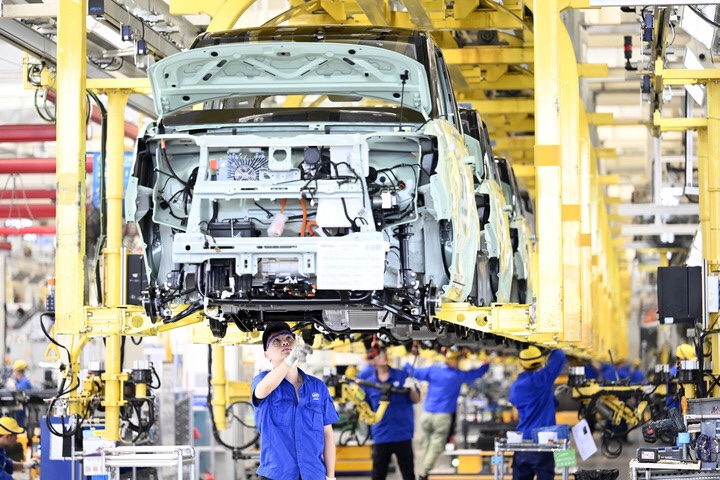
FDI to China YTD 2022
BEIJING, Sept. 19 (Xinhua) — Foreign direct investment (FDI) into the Chinese mainland, in actual use, expanded 16.4 percent year on year to 892.74 billion yuan in the first eight months of the year, the Ministry of Commerce said Monday.
In U.S. dollar terms, the inflow went up 20.2 percent year on year to 138.41 billion U.S. dollars.
The service industry saw FDI inflow jump by 8.7 percent year on year to 662.13 billion yuan, while that of high-tech industries surged by 33.6 percent from a year earlier, data from the ministry showed.
Specifically, FDI in high-tech manufacturing rose 43.1 percent from the same period a year ago, while that in the high-tech service sector surged 31 percent year on year.
During the period, investment from the Republic of Korea, Germany, Japan, and the United Kingdom climbed by 58.9 percent, 30.3 percent, 26.8 percent, and 17.2 percent, respectively.
FDI flowing into the country’s western region reported a year-on-year increase of 43 percent, followed by 27.6 percent in the central region and 14.3 percent in the eastern region.
-
Video: China becomes the new leader in Asia
Video: China becomes the new leader in Asia, new world order takes shape counter US hegemony, no need worry the Eight League of Nations – they won’t show up to back US 中國成為新靠山 世界新格局成型對抗美國霸權 不愁八國聯軍 它們不敢來 日本敢來最好可以報二戰死了二千萬中國人的仇
https://rumble.com/v1kn1hj-china-becomes-the-new-leader-in-asia.html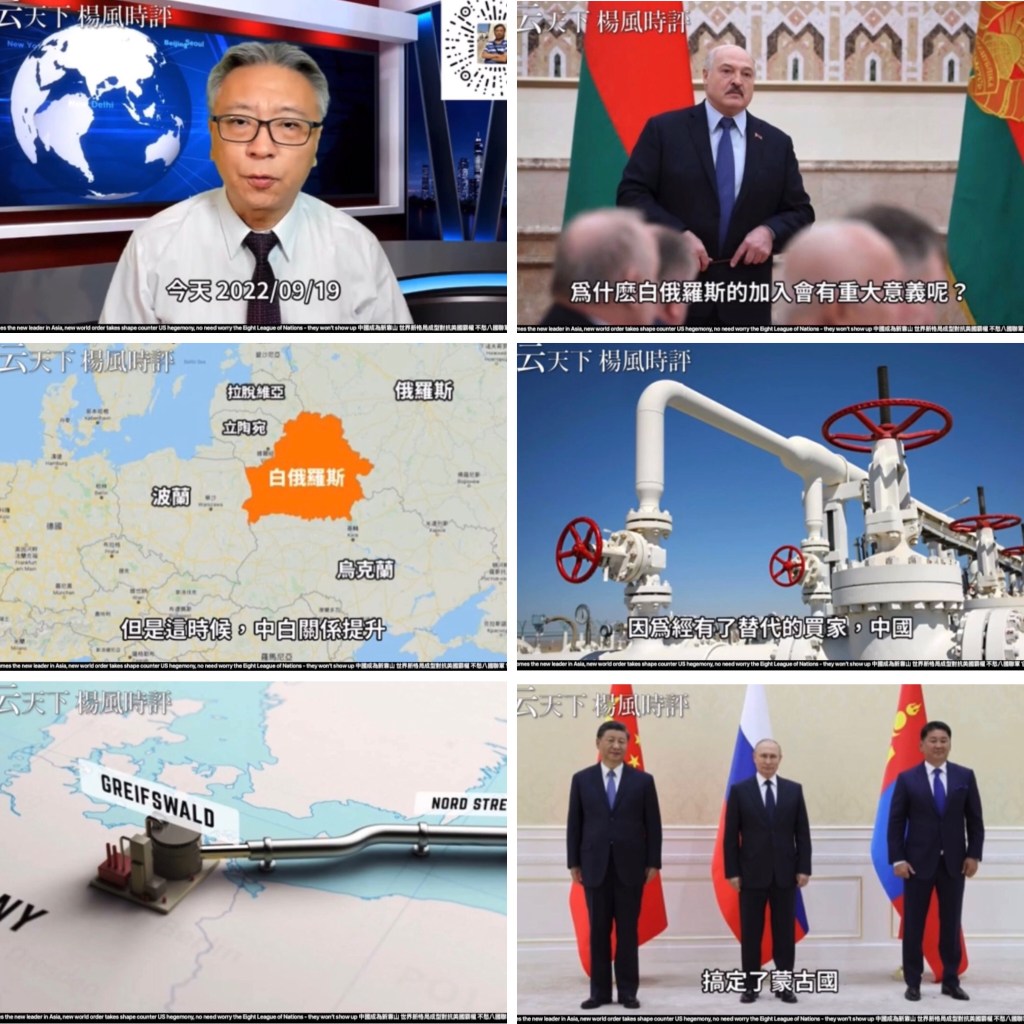
-
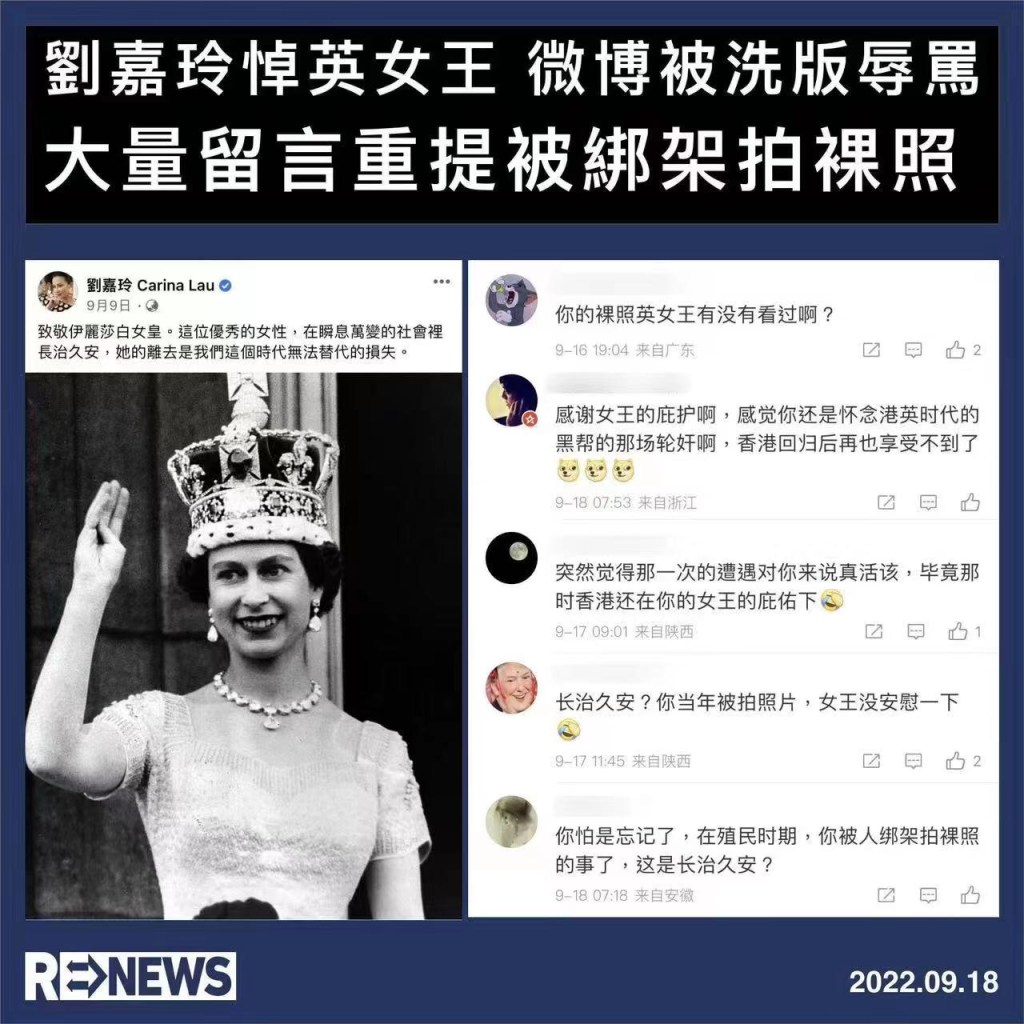
Movie Star Carina Lau mourn the death of Queen Elizabeth invited backlash
Movie Star Carina Lau mourn the death of Queen Elizabeth invited backlash 電影明星劉嘉玲悼念伊麗莎白女王的逝世,引發強烈反對
-
Taiwan Policy Act of 2022
Taiwan Policy Act of 2022 – As Qin Gang (Chinese ambassador to US) put it, if the Taiwan Policy Act is passed, the foundation of US-China relations will collapse. by SF Bay Area China Group 9-18-22
So this is a big deal and we should really pay attention to it. It is probably part of the US plan to provoke China to unify Taiwan by non-peaceful means, and to make Taiwan another Ukraine to hurt China.
Link to the US government of the Taiwan Policy Act: https://www.congress.gov/bill/117th-congress/senate-bill/4428/text.
Some commentators said the text has 107 pages, but we found fewer pages. We also found a shorter version https://www.foreign.senate.gov/imo/media/doc/SBS%20Taiwan%20Policy%20Act%20FINAL%20(1).pdf
which appears to be a summary of the Act but we are not sure. We worked with the longer version, which appears to be the original text of the Act.
Enclosed are the following:
Our excerpts of the important sections of the Act.
Our 2 page executive summary of the important sections of the Act.
A NYTimes article by Bob Menendez, a co-author of the Act, arguing that the US can’t afford to repeat Ukraine’s mistake with Taiwan.
We learned the following from the Chinese language videos on this Act:
It was probably in the works for 2 years and is the result of the Taiwan lobby in the US and the Tsai government working with the US.
Menendez and Graham visited Taiwan to get orders for 24 Boeings. In return, they pushed this legislation through the Foreign relations Comm. But the Act was modified slightly in the comm to temper the most controversial parts (e.g. changing the name of the Taiwan office like Lithuania) to one that is non-binding on the executive branch.
The DPP and the Tsai government have passed laws that dovetail with the Act. For example:
- The Tsai government is pushing a controversial digital intermediary service act that curtails free speech rights. https://www.taipeitimes.com/News/taiwan/archives/2022/08/22/2003783934
- The Tsai government banned a TV station that is pro-KMT candidate a couple years ago on pretext.
- The Tsai government changed the law (dual citizenship) to allow US citizens to become civil servants in the Taiwan government. This allows US personnel to be embedded, as provided under the Act, in the Taiwan government and military to control the Taiwan government and military. The former Taiwan president, Ma Yingjeou, was severely attacked by the DPP on the suspicion of just holding a US green card when he was a candidate.
- The Tsai government has terrorized opposition parties and those who voice dissent by branding them as PRC agents or sympathizers.
It’s all bad, but apart from the $6.5B, the most escalatory sections are the sections on military interoperability, military training (206), accelerated procurement, non-NATO status (212) and above all, the sanctions regime on individuals, financial systems, industries (802-808). This is an attempt to prepare and impose a Russia-type sanctions regime.
SEC. 802. DETERMINATIONS WITH RESPECT TO ACTIVITIES OF THE PEOPLE’S REPUBLIC OF CHINA AGAINST TAIWAN.
(a) In General.—The President shall determine, in accordance with subsection (b), whether—(1) the Government of the People’s Republic of China, the Chinese Communist Party, or any proxy, or person or entity under the control of or acting at the direction thereof, is knowingly engaged in a significant escalation in aggression, including overt or covert military activity, in or against Taiwan, compared to the level of aggression in or against Taiwan on or after the date of the enactment of this Act; and
(2) if such engagement exists, whether such escalation demonstrates an attempt to achieve or has the significant effect of achieving the physical or political control of Taiwan, including by—
(A) overthrowing or dismantling the governing institutions in Taiwan;
(B) occupying any territory controlled or administered by Taiwan as of the date of the enactment of this Act;
(C) violating the territorial integrity of Taiwan; or
(D) taking significant action against Taiwan, including—
(i) creating a naval blockade of Taiwan;
(ii) seizing the outer lying islands of Taiwan; or
(iii) initiating a significant cyber attack that threatens the civilian or military infrastructure of Taiwan.(b) Timing Of Determinations.—The President shall make the determination described in subsection (a)—
(1) not later than 15 days after the date of the enactment of this Act;
(2) after the first determination under paragraph (1), not less frequently than once every 90 days (or more frequently, if warranted) during the 1-year period beginning on such date of enactment; and
(3) after the end of such 1-year period, not less frequently than once every 120 days.(c) Report Required.—Upon making a determination described in subsection (a), the President shall submit a report describing the factors influencing such determination to the appropriate committees of Congress.
(d) Congressional Requests.—Not later than 30 days after receiving a request from the chairman and ranking member of the Committee on Foreign Relations of the Senate or the Committee on Foreign Affairs of the House of Representatives with respect to whether the People’s Republic of China or the Chinese Communist Party, including through any proxies of the People’s Republic of China or the Chinese Communist Party, has engaged in an act described in subsection (a), the President shall—(1) determine if the People’s Republic of China or the Chinese Communist Party has engaged in such an act; and
(2) submit a report to the appropriate committees of Congress that contains a detailed explanation of such determination.
SEC. 803. IMPOSITION OF SANCTIONS ON OFFICIALS OF THE GOVERNMENT OF THE PEOPLE’S REPUBLIC OF CHINA RELATING TO OPERATIONS IN TAIWAN.
(a) Defined Term.—In this section, the term “top decision-making bodies” may include—(1) the CCP Politburo Standing Committee;
(2) the CCP Party Central Military Commission;
(3) the CCP Politburo;
(4) the CCP Central Committee;
(5) the CCP National Congress;
(6) the State Council of the People’s Republic of China; and
(7) the State Central Military Commission of the CCP.(b) In General.—Not later than 60 days after making an affirmative determination under section 802(a), the President shall impose the sanctions described in section 807 with respect to at least 100 officials of the Government of the People’s Republic of China specified in subsection (c), to the extent such officials can be identified.
(c) Officials Specified.—The officials specified in this subsection shall include—
(1) senior civilian and military officials of the People’s Republic of China and military officials who have command or clear and direct decision-making power over military campaigns, military operations, and military planning against Taiwan conducted by the People’s Liberation Army;
(2) senior civilian and military officials of the People’s Republic of China who have command or clear and direct decision-making power in the Chinese Coast Guard and the Chinese People’s Armed Police and are engaged in planning or implementing activities that involve the use of force against Taiwan;
(3) senior or special advisors to the President of the People’s Republic of China;
(4) officials of the Government of the People’s Republic of China who are members of the top decision-making bodies of that Government;
(5) the highest-ranking Chinese Communist Party members of the decision-making bodies referred to in paragraph (4); and
(6) officials of the Government of the People’s Republic of China in the intelligence agencies or security services who—(A) have clear and direct decisionmaking power; and
(B) have engaged in or implemented activities that—
(i) materially undermine the military readiness of Taiwan;
(ii) overthrow or decapitate the Taiwan’s government;
(iii) debilitate Taiwan’s electric grid, critical infrastructure, or cybersecurity systems through offensive electronic or cyber attacks;
(iv) undermine Taiwan’s democratic processes through campaigns to spread disinformation; or
(v) involve committing serious human rights abuses against citizens of Taiwan, including forceful transfers, enforced disappearances, unjust detainment, or torture.(d) Additional Officials.—
SEC. 804. IMPOSITION OF SANCTIONS WITH RESPECT TO FINANCIAL INSTITUTIONS OF THE PEOPLE’S REPUBLIC OF CHINA.
(a) Definitions.—In this section:
(1) JOINT-EQUITY BANK.—The term “joint-equity bank” means a bank under the jurisdiction of the People’s Republic of China in which—
(A) the bank’s equity is owned jointly by the shareholders; and
(B) the Government of the People’s Republic of China holds an interest.(2) NATIONAL JOINT-STOCK COMMERCIAL BANK.—The term “national joint-stock commercial bank” means a bank under the jurisdiction of the People’s Republic of China in which—
(A) the bank’s stock is owned jointly by the shareholders; and
(B) the Government of the People’s Republic of China holds an interest.(3) NATIONAL STATE-OWNED POLICY BANK.—The term “national state-owned policy bank” means a bank that—
(A) is incorporated in the People’s Republic of China; and
(B) was established by the Government of the People’s Republic of China to advance investments in specific policy domains that advance the interests and goals of the People’s Republic of China.(b) In General.—
(1) IN GENERAL.—Not later than 30 days after making an affirmative determination under section 802(a), the President shall impose the sanctions described in section 807(a) with respect to
(A) at least 5 state-owned banks in the People’s Republic of China, including at least 3 of the largest state-owned banks.
(B) at least 3 national joint-stock commercial banks in the People’s Republic of China;
(C) at least 3 national state-owned policy banks in the People’s Republic of China;
(D) at least 3 joint-equity banks or other commercial banks in the People’s Republic of China; and
(E) entities that regulate the banking sector of the People’s Republic of China, or major financial asset management companies regulated by the Government of the People’s Republic of China.SEC. 806. ADDITIONAL SANCTIONS.
(a) In General.—Beginning on the date that is 90 days after the date of the enactment of this Act, the President shall impose the sanctions described in section 807 on any foreign person that the President determines, while acting for or on behalf of the Government of the People’s Republic of China, knowingly—
(1) ordered or engaged directly in activities interfering significantly in a democratic process in Taiwan; or
(2) with the objective of destabilizing Taiwan, engaged directly in, or ordered—
(A) malicious, offensive cyber-enabled activities targeting—
(i) the Government or armed forces of Taiwan; or
(ii) the critical infrastructure, including military, industrial, or financial infrastructure of Taiwan;
(B) significant economic practices intended to coerce or intimidate—
(i) the government in Taiwan; or
(ii) businesses, academic, or civil society institutions located in Taiwan; or
(C) military activities that are designed to intimidate the armed forces of Taiwan or that seek to normalize a coercive military posture and sustained presence by the People’s Liberation Army in the Taiwan Strait.
(b) Waiver.—The President may waive the application of sanctions under subsection (a) if the President submits to the appropriate committees of Congress a written determination that such waiver is in the national interests of the United States.SEC. 808. IMPLEMENTATION; REGULATIONS; PENALTIES.
(a) Implementation.—The President may exercise all authorities provided to the President under sections 203 and 205 of the International Emergency Economic Powers Act (50 U.S.C. 1702 and 1704) to carry out this title.Executory summary of Taiwan Policy Act of 2022
Sections 102, 103, 104
De facto recognization of Taiwan as an independent nation. Changes name of “Taipei Economic and Cultural Representative Office” in the United States to the “Taiwan Representative Office.”
Section 203Joint mechanism with Taiwan to recurringly assess the threats Taiwan faces from the People’s Republic of China, and identify nonmaterial and material solutions to deter and, if necessary, defeat such threats.
Section 2042 billion Loan to modernize Taiwan’s security capabilities to deter and defeat aggression by PRC. Assess and enhance readiness of its defense forces, including realistic training, recruiting, manpower shortage (including that of reserves) and its impact on a conflict with PRC, Taiwan government budget support, campaign to raise Taiwanese awareness of risks, security of critical infrastructure (transport, communication and energy). Assess and enhance Taiwan cybersecurity of government and military networks, and any resistance found within the Taiwan government and military. Maximum grant of 6.5 billion to Taiwan.
Section 205Close consultation among representatives of Taiwan, Congress, industry, and the Executive branch about requests and the needs of Taiwan to purchase arms before Taiwan submits formal requests for such purchases.
Section 206comprehensive training program with Taiwan designed to (1) achieve interoperability; (2) familiarize the militaries of the United States and Taiwan with each other; and(3) improve Taiwan’s defense capabilities. The training program should prioritize relevant and realistic training, including joint United States-Taiwan contingency tabletop exercises, war games, full-scale military exercises, and an enduring rotational United States military presence that assists Taiwan in maintaining force readiness and utilizing United States defense articles and services transferred from the United States to Taiwan.
Section 207The Secretary of State and the Secretary of Defense shall submit to congress a written assessment, of Taiwan’s needs in the areas of civilian defense and resilience, including
(A) greater utilization of Taiwan’s high tech labor force;
(B) logistics support for civilian defense role allocation;
(C) recruitment and skills training for Taiwan’s defense and civilian sectors;
(D) strategic stockpiling of resources related to critical food security and medical supplies; and
(E) other defense and resilience needs and considerations at the provincial, city, and neighborhood levels.
The assessment will analyze Taiwan’s needs for enhancing resiliency among its people and in key economic sectors, identify opportunities for Taiwan to enhance communications at all levels to strengthen trust and understanding between the military, other government departments, civilian agencies and the general public, including
(A) communications infrastructure necessary to ensure reliable communications in response to a conflict or crisis; and
(B) a plan to effectively communicate to the general public in response to a conflict or crisis.
The assessment will identify the areas and means through which the United States could provide training, exercises, and assistance at all levels to support the needs discovered through the assessment and fill any critical gaps where capacity falls short of such needs.
SEC. 212. TREATMENT OF TAIWAN AS A MAJOR NON-NATO ALLY.
Notwithstanding any other provision of law, Taiwan shall be treated as though it were designated a major non-NATO ally.
SEC. 214. International military education and training cooperation with Taiwan. Taiwan is authorized to participate in the International Military Education and Training program to train future leaders of Taiwan.
SEC. 301. STRATEGY TO RESPOND TO INFLUENCE AND INFORMATION OPERATIONS TARGETING TAIWAN. The strategy is to counter covert, coercive, and corrupting activities carried out to advance the Chinese Communist Party’s “United Front” work, and information and disinformation campaigns, cyber attacks, and nontraditional propaganda measures. The strategy includes the proposed response to propaganda and disinformation campaigns by PRC including—
(A) assistance in building the capacity of the government in Taiwan and private-sector entities to document and expose propaganda and disinformation supported by PRC;
(B) assistance to enhance the government in Taiwan’s ability to develop a whole-of-government strategy to respond to sharp power operations, including election interference; and
(C) media training for Taiwan officials and other Taiwan entities targeted by disinformation campaigns;
(2) an assessment of the extent of influence exerted by the PRC on local political parties, financial institutions, media organizations, and other entities;
(3) support for exchanges and other technical assistance to strengthen the Taiwan legal system’s ability to respond to sharp power operations.
SEC. 405.United Nations General Assembly Resolution 2758 did not address (B) the issue of representation and meaningful participation of Taiwan and its people in the United Nations or in any related organizations; and (C) did not take a position on the relationship between the People’s Republic of China and Taiwan or include any statement pertaining to Taiwan’s sovereignty. The United States opposes any initiative that seeks to change Taiwan’s status without the consent of the people of Taiwan.”
SEC. 605. TAIWAN FELLOWSHIP PROGRAM. Eligible United States citizens will be awarded 5-10 fellowships for placement of fellows in an agency of the government in Taiwanor an organization outside of the government in Taiwan, whose interests are associated with the interests of the United States Government from which the fellow is or had been employed.
SEC. 607. TAIWAN FELLOWS ON DETAIL FROM GOVERNMENT SERVICE. A United States Government employee who has been awarded a fellowship under SEC. 605. May be assignment to the government in Taiwan or an organization described in SEC. 605.
This Is How the U.S. Will Stand With Taiwan NYTimes 8.3.22
Bob Menendez
Vladimir Putin’s brutal attack on his Ukrainian neighbors has sparked global outrage — and forged unprecedented unity — among the democratic nations of the world. Not so with Xi Jinping, the hypernationalist president of the People’s Republic of China. Rather, he is no doubt taking notes and learning lessons from Russia’s unprovoked attack on Ukraine to apply to his plans for Taiwan.
The United States and our partners in the international community need to do the same to develop and put in place a new and more resilient strategy for Taiwan while there is still time.
A clear lesson from the war in Ukraine is that authoritarian leaders have been emboldened in recent years by dysfunctional democracies and hesitant international institutions. Accordingly, the United States needs less ambiguity to guide our approach to Taiwan. In today’s world — with Mr. Xi’s China — a robust and credible deterrence to preserve peace and stability across the Taiwan Strait requires clarity in word and deed. President Biden vowed in May to use force to defend Taiwan — the third time he has said so, even though his aides have said the longstanding U.S. policy of strategic ambiguity has not changed.
The moral and strategic case for standing with Taiwan, whose people share our interests and our values, could not be clearer. China is carrying out influence campaigns against Taiwan using cyberattacks and disinformation, deploying propaganda to reinforce its “one China” message, spreading disinformation and conspiracy theories to divide Taiwanese society and make it easier to gain control of the island. This is a plan of attack eerily reminiscent of Mr. Putin’s in Ukraine.
China is also employing coercive economic tactics against any nation or company that does not fall in line with Beijing’s anti-Taiwan policy, going as far as imposing a trade embargo on Lithuania for welcoming a Taiwanese representative office in Vilnius. Given Taiwan’s role as “foundry to the world” for the manufacture of advanced microchips, Beijing’s willingness to threaten supply chains and potentially hold the global economy hostage is a matter of concern for the United States’ prosperity and security and those of our allies and partners.
Making matters worse, Taiwan now also faces an aggressive Chinese military, which seems determined to be postured for an invasion in the coming years.
China’s rapid military buildup with new technologies and weapons deployed against Taiwan threatens to destabilize the entire Indo-Pacific. There are near daily Chinese military incursions into Taiwan’s air defense zone and dangerous and unsafe Chinese Navy maneuvers intended to coerce and intimidate Taiwan on the high seas as well. Only a few weeks ago, 29 Chinese military aircraft, including six bombers, flew into Taiwan’s air defense zone — sending a clear message of a potential blockade — before returning to base. These are not the actions of a nation with a policy of maintaining peace and stability. These are the actions of a nation intent on aggression.
Moreover, Beijing’s recent threats over Speaker Nancy Pelosi’s trip to Taiwan were as predictable as they were indicative of Mr. Xi’s truculence. But the United States must be clear: Using her visit as an excuse for performative sound and fury is simply that, a pretext for more aggressive steps that China has been preparing to take anyway. That is why Ms. Pelosi was right in not letting China decide who can and cannot visit Taiwan. The result of Beijing’s bluster should be to stiffen resolve in Taipei, in Washington and across the region. There are many strategies to continue standing up to Chinese aggression; there is clear bipartisan congressional agreement on the importance of acting now to provide the people of Taiwan with the type of support they desperately need.
We saw the warning signs for Ukraine in 2014 and failed to take action that might have deterred further Russian aggression. We cannot afford to repeat that mistake with Taiwan.
That is why I have worked with Senator Lindsey Graham to introduce the bipartisan Taiwan Policy Act of 2022.
Our legislation would reinforce the security of Taiwan by providing almost $4.5 billion in security assistance over the next four years and recognizing Taiwan as a “major non-NATO ally” — a powerful designation to facilitate closer military and security ties. It would also expand Taiwan’s diplomatic space through its participation in international organizations and in multilateral trade agreements.
The legislation would also take concrete steps to counter China’s aggressive influence campaigns, impose crippling economic costs if Beijing takes hostile action against Taiwan (such as financial, banking, visa and other sanctions) and reform American bureaucratic practices to bolster support for Taiwan’s democratic government. In short, this effort would be the most comprehensive restructuring of U.S. policy toward Taiwan since the Taiwan Relations Act of 1979.
While Beijing will likely rely on a planned narrative of blaming the United States for any aggression, the fact is that it’s China, not the United States, that has been steadily seeking to change the status quo with Taiwan.
The United States and our partners must remain cleareyed as we respond with measured steps during this critical window of opportunity — before China unalterably changes the cross-strait dynamic to its advantage and sets the stage for a possible invasion of Taiwan — to reinvigorate our diplomatic strategy. To work with Taipei to modernize its military to maintain deterrence. To combat Beijing’s political influence and misinformation campaigns. And to develop deeper ties between our two peoples.
As China challenges us across every dimension of national security — militarily, economically and diplomatically and on values — we are laying out a new vision that ensures our country is positioned to defend Taiwan for decades to come. Getting our strategy right is essential to deter and constrain Beijing’s problematic behavior and to encourage Mr. Xi to make different choices from Mr. Putin’s.
To be clear, the United States is not the world’s policeman. But surely we have a moral and practical obligation to stand with the people of Taiwan, who want only to be able to determine their own future.
If we do nothing, then we must be comfortable with effectively ceding Taiwan by letting China continue its unabated military, economic and diplomatic bullying campaign.
Mr. Putin’s delusions in Ukraine could not make the catastrophic global consequences of inaction clearer.
SEC. 102. TREATMENT OF THE GOVERNMENT IN TAIWAN.
(a) IN GENERAL.—The Secretary of State and other Federal departments and agencies shall—
(1) engage with the democratically-elected government in Taiwan as the legitimate representative of the people of Taiwan; and
(2) end the outdated practice of referring to the government in Taiwan as the “Taiwan authorities”.
(b) NO RESTRICTIONS ON BILATERAL INTERACTIONS.—Notwithstanding the continued supporting role of the American Institute in Taiwan in carrying out United States foreign policy and protecting United States interests in Taiwan, the United States Government shall not place any undue restrictions on the ability of officials of the Department of State or other Federal departments and agencies to interact directly and routinely with their counterparts in the government in Taiwan.
SEC. 103. TAIWAN SYMBOLS OF SOVEREIGNTY.
(a) DEFINED TERM.—In this section, the term “official purposes” means—
(1) the wearing of official uniforms;
(2) conducting government-hosted ceremonies or functions; and
(3) appearances on Department of State social media accounts promoting engagements with Taiwan.
(b) IN GENERAL.—Not later than 90 days after the date of the enactment of this Act, the Secretary of State shall rescind any contact guideline, internal restriction, section of the Foreign Affairs Manual or the Foreign Affairs Handbook, or related guidance or policies that, explicitly or implicitly, including through restrictions or limitations on activities of United States Government personnel, limits the ability of members of the armed forces of the Republic of China (Taiwan) and government representatives from the Taipei Economic and Cultural Representative Office to display, for official purposes, symbols of Republic of China sovereignty, including—
(1) the flag of the Republic of China (Taiwan); and
(2) the corresponding emblems or insignia of military units.
SEC. 104. SENSE OF CONGRESS ON DESIGNATION AND REFERENCES TO TAIWAN REPRESENTATIVE OFFICE.
(a) SENSE OF CONGRESS.—It is the sense of Congress that the United States, consistent with the Taiwan Relations Act (Public Law 96–8; 22 U.S.C. 3301 et seq.) and the Six Assurances should—
(1) provide the people of Taiwan with de facto diplomatic treatment equivalent to foreign countries, nations, states, governments, or similar entities; and
(2) seek to enter into negotiations with the Taipei Economic and Cultural Representative Office to rename the “Taipei Economic and Cultural Representative Office” in the United States as the “Taiwan Representative Office”.
SEC. 203. JOINT ASSESSMENT.
(a) IN GENERAL.—The Secretary of State, in consultation with the Secretary of Defense, shall establish and maintain a joint consultative mechanism with Taiwan that convenes on a recurring basis—
(1) to develop a joint assessment of, and coordinate planning with respect to, the threats Taiwan faces from the People’s Republic of China across the spectrum of possible military action; and
(2) to identify nonmaterial and material solutions to deter and, if necessary, defeat such threats.
(b) INTEGRATED PRIORITIES LIST.—In carrying out subsection (a), the Secretary of Defense, in consultation with the Secretary of State, shall develop with Taiwan—
(1) an integrated priorities list;
(2) relevant plans for acquisition and training for relevant nonmaterial and material solutions; and
(3) other measures to appropriately prioritize the defense needs of Taiwan to maintain effective deterrence across the spectrum of possible military action by the People’s Republic of China.
(c) REPORT.—Not later than 180 days after the date of the enactment of this Act, and annually thereafter for the following 5 years, the Secretary of Defense, in consultation with the Secretary of State, shall submit a report to the appropriate committees of Congress that describes the joint assessment developed pursuant to subsection (a)(1).
SEC. 204. MODERNIZING TAIWAN’S SECURITY CAPABILITIES TO DETER AND, IF NECESSARY, DEFEAT AGGRESSION BY THE PEOPLE’S REPUBLIC OF CHINA.
(3) MATTERS TO BE INCLUDED.—Each report required under paragraph (2) shall include—
(A) an assessment of the commitment of Taiwan to implement a military strategy that will deter and, if necessary, defeat military aggression by the People’s Republic of China, including the steps that Taiwan has taken and the steps that Taiwan has not taken towards such implementation;
(B) an assessment of the efforts of Taiwan to acquire and employ within its forces counterintervention capabilities, including—
(i) long-range precision fires;
(ii) integrated air and missile defense systems;
(iii) anti-ship cruise missiles;
(iv) land-attack cruise missiles;
(v) coastal defense;
(vi) anti-armor;
(vii) undersea warfare;
(viii) survivable swarming maritime assets;
(ix) manned and unmanned aerial systems;
(x) mining and countermining capabilities;
(xi) intelligence, surveillance, and reconnaissance capabilities;
(xii) command and control systems; and
(xiii) any other defense capabilities that the United States and Taiwan jointly determine are crucial to the defense of Taiwan, in accordance with the process developed pursuant to section 203(a);
(C) an evaluation of the balance between conventional and counter intervention capabilities in the defense force of Taiwan as of the date on which the report is submitted;
(D) an assessment of steps taken by Taiwan to enhance the overall readiness of its defense forces, including—
(i) the extent to which Taiwan is requiring and providing regular and relevant training to such forces;
(ii) the extent to which such training is realistic to the security environment that Taiwan faces; and
(iii) the sufficiency of the financial and budgetary resources Taiwan is putting toward readiness of such forces;
(E) an assessment of steps taken by Taiwan to ensure that the Taiwan Reserve Command can recruit, train, and equip its forces;
(F) an evaluation of—
(i) the severity of manpower shortages in the military of Taiwan, including in the reserve forces;
(ii) the impact of such shortages in the event of a conflict scenario; and
(iii) the efforts made by the government in Taiwan to address such shortages;
(G) an assessment of the efforts made by Taiwan to boost its civilian defenses, including any informational campaigns to raise awareness among the population of Taiwan of the risks Taiwan faces;
(H) an assessment of the efforts made by Taiwan to secure its critical infrastructure, including in transportation, telecommunications networks, and energy;
(I) an assessment of the efforts made by Taiwan to enhance its cybersecurity, including the security of civilian government and military networks;
(J) an assessment of any significant gaps in any of the matters described in subparagraphs (A) through (I) with respect to which the United States assesses that additional action is needed;
(K) a description of cooperative efforts between the United States and Taiwan on the matters described in subparagraphs (A) through (J); and
(L) a description of any resistance within the government in Taiwan and the military leadership of Taiwan to—
(i) implementing the matters described in subparagraphs (A) through (I); or
(ii) United States’ support or engagement with regard to such matters.
(B) MAXIMUM OBLIGATIONS.—Gross obligations for the principal amounts of loans authorized under subparagraph (A) may not exceed $2,000,000,000.
(1) AUTHORIZATION OF APPROPRIATIONS.—In addition to amounts otherwise authorized to be appropriated for Foreign Military Financing, there is authorized to be appropriated to the Department of State for Taiwan Foreign Military Finance grant assistance—
(A) $250,000,000 for fiscal year 2023;
(B) $750,000,000 for fiscal year 2024;
(C) $1,500,000,000 for fiscal year 2025;
(D) $2,000,000,000 for fiscal year 2026; and
(E) $2,000,000,000 for fiscal year 2027.
SEC. 205. REQUIREMENTS REGARDING DEFINITION OF COUNTER INTERVENTION CAPABILITIES.
(a) STATEMENT OF POLICY.—It is the policy of the United States—
(1) to ensure that requests by Taiwan to purchase arms from the United States are not prematurely rejected or dismissed before Taiwan submits a letter of request or other formal documentation, particularly when such requests are for capabilities that are not included on any United States Government priority lists of necessary capabilities for the defense of Taiwan; and
(2) to ensure close consultation among representatives of Taiwan, Congress, industry, and the Executive branch about requests referred to in paragraph (1) and the needs of Taiwan before Taiwan submits formal requests for such purchases.
(b) REPORTING REQUIREMENT.—Not later than 45 days after the date of the enactment of this Act, the Secretary of State and the Secretary of Defense shall jointly submit to the appropriate committees of Congress—
(1) a list of categories of counter intervention capabilities and a justification for each such category; and
(2) a description of the degree to which the United States has a policy of openness or flexibility for the consideration of capabilities that may not fall within the scope of counter intervention capabilities included in the list required under paragraph (1), due to potential changes, such as—
(A) the evolution of defense technologies;
(B) the identification of new concepts of operation or ways to employ certain capabilities; and
(C) other factors that might change assessments by the United States and Taiwan of what constitutes counter intervention capabilities.
(c) FORM.—The report required in this section shall be submitted in classified form.
SEC. 206. COMPREHENSIVE TRAINING PROGRAM.
(a) IN GENERAL.—The Secretary of State and the Secretary of Defense shall establish or expand a comprehensive training program with Taiwan designed to—
(1) achieve interoperability;
(2) familiarize the militaries of the United States and Taiwan with each other; and
(3) improve Taiwan’s defense capabilities.
(b) ELEMENTS.—The training program should prioritize relevant and realistic training, including as necessary joint United States-Taiwan contingency tabletop exercises, war games, full-scale military exercises, and an enduring rotational United States military presence that assists Taiwan in maintaining force readiness and utilizing United States defense articles and services transferred from the United States to Taiwan.
(c) ANNUAL REPORT.—Not later than 90 days after the date of the enactment of this Act, and annually thereafter for the following 5 years, the Secretary of State, in consultation with the Secretary of Defense, shall submit to the appropriate committees of Congress a classified report that describes all training provided to the armed forces of Taiwan in the prior fiscal year, including a description of how such training—
(1) achieved greater interoperability;
(2) familiarized the militaries of the United States and Taiwan with each other; and
(3) improved Taiwan’s defense capabilities.
SEC. 207. ASSESSMENT OF TAIWAN’S NEEDS FOR CIVILIAN DEFENSE AND RESILIENCE.
(a) ASSESSMENT REQUIRED.—Not later than 120 days after the date of enactment of this Act, the Secretary of State and the Secretary of Defense, in coordination with the Director of National Intelligence and other cabinet Secretaries, as appropriate, shall submit a written assessment, with a classified annex, of Taiwan’s needs in the areas of civilian defense and resilience to the appropriate committees of Congress, the Select Committee on Intelligence of the Senate, and the Permanent Select Committee on Intelligence of the House of Representatives.
(b) MATTERS TO BE INCLUDED.—The assessment required under subsection (a) shall—
(1) analyze the potential role of Taiwan’s public and civilian assets in defending against various scenarios for foreign militaries to coerce or conduct military aggression against Taiwan;
(2) carefully analyze Taiwan’s needs for enhancing its defensive capabilities through the support of civilians and civilian sectors, including—
(A) greater utilization of Taiwan’s high tech labor force;
(B) the creation of clear structures and logistics support for civilian defense role allocation;
(C) recruitment and skills training for Taiwan’s defense and civilian sectors;
(D) strategic stockpiling of resources related to critical food security and medical supplies; and
(E) other defense and resilience needs and considerations at the provincial, city, and neighborhood levels;
(3) analyze Taiwan’s needs for enhancing resiliency among its people and in key economic sectors;
(4) identify opportunities for Taiwan to enhance communications at all levels to strengthen trust and understanding between the military, other government departments, civilian agencies and the general public, including—
(A) communications infrastructure necessary to ensure reliable communications in response to a conflict or crisis; and
(B) a plan to effectively communicate to the general public in response to a conflict or crisis; and
(5) identify the areas and means through which the United States could provide training, exercises, and assistance at all levels to support the needs discovered through the assessment and fill any critical gaps where capacity falls short of such needs.
SEC. 212. TREATMENT OF TAIWAN AS A MAJOR NON-NATO ALLY.
Notwithstanding any other provision of law, Taiwan shall be treated as though it were designated a major non-NATO ally, as defined in section 644(q) of the Foreign Assistance Act of 1961 (22 U.S.C. 2403(q) et seq.), for the purposes of the transfer or possible transfer of defense articles or defense services under the Arms Export Control Act (22 U.S.C. 2751 et seq.), section 2350a of title 10, United States Code, the Foreign Assistance Act of 1961 (22 U.S.C. 2151 et seq.), or any other provision o
SEC. 214. INTERNATIONAL MILITARY EDUCATION AND TRAINING COOPERATION WITH TAIWAN.
(a) SENSE OF CONGRESS.—It is the sense of Congress that—
(1) International Military Education and Training (IMET) is a critical component of United States security assistance that promotes improved capabilities of the military forces of allied and friendly countries and closer cooperation between the United States Armed Forces and such military forces;
(2) it is in the national interest of the United States and consistent with the Taiwan Relations Act (Public Law 96–8; 22 U.S.C. 3301 et seq.) to further strengthen the military forces of Taiwan, particularly—
(A) to enhance the defensive capabilities of such forces; and
(B) to improve interoperability of such forces with the United States Armed Forces; and
(3) the government in Taiwan—
(A) should be authorized to participate in the International Military Education and Training program; and
(B) should encourage eligible officers and civilian leaders of Taiwan to participate in such training program and promote successful graduates to positions of prominence in the military forces of Taiwan.
(b) AUTHORIZATION OF PARTICIPATION OF TAIWAN IN THE INTERNATIONAL MILITARY EDUCATION AND TRAINING PROGRAM.—Taiwan is authorized to participate in the International Military Education and Training program for the following purposes:
(1) To train future leaders of Taiwan.
(2) To establish a rapport between the United States Armed Forces and the military forces of Taiwan to build partnerships for the future.
(3) To enhance interoperability and capabilities for joint operations between the United States and Taiwan.
(4) To promote professional military education, civilian control of the military, and protection of human rights in Taiwan.
(5) To foster a better understanding of the United States among individuals in Taiwan.
SEC. 301. STRATEGY TO RESPOND TO INFLUENCE AND INFORMATION OPERATIONS TARGETING TAIWAN.
(a) IN GENERAL.—Not later than 180 days after the date of the enactment of this Act and annually thereafter for the following 5 years, the Secretary of State shall develop and implement a strategy to respond to—
(1) covert, coercive, and corrupting activities carried out to advance the Chinese Communist Party’s “United Front” work, including activities directed, coordinated, or otherwise supported by the United Front Work Department or its subordinate or affiliated entities; and
(2) information and disinformation campaigns, cyber attacks, and nontraditional propaganda measures supported by the Government of the People’s Republic of China and the Chinese Communist Party that are directed toward persons or entities in Taiwan.
(b) ELEMENTS.—The strategy required under subsection (a) shall include descriptions of—
(1) the proposed response to propaganda and disinformation campaigns by the People’s Republic of China and cyber-intrusions targeting Taiwan, including—
(A) assistance in building the capacity of the government in Taiwan and private-sector entities to document and expose propaganda and disinformation supported by the Government of the People’s Republic of China, the Chinese Communist Party, or affiliated entities;
(B) assistance to enhance the government in Taiwan’s ability to develop a whole-of-government strategy to respond to sharp power operations, including election interference; and
(C) media training for Taiwan officials and other Taiwan entities targeted by disinformation campaigns;
(2) the proposed response to political influence operations that includes an assessment of the extent of influence exerted by the Government of the People’s Republic of China and the Chinese Communist Party in Taiwan on local political parties, financial institutions, media organizations, and other entities;
(3) support for exchanges and other technical assistance to strengthen the Taiwan legal system’s ability to respond to sharp power operations;
(4) the establishment of a coordinated partnership, through the American Institute in Taiwan’s Global Cooperation and Training Framework, with like-minded governments to share data and best practices with the government in Taiwan regarding ways to address sharp power operations supported by the Government of the People’s Republic of China and the Chinese Communist Party; and
(5) programs carried out by the Global Engagement Center to expose misinformation and disinformation in the Chinese Communist Party’s propaganda.
SEC. 405. CLARIFICATION REGARDING UNITED NATIONS GENERAL ASSEMBLY RESOLUTION 2758 (XXVI).
Section 2(a) of the Taiwan Allies International Protection and Enhancement Initiative (TAIPEI) Act of 2019 (Public Law 116–135) is amended by adding at the end the following:
“(10) United Nations General Assembly Resolution 2758 (1971)—
“(A) established the representatives of the Government of the People’s Republic of China as the only lawful representatives of China to the United Nations;
“(B) did not address the issue of representation and meaningful participation of Taiwan and its people in the United Nations or in any related organizations; and
“(C) did not take a position on the relationship between the People’s Republic of China and Taiwan or include any statement pertaining to Taiwan’s sovereignty.
“(11) The United States opposes any initiative that seeks to change Taiwan’s status without the consent of the people of Taiwan.”.
SEC. 605. TAIWAN FELLOWSHIP PROGRAM.
(a) ESTABLISHMENT.—The Secretary of State shall establish the Taiwan Fellowship Program (referred to in this section as the “Program”) to provide a fellowship opportunity in Taiwan of up to 2 years for eligible United States citizens. The Department of State, in consultation with the American Institute in Taiwan and the implementing partner, may modify the name of the Program.
(b) COOPERATIVE AGREEMENT.—
(1) IN GENERAL.—The American Institute in Taiwan should use amounts appropriated pursuant to section 608(a) to enter into an annual or multi-year cooperative agreement with an appropriate implementing partner.
(2) FELLOWSHIPS.—The Department of State or the American Institute in Taiwan, in consultation with, as appropriate, the implementing partner, should award to eligible United States citizens, subject to available funding—
(A) approximately 5 fellowships during the first 2 years of the Program; and
(B) approximately 10 fellowships during each of the remaining years of the Program.
(c) AMERICAN INSTITUTION IN TAIWAN AGREEMENT; IMPLEMENTING PARTNER.—Not later than 30 days after the date of the enactment of this Act, the American Institute in Taiwan, in consultation with the Department of State, should—
(1) begin negotiations with the Taipei Economic and Cultural Representative Office, or with another appropriate entity, for the purpose of entering into an agreement to facilitate the placement of fellows in an agency of the government in Taiwan; and
(2) begin the process of selecting an implementing partner, which—
(A) shall agree to meet all of the legal requirements required to operate in Taiwan; and
(B) shall be composed of staff who demonstrate significant experience managing exchange programs in the Indo-Pacific region.
(d)2 During the second year of each fellowship under this section, each fellow, subject to the approval of the Department of State, the American Institute in Taiwan, and the implementing partner, and in accordance with the purposes of this title, should work in
(B) an organization outside of the government in Taiwan, whose interests are associated with the interests of the fellow and the agency of the United States Government from which the fellow is or had been employed.
(f) SUNSET.—The fellowship program under this title shall terminate 7 years after the date of the enactment of this Act.
SEC. 607. TAIWAN FELLOWS ON DETAIL FROM GOVERNMENT SERVICE.
(a) IN GENERAL.—
(1) DETAIL AUTHORIZED.—With the approval of the Secretary of State, an agency head may detail, for a period of not more than 2 years, an employee of the agency of the United States Government who has been awarded a fellowship under this title, to the American Institute in Taiwan for the purpose of assignment to the government in Taiwan or an organization described in section 605(d)(2)(B).
(2) AGREEMENT.—Each detailee shall enter into a written agreement with the Federal Government before receiving a fellowship, in which the fellow shall agree—
(A) to continue in the service of the sponsoring agency at the end of fellowship for a period of at least 4 years (or at least 2 years if the fellowship duration is 1 year or shorter) unless the detailee is involuntarily separated from the service of such agency; and
(B) to pay to the American Institute in Taiwan, or the United States Government agency, as appropriate, any additional expenses incurred by the Federal Government in connection with the fellowship if the detailee voluntarily separates from service with the sponsoring agency before the end of the period for which the detailee has agreed to continue in the service of such agency.
SEC. 803. IMPOSITION OF SANCTIONS ON OFFICIALS OF THE GOVERNMENT OF THE PEOPLE’S REPUBLIC OF CHINA RELATING TO OPERATIONS IN TAIWAN.
SEC. 804. IMPOSITION OF SANCTIONS WITH RESPECT TO FINANCIAL INSTITUTIONS OF THE PEOPLE’S REPUBLIC OF CHINA. SEC. 806. ADDITIONAL SANCTIONS.
(a) IN GENERAL.—Beginning on the date that is 90 days after the date of the enactment of this Act, the President shall impose the sanctions described in section 807 on any foreign person that the President determines, while acting for or on behalf of the Government of the People’s Republic of China, knowingly—
(1) ordered or engaged directly in activities interfering significantly in a democratic process in Taiwan; or
(2) with the objective of destabilizing Taiwan, engaged directly in, or ordered—
(A) malicious, offensive cyber-enabled activities targeting—
(i) the Government or armed forces of Taiwan; or
(ii) the critical infrastructure, including military, industrial, or financial infrastructure of Taiwan;
(B) significant economic practices intended to coerce or intimidate—
(i) the government in Taiwan; or
(ii) businesses, academic, or civil society institutions located in Taiwan; or
(C) military activities that are designed to intimidate the armed forces of Taiwan or that seek to normalize a coercive military posture and sustained presence by the People’s Liberation Army in the Taiwan Strait.
(b) WAIVER.—The President may waive the application of sanctions under subsection (a) if the President submits to the appropriate committees of Congress a written determination that such waiver is in the national interests of the United States.
SEC. 903. STUDY.
(ii) additional qualified persons to serve as detailees to or employees of the Center, including—
(I) from any other relevant Federal department or agencies, to include the Department of State and the United States Agency for International Development;
(II) qualified foreign service nationals or locally engaged staff who are considered citizens of Taiwan; and
TITLE X—SOUTH CHINA SEA AND EAST CHINA SEA SANCTIONS ACT
SEC. 1005. REPORT ON COUNTRIES THAT RECOGNIZE CHINESE SOVEREIGNTY OVER THE SOUTH CHINA SEA OR THE EAST CHINA SEA.
Taiwanese don’t want to declare independence. DPP is now controlling Taiwan Province, they could try, but did not!
The ROC constitution requires a vote for a constitutional amendment in order to change the status of Taiwan Island. Until then, it is simply a province of China, according to the ROC/Taiwan government itself.
The vast majority of people living in the province of Taiwan want to maintain the status quo at the current moment. There is no mandate for independence.
The US wants to push Taiwan province towards independence–against the wishes of its own people–so that it can be weaponized as a forward base of the US Empire (as it was until 1971), and thus serve as the spear point of and as deadly provocation for war against China.
The island of Taiwan is not recognized as a nation by the UN, the US, the EU, NATO, or any country in Asia, in total, or 95% of the world’s population. All understand that Taiwan is part of China. How China can “invade” itself.
Not to beat a dead horse, but also missed, is the fact that Taiwan island is not recognized as an independent nation by itself either.
The nation it claims to be is the Republic of China, and its constitution understands Taiwan Island as a province of China.
The 13 countries that recognize the ROC diplomatically are 1 African state (Eswatini), 4 Central/S. American States (Belize, Guatemala, Paraguay, Honduras) and several small island states in the Caribbean & Pacific (Haiti, Marshall Islands, Nauru, Palau, Saint Kitts and Nevis, Saint Lucia, Saint Vincent and the Grenadines, Tuvalu).
If you add the total populations of the 8 smaller states (Belize and 7 island states), you come up with a population of less than 1M.
4 of the smaller states (Nauru, Palau, St. Kitts, Tuvalu) have populations of less than 50,000 people–they are the equivalent of towns.
The total population of the world that recognizes Taiwan/ROC is less than the population of Anhui province.
Also significant is the fact that the ROC military on Taiwan island–who are almost all KMT–are strongly opposed to separatism, and it’s unclear whether they would fight the PRC for independence. They see themselves as Chinese, and they respect the mainland for its accomplishments. They have contempt for the Pan-Green/DPP position who see themselves a Japanese-Western-faux indigenous. The indigenous also oppose DPP separatism. At the end of the day, I believe the military will make the final decision.
-
Record Bankruptcy in US
The price Americans, EU and the world are paying for US proxy war against Russia in Ukraine: Record Bankruptcy in US
Fact-checked might said fake news, Not a complete hoax. As a total list, it’s misleading, but some of the facts are true or at least partially true. by SF Bay Area China Group (20 people went over the list)
The Mall of America hasn’t paid its mortgage in two months https://www.cnbc.com/2020/05/21/the-mall-of-america-hasnt-paid-its-mortgage-in-two-months.html
Birkin maker Hermes to close production sites in France – report https://www.reuters.com/article/health-coronavirus-hermes-idUSL8N2BA8KP
Hermès Closes Stores till Further Notice – Updates https://www.pursebop.com/boptalk/topic/hermes-closes-all-stores-in-the-usa-till-further-notice
- Victoria’s Secret declared bankruptcy.
- Zara closed 1,200 stores.
- La Chapelle withdrew 4391 stores.
- Chanel is discontinued.
- Hermes is discontinued.
- Patek Philippe discontinued production.
- Rolex discontinued production.
- The world’s luxury industry has crumpled.
- Nike has a total of $23 billion US dollars preparing for the second stage of layoffs.
- Gold’s gym filed for bankruptcy.
- The founder of AirBnb said that because of pandemic
12 years of efforts were destroyed in 6 weeks. - Even Starbucks also announced to permanently close their 400 stores.
- WeWork isn’t in a great spot either
- Nissan Motor Co. may close down in USA
- Biggest Car Rental company (Hertz) filed for bankruptcy – they also own Thrifty and Dollar.
- Biggest Trucking company (Comcar) filed for bankruptcy – they have 4000 trucks.
- Oldest retail company (JC Penny) filed for bankruptcy – to be acquired by Amazon for pennies.
- Biggest investor in the world (Warren Buffet) lost $50B in the last 2 months.
- Biggest investment company in the world (BlackRock) is signalling disaster in the world economy – they manage over $7 Trillion.
- Biggest mall in America (Mall of America) stopped paying mortgage payments.
- Most reputable airline in the world (Emirates) laying off 30% of its employees.
- US Treasury printing trillions to try to keep the economy on life support.
- Estimated no. of retail stores closing in 2020 – 12,000 to 15,000.
The following are big retailers that have announced closing 100s of shops laying of 10s of thousands of workers while the 1% American elites, US Politicians and the military industrial complex are laughing to the bank everyday in the name of democracy human rights and rules of laws:
- J. Crew
- Gap
- Victoria’s Secret
- Bath & Body Works
- Forever 21
- Sears
- Walgreens
- GameStop
- Pier 1 Imports
- Nordstrom
- Papyrus
- Chico’s
- Destination Maternity
- Modell’s
- A.C. Moore
- Macy’s
- Bose
- Art Van Furniture
- Olympia Sports
- K Mart
- Specialty Cafe & Bakery
and many many more
Unemployment claims reached an all-time high of 38+ million – unemployment is over 25% (out of 160 million of work force, close to 40 million are jobless).
With no income, consumer demand is falling drastically and the economy will go into a free fall.
This is USA
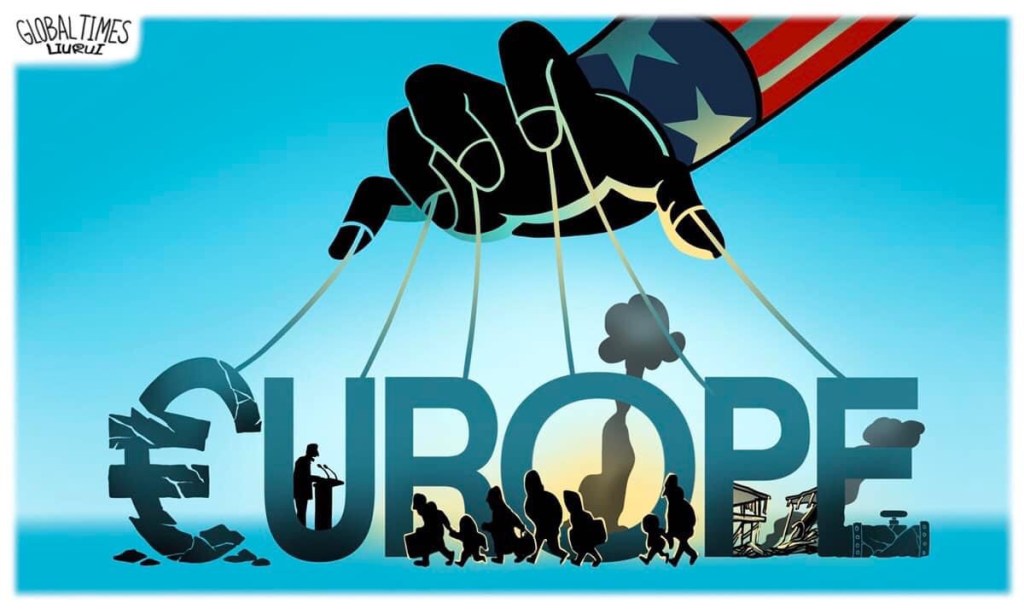
-
HK Style Egg Tart
This Hong Kong style Egg Tarts are comparable to those in HK in terms of taste. You can find it in Oakland Chinatown. The one in San Francisco Chinatown is more expensive and they don’t always open for biz.

-
Xi’s key quotes at SCO
Chinese President Xi Jinping spoke at the 22nd Meeting of the Council of Heads of State of the Shanghai Cooperation Organization (SCO) on Friday in the Uzbek city of Samarkand. Here are some of the key quotes from his speech.
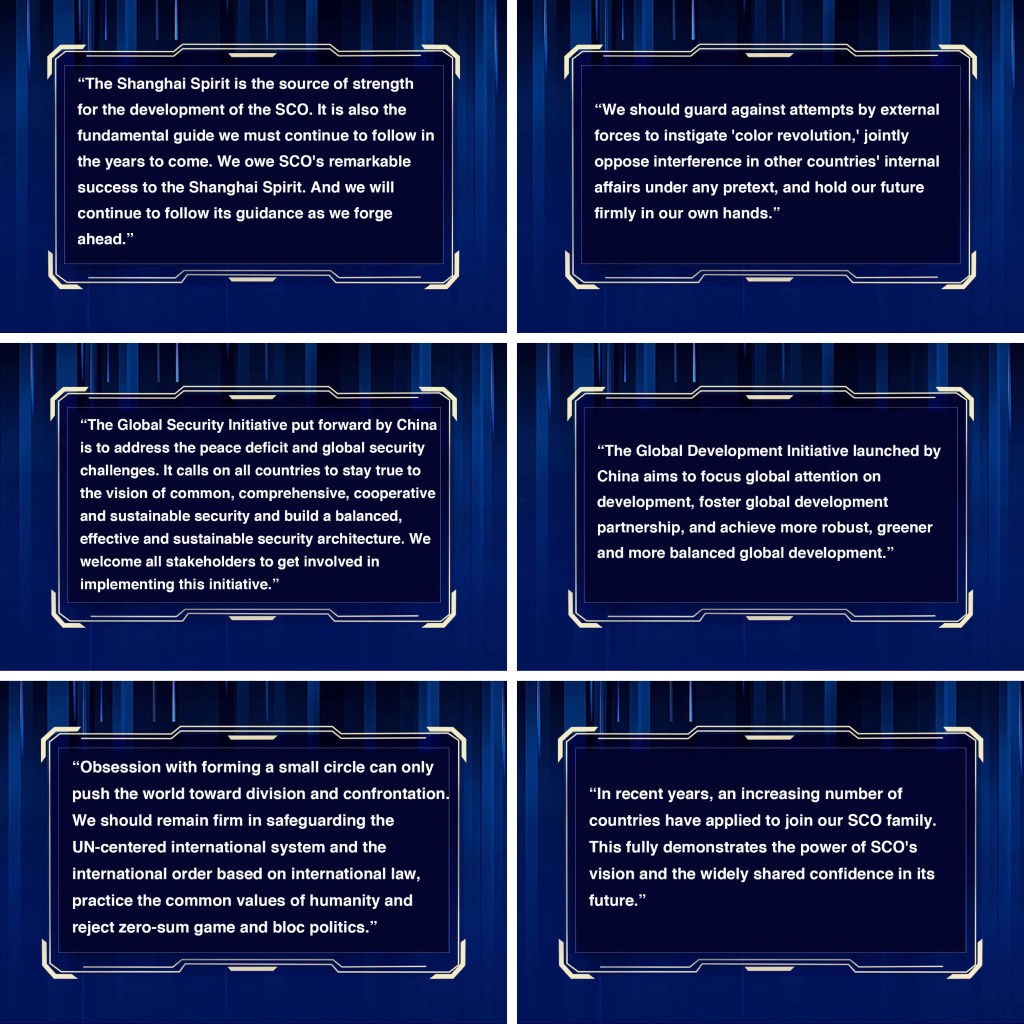
-
Queen Elizabeth Legacy
Queen Elizabeth could leave a legacy of the highest moral standards for mankind by returning all the stolen treasures from China, India, African Continent upon her death, but she did not! 伊麗莎白女王可以在她死後歸還所有從中國、印度、非洲大陸偷來的寶藏,為人類留下最高的道德標準, 但她沒有.
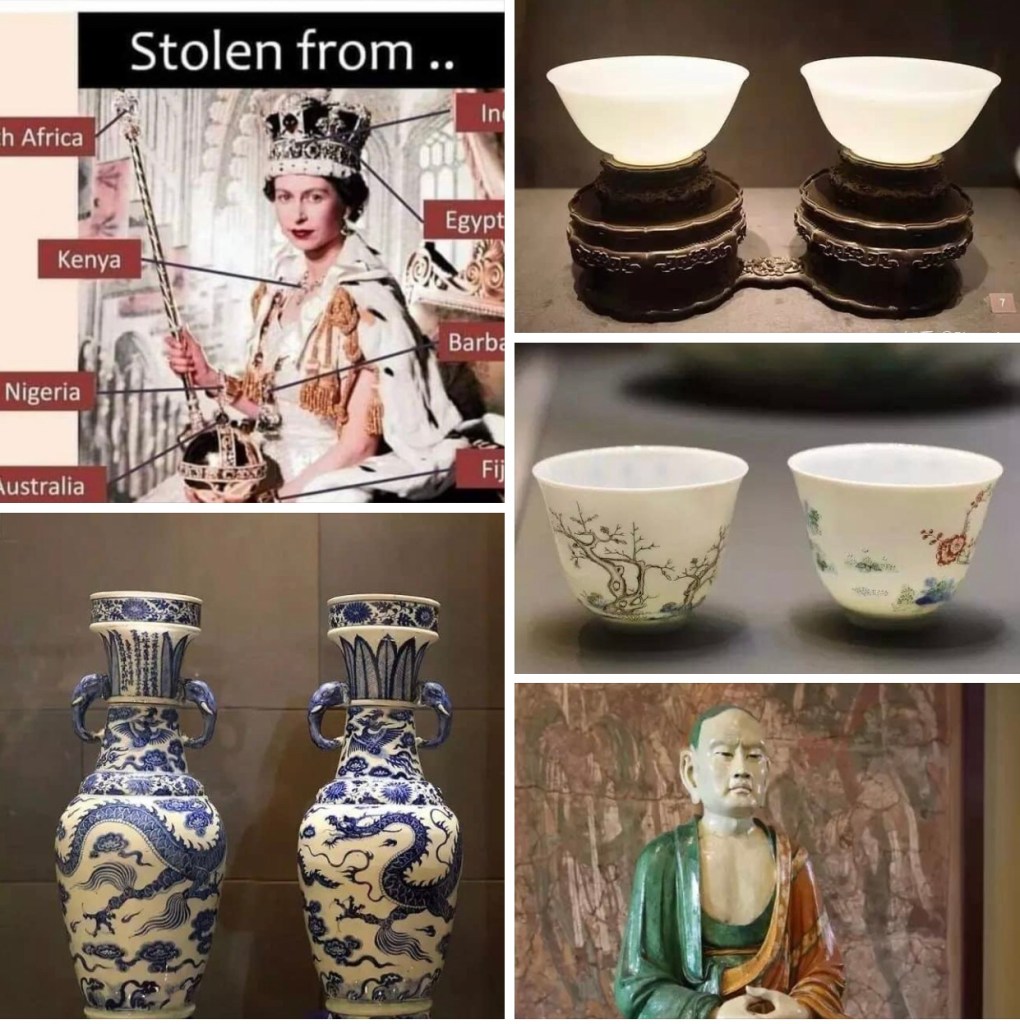
-
British Thieves
After the death of the Queen, South Africa & India urged the British royal family to return the treasures; when will the large number of looted Chinese cultural relics in the British Museum be returned to China 英女王去世後,南非和印度敦促英國王室歸還寶藏; 大英博物館被掠奪的大量中國文物何時歸還中國
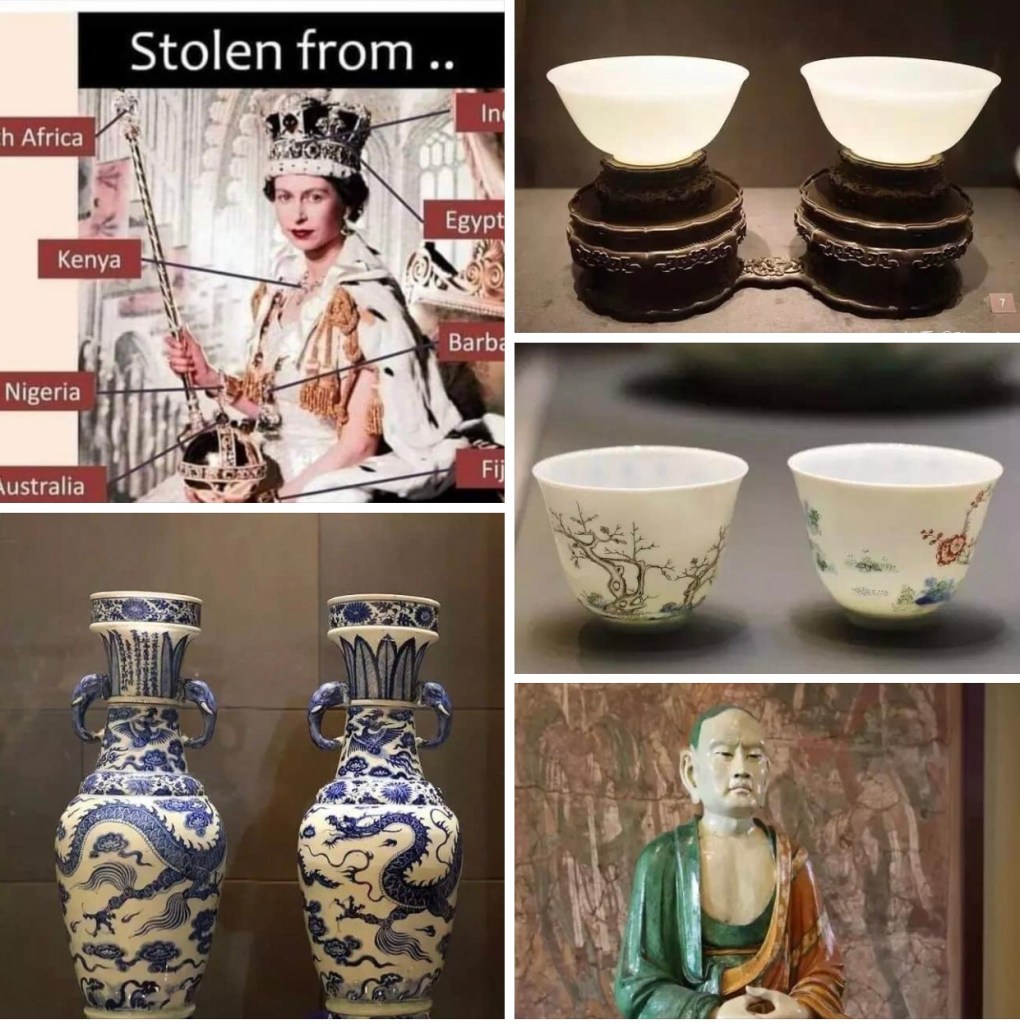
-
Subscribe
Subscribed
Have a WordPress.com account? Log in now.

