-
Harvard University: Digital Dynasties – How China’s Cryptocurrency Could Unseat the Dollar
Harvard University: Digital Dynasties – How China’s Cryptocurrency Could Unseat the Dollar Aug 29 2022
Nearly 900 years ago, China’s Song dynasty government, at the time the most advanced civilization in the world, issued the world’s first centralized paper currency. When Marco Polo encountered money made from the “bark of trees” circulating universally within the Mongol empire during the Yuan Dynasty, one hundred years later, he witnessed a financial system with efficient, long distance transactions, and a central banking authority with the complete trust of the population. Today, the world is on the cusp of another technological revolution in how humans conduct commerce. Again, China is at the fore, leading the way from cash to cryptocurrency with a new central bank digital currency (CBDC), the e-CNY, commonly known as the digital yuan. Although the US dollar remains the world’s dominant fiat currency, an analysis of the geopolitics surrounding the battle for currency hegemony reveals that China’s digital yuan will pose a serious challenge to the dollar status quo as the 21st century unfolds.
The Digital Yuan
China’s 13th Five Year Plan, covering 2016 through 2020, aimed to “promote RMB [Chinese currency] internationalization and see RMB capital go global.” China’s motivations for RMB internationalization include escaping US monetary policy, shoring up against dollar shortages, and gaining lower borrowing costs. From 2009 to 2019, 20 trillion yuan were exchanged across borders. Still, the RMB makes up a mere two percent of global foreign reserves compared to the dollar’s sixty percent. The basic prerequisite for any reserve currency is the backing of a large economy, a high trade volume, and a net creditor status (meaning a country’s international investments are larger than the foreign debt they owe). China lags just behind the United States in GDP and trade volume and is a fifteen percent net creditor compared to the United States’ eighty percent net debtor position. Beyond pure economic calculus, however, currency hegemony relies on a balance of factors that still remain squarely in favor of the dollar. Crucially, China’s rule of law, trustworthiness, and tightly controlled economy make investors skittish of relying on Chinese currency. What, then, is China’s path to an internationally formidable RMB?
The answer may lie in China’s digital yuan. The cryptocurrency has been in development for over eight years, since the People’s Bank of China (PBoC) began investigating a government-run bitcoin in 2014. In the early 2010s, Chinese crypto miners were responsible for an estimated 95 percent of all newly minted bitcoin. The Chinese government discovered this mining activity in 2012 after investigating suspicious power usage, as bitcoin mining is extremely energy intensive. A decentralized, anonymous currency posed a major threat to China’s strict social and financial controls. As officials started banning and regulating cryptocurrency, they also saw its potential. By 2021, all private cryptocurrency activity was banned and the Chinese economy had also largely transitioned away from paper yuan. Last year, 80 percent of Chinese adults made digital payments. Testing for the digital yuan began in 2020, but the early adoption numbers were less encouraging than Chinese officials may have hoped for. By October 2021, there were a total of 123 million individual wallets, although the average sum in each was just 47 cents (three RMB) implying that many consumers weren’t actively using the new currency. Adoption numbers then doubled by January 2022 in the lead-up to the Winter Olympics hosted in Beijing. China planned to use the Olympics to introduce the world to the digital yuan, similar to the country’s extravagant displays in 2008 that thrust a modern China onto the global stage. Due to China’s stringent covid policies, few foreign visitors were actually in attendance. Still, the PBoC reported around $300,000 (2 million RMB) in daily transactions with the digital yuan throughout the games. Although dwarfed domestically by China’s primary digital payment companies, AliPay and TenPay, China’s ambitions for the digital yuan are undoubtedly international.
The Geopolitics of Currency Hegemony
The battle for currency hegemony is better characterized as an insurgency than a Cold War, and China may be willing to employ geopolitical tactics to outmaneuver the current-standing hegemon. There are three primary ways that China could leverage its geopolitical clout to achieve RMB internationalization through the digital yuan.
The first and strongest lever available to China is the Belt and Road Initiative (BRI). Announced in 2013 as Xi Jinping’s capstone foreign policy project, the BRI has a projected lifetime spending of over one trillion dollars. The initiative consists of both an overland economic belt and a maritime silk road and encompasses an estimated 60 countries that comprise two-thirds of the world’s population. The domestic goals of the BRI are largely economic. China has an overcapacity of raw materials such as steel and coal and producers are desperate for new export markets. The BRI also aims to economically develop impoverished regions in western China as a part of trade routes planned through central Asia. The economic goals alone do not justify the initiative’s price tag, however, and the foreign policy ambitions inherent in the BRI are vast.
Regionally, China hopes to counter the U.S. “pivot to Asia” which started under the Obama Administration’s strengthening of economic ties with neighboring countries and fostering of new investment opportunities. Globally, China aims to finance infrastructure spending in developing countries, thus currying favor and potentially gaining political leverage in recipient nations. This practice, sometimes referred to as “debt-trap diplomacy,” has recently been criticized for contributing to Sri Lanka’s economic crisis.
China is also planning to use the BRI to internationalize the RMB. Indeed, the majority of BRI project recipients showed interest in settling cross-border transactions using RMB. This is where the digital yuan comes in. According to researcher Mahima Duggal, The BRI is a “perfect mechanism for accelerating the international use of a digital yuan.” In many developing countries, banking infrastructure is severely lacking and transactions can take weeks. The digital yuan bypasses any third-party banks or local institutions and practically eliminates fees while executing transactions instantly. Stanley Chao, an expert on business in Asia, says that many countries within the BRI would “jump at the idea” of adopting a digital yuan. Another facet of the BRI is the Digital Silk Road (DSR), which aims to export Chinese technology to BRI participants including high speed internet, artificial intelligence, and mobile payment systems similar to China’s own AliPay. With Chinese technology comes Chinese control, as many technology firms in China are only nominally in the private sector. With greater control of a country’s digital infrastructure and widespread use of a digital yuan, Duggal writes that China could even “rewire the financial networks” in countries heavily involved with the BRI.
China’s BRI is primarily a foreign policy outreach program aimed at developing new allies and gaining influence in emerging markets. But for a project as ambitious as currency hegemony, China is also turning to old allies to help implement an international CBDC. A majority of countries that are members of the International Monetary Fund (IMF) are currently investigating a CBDC or have already developed one. Many of these CBDCs are limited to domestic use, but China is one of the first countries seriously evaluating cross-border transactions using a CBDC, a crucial first step towards global adoption. Their experimentation has spawned the multiple CBDC, or mCBDC, bridge project, a collaboration between four financial jurisdictions—China, Hong Kong, Thailand, and the UAE—that aims to create infrastructure to facilitate efficient, low cost transfers between CBDCs while respecting existing regulations and privacy norms within each jurisdiction. The project identified 15 use cases of CBDC transfers between countries including commercial payments, wealth management, bond issuance, trade settlements, and supply chain financing. Several of the financial institutions participating in the mCBDC such as Goldman Sachs (US), HSBC (UK), and UBS (Switzerland), are based in western economies. This potentially indicates a broader reach for collaboration than simply Chinese allies and regional banks.
Lastly, international sanctions present a unique opportunity for China to showcase the advantages of a currency outside of US control. When Russia invaded Ukraine, one way the United States retaliated was by cutting Russia off from the Society for Worldwide Interbank Financial Telecommunication (SWIFT). SWIFT is responsible for nearly all international cross-border transactions. As 95 percent of all dollar payments are settled in New York, SWIFT is policed by the US. The White House vowed that without SWIFT, Russia would be reliant on “the telephone or a fax machine” to conduct international business. The digital yuan offers a potential solution. By bypassing SWIFT and executing a secure cross-border transfer using China’s CBDC, Russia could theoretically trade with anyone willing to run afoul of US sanctions. If China itself were the target of widespread sanctions, the digital yuan could be crucial to continuing trade relations with close allies. China could also pitch the digital yuan to any countries seeking to disrupt US hegemony, such as its ally Iran. More support for the digital yuan increases its reach and recognition, in turn boosting the internationalization of the RMB.
Playing Catch-up
Regardless of the present shortcomings of China’s CBDC experimentation, the United States may be too far behind in producing a viable competitor. After the digital yuan had already debuted on the international stage in March 2022, Biden issued an executive order to begin investigating a US CBDC. Although the United States is a dominant market player in privately traded cryptocurrencies, it has not spent the past decade seriously researching and testing CBDCs as China has. There is some hope, as early versions of a US CBDC being developed in conjunction with MIT have proven more sophisticated than the digital yuan, being able to handle over five times more transactions per second. This technology is still far from being traded across borders, however. For now, as the Vice President of a Beijing-based cryptocurrency firm Ian Wittkop writes, CBDCs are “a field of one.” In our post-pandemic world, with trends such as e-commerce, social media, and remote work, it is clear that the world is becoming more and more digital. A financial system dominated by CBDCs and, by extension, China, could become an inevitable reality.

-
US Fake News Machines
Massive secret network revealed to be pushing western narrative. US Huge disinformation campaign ran for almost five years, study shows Network blackened reputation of Chinese, Russians, Iranians BY NURY VITTACHI 8-27-2022
Agents used AI to generate photos of fake humans for Facebook and other media
Falsified accounts pushed stories in tandem with US govt media VOA, RFE and others
A TORRENT OF DISINFORMATION about the Chinese and other communities painted as enemies of the Western allies ran for almost five years on YouTube, Facebook, Instagram, WhatsApp and Twitter, researchers reported on Wednesday.
“These campaigns consistently advanced narratives promoting the interests of the United States and its allies,” said the shocking study by the Stanford Internet Observatory and the research company Graphika. [Click here to download a PDF of the report.]
The sophisticated system originated from the U.S. and the U.K., the study said. The perpetrators worked in tandem with groups which presented themselves as news organizations, but were really partner assets, or even major U.S. government operations such as Voice of America and the Radio Free Asia group, which includes Radio Free Europe, Radio Liberty, and others.
Facebook and Twitter said they had taken down the sham accounts.
ASSETS FOCUSED ON CHINA
The massive operation “used deceptive tactics to promote pro-Western narratives” the study said.
“Two assets concentrated on China and the treatment of Chinese Muslim minorities, particularly the Uyghurs in Xinjiang province,” the report said.
For example, researchers noted that one Twitter account said it operated on behalf of the U.S. military but also posed as an Iraqi individual sending tweets from his home country.
AI-GENERATED PEOPLE
The number of techniques used by the operations was remarkable, as was the length of time it ran before being discovered. The study is called: “Unheard Voice: Evaluating five years of pro-Western covert influence operations.”
From the Stanford/ Graphika study
a) Narrative creators made multiple fake personas with AI-generated faces to appear as authentic human beings. These appeared as accounts of “real people” on Facebook, Twitter, Instagram and other media;b) Narrative creators posed as journalists running independent media outlets;
c) Narrative creators made memes and short videos (for sharing on Tiktok, Instagram and others);
d) Narrative creators ran hashtag campaigns across platforms;
e) Narrative creators launched online petitions on “change” style sites known for “human rights” campaigns.
The players had “an interconnected web of accounts on Twitter, Facebook, Instagram, and five other social media platforms” indicating a high level, well-organized operation to deceive. This enabled agents to back up false narratives by quoting each other: they backed up false news with quotes from what seemed to be small news operations or even large ones, like Voice of America, to promote a pro-west, anti-east narrative.
EXPLOITED SYMPATHY FOR WOMEN
Sham media outlets used the theme of women’s rights to create negativity towards non-western groups, the report said.
“For example, the Shestigrannik Facebook page repeatedly accused Russia and China of ignoring the Taliban’s ethnic cleansing of Afghan minorities and mistreatment of women,” the researchers said.
Agents sometimes created posts in Russian or other Central Asian languages, the researchers said. The one on the left, above, revives a long debunked allegation about organ-harvesting in China, and the one on the right paints China as the power behind Russian aggression.
While there were cases of some agents creating accounts which failed to win many followers, or were not widely shared, in other instances they succeeded in producing material which spread or went viral.
FOCUS ON CHINA
“A small cluster of assets within the Central Asia group focused almost exclusively on China,” the study said.
“These accounts—a fake persona and sham media outlet—mainly focused on the genocide of Uighurs and Muslim minorities in “re-education” camps in Xinjiang. Posts described alleged organ trafficking, forced labor, sexual crimes against Muslim women, and suspicious disappearances of ethnic Muslims in Xinjiang. The assets also posted about the Chinese Communist Party’s poor treatment of women in the country and often framed these stories around news about domestic violence.”
DANGER TO THE WORLD
Other assets in the sham network painted an image of China imperilling the world. They “asserted that Chinese authoritarianism and financial imperialism threatened Central Asia and other regions of the world,” the researchers said.
“The assets frequently referred to China’s cooperation with Russia, especially on military issues, and said Beijing should be held responsible for Russia’s invasion of Ukraine because the CCP had secretly supplied the Kremlin with weapons. The group rebuked China for buying stolen Ukrainian grain from Russia and predicted that Moscow’s invasion of Ukraine would precipitate a Chinese invasion of Taiwan.”
FAKE PETITIONS
Western agents created petitions such as the one above, pretending to be people in Central Asia demanding that Kyrgyzstan curbs Chinese influence in the country, the study showed. The petitions were shared on Facebook, Instagram and Twitter. Agents’ petitions were sometimes shared on a well known U.S. human rights activism platform called Avaaz, and promoted by Radio Liberty, a partner of Radio Free Asia: these are groups which present themselves as journalists, while actually being arms of the U.S. government.
In reality, China has good relationships with Kyrgyzstan and have been having lengthy talks towards building a “New Eurasian Land Bridge”, which will be a convenient transport path from East and Southeast Asia to Central and Western Asia, Northern Africa and Europe. The plan is to create prosperity through improved infrastructure that creates opportunities for trade.
PROJECTION TECHNIQUE
For decades, a key technique of western intelligence forces has been to announce exactly what they are doing in the media – but ascribe it to “the enemy”. So there have been numerous false allegations of Chinese interference with politics in the U.S., while the truth was that the U.S. had massive operations interfering in politics in Chinese communities, particularly in Hong Kong, Xinjiang and Taiwan.
The existence of an artificial Western narrative is rarely acknowledged—and even more rarely confronted. China-friendly voices are seen being removed from Twitter frequently. But the other way round?
Renée DiResta, research manager at the Stanford Internet Observatory, told the New York Times: “It’s the first time we’ve seen a pro-U.S. foreign influence operation taken down by Twitter and Meta.”
MULTI-LINGUAL
Another remarkable aspect of the study was its revelation of how culturally wide the false narrative dissemination operation was. Just a few days ago, the New York Times printed a long feature bemoaning the ability of the west to control the discourse outside the Anglosphere.
Yet the new study reveals that the western narrative operation functioned in at least seven non-English languages on global social media such as Facebook, YouTube, Twitter and Instagram, and also on allegedly “secure” operations such as Telegram, and even on popular non-Western networks VK and Odnoklassniki, run from Russia.
LITTLE IMPACT
The report, dramatic as it was, received relatively little coverage internationally. There were pieces in the New York Times and the Washington Post reporting the publication of the study, but without follow-up. Some media mentioned the report but played it down. Cyberwire headlined their report: “Not all coordinated inauthenticity is Russian”.
But even if there is no change in the narrative carried by the mainstream media, critics still welcomed the study. A Twitter user who has been banned three times for questioning the western narrative said: “This is just one more nail in the coffin of the narrative’s credibility, and that’s a good thing.”

-
China’s Dongfeng Express missiles custom made for Guam
Video: US should be afraid to upgrade the U.S. Guam anti-missile system to deal with China’s Dongfeng Express missiles custom made for Guam 美國應當要害怕, 是該升級 美國關島反導系統應對中國的東風快遞飛彈是起不到什麼作用
https://rumble.com/v1hwu51-chinas-dongfeng-express-missiles-custom-made-for-guam.html
https://m.facebook.com/story.php?story_fbid=779158453307482&id=100036400039778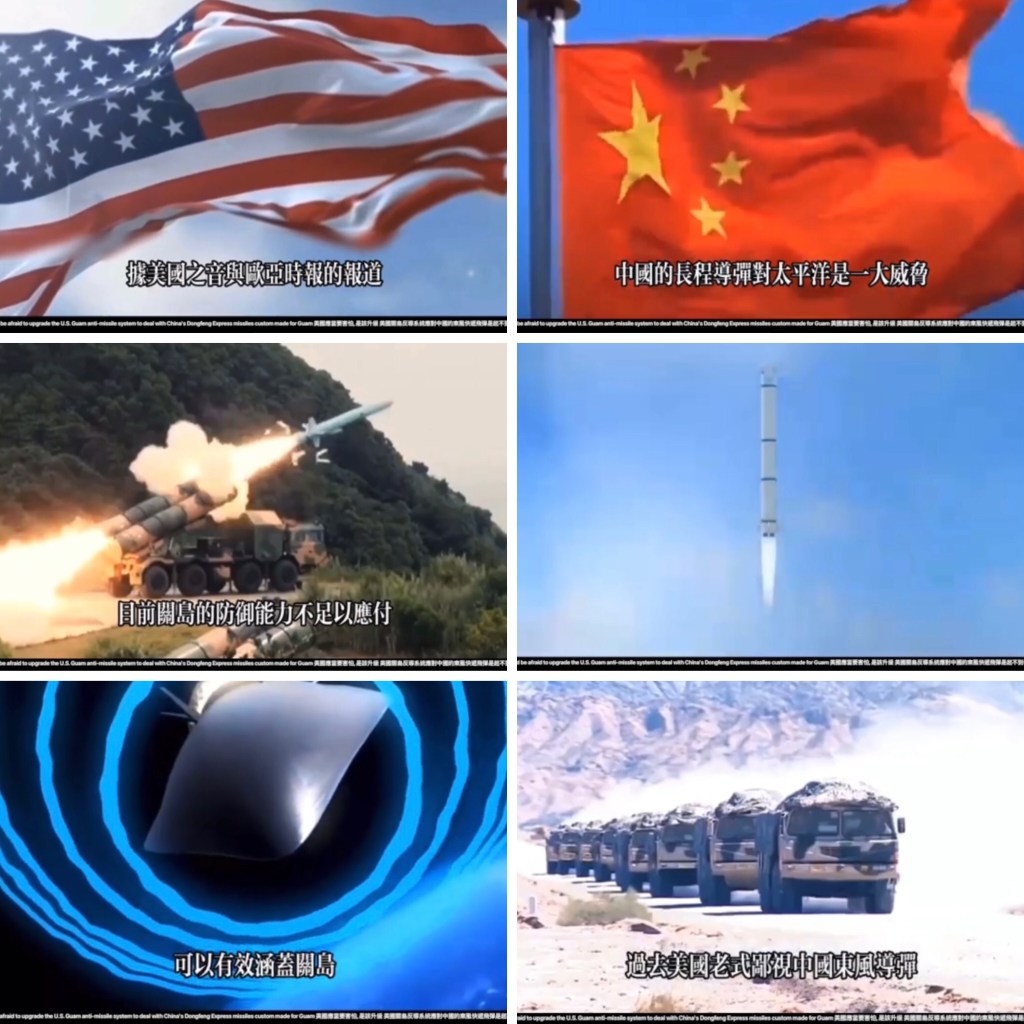
-
US decline irreversible
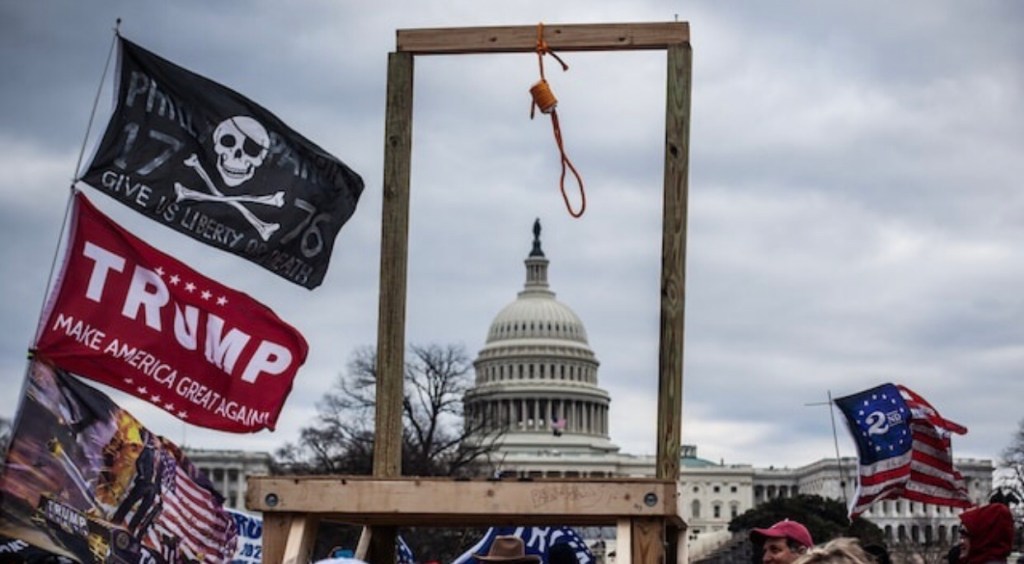
Washington Post: Other than the military, in every other dimension — industrial, financial, educational, social, cultural — the distribution of power is shifting, moving away from American dominance.” In 2022, that vision of a “post-American world” has gone from theory to truth.
EVEN THE WASHINGTON POST IS REGULARLY REPORTING ON THE DECLINE OF AMERICA
In a Hamburg-based international conference consisting of dozens of young leaders from around the world, “Facing New Realities: Global Governance Under Strain.”
“America has become smaller.”
“America’s light has dimmed”.
We are still watched intently and remain a major power. But it was clear that to many of the conference’s attendees — hailing from Germany to Mongolia, Ghana to Ukraine — the United States has become shorthand for democratic decline and disinformation, home to citizens who react to dissatisfaction by rejecting reality, and to institutions that are increasingly hollowed out.
“I thought about settling in the U.S.,” one attendee, an Ivy League- and Oxbridge-educated internationalist now working for the United Nations, told me. “But I couldn’t imagine living in a place where my children would have to practice” — here, she made mocking quotation marks with her fingers — “active shooter drills.”
The United States’ most famous exports used to be Coca-Cola, Levi’s and jazz — not to mention such ideals as freedom, civil rights and the rule of law. Now, we’re best known for rampant gun violence and gruesome school shootings.
The United States’ reputation has been deteriorating for at least two decades. During the Iraq War, as Bush-doctrine foreign policy was derided across the globe, the trope of American backpackers abroad pretending to be Canadian to avoid shame by association became something of a cliche.
Yet, the past six years have seen an unprecedented acceleration.
-
NASA firing all the Chinese engineers?
There were rumors as a result of NASA firing all the Chinese engineers? See what happened! Mission aborted. NASA has postponed the launch of the Artemis 1 mission due to a malfunctioning core stage engine.
NASA has officially scrubbed its first attempt at launching the Artemis 1 mission to the moon due to a malfunctioning core stage RS-25 engine.

-
Video: US backed off forcing Chinese firm at the NYSE to disclose sensitive data
Video: US backed off forcing Chinese firm at the NYSE to disclose sensitive data 美國還是忌憚中國 與中達成協定 2022
https://rumble.com/v1hu903-us-backed-off-forcing-chinese-firm-at-the-nyse-to-disclose-sensitive-data.html
https://m.facebook.com/story.php?story_fbid=778859513337376&id=100036400039778
-
Video: Perfect reason by Tim Cook of Apple Computer why the world uses Chinese Manufacturing capabilities
Video: Perfect reason by Tim Cook of Apple Computer why the world uses Chinese Manufacturing capabilities and it is not about cheap labor propaganda by US Gov’t 蘋果電腦的蒂姆庫克的完美理由為什麼世界使用中國製造能力而不是美國政府的廉價勞動力虛假宣傳 (how many of our middle class+ kids willing to work hard, have technical skills, how many of these parents set them up for failure with family welfare plan for life, and many just want to be investment bankers on the get rich quick scheme 我們有多少中產階級+ 的孩子願意努力工作,有技能, 有多少父母為他們制定了終身家庭福利計劃,不需要努力, 很多年輕人只想賺快錢, 反正父母留下遣產, 天天可以發白日夢做人便是)
https://rumble.com/v1hsvvn-perfect-reason-by-tim-cook-of-apple-computer-why-the-world-uses-chinese-man.html
https://m.facebook.com/story.php?story_fbid=778668876689773&id=100036400039778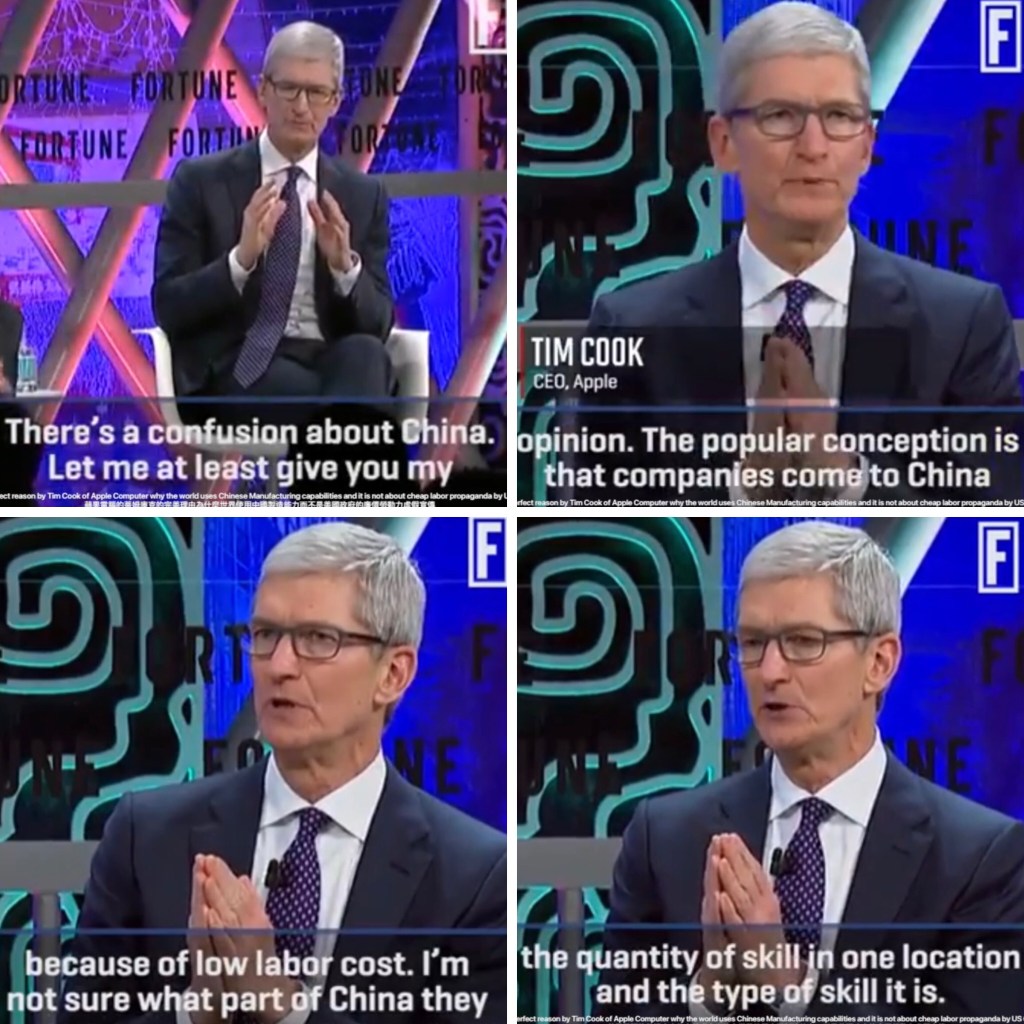
-
A call to heaven: $10,000 verses 40 cents
A call to heaven: $10,000 verses 40 cents
An American decided to write a book about famous churches around the world.
So, he bought a plane ticket and took a trip to Orlando, thinking that he would start by working his way across the USA from North to South.
On his first day, he was inside a church taking photographs when he noticed a golden telephone mounted on the wall with a sign that read: ‘$10,000 per call’.
The American, being intrigued, asked a priest who was strolling by what the telephone was used for.
The priest replied. “That is a direct line to Heaven and for $10,000 you can talk to God”.
The American thanked the priest and went along his way.
Next stop was in Atlanta.
There, in a very large cathedral, he saw another golden telephone, with the same sign under it.
He wondered if this was the same kind of telephone he saw in Orlando and he asked a nearby nun what its purpose was.
She told him: “That is a direct line to Heaven and for $10,000 you can talk to God”.
“OK, thank you,” said the American.
He then travelled all across America, then onto Europe, England, Japan, and New Zealand.
In every church he saw an identical golden telephone with the same.
‘$10,000 per call’ sign under it.
The American decided to travel to China, to see if China had the same phone.
After he landed in China, he went into the first church he found.
There was the golden telephone, but this time the sign under it read: ‘40 Cents per call.’
The American was surprised so he asked the priest about the sign.
“Father, I’ve travelled all over the world and I’ve seen this same golden telephone in many churches.
I’m told that it is a direct line to Heaven, but in all of them the price was $10,000 per call”.
“Why is it so cheap here?”
The priest smiled and answered.
“You’re in China now son…….”“THIS IS HEAVEN,”
“so it’s a local call’.

-
Video: Taiwan CTI News – US’ send 2 obsolete old warships sailing through Taiwan Straits closely watch by PLA
Video: Taiwan CTI News – US’ send 2 obsolete old warships sailing through Taiwan Straits closely watch by PLA 美艦穿越台海 大陸東站區嗆”炒作”.”全程跟監”|美中高度對抗 11月”拜習會”恐破局?
https://rumble.com/v1hrh95-taiwan-cti-news-us-send-2-obsolete-old-warships-sailing-through-taiwan-stra.html
https://m.facebook.com/story.php?story_fbid=778469553376372&id=100036400039778
-
Red dates from our garden
Red dates 紅棗 from our garden

-
Subscribe
Subscribed
Have a WordPress.com account? Log in now.

