English Video: Principles for Dealing with the Changing World Order, the rise of China and the decline of US is at the crossroads by Ray Dalio, founder of Bridgewater, a trillion dollar hedge fund 應對變化的世界秩序的原則,中國崛起和美國衰落正處於十字路口,中美博弈的終局,以500年歷史,揭示東升西降正在發生的規律是不會改變的. 作者:萬億美元對沖基金橋水基金創始人雷·達利奧
I believe the world is changing in big ways that haven’t happened before in our lifetimes but have many times in history like the rise and fall of the Dutch and British Empires, the decline of the US and Rise of China is at the crossroads, so I knew I needed to study past changes to understand what is happening now and help me to anticipate what is likely to happen. 我相信世界正在發生巨大的變化,這種變化在我們有生之年從未發生過,但歷史上曾多次發生過,例如荷蘭和英國帝國的興衰、美國的衰落和中國的崛起正處於十字路口,所以我知道我需要研究過去的變化,以了解現在正在發生的事情,並幫助我預測可能發生的事情.
Stephen Colbert just dropped the nuclear truth bomb on live TV and Donald Trump couldn’t handle it. In one of the most jaw-dropping monologues of his career, Colbert exposed Trump’s disturbing ties to Jeffrey Epstein, including a grotesque birthday letter that reads more like a confession than a card. Hand-drawn nudity, coded language, and a signature placed where the pubic hair should be yes, it’s that dark.
As Colbert torches every layer of Trump’s lies from his “I barely knew him” defense to his alleged presence in the Epstein files the crowd erupts. But beneath the laughter lies a chilling truth: Trump wasn’t just connected to Epstein. He was comfortable with him. This video walks you through the evidence, the language, and the legacy of moral decay Trump tried to bury.
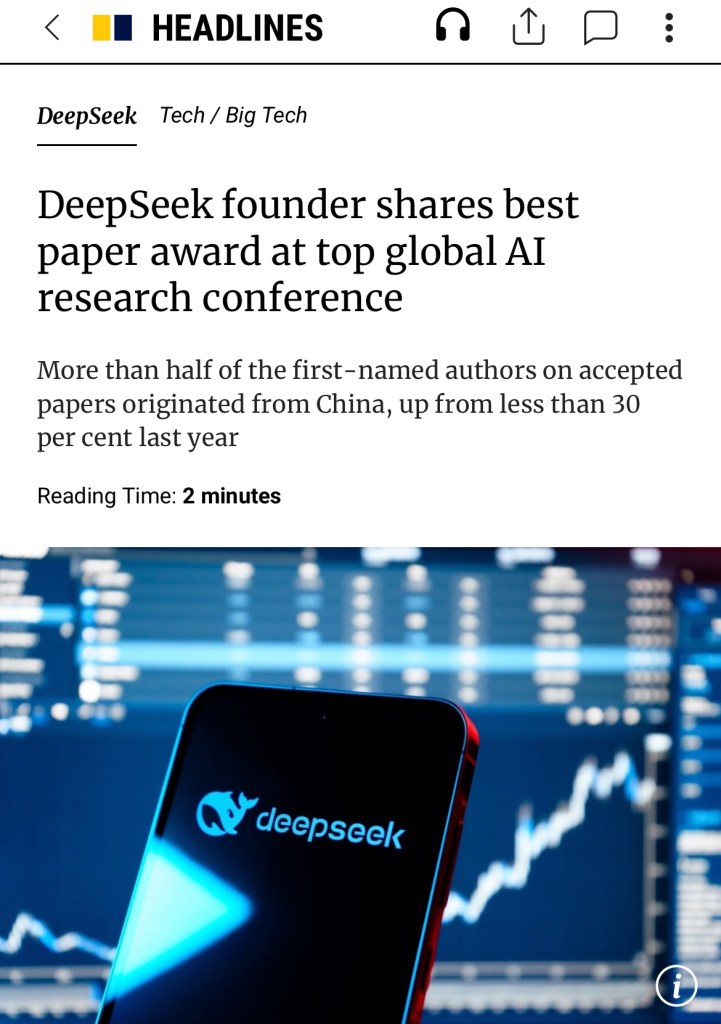
SCMP: China beats US again! DeepSeek founder shares best paper award at top global AI research conference DeepSeek 香港南華早報: 中國再次擊敗美國! 創辦人在全球頂尖人工智慧研究會議上分享最佳論文獎
A research paper co-authored by Liang Wenfeng, founder of Chinese artificial intelligence start-up DeepSeek, was honoured with the best paper award at the Association for Computational Linguistics (ACL) conference in Vienna, Austria, widely recognised as the premier global conference for AI researchers. 由中國人工智慧新創公司DeepSeek創始人梁文峰與他人合作撰寫的研究論文,在奧地利維也納舉行的計算語言學協會(ACL)會議上榮獲最佳論文獎,該協會被公認為人工智慧研究人員的全球頂級會議.
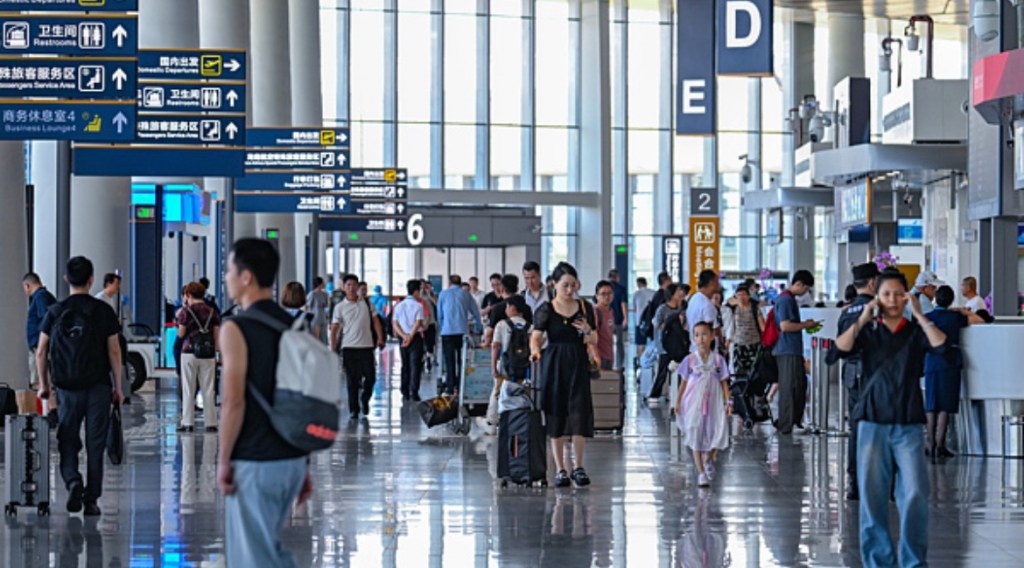
China has granted visa-free access to citizens of 75 countries, as part of efforts to streamline visa rules and promote international exchange.
This initiative allows eligible travelers to enter China without a visa for a specific duration, typically 15 or 30 days, depending on their nationality.
The countries included in this policy span across Europe, Asia, Latin America, and the Middle East. Some notable examples include: European Union: France, Germany, Italy, Netherlands, Spain. Other European Countries: Switzerland, Norway, Iceland. Asia: Malaysia, Singapore, Japan, South Korea. Latin America: Brazil, Argentina, Chile, Uruguay,. Middle East: Saudi Arabia, Oman, Kuwait, Bahrain, UAE, Qatar. Other: Australia, New Zealand, The Bahamas, Barbados, Armenia, Mauritius, Seychelles.
This visa-free policy is being implemented on a trial basis for many countries, with the goal of boosting tourism and strengthening international ties. The number of countries eligible for visa-free transit to China has also increased to 55, with a growing number of entry ports
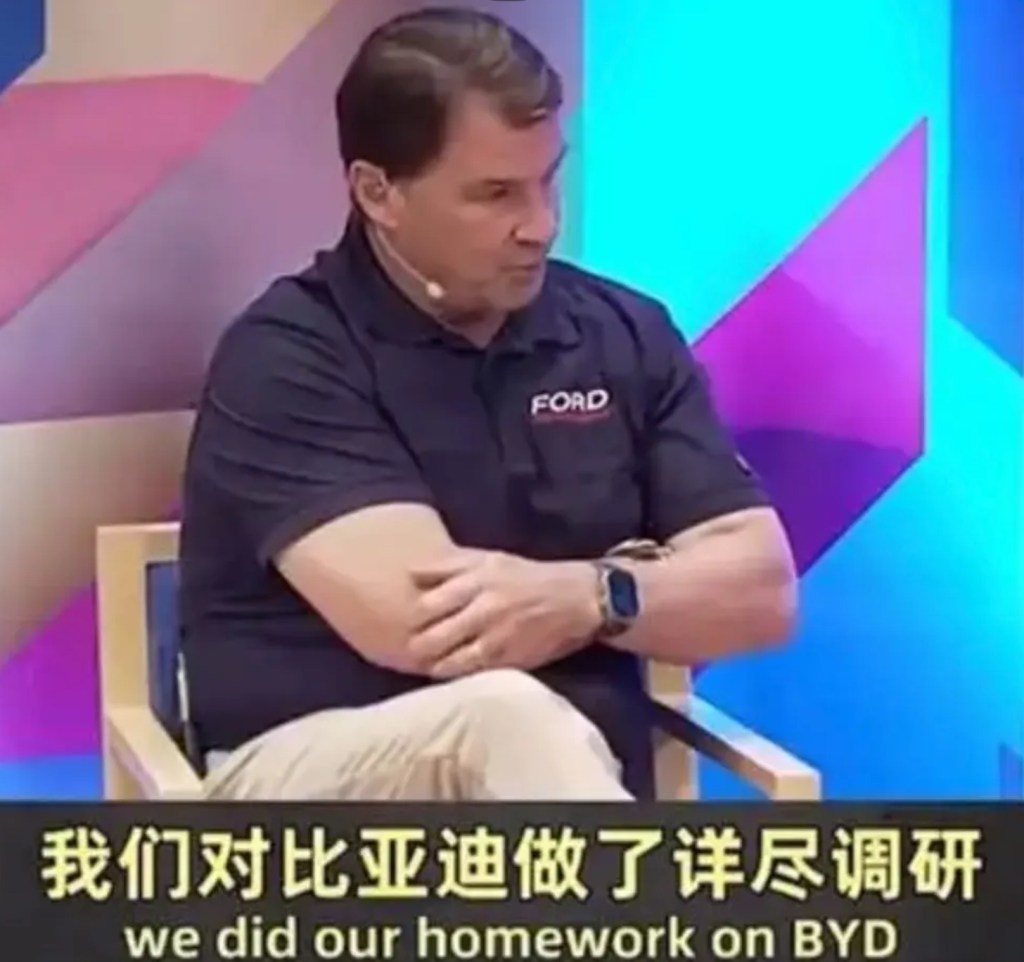
Ford CEO Jim Farley made a rare revelation in an interview… FORD福特CEO吉姆·法利在採訪里少見地透露…
Last year, his executive team visited China five times, test-driving nearly 100 Chinese new energy vehicles. They then airlifted four of their favorites back to Detroit, meticulously disassembling them down to the last detail.
After disassembling the BYD Haisei battery pack, they discovered it was 30% more integrated than Ford’s existing technology, yet 40% less expensive. Farley immediately decided: he must collaborate with China and establish technical expertise within the joint venture to bring this cutting-edge technology back home.
The foreshadowing of this silent technological battle began three years ago. In 2022, Toyota secretly purchased five models, including the BYD Han EV, and spent three months disassembling them in a Japanese laboratory. The team concluded that Chinese automakers were lagging behind in vertical integration capabilities.
Even more dramatically, in 2024, Japanese Sanyo Trading disassembled the Wuling Hongguang MINI EV and discovered that none of its core components came from the Japanese supply chain. Experts were furious, shaking their heads: “With Japan’s current system, it’s impossible to produce such a cheap electric car.”
The US military’s actions are also quite interesting. The news of China’s successful sixth-generation fighter jet test flight in early 2025 shocked the Pentagon. According to CCTV, the US Pacific Command had secretly implemented the “Falcon Project,” attempting to lure test pilots into defecting by offering them bribes.
But they didn’t anticipate that Chinese fighter jets would have quantum communication systems, automatically cutting power and initiating a self-destruct sequence within seven seconds if their flight path deviated by more than 50 meters. Even more remarkable, the AI flight control system had final decision-making authority, and even the pilot couldn’t disable the defense mechanism.
Behind this lies the restructuring of the global industrial chain. China’s new energy vehicle industry, relying on the “software-defined car” concept, has significant advantages in in-vehicle intelligent systems and battery technology. For example, the Xiaomi SU7’s in-vehicle AI can implement over 200 scenario-based services. After disassembling it, Ford engineers discovered that the system contained 10 times more code than traditional car systems.
This technological gap caused Farley to lose his composure at a Detroit executive meeting: “If we don’t put down our guard and learn, in ten years Ford might not even be qualified to work as a contract manufacturer for Chinese automakers.”
What’s most intriguing is that while the West is still grappling with accusations of “technology theft,” China has quietly built a defense of its own innovation. At the 2025 Tianjin Summer Davos Forum, the Stanford University Artificial Intelligence Development Index showed that China’s global market share in large-scale model applications reached 41%, surpassing the United States’ 38%.
Crucially, China controls 92% of the world’s rare earth refining capacity, posing a potential supply shortage for US F-35 fighter jet production!
From cars to fighter jets, from businesses to the military, this technological war is essentially a contest between two development models!
When Ford engineers marvel at China’s cost control, they may not have noticed the 376 patents behind BYD’s Blade Battery; when the US military fantasizes about a “technological surprise attack,” they may have forgotten that the average age of China’s sixth-generation fighter development team is only 32.
As Changan Ford Executive Vice President Yang Dayong said at the 2025 Shanghai Auto Show: “The Chinese market is no longer a testing ground, but a source of technology for the global automotive industry.”








 Business Blog