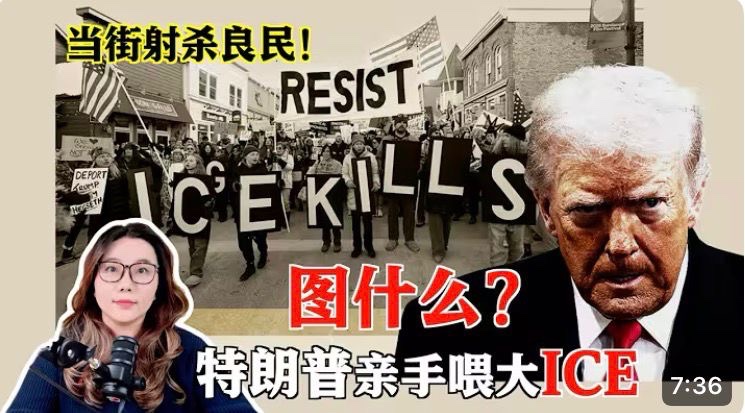
Video: On the street, innocent civilians were shot and killed! Trump has spent $750 billion to bolster ICE – what exactly is its origin? 當街射殺平民!川普砸7500億養大的ICE,究竟是何方神聖?
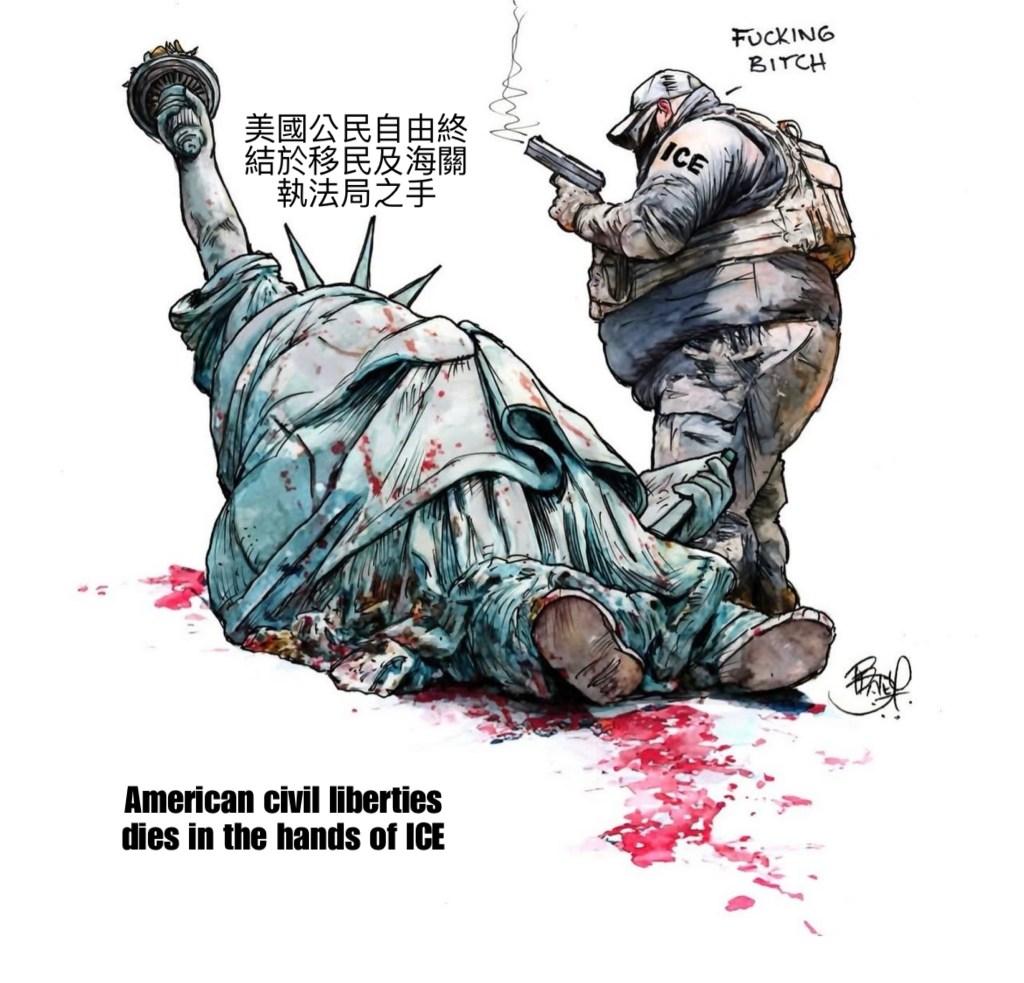
Who is ICE? Why have they sparked public outrage? What does Trump truly want by nurturing ICE at all costs? Hello everyone, Xiao Ying here! Recently, many parts of the United States have been hit by blizzards, with temperatures in Minnesota plummeting to -30 degrees Celsius. Amidst this bitter cold, thousands of citizens have taken to the streets, loudly demanding “ICE OUT.” Over the past month, three immigration enforcement shooting incidents have occurred consecutively in Minneapolis, resulting in the deaths of two American citizens on the street. What exactly is the origin of ICE? The story begins with the world-shocking “9/11” attacks.
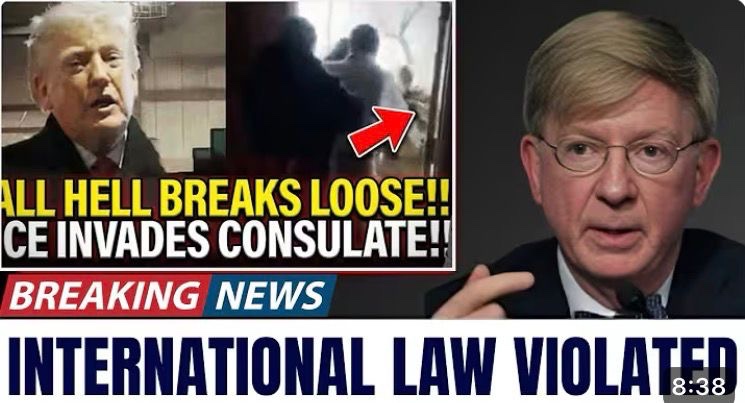
American Journalist George Will Video – BREAKING: SHOCKING Chaos as Trump’s ICE STORMS Foreign Consulate, Triggering Global Outrage 美國記者喬治·威爾的視頻 – 突發:震驚全球的混亂 – 川普時期ICE突襲外國領事館 引爆國際譴責風暴
In a stunning escalation now rippling across the world, ICE agents linked to the Trump-era enforcement apparatus attempted to force entry into a foreign consulate on U.S. soil — an action that directly challenges long-standing international law.
According to witnesses, agents arrived without prior notice, demanded immediate access, and asserted enforcement authority over consular premises that are legally protected under the Vienna Convention. While no breach ultimately occurred, the attempt alone has ignited a diplomatic firestorm.
Foreign governments have responded swiftly, issuing formal protests and warning that violations of consular inviolability threaten the safety of diplomats everywhere.
What makes this incident even more alarming is that it appears to be part of a broader pattern, not an isolated mistake. Reports suggest similar confrontations have unfolded in multiple U.S. cities, raising serious questions about policy direction, legal oversight, and the potential consequences for American diplomats stationed abroad.
This moment could mark a turning point in how international law is respected — or ignored — by powerful states, with global repercussions that extend far beyond immigration enforcement.
George Will is a prominent American conservative political commentator, journalist, and author. He is best known for his syndicated newspaper column, which appears in over 500 publications, and his long-time role as a contributor and analyst for ABC News and later NBC News.
Here are the key aspects of his career and profile:
Background & Career:
· Born: 1941 in Champaign, Illinois. · Education: Holds a Ph.D. in Political Science from Princeton University. · Columnist: His syndicated column, begun in 1974, is one of the most widely read in the United States. He writes from a conservative perspective but is known for his intellectual depth, erudite style, and willingness to criticize figures on both the left and right. · Pulitzer Prize: Won the Pulitzer Prize for Commentary in 1977. · Television: Was a regular panelist on ABC’s This Week for over three decades (1981-2013). He later became a senior political analyst for NBC News and MSNBC. · Author: Has written over a dozen books on politics, philosophy, and his other great passion, baseball.
Political Stance & Evolution:
· Traditional Conservative: Will is often described as a “traditional,” “institutional,” or “Burkean” conservative. He emphasizes limited government, free markets, individual liberty, civic virtue, and the importance of established institutions and norms. · Neoconservative Roots: He was initially associated with the neoconservative movement in the 1970s and 80s. · Critic of Trumpism: In recent years, he has become one of the most prominent and vocal conservative critics of Donald Trump and what he sees as the populist, norm-breaking “Trumpification” of the Republican Party. He has frequently argued that Trump is unfit for office and has endorsed Democratic candidates in specific elections as a result (notably writing in 2016 that he would vote for Hillary Clinton). · Libertarian Leanings: On some social and cultural issues, he holds libertarian views, such as supporting same-sex marriage and the decriminalization of drugs.
Public Persona:
· Known for his bow ties, erudite vocabulary, and deep knowledge of American history and political thought. · A serious baseball fanatic, he has written extensively on the sport (e.g., Men at Work: The Craft of Baseball) and serves on the board of the Baseball Hall of Fame.
In summary, George Will is a pillar of the American conservative intellectual establishment whose commentary has shaped political discourse for nearly half a century. While firmly conservative, his rigid principles have often placed him at odds with the populist currents that have dominated the Republican Party in the 21st century, making him a significant and sometimes controversial figure within the right.
Video: Renée Good and Alex Pretti got murdered by ICE! “Minnesota” – Marsh Family adaptation of “San Francisco (Be Sure to Wear Some Flowers in Your Hair)” 《明尼蘇達》馬什家族改編版〈舊金山(別忘了在髮間簪上鮮花)〉 Renée Good 和 Alex Pretti 被 ICE 謀殺了!
We hope the good people of San Francisco won’t mind us adapting this iconic track (about their city in the sixties, in the midst of protests and the counterculture movement) to treat the tragedies in recent days and weeks in Minneapolis. The original song was written by John Phillips (of “The Mamas & the Papas”) and first released (sung by Scott McKenzie) in 1967, reaching number one in the UK, Germany, Ireland, and New Zealand charts, though only fourth in the US. We chose it because of its link to protest, its soaring refrains, its simplicity, its earnestness, and its celebration of love and solidarity. In our arrangement we haven’t double tracked the vocals but have added harmonies and mandolin/violin lines.
We hope it serves its aim, which is to express solidarity with the courageous and valiant protesters in Minnesota (and beyond), and to memorialise Renée Good and Alex Pretti, and sing their names across the ocean: two innocent American citizens executed on the streets in appalling scenes that so obviously echo waypoints in the historical march of fascism. Taking on the guns, masks, fear, and falsehoods requires more than flowers and songs. But they are powerful nonetheless, especially if they remind folk of previous generations that navigated trauma, and that you are not alone, and others are being inspired your courage and actions in the face of the winter of our times.
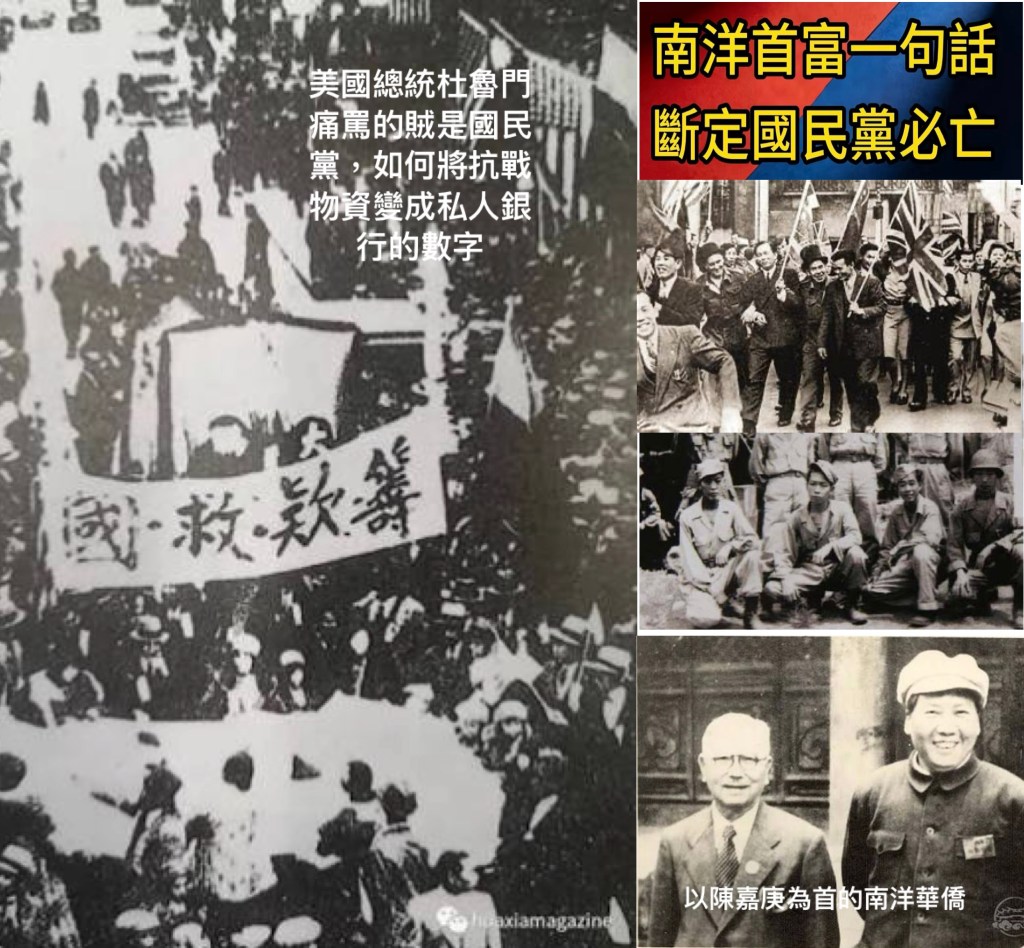
Video: From WWII the 5.4 Billion in China Rescue Funds to Mansions in New York? Overseas Chinese in Malaysia Sold Their Children, Only to Exchange It for Soong May-ling’s 99 Crates of Jewelry? This Is the Truth Behind the Kuomintang’s Defeat! 二戰54億中國救國款變紐約豪宅?馬來華僑賣兒賣女,卻換來宋美齡99箱珠寶?這才是國民黨敗逃真相!
From $5.4 Billion in Rescue Funds to Mansions in New York? Overseas Chinese in Malaysia Sold Their Children, Only to Exchange It for Soong May-ling’s 99 Crates of Jewelry? This Is the Truth Behind the Kuomintang’s Defeat!
When we look back at the history of 1937, on one side, there were the overseas Chinese in Southeast Asia who sacrificed their family wealth and even sold their children to raise $5.4 billion in life-saving funds. On the other side, the privileged class reveled in luxury in mansions on Long Island, New York. This film will contrast these two extreme scenes: 3,200 Southsea Overseas Chinese Drivers gave up comfortable lives to transport supplies on the deadly Yunnan-Burma Road, known as the “Death Highway,” with one-third of them forever lost in the deep valleys.
During World War II, the overseas Chinese in Southeast Asia (primarily in Singapore-Malaya, the Philippines, Indonesia, and other regions), led by Tan Kah Kee, wholeheartedly supported the resistance against Japan by establishing the “Nanyang Chinese Relief Fund Association,” raising donations for relief efforts, boycotting Japanese goods, and returning to China to join the war. The overseas Chinese organizations raised substantial funds, and thousands of mechanics returned to China to support transportation on the Yunnan-Burma Road, making exceptional contributions to China’s war of resistance.
How did the KMT thieves, denounced by President Truman, turn wartime supplies into numbers in private bank accounts? Why did an extravagant banquet worth $80,000 lose to a simple bowl of homemade chicken soup costing just a few cents in the caves of Yan’an?
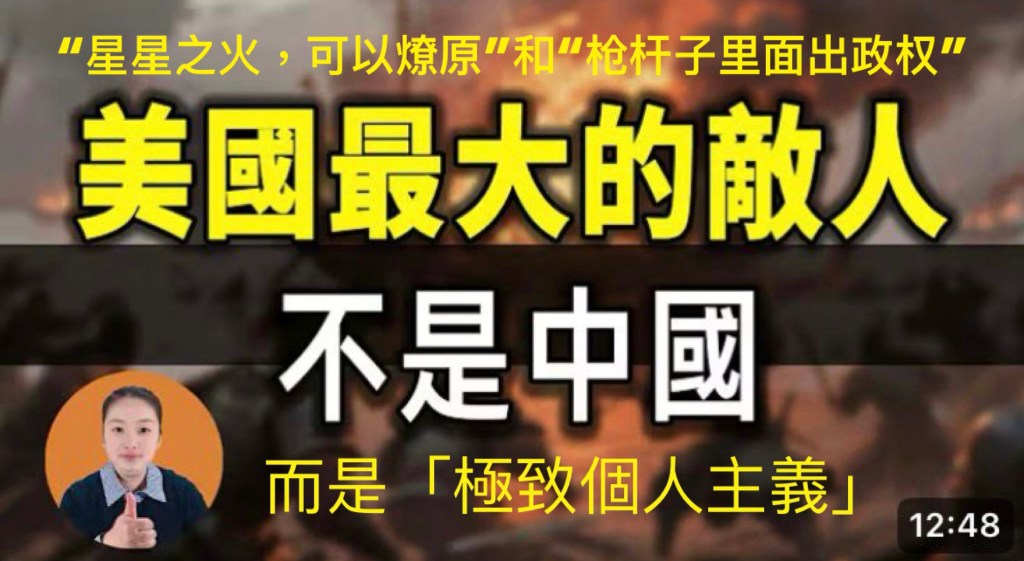
Video: America’s Greatest Enemy Is Not China, But “Extreme Individualism” How China used the ideas of “a single spark can start a prairie fire” and “political power grows out of the barrel of a gun” to defeat the US, leaving America unable to ever hold its head high again. 美國最大的敵人不是中國,而是「極致個人主義」 . 中國如何用“星星之火,可以燎原”和“枪杆子里面出政权” 的理念打敗美國,讓美國永遠抬不起頭來!
The United States has 390 million guns, averaging 1.2 per person, yet has never truly united to challenge the centers of power. What’s behind this paradox?
This video analyzes a deep paradox in American society from sociological and historical perspectives: Why can’t a country armed to the teeth launch effective collective action? The answer may overturn your understanding of “freedom.”
Key Point: America’s greatest threat is not external enemies, but the social atomization caused by extreme individualism. When everyone only cares about their own interests, society loses its capacity for collective action.
This is not a criticism of America, but an exploration of a universal dilemma: Can individual freedom and collective action capacity truly coexist?
“A single spark can start a prairie fire” and “Political power grows out of the barrel of a gun” are two important propositions in the history of the Chinese revolution. They embody the strategic thinking and practical principles of the Communist Party of China in leading revolutionary struggle. “星星之火,可以燎原”和“枪杆子里面出政权”是中国革命史上的重要论断,体现了中国共产党在领导革命斗争过程中的战略思想与实践原则。
“A single spark can start a prairie fire” and “Political power grows out of the barrel of a gun” are two important propositions in the history of the Chinese revolution. They embody the strategic thinking and practical principles of the Communist Party of China in leading revolutionary struggle.
A single spark can start a prairie fire This phrase comes from Comrade Mao Zedong’s 1930 essay A Single Spark Can Start a Prairie Fire. At that time, the Chinese revolution was at a low ebb, and some comrades within the Party were doubtful about its future. Through this metaphor, Mao Zedong pointed out that although revolutionary forces might initially be as small as a “single spark,” as long as they followed the tide of history, took root among the masses, and adhered to the correct line, they would eventually grow into a prairie fire and achieve nationwide victory. This proposition emphasizes the importance of revolutionary conviction, historical trends, and the power of the masses, and became a spiritual banner that inspired morale and strengthened confidence.
Political power grows out of the barrel of a gun This proposition originated from Mao Zedong’s well-known statement at the August 7 Meeting in 1927: “Political power is obtained from the barrel of a gun.” It summarized the lessons of the failure of the Great Revolution and made clear that, under conditions in which reactionary ruling classes controlled the instruments of violence, a revolutionary party must establish and command its own armed forces and seize political power through revolutionary war. This idea charted the path of armed struggle for the Chinese revolution and became one of the fundamental guiding principles for the Communist Party of China in leading the people’s armed forces and waging revolutionary war.
Together, these two statements reflect the core experience of the Communist Party of China during the revolutionary period: • Upholding firm revolutionary ideals and believing in the strength of the masses and the direction of historical development; • Adhering to armed struggle, overthrowing the old regime through revolutionary war, and establishing a new society.
They are not only a summary of historical experience, but also an expression of the inevitable choice made by the Communist Party of China in leading the Chinese people toward national independence and liberation. The successful practice of the Chinese revolution has proven the scientific validity and correctness of these ideas, which continue to offer important insights for understanding modern Chinese history and China’s path of development today.
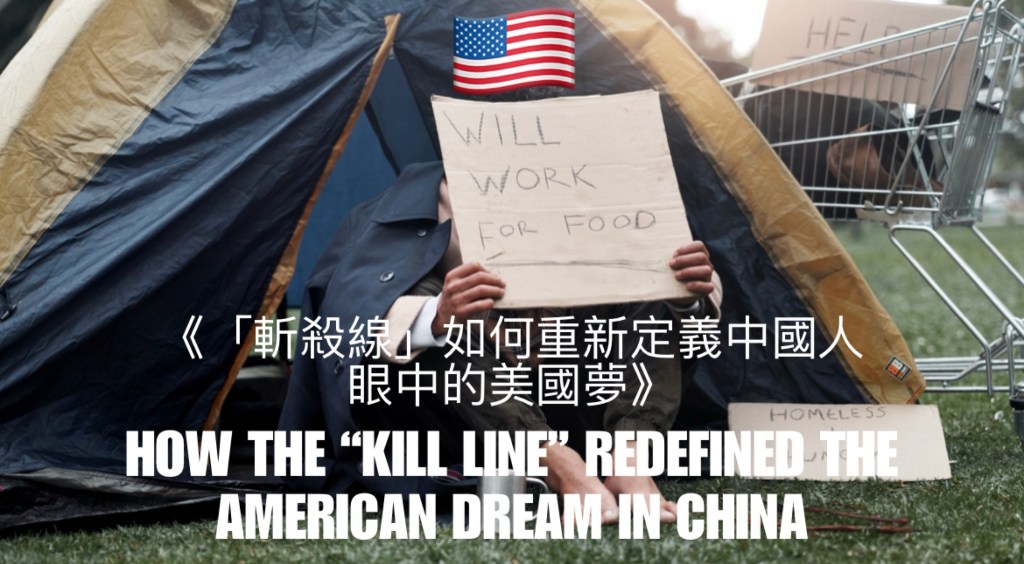
HOW THE “KILL LINE” REDEFINED THE AMERICAN DREAM IN CHINA. By Jianlu Bi | January 22, 2026 《「斬殺線」如何重新定義中國人眼中的美國夢》作者:畢健鷺 | 2026年1月22日
The growing holes in America’s safety net reveal the insecurity at the core of the world’s richest nation.
Recently, a wave of digital shockwaves rippled across Chinese social media platforms like Bilibili and Xiaohongshu. It wasn’t triggered by a geopolitical skirmish or a trade dispute, but by a viral video from a Seattle-based vlogger. The video depicted a former software engineer, once a “gold-collar” professional, living in a tent after a medical emergency led to job loss and eviction. For millions of Chinese netizens, this was the moment the “US Kill Line” entered the national lexicon.
The term, borrowed from competitive gaming, refers to a health threshold where a character is vulnerable to an instant, unblockable finishing move. In the context of American life, Chinese observers use it to describe a terrifyingly low “margin for error.” This is the point where a single stroke of bad luck—a $3,000 ambulance ride or a sudden layoff—triggers a terminal collapse into homelessness.
The shock stems from a fundamental realization. In the world’s wealthiest nation, the floor is not made of wood or stone, but of thin glass.
The Arithmetic of Anxiety The primary reason for this disillusionment is the brutal mathematical gap between the “official” American story and the lived reality. For decades, the U.S. federal poverty line—set at $32,150 for a family of four in 2025—was viewed from afar as a benchmark of success. However, as information barriers have dissolved, Chinese netizens have discovered that this figure is a relic of 1960s economics.
Current financial analyses suggest that once you account for modern housing, childcare, and the inescapable costs of private healthcare, the actual survival threshold in major US cities is closer to $136,500 for a family of four. For a Chinese public that prizes “stability” and high savings as the ultimate shields against fate, the realization that nearly 40 percent of American adults cannot cover a $400 emergency is not just a statistic—it is a horror story.
It reveals that even the American “middle class” is walking a tightrope just inches above the kill line.
The Cruelty of the “Welfare Cliff”
Perhaps most incomprehensible to the Chinese observer is the “welfare cliff.” In China, social safety nets are generally perceived as a staircase: as you earn more, you contribute more, but basic protections remain. In contrast, the American system often functions like a trapdoor.
Under policies like the One Big Beautiful Bill Act of 2025, which tightened SNAP (food stamp) eligibility and work requirements, many families find themselves in a systemic trap. A family earning $30,000 might qualify for Medicaid and food assistance. However, if they work hard and increase their income to $70,000, they often lose these subsidies.
Suddenly, they are thrust into a “no-man’s land”—too “rich” for government help, but too poor to afford the exorbitant private insurance deductibles and market-rate rents. To Chinese eyes, this is a “physical slashing” of the working class, where the reward for social mobility is increased vulnerability.
The Great Information Leveling
This shift in perception is driven by radical transparency. For the first time, the “American Dream” is being filtered through the lens of real people rather than Hollywood studios. Through international students and overseas Chinese on TikTok and Weibo, the “unfiltered” America has been revealed.
Instead of the manicured suburbs of Desperate Housewives, Chinese netizens see the sprawling tent cities of the West Coast. They witness the “Great Reckoning” on Xiaohongshu, where American users share medical bills that look like mortgage statements.
In contrast, Chinese citizens enjoy a system where a General Practitioner (GP) visit costs less than a cup of coffee and major medical expenses are largely covered by a basic national insurance scheme. This “no-middleman” information flow has humanized the suffering of ordinary Americans, turning what was once a “shining city on a hill” into a cautionary tale of social Darwinism.
A New National Confidence Finally, the decline of the U.S. image coincides with a surge in Chinese national confidence. Having built a comprehensive social safety net that covers over 95 percent of its population, China has moved past the era of blind imitation. When ordinary Chinese look at the United States today, they no longer see a mentor; they see a society that prioritizes “market efficiency” over “social reproduction.”
A 2025 global survey conducted by American business intelligence company Morning Consult reflected this shift: For the first time, China’s global favorability among its own citizens surpassed that of the United States by a significant margin. This isn’t necessarily rooted in anti-Americanism, but in a profound disillusionment with unmet expectations. For a society that values collective well-being and risk aversion, the American emphasis on individualism at the expense of a safety net is seen as a fatal weakness.
The “Kill Line” phenomenon marks the end of an era of romanticism. The American Dream was built on the promise of upward mobility, but to the modern Chinese observer, that mobility looks like a treadmill where the floor is perpetually falling away. Until the United States addresses the systemic fragility that keeps its citizens in a state of permanent anxiety, its image in China will remain tarnished by the harsh reality of the “Kill Line”—the point where the dream of a superpower meets the nightmare of a single unpaid bill.
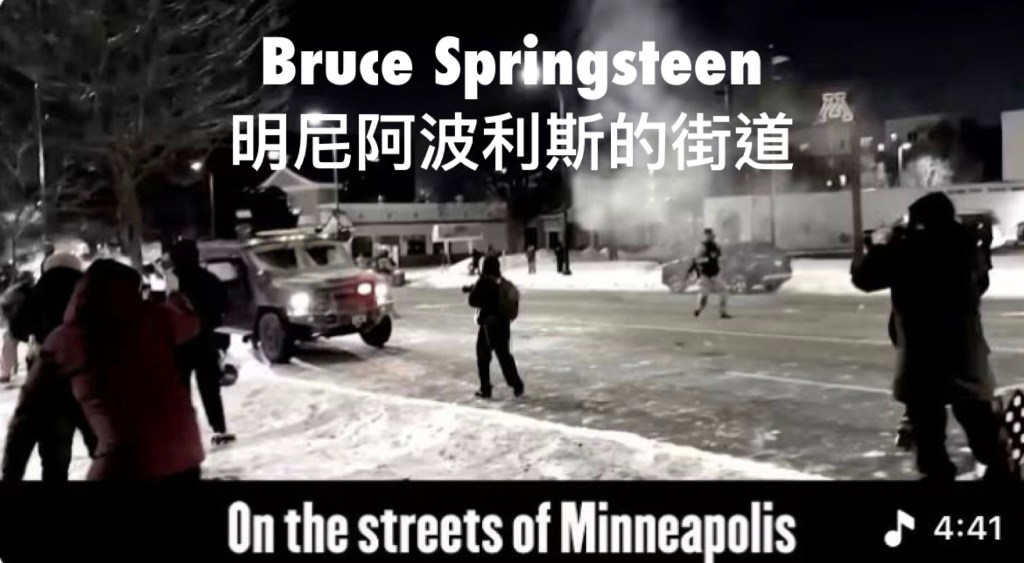
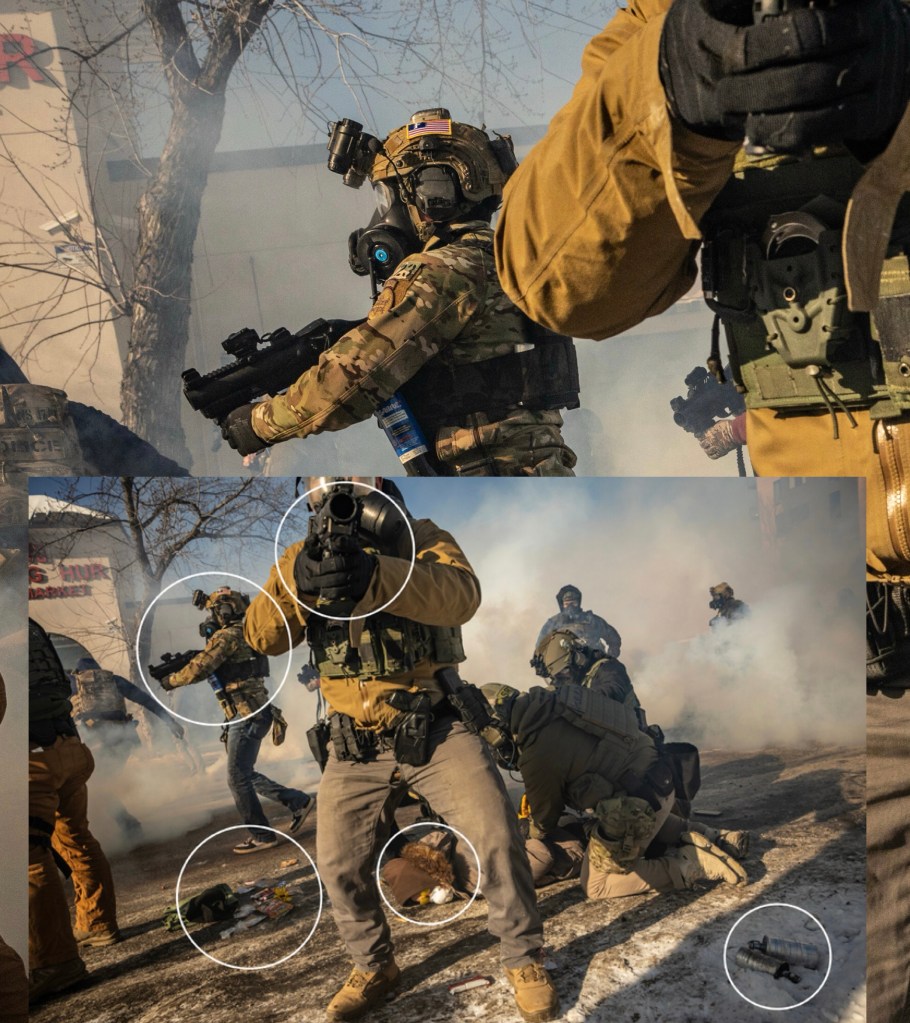
NYT: A photo taken during a protest in south Minneapolis after federal agents murdered Alex Pretti encapsulates a story unfolding on America’s streets. 一張拍攝於明尼阿波利斯南部的抗議照片 – 在聯邦探員殺害亞歷克斯·普雷蒂後 – 凝聚了正在美國街頭上演的故事。
Video: No Poverty Path V – Boundless Wisdom in Action | China’s Medical Technology Leads the World, AI Exoskeletons Help Patients “Rebirth” | Hosted by Chan Beier | Hong Kong TVB。Host Chan Beier and the production team visited the University of Electronic Science and Technology of China in Sichuan to witness how exoskeletons help people achieve “rebirth.” 視頻:無窮之路V – 智行無疆|中國醫療科技領先全球 AI外骨骼助病人「重生」|陳貝兒主持|香港TVB 主持陳貝兒與攝製隊,探訪四川電子科大,見證外骨骼如何助人「重生」。 https://youtu.be/bl8c4byahyM?si=gEp2JUzUofVKZKF_ 🇨🇳🇭🇰


 Business Blog