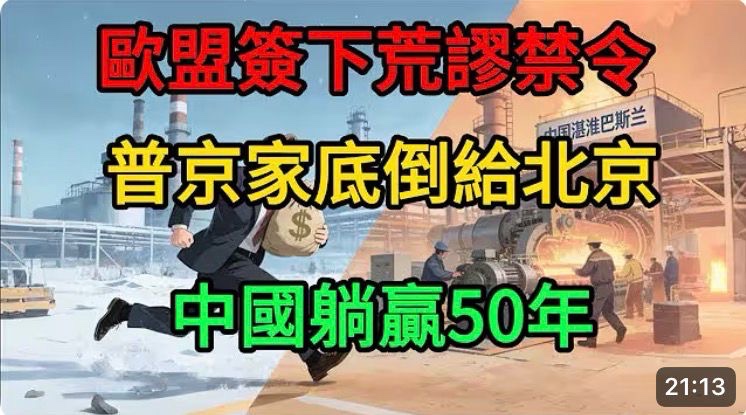
Video: EU Signs “Suicide Declaration”! Putin Tearfully Pumps Century-Old Resources into Beijing—Will This 2026 Energy Farce Hand China a 50-Year Windfall? 歐盟簽下「自殺宣言」!普京含淚把百年家底倒給北京,這場2026年的能源鬧劇,讓中國躺贏50年?
EU Signs “Suicide Declaration”! Putin Tearfully Pumps Century-Old Resources into Beijing—Will This 2026 Energy Farce Hand China a 50-Year Windfall?
In January 2026, the EU approved an “ultimate ban” on Russian natural gas. Sounds tough? Wrong! This is a “suicide declaration” crafted by chronic procrastinators. While Brussels elites loudly impose sanctions, aren’t they actually buying Russian oil “bathed” through India?
This absurd farce has not starved Putin but is instead pushing Europe’s industrial foundation toward China! In this video, Mai Zi delivers a hardcore recap of the Western world’s “self-harm game”:
Deaf to Reality: What is “Turkish blended gas”? How is Europe handing knives to Ukraine while stuffing money into Russia’s pockets?
Industrial Disintegration: From BASF to Volkswagen, why is this ban seen as an “expulsion order” for European manufacturing?
Strategic Windfall: How has Russia’s forced “pivot eastward” helped China break free from decades of the “Malacca Dilemma”?
Understand this ban, and you’ll understand how Europe is step by step turning itself into a “museum of history.”
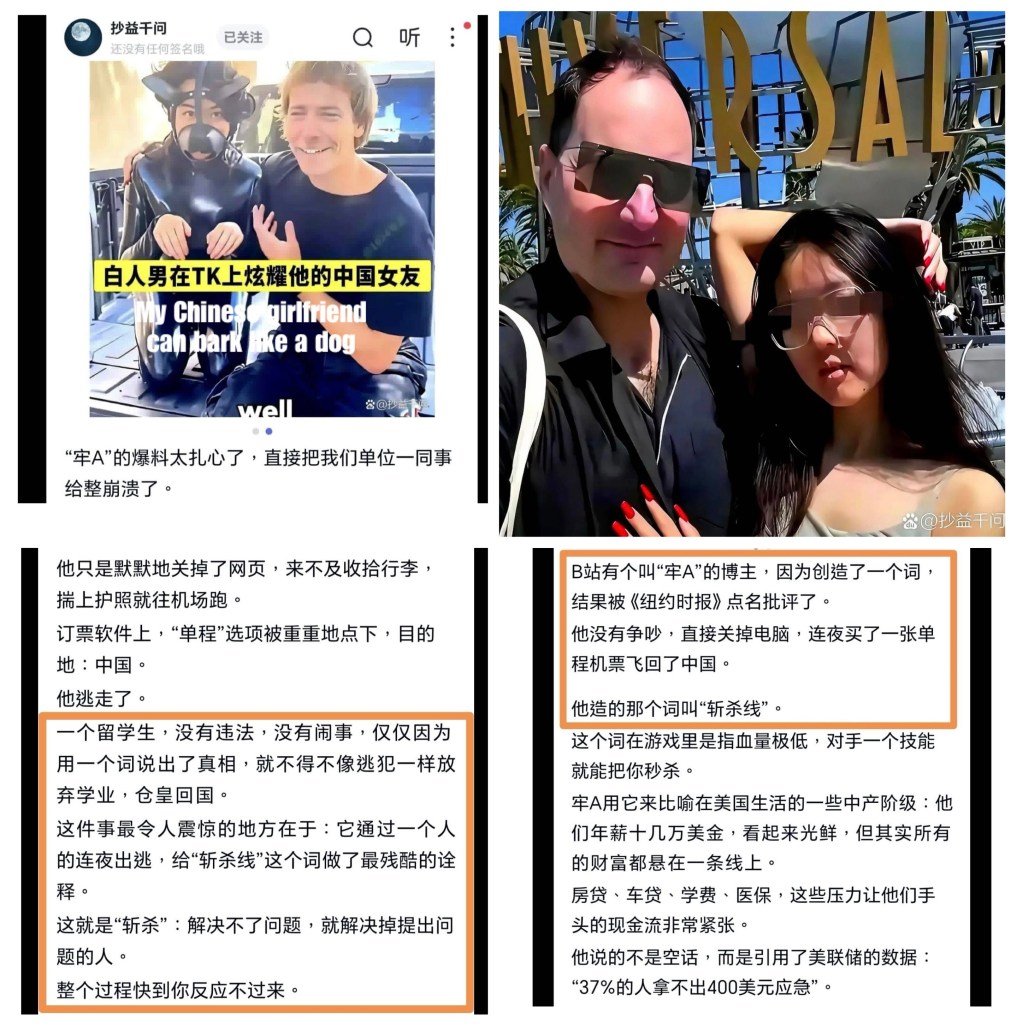
The emergence of “Prisoner A” is truly infuriating; he single-handedly disrupted the dating scene…「牢A」的出現真是太讓人氣憤了,他一個人就把相親市場攪亂了…有些白人男子炫耀他們的中國女朋友,還說她們可以像狗一樣吠叫。這是一種羞辱😡
In the past, having a study abroad background was a sparkling advantage, but now it has actually become a disadvantage!
Initially, we looked up to those who studied abroad, especially those sent on government scholarships—they were definitely top students, one in a million. Later, studying abroad became a trend, and graduates from Ivy League schools were considered the elite among elites, something to be admired.
But as some “diploma mills” were exposed, people started to take a more cautious view of students from ordinary universities, though they still held a high regard for Ivy League graduates.
However, the “Prisoner A” incident revealed the truth: the admissions criteria of American Ivy League schools are completely different from China’s score-focused system. The fairness of China’s college entrance exam lies in its disregard for background or family circumstances—if your scores are high enough, you get in.
But the U.S. is different. Scores are just one factor; admissions also consider the amount of donations, race, and even whether the applicant has a “disability.” What’s even more absurd is that all these complex conditions can be outweighed by a single letter of recommendation from an American power elite.
Many people gain admission by “auditing” courses in elite families for half a year and then securing a recommendation letter. With such questionable admissions thresholds, shouldn’t they at least focus on studying diligently after entering?
Look at Harvard’s data: In 2014, about 3% of undergraduates received academic accommodations (not referring to physical disabilities, but conditions such as dyslexia, mental health issues, etc., requiring formal diagnosis). By 2024, this figure had skyrocketed to 21%.
It’s worth noting that the institution responsible for these diagnoses has close ties to Harvard. With these “accommodations,” students can apply for extended time, open-book exams, and various other loopholes, which they exploit skillfully.
This may be the root cause of the talent shortage in the United States. Those local students who rely on recommendation letters or exploit “loopholes” to gain admission to prestigious universities are not fundamentally there for academic pursuits—they simply want a diploma.
These individuals take up spots that should belong to genuinely capable students. Even if some students from less privileged backgrounds manage to get into Harvard, they are often burdened with crushing student loans after graduation.
In fact, the current talent crisis in the United States is its biggest problem.
“Guo Zhenglian Channel” is the only official channel personally operated by Guo Zhenglian (Brother Liang). Over the next decade, the world will enter an unprecedented era of great transformation! American hegemony is facing unprecedented challenges: the rise of China, the ascent of the East and decline of the West, the emergence of resource-rich nations, a reshuffling of global power, and an unpredictable international landscape. Cross-strait relations are fraught with uncertainty, necessitating more professional analysis. Brother Liang will synthesize global information, organize data, and delve into key details to help everyone discern the trends of our times, offering clarity amid the global political and economic haze.
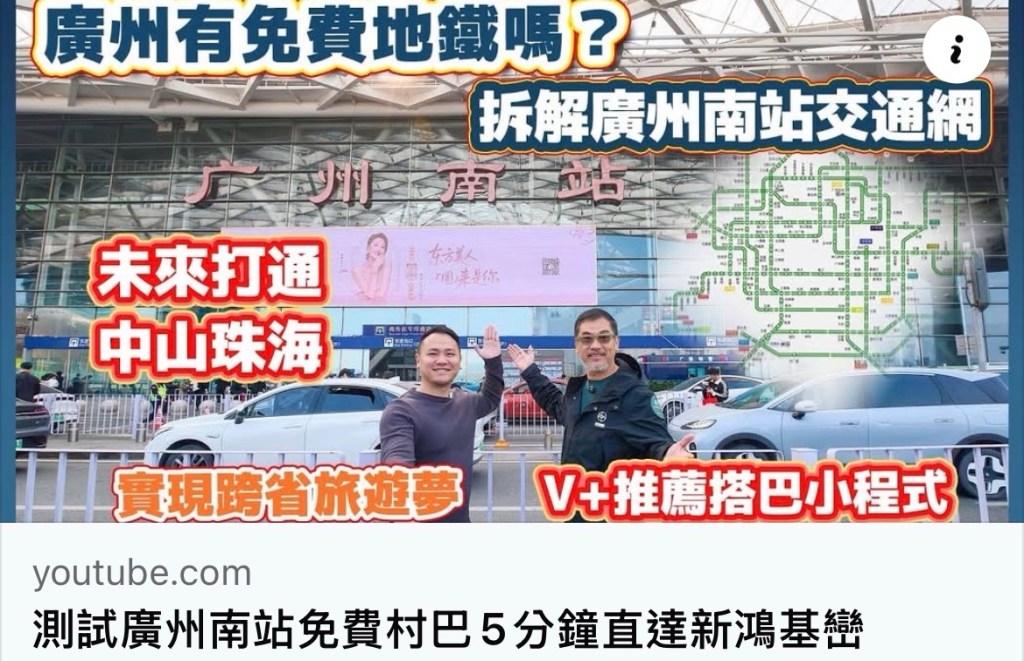
Video: Retirement Life in China’s Greater Bay Area. Testing the Free Shuttle Bus from Guangzhou South Station—a 5-Minute Direct Ride to Sun Hung Kai • Luan. 中國大灣區退休生活. 測試廣州南站免費村巴5分鐘直達新鴻基巒. https://youtu.be/p02E9Err4p0?si=D_RrffTROaxnmCVg 🇨🇳
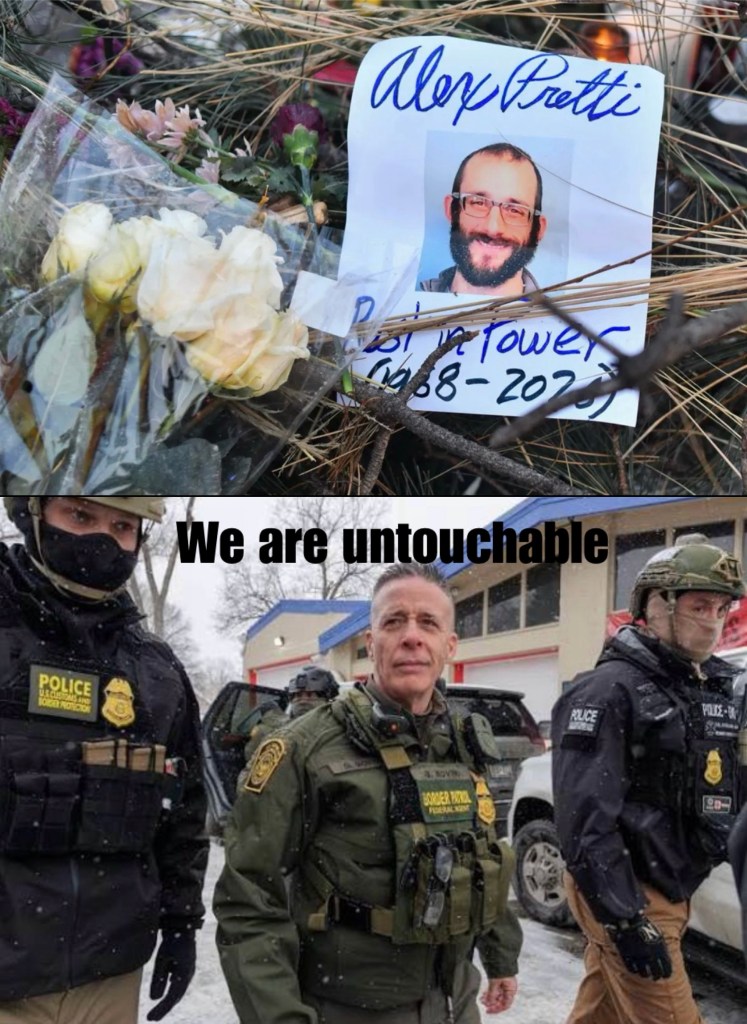
Video: ICE agents don’t shoot drug dealers crossing US border. The uncomfortable truth is that these operations thrive because money ensures silence and selective enforcement. 美國移民及海關執法局的幹員不會槍擊越境毒販. 令人不安的真相是:這些犯罪活動之所以猖獗, 正是因為有足夠的錢就能買到沉默, 並實現選擇性執法
Ask yourself this: when was the last time ICE agents confronted—let alone shot at—the hundreds of drug dealers trafficking cocaine into the United States from Mexico every day? The uncomfortable truth is that these operations thrive because money ensures silence and selective enforcement. 請反問自己:上一次移民及海關執法局探員真正面對 – 更不用說開槍反擊 – 那些每日從墨西哥向美國販運古柯鹼的數百名毒販,是什麼時候?令人不安的真相是:這些犯罪活動之所以猖獗,正是因為金錢確保了沉默與選擇性執法。
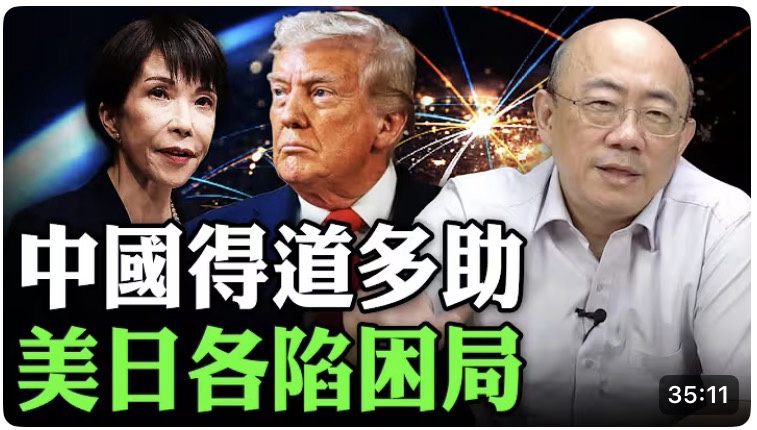
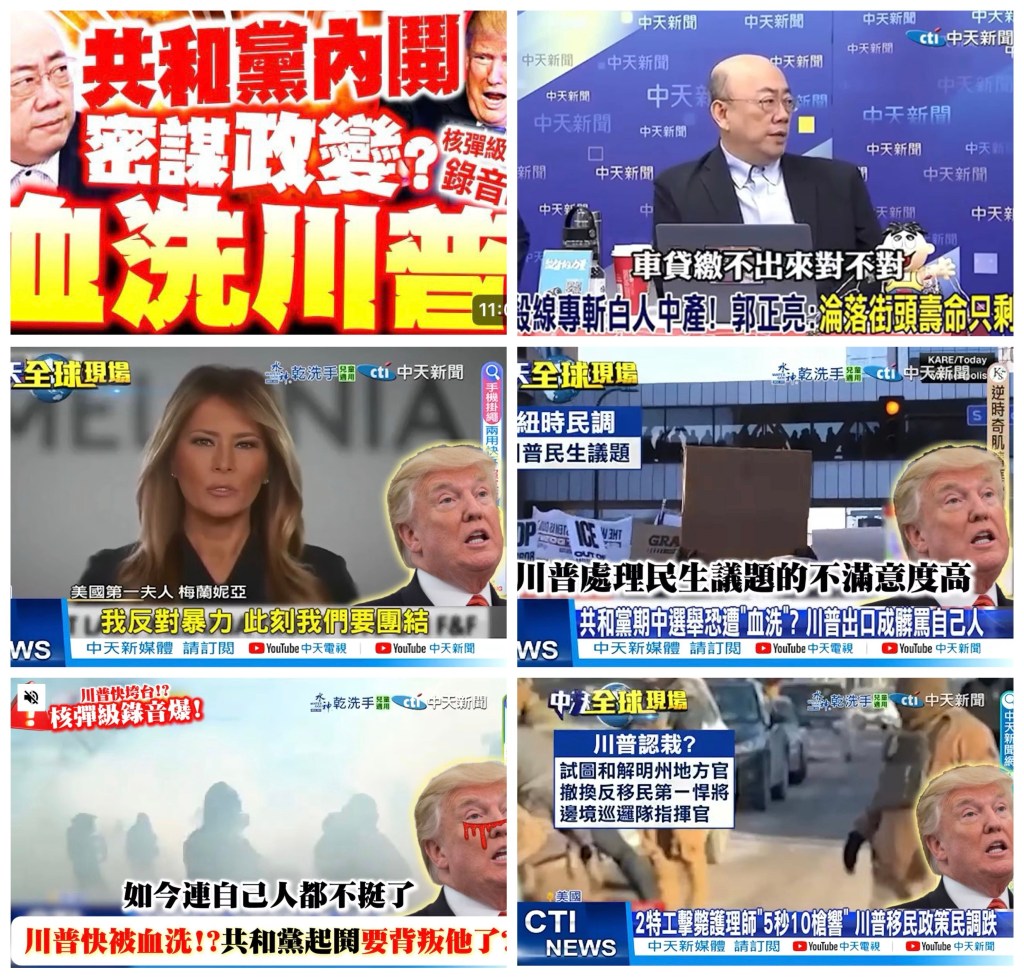
Taiwan CTI News Video: Is Trump About to Be Wiped Out!? Infighting and Coup Plot Within the Republican Party? Guo Zhenglian Warns the U.S. Is on the Verge of Collapse! Explosive Nuclear-Level Recording Unveiled! 川普要被血洗了!? 共和黨內鬨密謀政變? 郭正亮轟美要瓦解了! 核彈級錄音曝光! https://youtu.be/fi-5rXG71wQ?si=iInbNg1X_83LIUCQ 🇺🇸
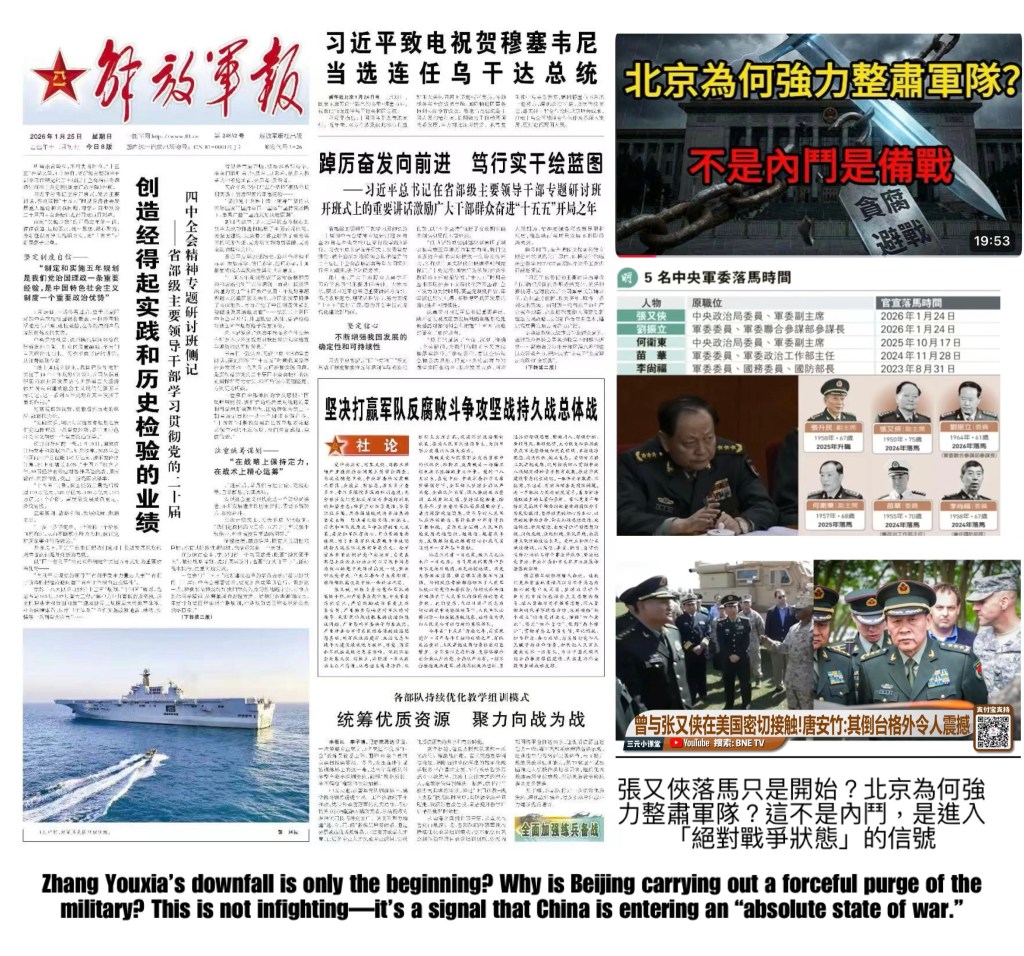
Video: Zhang Youxia’s downfall is only the beginning? Why is Beijing carrying out a forceful purge of the military? This is not infighting—it’s a signal that China is entering an “absolute state of war.” 張又俠落馬只是開始?北京為何強力整肅軍隊?這不是內鬥,是進入「絕對戰爭狀態」的信號
Zhang Youxia’s downfall is only the beginning? Why is Beijing carrying out a forceful purge of the military? This is not infighting—it’s a signal that China is entering an “absolute state of war.”
With Zhang Youxia falling from power and Liu Zhenli under investigation, the top ranks of Beijing’s military are undergoing an unprecedented reshuffle. Many people think this means the military is out of control. Wrong. On the contrary, it shows that the military is about to enter an “absolute state of war.” Why is this not internal power struggle, but something aimed at Taiwan?
Why is Xi Jinping striking so hard at the “hereditary aristocracy”? In this episode, Mai Zi delivers a hard-core analysis of the ultimate lethal intent behind this purge:
Authoritarian logic: Why does war tolerate “democracy” the least? Only a single voice can unleash maximum combat power.
Historical review: From the “summoning of the spirit” at the Gutian Conference to a decade of purges—how has Xi Jinping reshaped the military’s soul?
The truth about avoiding war: Why are the “Red Second Generation” the biggest “anti-war faction” within the military? What does eliminating them really mean?
If you understand this purge, you will understand the Chinese military’s determination to “be able to fight wars and to win them.”
The universities with the highest number of graduates hired by Huawei in 2024… Western institutions like Stanford, Harvard, MIT, and Caltech seem unable to keep up with China’s top tech universities, so none of their graduates made the list. 華為2024年簽約畢業生人數最多的大學名單…西方大學好像史丹佛大學,哈佛大學,麻省理工學院,加州理工學院等追不上中國頂尖科技大學,因此,他們的畢業生中無一人上榜。
12th: Central South University → 204 people 11th: Nanjing University → 223 people 10th: Nanjing University of Posts and Telecommunications → 225 people 9th: Northwestern Polytechnical University → 285 people 8th: University of Science and Technology of China → 350 people 7th: Xi’an Jiaotong University → 394 people 6th: Shanghai Jiao Tong University → 402 people 5th: Southeast University → 414 people 4th: South China University of Technology → 467 people 3rd: Harbin Institute of Technology → 475 people 2nd: Zhejiang University → 550 people 1st: Xidian University → 783 people
Does this data颠覆 your expectations? It clearly highlights Huawei’s strategic shift toward strengthening partnerships with China’s leading technology and engineering universities, focusing on cultivating and recruiting top domestic talent.
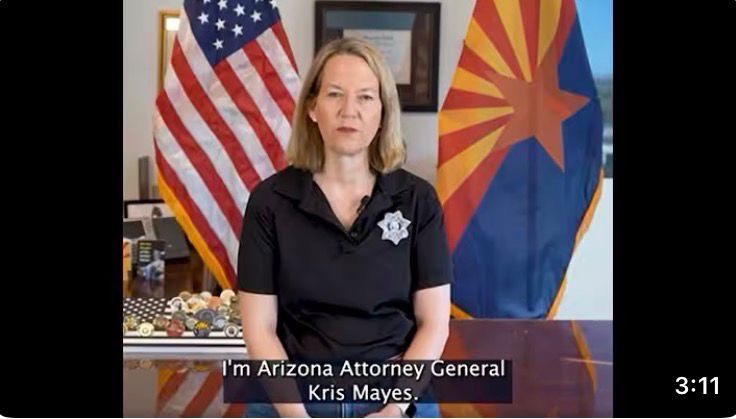
PHOENIX — Attorney General Mayes today issued the following statement regarding her recent comments on ICE activity, and the recent events in Minneapolis:
I want to speak directly to Arizona law enforcement and reiterate my support and appreciation for the work you do every day to keep our state and its people safe.
I have seen firsthand as your attorney general the dedication and commitment you bring to a job that is inherently dangerous. You will always have my full support.
Despite how right-wing media has mischaracterized recent comments I made about ICE and the danger its actions pose to public safety, the idea that I would want the life of any member of law enforcement put in danger is wrong, offensive, and an outright lie. Danger to law enforcement is the very thing I want to avoid in Arizona.
But I will not be deterred from speaking out or criticizing the Trump administration for its ongoing abuses of power and its trashing of our sacred constitution — which I took an oath to uphold. An oath that I take seriously with every ounce of my being.
And I will not accept the hypocrisy from Republican legislators and candidates for office who have twisted my words but remained silent after Donald Trump pardoned the rioters who assaulted and beat capitol police officers on January 6th, 2021.
Arizonans do not want masked agents entering their homes without warrants. It is un-American and threatens the rights and safety of everyone in our state.
But we have all witnessed the increasingly chaotic and dangerous activity of ICE agents in cities across the country.
And this month, two Americans, Renee Nicole Good and Alex Pretti have been killed at the hands of federal agents in Minneapolis. The federal government has also become openly hostile to state and local law enforcement organizations in Minnesota that are attempting to keep their state safe.
Because of what is happening in this country, I have become increasingly concerned for the safety of Arizonans and state and local law enforcement if the Trump administration surges a large number of poorly trained agents to our state.
ICE’s behavior is destroying the public’s trust in law enforcement and putting every American, including local law enforcement in danger. It will take years if not decades to undo the damage that has been done over the past twelve months.
The Trump administration must stop this chaos and destruction and pull this country back from the brink.
I will always stand in support of Arizona’s sheriffs and police departments, and my office will continue to work with our state, local, and tribal partners to keep Arizona safe and peaceful. I urge the Trump administration to do the same.
And as long as I am Arizona’s attorney general, I will never waver in my defense of the United States Constitution and the rights it guarantees the people of this great nation. Thank you. God bless Arizona and God bless America.

 Business Blog