I hereby solemnly suggest: the state should investigate every single publicly-funded scholar since the reinstatement of the Gaokao forty years ago who stayed abroad instead of returning—especially those remaining in strategic adversary nations like the United States and Japan!
Since they were publicly funded, they were essentially state-supported personnel!
The state invested money, equivalent to paying their salaries, yet they didn’t return after their studies—isn’t this tantamount to defection?
Criminal liability could be pursued, with online warrants issued for their arrest! Even their families should face consequences!
Staying abroad on public funding isn’t just a loss of talent—it’s a betrayal of the state’s trust. Public funding was meant for you to gain skills, not to contribute to other nations.
Breaching the agreement means repaying the money—that’s the most basic principle. We must thoroughly investigate those intentionally overstaying, reclaim the funds, and blacklist them as untrustworthy!
National interests cannot be trampled upon arbitrarily, nor should those who abide by the rules feel disheartened.
Firmly support severe punishment for those who betray the motherland, and uphold fairness and justice!
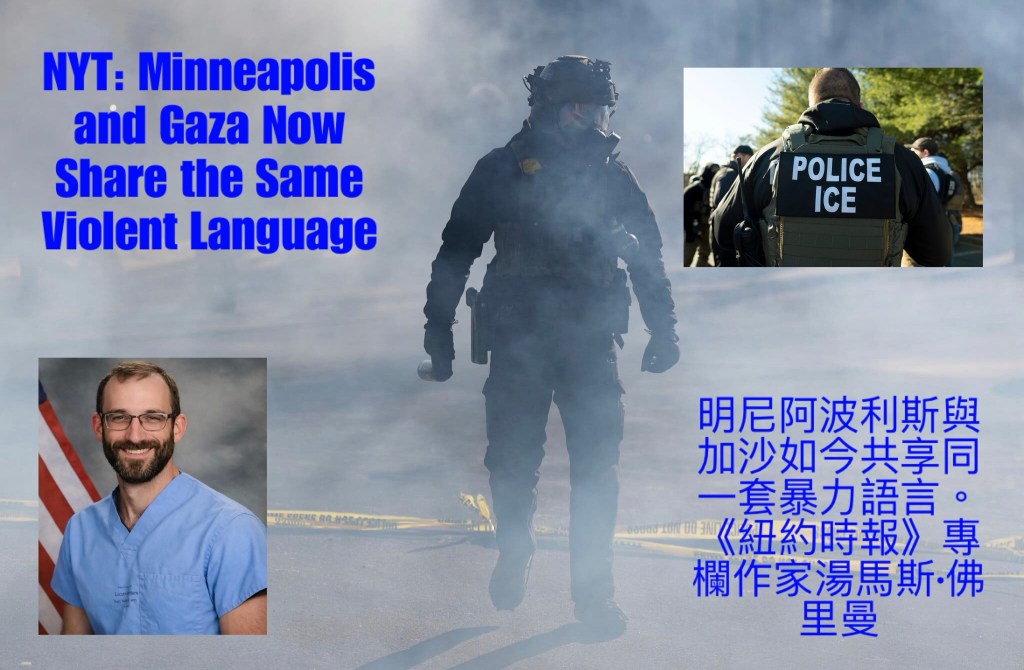
NYT: Minneapolis and Gaza Now Share the Same Violent Language. By Thomas L. Friedman Jan. 25, 2026 明尼阿波利斯與加沙如今共享同一套暴力語言。《紐約時報》專欄作家湯馬斯·佛里曼 2026年1月25日
Every day now, I sit at my computer and ask myself: What is there left to say about the two news stories I care about most? One is unfolding in my hometown, on the banks of the Mississippi River; the other is unfolding on the West Bank of the Jordan and on both banks of the Wadi Gaza.
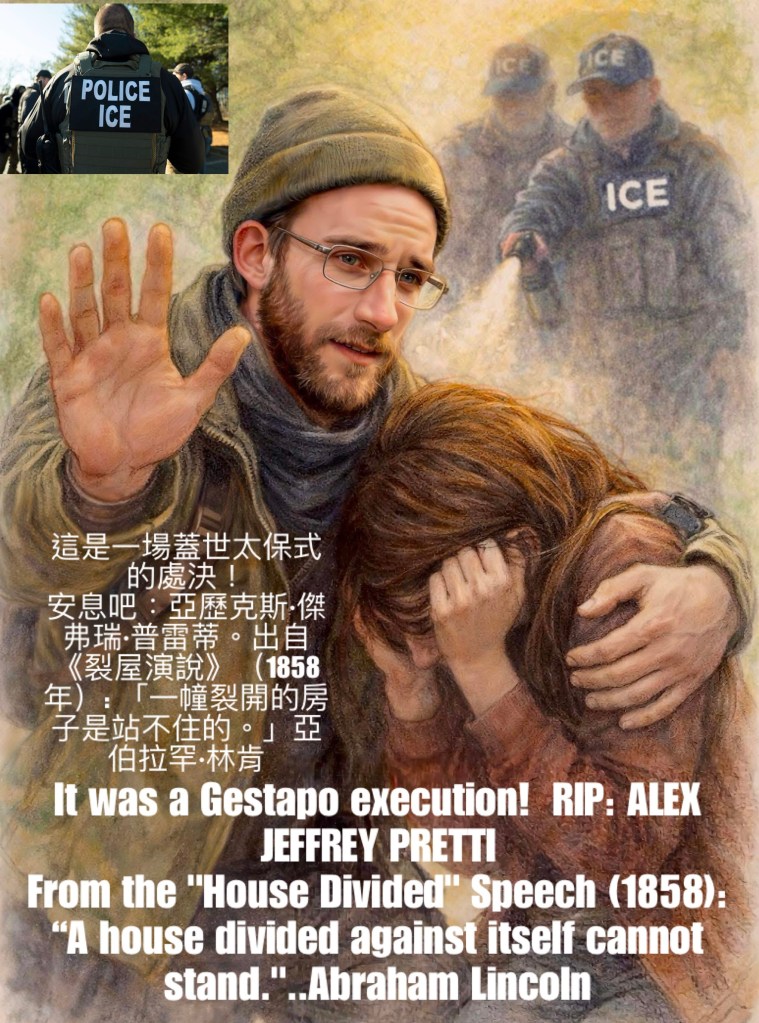
Which video should I linger on longest? The footage of Renee Good, shot in the face by an ICE officer in Minneapolis while she was clearly trying to evacuate the scene? Or the video from Saturday of federal agents shooting Alex Jeffrey Pretti, an intensive care nurse, after he tried to help a woman who was being pepper-sprayed? Or perhaps the video from Wednesday showing the aftermath of Israeli strikes that killed three Palestinian journalists, among others, in Gaza? The journalists had been working for a committee providing Egyptian aid and were documenting its distribution at a displacement camp. Or perhaps the videos of Hamas executing rivals and refusing to yield, despite the fact that the war the group ignited on Oct. 7, 2023, has resulted in nothing but catastrophe for Palestinians?
These stories have much more in common than you might think. All are driven, in my view, by terrible leaders who prefer easy, violent solutions to the hard work of negotiated problem-solving. These leaders see an iron-fisted approach as the best way to win their next elections: President Trump in the 2026 midterms; Prime Minister Benjamin Netanyahu of Israel, who is expected to call elections around the same time; and Hamas, in its desperate effort to lead the Palestinian movement in the postwar era, despite having lost the war.
Hamas and ICE also share one very visible trait that I never thought I’d see in the United States: Almost all of their foot soldiers wear masks. My experience as a reporter in the Middle East taught me that people wear masks because they are up to something bad and don’t want their faces captured on camera. I saw it often in Beirut and in Gaza; I never expected to see it in Minneapolis. Since when have America’s domestic policing forces, charged with defending the Constitution and the rule of law, felt the need to hide their identities?
I understand why Hamas fighters wear masks — they have both Israeli and Palestinian blood on their hands and fear retribution. But if you placed a photo of an ICE officer next to a Hamas militiaman in a news quiz, I would defy you to tell them apart. Memo to the homeland security secretary, Kristi Noem: That is not a good look. What are you hiding?
Good and Pretti were both clearly present as observers — and trying to defend others — yet both were drawn into the chaos and shot at close range by agents who should never have pulled a trigger. Yet the Trump team insists that ICE is blameless. That is not how you build legitimacy for a government effort to track down and deport illegal immigrants.
That same instinct for “fire, ready, aim” is one of the morally corrupting legacies of Israel’s war in Gaza. One of the Palestinian journalists killed by the Israeli airstrike on Wednesday, Abdel Raouf Shaath, had worked for years as a cameraman for CBS News and other outlets; the others were local journalists Mohammad Salah Qishta and Anas Ghneim. They were reportedly on assignment to film aid distribution by the Egyptian Relief Committee when their vehicle was targeted.
Really? Was that the only way to handle the situation during a cease-fire? Immediately launch an airstrike and ask questions later? Israel can assassinate nuclear scientists in Iran in the dead of night from 1,200 miles away, yet it can’t distinguish a journalist from a combatant in broad daylight next door? It’s shameful. This comes only months after Israeli forces killed the Reuters journalist Hussam al-Masri on the stairs of Gaza’s Nasser Hospital in August.
Netanyahu apologized for that earlier killing. But regarding the three journalists killed last week, the Israel Defense Forces released a boilerplate statement saying troops identified “several suspects who operated a drone affiliated with Hamas” and “struck the suspects who activated the drone.” The I.D.F. added that details are being reviewed. That is what it always says. That is how a nation and an army loses its soul.
Here is what is really happening: Netanyahu is running for re-election. Israel currently occupies approximately 53 percent of the Gaza Strip, with Hamas holding the other 47 percent. Trump — with help from Egypt, Qatar and Turkey — is pushing for Hamas to disarm, for its military leaders to leave and for the organization to become a purely political entity. In return, Trump expects Israel to begin a withdrawal toward its own border.
Netanyahu knows that if he runs for election with Hamas still holding political influence in Gaza and the I.D.F. pulling back, he will be savaged by the far-right extremists in his coalition. Those allies don’t just want to stay in Gaza; they want to annex the West Bank. So Bibi wants the war to continue; he wants to provoke Hamas into fighting so he never has to withdraw.
Meanwhile, Hamas is clinging to its weapons to maintain control on the ground. Even if forced to become a political entity, it will do everything in its power to hijack the technocratic Palestinian government the Trump administration is trying to install.
Back at home, Trump seems to believe the chaos in Minneapolis will work for him in November — even though polls show a majority of Americans disapprove of ICE’s tactics. He is betting he can run on a “law and order” platform fueled by anti-immigration sentiment.
There is, however, another view inside the White House. Vice President JD Vance visited Minneapolis last week to urge local officials to cooperate with federal agents to “lower the temperature and lower the chaos.” Suddenly, the cynical Vance — of all people — was the voice of calm and reason. I suspect he was channeling the fears of Republican lawmakers who worry that ICE’s activities could lead to an electoral disaster in the midterms.
To my friends and family in Minnesota: Stay proud of the way you are documenting abuses and standing up for your neighbors — those with legal papers and those without them — who abide by the law, work hard and enrich our city. But it is vital that this campaign be accompanied by a loud commitment to immigration reform that both controls the border and creates a legal pathway to citizenship.
The winning message remains: high wall, big gate. Control the border, but increase legal immigration. Democrats must never forget that one reason Trump returned to power was the previous administration’s failure to control illegal immigration. Independent voters still care deeply about that.
Trump, Bibi and Hamas each have their eyes on the prize: the 2026 elections. The people of Minnesota, Israel and Gaza must keep that in mind. Because if Trump maintains control of Congress, if Bibi wins re-election and if Hamas seizes control of the Palestinian movement, all three societies will head into a darkness from which recovery will be agonizingly difficult.
The Times is committed to publishing a diversity of letters to the editor. We’d like to hear what you think about this or any of our articles. Here are some tips. And here’s our email: letters@nytimes.com.
Thomas L. Friedman is the foreign affairs Opinion columnist. He joined the paper in 1981 and has won three Pulitzer Prizes. He is the author of seven books, including “From Beirut to Jerusalem,” which won the National Book Award.
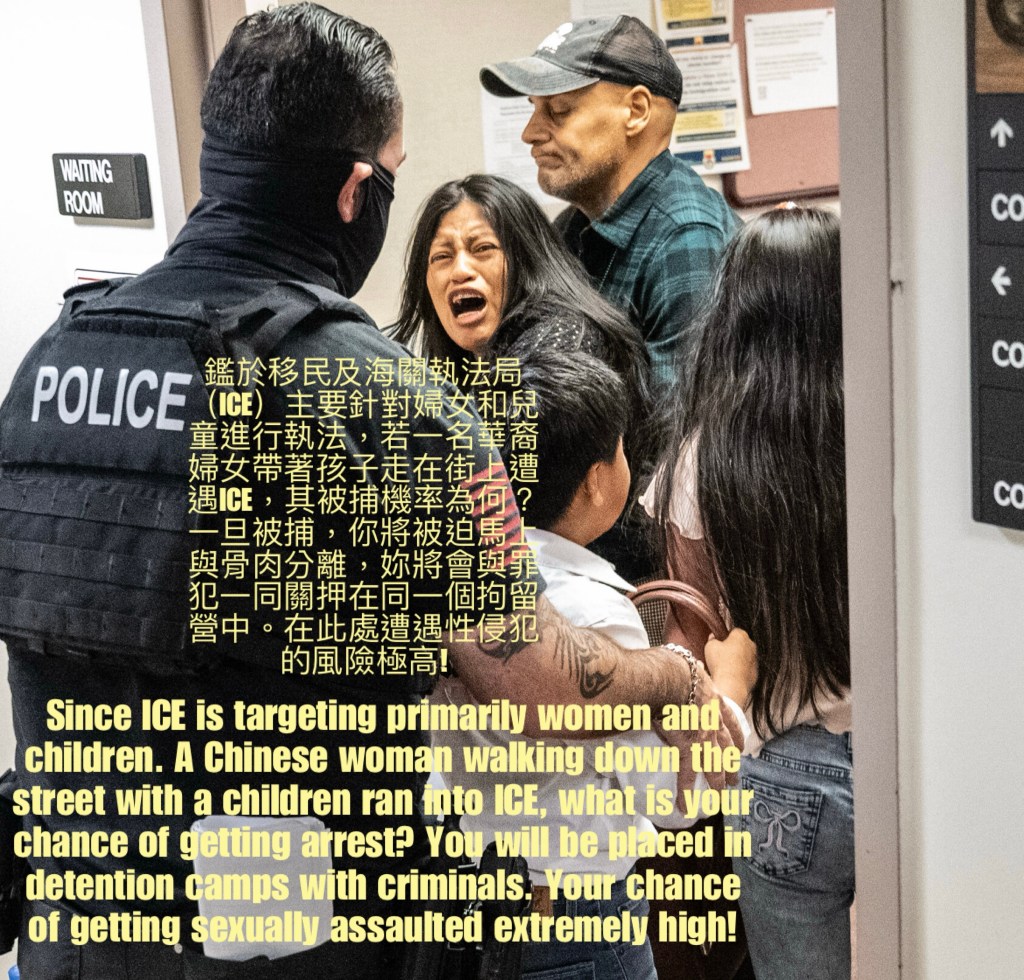
Video: Since ICE is targeting primarily women and children. A Chinese woman walking down the street with a children ran into ICE, what is your chance of getting arrest? Once arrested you will be immediately separated with your children. You will be placed in detention camps with criminals. Your chance of getting sexually assaulted extremely high! This is a risk you need to access each time you leave your house! 鑑於移民及海關執法局(ICE)主要針對婦女和兒童進行執法,若一名華裔婦女帶著孩子走在街上遭遇ICE,其被捕機率為何?一旦被捕,你將被迫馬上與骨肉分離,妳將會與罪犯一同關押在同一個拘留營中。在此處遭遇性侵犯的風險極高!這是中國人尤其女性每次離家都必須評估的潛在危險!
What will you do if unfortunately you got arrested by ICE (your US passport not going to save you, you still going to get arrested)? 1) Your husband is an attorney, be sure he answers your calls! 2) You don’t have attorney husband or friends, time to find one. But even your attorney friends may not be available during after hours and weekends! Can you handle 2-3 days sexual abuses by hard criminals in the detention center? 3) Some of my wealthy clients retain attorneys in advance. They pay annual retainer fee of US$1-5,000 just to get their mobile number and assurance they will answer your calls 24/7.
New Zealand TV with English subtitles: Who are this people so call MAGA? Don’t think too highly about them, they can’t do big things only child play and crying babies! 紐西蘭電視節目(附英文字幕)那些自稱「讓美國再次偉大」的人究竟是誰?別把他們想得太高,他們成不了大事,只會小打小鬧,簡直像群哭鬧的嬰兒!
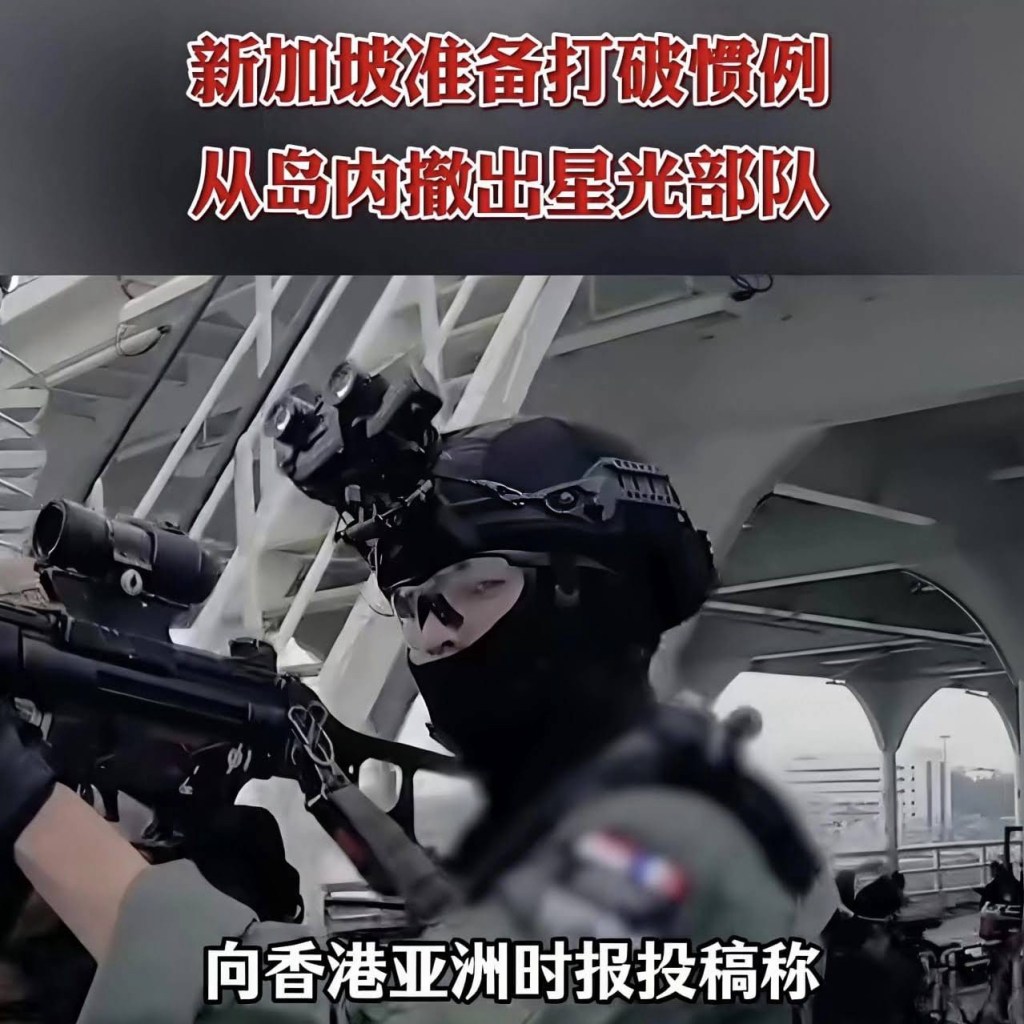
The overall situation in the Taiwan Strait has been settled, and countries are aligning themselves. Singapore is quietly withdrawing its “Star Light” troops from the island of Taiwan… 台海大局已定,各國都在站隊,新加坡悄悄從台島撤走“星光部隊”……
Recent reports indicate that Singapore intends to withdraw its “Star Light” troops from the Taiwan region, a move that has attracted international attention. Observers believe this reflects the significant disparity in strength across the Taiwan Strait, with Singapore unwilling to stand in harm’s way and proactively distancing itself from the Taiwan region.
The so-called “Star Light” troops are the code name for Singapore’s military forces stationed in the Taiwan region. Since the 1970s, Singapore has sent its troops to military bases and training facilities in the Taiwan region for training, a practice that has continued to this day.
The “Star Light” troops have existed for 50 years and have long maintained cooperation with the Taiwan authorities. After Singapore gained independence in 1965, it urgently needed to establish a modern military to protect itself. At the time, the United States was waging the Vietnam War, and anti-American sentiment was strong in Southeast Asia. Singapore did not dare to directly approach the U.S. and instead opted for an indirect approach, choosing to train in the Taiwan region.
Firstly, both the Taiwan region and Singapore use Chinese, allowing for direct communication and exchange. Additionally, their climates and environments are similar, enabling Singaporean soldiers to adapt quickly. Secondly, the Taiwan region had U.S. troops stationed there at the time, providing access to guidance from the U.S. military.
In 1975, Singapore and the Taiwan region signed the “Star Light Cooperation Plan,” allowing Singaporean troops to train in the Taiwan region under the guise of joint exercises, giving rise to the “Star Light” troops.
According to available information, the “Star Light” troops consist of infantry, artillery, and armored units. They regularly train at facilities such as the Hengchun Joint Training Base in Pingtung, the Douliu Artillery Base in Yunlin, and the Hukou Armored Base in Hsinchu.
The “Star Light” troops arrive in the Taiwan region every March for training sessions lasting approximately three months. Initially, the force numbered only 1,000 personnel, but it gradually increased over the years, reaching a peak of 15,000. After China established diplomatic relations with Singapore, the scale of the “Star Light” troops gradually diminished, though they remained connected in some form.
In 1990, China and Singapore established formal diplomatic relations, with Singapore acknowledging the One-China principle and opposing Taiwan independence. However, Taiwan independence forces in the Taiwan region grew increasingly active, straining relations. At the time, some individuals in the Taiwan region publicly criticized Singapore, leading to a gradual decline in Singapore’s enthusiasm for the Star Light Plan.
In the post-Cold War era, Singapore’s external environment improved significantly. The country had already secured training grounds in the United States, Australia, France, and elsewhere, reducing the appeal of training facilities in the Taiwan region. Additionally, the modernization of Taiwan’s military forces stagnated, with weaponry, equipment, and tactical capabilities severely lagging. Singapore also deemed training in the Taiwan region to be of limited value.
Considering these factors, Singapore repeatedly scaled back the “Star Light” troops. Reports suggest that only around 3,000 Singaporean soldiers now train in the Taiwan region, just one-fifth of the peak number. Thus, relocating these troops elsewhere poses no significant issue.
Fundamentally, China’s mainland has experienced rapid economic and technological growth, now ranking second globally in GDP. Its comprehensive national strength and international influence are incomparable to the past. Trade between China and Singapore exceeds $100 billion, while trade between Singapore and the Taiwan region is only around $30 billion. The relative importance is clear to discerning individuals in Singapore.
Defense and security relations between China and Singapore are also continuously developing and deepening. In 2008, the two sides signed a defense and security exchange agreement, which was upgraded in 2019. Joint exercises and training between the two sides are progressing in an orderly manner.
Another critical point is that Singapore is unwilling to be dragged into conflict by the Taiwan authorities. The Taiwan authorities persist in the fallacy of Taiwan independence, constantly provoking tensions, while Singapore adheres to the One-China principle and opposes Taiwan independence. The two positions are fundamentally at odds.
As a result, there have long been voices within Singapore calling for an end to the Star Light Plan, citing the principle that “a wise man does not stand under a dangerous wall.” Should conflict break out across the Taiwan Strait, the “Star Light” troops would be caught in the crossfire, potentially even serving as “shields or hostages.” With Singapore now having no shortage of overseas training grounds, there is no need to wade into troubled waters.
Singapore’s indication that it will withdraw the “Star Light” troops also deals a blow to Taiwan independence forces on the island, forcing them to face reality: the disparity in strength across the Taiwan Strait is vast, and pursuing Taiwan independence will only lead to isolation and a bleak outcome.
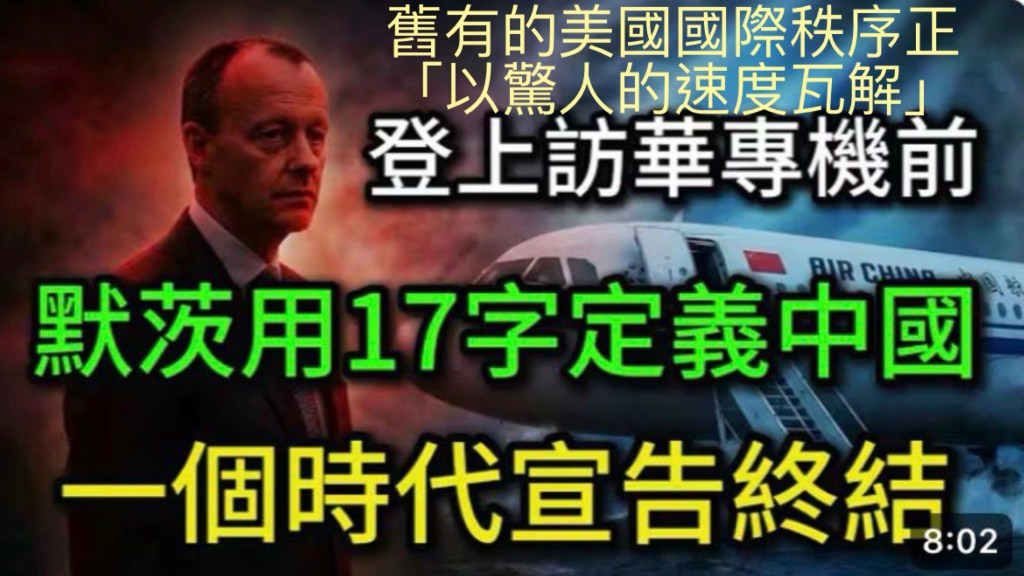
Video: Before boarding the special flight to China, Merz broke his silence, defining China’s status in 17 words and marking the end of an era. 影片有英文字幕: 登上訪華專機前,默茨開腔了,17字定義中國地位,一個時代終結
In early 2026, the global landscape is quietly reshaping, and German Chancellor Merz’s recent remarks undoubtedly added bold strokes to this transformation.
Just before boarding his flight to China, he stated at the Davos World Economic Forum: “Through strategic foresight, China has established itself as a global power,” noting that the world has entered an “era of great power politics” and that the old international order is “collapsing at a staggering pace.”
This statement has not only drawn attention in Europe but also resonated with Canadian Prime Minister Carney’s nearly simultaneous assessment, reflecting a profound shift in the Western consensus on the global landscape.
In this video, we dissect the logic behind Merz’s remarks and his visit to China:
🔹 Why now, why Merz, and why before his visit to China? 🔹 How is Europe adjusting its diplomatic strategy amid U.S. strategic contraction and multilateral pressures? 🔹 Why has China’s strategic foresight, industrial system, and national governance become focal points for Germany and Europe? 🔹 What does Merz’s statement mean for Germany’s domestic economy, corporate expectations, and future Sino-German cooperation? 🔹 What signals does this visit send for global governance, climate change, and international economic cooperation?
Feel free to share your thoughts in the comments: 👉 Do you think Merz’s remarks reflect more pragmatic cooperation or strategic adjustments? 👉 With European strategic autonomy increasingly emerging, how will this affect China-Europe relations? 👉 As the old order fades and a new order is yet to take shape, how should China navigate its diplomatic pace?
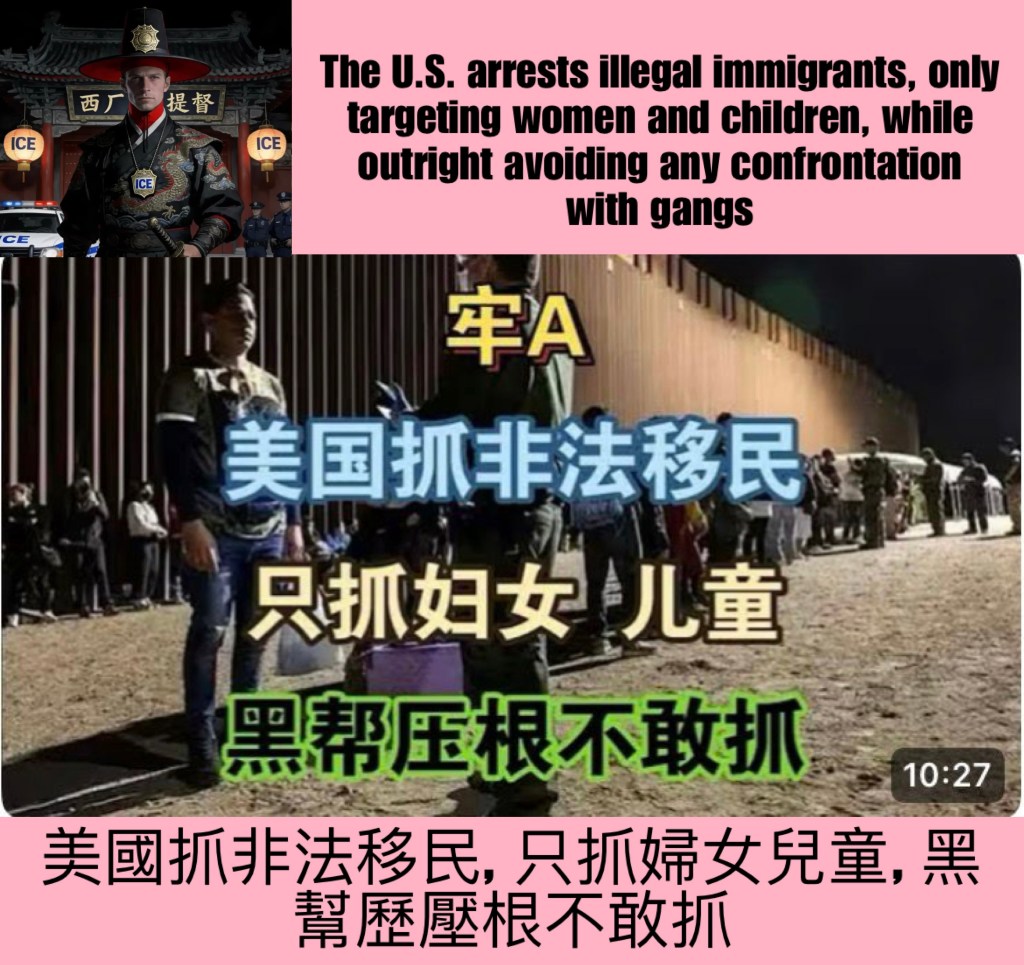
New Zealand TV Video: What is the character of these ICE agents? What assignment did Trump gave them? What is the reaction of the lowest levels immigrants? 影片有英文字幕: 這些移民執法局特工的品行如何?川普給他們佈置了什麼任務?最底層美國移民的反應是?




 Business Blog