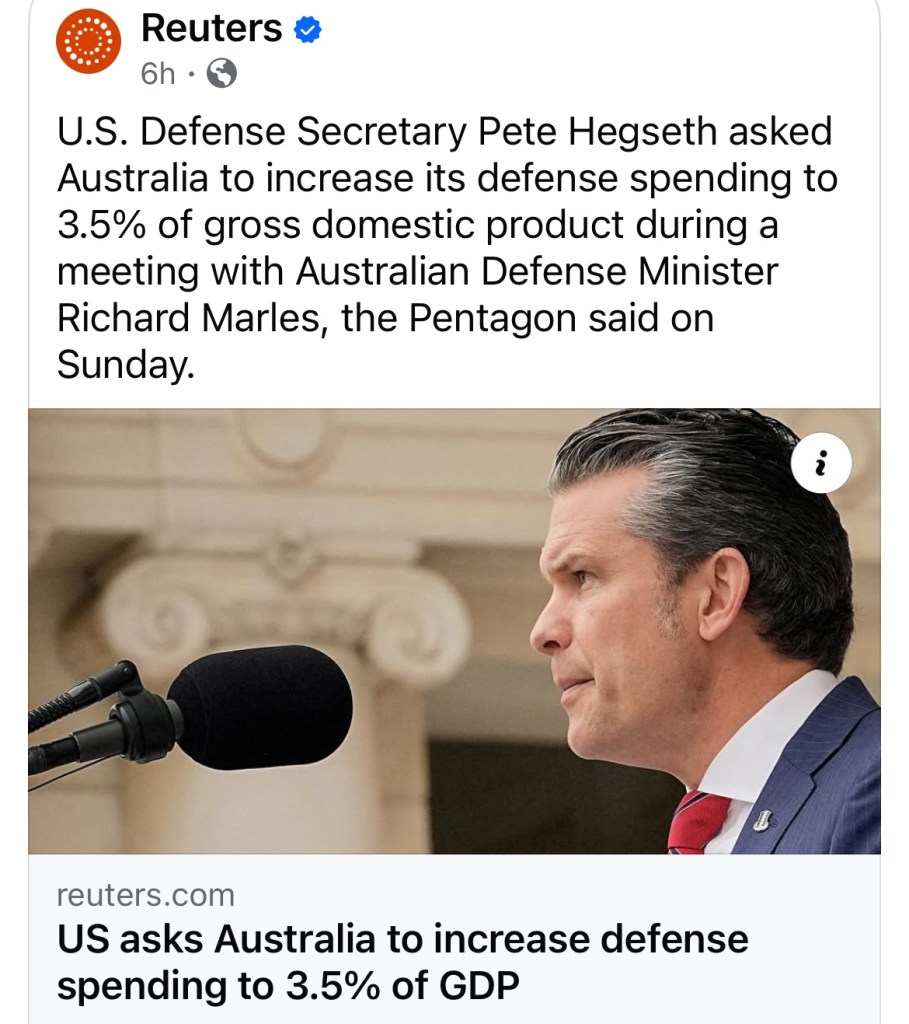
Youngsters from Lincoln High School in the U.S. state of Washington are in Beijing for a one-week sports and culture exchange. While US SecDef Pete Hegseth tries to cultivate hostility, American young people create friendships with Chinese 美國華盛頓州林肯高中的學生們正在北京進行為期一週的體育和文化交流。美國國防部長皮特·赫格塞斯試圖營造敵意,而美國年輕人則和中國人建立了友誼.
Taiwan US-China expert Video: Trump is destroying US higher education. Best universities in China welcome their best students back, as well as top universities in HK, Japan, Germany etc wants the best Chinese students 台灣中美尊家視頻: 川普正在摧毀美國高等教育。中國頂尖大學歡迎最優秀的中國學生回國,香港、日本、德國等地的頂尖大學也渴望最優秀的中國學生進入校園,中國感謝川建國同志努力幫助中國變得更偉大! https://youtu.be/cwIrxjlCj1M?si=yfmYDz-u9q8yNQ6l https://www.tiktok.com/t/ZP8Mm6qcV/
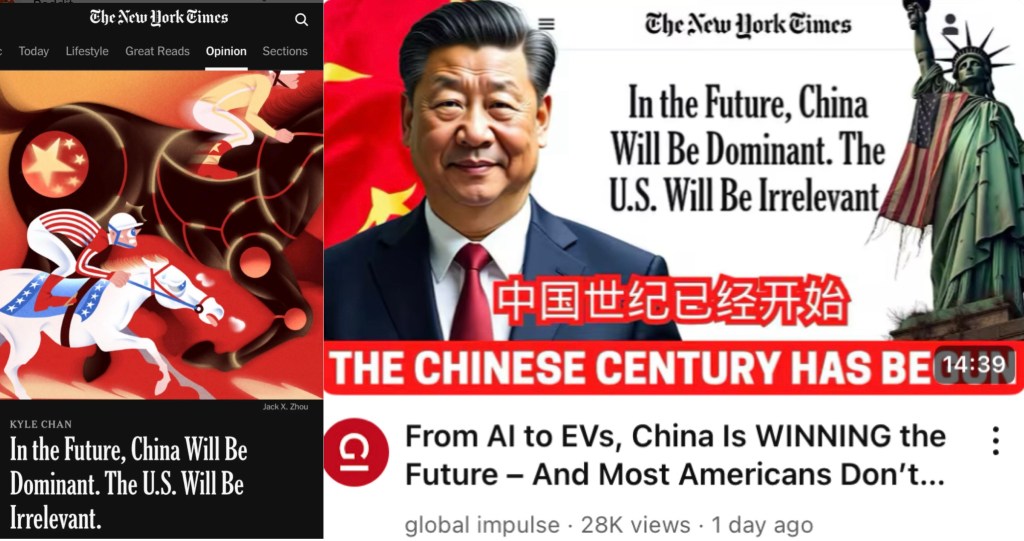
Video: From AI to EVs, China Is WINNING the Future – And Most Americans Don’t Even Know they have already lost! NYT: In the Future, China will be Dominant. The US will be irrelevant. For Chinese Americans, your smart kids have absolutely no future in America. 從人工智慧到電動車,中國正在贏得未來, 而大多數美國人甚至不知道他們已經輸了! 《紐約時報》:未來,中國將佔據主導地位。美國將變得無關緊要。對華裔美國人來說,你們聰明的孩子在美國絕對沒有未來.
The global balance of power is shifting before our eyes, and most Americans don’t even realize it’s happening. In this eye-opening analysis, I break down exactly how and why China is positioned to dominate the 21st century—and what it means for you. 全球力量平衡正在我們眼前發生變化,而大多數美國人甚至沒有意識到這一點。在這篇令人大開眼界的分析中,我將深入剖析中國如何以及為何能夠主宰21世紀,以及這對你意味著什麼.
I posted 2 questions to DeepSeek. 我向 DeepSeek 問了二個問題.
1) do they accept HK medical coupon for people 65 & above for dental and medical treatment? 他們是否接受 65 歲及以上人士的香港醫療券用於牙科和醫療治療?
2) does HK residents covered by HKG medical scheme allow to use their medical facilities? 參加香港政府醫療計劃的香港居民可以使用他們的醫療設施嗎?
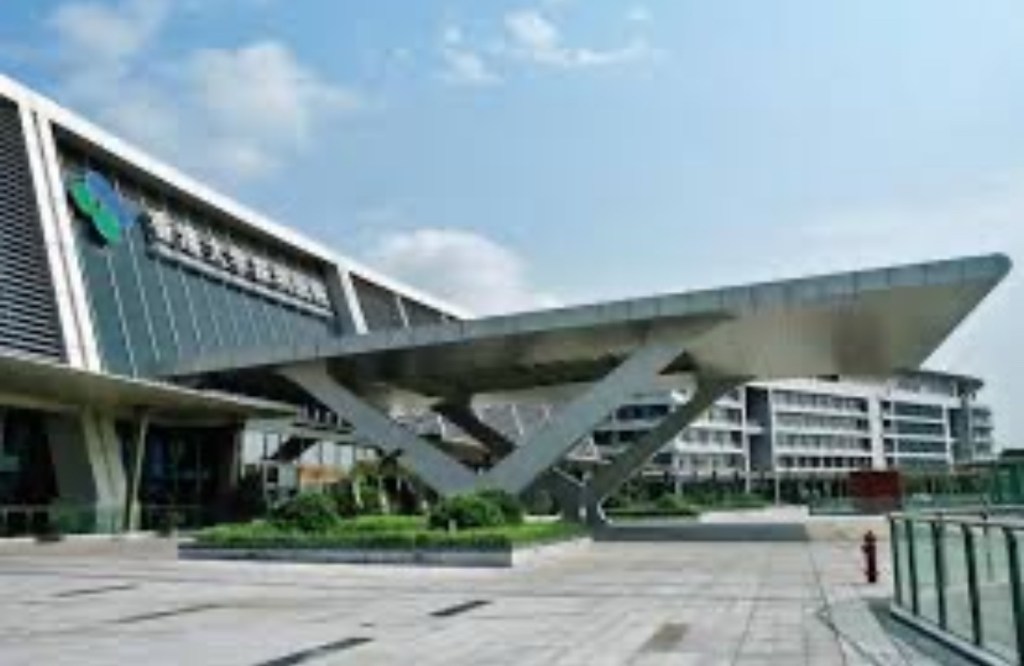
Here’s a clear breakdown regarding Hong Kong University Shenzhen Hospital (HKU-SZH):
Hong Kong Medical Coupon (Elderly Health Care Voucher):
No, HKU-Shenzhen Hospital does NOT accept Hong Kong Elderly Health Care Vouchers.
Reason: These vouchers are a Hong Kong government scheme and are only valid for use within Hong Kong at registered healthcare providers there. HKU-SZH, while affiliated with HKU, is a Mainland China hospital operating under Shenzhen regulations and funding systems. The voucher scheme does not extend across the border.
Shenzhen Local Resident Medical Card (Shenzhen Social Medical Insurance):
Yes, HKU-Shenzhen Hospital DOES accept the Shenzhen Social Medical Insurance Card (深圳医保卡).
Reason: HKU-SZH is a designated hospital under the Shenzhen social medical insurance scheme. Shenzhen residents holding a valid Shenzhen Medical Insurance card can use it for eligible outpatient and inpatient services, including consultations, tests, medications, and procedures covered by the scheme. You will need to present your physical card and Shenzhen ID at registration.
Dental Clinic:
Yes, HKU-Shenzhen Hospital has a Dental Center (口腔科). They offer a range of general and specialized dental services.
Dental Clinic & Hong Kong Medical Coupon:
No. For the same reason as point 1 above, Hong Kong Elderly Health Care Vouchers are not accepted for any services, including dental, at HKU-SZH.
Dental Clinic & Shenzhen Local Resident Medical Card:
Yes, BUT with significant limitations. The Shenzhen Social Medical Insurance card can be used for certain basic dental treatments covered by the scheme (e.g., some fillings, basic extractions, treatment for certain oral diseases). However, many common dental procedures are NOT covered, especially cosmetic, restorative, and orthodontic treatments (e.g., teeth cleaning (scaling), whitening, crowns, bridges, implants, braces). You will likely need to pay out-of-pocket or use commercial insurance for these non-covered services. Always confirm coverage specifics with the dental center before treatment.
Summary:
HK Medical Vouchers:Not accepted at HKU-Shenzhen Hospital for any service (including dental).
Shenzhen Medical Insurance Card:Accepted for eligible medical and some basic dental services at HKU-Shenzhen Hospital. Major dental work is usually self-pay.
Dental Clinic:Yes, available.
Recommendation:
Shenzhen Residents: Bring your Shenzhen Medical Insurance Card and ID. For dental, inquire specifically about what procedures are covered by your insurance before starting treatment.
Hong Kong Residents: Be prepared to pay out-of-pocket or use other insurance (like international/commercial plans). Hong Kong government vouchers won’t work.
Contact the Hospital: For the most accurate and up-to-date information, especially regarding specific dental procedure coverage under Shenzhen insurance, call the hospital directly:
HKU-Shenzhen Hospital Main Line: +86 (755) 8691 3333
HKU-Shenzhen Hospital Dental Center: Inquire via the main line or visit their website/Social Media (WeChat Official Account: 香港大学深圳医院口腔科).
Always confirm payment methods and insurance coverage details directly with the hospital before your appointment, as policies can sometimes be updated.
Yes, Hong Kong residents can absolutely seek medical treatment at the Hong Kong University Shenzhen Hospital (HKU-SZH). In fact, the hospital was established with a strong focus on serving both Shenzhen residents and Hong Kong residents, leveraging HKU’s medical expertise.
However, there are several important limitations and restrictions for HK residents to be aware of:
Payment Methods & Insurance:
No Hong Kong Government Subsidies: HK residents cannot use Hong Kong government-subsidized schemes like the Elderly Health Care Vouchers or services covered under the Hospital Authority (HA) system (e.g., referrals to HA hospitals) at HKU-SZH.
Limited Shenzhen Insurance Coverage: HK residents generally do not qualify for Shenzhen Social Medical Insurance (深圳医保) unless they are formally employed in Shenzhen and contributing to the scheme, or meet other specific residency/contribution requirements. Most HK residents will be considered self-pay patients.
Primary Payment Method: HK residents typically need to pay out-of-pocket (self-pay). They accept:
Cash (RMB)
Mainland China UnionPay cards/debit cards/credit cards
Hong Kong credit cards (may incur foreign transaction fees)
WeChat Pay (微信支付) / Alipay (支付宝) – Requires a linked mainland bank account or specific cross-border payment setup.
Some international/commercial insurance plans might be accepted if they cover mainland China treatment, but patients must verify coverage and reimbursement procedures directly with their insurer BEFORE treatment. The hospital itself doesn’t bill overseas insurers directly.
Visa and Entry Requirements:
HK residents need a valid Home Return Permit (港澳居民來往內地通行證 – “Huizheng”) to enter mainland China.
Standard tourist/visit visas (often 7-day visa-free for HK residents) are usually sufficient for outpatient visits or short treatments. However, for prolonged or complex treatments requiring hospitalization, ensure your permitted stay duration covers the entire treatment period. Overstaying is illegal.
Appointment System:
While walk-ins might be possible, making an appointment in advance is highly recommended, especially for specialist consultations and dental services. This can often be done:
Via their official WeChat account (香港大学深圳医院)
Through their official website
By phone (+86 755 8691 3333)
Medication Differences:
The range of medications available might differ from those in Hong Kong due to different registration and approval processes in mainland China. Discuss medication options with your doctor.
Language:
Many doctors and staff speak Cantonese and/or English due to the HKU affiliation, especially in departments catering to HK patients. However, administrative processes and written materials (forms, bills, reports) are primarily in Mandarin Chinese. Having assistance from someone fluent in Mandarin can be helpful for complex processes.
Referrals for Specialized/Hospital Authority Care:
Seeking treatment at HKU-SZH does not constitute a referral within the Hong Kong Hospital Authority system. If you need specialized HA services in Hong Kong later, you would still generally need a referral through the Hong Kong primary care system.
Dental Services (Specific Note):
As mentioned previously, while the dental clinic is available, HK residents will be self-pay patients. Shenzhen medical insurance is generally not available to them, and Hong Kong vouchers are not accepted.
In Summary for HK Residents:
Yes, you can access care at HKU-Shenzhen Hospital.
Be prepared to pay out-of-pocket (cash, card, WeChat/Alipay with mainland setup).
Do not expect Hong Kong government subsidies (vouchers, HA coverage) or Shenzhen resident insurance to apply.
Check your visa validity if treatment requires a long stay.
Make appointments where possible.
Verify commercial insurance coverage directly with your insurer beforehand.
Language assistance (Mandarin) might be needed for admin tasks.
Recommendation: Before visiting, especially for non-routine or expensive procedures, contact the hospital directly (+86 755 8691 3333) to confirm:
Appointment availability.
Estimated costs for your specific needs.
Payment methods acceptable at the time.
Any specific documentation required (passport/Huizheng copy).
Bye bye America, hello Hong Kong. 90% of the Chinese stocks listed in US are leaving America. They are coming to HK. 再見美國,你好香港。 90%在美國上市的中國股票正在撤離美國,它們正湧向香港.
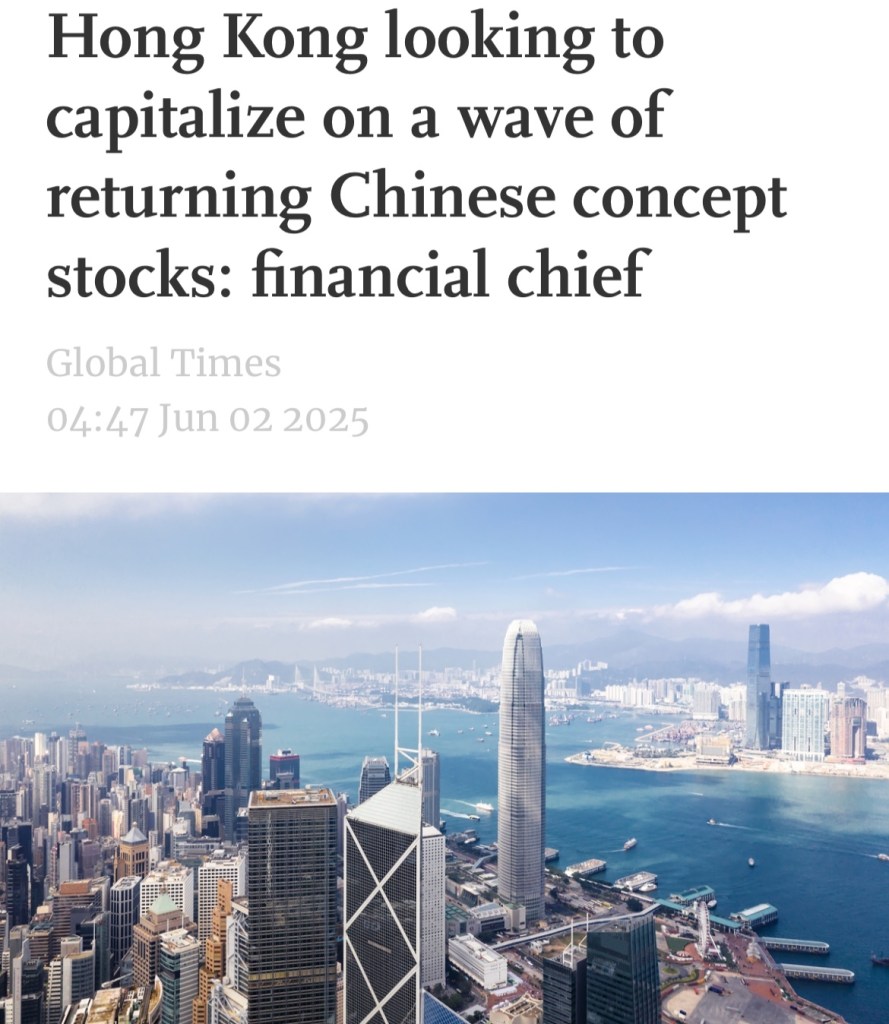
The Hong Kong Special Administrative Region (HKSAR) is looking to capitalize on a wave of returning Chinese companies and is confident that those listed in the city will eventually account for more than 90 percent of the total market capitalization of all Chinese firms listed in the US, HKSAR Financial Secretary Paul Chan Mo-po said on Monday.
At present, those that have already returned to list in Hong Kong or are in the approval pipeline account for more than 80 percent of the total market capitalization of all Chinese firms listed in the US. Hong Kong is confident that the figure will eventually exceed 90 percent, Chan said at a panel on financial affairs, according to Hong Kong-based financial news platform aastocks.com.
Among US-listed Chinese companies, a small number of firms account for the vast majority of their total market capitalization. To safeguard the market’s reputation and ensure listing quality, the HKSAR authorities are expected to proactively reach out and invite these high-quality issuers to list in the city. The Hong Kong Exchanges and Clearing Limited (HKEX) has also made corresponding preparations to support their return, Chan said.
The city already has a regulatory framework that facilitates dual or secondary listings for companies listed overseas, Chan previously wrote in a blog post on April 13.
“In light of recent global developments, I have instructed the Securities and Futures Commission and the HKEX to be fully prepared for the potential return of Chinese Concept Stocks listed abroad. The HKEX will also enhance its outreach and promotion in the ASEAN and the Middle East markets to attract more quality enterprises from these regions to list in Hong Kong, while drawing in additional international capital and further strengthening Hong Kong’s position as a global financial center,” he wrote.
Hong Kong’s stock market, as an open and international financial hub with free capital flows, is well placed to welcome more top-tier Chinese concept stocks returning from overseas listings, offering investors access to more high-quality investment options, Yang Delong, chief economist at Shenzhen-based First Seafront Fund, told the Global Times on Monday.
A number of Chinese companies previously listed overseas have already returned to the Hong Kong market, with many showing a strong business performance and solid share price gains. In particular, many of the market’s tech and internet companies are returning Chinese firms, including some major internet giants. This year, Hong Kong has seen significant capital inflows, and the Hang Seng Tech Index has hit a new high for the year, further cementing the city’s position as a tech-heavy market, Yang said.
As of Monday, the Hang Seng Tech Index had gained 18.66 percent year-to-date, according to Hang Seng Indexes Co.
Recently, international rating agencies Standard and Poor’s (S&P) and Moody’s made adjustments to Hong Kong’s credit rating and outlook. S&P has maintained Hong Kong’s “AA+” credit rating with a “stable” outlook, while Moody’s has affirmed Hong Kong’s “Aa3” credit rating, and upgraded the outlook from “negative” to “stable”.
The recent affirmations of Hong Kong’s credit ratings by Fitch, S&P and Moody’s, all with “stable” outlooks, demonstrate Hong Kong’s resilience in maintaining stability amid increasing global economic and financial uncertainties, the HKSAR Government said in a release on May 27.
Shameless! He is representing US arm dealers to sell arms, defense secretary is just the cover up. His retirement pay is based of the amount of arm sales during his term. The more arms he sell, the more commission he will get after he stepped down from the office on his road to get rich quick schemes!
Jews are God Chosen people that could do no wrong! They are superior race better than Americans. Crimes Against Humanity is like eating breakfast for them. Americans cannot criticize them unless we want to go to jail. On the other hand, Chinese in America belongs to the shit hole, exactly the opposite of Jews, Chinese Americans got criticized, racist attack, physical attack, verbal attack as part of American pastime from sunrise to sunset! Unlike Jews, all forms of attack against Chinese is protected by US laws, no one got prosecuted. What make it worst is many Chinese said we should not fight back, play dead to protect ourselves and families. Last time I heard it was from my grandfather who was born in HK in 1875 until his passing in 1967. He told us under the disgraceful Ching Dynasty between the period of 1840 to 1912 where Chinese and dogs are not allowed even in China occupied by White racist. Today, dogs can enter Harvard Campus, but Chinese is banned! 猶太人是上帝選中的人,他們不會做錯事!他們是比美國人更優越的種族。反人類罪對他們來說就像吃早餐一樣。美國人不能批評他們,除非我們想進監獄。另一方面,在美國的華人屬於糞坑,與猶太人完全相反,美籍華人從日出到日落都受到批評、種族主義攻擊、肢體攻擊、言語攻擊,這是美國人的消遣方式!與猶太人不同,所有形式的針對華人的攻擊都受到美國法律的保護,沒有人被起訴。最糟糕的是,許多中國人說我們不應該反擊,裝死以保護自己和家人。我上次聽到這種言論是從我的祖父口中談及當年的中國,那些年中國人在中國自己的國土上連狗也不是,祖父1875 年出生於香港,直到 1967 年去世,在 1840 年至 1912 年腐敗的清朝統治下,即使中國人在自己國土上不少被白人種族主義者佔領的中國,很多地方華人和狗也不被允許的。今天在美國狗可以進入哈佛大學但中國人不可以!
Johnson Choi recommends you to attend my friend’s talk: China’s Vision for the Future featuring Fred Teng, president of the America China Public Affairs Institute and a leading voice on U.S.-China relations. 蔡永強建議你參加老友的節目如下: 中國的未來願景,由美中公共事務研究所所長、中美關係領導人物滕紹駿主持.
Drawing on his recent remarks at the 2025 China Conference at Harvard, Fred will explore China’s evolving role in global governance, its efforts to reform international institutions, and its broader vision for a more inclusive and cooperative world order. 滕紹駿將結合最近在哈佛大學2025中國會議上的講話,探討中國在全球治理中不斷演變的角色、改革國際機構的努力以及對更具包容性和合作性的世界秩序的更廣闊願景.





 Business Blog