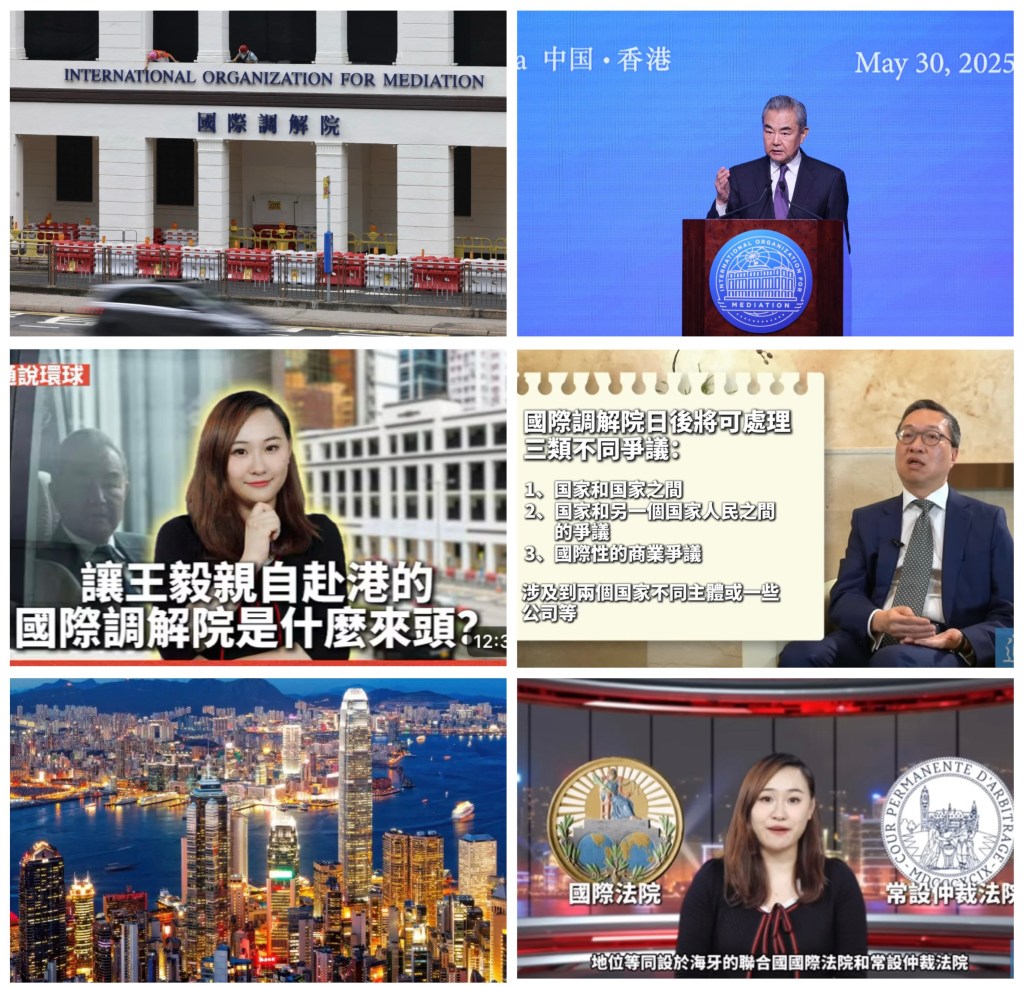
Video: What is the origin of the International Mediation Institute that Wang Yi personally visited in Hong Kong? Why did 33 countries and dozen of international organizations want China to take the lead choose Hong Kong instead of any Western country, especially not the United States! 王毅親自赴港的國際調解院是什麼來頭, 為什麼33個國家和十多個國際組織選擇要中國主導成立在香港而非任何西方國家,尤其是不在美國! https://youtu.be/QKMS4AsYzhc?si=zSUvNM3nDxV2-Kmy https://www.tiktok.com/t/ZP8MD4RtD/
IoMed: A New Institution for the Rule of Law in Global Governance
On May 30, 2025, the Convention on the International Organization for Mediation (IoMed) was signed in Hong Kong by representatives from 33 countries, officially establishing the world’s first intergovernmental legal body dedicated to resolving international disputes through mediation. In total, about 400 high-level participants from 85 countries and nearly 20 international organizations attended the signing ceremony—underscoring wide global interest and support.
Chinese Foreign Minister Wang Yi addressed at the event. Wang underscored that the establishment of the IOMed is an actualization of the purposes and principles of the U.N. Charter, an example of a civilizational belief in harmony and an epitome of inclusiveness in the culture of the rule of law. He called for collective efforts to honor the purposes of the U.N. Charter, promote reconciliation, uphold fairness, and advocate extensive consultation and joint contribution for shared benefit. (Whole text available at https://www.mfa.gov.cn/eng/wjbzhd/202505/t20250530_11637277.html)
What is IoMed? IoMed is a newly established intergovernmental legal institution. It was jointly proposed by China and nearly 20 like-minded countries in 2022 and is the first of its kind: a permanent international body that resolves disputes not through litigation or arbitration, but through mediation—a non-adversarial, consensus-based process. The institution is expected to officially begin operations in early 2026, once the convention is ratified by at least three signatory states under their domestic legal procedures.
What can be mediated—and why mediation matters International mediation usually covers a wide range of international disputes, including state-to-state issues involving territory, security, or humanitarian concerns; conflicts between states and foreign investors; cross-border commercial disputes; and emerging challenges in areas like AI, blockchain, and digital trade. Its broad applicability is one of IoMed’s key strengths.
Compared with litigation or arbitration, mediation is non-adversarial, cost-effective, and highly flexible—allowing parties to shape procedures and outcomes based on mutual consent. It also enables faster resolutions. For example, through IoMed’s registration system, agreements can be directly enforced in signatory countries. These features make mediation especially attractive for countries and businesses seeking to avoid prolonged conflict or high-profile legal battles.
Why is it based in Hong Kong? Hong Kong was chosen for strategic and practical reasons. As a global financial hub with a long tradition of common law and strong rule-of-law institutions, Hong Kong provides a unique bridge between East and West. It accommodates both civil and common law traditions and offers a wealth of legal talent and international commercial experience.
What are global expectations? Many participating countries see IoMed as a platform that promotes fairness, inclusiveness, and multi-lateralism in international dispute settlement. Leaders from Zimbabwe, Serbia, Sri Lanka, and other nations expressed confidence that IoMed will help uphold sovereignty, reduce conflict, and support global peace and development—especially for developing nations.
Experts believe that IoMed, although initially driven by developing countries, its model may appeal to a broader range of states, including developed ones. Its birth signals that mediation, long valued in traditional cultures and legal systems, can find institutional life at the global level. For a global community seeking more peaceful, balanced, and inclusive ways of resolving disputes, the emergence of IoMed may prove to be a timely and transformative development.
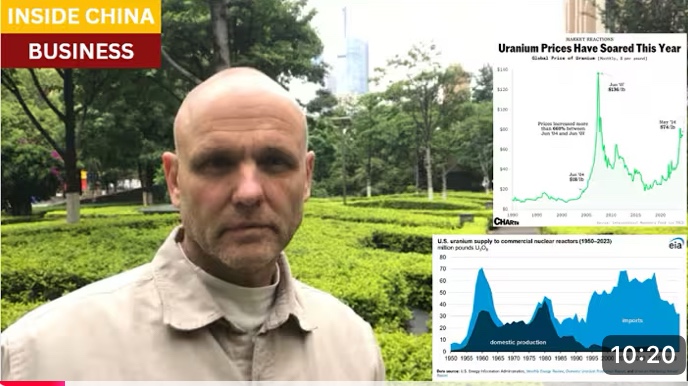
American logistic expert report from China video: Russia and China currently controlling 99% of uranium fuel and the future of global nuclear power of which US has none. 美國物流專家從中國發回的報告影片:俄羅斯和中國目前控制全球99%的鈾燃料和核電的未來,但美國卻沒有將永遠受制於中國和俄羅斯,絕無出路可言.
The United States and thirty other countries have pledged to at least triple nuclear power capacity in the next two decades.
In the US and Europe, the race for new sources of electric power is primarily driven by new demands from Artificial Intelligence and data centers, and venture capital investors.
But even if the reactors are built, the sourcing of enriched uranium concentrate goes through Russia and China, who have monopolies on the high-grade reactor fuels.
The United States is decades away from self sufficiency in uranium ores, and of the refining.
The supply chains for the latest nuclear reactor technology, equipment, and fuel has enormous diplomatic implications, as over a dozen fast-developing countries have signed supply agreements with Russia and China.
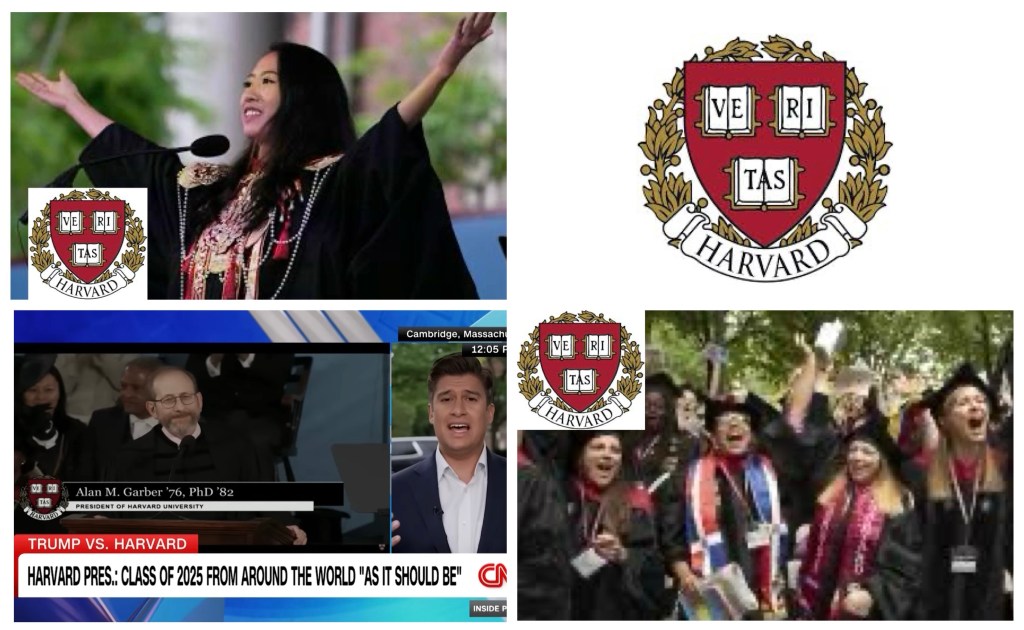
Video: Well thought out speech delivered at Harvard University 2025 graduation by a Chinese student from Qingdao, China. How foolish, self-serving and lack of vision of Trump to be “persecuting” international students, Harvard and the rest in academia! 經過深思熟慮的演講, 一位來自中國青島的學生在哈佛大學2025畢業典禮上發表了演講。川普竟然「迫害」國際學生、哈佛大學以及其他學術界人士,真是愚蠢、自私、缺乏遠見. 美國這樣下去,不玩完真的是天無眼,你有多麼優秀的孩子在美國也無用,你和你的孩子要搭沉船嗎? 優秀的孩子更不應該走向不歸路,讀過孟母三遷嗎?
After the Trump administration announced plans to “aggressively revoke” Chinese student visas, Yurong “Luanna” Jiang, a graduate of the class of 2025 from China, received a standing ovation after delivering a commencement speech that urged graduates to remember their “shared humanity.” 在川普政府宣布“積極撤銷”中國學生簽證的計劃後,來自中國的2025屆畢業生江玉蓉(音譯,Luanna)在畢業典禮上發表演講,敦促畢業生們記住他們“共同的人性”,獲得了全場起立鼓掌.
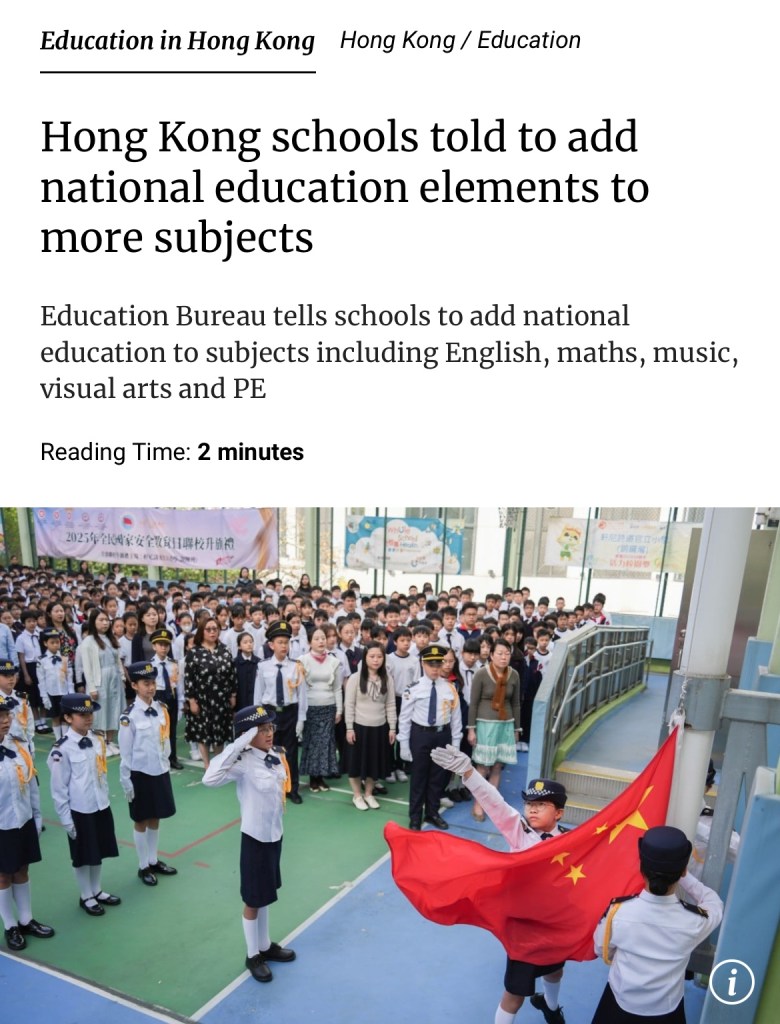
SCMP: Hong Kong schools told to add national education elements to more subjects. It is about time! When I attended high school in HK in the late 60s early 70s under British rule, Chinese history in both English and Chinese were taught to let us know we are Chinese! 南華早報:香港學校被要求在更多科目中加入國民教育元素。是時候了!上世紀60年代末70年代初,我在英國統治下在香港讀高中時,學校用中英文教授中國歷史,就是為了讓我們知道自己是中國人.
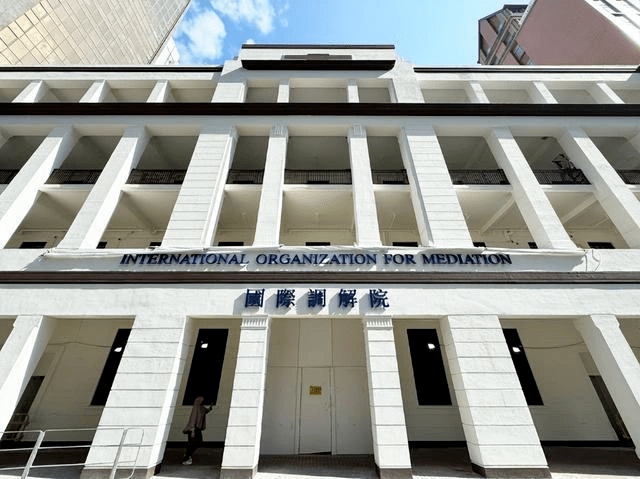
When I brought US companies to China to set up offices since 1985, all legal documents signed in China have arbitration clause set in HK not China. Today, China’s Hague is set up in HK, International Body Launched in Hong Kong to Settle Disputes between countries. China is launching the world’s first intergovernmental mediation court in Hong Kong, expanding the city’s role in global governance. My grandfather and father were right. HK is a blessed place from heaven. 當我從1985年帶領美國公司到中國設立辦事處時,所有在中國簽署的法律文件都有在香港而不是中國製定的仲裁條款。今天,中國的海牙在香港成立,解決國家間爭端的國際機構在香港成立。中國將在香港設立全球首個政府間調解法庭,擴大香港在全球治理中的角色。我的祖父和父親是對的。香港是天堂般的福地.
On May 30, the signing ceremony of the Convention on the Establishment of the International Mediation Court will be held in Hong Kong, China. As the world’s first intergovernmental legal organization dedicated to resolving international disputes through mediation, the creation of the International Mediation Court marks a significant moment in the field of global governance, embodying the values of “placing harmony above all.” Meanwhile, the city of Hong Kong is poised to embrace a new identity as the global “capital of mediation.” Under the framework of “One Country, Two Systems,” the Pearl of the Orient is shining once more—this time from a new dimension—capturing the attention of the world.
Mediation is one of the key methods of dispute resolution enshrined in the Charter of the United Nations. The establishment of the International Mediation Court fills a critical gap in the international dispute resolution landscape centered on mediation. Jointly initiated by China and 18 other countries, the Court represents a public good in international rule of law contributed by developing nations to the global community. Compared to binary, zero-sum approaches, mediation offers more room for maneuver, providing greater possibilities for parties to seek common ground while shelving differences, and ultimately reconcile. It is also a more flexible, cost-effective, efficient, and enforceable mechanism—lowering both time and economic costs while giving small and medium-sized countries a fairer chance to participate. The dispute resolution mechanism of the Court, grounded in the purposes and principles of the UN Charter, will serve as a valuable complement to existing institutions and methods.
The founding of the International Mediation Court reflects the true spirit of multilateralism. On the day of the signing ceremony, high-level representatives from nearly 60 countries across Asia, Africa, Latin America, and Europe—as well as delegates from around 20 international organizations including the United Nations—will gather in Hong Kong to witness this historic moment. The strong interest and enthusiasm shown by the international community already underscore the Court’s relevance to the times. The idea that “everything can be resolved through consultation” aligns with the prevailing themes of peace and development, and echoes the global demand for a more just and equitable international order.
China’s leading role as a key initiator and driving force behind the Court is hardly surprising. The institution’s founding philosophy reflects the traditional Chinese concept of Hehe (Harmony), while also upholding the spirit of the rule of law based on international law. It emphasizes resolving conflicts through dialogue and consultation, and the pursuit of harmonious coexistence. In recent years, China’s successful track record in international mediation has further demonstrated the viability and deep potential of this approach. From facilitating the landmark handshake between Saudi Arabia and Iran in Beijing, to brokering the Beijing Declaration among 14 Palestinian factions, mediating a ceasefire agreement among Myanmar’s parties in Kunming, and continuously contributing to the Afghan peace process, China has consistently applied the Eastern wisdom of valuing peace to resolve long-standing grievances through genuine dialogue. Using mediation to resolve disputes has become a vivid manifestation of China’s diplomatic commitment to the vision of a community with a shared future for mankind.
Speaking to the media on May 27, Chief Executive of the Hong Kong SAR John Lee stated that the International Mediation Court is a high-level international organization, with status on par with the International Court of Justice and the Permanent Court of Arbitration in The Hague. The Court’s establishment demonstrates China’s firm commitment to upholding an international order based on international law and opens a new chapter in the peaceful resolution of international disputes. It also marks the first time an intergovernmental international organization is headquartered in Hong Kong—revealing the empowering effects of “One Country, Two Systems.” Today, Hong Kong’s role as a “super connector” between East and West—in both economic and cultural realms—is more solid than ever. The security and stability brought about by the implementation of the Hong Kong National Security Law are being translated into competitive strengths that will support the city’s sustained prosperity.
The establishment of the International Mediation Court highlights the growing leadership and responsibility of China and the Global South in global governance. It will inject new momentum into global peace and cooperation. By focusing on resolving disputes through mediation, the Court addresses the shared aspirations of all countries for peace, stability, and development. A spokesperson for China’s Ministry of Foreign Affairs noted that China welcomes more countries to actively support and participate in the establishment of the International Mediation Court. Working in synergy with existing international dispute resolution mechanisms, the Court will offer more options and pathways for resolving disputes peacefully and efficiently, contributing to the protection of international fairness and justice.
The signing ceremony, to be held at the Hong Kong Convention and Exhibition Centre, will not only witness the birth of a new international institution—it will also mark the opening of a new door toward a multipolar world governed by equality and order, through the key of civilization offered by the concept of a shared future for mankind.
Chinese in US has additional political risk if war breaks out between US & China, everything they have in US could be confiscated! 如果中美人爆發戰爭,在美華人將面臨額外的政治風險,他們在美國擁有的一切都可能被沒收!
SCMP: Asia is ditching the dollar for China’s yuan, gold, and bitcoin drive trade shifts. A recent study by foreign exchange platform Forex Complex pointed to three primary indicators of de-dollarisation: a reduced share of US dollars in national reserves, a rise in gold’s share, and growing use of alternative currencies in bilateral trade. 《南華早報》:亞洲正在拋棄美元,轉而使用人民幣,黃金和比特幣推動貿易轉移。外匯平台 Forex Complex 最近的一項研究指出了去美元化的三個主要指標:美元在國家儲備中的佔比下降、黃金佔比上升以及雙邊貿易中替代貨幣的使用增加。
Watch how “Larry” KO “Lam” in person in San Francisco. a patriot verses a traitor 愛國華人對抗賣國賊世紀大戰) (SF Saturday June 21st 2-5pm is China Sunday June 22nd, 5-8am 三藩市 星期六,6月21日 下午2點到5點 “對應” 是中國 星期日 6月22日 上午5點到8點)


 Business Blog