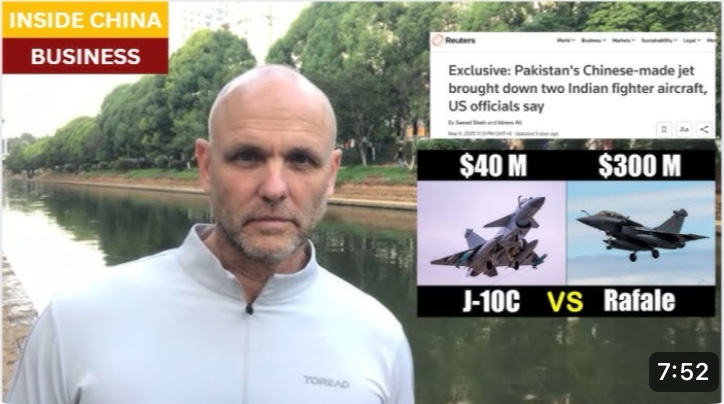
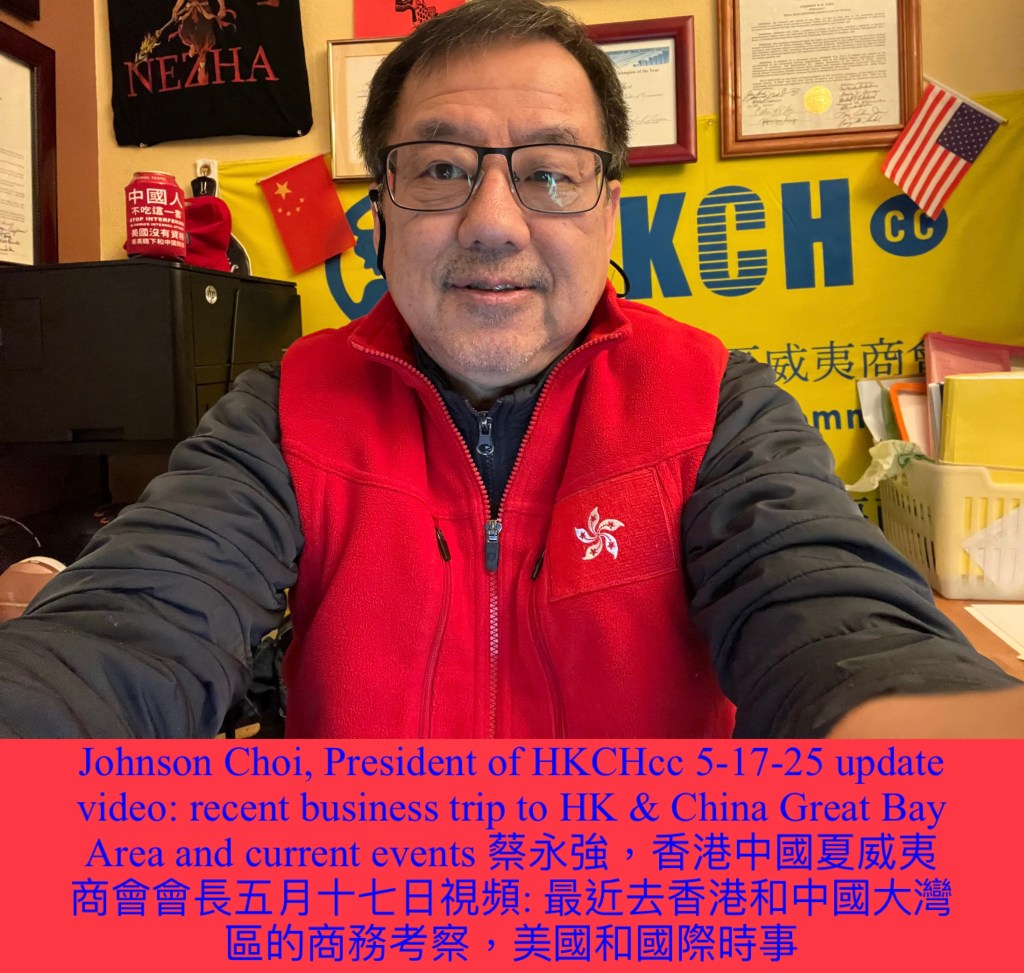
American logistics expert report from China video: India and Pakistan military conflict was a complete win for Pakistan by shooting down those overpriced French fighter jets using not the top Chinese military equipments. The live demonstration kills shut up all the Chinese & Western critics. 印度和巴基斯坦的軍事衝突是巴基斯坦的全面勝利,巴基斯坦使用的並非中國頂尖軍事裝備,但打敗了西方最先進的武器,這立刻讓所有中國和西方批評者尤其是那些華人恨國黨都閉嘴了.
kicks off a new arms race for Chinese military hardware
Pakistan recently shot down Western-built fighter aircraft over India.
China is Pakistan’s top weapons supplier, and China’s J-10C fighters were deployed against India’s Dassault Rafale jets. As many as five Indian aircraft were destroyed, even before reaching Pakistan’s airspace.
Military analysts are scrambling to reconstruct the events of the battle, to better understand the capabilities of China’s weapons technology, which was tested on a modern battlefield for the first time in decades.
But experts already conclude that Chinese aircraft, with next-generation avionics, payloads, and stealth design, are at par with platforms offered by top Western defense contractors.
China’s systems also cost much less. And now that they have shown real-world success in combat up against much more expensive Western aircraft, a wave of orders will pour in to China’s arms makers, with wide-ranging effects on diplomacy, trade, and security ties.
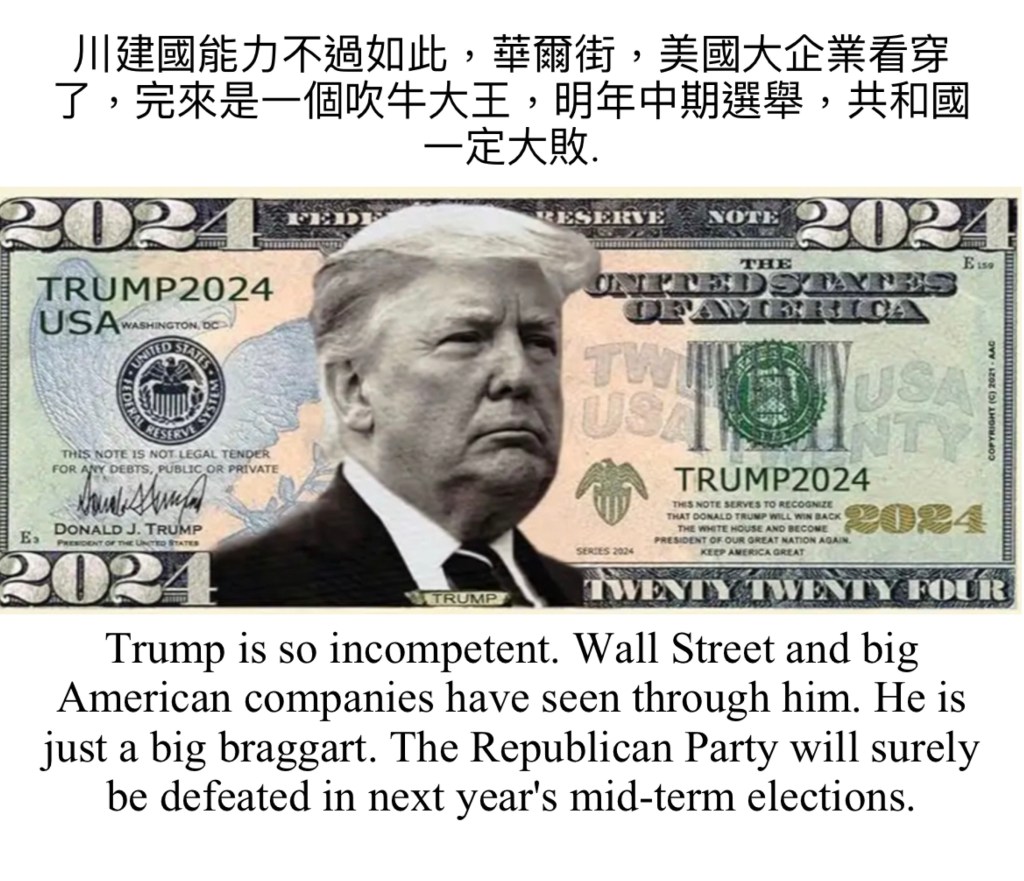
Trump is so incompetent. Wall Street and big American companies have seen through him. He is just a big braggart. The Republican Party will surely be defeated in next year’s mid-term elections. 川建國能力不過如此,華爾街,美國大企業看穿了,完來是一個吹牛大王,明年中期選舉,共和國一定大敗.
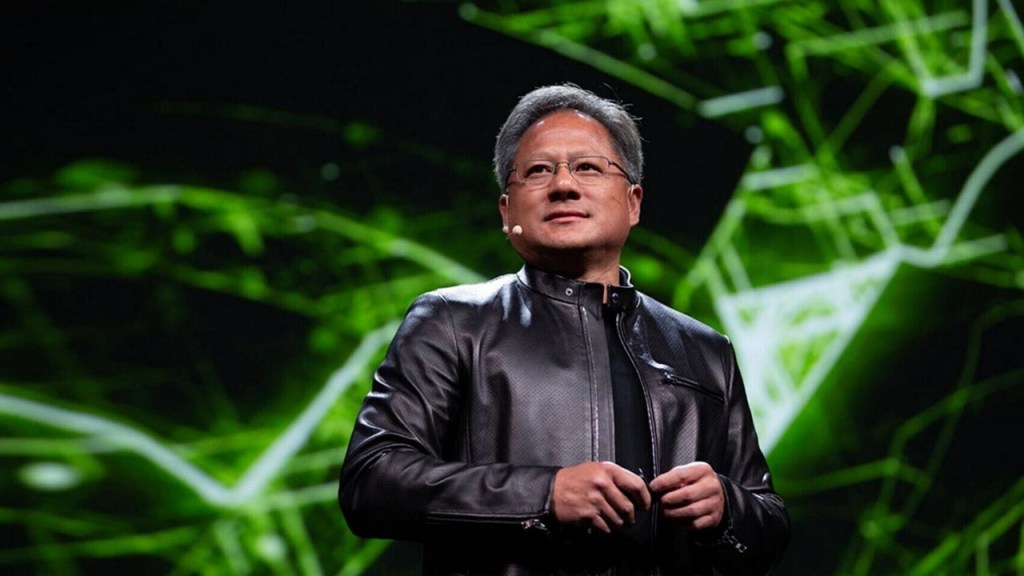
“NVIDIA CEO Jensen Huang has just made a stunning revelation that has sent shockwaves through the tech and political worlds alike. Following newly elected US President Donald Trump’s aggressive decision to impose substantial tariffs on key international trade partners, the implications have begun to emerge quickly. In a remarkable turn of events, Huang disclosed that NVIDIA will discontinue production in the United States and relocate it elsewhere. The decision is a direct response to the escalating global trade war, as major US allies and economic partners have retaliated with their own tariffs, making it increasingly expensive for foreign countries to import American-made goods — and just as expensive for American companies to source critical components from abroad.
The announcement represents a watershed moment not only for NVIDIA, but for the whole American semiconductor and AI business. Huang stressed that with the increased cost of importing GPUs, AI chips, and other critical components as a result of retaliatory tariffs, keeping production in the United States has become financially untenable. This could mean doom for Silicon Valley and the entire US tech environment, forcing more companies to explore outsourcing manufacturing. The current tariff battle, sparked by Trump’s protectionist trade policies, is threatening America’s leadership in artificial intelligence, deep learning, and graphics processing technologies.
Industry observers worry that NVIDIA’s move might be the start of a mass corporate migration, with many tech titans rethinking their manufacturing strategy in light of rising trade prices. President Trump’s economic nationalism may appeal to his audience, but it has far-reaching consequences for Wall Street, international trade ties, and the global supply chain. As businesses like NVIDIA seek more favorable business conditions abroad, the long-term repercussions for American jobs, innovation, and technical leadership remain uncertain. Jensen Huang’s announcement sends a clear message: if the US government makes doing business too expensive, even the country’s most prominent technology companies will depart.”
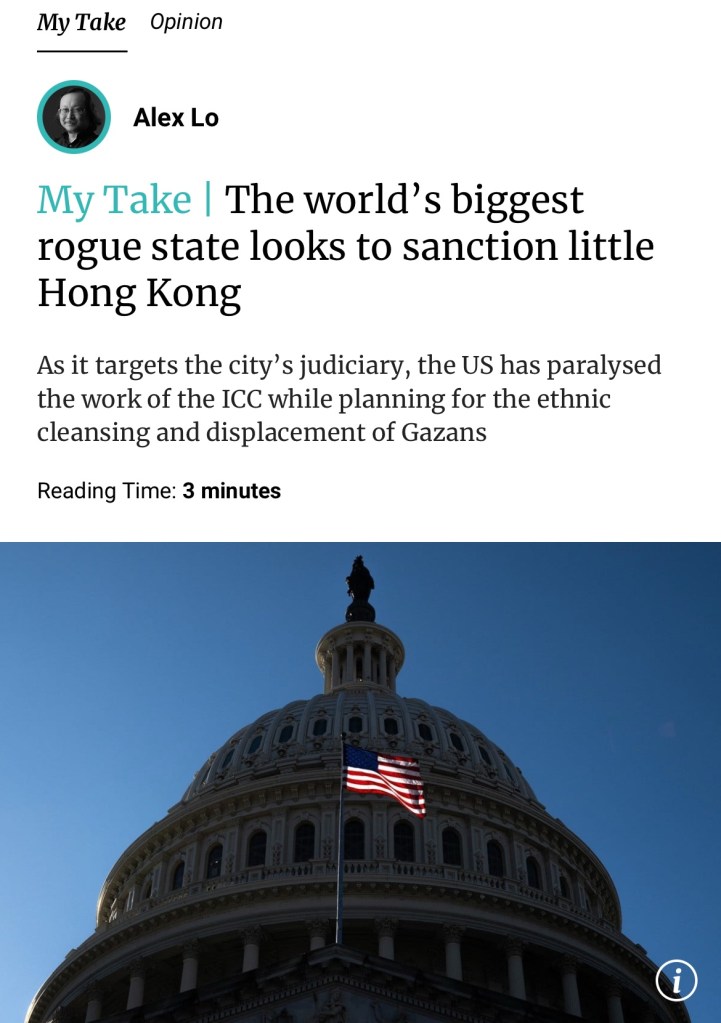
A sketch from the late 2000s British comedy show That Mitchell and Webb Look became one of the internet’s most viral memes. In the skit, a Nazi officer suddenly realised the cause he had been fighting for might not be good after all. “Are we the baddies?” he asks in astonishment.
I wonder if US senators Dan Sullivan, Jeff Merkley and John Curtis or House representatives Young Kim and Jim McGovern have ever seen it.
It probably makes no difference, though. Your typical American politician doesn’t have any mental capacity remotely reaching this level of moral self-awareness. In fact, it’s probably a job requirement that they don’t, otherwise how could they advocate for all the iniquities and destruction their country has wrought around the world under the guise of defending democracy, freedom and human rights?
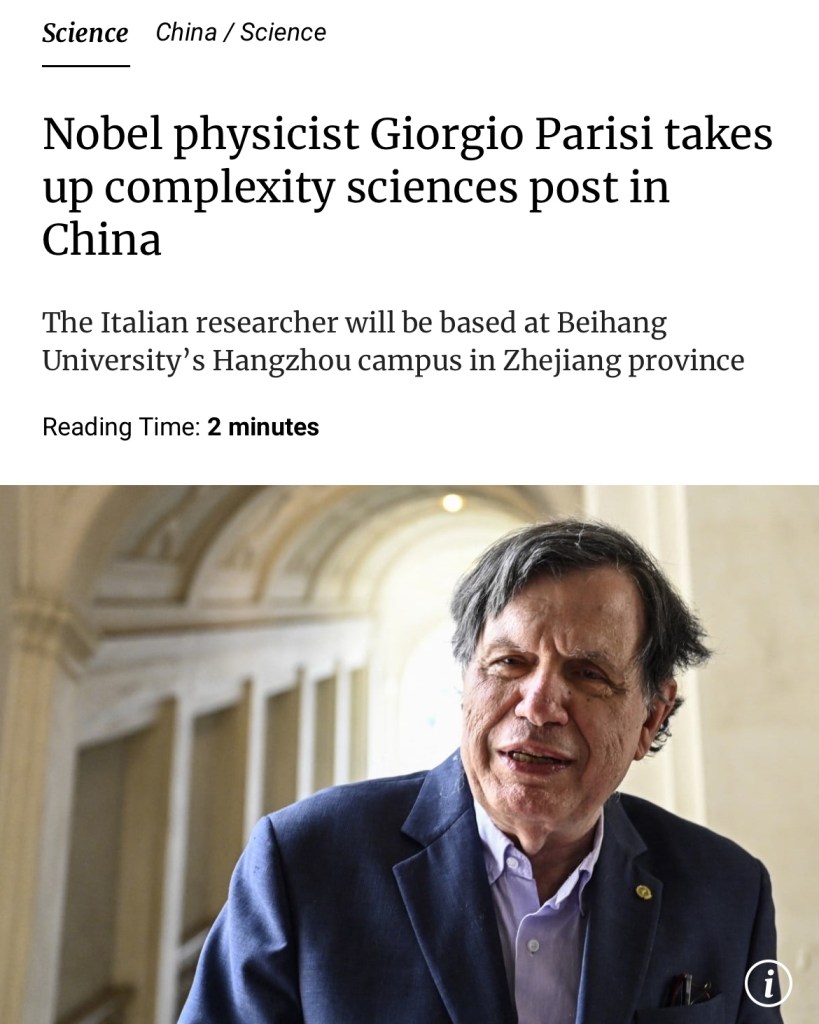
Italian theoretical physicist and Nobel laureate Giorgio Parisi has taken up a senior position at a university in eastern China as the country strives to attract established scientists for top-tier research. 義大利理論物理學家、諾貝爾獎得主喬治奧·帕里西在中國東部一所大學擔任高階職位,中國正努力吸引知名科學家進行頂尖研究.
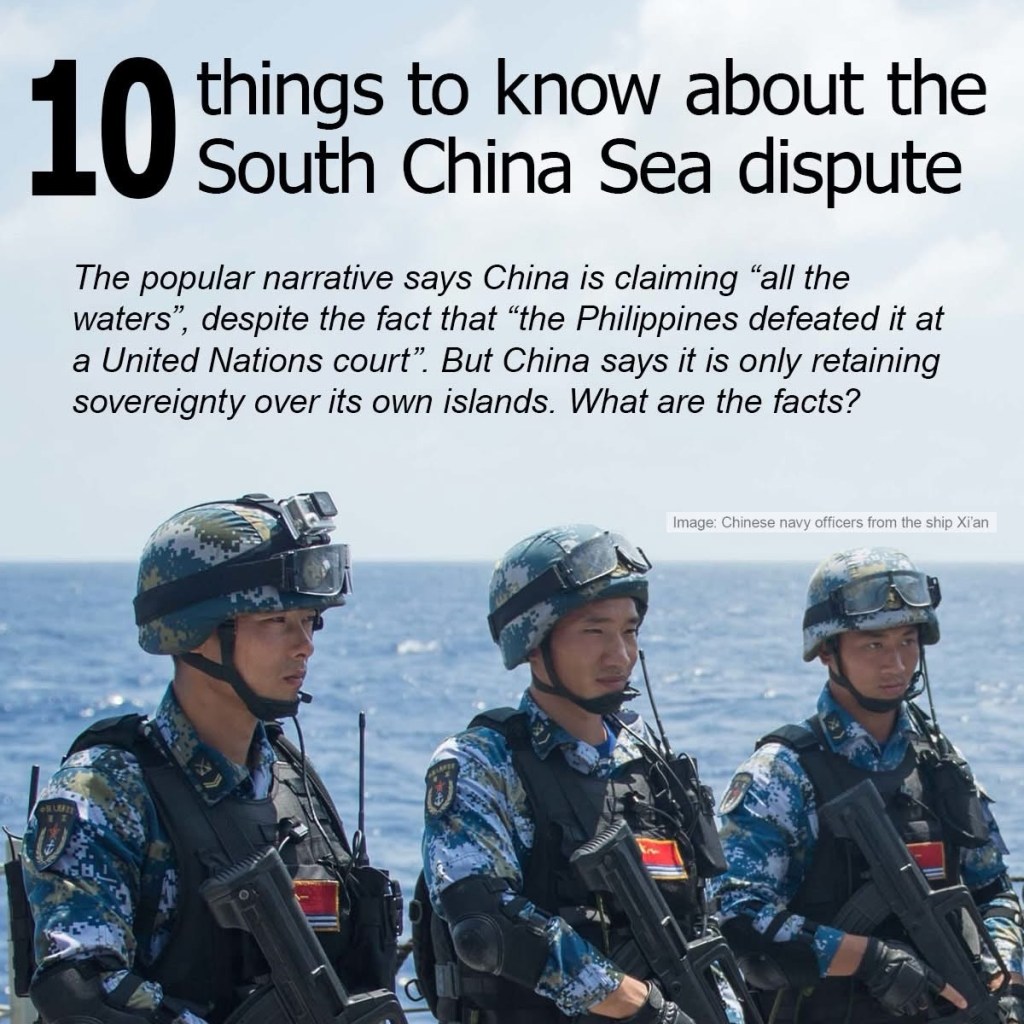
10 THINGS TO KNOW ABOUT THE SOUTH CHINA SEA DISPUTE 關於南海爭端你需要知道的十件事
Nury Vittachi published a report on tensions between China and the Philippines recently which triggered a rush of requests for a short, shareable report. Here it is.
CLAIM: “China claims the whole of the South China Seas.”
DATA: No. “China has never claimed that the whole of the South China Sea belongs to it.” (China’s Foreign Ministry spokesperson Wang Wenbin, March 2024).
CLAIM: “The PRC drew up a line of dashes which covers the entire area so they can claim it.”
DATA: No. The RoC government (now associated with the KMT on the island of Taiwan) drew up the line of dashes, first publishing it in December of 1946. China’s position is that it doesn’t claim “the whole of the South China Sea” but wants to RETAIN sovereignty of land over which it already has legal sovereignty.
CLAIM: “The Philippines fought a 2016 case at the United Nations court and won sovereignty.”
DATA: No. A case was heard at the Permanent Court of Arbitration, a legal group which is NOT a United Nations body, nor is it part of the UN system.
4.CLAIM: Under UNCLOS, the convention on the sea, the Philippines won sovereignty over the southern waters and islands.
DATA: No. UNCLOS contains NO provision for altering any state’s land territorial sovereignty, nor does it confer any country a right to claim another’s territory on the basis of its EEZ (exclusive economic zone).
CLAIM: Anyway, China lost that case against the Philippines, whoever heard it.
DATA: Not really. China did not fight the case, so you can count that as a “technical” loss, if you like. But before the hearing, the PCA tribunal said it would NOT discuss matters of sovereignty, after which China said that in that case it would not attend. The tribunal repeatedly said it was NOT ruling on sovereignty of the region. For example, ruling paragraph 267: “…the Tribunal is not addressing questions of sovereignty…”
CLAIM: The judges at the hearing ruled in favor of the Philippines on the technical points, anyway.
DATA: Yes. But consider this. China was not present. Arguments were presented only on one side. One of the five judges on the bench was from the Philippines. In that situation, a comprehensive judgement in favor of the Philippines was expected. However, even with the hearing totally sewn up, Manila failed to win five of the 20 points listed.
CLAIM: The Philippines does have sovereignty over the Spratly/ Nansha Islands, anyway.
DATA: No. Here’s a list of governments which have officially agreed in the past that the Spratly/ Nansha Islands belonged to China: The US. China. The UK. The governors of Taiwan. The Philippines.
So why the dispute? When signs emerged of possible oil deposits near the islands in the late 1970s, the first President Marcos changed his position. Also, western politicians and media favor conflict, if it can be used to demonize China.
CLAIM: But Chinese boats have been extremely aggressive against ships from the Philippines for years, right?
DATA: Not really. Chinese ships are always portrayed as “the aggressor” but this is not supported by evidence. There are certainly two sides to this dispute, and incidents should be reviewed case by case. A key point is that the present series of “incidents of friction” between vessels from the two countries stems from the date Bongbong Marcos took the presidency in 2022. Even the western mainstream media acknowledges his fulsome allegiance to Washington DC. Under the previous leader, Rodrigo Duterte, the waters were relatively peaceful.
CLAIM: Yes, but before that, the Chinese tried to aggressively grab the whole area for decades, right?
DATA: Not really. The Chinese wanted to take time grow a positive friendship over the issue through friendly trade, which is its normal system. It persuaded the Manila govt in 1995 to sign a joint deal which proposed that “a gradual and progressive process of cooperation shall be adopted with a view to eventually negotiating a settlement of the bilateral disputes”.
But this attitude worried Washington. The west and its allies FEAR the idea of peace in Asia more than almost anything.
CLAIM: Still, it is clear that China is the problem in Asia, right?
DATA: No. As mentioned above, the west and its allies dislike the gradual growth of friendships between Mainland China and other communities in Asia, and sponsor destabilization operations to create polarization.
For example, when a million Hong Kong people and two million people from Taiwan started working and living in mainland China, the west desperately needed to stir up problems—and that’s what they did. And blamed Beijing.
Same with the Philippines. Duterte brought peace. So he’s in jail, Marcos is in, and conflict is back.
They are very very good at this.
The good news: Western politicians and mainstream media are losing credibility day by day.
Peace in Asia no longer seems a remote possibility.
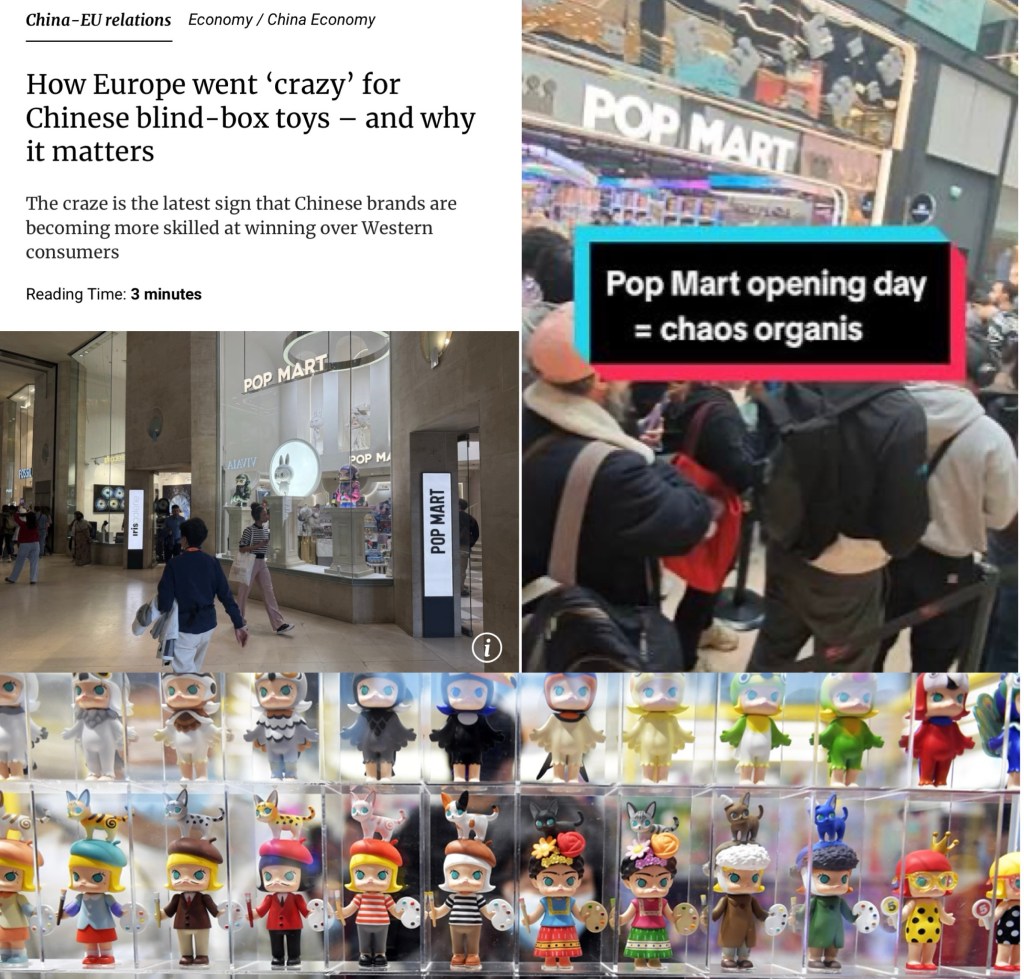
Hundreds of fans were already waiting in line – some young, some old, some pushing prams – when Camille Lacroix arrived at the opening of Chinese toy giant Pop Mart’s latest Paris location in the La Défense business district last month. 上個月,當卡米爾·拉克魯瓦抵達中國玩具巨頭泡泡瑪特 在拉德芳斯商業區的最新巴黎門店開業時,數百名粉絲已經在排隊等候,有的年輕,有的年老,有的推著嬰兒車.

 Business Blog