Many Asian American children grow up feeling a double alienation: from mainstream America due to racism, and from their ancestral homes due to a lost mother tongue that their parents failed to teach them. This isn’t simply a failure of parenting, but a tragic outcome of survival in a society that White Americans ruled.
The Wall Street Ecosystem: An Insider’s Account of Its Hidden Cost to America. By Johnson Choi in San Francisco on January 24 2026
華爾街生態圈:一位內部人士揭秘其對美國的隱性成本. 作者: 蔡永強. 2026年1月24日
For thirty years, I was a cog in the vast machinery of Wall Street. A decade ago, I stepped away, gaining the perspective of an outsider with an insider’s past.
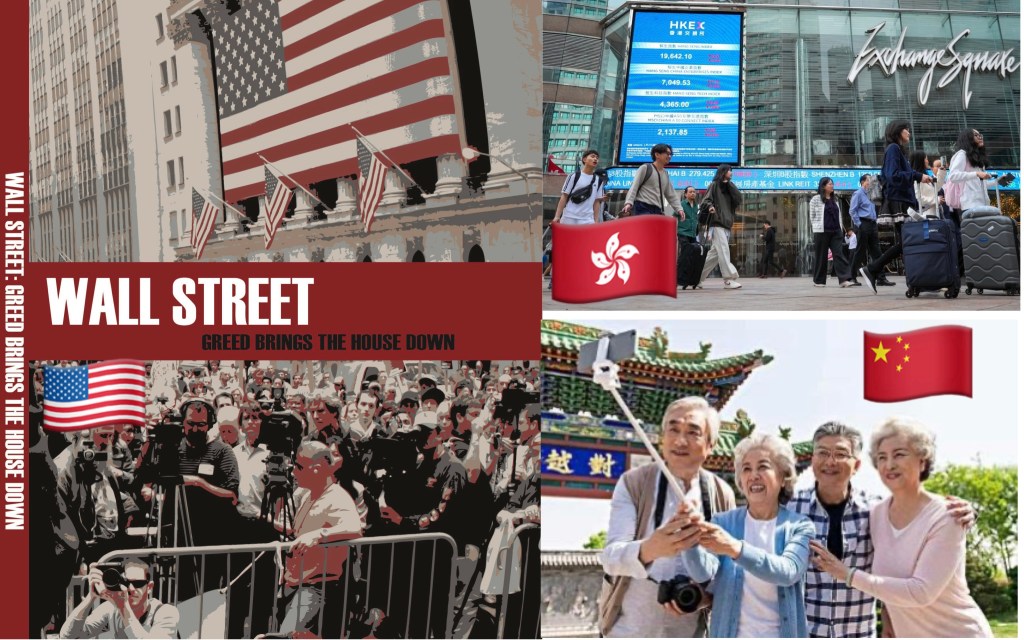
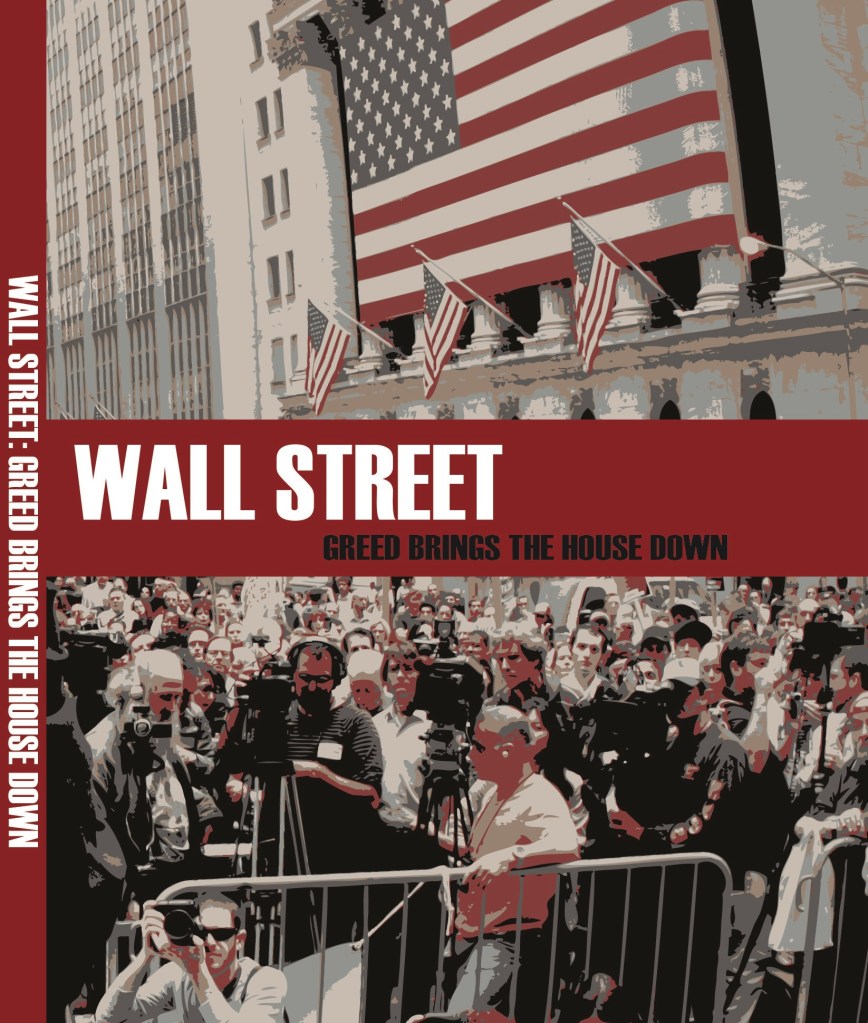
👉 This view compelled me to write an article entitled, “Don’t Blame China! How Greedy Wall Street Destroyed American Industries—and America in the Process.”
My experience revealed a difficult truth: countless professionals enter Wall Street at the ground level. Some climb the ladder to great heights, following a prescribed career path, often unaware of the profound collateral damage their ecosystem inflicts on the nation’s industrial base.
When I speak of the “Wall Street ecosystem,” I refer to a constellation far beyond investment bankers. It includes the major banks, law firms, accounting giants, and insurance companies—a interconnected network employing millions. For decades, this system has been spectacularly efficient at one thing: generating enormous profits for those within it.
My purpose is not to accuse individuals. Most participants are simply optimizing for the system’s primary goal: making money, and lots of it. In that pursuit, the broader consequences for American industry and communities can become invisible.
One of the most telling observations from my tenure is this: the very smartest people I knew—particularly a number of astute Chinese professionals—recognized the extractive nature of this game. They played it, won, and then did something remarkable. The smart ones took their capital and departed, choosing to build and enjoy their lives elsewhere, often in China.
Don’t blame China! How Greedy Wall Street destroyed American Industries and America in the process. By Johnson Choi in San Francisco on January 24 2026 別怪中國!貪婪的華爾街如何摧毀了美國工業,以及在此過程中摧毀美國. 作者: 蔡永強. 2026年1月24日
Let’s gets to the heart of a major shift in American capitalism over the last 40+ years. Let’s expand on that discussion by breaking down the legal changes, the philosophy behind them, and the cascading effects.
The Legal Change: How Stock Buybacks Were “Unshackled”
The key change was not about making buybacks legal (they always were), but about making them safe, easy, and incentivized for executives without fear of prosecution.
· Pre-1982: The “Stock Manipulation” Fear: Before 1982, the Securities and Exchange Commission (SEC) treated large-scale repurchases of a company’s own stock with deep suspicion. The concern was that they could be used to manipulate the market, artificially inflating the stock price to deceive investors. Companies could do them, but the legal risk was high. · The Watershed Moment: SEC Rule 10b-18 (1982): Under the Reagan administration, the SEC adopted Rule 10b-18. This rule created a “safe harbor.” If a company followed certain rules (on volume, timing, and manner of purchases), it would be presumed not to be illegally manipulating its stock price. This wasn’t a mandate, but a green light. It removed the legal risk and opened the floodgates. · The Incentive Shift: Linking Pay to Stock Price (1990s): A more profound change was in tax policy and compensation rules. In 1993, the Clinton administration passed a law that capped the corporate tax deduction for executive salaries at $1 million. However, it created a massive loophole: performance-based pay, like stock options, was exempt from the cap. Overnight, the incentive structure for CEOs was radically altered. Their personal wealth became directly tied to the short-term stock price, not the long-term health of the company.
The Result: The combination of safe buybacks and compensation tied to stock price created a powerful, self-rewarding mechanism. A CEO could use company profits (or even debt) to buy back shares, reducing the number of shares outstanding, which boosts Earnings Per Share (EPS) and often the stock price. Their options and stock holdings then soar in value.
How This Connected to Offshoring and Industry Erosion
This new financial engineering tool didn’t exist in a vacuum. It interacted with global trends and a new corporate philosophy.
· The Rise of “Shareholder Primacy”: In the 1970s-80s, the Milton Friedman doctrine that a company’s sole responsibility is to maximize shareholder value took hold. This meant that investing in workers, communities, or long-term R&D was seen as a waste of shareholder money if it didn’t provide an immediate return. · The Short-Termism Engine:
Capital Allocation Choice: A company now had a clear choice: take its profits and a) reinvest in new factories, R&D, and worker training in the U.S. (risky, long-term, low immediate return), or b) buy back stock (guaranteed to boost EPS and the stock price).
Offshoring as a Double Win: Moving production overseas was a powerful way to generate the cash for more buybacks. It cut costs dramatically (cheaper labor, fewer regulations). These “savings” were often not passed to consumers or workers, but were funneled directly to shareholders and executives via buybacks and dividends.
The Cycle: Buybacks starved domestic industrial capacity of investment. Older U.S. factories became less competitive, which was used to justify more offshoring. The financialized company became a cash-extraction machine rather than a production-innovation engine.
The Outcome: The Destruction of Industrial Capacity
This wasn’t just about greed in a moral sense; it was a systemic re-engineering of priorities:
· Erosion of the Productive Base: Critical industries like semiconductors, steel, machine tools, and consumer electronics atrophied. The “knowledge” of how to manufacture at scale was lost. · The Weakening of Labor: With the threat of offshoring ever-present, unions lost power. Wages for the working and middle class stagnated, while executive pay skyrocketed. The link between productivity gains and pay was broken. · Increased Systemic Risk: Companies took on huge debt to fund buybacks even in good times, making them fragile during downturns (e.g., the COVID-19 crisis). · Wealth Inequality Explosion: The vast majority of stock is owned by the wealthiest 10%. Buybacks directly transfer wealth from company coffers (which could benefit all stakeholders) to the already wealthy. The CEO-worker pay ratio went from ~20-to-1 in the 1960s to over 300-to-1 today.
In Summary:
The law (Rule 10b-18) didn’t create buybacks but made them a risk-free tool. The tax code change incentivized executives to prioritize stock price above all else. This converged with the ideology of shareholder primacy and the global opportunity of offshoring.
The result was a vicious cycle: Use offshoring to cut costs → Use profits for buybacks to boost stock price → Collect massive stock-based bonuses → Underinvest in domestic innovation and workforce → Become less competitive → Repeat.
The “destruction of US industries” was not an accidental byproduct; it was the logical outcome of a system that rewarded financial engineering over industrial engineering, and short-term stock gains over long-term productive capacity.
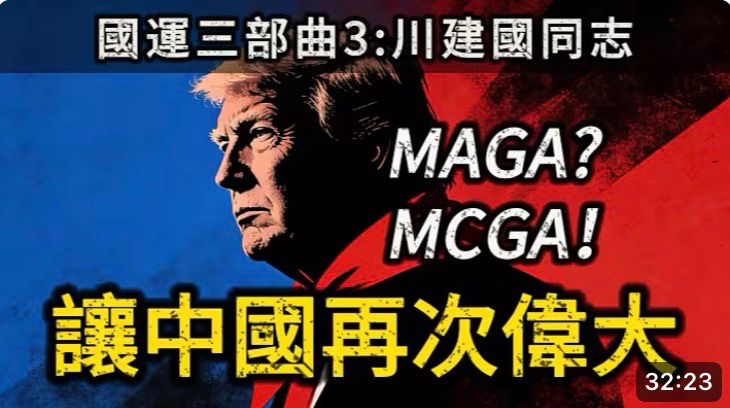
Video: Make China Great Again: The Biggest Promoter of China’s National Fortunes, Codename—Chuan Jianguo [U.S. National Fortunes Trilogy: Final Chapter] 讓中國再次偉大:中國國運的最大推手,代號——川建國【美國國運三部曲:終章】 本集是《美國國運三部曲》最終章
This installment is the final chapter of the U.S. National Fortunes Trilogy. We will review how Donald Trump, the most controversial U.S. president, single-handedly pushed China from the “comfort zone” of globalization into the “fast lane” of independent innovation. From the trade war, which inflicted 800 losses on the enemy at the cost of 1,000 to oneself, to the diplomatic strategy of “withdrawing from international groups” that handed over dominance in the Asia-Pacific region to others, Trump’s seemingly insane actions were, in essence, a clash between business logic and the strategic calculations of a great power, leading to a breakdown…
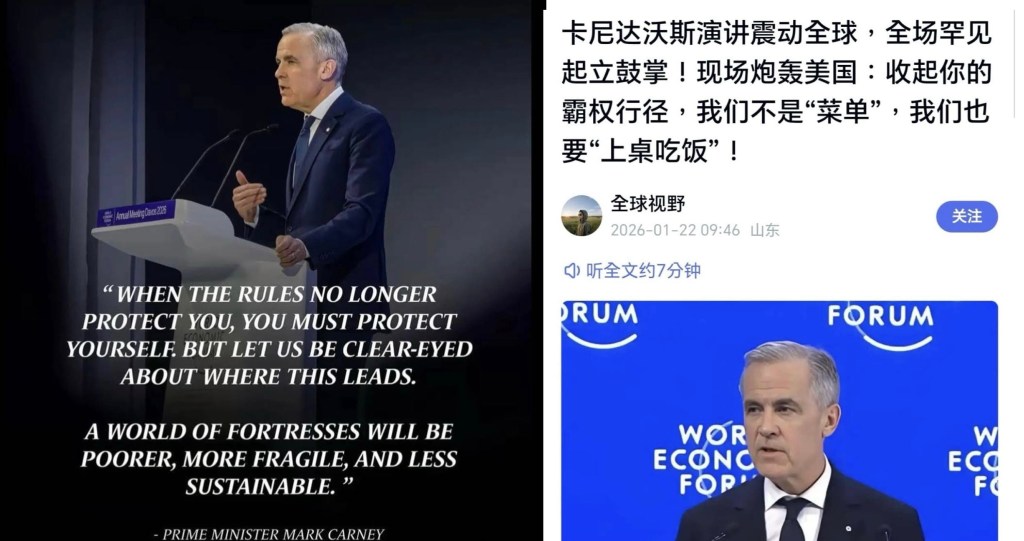
Canadian Prime Minister Carney: The Rules-Based International Order Has Completely Ended…加拿大總理卡尼:基於規則的國際秩序已徹底終結…
On January 20, Canadian Prime Minister Carney’s speech at the Davos Forum in Switzerland could be described as earth-shattering, and might even be seen as a manifesto declaring the complete end of the “rules-based international order.”
It is clear that his remarks in Beijing were not made on a whim but were based on a long-standing assessment of the international landscape. So, what noteworthy soundbites did Carney deliver in this speech?
Carney set a pessimistic tone from the very beginning. He told the elites at Davos that his talk would be about “the fracture of the world order, the end of a beautiful story, and the beginning of a harsh reality.” These words were like a bucket of cold water poured over those who still cling to illusions of the past.
He pointed out bluntly that the so-called “rules-based international order” has largely been a façade. The most powerful nations have always been able to exempt themselves from obligations when necessary, and the application of international law has often followed a double standard depending on the target. This statement tore away the fig leaf that had long covered these realities.
Carney took aim at “major powers” for “weaponizing” economic integration. Tariffs have become leverage, financial infrastructure a tool of coercion, and supply chains exploitable vulnerabilities. Although he did not name the United States, everyone present knew exactly who he was referring to.
Faced with this situation, Carney issued a series of warnings. He said, “Nostalgia is not a strategy,” emphasizing that past assumptions of comfort no longer hold. He cautioned, “If we are not at the table, we will be on the menu.” This phrase quickly went viral, capturing the survival anxiety of middle powers.
His conclusion was that the long-standing U.S.-led international order has come to an end. A hegemonic power cannot indefinitely profit from leveraging its relationships. Canada must be “principled and pragmatic,” refocus on domestic development, and diversify its trade relationships.
Carney called on middle powers like Canada to unite. He argued that they must collectively carve out an influential “third way,” establishing a new order that incorporates their own values. This is seen as a collective response to the coercion of superpowers.
Ironically, just hours before Carney’s speech, U.S. President Trump posted an image on social media showing Canada, Greenland, and other areas covered by the American flag. This served as the most vivid footnote to Carney’s warnings, making his speech sound less like a prediction and more like a timely indictment.
The speech resonated within Canada. Some commentators noted that Carney essentially declared that the American Empire is over, and “we’re done acting as a vassal state.” Such blunt expression would have been unimaginable in the past.
演講在加拿大國內引發了共鳴。有評論稱,Carney essentially declared that the American Empire is over, and weʻre done acting as a vassal state (基本上宣告了美利堅帝國的終結,我們不再扮演附庸國的角色)。這種直白的表達,在過去是不可想像的。
Recently, the so-called “tipping point” has been a hot topic of discussion in the United States. The near-inhuman living conditions of the American underclass have been thoroughly exposed, simultaneously shattering the long-crafted perfect Hollywood illusion of America. For many Chinese who were once misled and set foot on American soil with high hopes, the nightmare often begins from the very first day of arrival. By Johnson Choi in San Francisco on January 23 2026
The concept of the “tipping point” circulating recently on the American internet describes a societal survival dilemma—where an individual or family’s financial situation deteriorates sharply due to a single unexpected blow (such as a serious illness or job loss), rapidly falling from a decent standard of living to the bottom, with little hope of recovery. Its popularity indeed reflects long-standing and worsening systemic issues in American society.
Below is a comparison between the context of the “tipping point” trend and some of America’s social problems:
Social Context of the “Tipping Point” Concept:
· Core Characteristic: A sharp deterioration in financial situation due to a single unexpected blow (serious illness, job loss), with difficulty in recovering. · Core Cause: The combined effect of high living costs and a fragile social safety net (especially in healthcare).
Reflected Realities and Problems:
· Extremely High Medical Financial Risk · Typical Manifestation: Medical expenses are a leading cause of personal bankruptcy in the United States. · Specific Data/Situation: Approximately 20 million adults carry medical debt, and prices for the same service vary drastically between institutions. The experiences of international students also reflect issues with the complex, inefficient, and opaque billing of the U.S. healthcare system. · Rising Poverty Rate · Typical Manifestation: The poverty rate has seen a historic rebound. · Specific Data/Situation: In 2022, the overall U.S. poverty rate increased from 7.8% to 12.4%, with about 41.2 million people living in poverty. The child poverty rate more than doubled, jumping from 5.2% to 12.4%. · Vast and Entrenched Wealth Inequality · Typical Manifestation: Wealth inequality has reached a decades-high level. · Specific Data/Situation: In 2021, the top 1% of households held a record 32.3% of total wealth, while the bottom 50% of households held only 2.6%. Issues of income inequality and class stratification are equally severe. · Housing and Homelessness Crisis · Typical Manifestation: Soaring rents and the spread of tent encampments on streets. · Specific Data/Situation: Rents in major cities like Los Angeles are exorbitantly high, and an inability to pay rent is a primary driver of homelessness. In 2020, there were over 580,000 homeless people nationwide.
Please note: Some extreme and sensational descriptions related to the “tipping point” found online, such as “extracting drugs from cremains” or “sewer slime,” lack reliable evidence and resemble urban legends or exaggerated narratives. It is advisable to approach such content with caution.
🔍 Key Perspectives for Understanding These Issues
To understand these social contradictions, the following theoretical perspectives might be helpful:
· The “Society of the Spectacle” Theory: Philosopher Guy Debord proposed that in modern consumer society, real, autonomous social life has been replaced by its representation (media images, commodity spectacles). People passively live in a state of separation dominated by the spectacle. This can partly explain why severe social problems coexist with glossy media images. · Redefining Poverty: Some researchers point out that poverty in the United States has long been underestimated. Poverty is not just homelessness; it also includes a large population of the “working poor”—those who are employed but cannot make ends meet. They live perpetually on the brink of financial collapse due to the high costs of healthcare, housing, education, and other essentials. This is precisely the vast potential population referred to by the “tipping point” concept.
In summary, the “tipping point” is a vivid internet meme. Behind it lie systemic issues in American society, such as a weak social safety net, severe wealth disparity, and the high cost of basic living. Extreme anecdotal claims require careful scrutiny, but the systemic risks faced by ordinary middle-class and low-income families are very real.
How to find out where to retire? My grandfather and father were right when they said: better to walk ten thousand miles than to read ten thousand books. 如何找到適合退休的地方?我祖父和父親說得對:「行萬里路,勝讀萬卷書。」
I’ve just returned from my office in Honolulu to my second home in San Francisco.
In Honolulu, at least 60% of the downtown shops are closed—a scene strikingly similar to parts of downtown San Francisco.
While in Honolulu, I had dinner with friends in Chinatown that cost US$70 per person. A comparable meal in China’s Greater Bay Area would run about RMB 100 (roughly US$14)—making Honolulu five times more expensive.
During another gathering in Honolulu, few close friends and I discussed retiring safely in the China Greater Bay Area. Most preferred Shenzhen or Zhuhai, while a few considered Zhongshan. Since many were planning with a budget, I asked how much they had set aside for a condominium.
What became clear was a mismatch between budgets and expectations.
Comparing similar properties across the three cities: Shenzhen averages around RMB 6 million (US$860,000), Zhuhai about RMB 2 million (US$290,000), and Zhongshan roughly RMB 1 million (US$145,000). Most condos can be financed with a 15% down payment, with the balance covered by a 15–20 year mortgage, financing end date is age 75.
One couple at the meeting is currently on U.S. government welfare and food stamps. They aren’t poor—they had transferred their real estate and cash to their three children years ago to qualify for free government assistance. Now their children, concerned about their parents’ safety in the U.S., suggested using some of that money to buy a condo in China. I reminded the couple that doing so would risk losing their benefits, and advised them to ensure their children—who received over US$5 million from them a decade ago—set aside sufficient funds in the parents’ name.
Another couple has almost no savings and still rents for US$2,000 a month in Honolulu. However, they have combined pensions, Social Security, 401(k), and IRA income totaling US$5,000 monthly.
For them, I suggested renting rather than buying. At age 73 and in good health, they could move to Zhongshan and rent a brand-new, fully furnished apartment for around US$400 a month. That would leave them with US$4,600 each month to live on—enough to enjoy a luxurious lifestyle, including hiring a full-time maid. They no longer have to live in US fearing for their lives everyday.
All of this reminds me: if you don’t travel and see for yourself, you might never discover what’s truly possible out there.
I’m planning a trip to Hong Kong and the Greater Bay Area in May. You’re most welcome to join me—I’d enjoy showing you around and discussing the impressive developments in the China Greater Bay Area region.
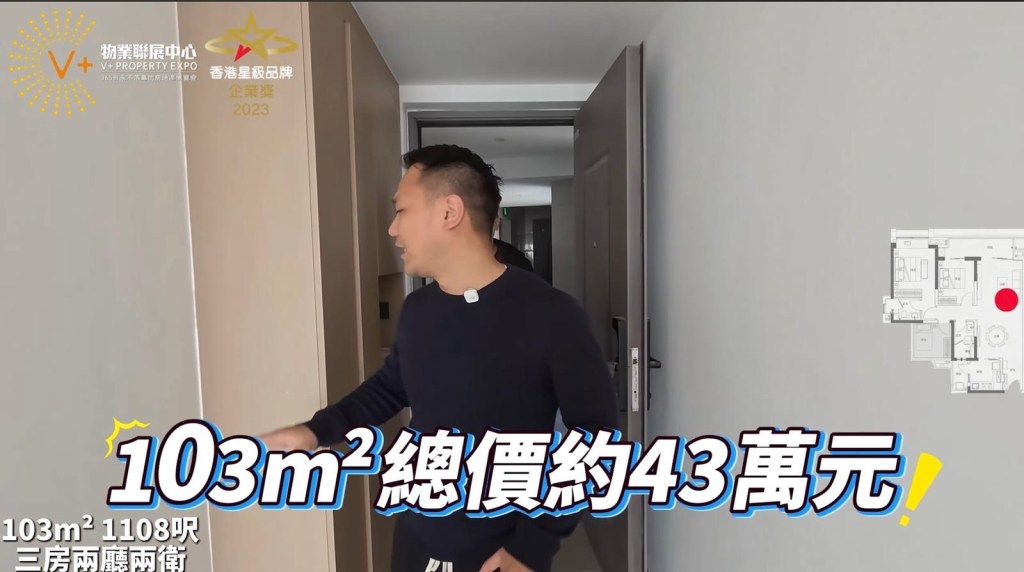
You can even mortgage 你還可以借錢買房子, for example 例如 3 房. Mortgage the 1100sf RMB$430,000 單位 15% 首期 down payment RMB$64,000 (US$9,215) 每月祇需付 monthly payment RMB$1400 (US$200)
$200 is lunch money for 4 in San Francisco, instead you can own a 3 bedrooms 2 bath 1,100sf apartments for life. In China there is no property tax. $200美元在舊金山只夠四個人吃一餐午飯,而在中國,你可以用這筆錢買一套三房兩衛公寓,終身居住。中國沒有房產稅.
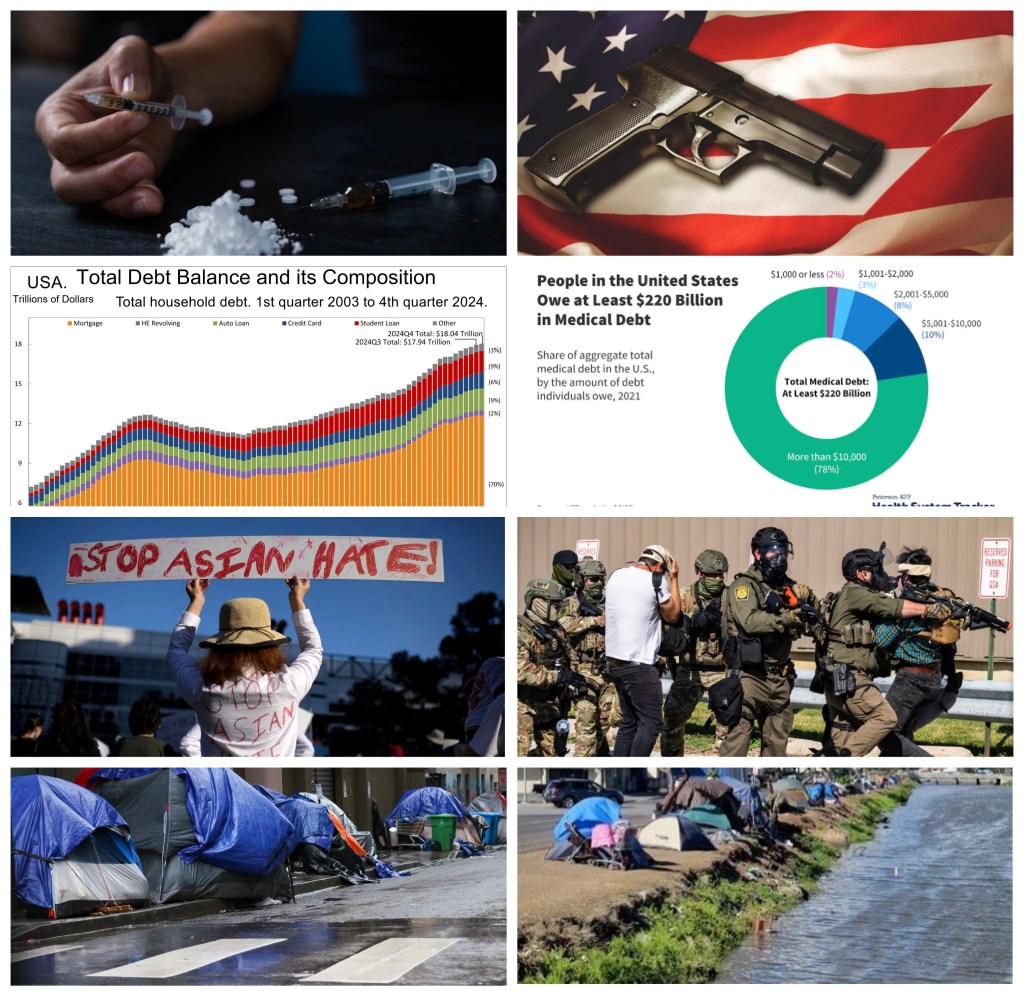
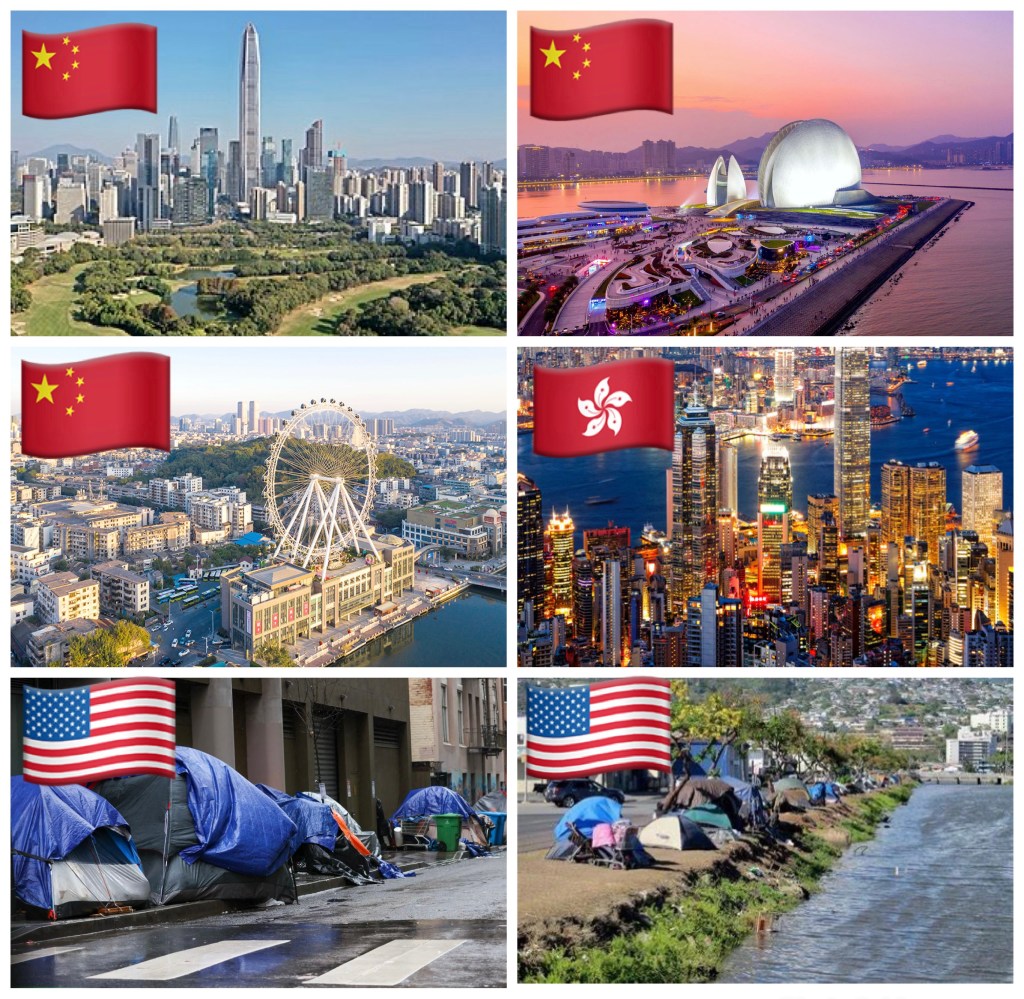
This kind of price can’t go wrong! Why lives in US to face Asian Hates, Gun Violence, Homelessness, drugs and drugs addicts, lock yourself inside the house for safety after dark!? And everything is 4-7x more expensive than China! 這個價格絕對划算!為什麼要在美國生活,面對仇亞裔情緒、槍枝暴力、無家可歸、毒品和吸毒者,晚上還要把自己關在家裡才能保證安全?!而且在美國所有東西的價格都比中國貴4到7倍.


 Business Blog