SCMP: Myanmar-Thailand earthquake, China & HK immediately dispatched rescue teams, resources and money, while US did nothing. 南華早報:緬甸-泰國大地震後,中國和香港立即派出救援隊、物資和資金,而美國卻沒有採取任何行動, 美國祇會賣殺傷性武器,救人莫談.

SCMP: Myanmar-Thailand earthquake, China & HK immediately dispatched rescue teams, resources and money, while US did nothing. 南華早報:緬甸-泰國大地震後,中國和香港立即派出救援隊、物資和資金,而美國卻沒有採取任何行動, 美國祇會賣殺傷性武器,救人莫談.
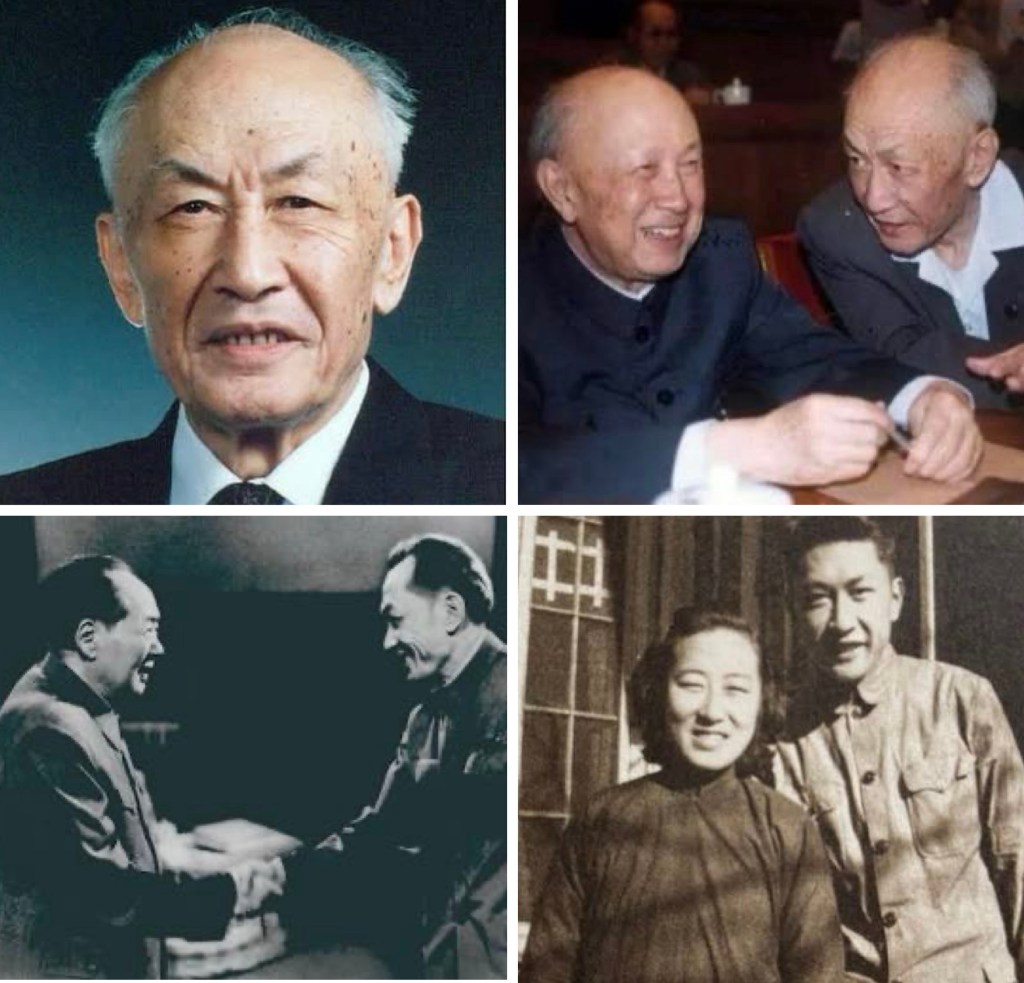
SCMP: Why are overseas Chinese scientists drawn back home? This heartfelt 1950 letter holds answers. A stirring open letter to Chinese students abroad has recently gone viral on social media. Drafted in late 1949 by Zhu Guangya—revered as the father of China’s nuclear program—the message continues to resonate across generations. 南華早報:為什麼海外的華人科學家都選擇回國?這封 1950 年發自內心的信件給了答案。一封給中國留學生的公開信近日在社群媒體上瘋傳。這項訊息由被尊為中國核計畫之父的朱光亞於 1949 年底起草,至今仍在幾代人中產生共鳴 By Stephen Chen
When first published on March 18, 1950, China stood ravaged by foreign invasions and civil wars, its soil scorched and people impoverished. Yet this clarion call moved over 1,500 scholars—including Qian Xuesen, later hailed as the father of Chinese rockets —to abandon foreign comforts and return home.
Seventy-five years later, as China thrives with prosperity and technological might, young researchers rediscovering this letter report the same pull. What explains its enduring power?
The answer lies in a parallel historical moment. In 1949, China achieved political independence. Today, around 2025, another “New China” emerges—this time claiming scientific sovereignty. Sixth-generation fighter jets streak across skies. Huawei’s cutting-edge chips defy foreign embargoes. Cancer breakthroughs save millions. From space stations to 5G networks, electric vehicles to quantum superprojects, China’s tech renaissance sparks awe.
No wonder overseas students feel the old summons anew. A second wave of talent homecoming may have already begun. To grasp their fervor, let’s revisit Zhu’s timeless words.
An Open Letter to Students in America by Zhu Guangya (1950)
Fellow Students,
The hour has come for us to return and participate in the reconstruction of our Motherland. The Motherland urgently requires our service! The People’s Government has repeatedly voiced its summons, and Radio Beijing echoes the call for students’ return. Our government welcomes and receives returning scholars with open arms. Comrades, our countrymen cherish boundless hopes for us—how can we linger in hesitation? Why should we delay? For what purpose do we tarry here?
We were all raised on Chinese soil, educated through two decades of learning, yet never cultivated a single grain of rice nor mined a lump of coal. We grew through the sweat and toil of millions of Chinese workers and peasants. Now they await us—ought we not hasten back to devote our skills to our people? Verily, we must return without delay.
Comrades! Having studied here for one year, two years, or half a decade—all under the pretense of “completing our education”—what constitutes “completion”? A Master’s? Doctorate? In former days such titles might purchase official posts, but no longer. The new China measures men thus: 50% by ability, 40% by dedication, and but 10% by credentials. In truth, doctoral laurels hold no terror now. Of what worth are empty honors?
You may protest: “My learning remains incomplete—I must continue research while opportunity permits.” Friend! Scholarship knows no bounds; we could study till death claims us. Should we remain enchained by foreign laboratories, we risk perpetual exile. Back home, practical study aligned with China’s needs awaits—more substantive than ivory-tower speculations. What folly to master techniques estranged from our soil, returning with useless knowledge and discredited credentials!
Perhaps you clutch at E.C.A.* subsidies, blind to their political strings and transient nature, prioritizing personal academic whims over our nation’s dire necessities. Such thinking reeks of selfishness!
To engineering students: Academic repetition or technical minutiae cannot substitute practical experience. Better to learn through our factories’ actual conditions than perfect theories abroad. Fear of failure? True learning comes through labor—let not cowardice stay your return!
Those interning in American factories: Their scale and resources differ vastly from China’s. While observation benefits, prolonged stay squanders time. Our homeland offers apprenticeship where it matters—with Chinese materials under Chinese skies. Why labor for foreigners when China needs our hands?
Researchers in sciences and medicine: Return to establish laboratories through Chinese effort. Shall we feast on banquets others prepared? Even Tsinghua professors teach through Chinese realities—see Professor Wang Zunming explaining steelmaking via our own iron ores and Anshan’s works. Such practical wisdom eludes foreign classrooms.
Students of social sciences: Most urgently must you return! Theories born of industrialized capitalism ill suit our new democracy. China’s social reconstruction follows its own path, demanding knowledge tempered by native soil. Would you parrot imperialist doctrines while your countrymen build anew? Even returning Marxists now study three months at North China University** before service.
Delay no more! Our 450 million countrymen—workers, peasants, intellectuals, and entrepreneurs—unite to forge a New China: free, democratic, and prosperous. Though hardship lies ahead, we march toward glorious dawn. This historic task is ours to share.
Hearken! The Motherland summons us—through her laboring masses, through five millennia of ancestral wisdom, through our People’s Government. Return! Let our sweat nourish Chinese soil till flowers of progress bloom. China shall rise triumphant—a nation no longer humiliated, standing erect among the peoples! Hasten homeward—the hour is at hand!
Footnotes:
*E.C.A. (Economic Cooperation Administration): U.S. postwar aid program with perceived political agenda. ** North China University: key revolutionary institution later merged into Renmin University.
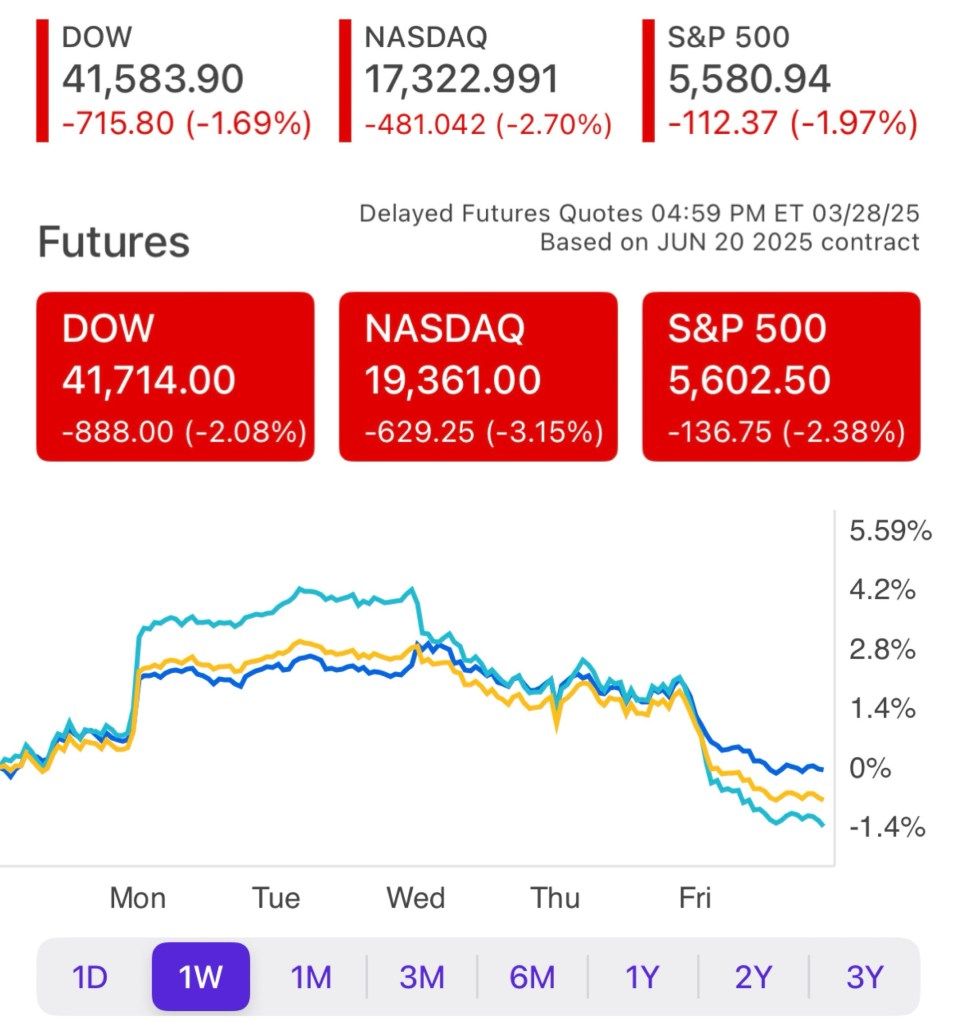
Another beautiful ending week for Wall Street, an unattainable stock rally backed by spectaculars with absolutely no good news in US early of the week ran out of gas again 華爾街一個美好的開始衰收尾, 股市還是大跌收塲,本周初的預期反彈已失去動力, 美國的前境像股市一樣,祇不過是曇花一現吧!
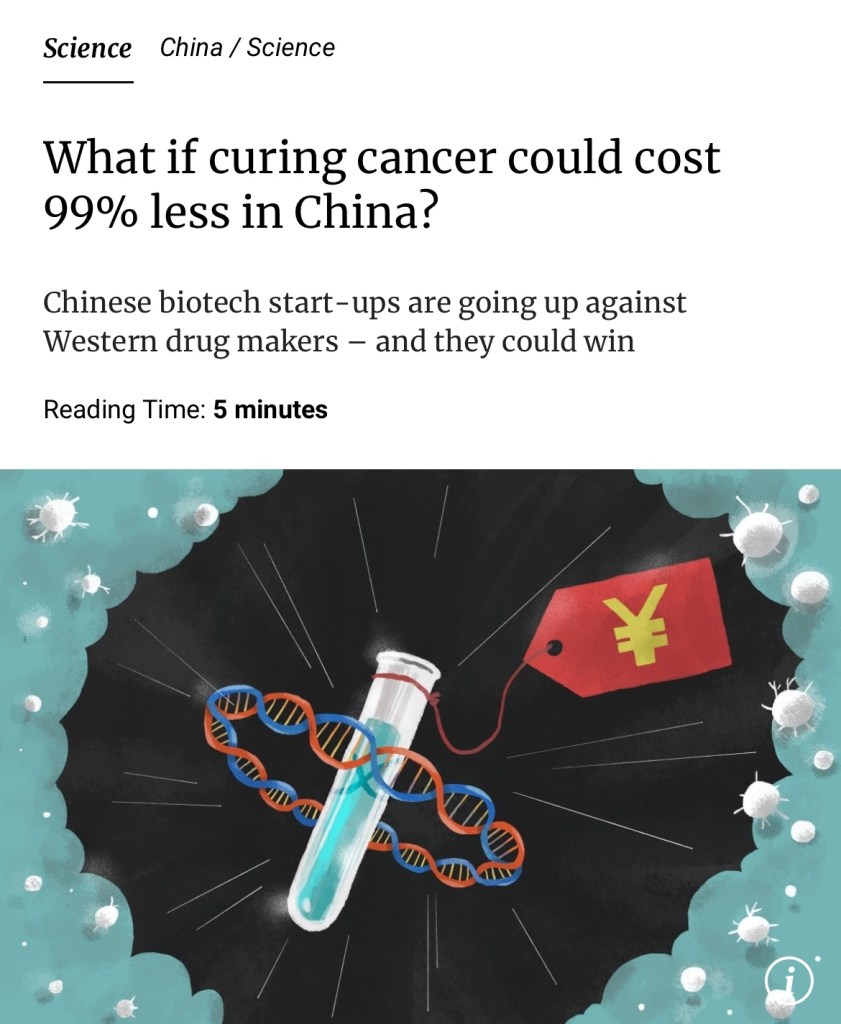
Will US saying to China that saving lives at substantially lower cost considered excess capacity to ban it in America to protect pharmaceutical giants exorbitant profits in the process? SCMP: A decade ago, treating cancer with personalised mRNA vaccines seemed like a US$1 million gamble per patient, a therapy reserved for the ultra-rich. But Chinese biotech start-ups are aiming to change that – by designing cancer therapy for a fraction of the cost. 美國是否會說,以極低的成本挽救生命被視為產能過剩,從而在美國禁止該藥物,以保護製藥巨頭在這過程中的暴利? 《南華早報》:十年前,使用個人化 mRNA 疫苗治療癌症似乎是每位患者100萬美元的賭注,而這種療法只有超級富豪才能享受。但中國生技新創公司正致力於改變這一現狀, 以極低的成本設計癌症治療方法.
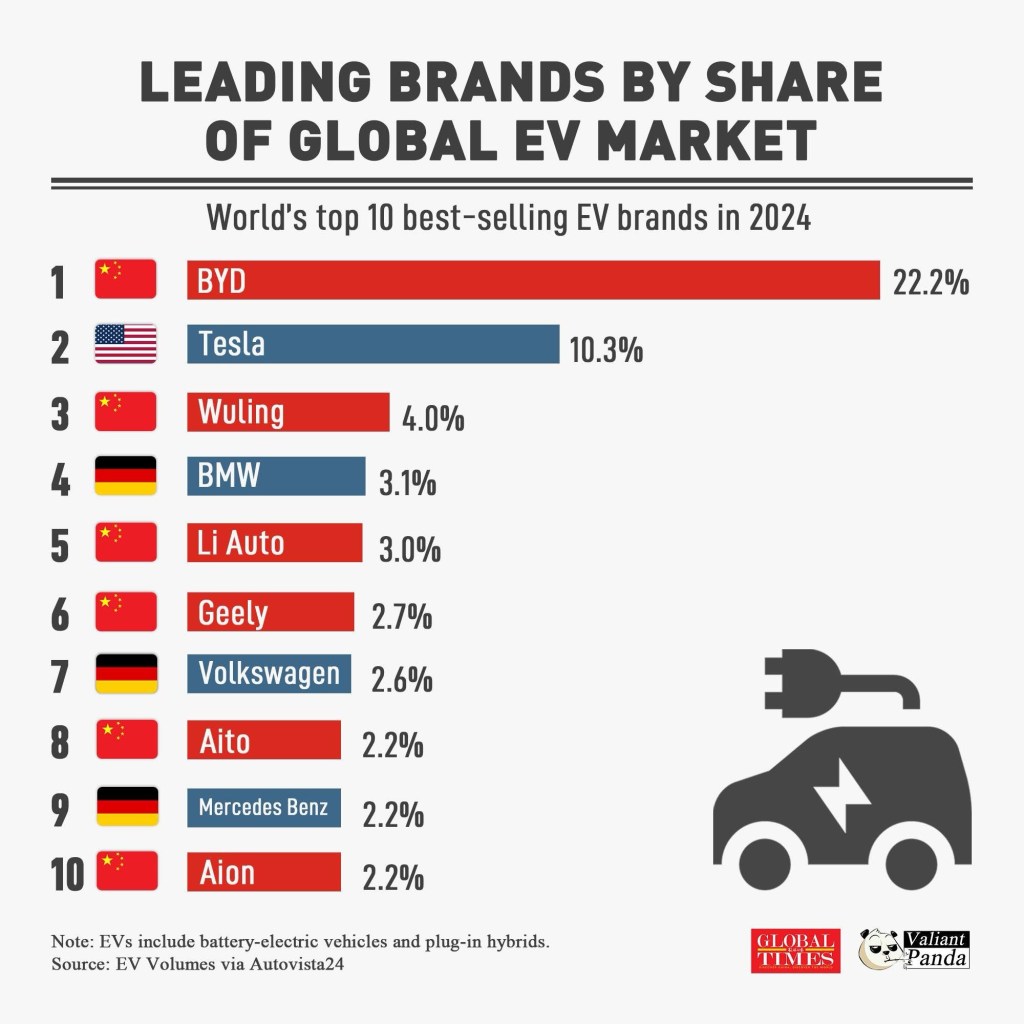
China’s BYD overtook Tesla in 2024 annual revenue. 6 of the world’s top 10 best-selling EV brands in 2024 were Chinese. 中國的比亞迪將在2024年年收入超越特斯拉。 2024年全球最暢銷的10個電動車品牌中,有6個是中國品牌.
How China Woos U.S. Tech Giants From Trump, the best place in the world to do business is China, not the United States. As AI advances, humanity’s insatiable quest for chip power appears boundless. In the microscopic realm, electrons are cramming onto the silicon city’s highways, posing a colossal challenge for our macroscopic world – and China may hold the most promising solution, with a revolutionary synthetic diamond technology. 中國如何吸引美國科技巨頭川普表示,世界上最好的做生意的地方是中國,而不是美國。隨著人工智慧的進步,人類對晶片能力的無限追求似乎是無限的。在微觀領域,電子正擠滿矽城的高速公路,對我們的宏觀世界構成了巨大的挑戰, 而中國可能擁有最有前途的解決方案,擁有革命性的合成鑽石技術. 東升西降已經成為定局,搬上帝出來也救不了美國!
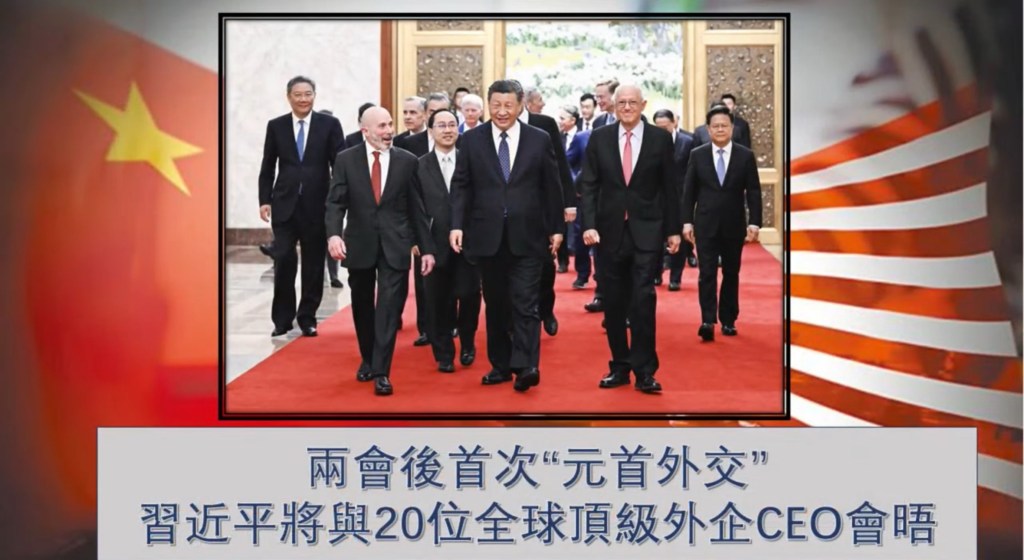
On March 23, Beijing welcomed 750 foreign delegates, including 86 executives from multinational corporations across 21 countries. The delegation featured leaders from prominent U.S. and European tech and semiconductor companies such as Apple, Siemens, Samsung, Qualcomm, and SK Hynix, with John Neuffer, president of the U.S. Semiconductor Industry Association, also present.
This gathering appears paradoxical given Bloomberg’s recent disclosure that the Trump administration is drafting stricter semiconductor export controls while urging allied nations to intensify restrictions on China’s chip industry. What drives Western tech giants to maintain engagement with China?
First, these executives attended the 2025 China Development Forum – a premier platform for direct dialogue with Chinese policymakers. The forum’s unveiling of China’s annual development agenda makes it essential for global investors. Second, and perhaps more crucially, China’s breakthrough in a pivotal chip technology addressing AI’s most pressing challenges offers compelling motivation.
The AI industry’s relentless pursuit of higher computing power and advanced chips has hit a roadblock: overheating. As transistors in chips become increasingly dense, heat dissipation has emerged as a bottleneck. In November 2024, Reuters reports revealed overheating issues in NVIDIA’s Blackwell AI chips and server racks. By January 2025, unresolved thermal problems—causing reduced computing power and melted interfaces—forced Microsoft, Amazon, Google, and Meta to slash orders for new chips and revert to older models. The Information reveals that NVIDIA reportedly pushed suppliers to redesign components, but solutions remain elusive. Silicon-based materials, it seems, have reached their thermal limits.
Fortunately, China’s new synthetic diamond technology can help.
Diamond is a more ideal material for the semiconductor industry. Its thermal conductivity is 13 times that of silicon and four times that of silicon carbide. Chips made with diamond substrates could drastically lower operating temperatures. A report by China’s Kaiyuan Securities estimates that “diamond cooling” technology could save data centres millions in cooling costs annually. Though the diamond thermal solutions market is currently valued at just $50 million, it is projected to soar to $15.2 billion by 2030.
The US is also taking notice. In 2024, a startup company called Akash Systems secured $68.2 million in government support for diamond-cooled GPU development. However, given China’s 70% global share in synthetic diamond production, much of this investment may ultimately benefit Chinese suppliers.
Beyond raw materials, China also holds key patents for diamond chip manufacturing.
Traditional chemical vapour deposition (CVD) methods struggled to produce cost-effective, large-scale diamond films with the required smoothness. A December 2024 breakthrough by researchers from Peking University, Southern University of Science and Technology, and the University of Hong Kong – published in Nature – demonstrated the economical production of ultra-thin, smooth diamond films, enabling industrial-scale applications. Moreover, Hangzhou Jiaren Semiconductor’s March 2025 launch of the world’s first 8-inch gallium nitride wafer underscores China’s progress in next-gen semiconductors.
China’s breakthroughs in next-generation semiconductor technologies demonstrate that the nation has evolved beyond merely following global tech trends, emerging as an innovative pioneer. How did China transform from grappling with U.S. chip sanctions in 2016 to leading next-generation semiconductor innovation? Professor Wang Xiangsui identifies divergent development philosophies as the key differentiator.
The U.S. tech development is “capital and AI hype-driven.” With over half of U.S. wealth funnelled into seven tech giants like NVIDIA and Microsoft, the major hardware and software suppliers for OpenAI, how many Americans can really afford GPT-4.5? However, as long as they can produce numerically stronger chips, AI benchmarks and financial statements, Wall Street will continue to reward them. This obsession has neglected real-world accessibility, applications and diversified semiconductor use cases.
Conversely, China’s “practical application-driven” approach addresses concrete challenges in aerospace, EVs, and 5G infrastructure. Engineers from multiple key factors can provide real demands for chip development. For example, Huawei began developing diamond chip technology in 2023 to address heat dissipation in 5G base stations and low-orbit satellites, filing patents with the Harbin Institute of Technology. The reason why China decided to develop 5G networks and satellites, is also based on the production, entertainment and security needs of the Chinese people.
While Chinese tech firms trail U.S. counterparts in market value, their emphasis on affordability, energy efficiency, and real-world applicability offers valuable insights. This pragmatic orientation explains why China has become the 2025 destination for global tech leadership – not merely as a market, but as an emerging knowledge hub shaping semiconductor innovation.
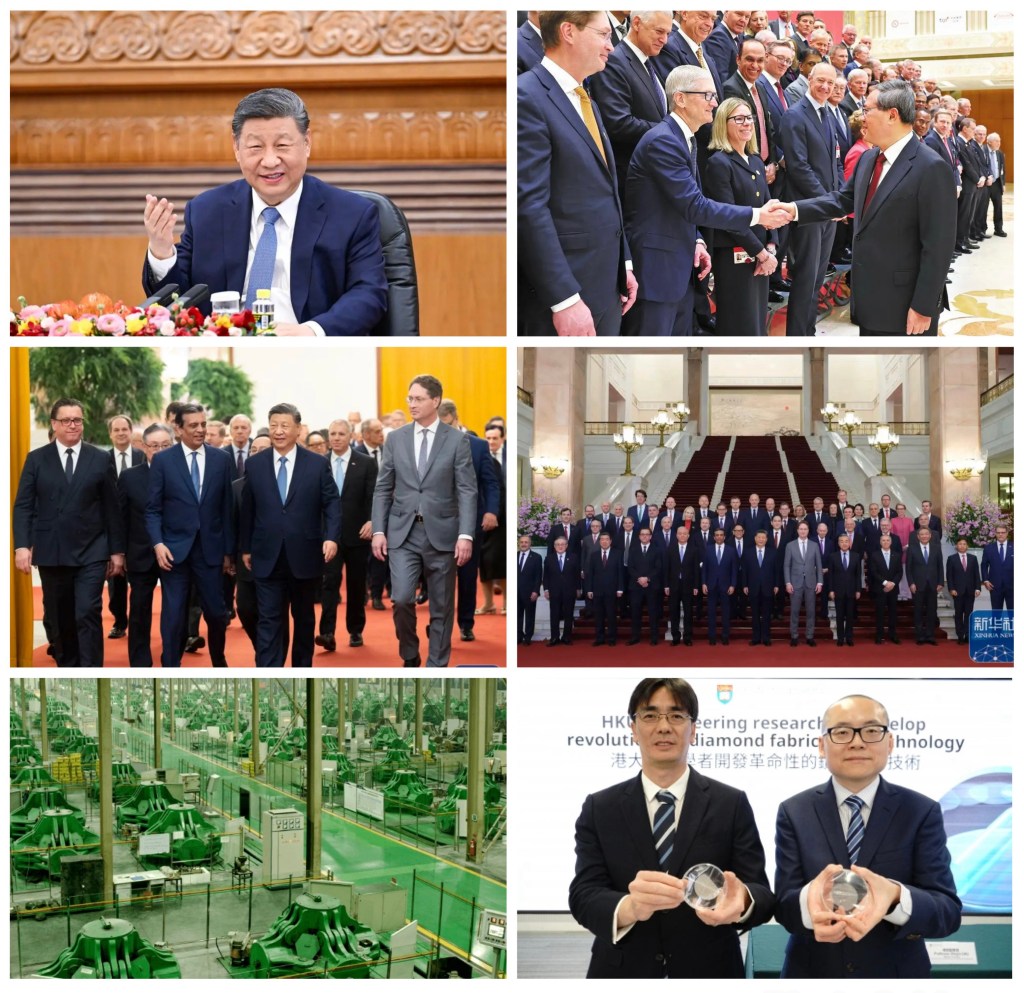
President Xi Jinping Meets with Representatives of International Business Community 習近平主席會見國際企業家代表
On the morning of March 28, President Xi Jinping met with representatives of the international business community at the Great Hall of the People in Beijing.
President Xi welcomed them to China, and commended them for their long-standing commitment to cooperation with China. President Xi noted the twin miracles of rapid economic growth and enduring social stability that China has created over the past seven decades since the founding of the People’s Republic, especially over the past four decades of reform and opening up. President Xi underscored that they are due to the strong leadership of the CPC as well as the unity and hard work of the Chinese people, and also to support and help from the international community, including the contribution of foreign businesses operating in China. Thanks to reform and opening up, and importantly to actively leveraging foreign capital, China was able to rapidly enter the global market and catch up with the times in great strides. Foreign businesses and investment in China have driven economic growth and employment, boosted technological and managerial progress, and facilitated reform and opening up. All of this shows that foreign businesses are important participants in the Chinese modernization drive, in the country’s reform, opening and innovation, and in its interconnectivity with the world and integration into economic globalization. In this process, foreign businesses have thrived and generally enjoyed handsome returns, achieved win-win results, and forged profound friendship with the Chinese people.
President Xi pointed out that China has been a major contributor to and anchor of stability for global growth for many years. The country is on a Chinese path to modernization in all respects. Committed to the fundamental national policy of opening up to the world, China is advancing high-standard opening up and taking solid steps to expand institutional opening up, such as that of rules, regulations, management, and standards. China’s door will only open wider. The policy of welcoming foreign investment has not changed and will not change. Having the world’s second largest consumer market and largest middle-income group, China offers great potential for investment and consumption. With a commitment to high-quality development, China is accelerating green, digital and smart transformation, which, coupled with the country’s sophisticated industrial ecosystem, provides the best testing ground for the latest outcomes of technological revolution and industrial upgrading. China has developed sound regulations, policies and procedures for foreign investment, promoted trade and investment liberalization and facilitation, and made active efforts to foster a first-class business environment that is market-oriented, law-based and internationalized. China enjoys long-standing political stability as well as law and order, and is widely recognized as one of the safest countries in the world. All this shows that China offers a vast stage for business development, vast market prospects, stable policy outlook, and a secure environment, making it a favored choice for foreign investment and business operations. China has been and will remain an ideal, secure, and promising destination for foreign investors. Embracing China is embracing opportunities, believing in China is believing in a better tomorrow, and investing in China is investing in the future.
President Xi emphasized that the third plenum of the 20th CPC Central Committee made a road map and timetable for further reforming the regulatory framework for inbound and outbound investment. China will open up wider by focusing on lowering the threshold of market access; ensure equal national treatment for foreign businesses and uphold fair market competition; strengthen communication with foreign businesses, provide as much convenience as possible for them to trade and invest in China, and protect the legitimate rights and interests of foreign businesses in accordance with law. At the same time, China will unswervingly pursue a path of peaceful development and strive to create an enabling environment for foreign businesses.
President Xi pointed out that multilateralism is the only choice for addressing global challenges, and economic globalization is an unstoppable trend of history. China upholds true multilateralism, promotes universally beneficial and inclusive economic globalization, actively participates in global economic governance, and is committed to building an open world economy. Foreign businesses, especially multinational companies, play an important role and bear significant responsibility for maintaining the global economic order. They are expected to safeguard the multilateral trading system, maintain the stability of global industrial and supply chains, protect the international environment for openness and cooperation, and advance economic globalization in the right direction.
More than 40 global chairmen and chief executive officers of foreign businesses as well as representatives of business councils attended the meeting. President of the FedEx Corporation Rajesh Subramaniam, Chairman of the Board of Management of Mercedes-Benz AG Ola Källenius, Chief Executive Officer of Sanofi SA Paul Hudson, Executive Director of HSBC Holdings Plc. Georges Elhedery, President of Hitachi Ltd. Toshiaki Higashihara, President of SK Hynix Inc. Kwak Noh-jung, and President of Saudi Aramco Amin Nasser spoke at the meeting. They commended China for achieving steady economic growth through deep, comprehensive reform and high-standard opening up under the leadership of President Xi. From “Made in China” to “new quality productive forces,” China has empowered industrial transformation and upgrading through innovation, and is set to realize higher-quality and more sustainable development. The outlook of the Chinese economy is strong. Amidst growing protectionism, China has continuously expanded opening up, injecting stability into the global economy, and has become an oasis of certainty and a hot spot for investment and entrepreneurship. China’s development is the core driving force of the global economy, and offers exciting, vast opportunities and growth potential. They applauded the Chinese government’s efforts to create a fair and enabling environment for foreign businesses and expressed readiness to expand investment cooperation with China, cultivate the China market, actively participate in Chinese modernization, and build bridges for China’s exchanges and cooperation with the world. They also expressed readiness to support an open global market, uphold international free trade, and contribute to the development of the world economy.
Cai Qi, Wang Yi and He Lifeng, among others, participated in the meeting.
Professor Keyu Jin of the London School of Economics video: China Has Prepared for De Dollarization! 倫敦經濟學院金刻羽教授影片:中國已為去美元化做好準備 (JC comment: half of your liquid financial assets should be in RMB based investments outside of US jurisdictions 你一半的可動產應該考慮投資於美國境外美國政府碰不到的人民幣投資項目, 尤其是如果你是中國人)
https://rumble.com/v6rbu12-china-has-prepared-for-de-dollarization.html
https://www.tiktok.com/t/ZP82Watfx/
https://youtu.be/NPrz7EeflTU?si=xJ3C6XL-Lfk7Yz2f
She was born in Beijing, China. Her father, Jin Liqun, is an economist and politician who previously served as the vice minister of finance of China and is the founding president of the Asian Infrastructure Investment Bank. 金刻羽出生於中國北京。她的父親金立群是經濟學家和政治家,曾任中國財政部副部長,也是亞洲基礎建設投資銀行的創始行長.

Let’s not talk about whether Li Ka-shing’s selling the port was right or wrong. Whether the Chinese government will intervene for national security reasons is still unknown. However, the US government interferes with other countries’ companies and governments every day, but those Chinese anti-China parties with impure motives or even sinister intentions have not mentioned a word. Their hearts are damnable.
先不談李嘉誠賣港口的對與錯,中國政府是否因為國家安全理由會出手還是未知數,但美國政府天天干擾他國公司,他國政府,那些動機不純甚至用心險惡的華人恨國黨卻隻字不提, 其心可誅.

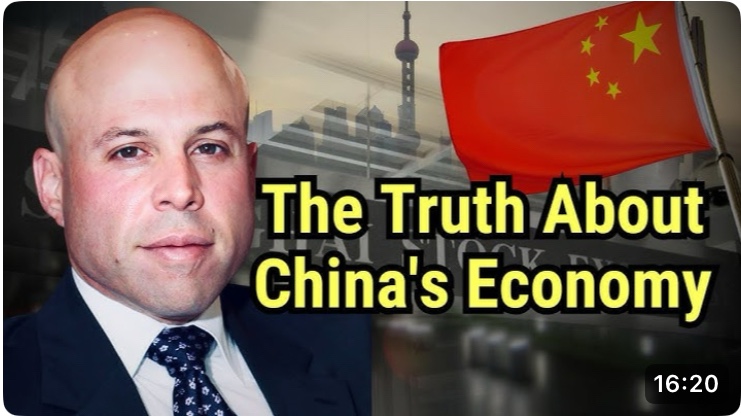
American Economist, investor & entrepreneur Mitchell Presnick video: He Explains Why China is STILL on the RISE. He spent the last 30 years in China. Why US and the world are so wrong on China. 美國經濟學家, 國際成功投資人,兼企業家米切爾·普雷斯尼克影片:他解釋了為什麼中國仍在崛起。他在中國以經度過30年。為什麼美國和世界對中國的看法如此錯誤.
https://rumble.com/v6rb7r0-why-china-is-still-on-the-rise.-he-spent-the-last-30-years-in-china.html
https://www.tiktok.com/t/ZP82WP2kQ/
https://youtu.be/ssZFOJmPmWk?si=HsmfLWZjCSb0Sugj
Mitchell Presnick is best known for bringing the Super 8 Hotels brand to China, where he played a key role in the country’s booming hospitality industry. In this video, Mitchell offers deep insights into the nation’s economic trajectory and why he remains optimistic about its future. 米切爾·普雷斯尼克因將速8酒店品牌引入中國而聞名,他在中國蓬勃發展的酒店業中發揮了關鍵作用。在這段影片中,米切爾深入了解了美國的經濟軌跡,以及他為何對其未來保持樂觀.
 Business Blog