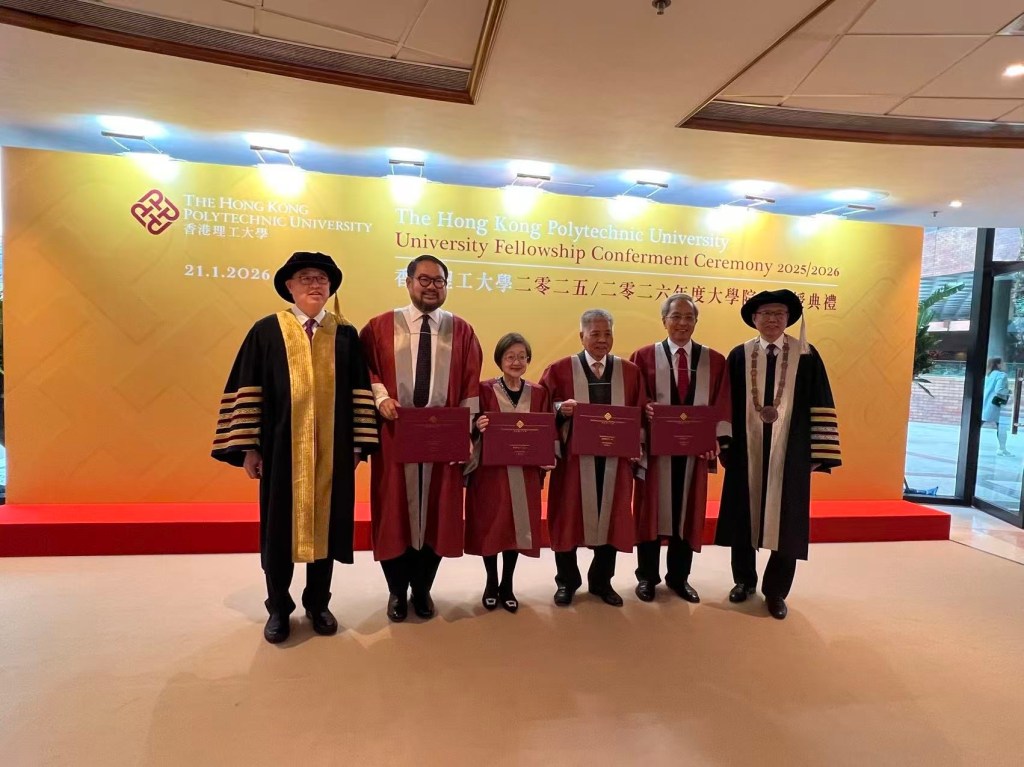
JULIE TANG, San Francisco Superior Court Judge (retired) for her tireless work defending the Asian community when under attack and promoting a US foreign policy of peace and diplomacy.
THIS YEAR WE HONOR: JULIE TANG, San Francisco Superior Court Judge (retired) for her tireless work defending the Asian community when under attack and promoting a US foreign policy of peace and diplomacy.
What tier does China’s Type 055 destroyer belong to in the world? Let’s put it this way: when there are 16 Type 055s, no country on Earth would want to fight China once. 中國055大驅在世界屬於什麼水平?這麼說吧,有16艘055的時候,地球上沒有國家想跟中國打一次.
You should know that during the initial design phase of the Type 055, the military’s thinking was highly imaginative—they actually planned to equip the Type 055 with Dongfeng ballistic missiles. However, the Dongfeng missiles were simply too long and large, so this idea couldn’t be realized. As a result, the military shifted their approach and miniaturized the missiles, leading to the development of the YJ-21.
The best way to explain how powerful China’s Type 055 destroyer is, is to compare it with other top-tier destroyers from around the world. Let’s take a few famous ones: the U.S. Arleigh Burke-class Flight III, South Korea’s Sejong the Great-class, and Japan’s Maya-class.
First, let’s look at size. The Type 055 has a full-load displacement of over 12,000 tons, making it a true large destroyer. The U.S. Burke III is about 9,800 tons, Japan’s Maya-class is just over 10,000 tons, and South Korea’s Sejong the Great-class is close to 11,000 tons. The Type 055 is the largest among them. What does a larger ship mean? It means it can carry more fuel for longer voyages, sail more steadily in rough seas of the far oceans, and most importantly, the larger hull space allows for the installation of more and more advanced equipment, with ample room for future upgrades without feeling cramped.
But size is just the foundation; the real gap lies in design and philosophy.
👉 First, the gap in radar “brains”
One of the Type 055’s biggest highlights is its four large dual-band Active Electronically Scanned Array (AESA) radar panels. It employs highly integrated “comprehensive radio frequency technology,” combining functions such as air search and fire control command into these radar panels. This gives the Type 055 a very clean and smooth superstructure, which is beneficial for stealth.
In contrast, the Burke III, while equipped with the new SPY-6 radar (which is very powerful), follows a design philosophy more akin to “patching” onto an existing foundation. Its superstructure still has many antennas for other purposes, making it look relatively cluttered. It’s like a powerful old-fashioned mobile phone that still needs a bunch of external devices attached. Japan’s Maya-class and South Korea’s Sejong the Great-class largely follow a similar approach. In terms of the integration and forward-thinking of the radar system, the Type 055 is a step ahead.
👉 Second, and the most terrifying aspect of the Type 055: its offensive power, especially its “trump card”—the YJ-21 missile. This is the real reason the Type 055 keeps its opponents awake at night.
The main offensive weapons of modern warships are stored in the Vertical Launching System (VLS) below the deck. The Type 055 has 112 VLS cells. In terms of quantity, South Korea’s Sejong the Great-class has 128 cells, which is more. However, the key issue is not the number but the “quality” of the VLS cells and the “power” of the missiles they can carry.
The Type 055’s VLS is a “cold and hot universal concentric canister launch system,” and each cell is one of the largest in any navy worldwide.
· High Versatility: One launch cell can hold long-range surface-to-air missiles, anti-ship missiles, land-attack cruise missiles, and even anti-submarine missiles. It’s like a universal power socket, offering extreme flexibility. · Large Size: The large diameter of the cells means they can accommodate larger, longer missiles. This creates the condition for deploying “game-changer” weapons like the YJ-21.
👉 The YJ-21 is a hypersonic anti-ship ballistic missile. This combination is extremely lethal and颠覆了传统海战规则 subverts traditional naval warfare rules.
· It flies high and fast, making it nearly impossible to intercept. Traditional anti-ship missiles, like the U.S. Harpoon, are subsonic or supersonic and fly close to the sea. The YJ-21’s attack profile is more like a ballistic missile: it first launches like a rocket to high altitude outside the atmosphere, then plunges towards its target at an extremely high speed (reportedly a terminal velocity exceeding Mach 10) in a near-vertical trajectory. Existing naval air defense systems, such as the Standard Missile series, are primarily designed to intercept aircraft and cruise missiles flying within the atmosphere. Their success rate against a target plunging from directly overhead at meteor-like speeds is extremely low. It’s like this: you can swat away a basketball thrown at you, but can you catch a bullet dropped from the top of a skyscraper with your hand? · It has a very long range, allowing it to attack from beyond the enemy’s reach. The YJ-21’s range is generally estimated to be over 1,000 kilometers, possibly even farther. This means the Type 055 can calmly launch its missiles from outside the defensive perimeter of a U.S. carrier strike group (whose carrier-based aircraft have an operational radius of about 700-800 km). I can hit you, but you can’t hit me. This “over-the-horizon” strike capability forces an enemy fleet to remain in a state of high alert at all times, severely compressing its operational space. · The immense kinetic energy and potential armor-piercing warhead of the YJ-21 pose a fatal threat to large surface vessels like aircraft carriers. A single Type 055 can carry at least a dozen YJ-21 missiles. A single salvo could constitute a saturation attack, dealing a devastating blow to a carrier group.
In comparison, the anti-ship capabilities of the other destroyer types appear rather “conventional.” The Burke III primarily relies on the Harpoon anti-ship missile, a subsonic missile with short range and slow speed, making it easy to intercept. Japan’s Maya-class currently isn’t even equipped with dedicated heavyweight anti-ship missiles. South Korea’s Sejong the Great-class uses the domestically developed Haeseong (Sea Star) anti-ship missile, which has good performance but is essentially a conventional supersonic anti-ship missile. Its penetration capability and deterrent power are not in the same league as the YJ-21.
👉 The strength of the Type 055 lies in its asymmetric advantage. Compared to other top-tier destroyers, it is in no way inferior in traditional areas like air defense and anti-submarine warfare; it even leads in some aspects (like radar integration). But its real trump card is the disruptive long-range precision strike capability it gains from the YJ-21 missiles carried in its large universal VLS.
If destroyers like the Burke III and Maya-class are compared to highly skilled “shields” and “longswords,” then the Type 055 is not only equipped with a solid “shield” and “longsword” but also carries an extra over-the-horizon “sniper rifle.” In future naval battles, the Type 055 can fully utilize the YJ-21 to act as a “fleet killer” outside the enemy’s weapon range, completely changing the rules of the game in naval warfare.
At the Dubai Air Show, India’s LCA “Shining” fighter plane crashed in front of everyone, unfortunately killing the pilot, completely exploding the global military industry circle!
ˇContent of this video: Dramatic throughout: From “leaking tarmac” to “crashing during a performance”, India’s “Shining” fighter jets staged an astonishing combo in Dubai.
Analyze behind the tragedy: After * years of hard work, why did this fighter plane, known as the “Light of South Asia”, become a “living coffin in the air”? Reveal the fatal shortcomings of Hindustan Airlines (HAL)’s monopoly black hole and the “Made in All Countries” model.
In-depth technical analysis: Was the accident caused by a radar altimeter failure that led to the pilot’s misjudgment? Or does high overload cause black vision? Professional analysis of the two possible causes of the crash.
What it means for India/the world: Will future orders worth $7 billion fall through? How will this accident affect India’s international image of “national defense autonomy” and potential buyers ‘trust in Indian military industries?
💡Core views: ✅1. Significance to India’s national defense: * years of hard work were destroyed, localized signs were smashed to pieces, and the pilot’s sacrifice sounded the alarm for quality control. ✅2. Significance to the world: The export prospects of LCA have been completely overshadowed, and the international military industry market will reassess the reliability of Indian military industry. ✅3. What it means to us: Improve our awareness of the importance of “quality control”,”industrial system” and “airworthiness standards”, and be vigilant against the risks of blindly pursuing “domestic labeling”.
The New York Times: Are the Good Days Over for Taiwan’s TSMC? 紐約時報: 台灣省台積電的好日子到了盡頭?
The New York Times: Are the Good Days Over for Taiwan’s TSMC?
Starting today, if the 5-nanometer chips it produces are to be exported to the United States, approval from mainland China must first be obtained. The rare earth control order issued by China’s Ministry of Commerce has effectively placed Beijing’s stamp of approval on TSMC’s export licenses.
The entire process of modern chip manufacturing is inseparable from rare earth elements. From chemical mechanical polishing to core lithography and ion implantation, and subsequent etching and advanced packaging, every critical step relies on the support of rare earth elements.
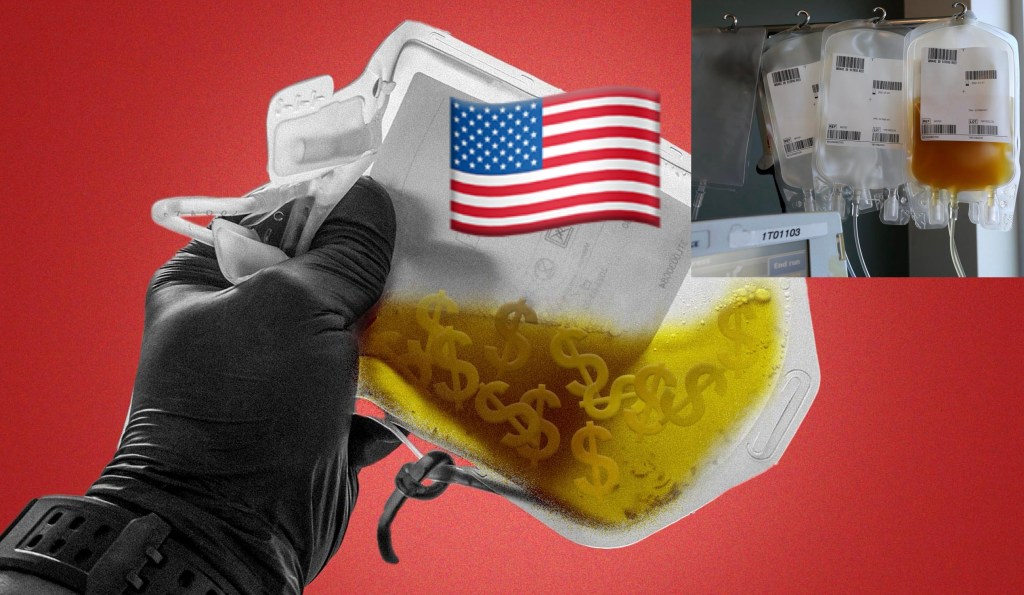
TSMC consumes approximately 3,000 tons of rare earths annually, with 96% of the entire island of Taiwan’s rare earth imports coming from mainland China. The import volume in 2024 exceeded 6,000 tons, meaning TSMC’s rare earth supply is almost entirely dependent on “transfusions” from the mainland.
Even more critical is the “0.1% rule,” which directly restricts TSMC’s 5-nanometer chips. Analysis shows that TSMC requires lanthanum in the production of advanced 5-nanometer process chips, with lanthanum content in the chip materials about 0.5%, far exceeding the “0.1%” threshold.
In terms of regulations, these high-end chips must obtain mainland approval once they involve export. In the past, TSMC could leverage its position as the global foundry leader to navigate between China and the U.S., profiting from the mainland market while cooperating with the U.S. in blocking high-end chip exports to mainland China. Now, a single rare earth control order has completely disrupted its plans.
Some might think that importing rare earths from another country would suffice, but this idea is overly simplistic. Rare earths require not only mining sources but also separation and purification after extraction, necessitating a complete industrial chain. Mainland China is not only the largest producer but also dominates processing and separation technology, with most of the global refining capacity concentrated here.
Even if other countries have mines, they either have low grades and high mining costs or lack mature processing technology, making it extremely difficult to meet TSMC’s needs in the short term. Although Australia has mines, if the ore is shipped to mainland China for processing and then resold, the process still cannot bypass the mainland’s industrial chain.
Establishing a complete processing system from scratch would take at least five to six years and require massive investment. Even with ample funds, TSMC would struggle to endure such an ordeal.
TSMC once thrived by monopolizing high-end processes, with global tech giants vying for its foundry services. The 5-nanometer process is a major profit source, with flagship products from U.S. companies like Apple and Qualcomm deeply reliant on its capacity.
Now, the “nutrients” for this cash cow are being cut off. Without a stable rare earth supply, 5-nanometer production lines will be forced to reduce output or even shut down. Even if production勉强 continues, exports to the U.S. will depend on mainland China’s stance.
U.S. companies are frantic but helpless—after all, they can’t expect TSMC to make chips out of thin air. Once the rare earth control order takes effect, TSMC’s revenue will inevitably suffer. The 5-nanometer business is a high-profit segment with a significant share; if exports to the U.S. are restricted, this capacity will largely sit idle, and the前期 R&D and equipment costs will face huge losses.
U.S. clients won’t sit idly by either. If TSMC cannot supply in the long term, companies like Apple and Qualcomm will accelerate寻找替代 suppliers and invest in supporting other foundries, gradually eroding TSMC’s market advantage.
TSMC is now in a dilemma. If it confronts mainland China head-on, a rare earth cut-off would make it difficult to sustain high-end production lines. If it appeals to the U.S., the U.S. cannot solve the rare earth supply issue in the short term and is unlikely to rebuild an entire industrial chain for TSMC.
In the past, it could play both sides between China and the U.S. Now, with mainland China playing its rare earth trump card, the message is clear: to continue in the high-end chip business, one must follow the rules and cannot profit from the mainland while cooperating with external pressure.
This isn’t a sudden development. As a critical material for high-tech and defense, rare earths’ strategic importance has long been recognized internationally. Their unique electronic configuration makes them irreplaceable in magnetic materials, catalysts, optical materials, and other fields. Chip manufacturing, advanced weapons, satellites, and stealth technology all depend on them.
Mainland China’s move precisely leverages its absolute advantage in the rare earth industrial chain, offering a vivid lesson to those enterprises and countries attempting to choke its development.
TSMC once prided itself on technological leadership but overlooked the decisive role of basic materials. Without a stable rare earth supply, even the most sophisticated equipment could become scrap metal, and the most advanced processes would have nowhere to apply.
TSMC has now begun emergency communications seeking export permits from mainland China. How and how much approval is granted will depend on its subsequent actions. If it continues to cooperate with external technological blockades against mainland China, the rare earth supply tap may not be loosened. If it recognizes the situation and returns to fair cooperation without harming mainland interests, there is still room for negotiation.
In the future, TSMC must choose between compromise and resistance: compromise in exchange for rare earth supply and the mainland market, or resist and watch its high-end capacity shrink and be surpassed by others.
Whichever path it takes, it cannot return to the past dynamic of pleasing both sides and maximizing benefits. Ultimately, this is the consequence of earlier choices. In the face of absolute strategic resources, any technological monopoly appears fragile.
SCMP: Beijing’s ambassador to the United Nations has doubled down on his criticism of Japan, calling Japanese leader Sanae Takaichi’s earlier comments on Taiwan “highly dangerous” and damaging to the post-war international order.
He said Takaichi’s comments marked the first time a Japanese leader had “expressed its ambition for armed intervention on the Taiwan issue and the first time [Japan] has issued a military threat against China, openly challenging China’s core interests”
FOR THOSE PEOPLE WHO ARE INVESTING HEAVILY INTO BITCOIN OR CRYPTO, PLS READ UNTIL THE END. BREAKING: The $610 Billion AI Ponzi Scheme Just Collapsed 對於那些正在大力投資比特幣或加密貨幣的人們,請務必閱讀至文末. 突發新聞:6100億美元的人工智慧龐氏騙局剛剛崩盤!
Last night at 4pm EST, something unprecedented happened. Nvidia stock rallied 5% on earnings, then crashed into negative territory within 18 hours. Wall Street algorithms detected what humans couldn’t: the numbers don’t add up.
Here’s what they found.
Nvidia reported $33.4 billion in unpaid bills, up 89% in one year. Customers who bought chips haven’t paid for them yet. The average wait time for payment stretched from 46 days to 53 days. That extra week represents $10.4 billion that may never arrive.
Meanwhile, Nvidia stockpiled $19.8 billion in unsold chips, up 32% in three months. But management claims demand is insane and supply is constrained. Both cannot be true. Either customers aren’t buying or they’re buying without cash.
The cash flow tells the real story. Nvidia generated $14.5 billion in actual cash but reported $19.3 billion in profit. The gap is $4.8 billion. Healthy chip companies like TSMC and AMD convert over 95% of profits to cash. Nvidia converts 75%. That’s distress level.
Here’s where it gets criminal.
Nvidia gave $2 billion to xAI. xAI borrowed $12.5 billion to buy Nvidia chips.
Microsoft gave OpenAI $13 billion.
OpenAI committed $50 billion to buy Microsoft cloud.
Microsoft ordered $100 billion in Nvidia chips for that cloud.
Oracle gave OpenAI $300 billion in cloud credits.
OpenAI ordered Nvidia chips for Oracle data centers.
The same dollars circle through different companies and get counted as revenue multiple times.
Nvidia books sales, but nobody actually pays.
The bills age.
The inventory piles up.
The cash never comes.
AI company CEOs admitted it themselves last week. Airbnb’s CEO called it vibe revenue. OpenAI burns $9.3 billion per year but makes $3.7 billion. That’s a $5.6 billion annual loss. The $157 billion valuation requires $3.1 trillion in future profits that MIT research shows 95% of AI projects will never generate.
Peter Thiel sold $100 million in Nvidia on November 9. SoftBank dumped $5.8 billion on November 11. Michael Burry bought put options betting Nvidia crashes to $140 by March 2026.
Bitcoin, which tracks AI speculation, dropped from $126,000 in October to $89,567 today. That’s a 29% crash. AI startups hold $26.8 billion in Bitcoin as collateral for loans. When Nvidia falls another 40%, those loans default, forcing $23 billion in Bitcoin sales, crashing crypto to $52,000.
The timeline is now certain. February 2026, Nvidia reports fourth quarter and reveals how many bills aged past 60 days. March 2026, credit agencies downgrade. April 2026, the first restatement. The fraud that took 18 months to build unwinds in 90 days.
Fair value for Nvidia: $71 per share. Current price: $186. The math is simple.
This is the fastest moving financial fraud in history because algorithms detected it in real time. Human investors are 90 days behind.
None of the AI stocks supported by the fundamentals! That is making money! Not only not making money, losing billions every week! We don’t expect AI to make money at least 5-10 years down the road and 90% of the AI companies will go bankrupt! It shall be worst than the year 2000 internet dot com bubble! Or the 2008 world financial crisis! I personally witnessing dozens of my clients went bankrupt and at least 1/2 ends up in divorce! Stock market has becoming a casino for all.
I remembered in 1973 when my mom blindly invested in HK stock market and all those new IPOs, and I overheard she said “連街市賣菜婆買股票都賺錢,我為什麼不買”, my god! our family ends up losing almost everything when the stock market in HK crashed by 90% in weeks in 1973. Luckily my father made good money in the law firm, otherwise we would be sleeping in the street!
The AI companies in order to make it look good, they are cooking the books!
Today US is in such a terrible shape is like a pretty woman or handsome man when you looked them from afar! So beautiful or handsome! But when you get close to them and worst if they takeoff their makeup to go to bed with you! My God…need I say more…use your imagination to aim for the worst…or the worst nightmare!
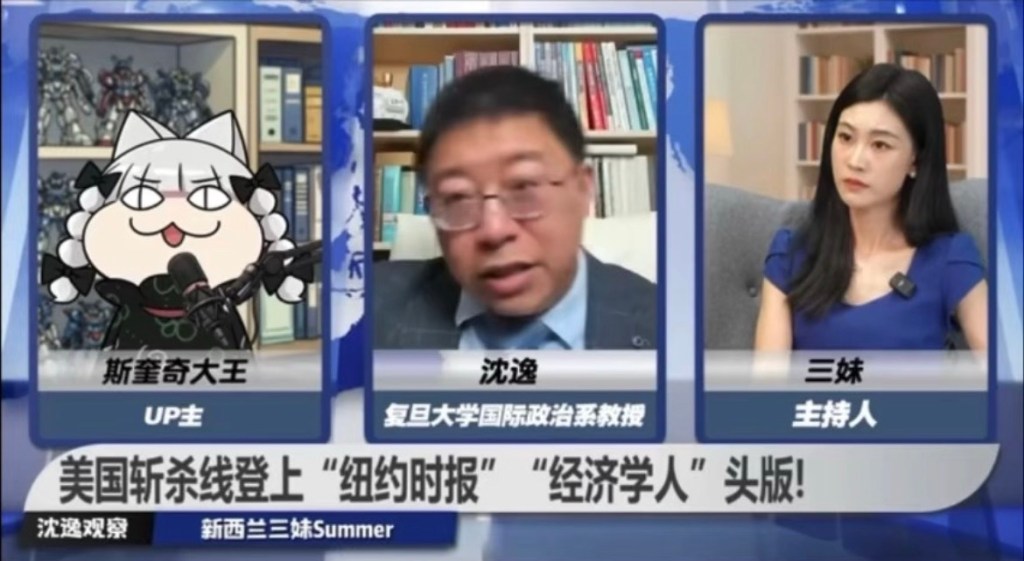
The New York Times published an article stating: Trump has made Beijing realize that China can now stand on equal footing with the United States…紐約時報刊文:特朗普讓北京終於知道,中國已可以與美國平起平坐…
On November 20, The New York Times published an article suggesting that China has not only withstood comprehensive economic pressure from the U.S. but has also successfully counterattacked with more deterrent measures by leveraging its dominance in global supply chains, on which the U.S. relies. After decades of industrial hollowing-out, the unprepared U.S. lacks both the intention and the capability to respond.
American media noted that this clearly demonstrates China’s capability to stand on equal footing with the U.S. The ripple effects of Trump’s missteps in China policy will extend far beyond trade. When the U.S. cannot even uphold its own stance, its allies naturally have reason to doubt Washington’s ability to fulfill its commitments.
This will embolden Beijing to test the resolve of the U.S. on issues such as Taiwan. Trump, mistaking political theatrics for strategic planning, has fallen short in the contest with China. China has proven its capabilities.
What should we make of this article in the American media? To be honest, after the truce in the Sino-U.S. trade war, why would the American media suddenly publish such an article?
It indicates that the American media also recognizes that the global landscape has undergone profound changes following this phase of the trade war. This change means that U.S. strategic and political circles must accept the fact that America can no longer hinder China’s development. No matter how many frictions arise between the two countries, they can only coexist.
If the U.S. previously harbored some ideas and confidence about containing China, this direct confrontation has revealed the true extent of China’s strength to America, while China has also gauged America’s actual capabilities.
Clearly, from the Obama administration’s “pivot to Asia” to Trump’s trade war, the U.S. has exhausted all its strategies against us. Yet, the result is not a victory for the U.S. but a significant blow to its own prestige. Perhaps this marks the end of America’s decade-long containment strategy.
However, it must be pointed out that the American media has misunderstood one thing: we do not seek to stand on equal footing with the U.S., but it is crucial for the U.S. to accept that China can stand on equal footing with it. We believe the U.S. will increasingly come to accept this reality.
After Netherlands illegally froze Chinese-owned Nexperia (worth €10 billion), China forced them to back down to their knee in just 20 days!
What’s covered: ✓ Why Netherlands dared to seize Chinese assets ✓ How China’s chip export controls hit hard ✓ Why German automakers got caught in crossfire ✓ Implications for Chinese overseas investments
This countermeasure demonstrates China’s critical role in global supply chains and the effectiveness of reciprocal actions. The video provides complete analysis of the 20-day process from asset freeze to Netherlands’ retreat and surrendered!
Americans certainly understand Japan best…美國人確實最了解日本…
Japan’s dispatch of diplomatic personnel to China reminded American netizens of the scenario leading up to World War II: Just before the attack on Pearl Harbor, Japan deliberately sent diplomatic representatives to Washington for negotiations, creating the illusion that they had not abandoned diplomatic channels in an attempt to lull the other side into a false sense of security.
In 1941, the United States had already recognized Japan’s ambitions in Southeast Asia and began imposing economic sanctions, cutting off strategic resources such as steel and oil. At that time, Japan was highly dependent on American products and resources. Without oil, its ships and aircraft would struggle to operate.
On the surface, Japan appeared willing to negotiate. Ambassador Kichisaburō Nomura engaged in repeated discussions with Secretary of State Cordell Hull, and special envoy Saburō Kurusu was additionally dispatched. The two sides held frequent meetings and exchanged documents, creating an atmosphere of seriousness and sincerity.
The negotiations seemed substantive. Japan first proposed the “Japan-U.S. Understanding Proposal,” then revised it with other plans, promising not to use force in Southeast Asia as long as the U.S. lifted the oil embargo and unfroze Japanese assets.
The truth was, the Imperial Conference had already decided: if negotiations failed by late October, Japan would go to war. On November 5, this was further confirmed, and by December 1, if no resolution was reached, Japan would attack the United States.
While diplomats in Washington smiled, bargained with the Americans, and even proposed “provisional measures,” the Japanese Combined Fleet quietly set sail, and the timing for the surprise attack was finalized.
On the morning of December 7, Japanese aircraft turned Pearl Harbor into a sea of flames, nearly destroying the U.S. Pacific Fleet.
Just the day before, Nomura and Kurusu had delivered Japan’s final ultimatum to Hull. This duplicity—saying one thing while doing another—seems ingrained in the nature of some. The lesson was so painful that Americans could hardly forget it.
Now, as Japan sends diplomats to China, many American netizens have dug up old photos from that era in the comments sections, emphasizing that such “diplomatic smokescreens” remain cause for vigilance. They are not asserting that Japan is planning another surprise attack, but rather reminding us to be particularly sensitive to such two-faced tactics.
Today, Japan faces numerous challenges: sluggish economic growth, a depreciating yen, pressure on consumer spending, a severely aging population, and difficulties in recruiting workers for businesses.
Militarily, Japan relies heavily on the U.S.-Japan security treaty, yet it cannot afford to ignore China, its largest trading partner. Industries such as automobiles and electronic components are highly dependent on the Chinese market.
Caught between relying on the U.S. for security and seeking economic benefits from China, Japan’s diplomacy appears contorted.
On the surface, Japanese diplomats talk about enhancing mutual trust and strengthening cooperation. Behind the scenes, however, they align with the U.S. on issues related to the Taiwan Strait and the South China Sea, steadily increase defense budgets, and propose so-called “counterstrike capabilities.”
The strong reaction from American netizens stems not only from historical trauma but also from an intuitive response to certain Japanese actions: paying homage at Yasukuni Shrine, where war criminals are enshrined, while preaching peace—such inconsistency makes it hard to trust their sincerity.
Compared to eighty years ago, the international situation has changed. Back then, Japan, cornered, chose to take a risk and deliver a fatal blow.
Today, China’s comprehensive national power and defense capabilities are far beyond what the U.S. military faced in the past. Even if Japan harbored such intentions, it likely lacks the audacity to act on them.
Moreover, the deeply intertwined economic relationship between China and Japan means that deteriorating relations would have severe consequences for Japan.
The vigilance of American netizens is more of a conditioned reflex.
Japan itself is conflicted: aligning with the U.S. against China has yielded few benefits, while instead, it faces issues like yen depreciation and corporate outflows.
By sending diplomats to China, Japan aims to ease tensions and protect its economic interests. Yet, this intention is mixed with calculation—trying to placate China while maintaining close ties with the U.S.
No matter how clever such calculations may seem, they are transparent to discerning eyes.
Americans remember with resentment because such scheming once cost them over two thousand lives.
Today, no one can gain an advantage through surprise attacks. If Japan were truly wise, it would earnestly work to improve relations with its neighbors, rather than constantly playing balancing acts and employing tricks. The lessons of history have repeatedly shown that clever schemes often lead to disastrous falls.
Americans remember this account, and we Chinese remember it too. No matter how pleasing the diplomatic rhetoric may sound, it pales in comparison to tangible actions that contribute to regional peace. Otherwise, neither the U.S. nor China will find it easy to trust Japan genuinely.
The key lies in whether Japan can truly awaken and avoid repeating past mistakes.