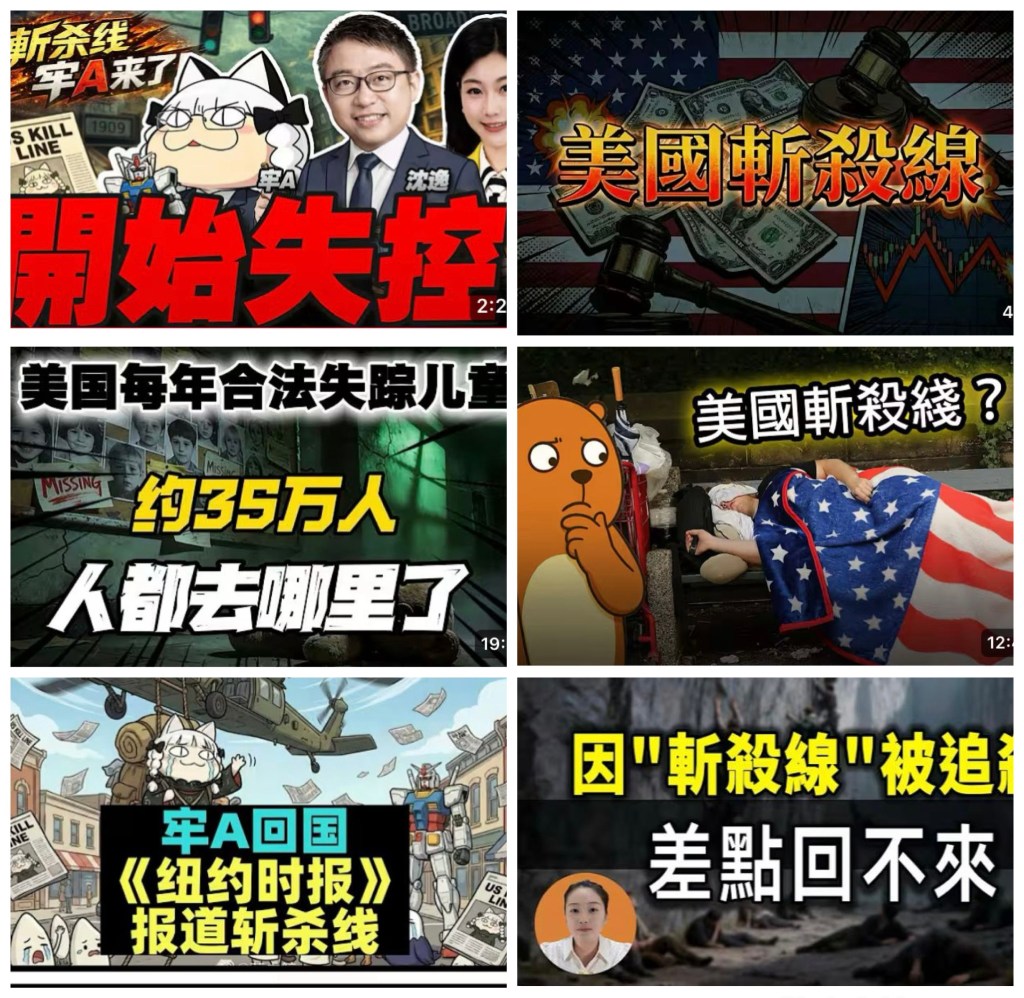
Video: Situation “Completely Out of Control” – Important Announcement from China | The Breaking Point Featured in The New York Times and The Economist – Shen Yi’s & Summer Interviews Lao A 局勢”完全失控” 中國重要通告 | 斬殺線登上紐約時報、經濟學人 沈逸三妹連線牢A
Host 主持人:Summer Guests 嘉宾:复旦大学国际政治系教授 沈逸 Professor Shen Yi from the Department of International Politics at Fudan University Up主:Squeezy the Great (Lao A) 斯奎奇大王 牢A
Alert: all young healthy Chinese students in US and Canada, never say yes to any form that say ok to organ donation. You body worth a lot of money and your accidental death, your parents or family may not get your body back and your organs worth a lot of money! 警示:所有在美國與加拿大的年輕健康中國留學生,切勿在任何同意器官捐獻的表格上簽署同意。你的身體極具價值,一旦發生意外身亡,你的父母或家人可能無法取回你的遺體,而你的器官價值連城!
📌 This video will provide an in-depth analysis: Focusing on the “breaking point,” this episode combines reports from mainstream media such as The New York Times and The Economist to analyze the accumulating structural pressures within American society and the economy.
From the rise in homelessness and wealth distribution imbalances to “pain-driven consumption” and debt-fueled growth, multiple signals are emerging simultaneously.
At the same time, recent safety advisories issued by Chinese consulates in the United States reflect real changes in public security, economic pressures, and group risks.
Connecting with Shen Yi’s third sister and Lao A, we discuss the “American breaking point” from both scholarly and frontline perspectives.
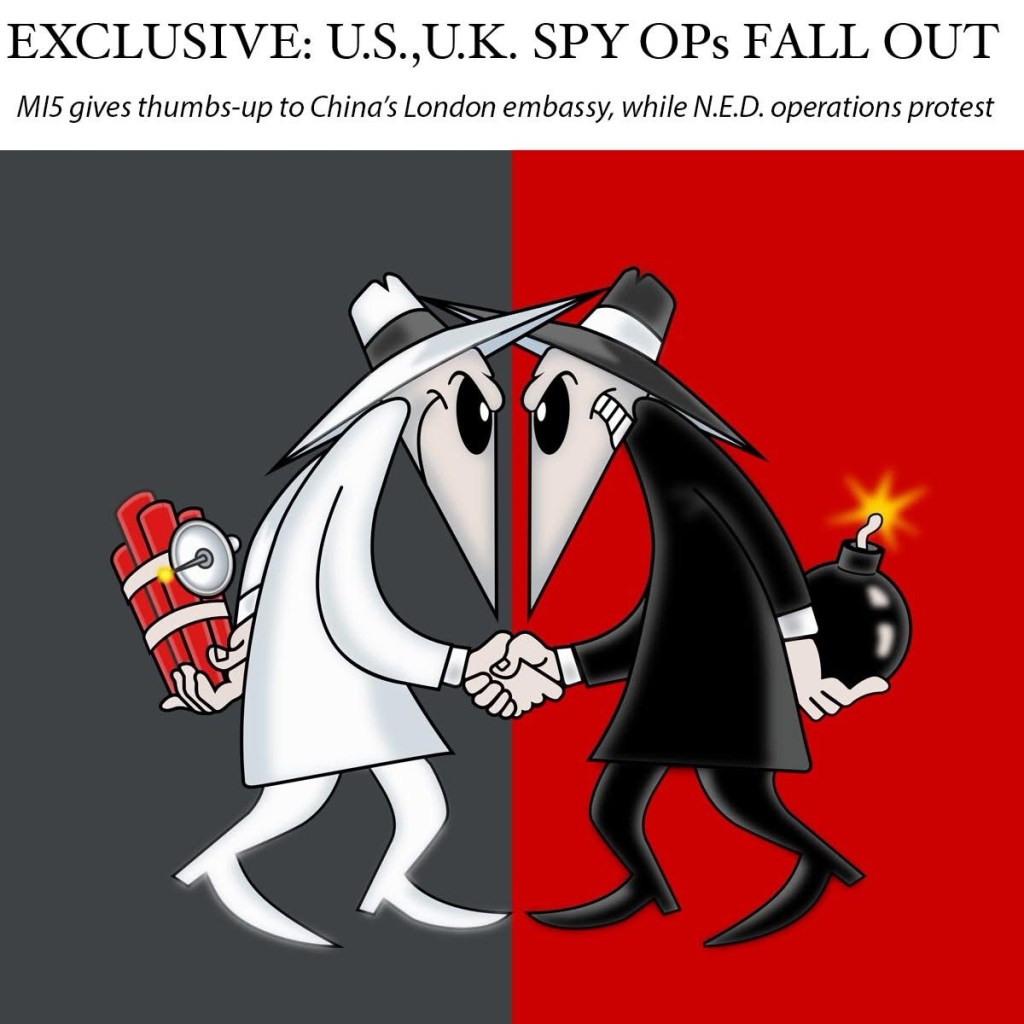
BRITISH SPY CHIEFS have broken ranks with a U.S.-financed spy operation to create problems between the U.K. and China. 英國間諜首腦與美國資助的間諜行動決裂,此舉可能導致英國與中國關係出現問題。英國軍情五處(MI5)處長肯·麥卡勒姆已批准中國在倫敦建造新使館大樓.
British intelligence boss Ken McCallum, director of MI5, gave a green light for the building of a new embassy building in London for China.
But a U.S. intelligence campaign led by Washington’s Inter-Parliamentary Alliance on China (IPAC) unit has been working on protests to STOP the project going ahead.
The British op has now unilaterally overruled the US op, with approval for the building of the embassy being fully granted. Prime Minister Keir Starmer is heading to China on 29 January, following Canada’s Mark Carney, literally and figuratively.
SET UP BY CIA SPIN-OFF
UK-based anti-China protest group IPAC presents itself as British, but was actually proposed at a 2019 meeting in Washington DC organized by the CIA spin-off National Endowment for Democracy (N.E.D.).
IPAC would be modelled on the CIA operation to exploit the Tibetans to demonize China, by creating an international anti-China campaign to exploit other groups, such as the Chinese Uyghurs, as N.E.D. leader Carl Gershman made clear at the meeting.
IPAC was then launched the following year (June 2020) with principal funding from N.E.D. and its frequent U.S. funding partner Open Source Foundations, which is run by Sinophobic U.S. billionaire George Soros.
To appear independent of Washington DC, IPAC deployed non-American leaders, Luke de Pulford in London, Shiori Yamao in Japan, who choose not to mention the operation’s US origins.
It immediately set to work pushing US demonization-of-China strategies, such as trumpeting the (now widely debunked) “Uyghur Genocide” narrative. This fictional tale was a step too far even for the China-criticizing Economist magazine. (As 200 million visitors a year can attest, the Uyghur Chinese population is growing much faster than the Han Chinese population, and the Uyghurs who are unhappy are the ones thrown out of work by US actions.)
TWIST – DILEMMA FOR UK PRESS
An intriguing twist is that much of the UK press, especially the Times of London, has tied its banner to the US/ IPAC position. But that has now become the U.S. intelligence position, and goes against the U.K. intelligence position.
For example, the UK press has backed the American position by downplaying or completely hiding key pieces of information.
They tell the British public that the Chinese embassy is extra-large because it is a spy base. But they’ve hiding the fact that British and Chinese maintain that it is large because it combines five Chinese organizations, which are currently housed separately.
The British press has been reporting the Chinese embassy project in a tone of outrage—while generally hiding from their readers the facts that British were also rebuilding their consular operations in Beijing, and the regularly expanded US embassy in the Chinese city of Hong Kong has been a CIA base for western powers since 1949 (and still is).
Reuters (and other international media outlets) report that the British “government ignored warnings from British and U.S. politicians” but routinely avoids mentioning the US-financing of anti-China politicians in London.
U.S. UNDOUBTABLY THE PROBLEM
IPAC’s relentless “China is a dangerous hegemon” line of attack has become entirely untenable today, when no political organization in the world – not even the embarrassingly sycophantic European Union – can avoid admitting that it is clearly the US which is the superpower acting as a dangerous hegemon.
This problem has been brewing for a while. The difficulty faced by a UK-based operation such as IPAC in retaining a simplistic US position for the long term has been obvious for years.
“They [IPAC] have a very Manichaean view of the world where it’s China bad, the rest of the liberal world good,” said Kerry Brown, director of the Lau China Institute and professor of Chinese Studies at King’s College London, in a 2023 interview with Nikkei Weekly. “The world doesn’t work like that.”
And with Canadian leader Mark Carney’s recent statements about the “new world order”, the people running a full-time US demonization-of-China operation in London and Japan needs to be thinking about the group’s future.
Video with English subtitles: Hunted by The New York Times for Talking About the “Kill Line”! A Chinese student in the U.S. encounters a fake bodyguard and flees back to China within 72 hours. He was allegedly hunted by anti-China Chinese extremists in the United States. These Chinese make a living by luring Chinese citizens bringing their money to the U.S., and when this Chinese student studying in America spoke the truth, he destroyed their livelihood—so, according to the narrative, he had to be “eliminated.” 影片有英文字幕: 因說了’斬殺線’遭《紐約時報》點名追殺!中國在美國留學生遇假保鏢,72小時逃回中國, 因為他被美國反中華人恨國黨追殺, 因為這些人用移民或投資顧問之名找中國人吸血,天天騙中國人來美國投資或移民. 但這位在美國的中國留學生說出真相,毀了他們飯碗,所以這個留學生必須要x, 不能讓他活著! 👉 如何証實你的朋友和親人是恨國黨,你可以做一個試驗,告訴這些人你是中國人,你愛中國,中國是你的根,我保證他們聽了後會馬上遠離你,你的飯局,你的生日會,你的Karaoke party 他們不會再來,不信你可以試試!
January 17, 2026 — “Prisoner A” miraculously made it back to China alive.
This post-2000s Chinese student, who was publicly named by The New York Times for exposing the so-called U.S. “Kill Line” theory, went through an extraordinary 72 hours before returning to China. What exactly happened during those final three days? A fake bodyguard suddenly appeared, his real identity was doxxed, The New York Times allegedly named him publicly and incited a manhunt… How did he escape at the very last moment?
This is not a Hollywood movie.
This is a story that supposedly happened in January 2026.
Core content of the video:
✅ Why was “Prisoner A” targeted? What does the “Kill Line” theory actually reveal? ✅ Why would The New York Times publicly name a student? ✅ The fake bodyguard incident: who sent him, and how did “Prisoner A” see through it? ✅ The full 72-hour escape: how he avoided surveillance and successfully returned home ✅ The hidden ideological confrontation between China and the United States behind all this
An ordinary international student challenged the entire Western discourse system on his own—and came back alive. This story is more thrilling than any spy thriller.
Verified by U.S. AI ChatGPT: Simply put, “exposing the U.S. ‘Kill Line’ theory” is not a formal academic term. Rather, it is a summary-style expression used in Chinese public discourse—especially in geopolitics, self-media commentary, and military analysis—to describe U.S. foreign strategy. It carries a tone of “exposing a conspiracy,” suggesting how the United States gradually pushes a target country toward a point of no return.
Let me break it down in plain language 👇
One-sentence version
The “Kill Line” = an invisible red line drawn by the United States for its rivals. Once you cross it—or are forced to cross it—you face comprehensive suppression until your regime, economy, or national power is effectively “decapitated.”
What does the “Kill Line” theory argue?
Its core logic usually includes five stages:
① First, “fatten you up” • Open markets • Technology transfer • Financial investment and globalization dividends
👉 Let you grow rapidly and integrate into the U.S.-led system (Many commentators say Japan, the late Soviet Union, and early China all went through this stage.)
② Allow development, but not “upgrading” • You can be the world’s factory • You cannot control core technologies • You cannot challenge dollar hegemony, financial dominance, or military supremacy
👉 Growth ≠ threat; upgrading = danger
③ Draw an invisible line that must not be crossed This line is never clearly stated, and may include: • Technological self-reliance (semiconductors, AI, defense industries) • De-dollarization of finance • Independent geopolitics (disobedience) • Moving up the industrial value chain
👉 The problem is: you usually don’t know where the line is
④ Once deemed to have “crossed the line,” the “kill” begins A combination of measures: • Sanctions • Technology blockades • Financial strangulation • Media demonization • Proxy wars / color revolutions
👉 The goal is not negotiation, but forcing you back into a “controllable state,” or outright collapse
⑤ Package the outcome as “values” and “order” • Human rights • Democracy • International rules
👉 The result: the winners are always the rule-makers
Why is it called “exposure”?
Because this line of thinking argues: The U.S. never admits such a line exists, but in hindsight, countries that were attacked often followed the same trajectory.
So Chinese discourse often uses the word “expose” to mean: 👉 Laying bare the power logic behind the so-called “rules-based game”
Commonly cited examples
(These are common narratives, not factual judgments) • 🇯🇵 Japan: “cut down” after the Plaza Accord • 🇷🇺 Russia: NATO expansion and sanctions • 🇮🇷 Iran: long-term blockade • 🇨🇳 China: tech war and supply-chain war
One brutal summary
“The Kill Line isn’t about you doing something wrong—it’s about you doing too well, becoming too strong, and refusing to obey.”
⸻
If you want, I can also turn this into one of the following: • 📺 A video narration script (self-media style) • 🧠 A calm, academic version (de-emotionalized, strategic analysis) • 🔥 A viral, hard-hitting version (headline + punchy quotes)
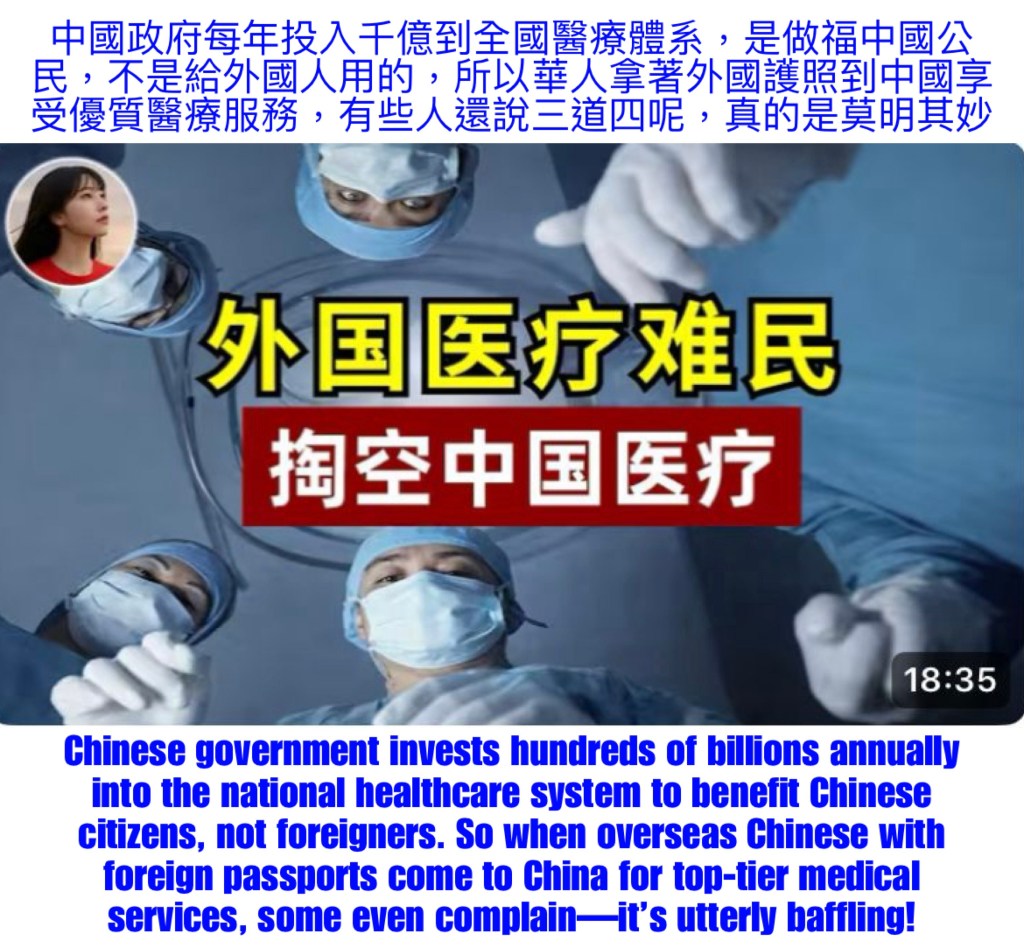
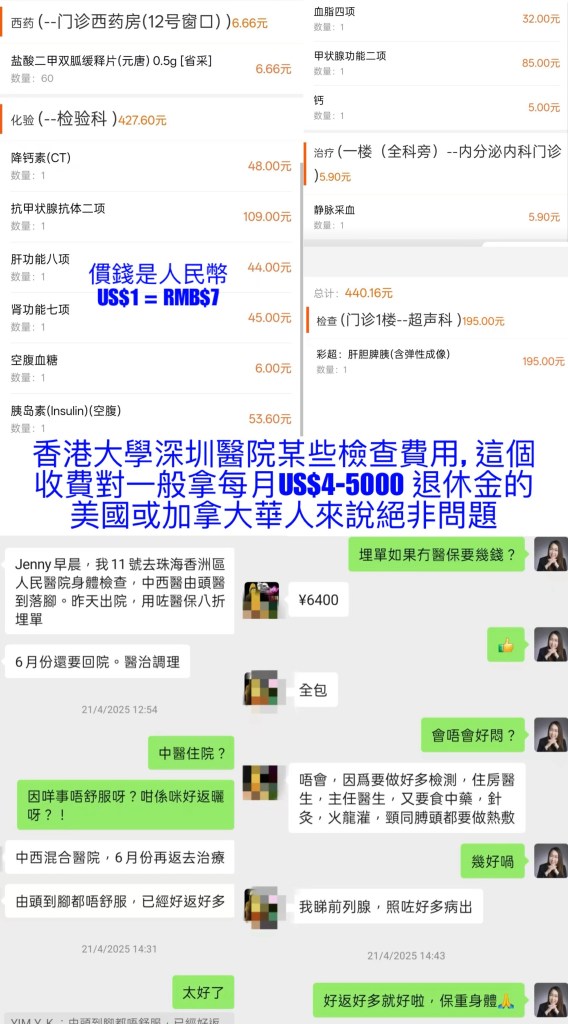
Video with English subtitles: Exclusive: 1.28 Million Foreigners Flock to China for Medical Treatment! Great Service, High Cost-Effectiveness, but the Hidden Costs Are Beyond Imagination! Even foreigners know, yet many Chinese living in the US and Canada are unaware—can you believe it? But let’s not forget, the Chinese government invests hundreds of billions annually into the national healthcare system to benefit Chinese citizens, not foreigners. So when overseas Chinese with foreign passports come to China for top-tier medical services, some even complain—it’s utterly baffling! 揭秘:128万外国人组团来中国看病!服務好,性價比高,这背后的代价远超想象! 連外國人都知道,不少住在美國和加拿大的華人卻不知道,你相信嗎? 但不要忘記中國政府每年投入千億到全國醫療體系,是做福中國公民,不是給外國人用的,所以華人拿著外國護照到中國享受優質醫療服務,有些人還說三道四呢,真的是莫明其妙!
This video delves into the global allocation of medical resources and the economic strategies at play, offering an in-depth analysis of the underlying logic behind the surge in foreign medical visits, which exceeded 1.28 million in 2025. As “China Travel” evolves into “China Medical Travel,” are the “medical foundation stocks” accumulated through the hard work of our 1.4 billion citizens now facing an invisible resource drain and economic exploitation?
The so-called “hollowing out” featured on the cover is, in essence, a struggle for limited high-quality medical resources and a cost backlash that inevitably occurs when there are no price barriers. This video will steer clear of emotional debates and instead dissect the issue from four hard-hitting perspectives:
Resource Allocation Theory: How do the hardware and human resource costs of top-tier hospitals get diluted by cross-border medical demands?
Capital Diversion Risks: Why could the excessive growth of international medical departments lead to a brain drain from the foundational public healthcare system?
Protecting Sovereign Dividends: A deep dive into how 1.4 billion taxpayers, as “original shareholders,” should safeguard the baseline of universal healthcare.
Root Solutions: A detailed discussion on the necessity of establishing a “National Medical Sovereignty Tax”—intercepting foreign capital and reallocating it to bolster grassroots medical infrastructure.
This isn’t narrow-mindedness; it’s the most rational reflection on the primary responsibility of a major nation’s healthcare system. Those who contribute should reap the benefits. Protecting our healthcare system and ensuring it serves the people more fairly and efficiently is the cornerstone of all development.
本期视频立足于全球医疗资源分配与经济学博弈视角,深度解析 2025 年涉外医疗接诊量突破 128 万人次背后的深层逻辑。当“China Travel”转化为“China Medical Travel”,咱们 14 亿国民辛勤积累的“医疗原始股”,是否正面临一场无形的资源挤兑与经济套利?
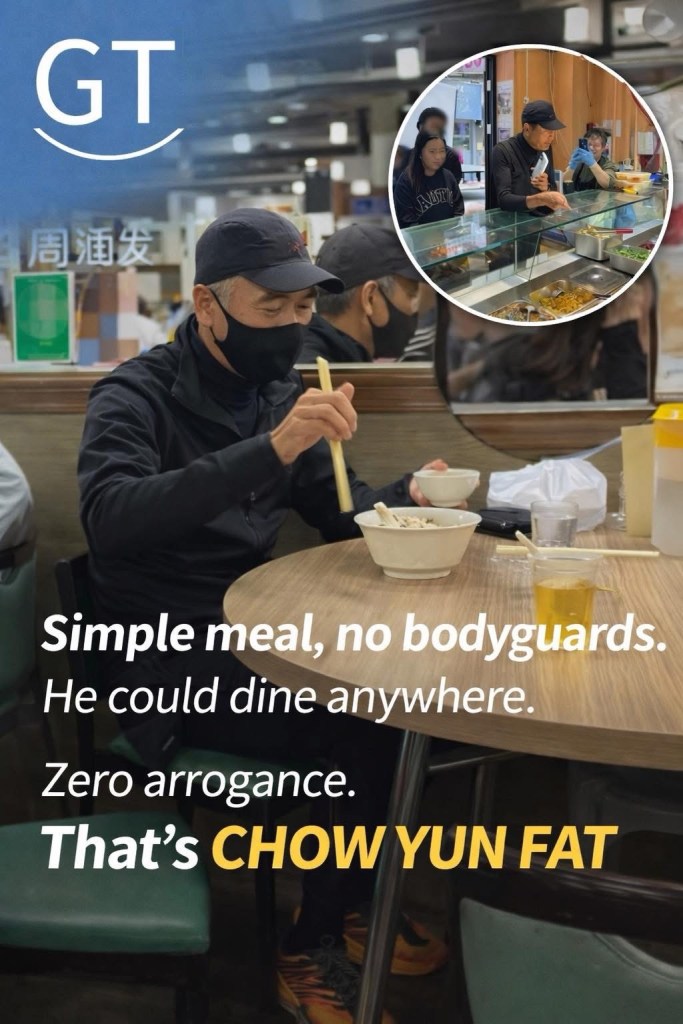
At 70 years old, Chow Yun Fat continues to show that true wealth isn’t about luxury—it’s about humility and character. 70歲的周潤發,依舊在詮釋著真正的富有與奢華無關,而是關乎謙遜與品格。
He queues for food, eats simply, and chats like an old friend.
True wealth doesn’t sit on the table. It shows in character. 🍲
The legendary actor was spotted at a local eatery, quietly queuing for food like any other diner. In the photos, Chow can be seen dressed simply in black, calmly selecting dishes at the counter before sitting down alone to enjoy a modest meal. No entourage, no fanfare—just an ordinary lunch among everyday people.
What stood out even more was his warm, down-to-earth behaviour. Witnesses shared that Chow chatted casually with other diners, joking and laughing like an old friend rather than an international movie icon. At his table, he ate slowly and contentedly, appearing completely at ease in the simple setting.
Despite being reported to be worth Over $700 million, Chow’s lifestyle remains remarkably frugal. Over the years, he has been known to take public transport, wear inexpensive clothes, and enjoy hawker-style meals—choices that reflect a life focused on simplicity rather than status.
At 70, Chow Yun Fat proves that elegance doesn’t come from wealth, but from how one lives, treats others, and stays true to oneself.
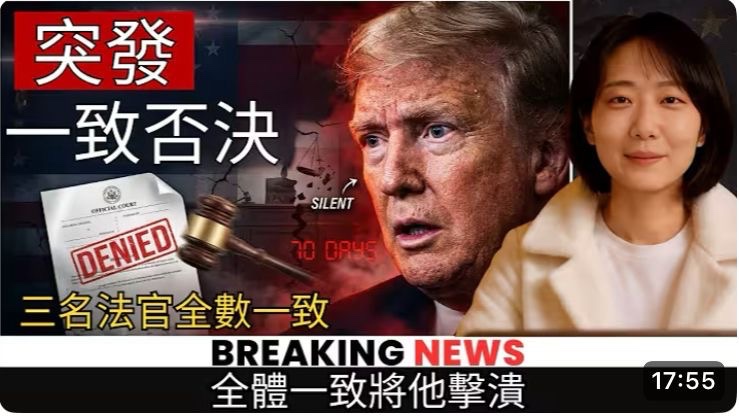
ChatGPT: Please confirm if true! Video: The U.S. Court of Appeals for the D.C. Circuit has just issued a unanimous ruling, rejecting Trump’s claim of presidential immunity. All three judges agreed. There were no dissenting opinions. No oral arguments. Within 8 hours, a complete rejection. 華盛頓特區聯邦巡迴上訴法院剛剛作出一致裁決,駁回川普提出的總統豁免權主張。三名法官,全數同意。沒有反對意見。沒有口頭辯論。在 8 小時內,全面否決。
Here’s the verified factual status of the claim you asked about:
✅ True (but with important context)
A three-judge panel of the U.S. Court of Appeals for the District of Columbia Circuit did unanimously reject former President Donald Trump’s claim that he has absolute presidential immunity from federal criminal prosecution. That ruling came in connection with his criminal case involving efforts to overturn the 2020 election results. 
Key points about that ruling: • The decision was unanimous — all three judges on the panel agreed.  • The court affirmed a lower court decision rejecting Trump’s claim of broad immunity for actions during his presidency.  • The opinion was substantial (a written opinion of many pages, e.g., ~57 pages).  • The ruling said a former president is not above the law and does not enjoy blanket immunity from prosecution for federal crimes. 
So the core of the claim you asked about — that the D.C. Circuit unanimously rejected Trump’s presidential immunity argument — is correct.
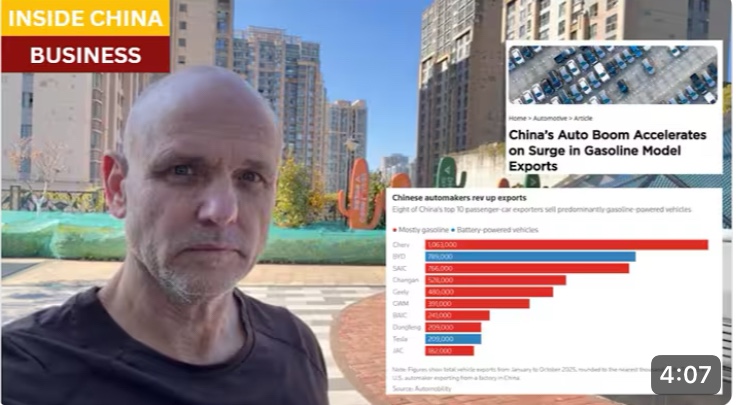
American logistic expert reports from China video: China’s traditional fuel car exports are taking over the world 影片有中文字幕: 美國物流專家解讀中國汽車出口趨勢:中國傳統燃油車正在攻佔全球市場
Chinese exports of electric vehicles are blowing past the sales from legacy carmakers, and even from Tesla.
But China is rapidly taking over markets of fuel-burning cars. In 2024, China exported an estimated 6.5 million gasoline-powered models. Insiders forecast growth of an additional 4 million exports by 2030.
The success of Chinese brands is especially striking in Mexico, where they already enjoy a 14% market share, while Chevrolet sales have dropped 17% in just two years.
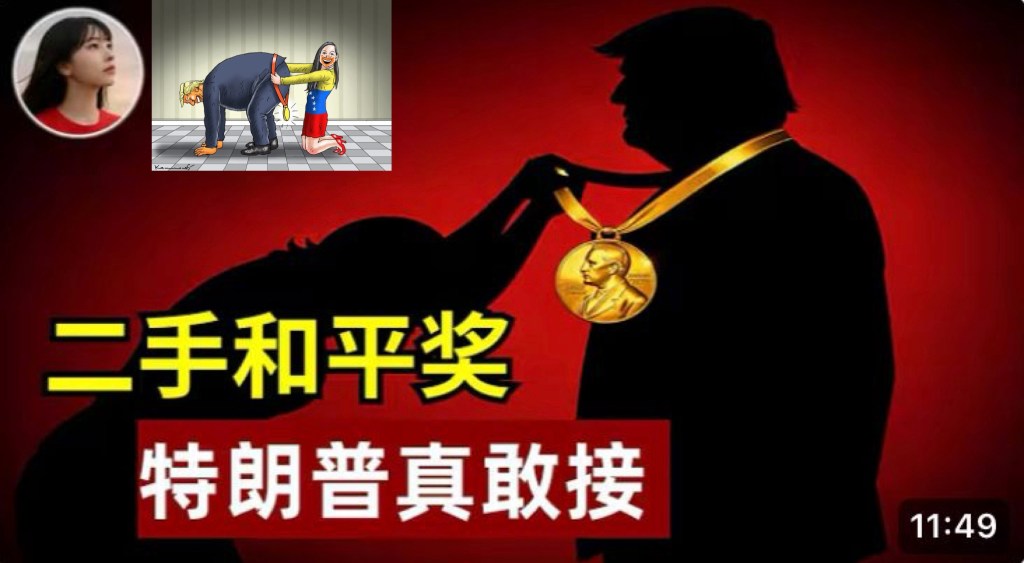
Video with English subtitles: Nobel Prize Publicly Humiliated? Trump Accepts ‘Hand-Me-Down Nobel,’ Leaving the World Stunned 影片有英文字幕: 诺贝尔奖被当场羞辱?特朗普收下‘二手诺奖’,全世界看傻了
In this episode, we begin with a highly controversial international political incident to discuss the symbolic meaning of the “Nobel Peace Prize” in contemporary global politics, as well as the complex relationship between personal power, political transactions, and the so-called “honor system.”
The content of this video is based on publicly available information, media reports, and historical analogies. Through commentary and analysis, it seeks to examine the political logic and real-world dynamics behind the actions of relevant individuals, rather than making factual accusations against any person or institution.
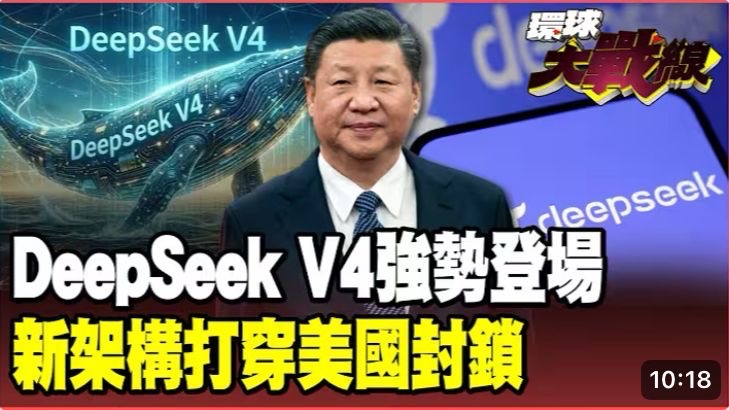
Taiwan Global Frontline Video with English subtitles: American Companies Excel at Burning Cash, Chinese Excel at Using Their Minds! Microsoft CEO said US already lost to China on AI 影片有英文字幕: 台灣環球大戰線視訊: 美國企業精於燒錢,中國人精於用腦! 微軟執行長表示,美國在人工智慧領域已經輸給了中國.
DeepSeek Sweeps the Global Market! Microsoft Tells the Harsh Truth: “The US Has Lost.” Secret Weapon V4 “Engram” Exposed, Partnering with Huawei to Seize the AI World!
Host: Ye Simin Guests: · Zhang Tingyan, Chair Professor at Tsinghua University · Yang Yongming, Former Deputy Secretary-General of the National Security Council · Li Zhengjie, Retired Army Major General

 Business Blog