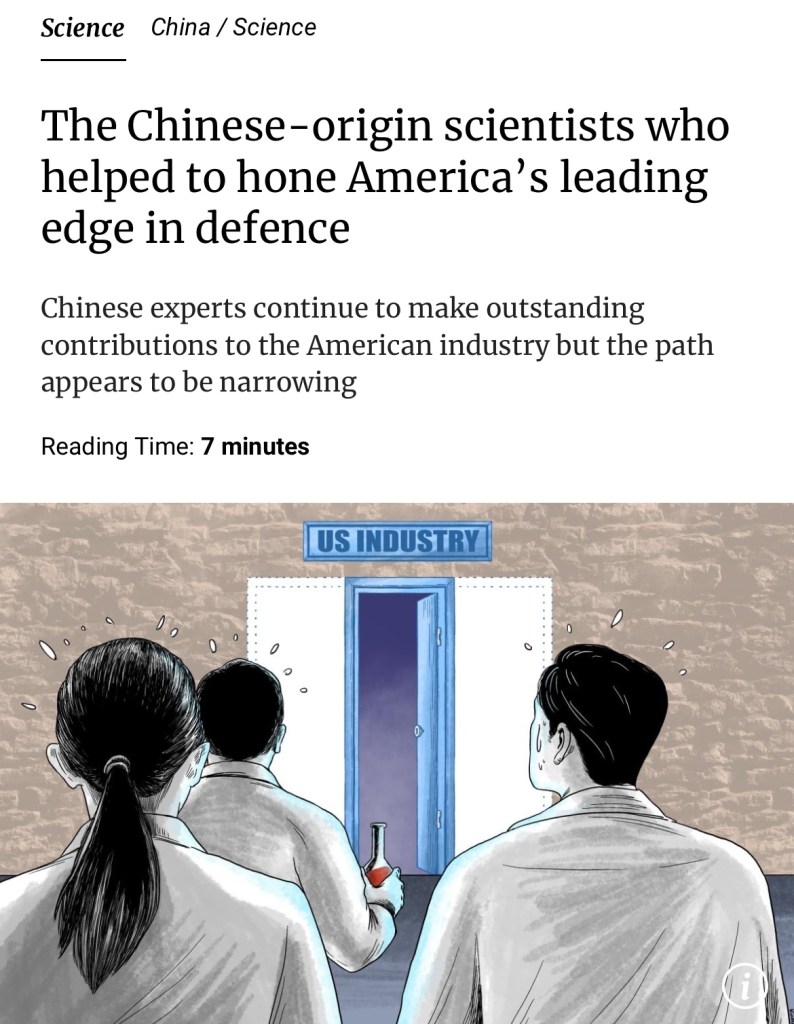
Time after time proofs Chinese scientists are so much more smarter. All US could do is the never ending fake news against and demonizing Chinese and China. The table now has turned. The smartest STEM students and scientists attend graduate schools in China ranked higher than CalTech, Stanford, MIT etc. Those that could not get into China’s best universities come to US. At the same time the best Chinese scientists in US are returning to China, more than 30,000 so far.
Chinese finally realizing that their contribution to US science and technology especially with the military industrial comple, US is using their brain power to design weapons of mass destruction aimed at their motherland putting their families, alumni, friends and former colleagues in harms way. They could not live with their conscience even though the paycheck used to be good. If the above do not wake them up. Today, based on purchasing power parity, China pays more than US. 在美國的中國科學家終於意識到,他們對美國科學技術特別是軍事工業綜合體的貢獻,美國正在利用他們的智力設計針對他們祖國的大規模殺傷性武器,並將他們的家人、校友、朋友和前同事置於危險之中。儘管美國薪水曾經很高,但他們卻無法良心安理得。如果以上都無法喚醒他們。今天,以購買力平價計算,中國的薪水比美國高.
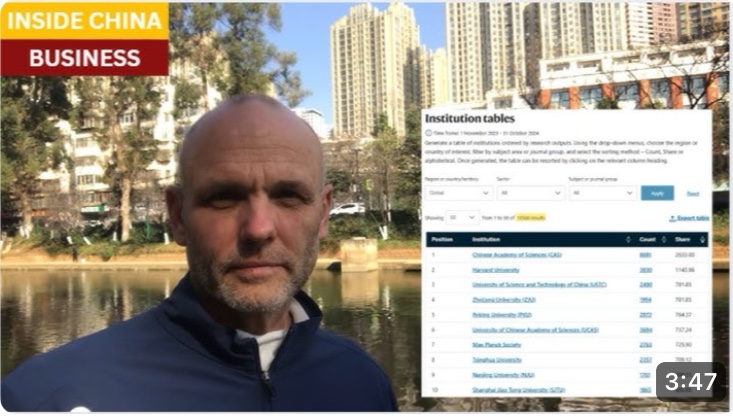
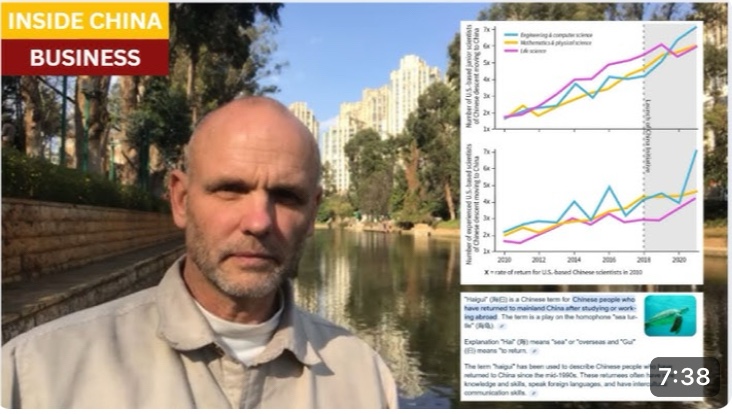
American logistics expert based in and report from China video: China’s universities are ahead of CalTech, Stanford, MIT and everybody. And so are their scientists. (why pay 30x more tuition fee to come to US when the best universities are in China) 美國駐華物流專家報告影片:中國的大學領先加州理工學院、史丹佛大學、麻省理工學院等包括美國和歐洲所有大學。他們的科學家也是如此 (既然最好的大學都在中國,為什麼還要付 30 倍的學費來美國呢).
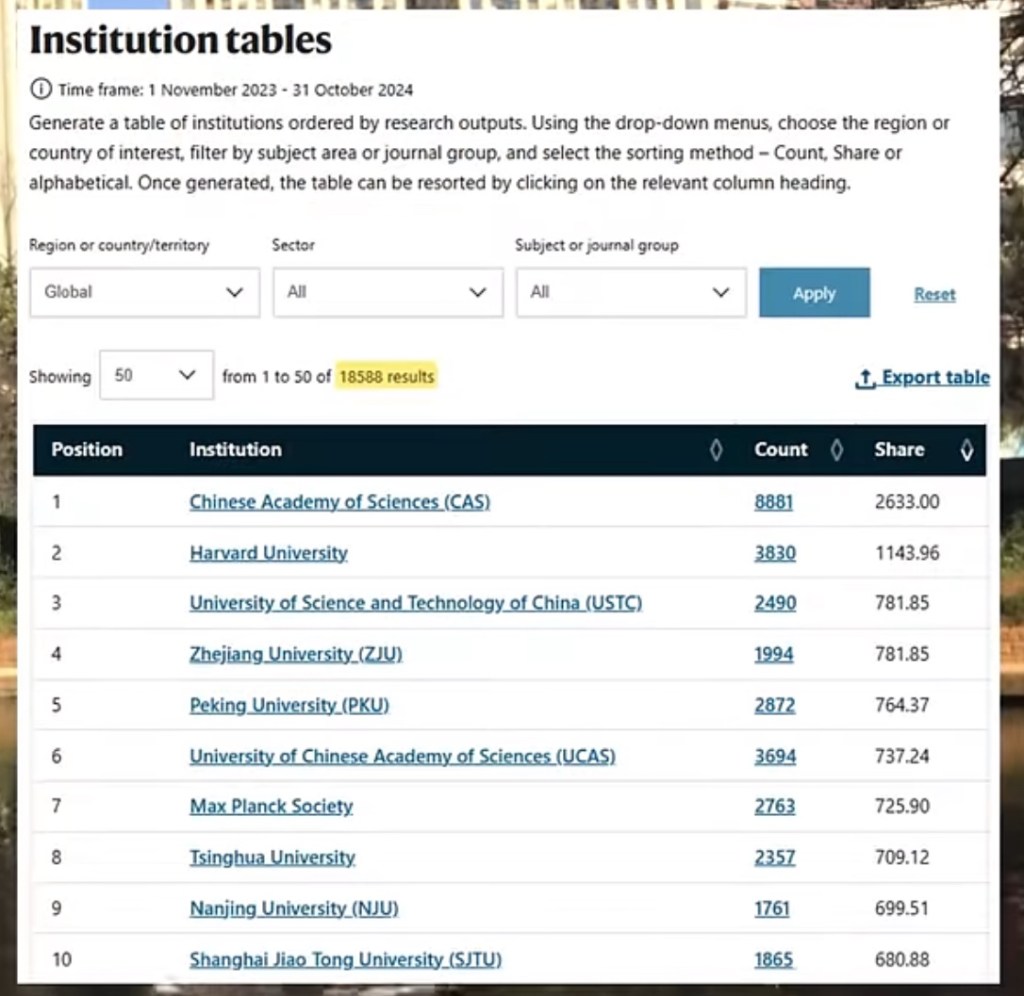
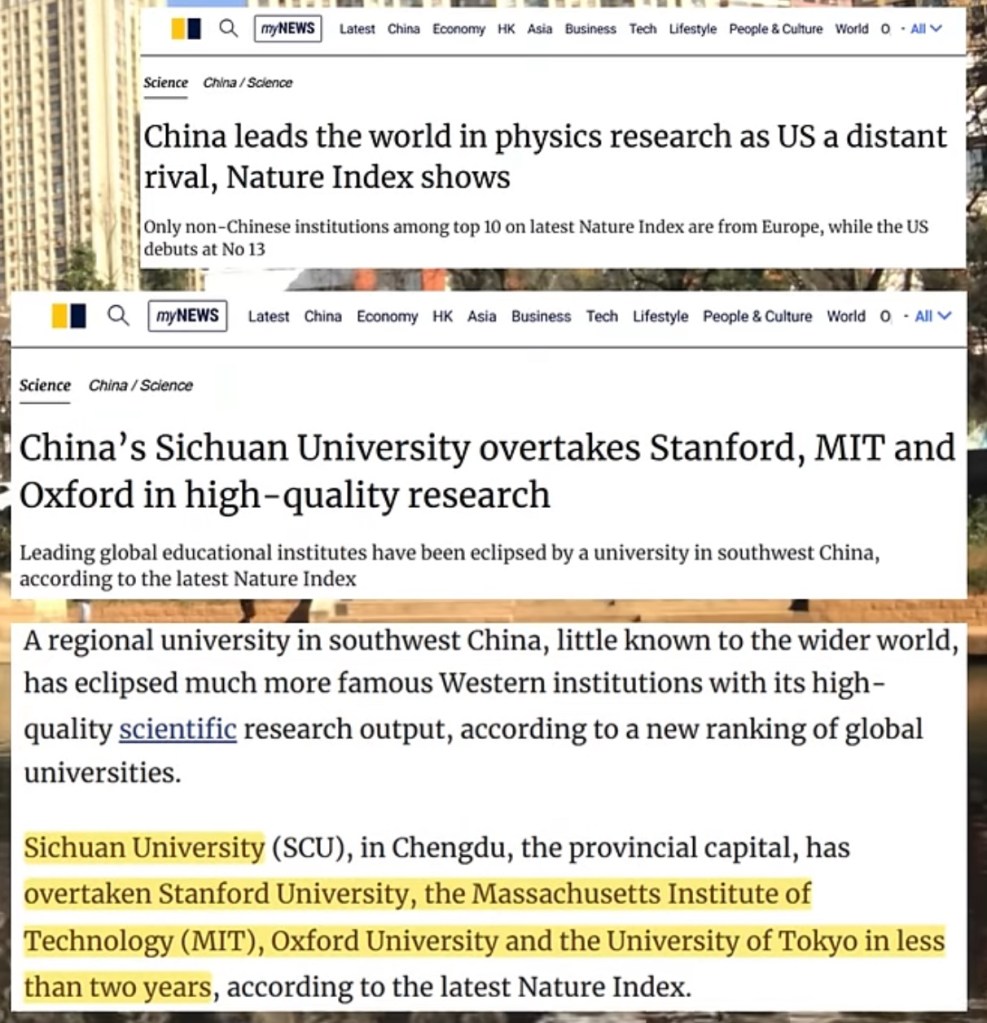
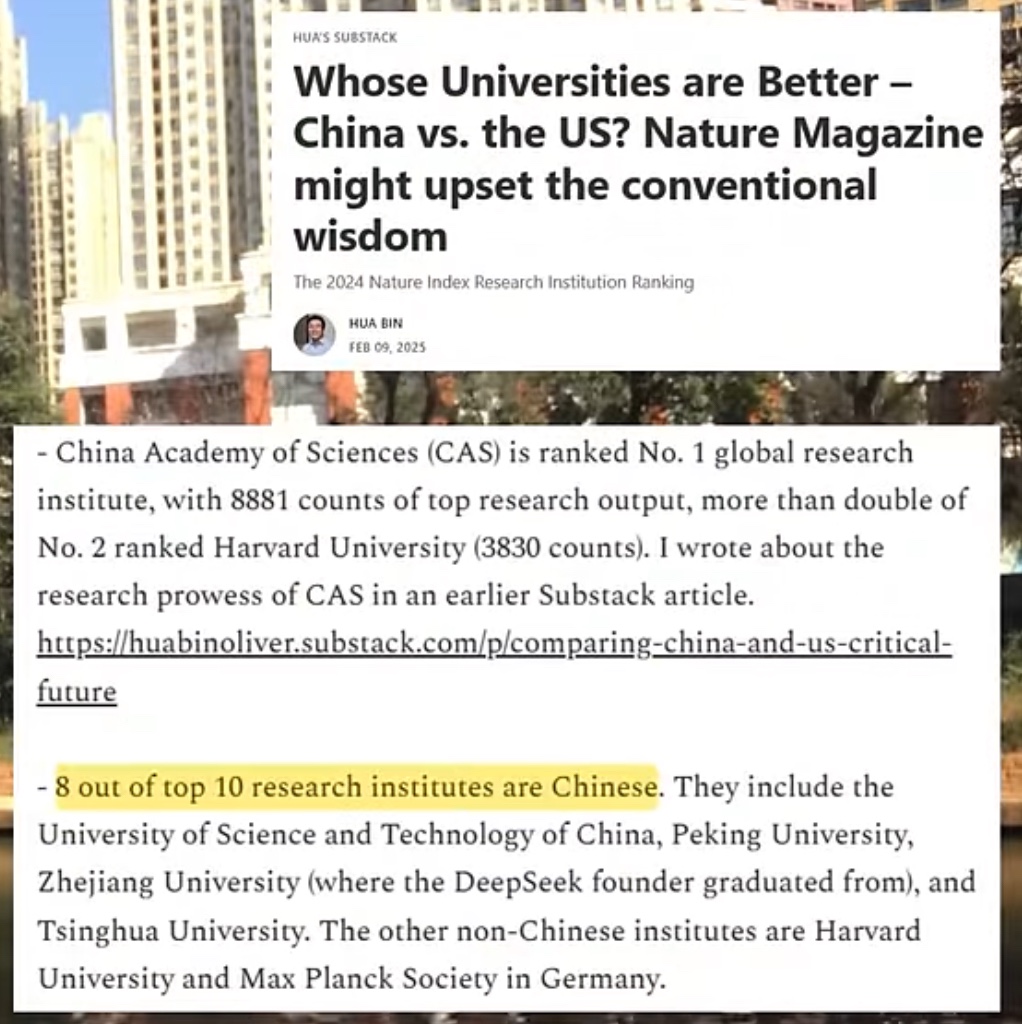
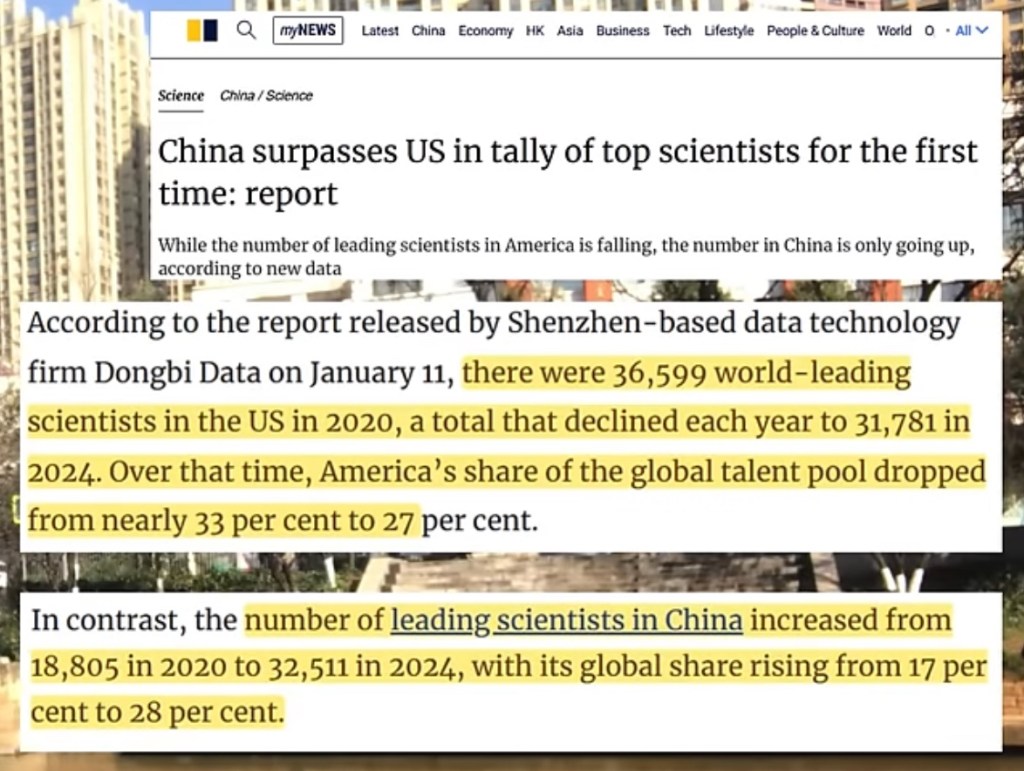
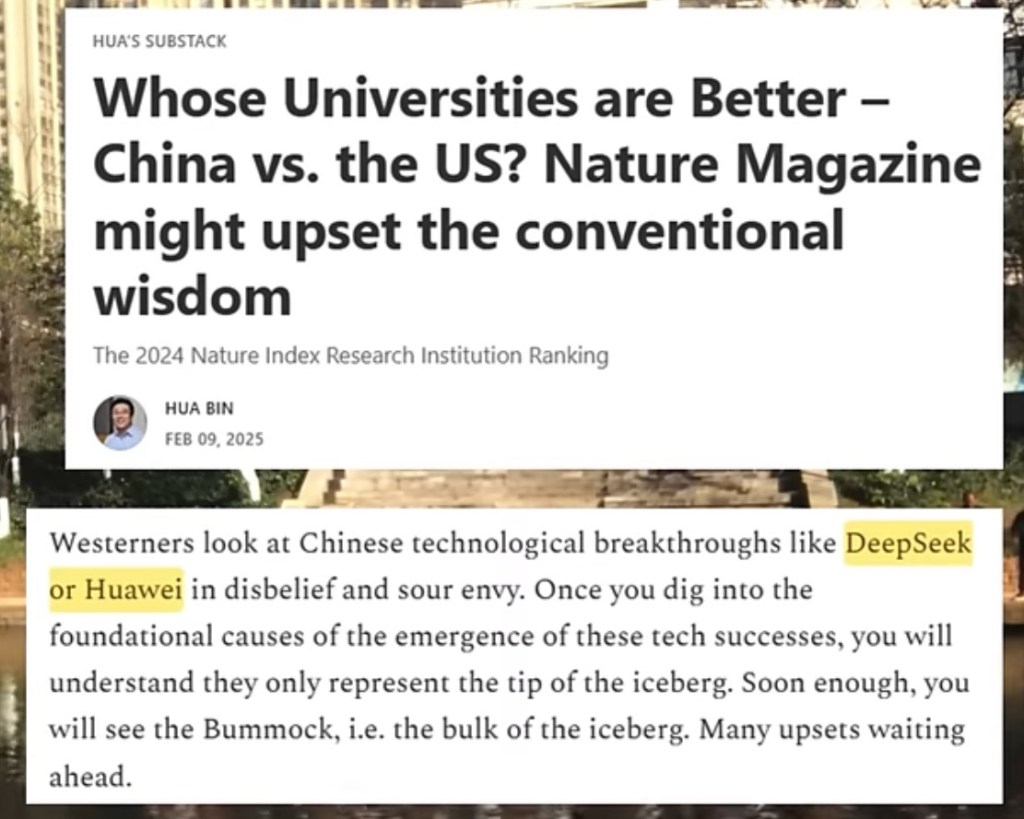
Comprehensive surveys of scientific output across over 18,000 universities and colleges around the world now show Chinese institutions at the top of the rankings.
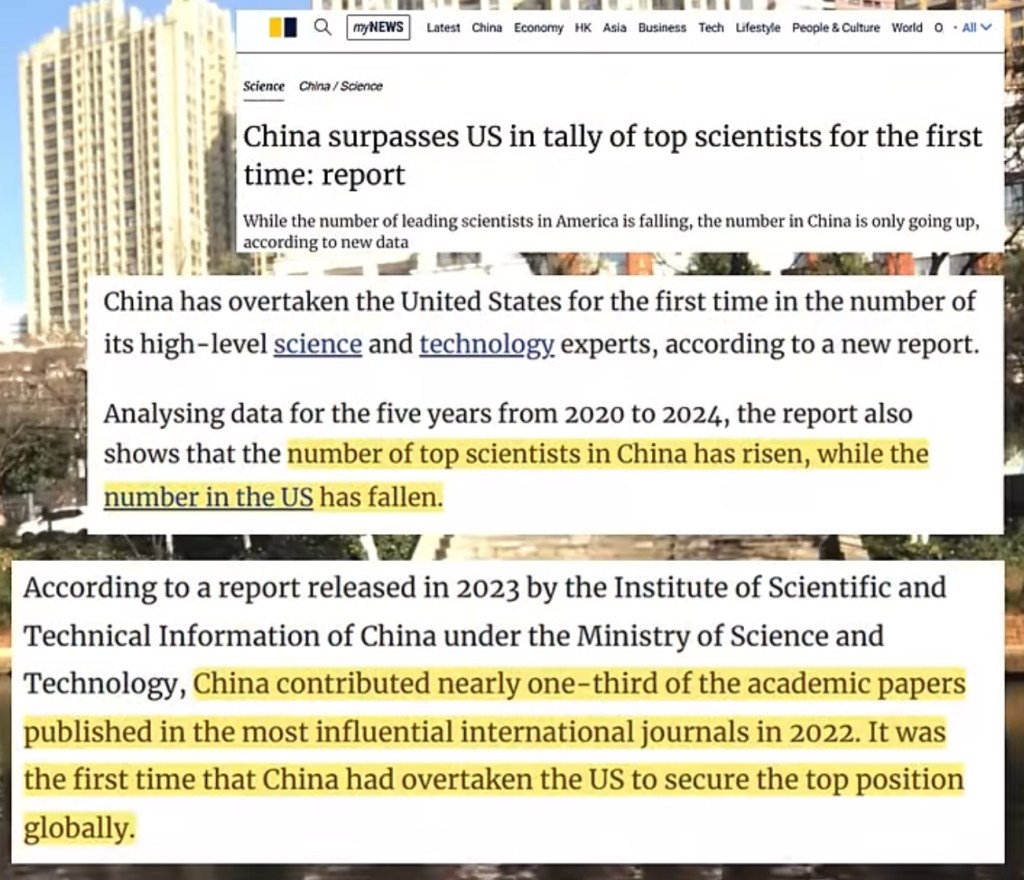
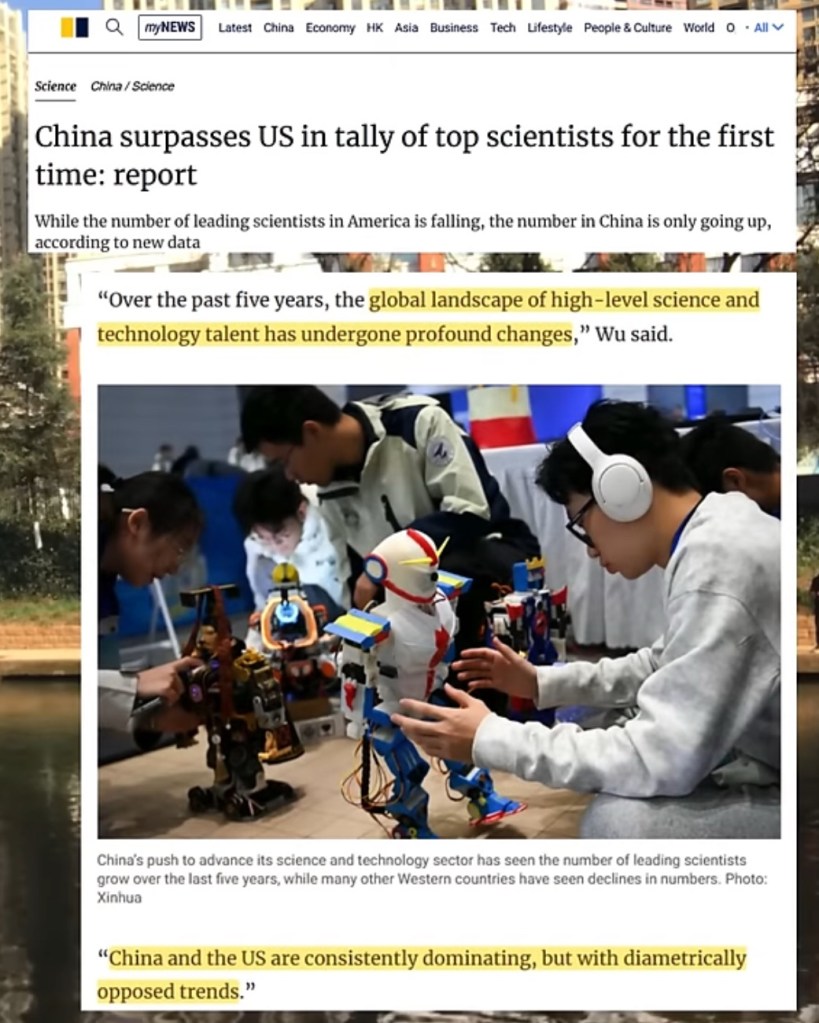
Researchers at the Nature Index examined tens of thousands of top research papers across engineering and hard-science disciplines. They also found that the number of top scientists in the United States peaked in 2020, and has been in decline since.
Last year, China passed the United States for the first time in the number of top scientists. The researchers conclude that while the US and China still dominate the world rankings, the trends are in opposite directions.
What is the Difference Between Deepseek Founders and Silicon Valley Businessmen?Deepseek創辦人和矽谷商人有什麼不同?
At the start of 2025, Wang Xingxing, founder of Unitree Technology, and Liang Wenfeng, founder of DeepSeek, shocked the global tech community. Both are driven by strong technological idealism and seem “not interested in money.” They embody the philosophy and practices of China’s new generation of entrepreneurs.February 21, 2025
The Underlying Logical Revolution from “Resource Arbitrage” to “Technological Breakthrough”
At the 2024 DeepSeek Developer Conference, Liang Wenfeng said, “My father was a mathematics teacher in a small town. He never asked about my test rankings, only ‘What problems did you solve today?’ This nurturing of problem-solving instincts is what gave me the confidence to venture into areas of technology unexplored by others.”
In the exhibition hall at DeepSeek’s headquarters in Hangzhou, there’s a display of a 90s “Feiyue” brand radio, an experiment Liang Wenfeng dismantled and reassembled 37 times in middle school. A nearby label reads: All great innovations begin with an “unreasonable” dismantling of the status quo.
When interacting with the self-media outlet “Dark Currents,” Liang Wenfeng shared: “In the past thirty-plus years of the IT wave, we have hardly been part of true technological innovations. We’ve become accustomed to Moore’s Law descending like a gift, with better hardware and software emerging every 18 months. In reality, these were created tirelessly over generations by the technology communities predominantly led by the West. Not having participated, we overlooked its existence. Innovation, first and foremost, is a matter of belief. Why is Silicon Valley so innovative? First, they dare.” While other companies focusing on large models are busy building moats, Liang Wenfeng chose to open-source core technologies. This “technological evangelist” approach not only prompted major companies like Alibaba and ByteDance to convene overnight strategy meetings but also stirred significant international attention, with OpenAI’s founder Sam Altman posting three tweets in rare quick succession: DeepSeek demonstrates that innovation doesn’t always require astronomical investments.
We aspire to create AI technologies that genuinely address major societal issues and enhance the overall well-being of humanity.
A core member of DeepSeek remarked, “Making money is no longer our primary goal. Exploring the unknown and advancing technological progress are our main drivers.” To realize this grand vision, Liang Wenfeng has once again showcased his “technological idealism.” He insists that DeepSeek’s technological path be “open-source” and “universally beneficial,” making research outcomes freely available to society and lowering the barriers to AI technology usage, allowing more people to benefit from technological advancements.
From the unique client agreement during the Huansquare era — charging fees upon redemption — to DeepSeek’s open-source declaration of making AI accessible to all, Liang Wenfeng consistently proves that technological innovation can coexist with ethical business practices.
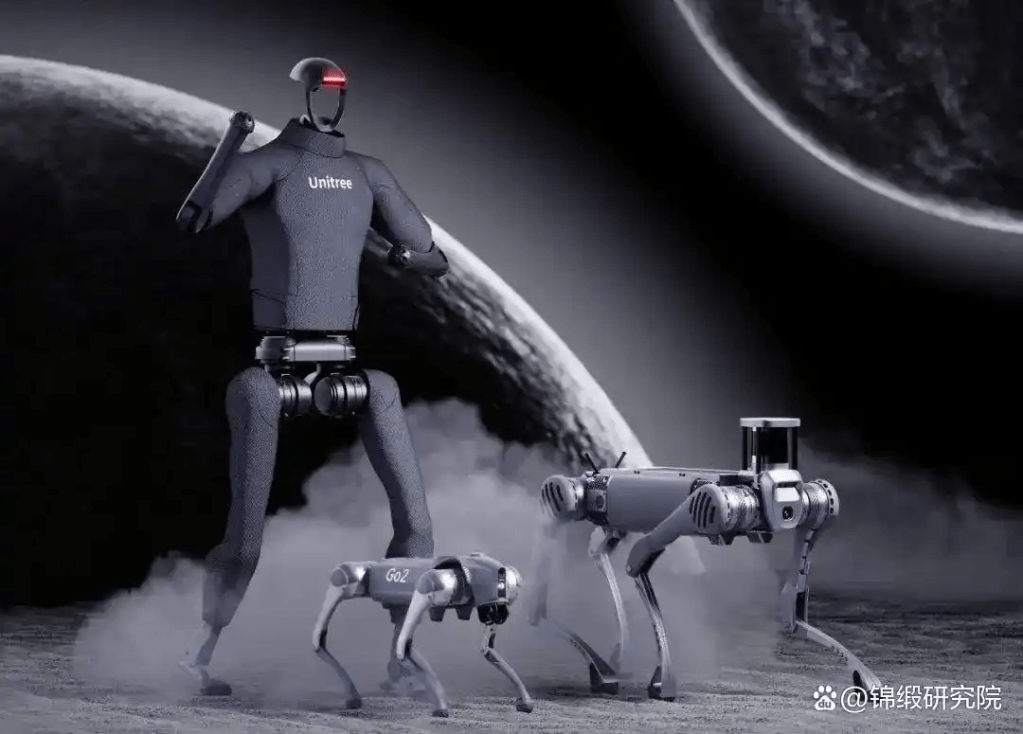
This is Liang Wenfeng – a person who leads with courage and someone who drives himself and his team with ideals to accomplish the impossible. Born in 1990, Wang Xingxing would say he has over 20 years of mechanical design experience, attributing it to his focused dedication and hands-on skills developed from a young age, which affords him the confidence to make such a claim. In elementary school, he watched domestic-imported documentaries on advanced fields such as aerospace and biochemistry and used his pocket money to build electric toys. He claims that was the start of his interest in robotics, laying the foundation for developing low-cost, high-performance robots today. During his studies between 2013 to 2015, despite limited resources and budget, Wang Xingxing independently designed the hardware and control algorithms, pairing industrial motors to create the robot dog XDog, earning second place in the Shanghai Robot Design Competition. “It’s often a burst of inspiration,” he said. “If you focus enough, solutions will naturally come to you. When you spend 24 hours continuously thinking about a problem, I don’t believe it can’t be solved.” Hailing from a small city, Wang Xingxing describes himself as self-taught, without teachers to guide him — merely relying on a few books at best. He considered himself the type of child suppressed by the educational system, lacking a sense of achievement in academics. This is Wang Xingxing – a “underachiever” with strong hands-on abilities, a perfectionist engineer, and an individual with steadfast ideals and beliefs. In the growth experiences of Liang Wenfeng and Wang Xingxing, we observe three commonalities: First, both embody the culture of engineering innovation and have received engineering education. Liang Wenfeng graduated from Zhejiang University’s School of Information and Electronic Engineering, focusing on machine vision during his master’s degree, while Wang Xingxing studied Mechanical and Electronic Engineering at Zhejiang Sci-Tech University. During graduate studies, he developed high-dynamic mechanical legs, volunteering to defer his graduation in favor of perfecting his robot dog project. Second, in their entrepreneurial philosophy, both emphasize long-termism and technological accumulation. Both consider technology their core competitive strength, resisting short-term profit temptations, and committing to long-term R&D investment. For example, Liang Wenfeng’s DeepSeek remains steadfast in its pursuit of general AI, avoiding quick monetization routes, while Wang Xingxing early on adhered to low-cost technology paths. They are patient, valuing technology accumulation. Third, regarding industry impact, both have advanced their respective fields in terms of technological progress and commercialization. Liang Wenfeng’s open-source strategy propels AI development, while Wang Xingxing’s widespread robot applications offer affordability. Liang Wenfeng and Wang Xingxing, within their domains, continue to lead their teams in breaking through Achilles’ heel of China’s economy — the “chokehold” on core technologies. They represent the new generation of Chinese technology entrepreneurs (a scientific class among the fifth-generation entrepreneurs advocated by Notebook Legion) with a deep pursuit of technology, a pragmatic approach to commercialization, and a mission to reshape industry landscapes through innovation. Methodology from “Experience Following” to “First Principles Innovation” In 2015, Huansquare Quantitative was officially established. Liang Wenfeng began assembling teams and building platforms, transitioning from an individual effort model to team collaboration and platform operation. He recruited Ph.D. and master’s degree holders from fields like computer science, mathematics, and physics. Liang Wenfeng believes that the core competitiveness of quantitative investment lies in top-notch interdisciplinary talent. “We don’t prioritize financial backgrounds, or even if you’ve ever traded stocks,” a recruiter at Huansquare stated, “We value your fundamental science abilities, your programming skills, and your passion and desire for research.” To attract top talents, Liang Wenfeng was willing to invest heavily in R&D. In October 2016, Huansquare launched its first AI model, leveraging AI to achieve rapid growth; In 2019, they initiated independent R&D for the “Firefly One” AI cluster; In 2020, it was officially commissioned; Subsequently, they commenced the construction of “Firefly Two” AI Cluster, with cumulative investments reaching 1 billion RMB, equipped with 10,000 Nvidia A100 GPUs. While the outside world assumed Liang Wenfeng would continue to lead Huansquare in expanding its quantitative investment territories, this “restless” leader once again made an unexpected decision — All in on AI. In a candid internal exchange, Liang Wenfeng admitted, “The financial market is merely a field for local optimization, whereas AI’s potential is far greater.” In May 2023, Liang Wenfeng established Hangzhou DeepSeek AI Foundational Technology Research Co., Ltd. (DeepSeek). The initial phase of R&D was independently funded with 3 billion RMB by Huansquare, with Firefly Two providing computational support. Liang Wenfeng saw both the massive potential for AI to enhance societal efficiency and the significant gap between China and the world’s leading levels in AI foundational research. We often say China’s AI lags one to two years behind the US, but the real gap is between innovation and imitation. Without changing this, China can only ever be a follower. The objectives of DeepSeek are grander and purer. Its focus is no longer solely on the profitability of the financial market; instead, it sets its sights on the starry seas of general AI. Liang Wenfeng believes the essence of human intelligence is language, that human thought is a language process. What you think you are pondering might actually be you weaving language in your mind. This implies that a language-based large model could potentially give birth to human-like AI (AGI). This closely resembles the “First Principle” often touted by Elon Musk. In 2016, when Wang Xingxing started his entrepreneurial journey, the robotics industry was extremely niche, quite the opposite of today’s climate. At that time, the awareness and understanding of robotics were limited, and even now, many people do not fully grasp it. Despite the numerous challenges faced in the earliest stages, Wang Xingxing did not abandon this path. He once said, “The fundamental logic of entrepreneurship is that when you enter any emerging industry or frontier field, you will inevitably be doubted at first. Many of the pioneering directions you believe are worth pursuing are not usually recognized by most people in society. You need to have confidence in your technical capabilities. After all, there are billions of people worldwide. Even if the niche is small, as long as you push the boundaries in this direction, it is relatively easy for a company to survive—it’s not as exaggerated as people think. If a direction is not doubted, it often means that you have missed the opportunity. When everyone sees the opportunity, it is no longer an opportunity. If the direction is already quite popular and you decide to enter it, you need to clearly understand your competitiveness, team, background, technical and product capabilities, and whether you can break through in these areas because the risk is relatively high. Wang Xingxing believes, “Entrepreneurship should recognize the importance of timing. Humanoid robots are a direction we must pursue, but not too early or too late. When the trend arrives, those who enter too early won’t last until the wave comes, and those who come too late will consistently fall behind. I found that in many industries, when the market is still a blue ocean and competition hasn’t started yet, getting ahead is crucial. By leading others by one step, there’s a greater hope of staying ahead by many steps in the future.” The first humanoid robot by Unitree Robotics was actually a robot dog standing up, thus becoming a “humanoid robot.” Doesn’t it sound incredible, even a bit like a “makeshift setup”? In fact, this is precisely the application of Wang Xingxing’s “first principles,” as he says: “Isn’t a human also evolved from a quadrupedal mammal?” Meanwhile, as a global leader in the quadruped robot field, the Unitree Robotics team has over 60% of its members holding master’s and doctorate degrees. Their R&D investment intensity in 2024 will reach 28%, far exceeding the industry average. Such intensive technological investments enable them to break through in a field monopolized by giants like Boston Dynamics. In Liang Wenfeng and Wang Xingxing, we see common traits again: First, they both practice the “first principles” approach. Liang Wenfeng believes human thought is a process of language, while Wang Xingxing uses the evolution from mammals to humans to think about how a robot dog can become a humanoid robot. They do not overly rely on past experiences but directly question the essence of things, using fundamental thinking to find solutions. Second, in terms of technical routes, both choose to independently develop core technologies. Liang Wenfeng’s DeepSeek develops cost-effective and efficient large models, while Wang Xingxing independently develops crucial components like servo motors to reduce cost and enhance competitiveness. They refuse to rely on external technical solutions, establishing technical barriers through underlying innovation and mastering critical nodes of the industry chain. Thus, while some traditional entrepreneurs are still struggling in the red ocean, contemplating how to make more money with existing resources, and even believing in “diversified expansion” and leveraging for “miracles,” Liang Wenfeng and Wang Xingxing have already innovated using “first principles,” carving out a new sea and inadvertently changing the tidal patterns. Decoding DeepSeek and Unitree Robotics Innovation Practice Engines In terms of practical implementation, DeepSeek’s talent philosophy and Unitree Robotics’ “extreme cost control” offer us great inspiration. Liang Wenfeng does not pursue scale, but rather talent density, building a small and elite team. DeepSeek deliberately keeps the team small, using an elite strategy to increase talent density. In its R&D team, 80% of the members have won top awards in academic competitions. This high-density intellectual resource forms a unique “innovation field” — any member who proposes a technical idea can quickly receive cross-disciplinary professional feedback. DeepSeek tends to recruit recent graduates and doctoral students, focusing on candidates’ pure passion for technology rather than their past experience and resumes. As Liang Wenfeng said, “Experience-oriented approaches are suitable for short-term goals, but innovation requires a spirit of exploration that doesn’t know its limits.” When forming the core team in 2023, they even hired several doctoral students who had not yet graduated. These young people were driven by their obsession with AI and spontaneously engaged in high-intensity research and development. The team requires members to strongly identify with “technological idealism,” being willing to commit to long-term, high-difficulty technical research and development without being swayed by short-term incentives, and to endure uncertainty for long-term technological breakthroughs. For example, one engineer who gave up a high salary in Silicon Valley to join said, “Here, I can focus on solving the world’s hardest AI problems. This sense of achievement far exceeds short-term gains.” This value-driven screening mechanism ensures the team’s consistency in goals without KPI constraints. DeepSeek’s evaluation standards are different from those of most companies. DeepSeek does not have KPIs or defined tasks. This is related to the nature of DeepSeek’s work and the type of talent it seeks. AI research and development involves high uncertainty, and measuring employees’ work outcomes through KPIs may lead to a misguided approach where employees, in pursuit of KPI targets, opt for conservative and predictable paths. DeepSeek follows a “three-no policy”: no fixed teams, no reporting relationships, and no annual plans. Strategy is iterated weekly, making the organization more flexible and capable of quickly responding to market changes. Employees can form flexible teams based on project needs, and project progress is shared with all relevant parties rather than a single leader. Such autonomy greatly enhances team communication efficiency, allowing every member to freely express their ideas in an open environment. It enables team members to explore new projects without pressure and gives every member the chance to contribute independent ideas. Through this iterative process, team collaboration becomes increasingly harmonious, advancing together on the path of innovation. DeepSeek’s model proves that when a company chooses to abandon KPIs, it must first establish a talent firewall. Only by gathering top talent with high intrinsic motivation and strong collaboration can “self-organizing innovation without assessment” be achieved. A fifth-generation enterprise mentor from the NoteXia community (PPE25 level) commented: “DeepSeek was developed by a group of young people rather than older individuals, by a startup rather than a giant enterprise. This shows that the more freedom there is, the easier it is to innovate. Therefore, innovation teams should be small, not large. The smaller the team, the easier it is to achieve freedom, whereas larger teams tend to have more mutual constraints.” In terms of product cost control, Unitree Robotics’ approach can be described as “extreme.” During the robot design phase, Wang Xingxing and his team began preparing for cost reduction, meticulously considering every component, thinking about how to simplify, use higher cost-performance materials, and so on. Industrial integration is also an important means for Unitree to reduce costs. By conducting self-research in areas like wireless communication, visual modules, and motor drivers, and building its own factories, it effectively lowers supply chain costs and continuously optimizes product structure. What is more puzzling than how to reduce costs to lower the price is why Unitree Robotics insists on keeping the product price so low. On one hand, Wang Xingxing believes that if customers are unwilling to buy, the product cannot be considered successful, and price is a very sensitive factor. During the 2021 CCTV Spring Festival Gala, Unitree Robotics’ quadruped robot A1 appeared on stage as a “little calf” and quickly caught public attention, attracting many inquiries. However, upon learning that the robot was priced at nearly 100,000 yuan, potential buyers hesitated. For consumers, the price was still too high. Wang Xingxing helplessly watched potential customers walk away, which further solidified his determination to develop a consumer-grade quadruped robot and enter the C-end market. Later, within just four months, Unitree launched the consumer-grade quadruped robot Go1, priced at only 16,000 yuan, becoming the first company to publicly retail quadruped robots directly to consumers. It is clear that both DeepSeek and Unitree Robotics share some common philosophies in terms of talent management and extreme cost control: Emphasis on multi-disciplinary technical talents. DeepSeek focuses on recruiting talent with both algorithm capabilities and engineering experience, especially in the AI large model field, where the team needs to push the theoretical boundaries while rapidly implementing technology. Unitree Robotics, as a robotics company, requires talent from multiple fields like mechanics, electronics, and algorithms. Engineers must possess comprehensive skills in both hardware design and software development to tackle the complexity of robot systems. Both companies also use flat management structures, emphasize autonomy, and encourage technical teams to participate directly in decision-making. DeepSeek uses agile development models to allow R&D personnel to lead project iterations, while Unitree Robotics drives product innovation through small-team, rapid trial-and-error mechanisms. Extreme cost control through shared strategies, driven by technology. DeepSeek lowers the cost of model training by developing its own AI frameworks and optimizing computational resource utilization (such as model compression and distributed training), rather than solely relying on hardware. DeepSeek’s model training cost is only 1/10 of that of top models in the same category, reducing the barriers to AI application through efficient technological paths. Unitree Robotics achieves independent development of core robot components (motors, sensors), replacing expensive imported parts. For example, its self-developed high-performance servo motor costs only 1/3 of international brands. Unitree Robotics’ Go2 quadruped robot is priced below 10,000 yuan, and the production version of its humanoid robot G1 is priced at 99,000 yuan, much lower than similar international products, driving robots from the lab to the market. i) Both companies have deeply integrated their supply chains and use a “vertical integration” model. DeepSeek collaborates with domestic cloud service providers to build customized computing clusters, while Unitree Robotics invests in upstream component manufacturers (such as precision gear processing) to control the supply chain and reduce intermediary costs. ii) Both companies adopt agile iteration to reduce waste and advocate for a “small steps, fast pace” development logic. DeepSeek uses A/B testing to quickly validate model performance, avoiding ineffective resource consumption; Unitree Robotics uses modular design (such as universal joint modules) to reduce the development cost of multiple product lines. iii) Both also leverage the power of open-source ecosystems. DeepSeek partially opens model interfaces to attract developer ecosystems, indirectly lowering application-level development costs; Unitree Robotics releases open-source robot motion control algorithms to attract community contributions, reducing internal R&D investment. Liang Wenfeng and Wang Xingxing’s common approach is to reshape the value chain through technological innovation: By breaking through technological bottlenecks with top talent, and then using technological advantages to reverse compress costs, they create a “talent → technology → cost” positive cycle. Conclusion: The Old World Is Collapsing, the New Era Is Coming at Light Speed The stories of Liang Wenfeng and Wang Xingxing reveal a harsh but inspiring truth: As AI rewrites work paradigms and humanoid robots reshape production, experience is rapidly devaluing, while pure technological belief and fundamental thinking are rapidly appreciating. This signals the rise of the “engineer entrepreneurship” model, and our new keyword has shifted to “technological breakthrough.” In 2024, the number of manufacturing companies in China’s top 500 private enterprises rose to 66.4%, with R&D spending exceeding 1.05 trillion yuan, further increasing the share of advanced manufacturing. From DeepSeek rewriting AI large model training rules to Unitree Robotics’ robots surpassing Boston Dynamics’ Atlas robot, our private enterprises are becoming the main force in hard-tech breakthroughs. This also aligns with NoteXia’s prediction that many “scientific entrepreneurs” and “industrial entrepreneurs” will emerge among the “fifth-generation entrepreneurs.” As Liang Wenfeng wrote on his social media: “The old world is collapsing, and the new era is arriving at light speed.” At this moment, what we may need most is not knowledge, but “insight.” We are living in an era of great transformation, where we must constantly face upheaval, abandon past models, habits, and experiences, and embrace a new world. The more transformation and upheaval we face, the more we are confronted with dense decisions and choices.
It surpassed every Disney & Pixar blockbuster, becoming the highest-grossing animated movie ever ($1.7B). And it’s about to shake up the global film industry like never before.
Here’s why Hollywood is terrified of Ne Zha 2: Ne Zha 2 is based on a 16th century Chinese mythology novel.
Budget: $80 million
Released during Chinese New Year
1st film to exceed $1 billion in a single market
Highest-grossing non-hollywood film ever made.
And it did this before it premiered outside of China… Ne Zha 2 has already made it into the Top 10 highest-grossing film of all time.
It’s the only non-Hollywood film in that list and surpassed Lion King, Jurrassic Park, and Avengers. It’s expected to pass $2B, standing alongside Star Wars, Titanic, & Avatar.
That’s not enough… On Feb 18, 2025, Ne Zha2 became the highest-grossing animated film of all-time:
1) Ne Zha 2 : $1.7B 2) Inside Out 2 : $1.7B 3) The Lion King: $1.65B 4) Frozen 2 : $1.45B 5) Super Mario Bros : $1.36B
How did a Chinese film dethrone Pixar, Disney, and Dreamworks in 20 days? The mastermind behind Ne Zha 2 is Yang Yu (Jiaozi).
Left Medschool to pursue animation.
Spent 3 years at home teaching himself 3D animation.
His dad died & his mom supported him during these 4 years with retirement fund (~$200/month).
Everyone thought he was crazy.. In 2009, using an old computer & MAYA, Jiaozi created the 16 min short “The Big Watermelon.”
It gained 10M+ views.
It won over 30 awards.
Received Jury prize at the 2010 Berlin Short Film Festival.
Yet classmates still visited & mocked him, “Take care of yourself…” Everything changed from a call by Yi Qiao, the CEO of Colorful Dream Studio.
At that time, Jiaozi was still working on outsourced projects. Yi Qiao suggested he drop all of them.
“Let’s spend 3-5 years to focus on one thing. If it succeeds, great; if not, at least we tried.” Yi Qiao promised Jiaozi
No worries on operation cost
Project budget won’t be cut midway.
Jiaozi went to work, he rewrote the script 60+ times and spent 5 years perfecting every scene.
Ne Zha 1 was a massive success, but the real battle was just beginning…. Jiaozi wanted Ne Zha to be different.
Instead of the usual cute or handsome hero, he designed:
Sharp eyebrows
A mischievous grin
A darker, rebellious personality
This good nor evil image was Jiaozi’s vision. It broke the traditonal mold, and audiences loved it. The famous scene of Ne Zha reflects the deep love & sacrifices of Jiaozi’s mother:
“I just want to hold you 1 more time. I won’t be there as you grow, but you must walk your own path. I never cared if you were a god or demon. You are my son. I will always love you.”
Ne Zha 2 followed the formula of taking a story from Chinese folklore.
Retelling ancient tales with cutting-edge tech reflects the rapid economic growth and technoloical rivalry with the west.
This national pride trend also fueled success like the game “Black Myth: Wukong.” Jiaozi spent 20 years proving Chinese animation could rival global standards.
He wanted to shock and immerse anyone who watched the movie.
Nowhere is this clearer than in Ne Zha’s breathtaking battle scenes:
Jiaozi’s team tried outsourcing animation to top Hollywood studios, but:
Western animators lacked cultural knowledge.
The quality wasn’t up to their standards & quality.
He personally demonstrated 70% of the entire film.
This was a Chinese-made success story. Ne Zha 2 is packed with Hollywood-level animation.
138 companies & 4,000 staffs
2,000+ visual effect shots
“We realized the giants we once looked up to were also built by relentless effort. All hard tasks are accomplished by people & we have the potential to do the same.”
Now, Ne Zha 2 is being called China’s biggest cultural export.
99% audience rating on Rotten Tomatoes.
Oscar judges are pushing for it to compete.
The Academy is already eyeing it for awards.
Hollywood isn’t the default for world-class animation anymore.
Ne Zha 2 symbolizes China’s entertainment industry telling its own stories instead of relying on Western studios to make movies based on Chinese folklore.
The era when Chinese people looked up to Hollywood cartoons like ‘Kung Fu Panda’, ‘Mulan’, and marveled at them is over.
From Carmen and Johnson Choi Wong, Ho Lin died peacefully on Feb 20, 2025 at the age of 85; Family and friends are invited to attend the funeral to be held at Grissom’s Chapel & Mortuary located at 267 E. Lewelling Blvd, San Lorenzo, CA 94580, on Thursday, February 27, 2025 at 9:00am – 12noon
American logistic expert in China CONFIRMED video: No Chinese sea turtles (graduates from Western U) were used to build DeepSeek. Absolutely no value to get foreign degree at all and pay 30x more tuition fee! U in China is as good if not better than U in US such as Caltech, Stanford etc. 美國在華物流專家確認影片:DeepSeek 的建構沒有使用中國海龜(西方大學畢業生)。獲得外國學位並支付比中國貴30 倍的學費根本毫無價值!中國的大學和美國的加州理工學院、史丹佛大學等大學一樣好,甚至更好.
DeepSeek’s AI has upended our understanding of China’s tech industry. Since its introduction two months ago, Silicon Valley analysts have been busy unpacking whether, and how, a Chinese startup company was able to develop a model that is comparable to the best western-built AI’s, and at a tiny fraction of the cost.
This analysis goes deeply into DeepSeek’s engineering team. Is it true, as the company has claimed, that this group of very young technicians are all “home-grown” talent, with no study-abroad experience, or history of work in foreign tech companies? Further, what about their professors and academic advisors?



 Business Blog