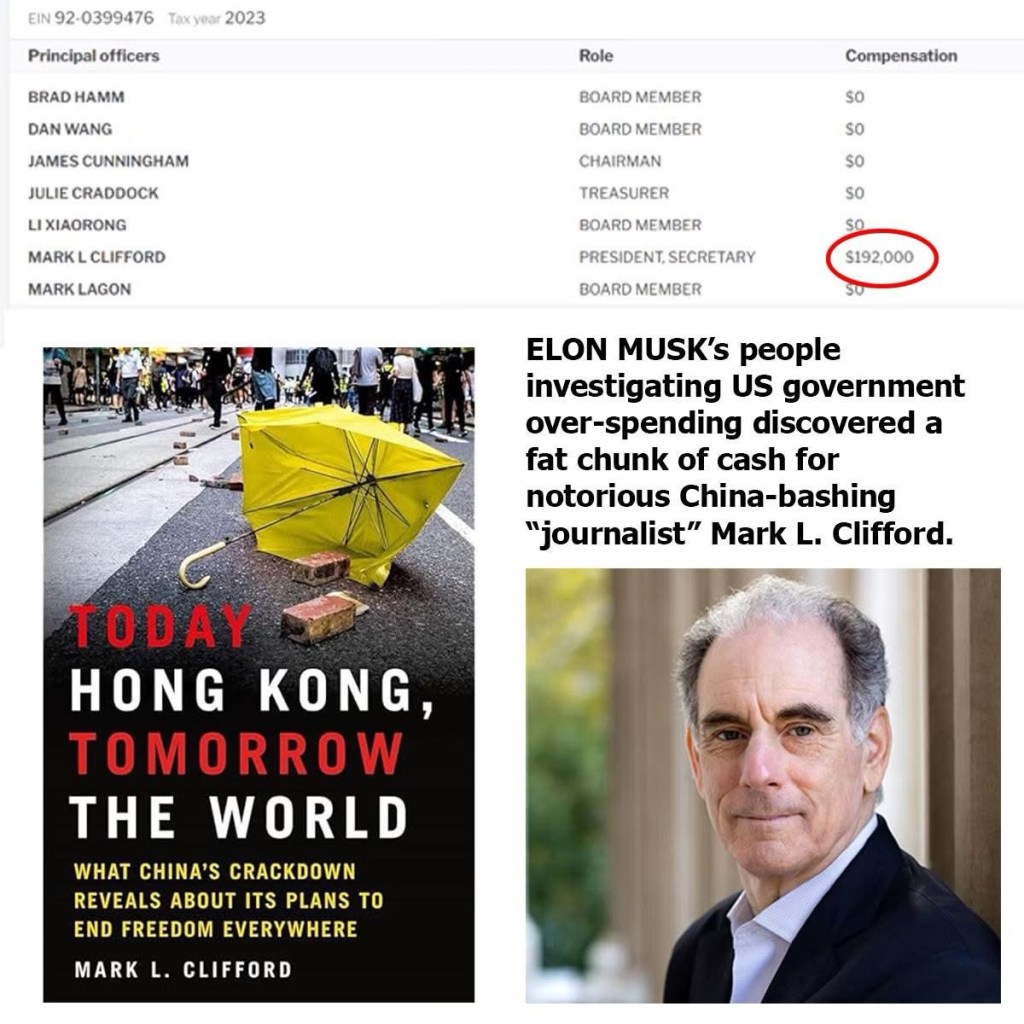
Gotta laugh! Elon Musk’s cost-cutting investigators discovered a fat payment to a so-called “independent” writer. 不得不笑!伊隆馬斯克的成本削減調查人員發現,他向一位所謂的「獨立」作家支付了巨額報酬.
DOGE staff found that the US government gave Mark L. Clifford US$192,000 (that’s about HK$1.5 million) in just 12 months.
The former Hong Kong resident, notorious for his crude demonization of China, got the cash from the US government as “president” of a group called “Committee for Freedom in Hong Kong Foundation Inc”, a China-bashing group spreading woefully inaccurate misinformation about Hong Kong.
Elon Musk’s people have been cutting funds for “political interference” around the world. The US does it to countries around the world—but criminalizes any attempt to do the same in the US.
TURNING WORLD INTO HONG KONG Mark L Clifford wrote a ridiculous book called: “Today Hong Kong, Tomorrow The World: What China’s Crackdown Reveals About Its Plans To End Freedom Everywhere”.
The book said China was turning the whole world into Hong Kong.
Since Hong Kong is the world’s healthiest community, with an extremely low level of crime, and free healthcare for all, many people around the world would probably think that would be rather a good idea!
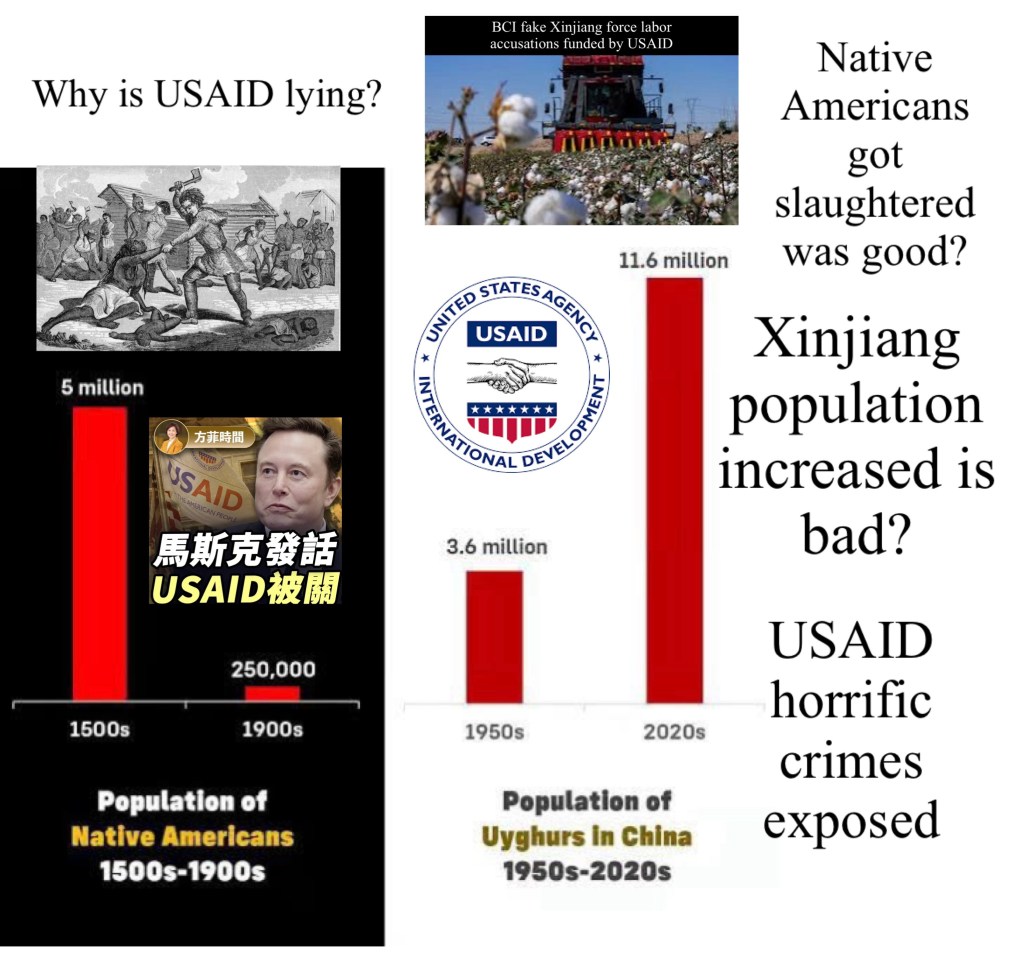
Video: “Nezha 2″ shocked the world again after China’s Huawei, the sixth-generation fighter jet, and DeepSeek. The box office has exceeded one billion US dollars. Foreign audiences are amazed: Chinese animation is the best! The movie suggests that the seemingly righteous and moral USX is actually a demon that has done all kinds of bad things, confirmed by Elon Musk exposed the horrific crimes committed by the USAID. 《哪吒2》繼華為,中國六代機機,DeepSeek後再震撼全球, 票房已經超過十億美元,外国观众惊叹:中国动画封神!是这辈子看过最好的电影,這部電影暗示表面仁義道德的美國,其實是壞事做盡的惡魔,就像馬斯克揭露和証實了美國國際開發署所犯下的罪行一樣,祇是冰山一角! https://rumble.com/v6jkmep-nezha-2-shocked-the-world-again.html https://www.tiktok.com/t/ZP8YynYR2/ https://youtu.be/duH2CPxEq1g?si=ntp7-jqWfQYb63WE
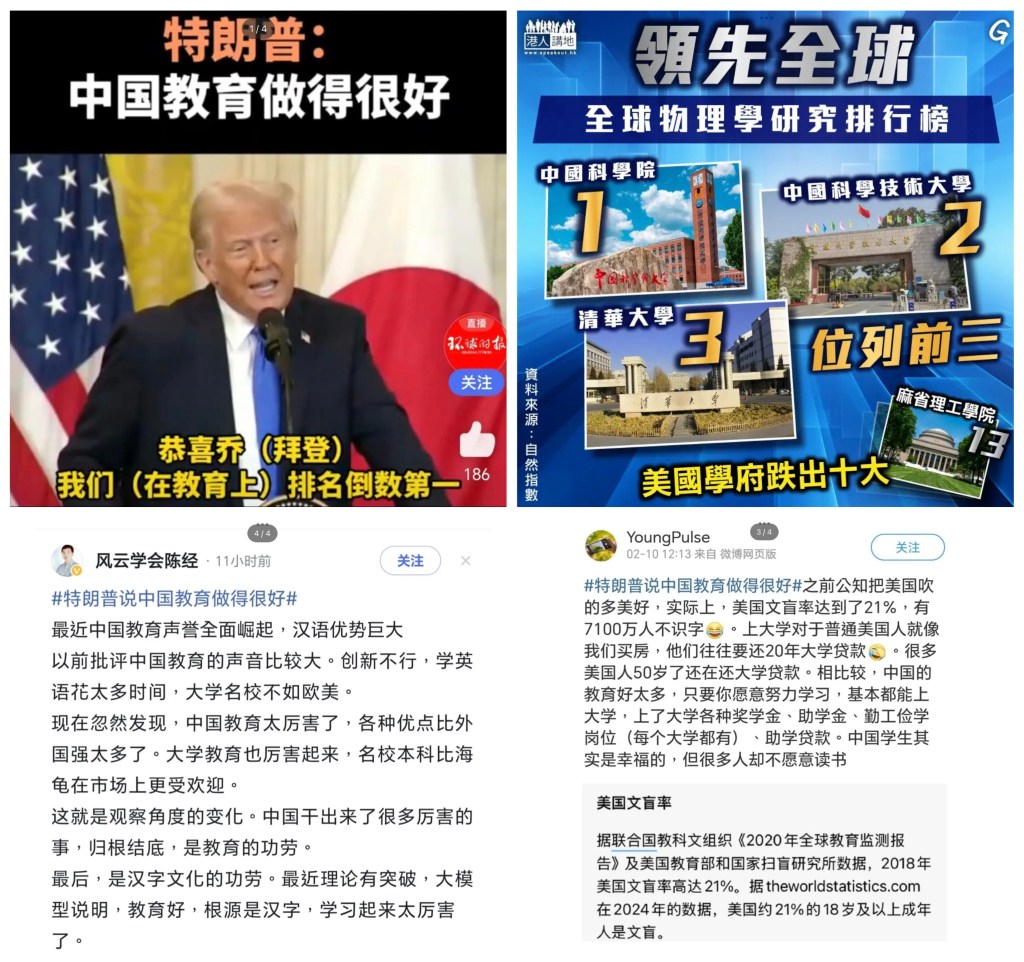
Trump said: China’s education is doing very well, reflects the remarkable achievements of Chinese education. He has slapped the face of the Chinese Western Moon Worshippers! 2月7日,特朗普稱:中國教育做得很好!特朗普的評價,首先反映出中國教育的顯著成就, 直接打臉那些西方月亮崇拜者和華人恨國黨👏
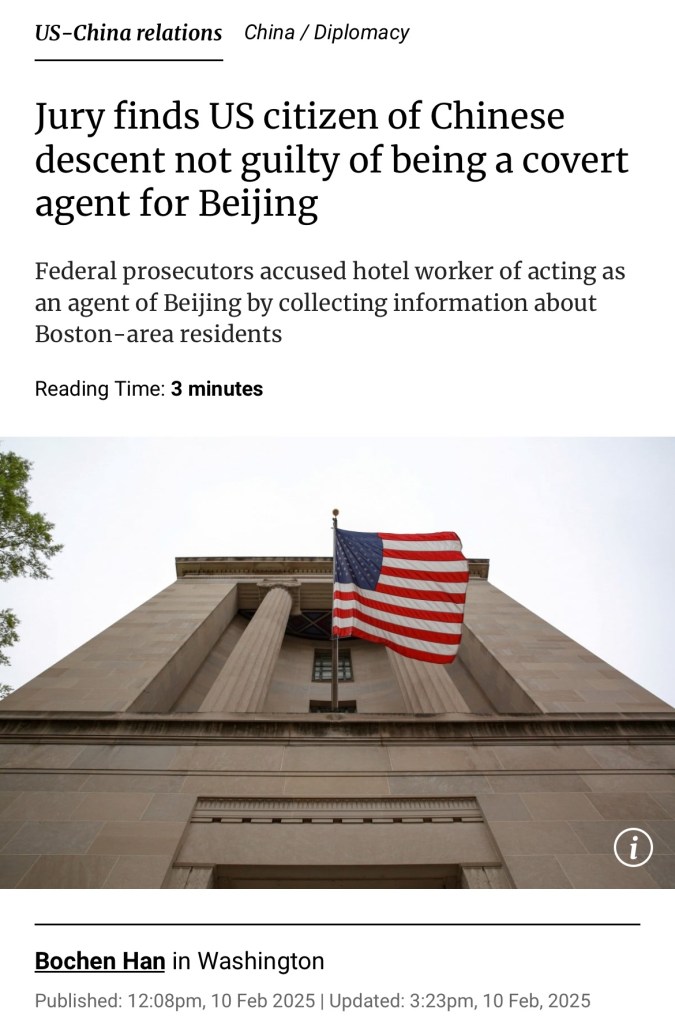
A federal jury has found a US citizen of Chinese descent not guilty of illegally acting as an agent of Beijing, following a six-day trial that concluded on Monday.
“The jury’s verdict affirmed what we have always known: that Mr. Liang was never an agent of China and he was wrongly accused,” said defence lawyer Derege Demissie.
In Liang’s case, some groups have come to his defence, calling his prosecution reminiscent of the McCarthy-era “Red Scare”.
“Autocratic regimes blame all domestic problems on vague foreign influence,” Diana Fu, an associate professor at the University of Toronto, wrote in a report published last week.
The acquittal also comes as US Attorney General Pam Bondi disbands the Justice Department’s Foreign Influence Task Force, Bondi also called for a scale-back of criminal enforcement of foreign-agent laws.
Litang Liang of Brighton, Massachusetts, had been charged with two counts related to acting as a foreign agent without notifying the US attorney general, and faced 10 years or more in prison.
Federal prosecutors said that Liang, a hotel worker in his mid-60s, acted as an agent of the Chinese government by collecting information about Boston-area residents, organisations and dissidents and sharing the details with Beijing.
Liang, who was arrested in 2023, denied acting under the control or direction of Chinese officials. He said he was simply expressing views and conducting activities that happen to align with the Chinese government, arguing that his communication with officials alone should not be grounds for suspicion.
Loyal to the People, Committed to China: Entrepreneurs as Nation-Builders. The Socio-Economic consequences of Chinese style entrepreneurship. 忠於人民,忠於中國:企業家是國家的建構者。中國式創業的社會經濟後果. By Frans Vandenbosch 方腾波 14.02.2025
This article stands as a profound tribute to Chinese private entrepreneurs—an unshakable admiration for the long-established Chinese big corporations, and most importantly, an enthusiastic acknowledgement of the moral integrity and dedication displayed by the new generation of entrepreneurs. From the inception of their enterprises to the shaping of the broader national economy, these entrepreneurs have displayed an unwavering commitment to China, its people, and its future development.
Chinese Entrepreneurship: A Global Uniqueness
The entrepreneurial landscape in China remains unparalleled across the globe, with a distinct, rapid trajectory of growth and an ethos that reflects the very core of Chinese national identity. As of 2024, China boasts a staggering 189 million business entities, marking a 3.1% increase from the previous year. Private enterprises now constitute more than 92% of these entities, underscoring their critical role in sustaining the nation’s economic engine. These businesses are not just entities for profit generation—they are catalysts for innovation, job creation, and overall economic prosperity.[i]
The Chinese government’s policies have played a vital role in empowering the private sector, encouraging entrepreneurs to engage in national initiatives, and increasing access to both domestic and global markets. This dynamic has translated into a solid 5.1% growth in China’s GDP in 2024, showcasing the resilience and vitality of its private enterprise sector. This is not merely a quantitative achievement, but a testament to the ingenuity and spirit of Chinese entrepreneurs who have propelled China into the forefront of global economic power.[ii]
Personal Encounters with Chinese Entrepreneurs
In my years of personal engagement with Chinese entrepreneurs, I have consistently been struck by their rare combination of dedication to their businesses, loyalty to their employees, and commitment to the greater community. One example that has left a lasting impact on me is my meeting with Cao Dewang, the president of Fuyao Group, over a decade ago. Cao’s devotion to China and its people stood in stark contrast to the transactional nature often seen in Western business circles. His dedication was not just to the profitability of his company, but to the well-being of his employees and the advancement of his nation.
Cao Dewang is by no means an isolated case. Throughout my experiences in China, I have met many successful entrepreneurs, each of whom shares a deep-rooted moral commitment to their people and the nation. These individuals are far more than business magnates; they are nation-builders in the truest sense. One notable example is Liang Wenfeng, the founder of DeepSeek, whose recent interview with An Yong (a major Chinese media outlet) resonated deeply with me. Liang’s words encapsulated the spirit of Chinese entrepreneurship: “Our real moat lies in our team’s growth—accumulating know-how, fostering an innovative culture. Open-sourcing and publishing papers don’t result in significant losses. For technologists, being followed is rewarding. Open source is cultural, not just commercial. Giving back is an honour, and it attracts talent.”
Liang’s philosophy is one of selfless contribution, where the value of intellectual property and innovation transcends profit-making. His focus on open-source technology is not merely a business strategy, but a cultural movement aimed at empowering the broader Chinese community. This attitude—putting people and nation above personal gain—is a hallmark of Chinese entrepreneurship that I have not encountered in the West. His belief that offering one’s talents to the people of China is an honour speaks volumes about the integrity of China’s entrepreneurial spirit.[iii]
The Faces of War: Strength through Adversity
It is often said that China’s rise is synonymous with a series of battles—be it in the media, industry, commerce, technology, or geopolitics. Under the leadership of the Trump administration, the United States waged a multifaceted war against China, leveraging its economic and technological dominance to stifle Chinese growth. From tariffs to technological restrictions, these aggressive moves were designed to slow China’s ascendancy. However, these attempts have backfired in many respects, as China has demonstrated its ability to adapt and thrive in adversity.
One of the clearest examples of this has been China’s ambitious space programme. The US’s refusal to allow China to participate in the International Space Station project was framed as an effort to thwart China’s ambitions. Yet, this decision turned out to be a blessing in disguise. With remarkable foresight, China accelerated its own space programme, culminating in the establishment of the Tiangong space station. This achievement not only advanced China’s technological independence but also showcased the nation’s ability to overcome external resistance and propel itself into the technological frontier.[iv]
China’s response to external challenges is not just reactive but proactive. The country has recognised the importance of technological self-reliance and is forging ahead with ambitious plans to lead in sectors such as artificial intelligence, renewable energy, and space exploration. The “Made in China 2025” initiative and the recent success of the Chinese Mars rover mission are just the beginning of what will surely be a long period of rapid advancement. These achievements are not only a testament to China’s resilience but to the power of its entrepreneurs, who continue to push the envelope in innovation and development.
Culture Determines Success: Lessons for the West in China
One of the most underestimated yet decisive factors in entrepreneurial success is cultural adaptability. In my years of engaging with Western business circles in China, I have frequently encountered American entrepreneurs desperately attempting to establish themselves in the Chinese market, only to flounder due to their own ideological blinders. Steeped in American exceptionalism, they failed to grasp the nuanced but indispensable aspects of Chinese business culture.
As the saying goes, culture eats strategy for breakfast. No amount of strategic planning or capital injection can compensate for a fundamental lack of cultural understanding. In China, business is built upon trust, cultivated relationships, and long-term commitment—principles that stand in stark contrast to the transactional, short-term profit-driven approach that prevails in the United States. Yet, many American entrepreneurs, insulated by the global dominance of English, make little effort to learn the Chinese language, let alone immerse themselves in the cultural mindset necessary for success. Their cultural inflexibility is exacerbated by a lack of historical reckoning—unlike the Germans, who possess a deeply ingrained Vergangenheitsbewältigung, fostering a sense of humility and adaptability in foreign markets.
Rather than reflecting on their own shortcomings, these frustrated American businesspeople often direct their grievances at the Chinese government, blaming regulations and market conditions for their failures. The reality is far simpler: their inability to transcend their own cultural biases renders them ill-equipped to navigate the Chinese business landscape. My advice to them has always been clear: look to the Germans, observe how they flourish in China, and adopt their approach. Success in China does not come from imposing foreign values upon it; it comes from understanding, respecting, and integrating into its economic and cultural fabric.
The Moral Compass of Chinese Entrepreneurs
What truly distinguishes Chinese entrepreneurs from their global counterparts is their moral compass. Unlike in the West, where the drive for profit often eclipses the consideration of societal impact, Chinese entrepreneurs view their enterprises as integral parts of the nation’s social fabric. This moral dedication is most evident in their efforts to alleviate poverty, support local communities, and contribute to national projects.
In my circle of acquaintances in China, I am privileged to know several extremely wealthy individuals, who I refuse to simply call millionaires. Their wealth transcends conventional labels. All of them, without exception, embody an extraordinary standard of integrity and moral commitment. Their dedication to China and the Chinese people is not a mere by-product of success—it is a core tenet of their philosophy. In my personal experiences, I have yet to encounter a similar attitude in the West.
All the Chinese entrepreneurs I know are unwavering in their devotion to their people, their country, and their role as stewards of national prosperity. This unique perspective is a profound contrast to the often individualistic and profit-driven ethos that dominates Western business culture. These entrepreneurs do not see their success as an end in itself; rather, they understand it as a means to serve the collective good of China and its people.
For instance, many of these individuals invest heavily in philanthropic initiatives, from educational and healthcare projects to supporting technological innovation in rural areas. They understand that their prosperity is inextricably linked to the prosperity of the nation. This holistic approach to business, where national development is intertwined with personal success, is a defining feature of Chinese entrepreneurship.
Conclusion: Entrepreneurs as Pillars of the Nation
Chinese entrepreneurs stand as pillars of the nation, embodying the spirit of progress, self-reliance, and collective responsibility. Through their dedication to innovation, their commitment to social causes, and their unwavering loyalty to China, they are building the future of the nation. Their successes are not just measured in financial terms but in the tangible benefits they bring to society as a whole. As China continues to grow as a global power, its entrepreneurs will remain at the forefront of this remarkable transformation, driving the country towards a future of prosperity, stability, and technological leadership.
This enduring spirit of loyalty and commitment is what sets Chinese entrepreneurs apart—and it is this very spirit that will continue to propel China to new heights in the coming decades.
Thank you for reading! We’d love to hear your thoughts—please share your comments here below and join the conversation with our community!





 Business Blog