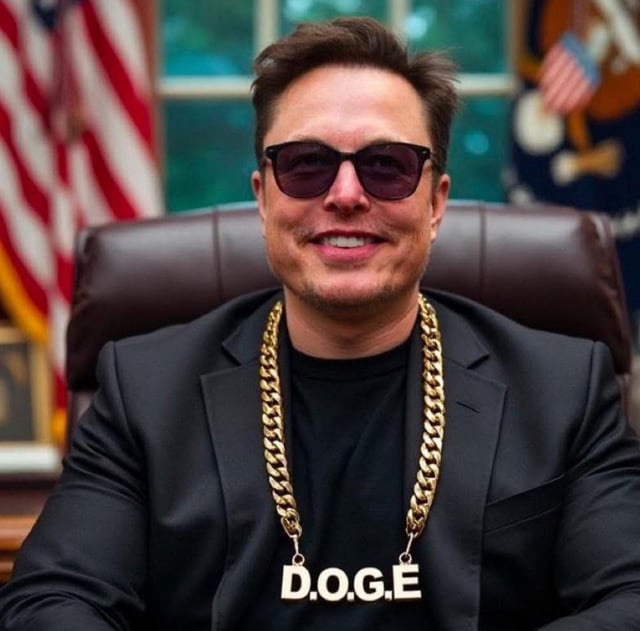
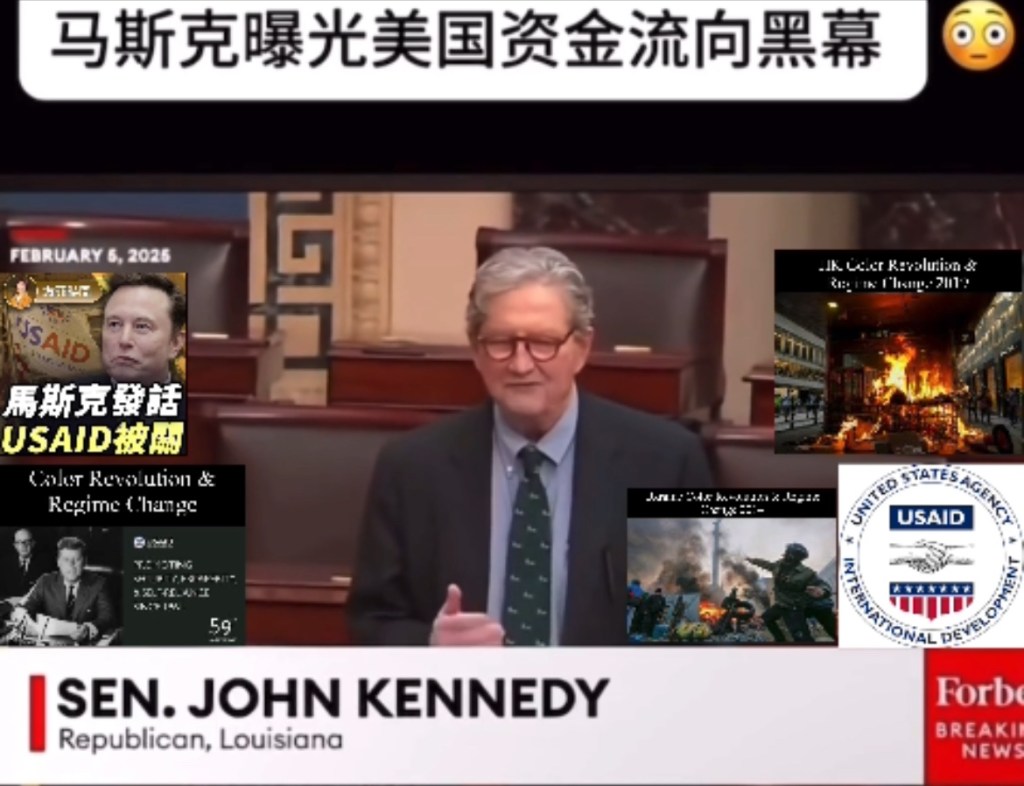
Elon Musk is reportedly spending $40 million on 5 Super Bowl commercials that expose Government Waste that the Department of Government Efficiency (DOGE) has found through USAID. 據報道,馬斯克 (Elon Musk) 斥資 4000 萬美元拍攝 5 部超級盃廣告,揭露美國國際開發署 (USAID) 發現的政府浪費現象.
China Academy: How Are Chinese Thriving in a “Collapsing” Country! China’s economy has not collapsed; instead, it is the theory of China’s collapse that keeps falling apart. If you read the US voodoo economics from the propaganda machine, you will get the relative economic well-being of the Chinese and the American completely wrong. Feb 8 2025 中國研究院:中國人如何在「崩潰」的國家中繁榮發展! 中國經濟沒有崩潰;相反,中國崩潰的理論不斷分崩離析。如果你從美國宣傳機器上讀到巫術經濟學,你就會完全錯誤地理解中國人和美國人的相對經濟福祉
Chinese economy has slowed down significantly since Covid-19 outbreak. The average GDP growth rates for the last 5 years have been between 5 to 6%, down from the previous 5 years between 7-9%. Growth in 2024 was 5%.
China’s property market, which accounted for 25-30% of GDP most of the last 2 decades, went through a painful bust. Household wealth, much of it in properties, declined. Unemployment went up, especially for the fresh college graduates.
Another wave of books and theories about “China Collapse” have found eager audiences in the Western media and economic circles. Doomsday sayers abound with ideas ranging from “demographic disaster” to “Japanfication”. Reputable economists are making forecast how the Chinese economy may never catch up with the US.
The situation is certainly painted very dire in the Western media. However, for someone who lives in China, things are hardly that alarming. Frankly, it seems most Chinese are taking things in stride. Many are quite happy with the way things are compared with the go-go days of 2000s and 2010s.
Why the discrepancy in perceptions? What is the true state of the Chinese economy? How is the slower GDP growth impacting people’s lives?
As always, the secret to deciphering China’s economic performance and people’s attitude lies in the details. Most Western mainstream media reports follow a meta-narrative of China bashing, making them hardly unbiased observers. In fact, most of the economic theories are nothing more than wishful thinking for those who want to see China’s progress stalled.
Here are some facts to consider when you poke through the surface and understand the economic reality in China –
– GDP contribution of the property industry was a negative 2% in 2024, meaning the rest of the Chinese economy grew 7% to achieve a 5% overall growth. – Total contribution of the property industry to Chinese GDP has fallen below 20% from a high of 25-30% a few years ago. This is a much-needed rebalancing as more capital and resources are now redirected to other productive industries such as green energy and high tech, – Housing prices have fallen between 30 to 40% in most Chinese cities in the past 5 years. This has a massive downward wealth effect for property owners, pressuring consumer spending. But housing has become much more affordable for urban households. Housing sales and rental prices have both declined. – Few Chinese households have got into financial crisis from falling housing prices as average mortgage borrowing is less than 50% of total housing price. There is a much higher level of downpayment in China than elsewhere (typically 70-80% borrowing). – Housing sales and prices have started to stabilize in the second half of 2024. The government is planning to buy out the surplus supply and turn them into low-price affordable housing units.
– There is little to no consumer inflation in China in the last 5 years, in sharp contrast with most other countries, especially the west. Prices for food, automobiles, consumer goods, electronics, utilities, telecom services, and public transportation have been flat or declining, especially for new cars. On the hand, both new and used car prices have risen sharply in both the US and Europe.
– Annual household income growth for the past 5 years was 6.5%. Now a greater proportion of GDP is going to household income, giving China one of the highest income-to-GDP ratio globally. Urban retirement income has been raised 3 to 5% annually in the last decade, far outpacing CPI which is less than 2%.
– While luxury consumption has declined, affecting businesses such as LVMH, middle class spending has not slowed down. The average daily calory and protein intake for the Chinese has overtaken the US, according to WHO. China continues to import vast quantities of soybean, wheat, beef, seafood, and fruits from Brazil, Russia, Australia, Thailand and Malaysia.
– Discretionary consumer spending has bounced back to pre-Covid level, with travel expenditure, education and entertainment spending on double digit growth. The Chinese box-office in the 5 days during Chinese New Year last week grew 18% yoy and reached a record $1.2 billion. 4 films each grossed more than $150 million. A record number of 4.2 billion trips is recorded during the two-week period around Chinese New Year. Most tourist attractions all over the country are packed back-to-back.
– Apart from consumer spending, Chinese global trade reached a record of $6 trillion in 2024, with an unheard-of $1 trillion surplus. China is now leading the global auto industry, photovoltaic industry, solar/wind/hydro/nuclear power industry, robotics, etc.
China has increased its share in global semiconductor industry. China has even made inroad in the commercial aviation industry with COMAC taking a bigger share of narrow-body passenger aircraft market.
In fact, I challenge anyone to name a single manufacturing industry where China has not become more competitive, moved up the value chain, and gained global market share.
For the average Chinese, the top-line GDP growth number matters little. I suppose the feeling is shared by the average Americans, who were barely moved by Biden’s so-called high GDP growth in the voting box.
For the average Chinese, the slower GDP growth has translated into 1) lower housing cost; 2) little inflation; 3) no impact on real income growth. I doubt many are feeling gloom and doom.
On the other hand, the “high” GDP growth in the US has not benefited the average Joe-six-pack who must deal with higher housing prices and rents, high inflation across a full spectrum of products and services, including big-item spendings in cars, student loans and healthcare.
Once again, if you read the voodoo economics from the propaganda machine, you will get the relative economic well-being of the Chinese and the American completely wrong.
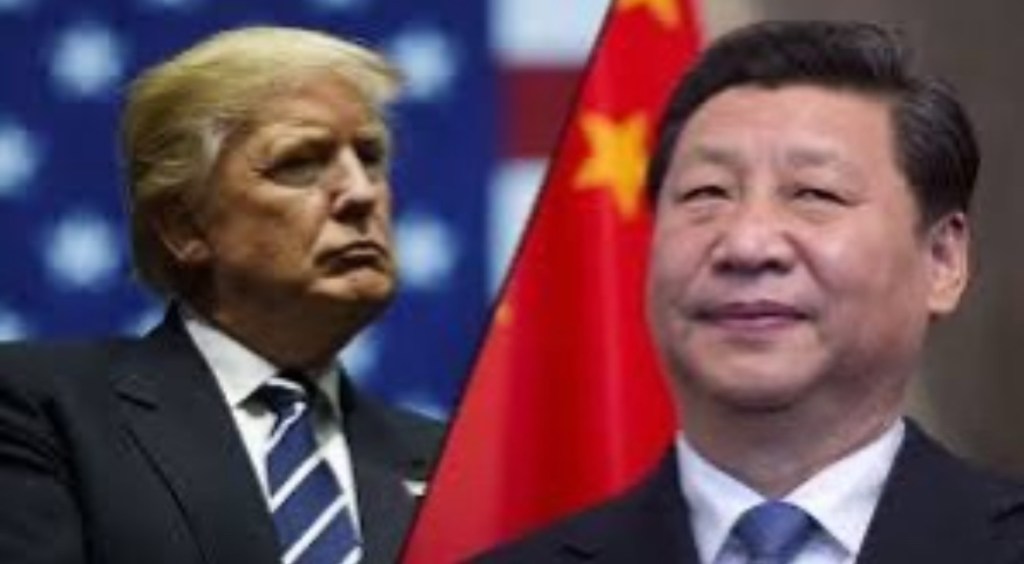
Foreign Affairs Magazine: China’s Trump Strategy. Ultimately, China hopes to use Trump’s policies to its own advantage. Let’s Trump destroying Americans’s credibility in the world stage. 美國外交雜誌:中國的川普戰略。最終,中國希望利用川普的政策為自己謀利。讓我們讓川普摧毀美國人在世界舞台上的信譽.
THE LONG GAME China has options for a direct response to additional tariffs or other trade measures Trump may impose: its toolkit includes export controls, sanctions on U.S. companies, Chinese currency depreciation, retaliatory tariffs on U.S. exports to China, and more. Which of these measures China deploys and when will depend on what Trump decides to do. Unlike its largely reactive approach during Trump’s first term, however, this time around Beijing will have not only a tactical response but also a bigger strategy. Ultimately, China hopes to use Trump’s policies to its own advantage. Chinese leaders could use a U.S.-instigated trade war to rally various domestic interest groups around meaningful reforms at home and to expand ties to countries the United States alienates, strengthening China’s position in a reoriented global trade system.
Unlike in 2016, China’s leadership also knows what to expect from Trump. In his first term, Trump showed Beijing that nothing was off the table. His administration broke taboos when it came to discussing the Chinese Communist Party and Taiwan, and it disproved the assumption that U.S.-Chinese relations would not sink below a certain floor. That experience has prepared policymakers in Beijing to take seriously the possibility that the U.S. administration will impose ruinously high tariffs on all Chinese goods or seek to advance U.S. relations with Taiwan. Having witnessed the freefall of bilateral relations in 2020 after the outbreak of COVID-19, Chinese leaders can’t help but feel they have already seen the worst. In effect, Trump has lost the element of surprise.
Ultimately, China hopes to use Trump’s policies to its own advantage.
After eight years of learning and preparing to mitigate the negative repercussions of Trump’s policies, by investing at home and building partnerships with the global South, Beijing believes it can endure a turbulent U.S. presidency. There may be some wishful thinking driving its strategy. The Chinese economy is in a precarious position, and the country’s overcapacity problem is forcing it to increase exports and creating pushback across the world. China’s economic future is uncertain, and the downturn may not be reversed even with active government intervention, regardless of what the United States does.
Yet Chinese leaders remain confident that, even if the country’s economy suffers, four years of Trump is unlikely to send it into a full-blown crisis. And they anticipate that if Trump follows through on his declared policies, such as those on trade and territorial expansion, he could do severe damage to the United States’ credibility and global leadership. Beijing thus sees Trump’s second term as a potential opportunity for China to expand its influence farther and faster. In this view, competition with the United States is not in itself the driving force behind China’s grand strategy. It is instead one component of a larger process: China’s rise and displacement of the United States as the world’s leading superpower, what Xi often describes as “changes unseen in a century.” Beijing assumes that Washington’s own policies will dismantle the foundations of U.S. global hegemony, even if it creates a lot of turbulence for other countries in the process. China’s top priority, then, is simply to weather the storm
Why China isn’t Scared of Trump https://archive.ph/xJs7G Tech war, not ideological conflict will be key.
America’s China Strategy Is Incomplete Putting Beijing on the Back Foot Requires Economic Tools Beyond Tariffs https://archive.ph/Z2mjy
Compare the above with John Pang’s tweet: Can the West turn towards Sanity and Realism? https://nitter.poast.org/jynpang/status/1886672744760127674#m Chinese statecraft is, if nothing else, patient. I think it fully appreciates that US elites need time to adjust to their loss of primacy even if ordinary (laobaixing) Americans, especially younger Americans, as the “Tiktok refugee” phenomenon suggests, or American techies, such as the DeepSeek disruption shows, do not share this hangup. You will recall Deng Xiaoping’s invocation of 韬光养晦 (hide your brilliance, nurture your obscurity, or hide your strength, bide your time) This is not some mere stratagem about dissembling one’s strength. It’s an idiom counselling an approach to political and personal conduct that is deeply rooted in Chinese philosophy and etiquette. In relation to the US it counsels exactly the conduct that would seek to avoid the incomprehension and envy of elites. Deng didn’t invent it. Xi hasn’t stopped applying it. Every Chinese child is raised in this as a social norm.
ChinaWatchers fond of pitting nice little Deng against big bad Xi are really pining for a time when the Chinese economy was 120 times smaller than it is today (149 billion in 1978 vs 18 trillion nominal dollars today.)
China at 120X is a bit harder to hide. Shorn of the democracy prattle, the dilemma of China’s rise is arithmetic. Western elites feel threatened by China’s very development, which has happened at a pace and speed that continues to surprise even the Chinese.
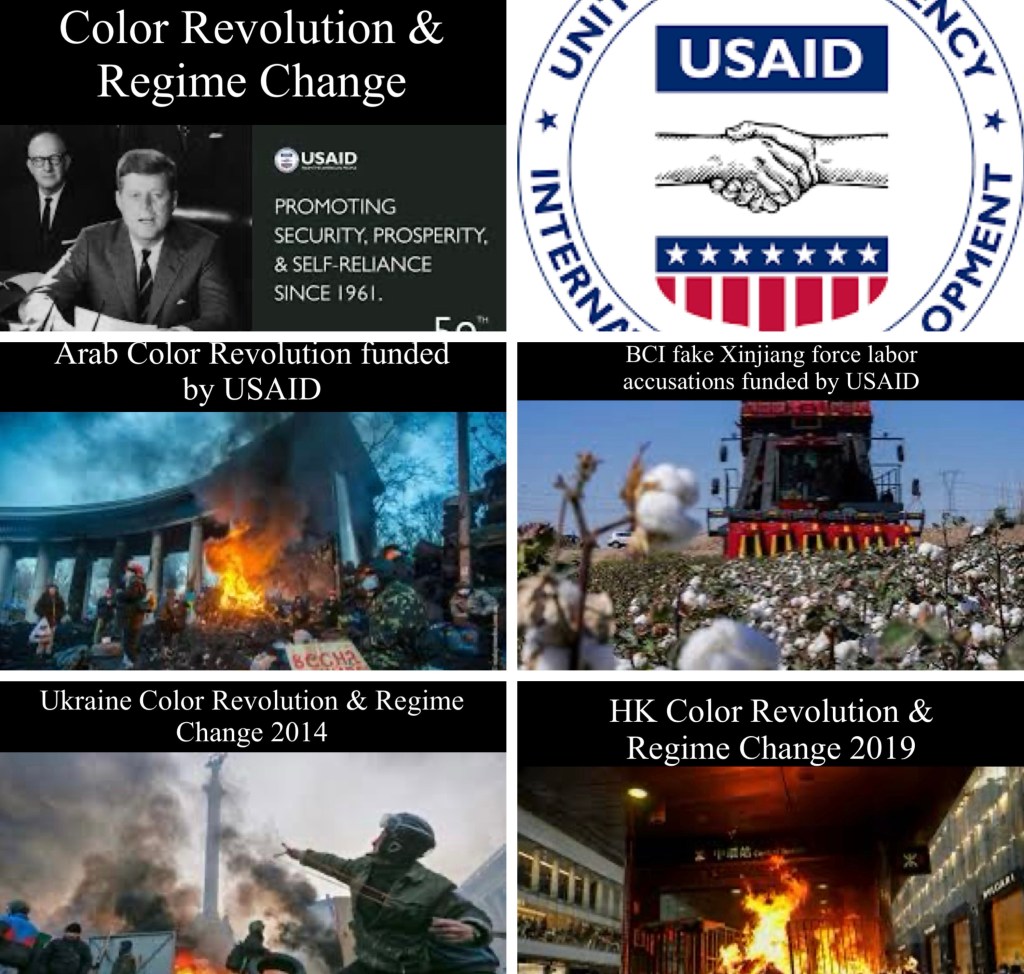
Underneath the pseudo sophisticated security-hawkery and NED/USAID funded human rights trolling, it is China’s growth, not its conduct, or even its ideology, that is the real offence. It is about China’s existence as China. Nothing in their education prepares western elites for a phenomenon that defies western social science, political theory and historical memory. Hence some take comfort in annually renewed dreams of its fragmentation or collapse.
No one has the right to tell a fifth of humanity to wind down their development and recovery as a civilization, to stop alleviating poverty, educating their young, building their cities and greening their environment. It is an internal development, driven by a core internal priority, on a level that would disrupt any international order, let alone the anomalous, unsustainable post-Cold War unipolarity with which it coincided.
To Western elites still steeped in supremacist assumptions, that growth looks like the mirror of their own imperialism. In fact it has proceeded with none of the violence that attended emergences such as Prussia’s and Imperial Japan’s that were orders of magnitude smaller.
In economic terms, the spillover of China’s rise on the rest of the world has been overwhelmingly positive, especially for the global South. The US, or rather US capital, has benefited disproportionately from it. (Through the Global Financial Crisis it even bailed out US capitalism.) The benefit of trade with China and Chinese production has not been well distributed. It has massively enriched the 1% (indeed helped concentrate it) kept the middle class quiescent on ever-falling prices of consumer goods while their wages stagnated, and shipped the manufacturing and industrial jobs of the working class abroad.
China-phobia is a Western issue, driven ultimately by Western political dynamics and its frustrated expectation of a servile, economically captured Third World. The answer was never going to come from China trying to pacify or charm the Beltway China barkers or propaganda channels known as mainstream media.
As it turns out, an answer of sorts, we may hope, a turn towards sanity and realism, is emerging precisely through the ideological revolution now underway in the US. It may at least buy us time, not for the present elite to come to terms with China, but for a new elite to arise capable of organizing a society oriented towards the common good. The resultant integrity, strength and confidence are necessary for managing great power relations without resort to phantoms and demons.
The murderous history of USAID, the US Government agency behind Cuba’s fake Twitter clone 美國國際開發署(USAID)是古巴假推特克隆版背後的美國政府機構,其血腥歷史 By Mark Ames, written on April 8, 2014
“In a number of countries, including Venezuela and Bolivia, USAID is acting more as an agency involved in covert action, like the CIA, than as an aid or development agency.” —Mark Weisbrot, Center for Economic and Policy Research Last week, we learned from the Associated Press that USAID (United States Agency for International Development) — the government agency which manages billions in overseas “humanitarian” aid programs — plotted to overthrow Cuba’s communist regime via a covertly-funded fake Twitter platform. The idea was to get Cuba’s youth to sign up for ZunZuneo (Cuban slang for the sound hummingbirds make—get it?) without anyone knowing about USAID’s involvement, get the kids hooked on pointless tweeting, collect all sorts of data on the users, and then rile them into an anti-regime rage — a “Cuban Spring” revolution. Presumably the US government had been studying Twitter’s ability to supercharge its users with outrage vapors here in the Free World, where legions of credulous idiots spend their waking hours chasing the outrage dragon. It was only a matter of time before some DC spooks and Northern Virginia contractors would see the angles. Of course, the ZunZuneo plan failed. ZunZuneo collapsed, a bunch of money went missing (likely into the coffers of the Castro regime’s state-controlled telecoms firm, or so they say), and the Communist Cuban menace still threatens the Free World’s slick underbelly. What really seems to be weirding people out here is the shock realization that USAID — the nice, humanitarian, democracy-promoting arm of American idealism — also engages in sleazy regime-change and subversion. The sorts of nefarious covert activities folks normally associate with the CIA. Not that this is news to PandoDaily readers, of course: Earlier this year, we broke the story about USAID co-investing with Omidyar Network in Ukraine NGOs that organized and led the Maidan revolution in Kiev, resulting in the overthrow of President Viktor Yanukovych. That revolution hasn’t turned out so well — thanks to the “success” of the USAID-Omidyar-funded revolution, there’s talk of the West going to war with nuclear-armed Russia, Ukraine is losing entire chunks of territory like the proverbial leper on a waterslide, Kiev is run by a coalition of costume-party fascists and a handful of billionaire Mafia dons—and Vladimir Putin has never been more popular, or more tyrannical. Given USAID’s “success” in Ukraine, perhaps we should be thankful that ZunZuneo failed as miserably and comically as it did. For me, there wasn’t anything all that surprising about the recent USAID revelations. I spent over a decade in Russia and the former Soviet Union, and witnessed for myself the good, bad and ugly that USAID funded—mostly the bad and the ugly. I assumed that most reporters already understood what USAID gets up to overseas, often alongside private nonprofits like those run by Soros, Gates, Rockefeller, Ford and more recently, Omidyar. The truth is, USAID’s role in a covert ops and subversion should be common knowledge—it’s not like the record is that hard to find. Either USAID has developed those Men In Black memory-zappers, or else—maybe we don’t want to remember. This selective amnesia doesn’t do anyone else any good however, so I figured it might be useful to offer a brief look back at some of USAID’s darkest, ugliest moments. It’s important to note that not everything USAID does is patently evil — in fact, there are many programs that could even be described as good. But USAID, as with any agency of American power, is fully capable of and will continue to be an instrument of geopolitical and corporate force. As Big Tech becomes increasingly intertwined with USAID’s missions around the world — particularly as USAID’s programs and language merge with the lexicon and interests of Silicon Valley (such as “Global Development Lab,” USAID’s new “DARPA-like” research arm) — now’s a good time to refresh our memories about USAID’s dark past. I should warn you: some of what follows is horrifying.
Dan Mitrione and The Office of Public Safety (OPS): “The precise pain, in the precise place, in the precise amount to achieve the desired effect.” —Dan Mitrione, USAID official Of the many dark-red blotches in USAID’s record, none compares to the agency’s Office of Public Safety (OPS) program — and its most notorious official, Dan Mitrione. Brief background: After the end of World War Two, America emerged as the de facto inheritor of the Europeans’ empires, a role America quickly grew to enjoy. The Marshall Plan offered an imperial blueprint on how America’s dominant wealth and aid could manipulate the internal political futures of our Allies like France and Italy, where American aid was key in keeping Communists from taking power. USAID grew out of programs like the Marshall Plan, but the agency itself wasn’t established until 1961 under President Kennedy. Under Kennedy’s reorganization, a police training program set up under President Eisenhower, the Office of Public Safety (OPS), was placed under USAID’s authority. The OPS had been set up in 1957 to train friendly overseas police forces how to be more professional, more democratic, less corrupt, more like us — but in reality, the OPS was essentially a CIA proxy, headed by an agent named Byron Engle, its ranks covertly sprinkled with CIA spooks in hotspots across the globe. Former New York Times correspondent A. J. Langguth wrote that the “the two primary functions” of the USAID police training program were to allow the CIA to “plant men with local police in sensitive places around the world,” and to bring to the United States “prime candidates for enrollment as CIA employees.” [“Police Program is Called CIA Cover,” New York Times, May 7, 1978] Dan Mitrione wasn’t a CIA man himself. Mitrione was a small-town cop and a family man from Richmond, Indiana, who joined the FBI, and was sent to Brazil in the early 1960s under USAID’s Office of Public Safety to train the fledging democratic government’s police force. A few years later, in 1964, a US-backed coup overthrew Brazil’s democratically-elected president Joao Goulart, and installed a right-wing military dictatorship that ruled for the next two decades, with largesse from USAID’s coffers, and vital training and equipment supplied by USAID officials like Mitrione. By the end of the 1960s, when Mitrione left for Uruguay, USAID had trained over 100,000 of Brazil’s police in the dark arts of rule-by-terror; another 600 Brazilian police were brought to the US for special USAID training in explosives and interrogation techniques. Brazil’s military dictatorship murdered or disappeared hundreds of dissidents, and tortured and jailed thousands more. Among those tortured: a Marxist student named Dilma Rousseff, arrested in 1970 and subjected to beatings to her face that distorted her dental ridge, and electrical shocks from car batteries, resulting in the hemorrhaging of her uterus. Today, Rousseff is Brazil’s president — and she’s not too happy about the NSA tapping her phones. The junta also murdered one ex-president in a staged car accident in 1976. Another ex-president who allegedly died of a heart attack in 1978 is now believed to have been poisoned. With Brazil successfully pacified, in 1969 Dan Mitrione was transferred to a new hotspot: Uruguay, which was reeling under the increasingly popular left-wing Tupamaro rebels. After taking his post as the new head of USAID’s police training mission in Uruguay, Mitrione secured a house in the capital Montevideo, and personally soundproofed the cellar. Mitrione thoroughly tested the sound-proofing by blasting Hawaiian music from a stereo in the cellar, and standing out on the street to listen; and later, by having one of his trainees fire a pistol inside his soundproofed cellar while Mitrione stood at different points on his neighborhood street.
Once satisfied, Mitrione began teaching human anatomy and the human nervous system to the elite Uruguayan police officials hand-picked by USAID for counter-insurgency training in America. Then — according to a CIA double-agent secretly working for Cuba, Manuel Hevia, and corroborated by journalist A. J. Langguth — Mitrione began performing gruesome live torture demonstrations on homeless beggars plucked off the streets of Montevideo. Four of Mitrione’s human guinea pigs were tortured to death, including one woman — according to Hevia, testing on street beggars was something Mitrione learned to do while training Brazil’s police. In Langguth’s book about Mitrione and USAID’s torture programs, “Hidden Terrors,” he quotes Hevia’s eyewitness account of Mitrione’s live torture demonstrations: “As subjects for the first testing, they took beggars, known in Uruguay as bichicones, from the outskirts of Montevideo, along with a woman from the border with Brazil. There was no interrogation, only a demonstration of the different voltages on the different parts of the human body, together with the uses of a drug to induce vomiting — I don’t know why or for what — and another chemical substance. “The four of them died.” Mitrione taught local police specialized forms of electroshock torture, introducing wires so thin they could fit between the teeth and gums. He also demonstrated drugs that induced violent vomiting fits, and advised on psychological tortures, such as playing tapes of a woman and child screaming in a room next to the interrogation room, and telling the detainee those are his wife and child. And it was all done under the aegis of USAID. Hevia eventually wrote about his experiences with the CIA, and gave few interviews about his experience serving as a Cuban double-agent inside the CIA, an assignment that brought him face to face working with Mitrione. In a 1978 New York Times article, Hevia is quoted saying, “If you ask me whether any American official participated in torture, I’d say yes, Dan Mitrione participated. If you ask me whether there were interrogations, I’d say no, because the unfortunate beggars who were being tortured had no way of answering because they were asked no questions. They were merely guinea pigs to show the effect of electric shock on different parts of the human body.” Hevia made a point of not blaming Mitrione, who was “only carrying out policy.” But Hevia was clearly bothered by Mitrione’s cold, technocratic approach: “The special horror of the course was its academic, almost clinical atmosphere. Mitrione was a perfectionist. He was coldly efficient, he insisted on economy of effort….A premature death, he would say, meant that the technique failed.” In 1979, the Times’ A. J. Langguth, who had resisted believing witnesses’ testimony about Mitrione’s torture sessions until then, described in a wrenching Times article, “Torture’s Teachers,” how he was finally forced to accept the awful truth after he was able to corroborate Manuel Hevia’s story: We can read the accusations, even examine the evidence and find it irrefutable. But, in our hearts, we cannot believe that Americans have gone abroad to spread the use of torture. Mr. Mitrione has become notorious throughout Latin America. But few men ever had the chance to sit with him and discuss his rationale for torture. Mr. Hevia had once. Now, reading Mr. Hevia’s version, which I believe to be accurate, I see that I too had resisted acknowledging how drastically a man’s career can deform him. I was aware that Mr. Mitrione knew of the tortures and condoned them. That was bad enough. I could not believe even worse of a family man. A Midwesterner. An American. Langguth — today professor emeritus at USC’s Annenberg J-school — quotes directly from Mitrione’s own words: “When you receive a subject, the first thing to do is determine his physical state, his degree of resistance, through a medical examination. A premature death means a failure by the technician. “Another important thing to know is exactly how far you can go given the political situation and the personality of the prisoner. It is very important to know beforehand whether we have the luxury of letting the subject die . . . “Before all else, you must be efficient. You must cause only the damage that is strictly necessary, not a bit more. We must control our tempers in any case. You have to act with the efficiency and cleanliness of a surgeon and with the perfection of an artist . . .” Mitrione took over the USAID police training program in Uruguay in 1969, and within months, the country was racked by allegations of widespread torture and police abuses. In 1970, Uruguay’s Senate opened an investigation and heard testimony from tortured men and women who’d been subjected to electrocutions, genital mutilation and psychological torture. As things heated up in 1970, Hevia was recalled back to Havana to end his years working as a Cuban mole inside the CIA. Before leaving Uruguay, Hevia had one final meeting with Mitrione: “The last time I talked to Mitrione was in his home one evening over drinks. He said that he considered interrogation to be a complex art. First you have to soften up the detainee with blows and the usual abuse. The objective was to humiliate the victim, separating him from reality, making him feel defenseless. No questions, just blows and insults. Then just silent blows.” In August 1970, Tupamaro rebels kidnapped Mitrione and demanded the release of 150 Tupamaro rebels in exchange for freeing him. Publicly, the Nixon Administration’s position was not to negotiate with terrorists. Ten days after Mitrione was kidnapped, his dead body was discovered in the trunk of a car. Recently declassified cables show that behind the scenes, the Nixon Administration pushed hard to free Mitrione, not through negotiation, but through threats of terror. Nixon’s people pushed their Uruguayan counterparts to threaten to kill not only the Tupamaros prisoners in their custody, but also to hunt down the prisoners’ relatives and kill them too. As reported in the National Security Archives, after Mitrione’s body was discovered, Uruguayan authorities did exactly as Nixon’s people demanded: The nine documents posted today by the National Security Archive contain evidence that the Government of Uruguay unleashed death squads activity in the wake of Mitrione’s execution, and that the United States was aware of these extra-judicial operations.
Other Offices of Public Safety (OPS’s) “At one time, many AID field offices were infiltrated from top to bottom with CIA people. The idea was to plant operatives in every kind of activity we had overseas, government, volunteer, religious, every kind.” —John Gilligan, director of USAID under Jimmy Carter [quoted in William Blum’s book “Killing Hope”] Multiply Dan Mitrione’s story by all the other Dan Mitrione’s working in all the other USAID Offices of Public Safety that we rarely hear about, and you start to get a sense of how small USAID’s failed Twitter revolution in Cuba is by the agency’s standards. A few more examples of other USAID police training ventures through the Office of Public Safety: — The Vietnam War: USAID trained police and ran civilian jails. USAID also participated in the “soft” side of the Phoenix Program — funding the failed “Land to the Tillers” program granting peasants small plots of land, a program that has a poor track record, but serves some important foreign policy/propaganda purpose every time it’s rolled out because it remains one of the most enduring boondoggles in the USAID kit. — Laos: In 1967, USAID Co-funded with the CIA a suspected private opium airliner, Xieng Khouang Air Transport. Later, as the CIA-backed Hmong were under attack from Lao Marxist rebels and North Vietnamese forces, USAID forcibly resettled Hmong families in the line of their advance to protect the pro-US government in Vientaine. According to Albert McCoy’s classic investigative book, “The Politics of Heroin,” “Knowing that the Hmong fought better when their families were threatened, USAID … seemed intent on keeping them in the area for a final, bloody stand against the North Vietnamese and Pathet Lao…Since USAID decided where the rice was dropped, the Hmong had no choice but to stand and fight.” —Guatemala: By 1970, USAID trained over 30,000 Guatemalan police to suppress local leftists, according to William Blum’s book“Killing Hope.” Just over a decade later, Guatemalan death squads under US-backed dictator Rios Montt unleashed a genocide on the Mayan peasants. According to Victoria Sanford’s “Buried Secrets: Truth and Human Rights in Guatemala,” USAID programs supported the death squads as they carried out the genocide: Though the U.S. Agency for International Development (AID) claimed complete dissociation from the army’s security operations (which were veiled in development language) in fact AID provided several million dollars to the army’s rural security. …During the Guatemalan army’s successive campaigns of genocide against the Maya, international aid continued to flow into Guatemala. Whether by design or through willful ignorance, U.S. AID, U.S. Food for Peace, UN WFP, private voluntary organizations (now called NGOs—nongovernmental organizations), and the countries of Israel and Taiwan provided financial, technical, and material support to the Guatemalan army. —El Salvador: According to NYU historian Greg Grandin, in El Salvador, where 75,000 were killed between 1979 and 1992, “[I]n the early 1960s agents from the State Department, Green Berets, CIA, and USAID organized two paramilitary groups that would become the backbone of that country’s death squad system.” In the brief window between Watergate and the Church Committee, Democratic Sen. James Abourezk managed to shut USAID’s police training program down. Which meant that from then on, USAID would have to be a tad more subtle.
Haiti: After populist left-wing candidate Jean-Bertrand Aristide won the first democratic elections in Haiti in 1990, USAID and the National Endowment for Democracy began pouring funds into opposition groups opposed to Aristide. Noam Chomsky writes: Aid for “democracy promotion” sharply increased, directed to antigovernment, probusiness groups, mainly through the US Agency for International Development (USAID), also the National Endowment for Democracy and AIFLD (the AFL-CIO affiliate with a notorious antilabor record throughout the Third World). One of the closest observers of Haiti, Amy Wilentz, wrote that USAID’s huge “Democracy Enhancement” project was “specifically designed to fund those sectors of the Haitian political spectrum where opposition to the Aristide government could be encouraged.” A few months later, in 1991, Aristide was overthrown in a coup.
Peru mass-sterilization: In the early 1990s, Alberto Fujimori won Peru’s presidency, and quickly imposed harsh shock therapy measures that impoverished millions. Peru’s impoverished masses weren’t responding to shock therapy the way Fujimori and the neoliberal consensus thought they should. So Fujimori — currently in prison for crimes against humanity — decided the only way to cut poverty among the indigenous population was to cut the number of poor indigenous people. Literally. Between 1996-98, the Fujimori regime forcibly mass-sterilized some 300,000 women, mostly indigenous peoples in the Andes and Amazon regions. Fujimori’s massforced-sterilization program is one of only two such national programs known since the end of World War Two. And yes, it received enthusiastic funding from USAID, which donated $35 million to the program.
Russia: There were many ways to transform Russia in the 1990s, but thanks to funding from USAID, the path chosen was the most brutal and disastrous of all: Shock therapy, mass privatization, and the mass impoverishmentof 150 million people. As Janine Wedel and my former eXile partner Matt Taibbi documented, USAID funding and supportempowered a single “clan” from St. Petersburg led by Anatoly Chubais, who oversaw the complete destruction of Russia’s social welfare system, and the handing over of lucrative assets to a tiny handful of oligarchs. Under Chubais’ stewardship, Russia’s economic output declined some 60% in the 1990s, while the average Russian male life expectancy plummeted from 68 years to 56 years. Russia’s population went into a freefall, Russia’s worst death-to-birth ratio at any time in the 20th Century — which is amazing when you think that USAID’s privatization program had to compete with the ravages Hitler, Dzerzhinsky and Stalin wreaked on Russia. USAID funded Chubais through public-private organizations and a Harvard programthat was so patently corrupt, Harvard and its program directors including economist Andrei Shleifer were sued by the US Department of Justice for “conspiring to defraud” the US government (not to mention Russians). USAID also paid public relations giant Burson-Marsteller to sell the disastrous voucher program to the Russian public, in a mass media advertising blitz that promoted Chubais’ political party on the eve of parliamentary elections. It was this USAID funded privatization, and the USAID-backed Russia “democrats,” which soured Russians on market capitalism and democracy (renamed “dermokratsia” or “shitocracy” in Russian). Since Putin came to power and American influence waned, USAID and other privately-funded NGOs have focused on exposing widespread corruption and election fraud—areas that were of little interest to the same aid groups in the Yeltsin era.
Palestine: In 2006, the Washington Post revealed a covert $2 million USAID propaganda effort to help the “moderate” Palestinian Authority’s election bid against Hamas: The approximately $2 million program is being led by a division of the U.S. Agency for International Development. But no U.S. government logos appear with the projects or events being undertaken as part of the campaign, which bears no evidence of U.S. involvement and does not fall within the definitions of traditional development work. U.S. officials say their low profile is meant to ensure that the Palestinian Authority receives public credit for a collection of small, popular projects and events to be unveiled before Palestinians select their first parliament in a decade. Internal documents outlining the program describe the effort as “a temporary paradigm shift” in the way the aid agency operates. The plan was designed with the help of a former U.S. Army Special Forces officer who worked in postwar Afghanistan on democracy-building projects. Yes, just another “temporary paradigm shift.” Because as we know, under normal circumstances, USAID would never, ever act so secretively. That’s not what USAID is about. Just ask the users of ZunZuneo.


 Business Blog