Video: From Hating the Country to Loving It! What Is the Greatest “Common Denominator” in Chinese Society? I Once Disliked Mao Zedong, but Now I’ve Found the Answer. 從恨國黨到愛國! 中国社会最大的“公约数”是什么?我曾厌恶毛泽东,现在我有了答案.
This is not a current-affairs commentary—it’s a story about myself.
Many friends are familiar with my sharp and humorous style, but today, I want to share a personal experience that profoundly changed my worldview. In this video, I talk about how I went from being a biased, easily influenced young person to someone who began to re-examine a period of history that is both familiar and unfamiliar to us—through observing ordinary people, especially a story from my grandmother that I will never forget.
This is not a history lesson, nor is it meant to instill any particular viewpoint. It is a sincere reflection on “independent thinking”: How should we cut through the fog and use our own eyes and hearts to understand a complex era and a historical figure who influenced generations?
I hope that the journey of my own thoughts can bring you a different kind of insight.
The Japanese Yen plummeted from 145 to 155, tensions between China and Japan are escalating, but here’s the bizarre part: the Chinese Yuan is rising, the US Dollar is rising, only the Yen keeps falling.
Why does the Yen depreciate when East Asian tensions intensify?
Behind this lies a shocking three-way game between China, the US, and Japan:
The US needs East Asian tensions to prevent capital inflows, supporting a financial soft landing Japan’s far-right leadership tests US commitment to intervene, seeking national normalization China seizes the opportunity to take over East Asian strategic dominance from the US
The ultimate goal of all this? China may deploy troops in Japan.
Sounds crazy? But based on the legal grounds of the 1945 Potsdam Declaration, it’s not impossible.
This video provides in-depth analysis of: ✓ The three-way strategic game behind the Yen collapse ✓ The secret deal of US-China strategic adjustment ✓ The real mission of Prime Minister Sanae Takaichi ✓ The possibility and pathway of Chinese troops in Japan ✓ Impact on Chinese stock market and capital flows
Notice that the entire Japan is covered by China’s medium range DF-21D anti-ship ballistic missile which is the Aircraft Carrier killer 外界盛传为“航母杀手”。
Here is a list of DF missiles which can cover entire Japan from mainland China.
东风-17 乘波体高超音速机动助推滑翔导弹 hypersonic glide vehicle with range 1800 to 2500 km. Even DF-17 hypersonic glide missile can cover entire Japan. Can Japan survive barrages of hypersonic missile strikes? No.
Without the need of using PLA Navy or PLA Air Force, the entire Japan is within PLA Rocket Force’s missile strike. 👈🏻
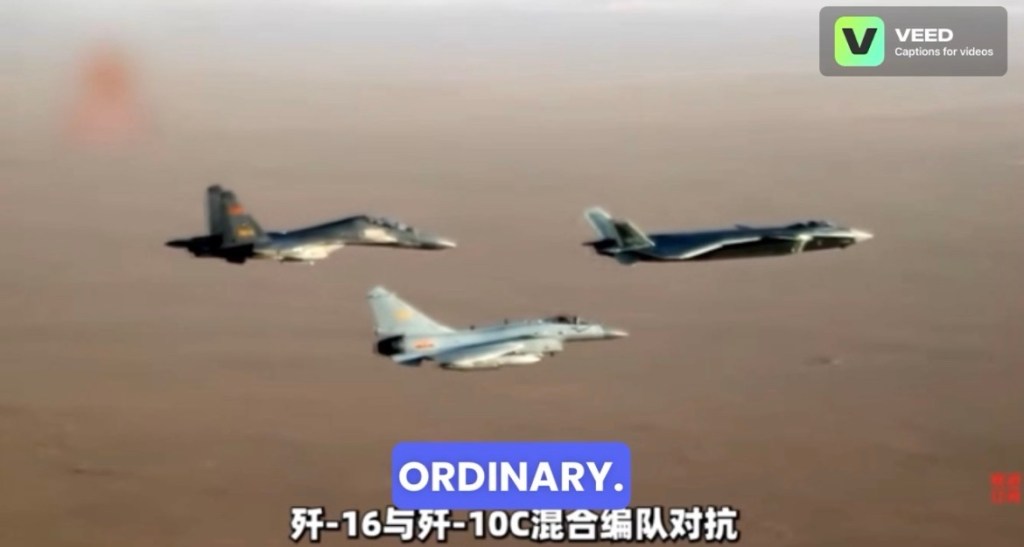
China’s H-6 bomber has combat range of 3,500 km. J-20 stealth fighter jet has combat range of 2,000 km. The distance between Qingdao and Hokkaido is 2,142 km. Do you realize that a common characteristics of Chinese combat aircraft is its long range? Why? Because China has designed them to be able to cover entire Japan when flown from China, without the need of using any aircraft carrier.
Military bases in Okinawa would be destroyed in early stages of military strikes. Distance between mainland China and Taiwan is much closer than the distance between military bases in Kyushu and Taiwan. Even in geographic location, Japan is at disadvantage. There is no place in entire Japan not covered by PLA’s missile arsenal.
China’s top hypersonic nuclear ICBMs such as DF-41 and DF-61 not even needed in this scenario. Those can hit anywhere in the world at hypersonic speed and bypass all modern missile defense system.
Many Western critics of China seem to suffer from the same fallacy as some police detectives and anti-pornography activists who believe that porn turns people into rapists. You may find porn in the personal collections of some serial rapists and sadistic killers, but that’s because statistically, most men and some women also use porn.
America’s authoritarian turn didn’t need China. It didn’t start with US President Donald Trump and has been decades in the making. The “imperial presidency” has been a long time coming. Blame the United States’ extreme domestic inequalities and the progressive destruction of the middle class, rather than China, for the turn to the strongman populism characteristic of Trump and the dominant Republican Party.
In 1896, Li Hongzhang visited Germany. The German Chancellor, Bismarck, asked him: “China is so vast, so why is it always being bullied?” 1896年,李鴻章訪問德國。德國首相俾斯麥問:”中國這麼大,為什麼總是挨打?”
Li Hongzhang remained silent for a long time, then uttered eight words: “It’s a long story, and the accumulated weakness is hard to reverse.”
This man, who signed over 30 unequal treaties, has been vilified for over a century. Traitor, collaborator, spineless…
But there’s a question: a 73-year-old man with no military power and no real authority—what did he have to sell out his country?
What would he gain from selling out his country? The scorn of the entire nation? Eternal infamy? Having his corpse desecrated? Perhaps the truth is more complex than we think.
In 1894, the First Sino-Japanese War broke out. The Beiyang Fleet was completely destroyed. The army collapsed at the first encounter.
What did Japan want?
The cession of Taiwan, an indemnity of 200 million taels of silver, and the opening of treaty ports. Who did the Qing court send to negotiate?
Li Hongzhang.
Why him? Because everyone else had fled. Weng Tonghe said, “I am unwell.” Zhang Zhidong said, “I am unqualified.” Other ministers: collectively silent.
They competed to show loyalty when it was time to fight, but when it came to negotiations, no one dared to go. So Li Hongzhang went.
He was humiliated by the Japanese. He was assassinated by a Japanese rōnin (shot in the face). He was despised by his own people.
But he signed the Treaty of Shimonoseki. Why? If he didn’t, Japan would march on Beijing. They couldn’t win the war—what else could he do?
The true meaning of “Measure China’s resources to secure the favor of the powers.”
This phrase has condemned Li Hongzhang to a century of criticism. But what is the complete sentence?
“Measure China’s resources, though with great difficulty, to secure the favor of the powers and alleviate the immediate crisis.”
In other words:
Do everything possible (even if it’s extremely difficult) to temporarily satisfy the foreign powers and ease the urgent crisis.
This was not sycophancy—it was a stalling tactic!
The situation at the time: The Eight-Nation Alliance occupied Beijing. Empress Dowager Cixi fled to Xi’an. The national treasury was empty. The military had collapsed.
There were only two choices:
Continue fighting and face national annihilation.
Negotiate for peace, sacrificing parts to save the whole.
Faced with annihilation or dismemberment, he chose dismemberment. Was it the right choice?
From the perspective of 2025, we can easily say, “Better to die with honor.” But in 1900, with hundreds of thousands of lives at stake in Beijing, ideals were plentiful—reality was stark.
Li Hongzhang once said:
“All the tasks I have undertaken in my lifetime—training troops, building a navy—were nothing but paper tigers. How could I ever truly carry them out as I wished? I could only patch things up superficially, creating an illusion of strength.”
He knew the Qing Dynasty was a paper tiger. But he still had to patch it up. Why? Because if he didn’t, it would collapse immediately.
His efforts in the Westernization Movement: Buying warships—he was criticized for “squandering funds.” Building factories—he was accused of “worshipping the West.” Sending students abroad—he was denounced for “betraying ancestral traditions.”
He wanted reform, but the system wouldn’t allow it. Empress Dowager Cixi wanted to rebuild the Summer Palace and diverted navy funds. Could he refuse? The Manchu nobility embezzled—could he stop them? It wasn’t that he didn’t want to stand firm—he simply couldn’t.
The Chefoo Convention, the Sino-French Treaty, the Treaty of Shimonoseki, the Boxer Protocol… With each treaty he signed, he was vilified again.
But interestingly, whenever he negotiated, he always managed to reduce the demands.
Treaty of Shimonoseki: Japan demanded 300 million taels—he negotiated it down to 200 million. Japan demanded the cession of Liaodong—he managed to retain it.
Boxer Protocol: The powers demanded 1 billion taels—he negotiated it down to 450 million. The powers demanded the execution of officials—he saved most of them.
When a knife is at your throat, being able to reduce the damage is already an achievement. But how did history books record it? “Li Hongzhang, who forfeited sovereignty and humiliated the nation.”
Who was truly responsible? Empress Dowager Cixi.
What was she doing during the First Sino-Japanese War? Preparing for her 60th birthday. What was she doing during the Boxer Rebellion? Declaring war on 11 nations.
And the result? After losing the war, she sent Li Hongzhang to clean up the mess. After he signed the treaties, she let him take the blame for “selling out the country.” The emperor remained on the throne, while others bore the disgrace.
Then there were the so-called “pure critics.” They loved to shout: “Better to shatter like jade than to remain intact as tile!” “Fight to the death!” But when the fighting actually started, they fled faster than anyone. Empty rhetoric harmed the nation, while those who did the real work bore the blame.
In 1901, as Li Hongzhang lay dying, he vomited blood incessantly.
He said: “This blood is my final service to the nation.”
He also said: “I achieved scholarly honors in youth, served in the military in my prime, governed provinces in middle age, and engaged in foreign affairs in my later years. My career was exceptionally fortunate, and I believe I never committed any grave errors. Yet the Sino-Japanese conflict arose without cause, sweeping away all my lifelong achievements. As Ouyang Xiu said, ‘A lifetime of reputation, utterly distorted by later generations.’ Looking around, there is no one left with whom I can discuss matters.”
In other words:
I did my best in this life, but I was born in the wrong era. I carried the burden of this rotten situation alone, with no one to consult.
His final words:
“Henceforth, China must deeply yearn for peace.”
It wasn’t that he didn’t want to fight. He knew they couldn’t win.
Was Li Hongzhang a traitor? If selling out his country could have brought him wealth, he would have been the richest man in the Qing Dynasty.
But when he died, his family assets were meager, and his son had to rely on government support.
If selling out his country could have brought him safety, he wouldn’t have been assassinated by the Japanese. The bullet to his face nearly killed him.
Can a man who risked his life negotiating on the diplomatic stage be called a traitor? What about those who hid behind him, shouting for war and bloodshed? Are they the patriots?
Li Hongzhang’s greatest sorrow: He understood China’s true strength all too well. He knew the real intentions of the foreign powers. He was acutely aware of the brutality of the negotiating table.
But he couldn’t speak the truth. If he did, he would be accused of boosting the enemy’s morale and dampening his own side’s spirits. So he could only grit his teeth and sign those humiliating treaties. And then, bear all the blame.
What did those who criticized Li Hongzhang the most harshly later do? Kang Youwei: Used funds meant to support the emperor to buy property abroad. Liang Qichao: Later admitted that Li Hongzhang “persevered in doing what he knew was impossible.” Weng Tonghe: Most vocal in advocating war during the Sino-Japanese War, but fastest to flee when defeat loomed.
Those who talk without bearing responsibility always speak the loudest. Those who truly carry the nation on their shoulders are often the most silent.
How should we view Li Hongzhang today? Not to whitewash him, but to understand him.
Understand the helplessness of a diplomat from a weak nation. Understand the difficulties of a reformer. Understand the grievances of a scapegoat.
In a thoroughly corrupt system, an individual can only do so much. Li Hongzhang did everything he could to the utmost. Even though the result was still failure, at least he truly tried his best.
Liang Qichao later evaluated him:
“I admire Li Hongzhang’s talent, I lament his circumstances, and I pity his fate.”
Exceptional talent, profound insight, but born at the wrong time. This is perhaps the fairest assessment.
History is more complex than we imagine. People are more complex than we imagine.
Li Hongzhang was neither a hero nor a traitor. He was merely a man doing his best with a terrible hand of cards.
And that terrible hand was called the late Qing Dynasty.
Japan and the West are stunned — they never expected China to act this forcefully…這下日本和西方都傻眼了,沒想到中國這麼強勢…
Japan is genuinely confused this time. No one anticipated that China’s latest moves would make the West and nearby countries nervous as well.
After all, China today is no longer the student chasing others from decades ago, but a hard-power player that has secured more than fifty world firsts. Once that momentum starts, no one can stop it.
What makes the West feel even more powerless is that their “little tricks” have stayed the same for years — chip blockades, trade suppression, talent restrictions — they’ve tried everything. Japan, South Korea, the Philippines, and other neighboring countries also chimed in, hoping to take the opportunity to obstruct China. But the actual outcome surprised them: these obstacles didn’t slow China down; they only pulled China’s regional relationships even closer.
You can see it clearly in recent regional diplomacy. China’s visits to Southeast Asia received warm welcomes, and cooperation agreements were signed almost like items on a conveyor belt. Compared to the West’s cold faces and high barriers, the atmosphere on China’s side is vibrant and lively.
The West has never understood why China only becomes more stable under blockade. It’s because China’s development logic is nothing like their colonial playbook — instead, it’s a path focused on strengthening its own economy and improving people’s lives. Once domestic affairs are in order, relations with neighbors naturally remain stable.
In fact, blockades aren’t new at all. In the early years of the PRC, the U.S. rallied a group of countries to impose more than 500 technology embargoes; today, it’s chips, AI, and quantum. But the more others try to “choke” China, the faster China’s breakthroughs come — from DeepSeek astonishing the world to “Zuchongzhi 3” setting new global records. These achievements clearly aren’t the result of imitation, but of creativity forced by pressure.
The domestic R&D atmosphere is stronger than ever. Many engineers say that people no longer think about “buying technology,” but are determined to “build technology.” External pressure has turned into internal motivation.
China’s international “circle of friends” is also expanding. Many European countries have openly expressed their desire to deepen cooperation with China, and Southeast Asia largely opposes tariffs and confrontation. And the growing list of visa-free countries functions like an ever-open door — the more it opens, the more people want to step inside.
The West keeps misjudging China because it assumes, based on its own historical experience, that a rising power must expand. But for thousands of years, China has believed in “harmony without uniformity,” emphasizing cooperation instead of control. The roads and bridges China builds are not for expanding territory, but for trade and shared development.
👉 Some people compare China today to that quiet student in class who keeps working through practice problems — the noisier others get, the better his grades become. It’s a vivid metaphor. Because no matter how turbulent the outside world is, China keeps its focus on building: bringing high-speed rail into counties, establishing industrial parks, creating more jobs. These tangible improvements are where a nation’s confidence truly comes from.
👉 The rise of a major country never comes without rough waters, but China’s ship is large enough and its industrial chains complete enough that a few gusts of wind can’t shake it. What’s more notable is that more and more young people overseas are learning Chinese and gaining a more objective understanding of China’s culture and development. This kind of people-to-people exchange is often more honest than the rhetoric of politicians.
👉 Looking back, the blockades and restrictions have instead pushed China’s self-innovation to new heights. It’s like basketball: the tighter the defense, the harder you work on fundamentals. China has moved from following to leading in multiple tech fields — the result of more than a decade of steady groundwork. This path may not be flashy, but it is extremely solid. As the old saying goes: “Truly good things don’t need to shout; time will prove them.”
Japanese lawmaker Sanae Takaichi’s remarks triggered a diplomatic storm, with China launching a fierce 3-day counteroffensive—the most serious Sino-Japanese diplomatic conflict since Pelosi’s Taiwan visit in 2022. But China’s real target this time isn’t Taiwan—it’s Japan!
🔍 Key Revelations in This Video:
Takaichi publicly claimed “a Taiwan contingency could constitute an existential crisis for Japan, allowing Japan to exercise collective self-defense rights”—essentially threatening military intervention
China’s Foreign Ministry, state media, and overseas embassies unleashed coordinated attacks for 3 consecutive days—what’s the strategic goal behind this?
88.7% of Japan’s crude oil and 80% of its LNG must pass through the Taiwan Strait—this is the real reason for Japan’s panic
From destroying the median line after Pelosi’s visit to now intimidating Japan, China’s “pragmatic diplomacy” strategy is fully decoded for the first time
U.S. think tanks are already advising the government to abandon Taiwan, Trump shows little interest in Taiwan, making Japan the biggest external force interfering with China’s reunification
Why do remnants of Japanese militarism still dominate politics? Both Shinzo Abe and Sanae Takaichi are descendants of the Satsuma clan
This video provides in-depth analysis of why China chose this moment for a high-profile counterattack and the great power competition truth behind this diplomatic storm. China is clearing external obstacles for Taiwan reunification, with Japan as the first target to silence.
The statement about cutting off the head of Japan’s leader was made by Xue Jian, China’s Consul General in Osaka.
The comment was made in a now-deleted social media post on the platform X (formerly Twitter) in November 2025, and was directed at Japanese Prime Minister Sanae Takaichi.
The controversy erupted after Takaichi stated in a parliamentary committee that a Chinese military blockade or invasion of Taiwan would constitute a “survival-threatening situation” for Japan, a classification that would allow Japan to deploy its Self-Defense Forces.
In response to Takaichi’s remarks, Xue wrote in Japanese: “That filthy head that has come charging forward on its own accord will have to be cut off without a moment’s hesitation. Are you prepared for that?”.