If you love listening to Andy Lau and Teresa Teng’s songs, you will never tire of listening to them, right?
If you are Chinese and a Chinese who loves the motherland, you will never tire of hearing good stories about China, real good stories, right?
So for people who hated to hear good stories about China on social platforms, there are only two types of people who want to attack you:
1) He/she is a member of the Chinese Chinese-hate political Party, which is very powerful in the US, many works as an undercover agent in many Chinese groups
2) There are also many working for NSA/CIA/Military Intelligence. These people are highly paid and headquartered in Colorado. More than 70,000 people working on or off sites. I have clients with children born in the United States working for them. Their job is to attack domestic and foreign enemies like the Chinese and China. They are also masters of cyber hacking, and this department likes to hire first-generation Chinese born in the US who are proficient in Chinese.
A New Chinese Economy Created By Trump (Part I) Beijing is no longer obsessed with Washington, when Washington unfortunately remains obsessed with Beijing.
Editor’s Note:
In an exclusive interview with the China Academy, Professor Jin Keyu from the London school of Economics, also the author of The New China Playbook, elaborates on how China has adjusted its focus away from U.S. policies, while the U.S. has not learned to do the opposite.
The China Academy: After Trump’s reelection, despite his threats of imposing taxes on China, the Chinese capital market seemed relatively calm. Trade data shows that by the end of October 24, China’s export dependency on the United States decreased to 14.6%. Can we say that the US has failed in its trade war with China? What changes have occurred in China’s foreign trade pattern in recent years?
Keyu Jin: I think that the objectives of the US trade war, whether it was to reduce Chinese exports to the US and thereby reduce the bilateral deficit or to mitigate China’s global position in manufacturing, in that sense, have totally failed. And I think most economists would agree that trade wars really accomplish very little, except to hurt the countries involved. But I think going beyond that, there are also unexpected consequences, which is that it’s really been a long march since the first trade war, where Chinese companies have already been braced for this new uncertainty.
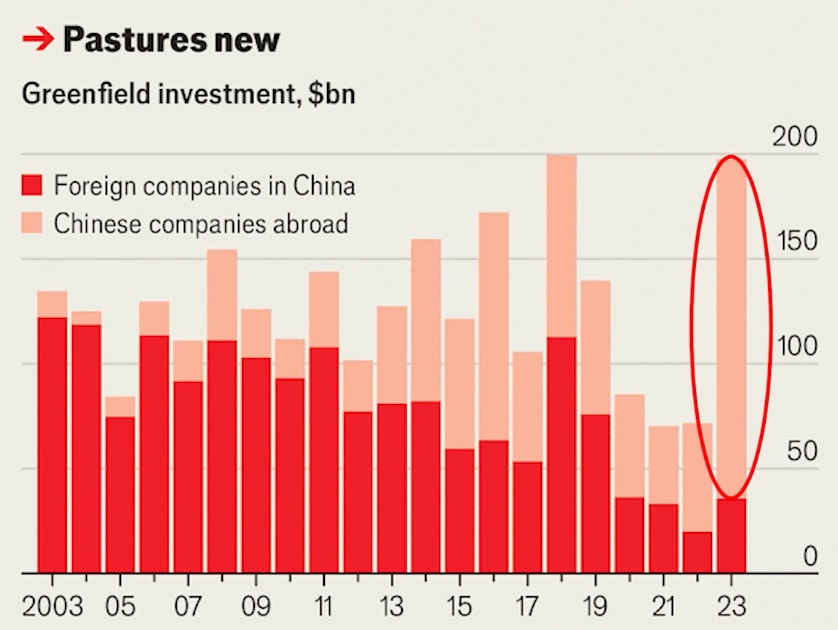
It has set off a globalization frenzy among Chinese companies. If you look at the data, in many major sectors, the majority of these Chinese companies have either already considered or are already implementing “going global” plans that would not have taken place as rapidly had there not been, for the first time, a trade or tariff war.
Moreover, if you look at the data, Chinese exports really seamlessly flowed away from the US to other countries. That is why currently Chinese exports are back at pre-tariff war levels. Chinese exports as a share of global exports have actually even climbed up. Meanwhile, the US share is declining, which means that China is even more integrated into the global economy.
In the past, I think for all of these tactics or strategies or restrictions, there are always unintended consequences to consider. China is not a place where they would voluntarily just submit to these aggressions but would actually react to it. And whether in the end the overall impact was beneficial for the US or not, I think it’s really the contrary.
The China Academy: What are your predictions for the economic actions of both China and the US in Trump’s potential second term?
Keyu Jin: It is not clear what President Trump would do with regard to imposing tariffs on China when he becomes president again. I think all of that is still very much in flux. But what I’m certain of is that China is not interested in a trade war.
China is not interested in engaging in more economic or financial confrontations with the United States for one reason, which is that it’s not going to be good for China. It’s not going to be good for the US either. Also, inflation is at a much higher level than it was in 2018. The Chinese economy is also in a weaker position than it was in 2018. The majority of China’s economic challenges remain within the country. It’s internal, not external.
The focus of China is not on the US, contrary to the other way around. There is no dangerous obsession with the United States in China, unlike the dangerous obsession with China in Washington, D.C. To fix China’s economy, they have to direct more of their resources internally.
Moreover, we’ve heard multiple times in the last couple of months the premier saying emphatically that China is going to be the world’s opportunity, meaning China is going to open up widely, deeply, broadly, and even unilaterally, If needed. China is going to impose zero tariffs on the least developed countries.
That is a symbolic gesture of a big country trying to be part of a global story, trying to really lift up other countries in the network as well.
Mixed blood Miss HK speak fluent Mandarin, Chinese Chinese-haters loves her beauty, hated that she said she is Chinese 混血兒香港小姐說流利普通話,華人恨國黨又愛又恨,愛她的美,恨她認自己是中國人
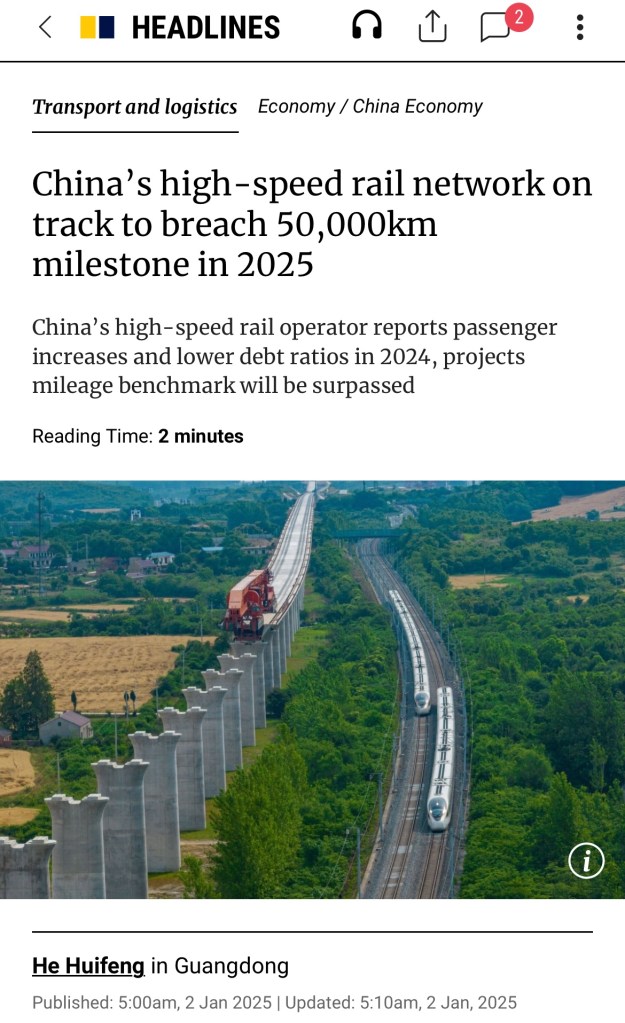
China high-speed railway mileage projected to reach over 50,000km and transport revenue set to surpass US$137 billion. Honolulu started the 42km snail rail at around the same time with no completion date in sight. Is this the way to compete with China? Talk is cheap when Americans always failed to deliver as promised! 中國高鐵里程預計將超過5萬公里,運輸收入將超過1,370億美元。夏威夷檀香山大約在同一時間啟動了 42 公里長的蝸牛鐵路,但目前還看不到完工日期。這是與中國競爭的方式嗎?當美國人總是未能兌現承諾時,空談就變得毫無意義!
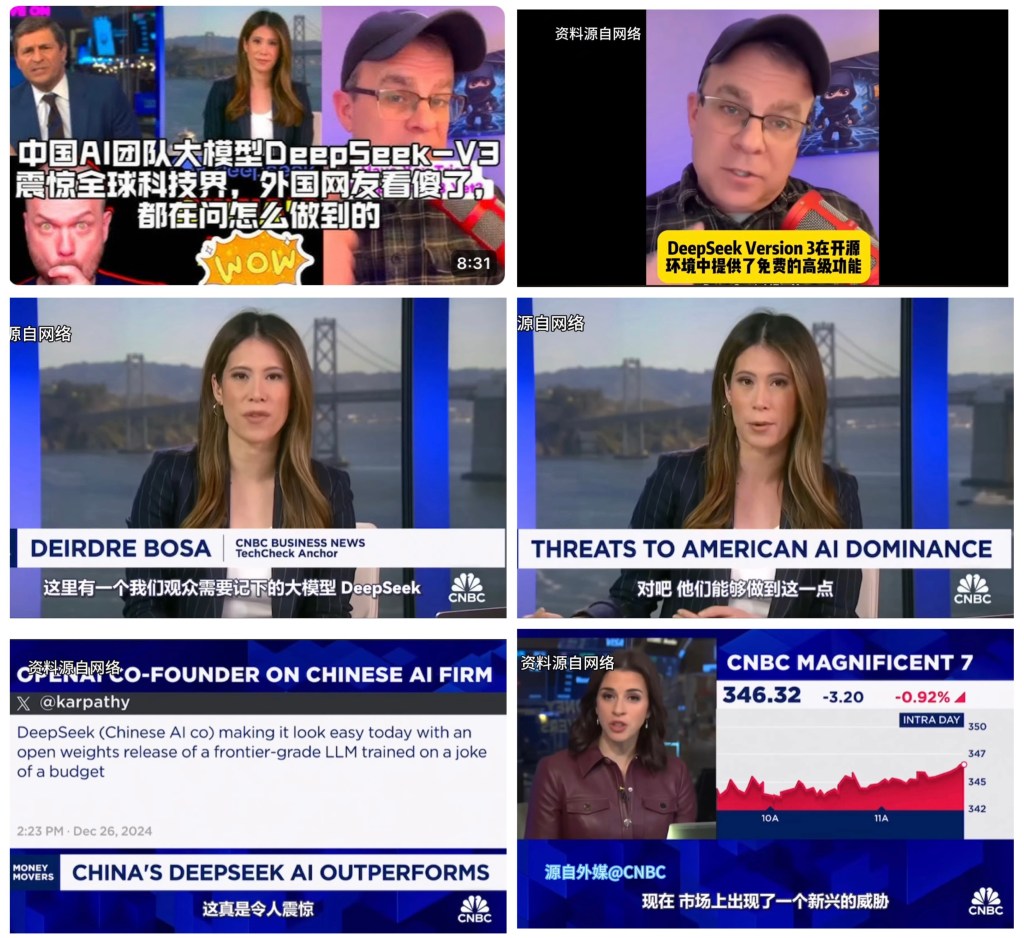
Video: The Chinese AI team’s large model DeepSeek-V3 shocked the global technology community. The China large model costing US$5 millions is faster and better than the large model costing US$500 million in US. Foreign netizens were dumbfounded and asked how they could do this? It is the wisdom of the Chinese people. To contain China, US really overestimates its capabilities and underestimates its own incompetencz! 中国AI团队大模型DeepSeek-V3震惊全球科技界,花五百窩美元的大模型比美國花五億美元的大模型更快更好,外国网友看傻了,都在问怎么做到的? 這就是中國人的智慧,美國和中國鬥,真的是不自量力,又不夠班.
American logistics expert reports from China video: The US needs $85 billion to build copper mines to replace China’s. Where are the investors? Investors are not foolish won’t invest in US when production cost much higher than China. 美國物流專家中國視訊報導:美國需要850億美元建造銅礦以取代中國。投資者在哪裡?當美國生產成本遠高於中國時,投資者不會愚蠢地在美國投資.
Large subsidies and tax credits are available to develop a copper supply chain that would reduce dependence on China, who is the world’s leader in copper refining.
But China’s copper supply chains are highly efficient, clean, and low cost. Chinese companies have strong supplier contracts with resource-rich copper areas in Africa, Mexico, Peru, and Chile.
China’s deep investments in copper supply chains were necessitated by its rapid industrialization, and then by its enormous factory sector for appliances and electronics. Now, the world’s copper mines feed China’s production of electric vehicles and green energy equipment.
Industry experts forecast a parabolic boom in demand for copper, along with plunging demand for oil, as the world’s transportation networks electrify. But insiders are also deeply pessimistic about our own companies’ ability to compete against China’s smelting and refining industries for copper, and investors have thus far shunned any new mines or smelting operations in North America or Europe.





 Business Blog