Saudi Arabia, Qatar, the UAE, Bahrain, and Kuwait have declared neutrality and will NOT allow the US to use their airbases against Iran 沙烏地阿拉伯、卡達、阿聯酋、巴林和科威特已宣布中立,不允許美國使用其空軍基地對付伊朗
https://nitter.poast.org/ASE/status/1841923113405317626#m
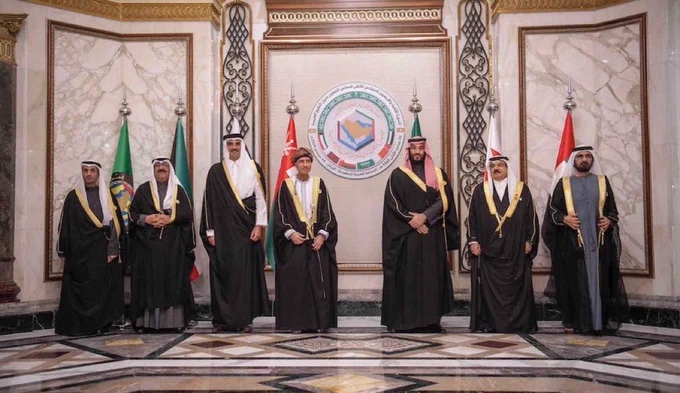
Saudi Arabia, Qatar, the UAE, Bahrain, and Kuwait have declared neutrality and will NOT allow the US to use their airbases against Iran 沙烏地阿拉伯、卡達、阿聯酋、巴林和科威特已宣布中立,不允許美國使用其空軍基地對付伊朗
https://nitter.poast.org/ASE/status/1841923113405317626#m
Harvard Business Review: China’s 4 economic strengths. The 4 Key Strengths of China’s Economy — and What They Mean for Multinational Companies 哈佛商業評論:中國的4大經濟優勢。中國經濟的四大關鍵優勢—及其對跨國公司的意義.
https://archive.ph/6ENeZ
https://hbr.org/2024/08/the-4-key-strengths-of-chinas-economy-and-what-they-mean-for-multinational-companies
This is capitalists trying to make sense of what makes China so successful, so it’s filtered through a HBR lens.
They could have just said “socialism is the competitive advantage”, but they can’t. This is HBR.
So they missed a whole bunch of things: infrastructure, public goods, workforce, logistics, education, etc.
這就是資本家試圖理解中國如此成功的原因,因此它是透過《哈佛商業評論》的鏡頭過濾的。
他們本可以說“社會主義是競爭優勢”,但他們不能。 這是《哈佛商業評論》。
所以他們錯過了很多東西:基礎建設、公共產品、勞動力、物流、教育等等
Foreign Affairs Magazine: China’s Soft Sell of Autocracy Is Working. Interesting article from FA. The expected narcissistic exceptionalism laced with paranoid-schizoid anxiety. 《外交》雜誌:中國對獨裁政權的軟推銷正在發揮作用。 FA 的有趣文章。預期的自戀例外主義夾雜著偏執-分裂的焦慮.
(NOTE: The author of this article does not understand China at all and describes Sino-US relations as an ideological battle. China has never thought about exporting its ideology. The so-called “telling China’s story well” only wants the world to understand China well, not for any selling. With the natural fragrance of musk, if more channels are built to let people from all over the world come into contact with the real side of China, there will naturally be people who speak good words for China. Since visa exemptions for many countries were opened, many foreign YouTubers have uploaded videos to tell the real situation in China. The West always thinks this is marketing or propaganda, which is nothing more than self-projection. Their election is marketing; promoting policies is also marketing. Africa and even the Global South no longer trust the West, but they have suffered simply because they did.)
Note the capitalist marketing framing (“China is out-messaging us”) and the solution: throw more money at private corporations!
U.S. policymakers must acknowledge that selling political models is an important arena of political competition—one that the United States stands to lose….the idea of American democracy does not simply speak for itself anymore.
…The United States should direct funding toward State Department public diplomacy programs… The CPC’s messaging strategy owes much of its success to highlighting pocketbook issues, especially the ability of the Chinese system to promote growth…
The United States should also work to emphasize the advantages of democratic political systems, such as a free press….Instead, the United States could subsidize independent U.S. press operations abroad, including supporting U.S. newspapers’ foreign bureaus, cable news outlets, and Internet media operations.
China is an authoritarian system that is beating the US in the global south for influence because its messaging is better.
China is winning over the global south because it is getting skilled in propaganda, and the US is “unfocused”. (projected capitalist mindset that everything is marketing, messaging, advertising, branding: smoke and mirrors without substance, rather than actual systems)
They begrudgingly admit that it’s a “soft sell”. It doesn’t strike them that China is not selling anything. Others are coming to China.
They see this as a marketing contest; China is deceiving (“elliding”) the world about its authoritarian system.
China’s message is a “prosperity gospel” of a responsive, meritocratic, effective, populist governance
The CPC is appropriating credit for the accomplishments of its hard-working people
Washington has a branding problem; its product is stale
More money!
China’s Soft Sell of Autocracy Is Working
And America’s Efforts to Promote Democracy Are Failing By Daniel Mattingly September 25, 2024
For decades, the United States has promoted democracy around the globe. But amid mounting U.S.-Chinese competition, a question has arisen: is Beijing attempting to export its authoritarian political system in a similar way? No, says Chinese leader Xi Jinping. “We do not seek to ‘export’ a China model,” he told an assembly of world leaders in 2017, “nor do we want other countries to ‘copy’ our way of doing things.” It would be a mistake, however, to think that Beijing is not seeking to shape global opinion in favor of China’s political system. The Chinese Communist Party’s efforts to promote autocracy are simply not as explicit as the United States’ hard-sell efforts to export democracy; instead, the CPC is soft-selling autocracy.
To that end, the party has invested heavily in public diplomacy and influence operations intended to make the global public more accepting of its nondemocratic political system. It has developed a far-reaching program of trainings, conferences, and workshops that teach CPC-style management of the press, Internet, military, and civil society to foreign political leaders. And despite a perception among some Western policymakers and academics that these efforts are tone deaf, China’s external influence operations are more sophisticated, effective, and likely to succeed over the long run than many in the West believe. They are aimed primarily at people in the developing world, where many see the so-called China model as effective at delivering what matters most to them: a path out of grinding poverty and into the global middle class.
In the face of Beijing’s increasingly resonant foreign propaganda, Washington has failed to rise to the challenge. It has yet to adopt a coherent message about the merits of the U.S. political system. In contrast to China’s messaging, which is tightly focused on winning over audiences in the developing world, U.S. messaging is scattershot and less persuasive. To compete, the United States needs to sell a positive vision for itself around the world. And it needs to refine this message for people in the developing world, which is likely to be the main arena of this competition. Should Washington fail to adapt its pro-democracy strategy to today’s evolving political and economic realities, it will cede ground to Beijing—and could well fuel international support for China’s autocratic model.
To sell its political system abroad, the CPC frames it as responsive, meritocratic, and remarkably effective at shepherding economic growth—without calling attention to its authoritarian aspects. CPC messaging claims that China’s political system is receptive to citizens and their everyday demands for government services and infrastructure. Propaganda videos feature inspiring drone shots of engineering marvels such as China’s high-speed rail network, its impressive bridges, and its gleaming airports.
The party also claims that the ruling party is staffed with highly competent politicians who undergo a rigorous selection process. Here, CPC messaging typically argues that the current civil service exam, which is in fact highly selective, is a legacy of the competitive imperial exam for selecting mandarins who served China’s emperors.
The most important element in the CPC’s soft-sell strategy is touting China’s extraordinary economic growth—what amounts to a prosperity gospel for the autocratic world. The CPC’s foreign propaganda points toward China’s inspiring success in lifting hundreds of millions of people from dollar-a-day poverty into the global middle class, which is an undeniable fact. Of course, rather than giving credit for this success to the Chinese people, the CPC likes to claim that the ruling party is mostly responsible.
Official messaging is generally upbeat and avoids a hard sell, even if the harsh and combative messages of a small subset of Chinese diplomats occasionally grab headlines. Xi and other party leaders have often stressed the need to “tell China’s story well” and spread “positive energy” about the country both at home and abroad. The underlying idea seems to be that hope and inspiration sell better than doom and gloom. Some of China’s foreign messaging is devoted to criticizing Western democracies and painting U.S. democracy as especially chaotic. For the most part, however, it promotes China’s own story.
Notably, these messages don’t just elide the authoritarian aspects of China’s political system, they also claim that it is in fact democratic. The CCP’s official stance is that China is a “whole process democracy” in which the ruling party, while unelected, represents the interests of all people, in contrast to parties in democracies that supposedly represent just factions of society. This messaging builds support for China’s illiberal, authoritarian system while dressing it up as a populist democracy.
The CPC pushes this message through an array of channels. The party has established a global television news network, CGTN, its answer to CNN or the BBC. It has funded an expansion of the global wire service Xinhua, which is making inroads abroad by placing its content into foreign newspapers. The party also increasingly uses covert influence operations on social media by promoting influencers who cheerily sell the merits of the Chinese system.
CHINA’S FRESH FACE
For decades, U.S. analysts have expressed skepticism as to whether the soft sell actually increases global acceptance of the Chinese political system. Their assumption has long been that the Chinese system is too authoritarian and too specific to the Chinese context to win over admirers overseas. China’s messaging, to many Americans’ ears, often falls flat. Some messaging is explicitly anti-American; moreover, the more positive stories of China’s growing prosperity can be seen as a threat to the United States’ global status—and given the United States’ greater wealth, there is little reason for it to emulate China’s system.
It is now clear, however, that CPC messaging is in fact effective at changing hearts and minds and building support for China’s autocratic system—but mostly outside of wealthy democracies. In a study published in the American Journal of Political Science in 2024, I worked with an international team of researchers to survey people across 19 countries in six continents and to analyze data on thousands of propaganda videos produced by CGTN. We found that viewers’ positions on China moved dramatically after watching representative clips produced by CGTN. Although only 16 percent of people preferred the Chinese political model to the U.S. political model initially, after watching CGTN content, 54 percent stated the reverse. People also saw the Chinese system as more responsive, better at delivering growth, and, remarkably, more democratic in character.
CPC messaging is particularly resonant in the developing countries we studied, such as Colombia, Kenya, Mexico, Nigeria, and South Africa. It is not a coincidence that these are areas where China has invested heavily in expanding its media footprint. CGTN, for instance, opened a bureau in Nairobi in 2012, and the party’s English-language newspaper, China Daily, has established content-sharing agreements with dozens of media outlets in Latin America.
A saving grace for the United States is that relatively few people consume China’s foreign-facing media, which means that however effective and slick its programming, its reach is not yet all that broad. For example, only seven percent of South Africans and six percent of Kenyans report regularly watching CGTN. The confined reach of China’s official media makes it, thus far, a limited tool.
The United States cannot take it for granted, however, that the CPC’s official media messaging will continue to have a narrow audience. The viewership of CGTN and other channels is growing, if modestly. In Nigeria, for example, viewership increased from six percent of the population in 2018 to 11 percent in 2020. The CPC also relies on an array of other strategies to make inroads. It has, for instance, expanded the footprint of Xinhua, so that stories with pro-CPC messages, implicit or explicit, are more likely to appear in newspapers around the globe, sometimes without attribution to Xinhua itself.
Moreover, China’s propaganda campaign is helped greatly by the fact that whereas the United States is old news, with a reputation born of decades of international activity, China is seen as a relatively new player. With many having relatively little knowledge about China and its system, the CPC is seizing the opportunity to define itself from scratch overseas. The United States, in other words, is the incumbent to China’s lesser-known challenger—and the United States, universally known and weighed down by its history of meddling and intervention, may find it very difficult to change minds. China, on the other hand, is a fresh-faced newcomer by comparison and can introduce itself as the better, unburdened alternative to Washington’s tired goods.
THE NUTS AND BOLTS OF AUTOCRACY
China uses traditional media and social media to sway the broader global public, but the CPC also has a complementary strategy for advancing its system among elites: workshops and summits to sell the benefits of Chinese-style governance. The Chinese government runs extensive programs instructing politicians across the globe about the mechanics of the CPC’s system of government. By the mid-2010s, according to a 2024 Atlantic Council report, the party was running an average of 1,400 training programs per year in developing countries on issues such as national governance, ethnic policies, and new media. But the effectiveness of these programs at changing minds or patterns of governance remains unclear.
The CPC also runs special training schools in Africa for politicians from regimes dominated by single parties. In 2022, the party established the Mwalimu Julius Nyerere Leadership School in Tanzania in partnership with parties in Angola, Mozambique, Namibia, South Africa, Tanzania, and Zimbabwe, many of which have experienced decades of dominant-party rule. The school focuses on the lessons of CPC-style party governance and discipline for parties in Africa. In addition to these workshops for civilian elites, the Chinese People’s Liberation Army trains foreign soldiers at military academies in China and abroad on maintaining control of the armed forces.
AMERICAN DEMOCRACY CAN’T SELL ITSELF
The United States cannot afford to stand idly by as China accelerates its efforts to sell its political system to the global public. So far, U.S. messaging has been far less coherent and effective than China’s influence campaign. This discrepancy became clear in my study; when survey respondents drawn from a global sample viewed both U.S. and Chinese messaging, on balance they moved toward China.
U.S. policymakers must acknowledge that selling political models is an important arena of political competition—one that the United States stands to lose. Official U.S. messaging to foreign audiences in the developing world is haphazard and gauzy, expounding on the idea of the United States, U.S. civil liberties, and the American way of life. There has not been a serious attempt to sell the merits of the U.S. system; Chinese messaging, on the other hand, is laser-focused on building global support for its system through consistent and targeted strategies. And amid the potential domestic political chaos ahead of November’s presidential election, the idea of American democracy does not simply speak for itself anymore.
There is much, however, that Washington can do on this score. The United States should direct funding toward State Department public diplomacy programs that evenhandedly portray the U.S. political system in all its glory and dysfunction—and, crucially, highlight the country’s dynamic economy. The CPC’s messaging strategy owes much of its success to highlighting pocketbook issues, especially the ability of the Chinese system to promote growth. China’s recent economic woes may very well undercut the ability to sell this message to a broad audience. The United States should take this as a lesson worth following and point to the considerable successes of the U.S. economy in producing innovation and prosperity.
The United States should also work to emphasize the advantages of democratic political systems, such as a free press. Washington should not lean exclusively on government organs for its messaging purposes; who wants to dine on state media when there are more exciting options on the menu? Instead, the United States could subsidize independent U.S. press operations abroad, including supporting U.S. newspapers’ foreign bureaus, cable news outlets, and Internet media operations. Foreign audiences are eager to consume American television, print, and Internet journalism that is free and honest—and that includes both critical and positive coverage of the United States.
In the long run, this is a competition the United States can win. Curiosity about the Chinese system does not mean that states actually can or will emulate it; China’s particular blend of a strong ruling party and elements of a capitalist market economy would be difficult to replicate elsewhere. Moreover, given China’s economic slowdown and the personalization of the CPC around Xi, Beijing’s economic appeals may soon start to lose their luster. The best advertisement for the U.S. system remains the United States itself—and the capacity of the country to live up to its democratic ideals
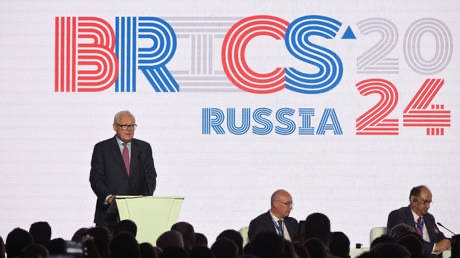
Russia reveals important condition for joining BRICS. Imposing sanctions against any member of the group would be a disqualifier. This would disqualify US Mafia and most AngloSaxon Western Empire + Japan. 俄羅斯透露加入金磚國家的重要條件。對該團體的任何成員實施制裁都將被取消資格。這將使全球黑幫老大美國和大多數白人西方帝國+日本沒有資格參加.
Video: China turn deserts into fertile farmlands, Western Empire turning cities & farmland into wastelands (Gaza, Afghanistan, Libya, Syria, Ukraine etc) 中國南水北調將沙漠變成肥沃的農田,但以美國為首的西方黑幫帝國將城市農田變成荒地(加薩、阿富汗、利比亞、敘利亞、烏克蘭)
https://rumble.com/v5hc8lp-china-turn-deserts-into-fertile-farmlands.html
https://www.tiktok.com/t/ZP8RtgEPP/
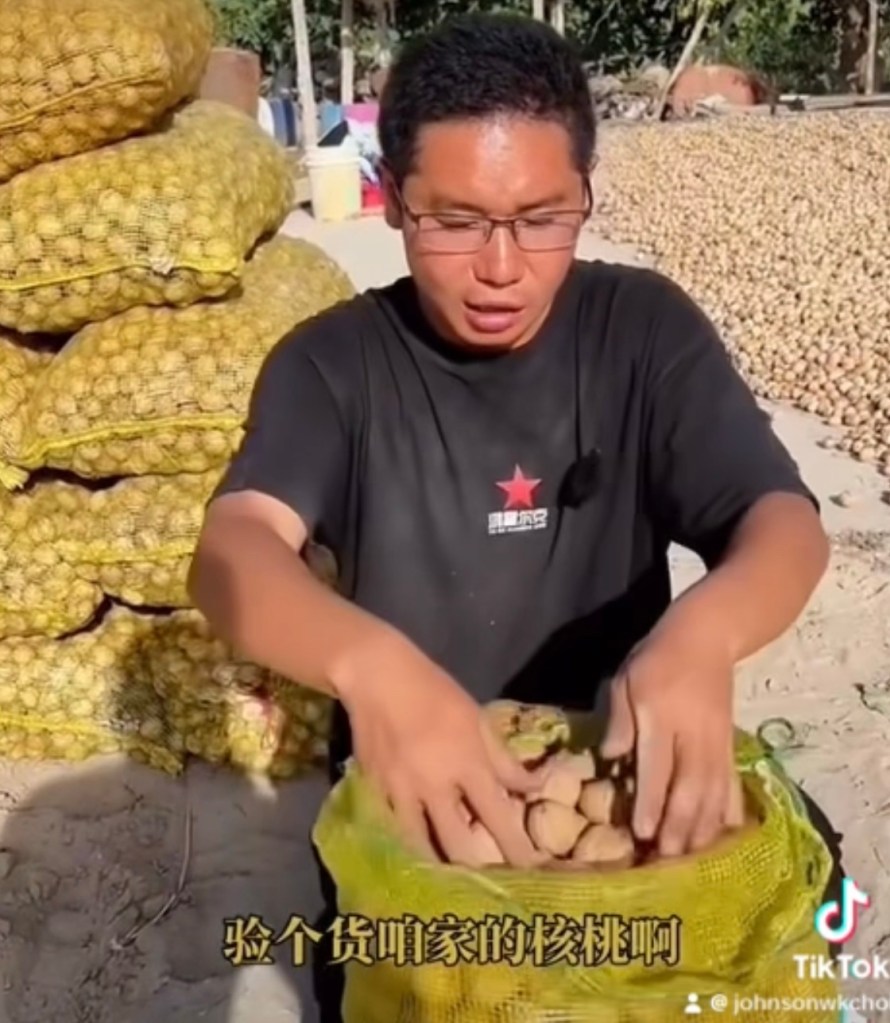
Food delivery video: How China does it compared to the 3rd world countries 送餐影片:中國與落後第三世界國家相比如何
https://rumble.com/v5hc0a1-food-delivery-how-china-does-it-compared-to-the-3rd-world-countries.html
https://www.tiktok.com/t/ZP8Rtbe44/
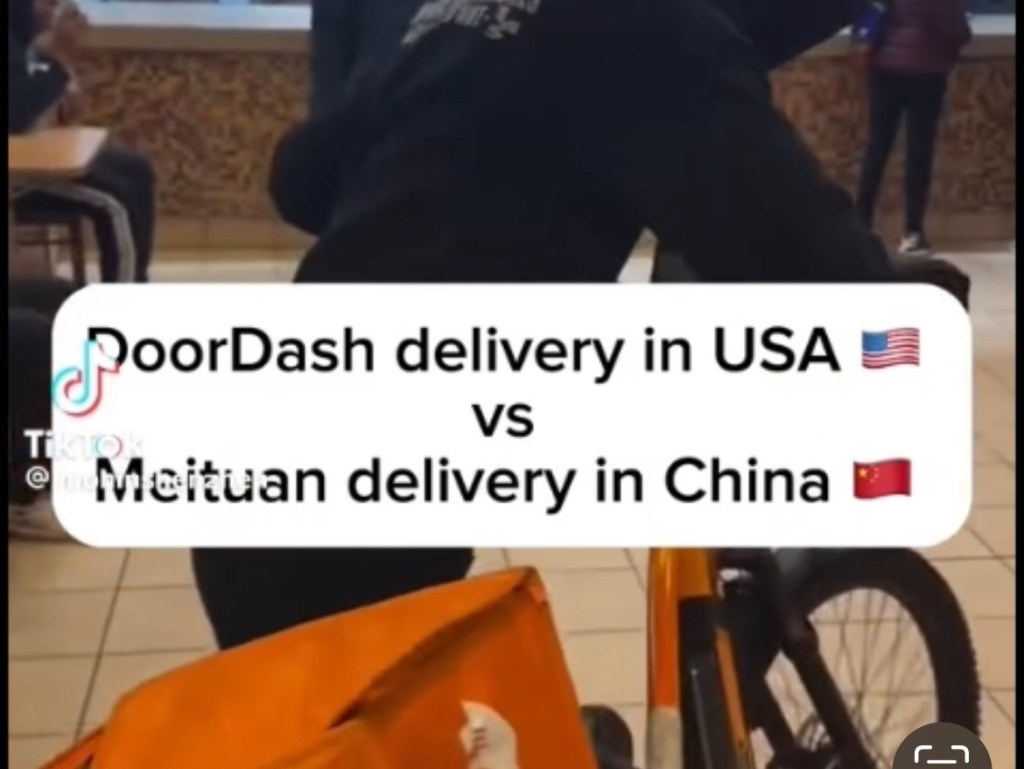
Video: Intermarriage is well accepted in China. Unlike US where we have Asian hates promoted by the US Gov’t with 3.1 billions fundings, Chinese Gov’t does not play the race cards. video dubbed to English! Visit app.vivalabs.ai to lipdub and lipsync 異族通婚在中國是被廣泛接受的。與美國不同的是,美國政府用 31 億美元的資金宣揚對亞洲人尤其是中國人的仇恨,中國政府永遠不會像美國政府如此下流打種族牌.
https://rumble.com/v5hb8rf-intermarriage-is-well-accepted-in-china.html
https://www.tiktok.com/t/ZP8RtFWbf/

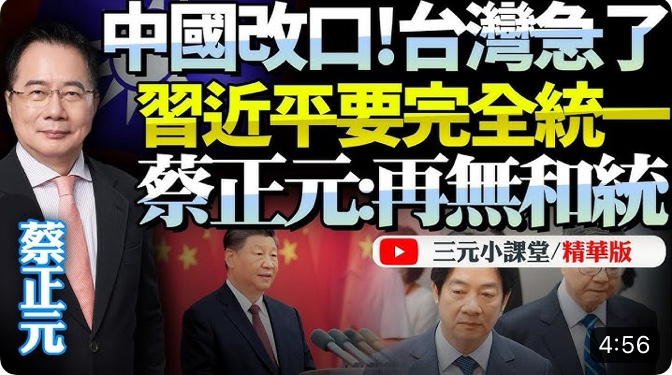
Taiwan US-China expert video: No double talks please! Want Peace No Reunification, Want Reunification No Peace. 台灣中美尊家視頻:習近平國慶再提「統一」卻「無和平」!蔡正元:兩者絕不共存!台灣沒實力就要認命!一群「鳥人」只懂嘴炮!
https://rumble.com/v5hayxh-want-peace-no-reunification-want-reunification-no-peace.html
https://www.tiktok.com/t/ZP8Rtrx14/
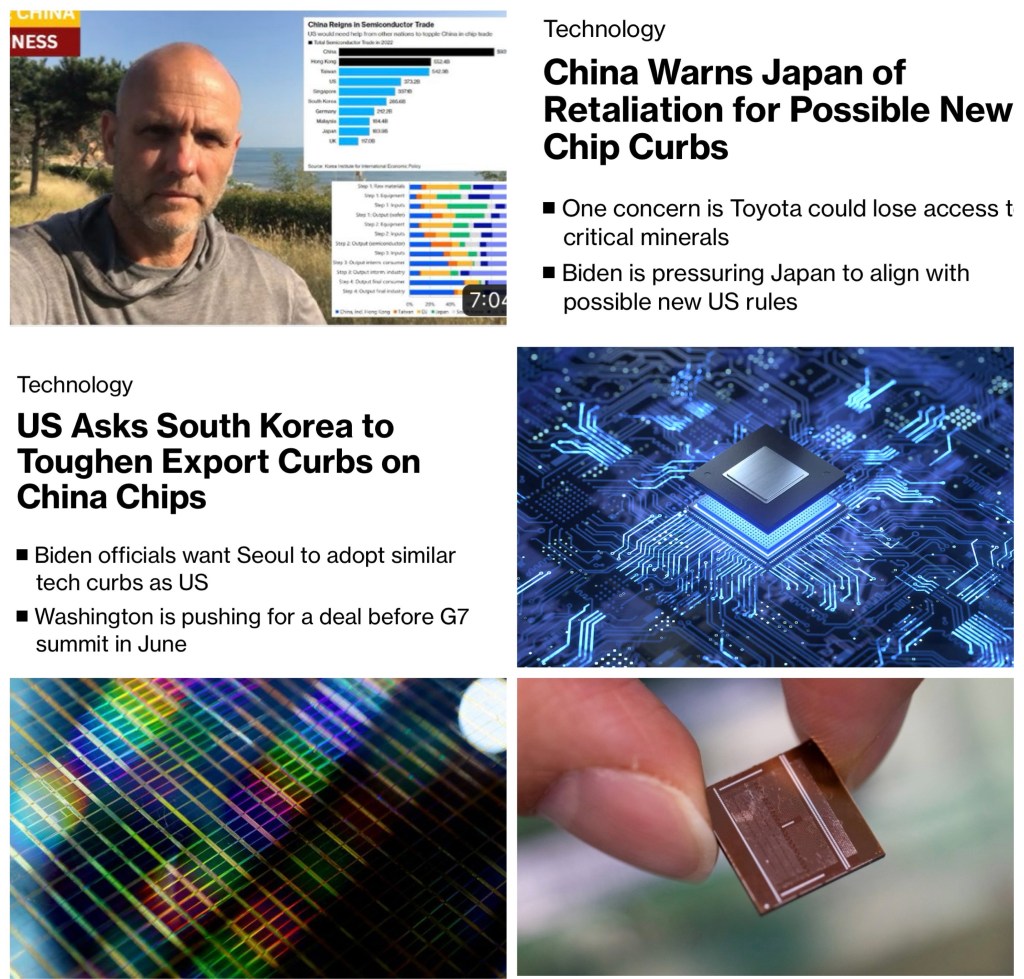
Video: Two problems in the Chip War: we need China to build semiconductors, and we need China to buy them 晶片戰爭的兩個問題:我們需要中國製造半導體,我們需要中國購買半導體
https://rumble.com/v5hatd9-two-problems-in-the-chip-war.html
https://www.tiktok.com/t/ZP8RGEGpN/
https://www.bloomberg.com/news/articles/2024-04-02/us-asks-south-korea-to-toughen-up-export-controls-on-china-chips
https://www.japantimes.co.jp/business/2024/09/02/tech/south-korea-us-china-chip/
https://waferpro.com/chinas-dominance-in-the-global-silicon-supply/
https://m.koreatimes.co.kr/pages/article.asp?newsIdx=383248
https://www.bloomberg.com/news/articles/2024-09-02/china-warns-japan-of-retaliation-over-potential-new-chip-curbs
https://www.rabobank.com/knowledge/d011371771-mapping-global-supply-chains-the-case-of-semiconductors
Korean tech companies are examples of the issues we face in our semiconductor export bans with China. China is dominant in key chokepoints of the supply chain, especially high-grade polysilicon and wafers, and certain rare earth elements necessary for the production of the newest-generation chips.
Korean firms also are heavily exposed by their own factory production, which is concentrated in China for the manufacture of intermediate components.
Most of all, though, is the chips firms’ reliance on China as a sales channel. China is by far the biggest buyer of semiconductors, and the rest of the world simply cannot replace Chinese firms as buyers. So to comply with US and EU demands for further chip restrictions is to imperil the survival of our own companies.
韓國科技公司就是我們在對華半導體出口禁令中所面臨的問題的例子。 中國在供應鏈的關鍵節點上佔據主導地位,尤其是高品級多晶矽和矽片,以及生產最新一代晶片所需的某些稀土元素。
韓國企業也因自己的工廠生產而受到嚴重影響,這些工廠生產集中在中國,用於製造中間零件。
不過,最重要的是晶片公司對中國作為銷售管道的依賴。 中國是迄今為止最大的半導體買家,世界其他國家根本無法取代中國企業成為買家。 因此,遵守美國和歐盟進一步限制晶片的要求就會危及我們自己公司的生存。
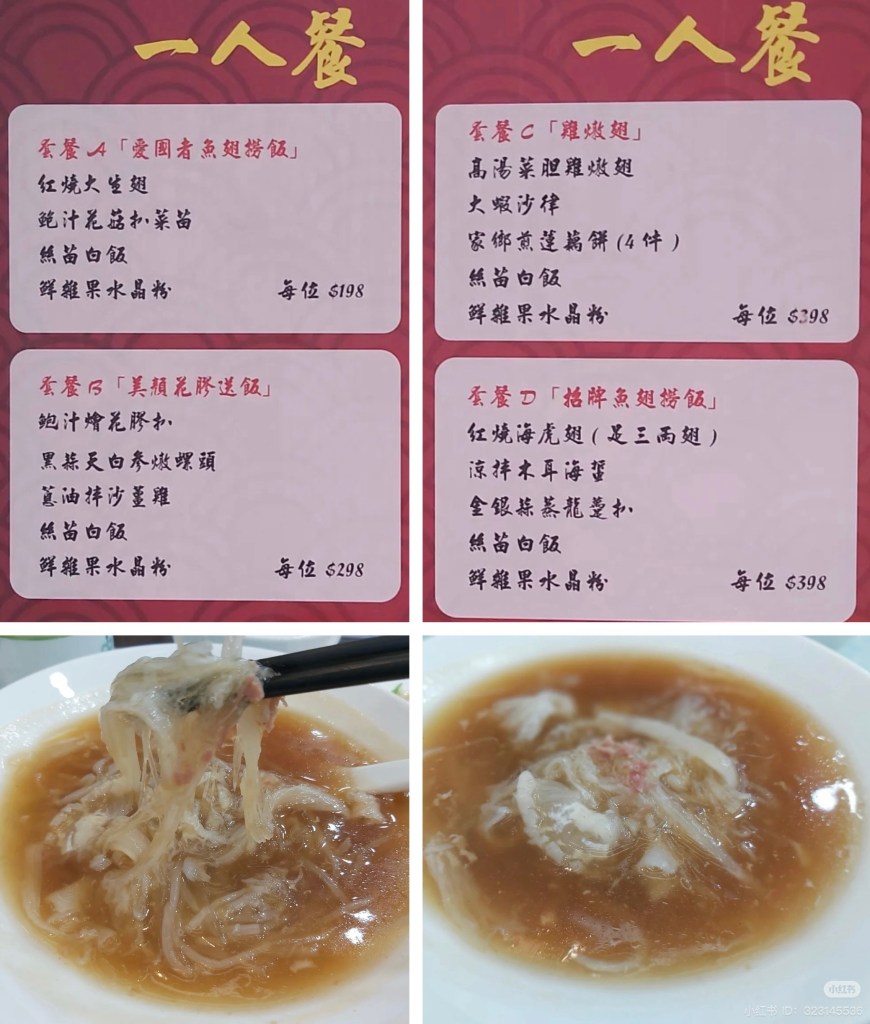
Video: Shark Fin Soup Restaurant in Jordon (MTR Jordon C Exit) Kowloon Hong Kong 中華樓酒家,魚翅撈飯,香港九龍佐敦庇利金街63號地下
https://rumble.com/v5haiyb-shark-fin-soup-restaurant-in-jordon-mtr-jordon-c-exit-kowloon-hong-kong.html
https://www.tiktok.com/t/ZP8RGcXDu/
 Business Blog