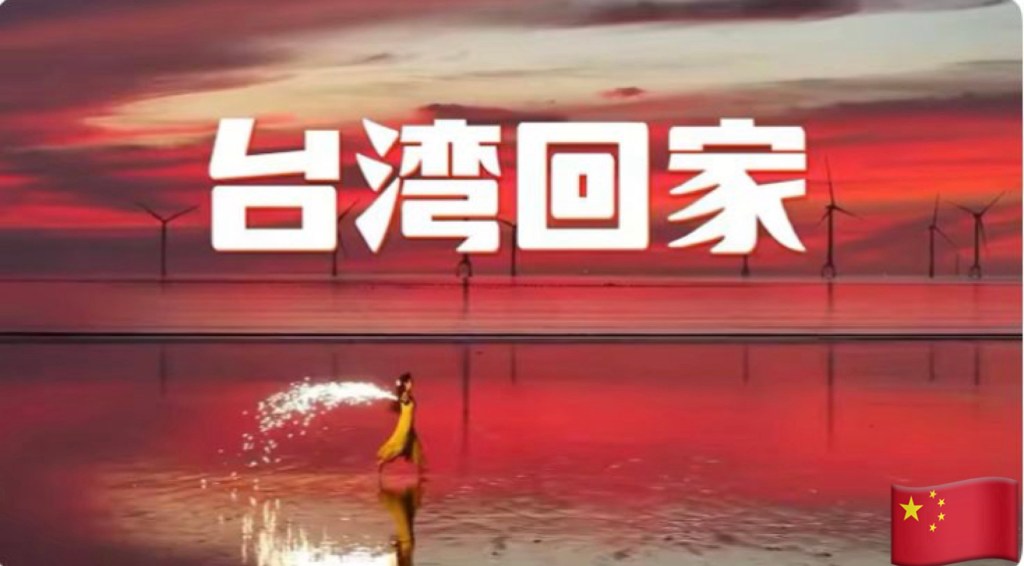
Taiwan financial expert Guo Zhengliang’s video has English subtitles: China’s technological rise, the US’s containment efforts have failed, and the dollar’s hegemony is slowly declining! 台灣中美財經尊家郭正亮影片有英文字幕:中國科技崛起, 美國圍堵失敗, 美元霸權正緩緩走向衰落!
American logistic expert report from China video: China wants custody of the world’s gold: great news for gold bulls, more bad news for the US dollar 美國物流尊家從中國報導影片有中文字幕: 中国谋求全球黄金托管权:黄金多头迎利好,美元再遭冲击
China’s central bank is opening gold vaults in Hong Kong and in friendly countries, and is courting other central banks and major institutions to custody their gold holdings outside Europe and the United States.
This is another major push to de-dollarize the new BRICS economic system, outside Western regulations and threat of sanctions and seizures.
These moves are also bullish for gold prices, and bearish for USD and Euro. Countries that earn dollars and euro can sweep their holdings to new banking centers in Hong Kong, and buy gold.
China is the world’s largest gold miner, and these efforts will further benefit Chinese mining companies.
San Francisco Supervisor Court Judge Julie Tang (retired) returned from her China trip on Nov 4 2025. By Johnson Choi 旧金山高等法院法官(已退休)鄧孟詩于2025年11月4日结束中国之行返美. 作者: 蔡永強,中國香港夏威夷商會會長
Left: at Iris Chang Memorial Museum in Huai’an, at Chou En Lai musuem in Hsia’an, in Hangzhou Tea farm where we stayed, at Shanghai intermediate court of Appeal. We also heard a criminal trial in a Beijing high court.
The level of transparency in every aspect of litigation for both the civil and criminal court was admirable.
11 of us (5 judges including me) and their family and friends spent 10 days in China covering Beijing, Xian, Shanghai, and 5 members of the group spent 5 days on a post trip to Hangzhou, Huai’an, Guangzhou.
In each city we saw the highlights. But it’s the same contentment of the people, the cleanliness of the streets, the feeling of street safety and social stability everywhere that give us the greatest impression of China. This period of history in China is the most prosperous and peaceful in modern history comparable to the Tang dynasty at the height of the Silk Road success. Back then as it is now, the country thrives under a liberal economic and social development policy system led by progressive leadership.
Video with English subtitles: Photovoltaic panels replaced by China have illuminated millions of homes in Africa. China use technology to help people! Unlike Western Hegemony use technology to hurt people. 影片有英文字幕: 中國光電點亮非洲千家萬戶,科技為民彰顯擔當. 中國引進的光電板已經照亮了非洲數百萬戶家庭。中國利用科技造福人民!這與以美國為首的西方霸權國家利用科技傷害人民的做法截然不同.
How can Chinese technology become hope for the poor?
China’s photovoltaic industry has witnessed a magnificent “dimension reduction strike” epic: from controlling 98% of silicon wafer production, to achieving an unparalleled photovoltaic conversion efficiency of 33.9%, to driving prices down to 1% of what they were 20 years ago. The second-hand photovoltaics we eliminated have become “the most high-end technology products” in Africa, helping countless households without grids to gain power sovereignty.
💡 Core ideas: ✅1. Significance to the country: China has mastered the absolute advantages of the global photovoltaic industry chain, achieved industrial epic-level cost reduction and efficiency improvement, and transformed high technology into inclusive products. ✅2. Significance to the world: Solve the energy crisis in poverty-stricken areas such as Africa, achieve leap-forward technological iteration, and demonstrate the power of Chinese science and technology to “benefit the common people”. ✅3. What it means to us: Recognize the true strength of Made in China – not only scale, but also technology, cost and global influence, and jointly witness the glorious achievements of our motherland!
👉 Follow me and let’s explore in depth how Chinese technology changes the world and witness the bright future of our motherland!
Just as Jensen Huang expressed his desire to sell more chips to China, Trump poured cold water on the idea: the most advanced chips are banned from sale…黃仁勛剛說想多賣芯片給中國,特朗普就潑了盆冷水:最先進的芯片不準賣…
On November 2, Trump made it clear in an interview with CBS’s 60 Minutes: not a single unit of NVIDIA’s newly mass-produced Blackwell chip is allowed to flow into China. This came even as Jensen Huang had just been smiling on the sidelines of APEC, saying he “hoped to sell someday.” The stinging slap left NVIDIA’s share of the AI chip market in China at zero. According to Huang’s own calculations for investors, this means a loss of $17 billion in annual revenue—equivalent to tossing the profits of a Shenzhen super factory into the Pacific.
The story dates back to August. At that time, Trump hinted that he “might” allow a watered-down version of Blackwell into China. Huang immediately had his engineering team reduce the chip’s computing power by 30%, thinking that “lowering the frequency would secure a pass.” However, on October 29, during a short trip on Air Force One, Trump changed his tune in front of reporters: “Technology that is a decade ahead must remain in the U.S.; other countries shouldn’t even think about it.”
As soon as these words landed, NVIDIA’s stock plummeted by 5% in after-hours trading, wiping out $200 billion in market value—a loss worse than three Intels combined. To add insult to injury, South Korea’s Samsung immediately secured an order for 260,000 fully-powered Blackwell chips, with the contract amount recorded in NVIDIA’s Q4 financial report, making it clear to the world: it’s not that there aren’t enough chips; it’s just that China isn’t getting them.
Why the sudden about-face? Trump himself revealed the reason in the CBS segment: the one-year “rare earths for tariffs” truce agreement recently signed between the U.S. and China only secured tariff reductions for agricultural products, with chips excluded from the list. Fearing backlash from China hawks in Congress, Trump decided to use Blackwell as a bargaining chip to secure votes.
Meanwhile, the U.S. Department of Defense submitted a briefing to the White House, claiming that the Chinese military is using AI for missile trajectory prediction and is only a few computing power steps away from closing the gap. Cutting off Blackwell, they argued, could slow China down by “at least five years.”
Politicians are counting votes, the Pentagon is calculating strategic advantages, and NVIDIA is caught in the middle, becoming a cash cow—Trump even suggested that if they couldn’t hold back, they could sell the previous-generation H20 chips but would have to pay a 15% “protection fee” to the Treasury Department, a blatant shakedown.
What happens next? Several major domestic cloud providers have already gotten wind of the situation. Alibaba’s 2026 capital expenditure plan has cut its AI chip budget by 40%, redirecting all of it to its in-house Pingtouge “Hanguang” chips. Baidu’s Intelligent Cloud is set to deploy 30,000 units of Huawei’s Ascend 910B chips next quarter, which match the performance of the A100 but are 30% cheaper than Blackwell.
The most telling data comes from customs: in the first ten months of this year, exports of domestic AI accelerators increased by 2.6 times year-on-year, with Cambricon and Hygon collectively selling 5.2 billion yuan worth of chips, capturing half of the Southeast Asian and Latin American markets. Foreign media predict that by 2026, China’s AI chip localization rate will reach 55%, up from just 17% last year—a pace equivalent to covering five years of Europe’s progress in just one.
👉 Trump’s move may seem harsh, but it’s essentially handing domestic chips a “VIP fast pass.” While there’s still a technological gap, what the market values most isn’t blueprints but real-world scenarios. China boasts the world’s largest single data ecosystem, with short videos, e-commerce, and smart cities generating data 24/7—creating a never-ending “pressure-testing ground” for domestic chips.
👉 No matter how advanced Blackwell is, if it can’t enter China, it’s irrelevant. No matter how immature domestic chips are, daily use will drive their evolution. History has already shown this: when Google cut off Huawei’s GMS in 2019, HarmonyOS reached 700 million users within two years. Today’s storyline merely has a different protagonist, but the outcome is unlikely to be much different.
Donald Trump Told Xi Jinping: “We Are G2!” – A Historic Turning Point. By Johnson Choi, President of HKCHcc, Nov 4 2025 川普對習近平說:「我們是G2!」 – 歷史性的轉捩點. 作者: 蔡永強, 中國夏威夷商會會長
When President Donald Trump told Chinese President Xi Jinping, “We are G2,” it carried extraordinary weight.
For the first time in U.S. history, a sitting American president openly acknowledged that China and the United States are equals — two great powers destined to shape the world together.
Why Is This Moment So Significant?
Since America’s founding in 1776 — and especially after the passage of the 1882 Chinese Exclusion Act — China and the Chinese people have long been treated as second-class on the global stage and within the United States itself.
Even today, Chinese Americans continue to face deep-rooted prejudice and systemic barriers — often treated worse than African Americans who were once enslaved but later gained formal equality through civil rights struggles.
Why Has the U.S. Changed Its Tone Toward China?
The answer lies in power — economic and military. Empires only understand equality when they are forced to.
Since 2014, China’s Gross National Product (GDP) measured by Purchasing Power Parity (PPP) has surpassed that of the United States. And by 2025, China’s military capabilities — in key areas such as hypersonic weapons, naval power, and space technology — have exceeded those of the U.S.
Faced with this new reality, America no longer has the luxury of condescension. Recognizing China as an equal partner is not a choice — it is a necessity for global stability and cooperation.
Will Equality Extend to Chinese Americans?
That remains to be seen.
While Washington may now treat Beijing as an equal power, whether that same respect will translate to fair treatment of Chinese Americans — who have contributed immensely to America’s growth — is still uncertain.
This moment marks the beginning of a new era — not just in U.S.–China relations, but in how the world understands power, equality, and respect in the 21st century.
How brilliant! A young man from Sichuan, born in the 2000s, felt heartbroken seeing his father exhausted from carrying bamboo… So, he went ahead and bought a drone! It can lift 18 tons of bamboo a day with ease, earning him 40,000 yuan a month.
Not only did he save his father from heavy labor, but he also boosted their income—a true “win-win”!
The reason he bought the drone was that his father had slipped and gotten injured while carrying bamboo. Some of the bamboo stalks were as thick as rice bowls, weighing 20 to 30 jin each (about 10-15 kg). The mountain paths were covered in loose gravel, making it easy to slip and fall, which worried him deeply.
Having frequently seen videos of drones being used to spray pesticides or transport goods, he decided to take the plunge and buy one. A round trip that used to take his father 40 minutes on foot now takes the drone just three minutes—more than ten times faster. During busy periods, the drone operates from 6 a.m. to 6 p.m., moving 18 tons of bamboo in a single day.
Before, his father worked himself to the bone, earning less than 5,000 yuan a month and ending up with various health issues. Now, the son simply operates the drone and earns over 40,000 yuan a month. The only significant expense is the quickly draining batteries.
Many people think of drones as “high-tech gadgets,” but they’ve got it all wrong.
Drones aren’t just for filming weddings or capturing scenic views, and industrial robots aren’t confined to factories.
This story shows that the best technology is “down-to-earth”—it can lighten the load for mountain villagers and help farmers earn more. Nothing could be better.
Some netizens commented: “My friend flies drones, and he says these things cost 50,000 to 80,000 yuan. They replace them yearly, and a single charge costs 500-600 yuan!”
Another netizen said, “I always thought drones were toys for the wealthy. I never imagined they could serve as ‘sky porters.’ This is putting technology to the right use—way better than just filming scenery!”
As the old saying goes, “If you can renovate yourself one day, you can do so every day.” What rural areas lack today isn’t resources, but young people willing to return, take risks, and try new things.
With just one drone, this young man has shown us that traditional trades hold new opportunities, and filial devotion to parents can become the foundation for transforming lives.
Technology changes lives. While the older generation carried heavy loads on their backs and suffered injuries, drones now handle the task effortlessly. That’s the true meaning of progress!
China’s in-orbit Shenzhou-20 and Shenzhou-21 crew members held a handover ceremony on Tuesday, during which they transferred the symbolic key to the space station, according to the China Manned Space Agency. 根據中國載人航太工程辦公室消息,神舟二十號和神舟二十一號在軌乘組人員於週二舉行了交接儀式,將象徵性的鑰匙移交給了太空站.
So far, the Shenzhou-20 crew has completed all their planned tasks, and is scheduled to return to the Dongfeng landing site in north China’s Inner Mongolia Autonomous Region on Wednesday.
The landing site and all relevant systems are making final preparations for their return.
Video: People’s Democratic Dictatorship VS Natural Human Rights: Is America Saving or Destroying People? 民主专政 VS 天赋人权: 美國救人还是毁人? 恨國黨把自己的無能和失敗都歸功於中國共產黨!
US Food Stamps Keep You from Starving, but Strip You of Your Dignity. Dignity Must Be Fought For! 美國糧食卷讓你餓不死,但剝奪你的尊嚴! 尊严是要自己争取!
When we talk about “human rights,” what exactly are we referring to? Is it the abstract freedom written on paper, or the solid guarantee that allows everyone to live a life of dignity and hope?
In this video, I will share a perspective that might be somewhat “subversive”:
We will start with the unique concept of “people’s democracy” to analyze its core logic of “protecting the majority and constraining the minority.” At the same time, by comparing the social challenges faced by some cities in the United States, we will reflect on the potential deep social costs behind the “cash-based” welfare system.
What is true security? Is it “giving a fish” or “teaching to fish”? How does China’s practice of targeted poverty alleviation provide us with a different answer?
This is not just a comparison of systems but an ultimate reflection on the value of “people” and the goals of “society.” If you are interested in these profound questions, I believe this content will bring you unique insights.
Overseas Chinese Retiring in China: How to Apply for Permanent Residence ID cards 海外華人回國退休,如果申請中華人民共和國永久居留身份証
Hello! This is a very practical and important question. For overseas Chinese who wish to return to China for retirement, applying for Chinese permanent residency (commonly known as the “Chinese Green Card”) is an ideal choice. It facilitates long-term residence in China and access to healthcare and social services.
For overseas Chinese specifically looking to retire in China, the primary application pathway is family reunion. Below is a detailed breakdown of the application requirements, process, and key considerations.
Primary Application Pathway: Family Reunion Permanent Residence
For retirees, the most common reason for application is reuniting with immediate family members who have Chinese household registration (Hukou).
Application Requirements
You must meet one of the following conditions:
Spouse Reunion · Your foreign spouse is a Chinese citizen. · The marital relationship has existed for at least 5 years. · You have resided continuously in China for 5 years, staying in China for no less than 9 months each year. · You have stable financial support and a stable residence.
Parent-Child Reunion · Your foreign child is a Chinese citizen. · You are 60 years of age or older. · You have no direct relatives (such as other children) abroad to rely on. · You have resided continuously in China for 5 years, staying in China for no less than 9 months each year. · You have stable financial support and a stable residence.
Key Interpretations:
· “Resided continuously for 5 years”: This is crucial. It typically means you first need to enter China with a Q1 visa, then obtain a family reunion-type residence permit, and maintain that permit continuously for 5 years. · “Stable financial support and residence”: You need to provide proof of your savings, proof of income (such as overseas pension statements), or financial sponsorship from relatives in China, along with property ownership proof or a rental contract.
Application Steps (Detailed Step-by-Step)
Step 1: Enter China with a Q1 Visa
· Apply for a Q1 Visa at the Chinese diplomatic or consular mission abroad (e.g., the Chinese Embassy in the USA). · You will need to provide an invitation letter from your relative in China and notarized and authenticated originals of proof of family relationship (e.g., birth certificate, marriage certificate). · The Q1 visa is an entry visa for “long-term residence in China,” usually valid for a single entry within 3 months.
Step 2: Apply for a Family Reunion Residence Permit (Crucial Step)
· After entering China with the Q1 visa, you must, within 30 days, apply for a “Family Reunion Residence Permit” at the Exit and Entry Administration of the Public Security Bureau in your place of residence. · This residence permit is usually valid for 1 to 5 years and can be renewed indefinitely. This marks the starting point for accumulating the “5 years of continuous residence.”
Step 3: Apply for Permanent Residence after Meeting the Residency Requirement
· After continuously residing in China for 5 years with the Family Reunion Residence Permit, you can submit an application for “Family Reunion Permanent Residence” to the local Exit-Entry Administration. · The approval process usually takes 6 months to 1 year.
List of Main Required Documents
When applying for permanent residence, you generally need to prepare, but are not limited to, the following documents:
“Application Form for Permanent Residence in China for Foreign Nationals”.
Valid passport, visa, and residence permit(s), both originals and copies.
Health Certificate, issued by a designated health and quarantine department.
No Criminal Record Certificate, usually issued by your country of current residence (e.g., the USA) and authenticated by the Chinese embassy or consulate in that country.
Four recent, 2-inch, front-facing, bareheaded, white-background passport photos.
Proof of identity of the Chinese relative (e.g., Chinese ID card, household register).
Proof of family relationship (e.g., marriage certificate, birth certificate), which must be notarized and authenticated.
Proof of financial support: Personal bank deposit statements, overseas pension payment statements, or a notarized guarantee from a relative along with that relative’s proof of income.
Proof of residence: Property ownership certificate or a registered rental contract.
Proof of continuous residence in China for 5 years; the Exit-Entry Administration can usually verify this based on your residence permit history.
Other Possible Pathways (Less Common)
· Special Contributions: If you have made significant and outstanding contributions to China’s economic, scientific, technological, or social development, you might be able to apply directly without being subject to the residency period requirement. However, the threshold for this is extremely high for most retirees.
Important Reminders
Identity Verification: If you previously held Chinese citizenship and later acquired foreign nationality, you need to clarify your current status as an “overseas Chinese of foreign nationality.” During the application process, you may need to provide proof of the cancellation of your previous Chinese household registration.
Policy Details: Specific document requirements might vary slightly between local Exit-Entry Administration departments across China. The safest approach is to personally consult, or have a relative consult, the Exit-Entry Administration of the Municipal Public Security Bureau in your intended city of residence before applying, to obtain the most accurate and up-to-date guidelines.
Plan Ahead: The entire process is lengthy (5-year residency period + approval period), so be sure to plan well in advance and ensure your residence permit does not lapse during this time.
Benefits of Holding the Permanent Residence ID Card
Once successfully approved, you will receive the “People’s Republic of China Foreign Permanent Resident ID Card,” which allows you to:
· Reside in China indefinitely without needing to apply for visas or residence permits. · Use the card to purchase train tickets, check into hotels, handle banking and financial services, etc., with convenience nearly equivalent to a Chinese citizen’s ID card. · Access local public services such as healthcare and social security.
In summary, for overseas Chinese wishing to retire in China, applying for permanent residence through reunion with Chinese citizen children or spouses is the most feasible and common path. The core requirement is planning ahead to ensure the 5-year continuous residency requirement is met.
Hope this information is helpful! Wishing you a smooth transition to your retirement life in China!