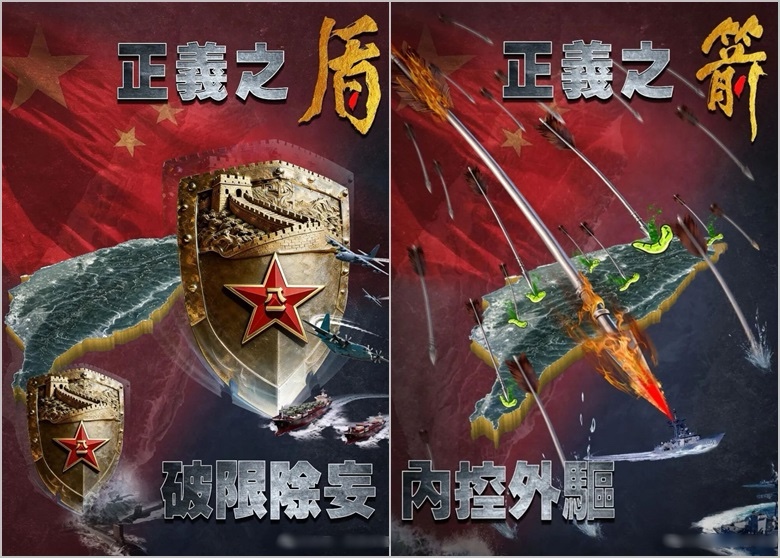
Video: The People’s Liberation Army fired rockets at waters near Taiwan on Tue during a second day of large-scale drills, as Beijing threatened to block cargo ships carrying US-made weapons to the island. 正義之盾, 正義之箭, 正義使命2025開局即打, 圍島鍊條越勒越緊. 震撼畫面, 中國解放軍無人機俯瞰台北101, 鎖島斷援,東部戰區陸軍部隊協同海軍、空軍、火箭軍台島北部及南部海域進行遠程火實彈射擊. https://rumble.com/v73odtq-the-peoples-liberation-army-fired-rockets-at-waters-near-taiwan-on-tue.html
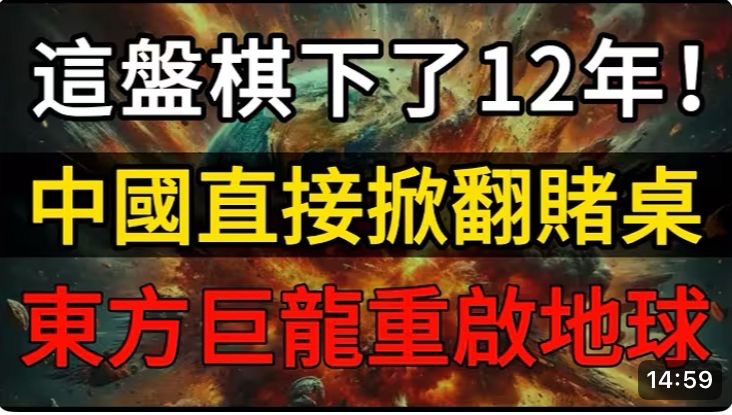
Year 2025 video with English subtitles: The Funeral of the Old Era! US Pivot to Asia vs. China’s Belt and Road Initiative – The Outcome of This 12-Year Game is Finally Decided! 2025年視頻有英文字幕: 旧时代的葬礼!美国重返亚太VS中国一带一路,这盘下了12年的棋终于分出胜负!
Twelve years ago, Obama loudly proclaimed the “Pivot to Asia,” attempting to lock down the Eastern Dragon. In the same year, China launched the “Belt and Road Initiative,” beginning a great breakout. After a full 12 years of strategic competition, the outcome is now clear: America’s containment strategy has completely failed, while China’s trade surplus has surpassed a trillion!
This isn’t just a simple GDP contest; it’s a clash on a civilizational level. While Trump tore off the mask, retreating into a “pirate logic” of plundering allies in a dark forest, China had already secured the trump card of “energy independence,” embarking on an industrial revolution akin to a StarCraft-style evolution.
In this episode, we’ll take you to a god’s-eye view to review this 12-year-long grand strategy game of the century:
Strategic Duel: America’s “Chains” vs. China’s “Arteries” – Why is the Malacca Dilemma considered completely broken?
Twilight of Hegemony: From “World Police” to “National-Level Pirate” – How will Trump’s new order bleed Europe dry?
Dimensional Supremacy: Photovoltaics + Energy Storage + AI – How is China’s “Energy Closed-Loop” launching a dimensionality-reduction strike against the West?
Final Verdict: The West is obsessed with gender debates, while the East looks to the stars. In 2025, what we are winning is not just the present, but the future!
Understand this game, and you’ll see why America didn’t just lose a trade war; it lost the leadership of human civilization!
If you too feel your blood boiling with the soaring rise of China’s national fortune, please be sure to like, subscribe, and share with more people. Let’s see through the fog together and witness the dawn of a new era!
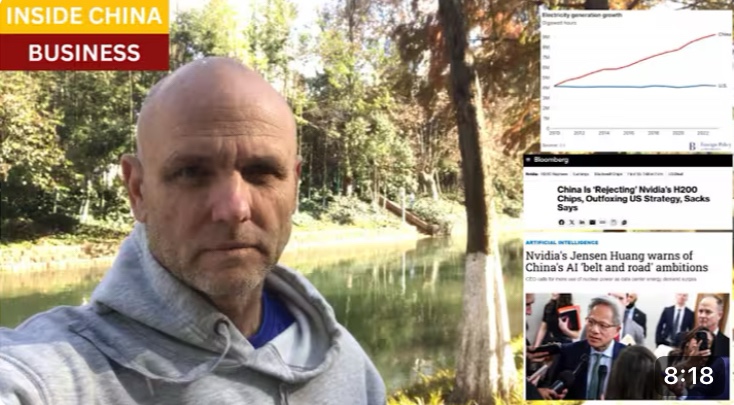
American logistic expert report from China video: Nvidia is in big trouble, as Huawei rolls out 5G and AI across the world. 美國物流專家在中國報導視訊有中文字幕: 隨著華為在全球範圍內鋪開5G和人工智慧佈局,輝達正陷入重大困境.
Nvidia faces severe challenges, as China’s monopolies on gallium allow its telecom providers to build low-cost 5G telecom across the world.
That leads to global adoption of Chinese standards and equipment for Artificial Intelligence.
To survive, Nvidia needs to keep lower-cost AI chips out of the US market. Nvidia is also desperate to sell billions of dollars’ worth of its own AI chips in the Chinese market, the world’s largest.
But even in the US and Europe, Nvidia desperately needs power prices to fall, as new data center construction faces soaring public opposition.
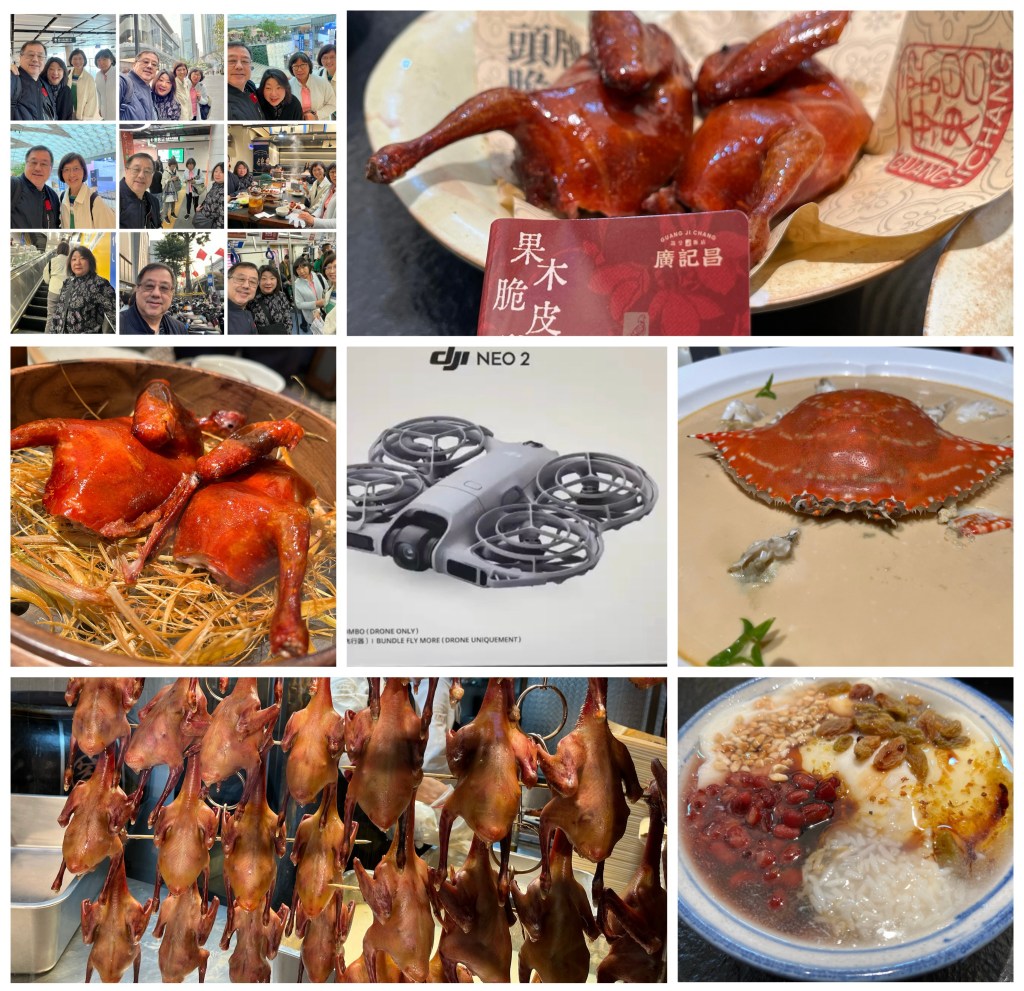
check out DJI NEO2, enjoyed excellent food and services not available in US, restaurants charge no tax no tips. Restaurants and shopping malls are packed, economy good debunked US fake news that Chinese economy collapsing.
Title: The Smart Choice: Retiring in the Greater Bay Area vs. The American Gamble. You should consider removing some of your kids from your wills and trusts immediately! 標題:明智之選:粵港澳大灣區退休與美國退休的賭博
Consider the stark contrast: a secure, robust, and clean retirement in China’s Greater Bay Area versus assuming the risks of later life in the United States.
The Greater Bay Area offers a comprehensive, high-quality living environment:
· Safety & Stability: A robust, drug-free society. · Social Harmony: An Asian-hate-free, homeless-free environment. · Modern Comfort: World-class infrastructure and healthcare.
Who, then, would be foolish enough to stake their golden years on the volatile line of American retirement?
A disturbing thought arises: are some adult children or grandchildren, eager to accelerate their inheritance, subtly encouraging elderly relatives to make this dangerous move? If you have family members pressuring you to give up your good life in Asia for a risk-filled retirement in the US or failed to warn that your life could be in peril, it may be time for serious reflection.
A Final Suggestion: Review your estate plans. Those who would jeopardize your safety and well-being for their own financial gain have perhaps forfeited their moral claim to your legacy, remove them immediately from your wills and living trusts without delays.
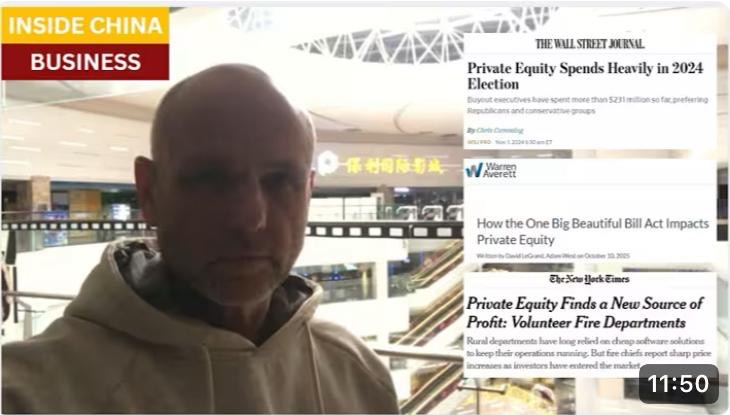
American logistic expert report from China video: Wall Street is stealing from volunteer fire departments using the pay to play game. 美國物流專家在中國報導視訊有中文字幕: 華爾街正在掠奪義勇消防部門的資源, 利用通過特別法例合法貪污條款發災難財!
US passed law not allowing foreign competition, therefore US companies could charge 5-10x more and in most cases provide inferior products at inflated prices. In most countries or jurisdictions like China and HK, such behavior would result in arrests and jail time.
US Private Equity firms are targeting volunteer fire departments, and the software these first responders rely on.
A handful of PE companies are snapping up affordable software providers in the emergency response space, consolidating them, then aggressively raising prices.
Most fire departments in the United States are made up of volunteers, and are budget-constrained. But Wall Street investors are enjoying huge profits, by tripling annual fees on departments, and buying and shutting down more affordable providers.
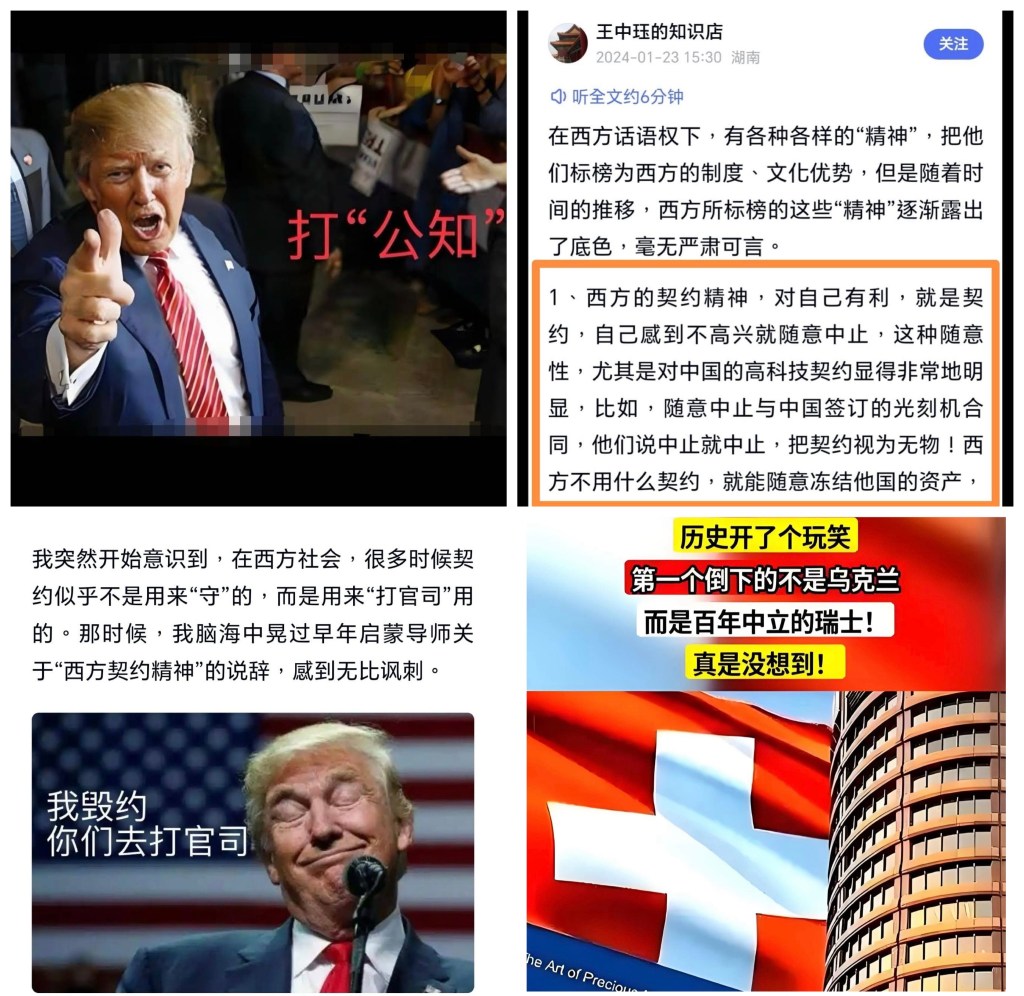
It is often said that the Western concept of “contractual spirit” cannot take root in China… 常有人說西方的契約精神在中國不能樹立起來…
First, let’s look at what Switzerland calls “contractual spirit”:
In March 2022, Switzerland announced additional sanctions against Russia, beginning to deviate from its traditional stance of permanent neutrality. In January 2023, Switzerland directly declared the abandonment of its over-200-year-old status as a permanently neutral country.
On March 23, 2023, Switzerland announced the restoration of its permanently neutral status, lifting all sanctions against Russia—including the unfreezing of funds for Russian clients—and pledged to cease all weapon exports to Ukraine.
Just six days later, on March 29, 2023, after declaring the restoration of its neutral status, Switzerland once again abandoned neutrality, reinstated sanctions against Russia, refroze Russian assets, and announced renewed military aid to Ukraine.
A country renowned for its financial industry and built on credit has, within a single year, reduced the word “permanent” to a meaningless term, resulting in the loss of 500 billion in private wealth from UBS and the collapse of Credit Suisse…
Honestly, it’s almost laughable when Switzerland talks about contracts!
When the West speaks of “contractual spirit,” what about the Standard Oil case—where was the contractual spirit there? How did the Alstom case reflect any contractual spirit? And what does the seizure of Nexperia using the Cold War-era Defense Production Act have to do with contractual spirit?
The first thing Trump did upon taking office was to openly violate the North American Free Trade Agreement, threatening sanctions against any transactions bypassing the United States. So where is the “contractual spirit” you champion?
Since the establishment of the WTO in 1995, the United States has faced over 150 complaints in less than 20 years—far more than any other country—losing 107 of these cases. Among these, 28 disputes arose due to failure to implement rulings, and in 9 cases, complainants were authorized to take retaliatory measures…
To continue avoiding compliance, the U.S. simply blocked the selection of judges for the appellate body, paralyzing the WTO’s dispute settlement function. Is this the “contractual spirit” you praise—turning around and blaming others when it suits you?
The West appears more like a group of bandits dressed in suits, learning to act civilized while their hands remain stained with blood. Despite numerous cases, they still refuse to reflect.
Should we continue to glorify this Western “contractual spirit” that borders on insanity?


 Business Blog