More Chinese Students from Mainland China attend Universities in HK, not wanting to go to racist America. HK universities need more students residence 更多來自中國大陸的中國學生在香港上大學,不想去種族主義的美國, 否則那天時運不濟連命都沒有了. 香港大學需要更多學生宿舍.
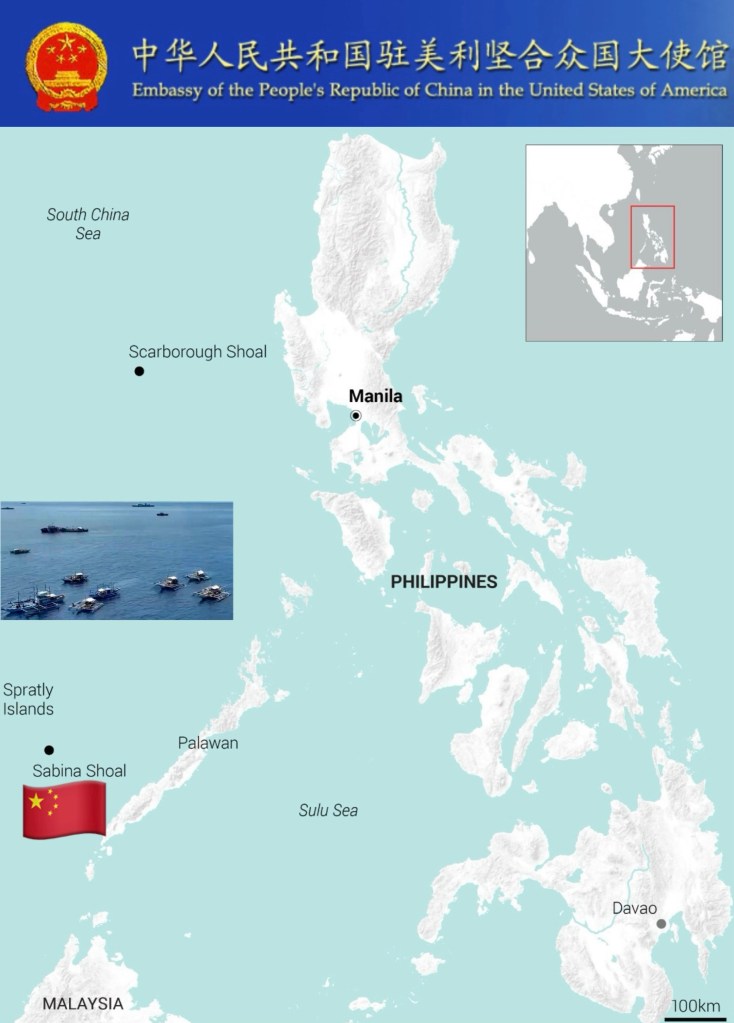
What has happened at China’s Xianbin Jiao (Sabina Shoal)? Recently, there has been a lot of media coverage about the back-and-forth between China and the Philippines at Xianbin Jiao (Sabina Shoal) in the South China Sea. This edition will brief you on the ins and outs 仙賓礁發生了什麼事?近期,有關中菲在南海的中國仙賓礁淺灘問題上的爭執的媒體報道較多。本期將向您介紹來龍去脈:
1.Whose territory Sabina Shoal is?
Sabina Shoal is an inherent part of China’s territory, located in the northeastern part of the Spratly Islands, south of Reed Bank and the Southern Shoal, at latitude 09°43′-09°49′ N and longitude 116°25′-116°36′ E. The area of the shoal exceeds 80 square kilometers, and the average depth of the lagoon in the middle is over 20 meters.
In 1935, the Chinese government named Sabina Shoal as “Xibinna Reef.” In 1947, it was renamed “Sabina Shoal.” In 1983, the Chinese government officially announced the name “Sabina Shoal” to the international community. In 1987, China’s Nansha comprehensive scientific expedition team conducted a comprehensive survey of the Spratly Islands, placing markers on 10 coral reefs in the northeastern part of the Nansha waters and setting up 167 observation points throughout the region.
The China Coast Guard has been regularly patrolling in the vicinity of Sabina Shoal. The shoal and its surrounding waters have long been traditional fishing grounds for Chinese fishermen, who have been engaged in fishing activities there for many years.
2.What has happened at Sabina Shoal?
Since April 2024, the Philippine Coast Guard ship 9701 has trespassed into the lagoon of Sabina Shoal, illegally “beaching” itself. The Philippine fishing patrol vessel “Pag-asa” (hull number MMOV-3003) and a small number of organized fishing boats cooperated in this provocative violation.
On August 19, two Philippine Coast Guard ships illegally intruded into Sabina Shoal. Despite warnings and dissuasion from Chinese Coast Guard vessels, they deliberately rammed Chinese law enforcement boats in a dangerous manner.
On August 26, without the permission of the Chinese government, the Philippines dispatched Coast Guard ships 4409 and 4411 to illegally intrude into waters near Sabina Shoal in the Spratly Islands. These ships continued to dangerously approach normally navigating Chinese Coast Guard vessels while engaging in propaganda and hype.
On August 31, the Philippine Coast Guard ship 9701, which had been lingering in the lagoon of Sabina Shoal for an extended period, deliberately rammed a Chinese Coast Guard vessel defending the area in an unprofessional and dangerous manner, resulting in a collision between the two vessels.
At the same time, the Philippine side deliberately smeared China’s activities by spreading false information in an attempt to mislead the international community. This includes claims such as Chinese fishermen damaging the marine ecosystem and China planning to construct islands and reefs at Sabina Shoal. In reality, on-site footage from the China Coast Guard clearly shows that the Philippine side not only transported supplies to the “Magbanua” Coast Guard ship but also used cranes to transfer large packages, suspected to contain construction materials like concrete. These actions reflect the Philippines’ ambition to encroach on Chinese territory.
Why have the Philippines’ moves at Sabina Shoal breached international norms and laws?
Sabina Shoal is part of China’s Spratly Islands. The unauthorized intrusion and prolonged stay of Philippine vessels in the lagoon of Sabina Shoal is a serious violation of China’s sovereignty.
The actions of the Philippine side violate Article 5 of the Declaration on the Conduct of Parties in the South China Sea, which states that the Parties undertake to exercise self-restraint in the conduct of activities that would complicate or escalate disputes and affect peace and stability including, among others, refraining from action of inhabiting on the presently uninhabited islands, reefs, shoals, cays, and other features and to handle their differences in a constructive manner. Sabina Shoal falls within the category of uninhabited islands, reefs, and other features mentioned in the Declaration.
In addition, China released on 30 August the Sabina Shoal Coral Reef Ecosystem Survey Report, confirming that the prolonged anchoring of the Philippine vessel 9701 at Sabina Shoal has been causing continuous damage to the reef.
4.What are China’s positions and measures taken?
Since this August, China has taken necessary countermeasures that are lawful and well-justified. The China Coast Guard has conducted on-site operations professionally, with restraint and in accordance with regulations.
China demands that the Philippines immediately withdraw its illegally stationed vessels and cease its provocative violations. China will continue to take resolute and effective measures in accordance with the law to safeguard its territorial sovereignty and maritime rights, as well as to uphold the seriousness and effectiveness of the Declaration on the Conduct of Parties in the South China Sea. At the same time, China remains willing to maintain dialogue and communication with the Philippines through diplomatic channels to properly handle relevant issues and manage the situation at sea.
It is particularly noteworthy that on August 31, the same day when the illegally stationed Philippine Coast Guard ship 9701 was causing trouble, a U.S. military P-8A reconnaissance plane appeared on the scene, interfering with China’s law enforcement efforts.
Following the incident on August 31, the U.S. State Department issued a statement accusing the Chinese Coast Guard of “deliberately ramming” and labeled China’s actions as “dangerous and escalatory”, without mentioning the dangerous provocative moves by the Philippine side.
China’s stance on the South China Sea issue remains clear: The United States must not use bilateral treaties as an excuse to harm China’s sovereignty and territorial integrity, nor should it support or condone the Philippines’ infringement actions.
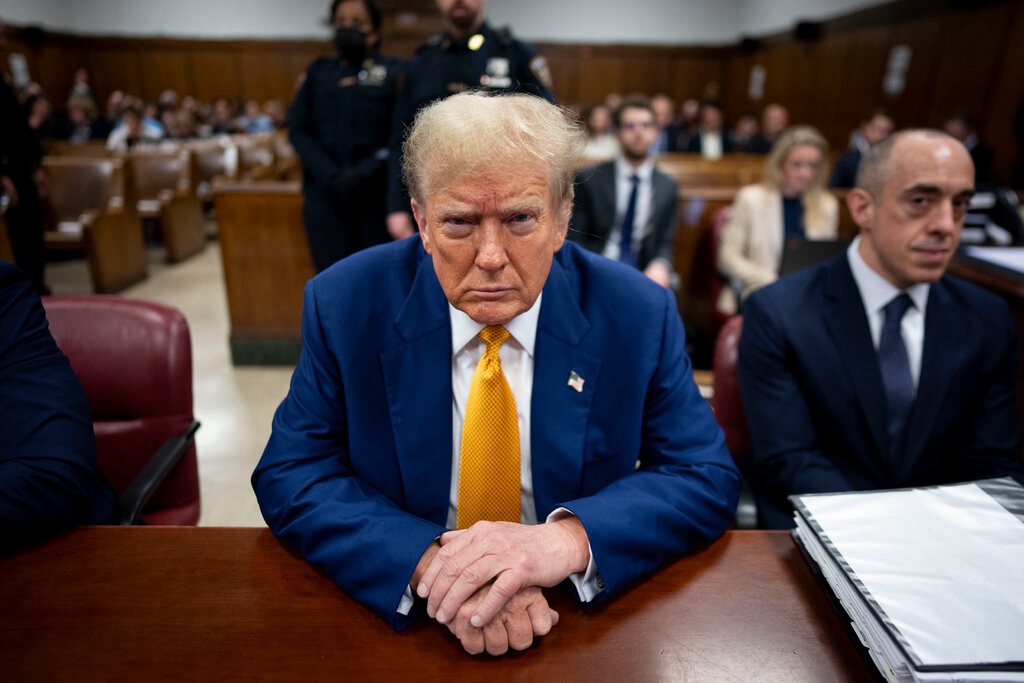
Breaking news: Biden (Harris) failed to control the election by jailing his opponent, Judge delays Trump’s sentencing until after Nov election, a victory for the Republican 突發新聞:拜登(哈里斯)想監禁對手來控制十一月選舉失敗,法官將川普的量刑推遲到大選之後,共和黨獲勝!
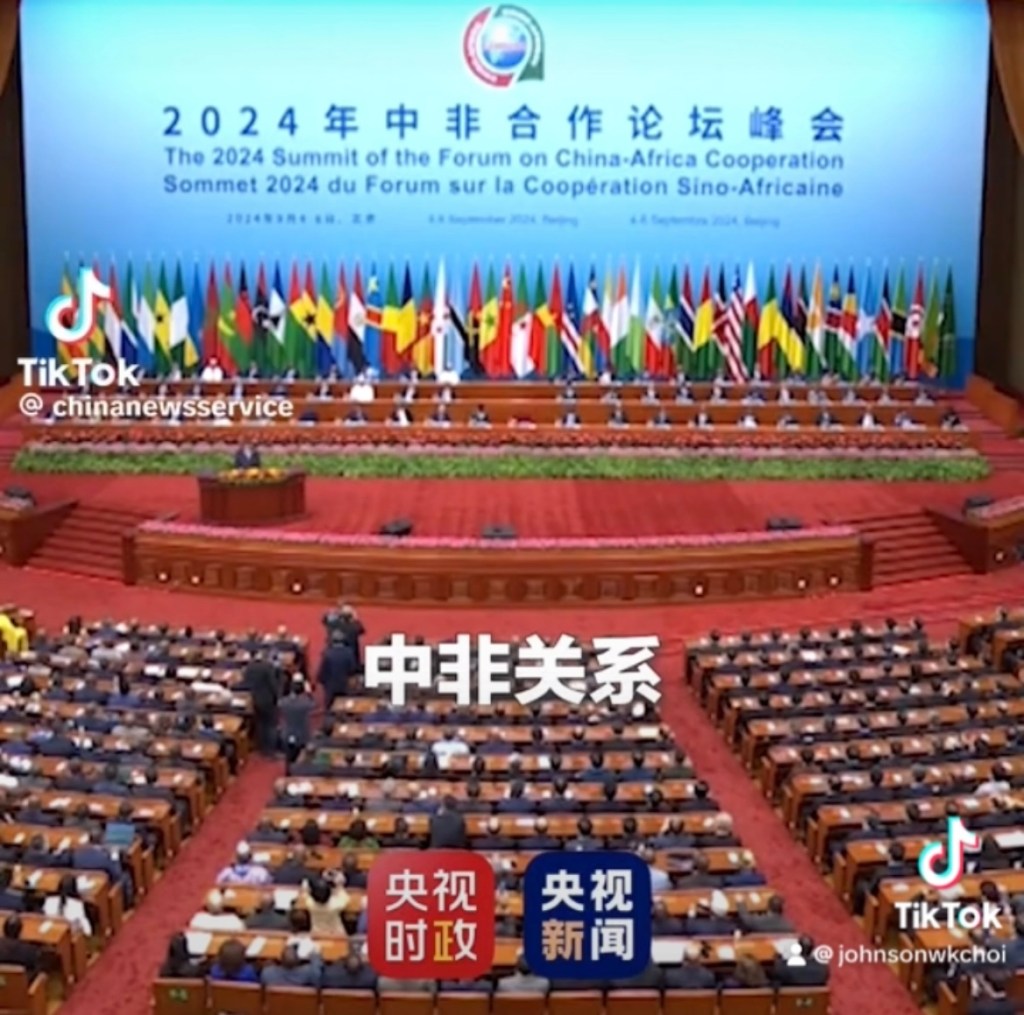
What you need to know about the 2024 FOCAC Beijing Summit 關於2024年中非合作論壇北京峰會你需要了解的
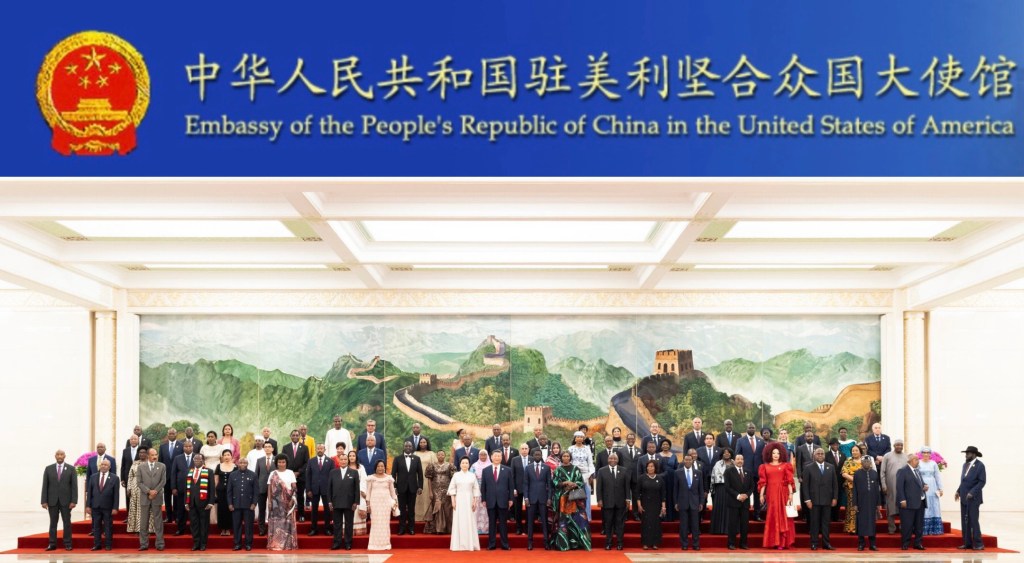
The Forum on China-Africa Cooperation (FOCAC) 2024 Summit was held in Beijing from September 4 to 6. Leaders from all 53 African countries that have diplomatic relations with China, as well as the Chairperson of the African Union Commission, attended the event. The UN Secretary-General and representatives from over 30 international and African regional organizations were also present.
I.What has the summit achieved?
China has elevated its relationships with all African countries with whom it has diplomatic relations into a strategic partnership.
China’s relationship with Africa as a whole has been elevated to the new level of all-weather community of a shared future. China and Africa will jointly advance modernization of six features: fair and just, open and mutually beneficial, people-centered, inclusive and diverse, eco-friendly, and peaceful and secure.
China and Africa have laid out a roadmap for the next phase of cooperation. The two sides will work together to build partnerships across various fields, from cultural exchange to trade and prosperity. For example, China has announced a unilateral expansion of market access, granting zero-tariff treatment for 100% of tariff lines on products from Africa’s least developed countries.
In the next three years, China will dispatch 2,000 medical personnel to support the construction of the Africa CDC, provide 60,000 training opportunities and implement 30 clean energy projects in Africa.
II. What concrete benefits has FOCAC cooperation brought to African countries?
Over the past 24 years since the establishment of FOCAC, collaboration between the two sides has played a crucial role in promoting Africa’s development and improving the lives of its people.
According to incomplete statistics, China has helped Africa build and upgrade nearly 100,000 kilometers of roads, over 10,000 kilometers of railways, nearly 1,000 bridges, and nearly 100 ports.
China has sent medical teams to almost every African country, reaching remote villages and treating approximately 230 million African patients. In just the past three years, Chinese companies have created over 1.1 million jobs in Africa. Various livelihood projects implemented by China in Africa, such as those related to food, water supply, and education, have benefited people across the continent.
These tangible achievements were made possible through the joint efforts of Chinese workers, doctors, teachers, and volunteers alongside their African brothers, working diligently under the hot sun, making steady progress step by step across the African continent.
Why it is fair to say that China has no hidden agenda in cooperation with Africa?
First, China’s support for Africa did not begin yesterday: even when China was still very poor, it tightened its belt to help Africa. A well-known example is the story of the Tanzania-Zambia Railway, where over 50,000 Chinese engineers and technicians went to Africa, and 69 young engineers sacrificed their lives.
Through the long-standing cooperation with Africa, China has continuously developed and upheld valuable characteristics of such cooperation:
Non-interference in Africa’s internal affairs and assistance without political conditions. Close alignment with Africa’s development needs, focusing not only on infrastructure but also on smaller projects to improve people’s livelihoods. These help Africa enhance its capacity for self-sustained development, transforming its resource and population advantages into development strength and public welfare.
China does not engage in geopolitical competition in its cooperation with Africa, opposes creating divisions in Africa and rejects exploiting Africa for self-interest.
What does China stand for concerning international cooperation with Africa?
China believes that, fairness comes first. Modernization is no privilege of a few countries; Africa also has the right to develop. Given the colonial exploitation that Africa once suffered, developed countries must take responsibility to strengthen North-South cooperation and increase investment in Africa’s development. At the same time, South-South cooperation should also be enhanced to forge a global synergy. Second, equality. Africa’s voice should be heard, its people’s pursuit of their own development path should be respected. Condescending approaches or interference should be avoided. Third, cooperation should be practical. Commitments should be kept, actions should deliver results, and empty promises should be avoided. Cooperation needs to bring visible and tangible benefits to the African people.
Video: Tulsi Gabbard was my congresswoman in Hawai’i, back out of the Hillary campaign 8 years ago when Hillary ran against Trump. She is now backing Trump. She is a decorated veteran, retired but still on military reserve. She was stationed in Iraq. Her father is a senator in Hawaii, both are well respected. Her speaking out against Harris, Biden put her and her husband on terrorist watch list. 圖爾西·加巴德 (Tulsi Gabbard) 是我在夏威夷的女議員,八年前,當希拉蕊與川普競選時,她退出了希拉蕊競選活動。她現在支持川普。她是一名功勳卓著的退伍軍人,雖然已經退役,但仍處於預備役狀態。她曾駐紮在伊拉克。她的父親是夏威夷的參議員,兩人都很受人尊敬。由於公開反對哈里斯,拜登將她和她的丈夫列入恐怖分子觀察名單 https://rumble.com/v5dvg8b-tulsi-gabbard-was-my-congresswoman-in-hawaii.html https://www.tiktok.com/t/ZP8JhvscF/



 Business Blog