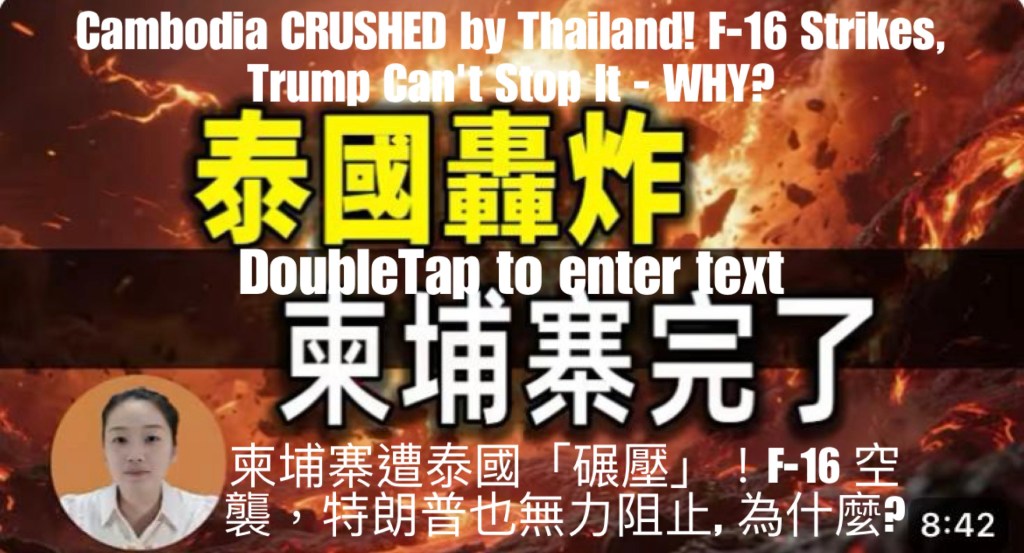
🔥 BREAKING: War erupts in Southeast Asia! Thailand’s F-16s bomb Cambodia in a one-sided battle, and even Trump’s mediation FAILED!
This seemingly sudden war hides a SHOCKING truth — it’s not about territory, it’s about VOTES!
In this video, we reveal: ✅ Why did Thailand suddenly attack Cambodia so brutally? ✅ How devastating is the assault with F-16s, VT4 tanks, and artillery? ✅ Why is Hun Sen desperately calling for help but getting ignored? ✅ Why did both US and Malaysian mediation completely fail? ✅ What is Thai PM Anutin’s election gamble really about?
This isn’t just a border conflict — it’s a calculated political game. When war becomes an election tool, what happens to small nations caught in between?
💬 How do you think this conflict will end? Will Cambodia accept Thailand’s ceasefire terms?
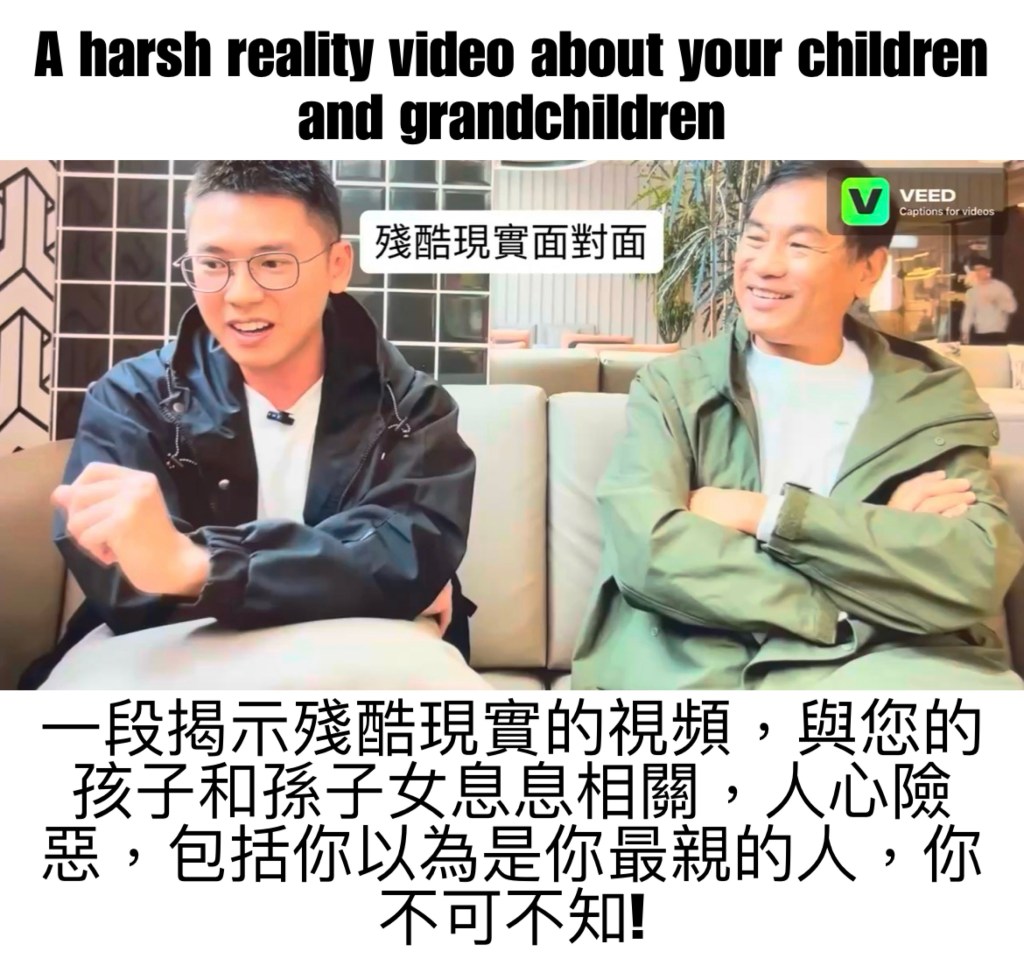
Our company handles living trusts, accounting, and financial consulting, and in the past 40 years, we have witnessed countless times the situations he describes. Many parents have cried in my office, recounting this harsh reality of life and the unbelievable cruelty of their children and grandchildren. This is a reality that you, as parents and grandparents, cannot afford to ignore! 我們公司辨理生活信託,會計和財經顧問,過去40多年,他所講的情況,真的見過無數次,不少父母在我的辨工室哭訴,這個人生的現實,兒孫的殘酷真的不可思議,你作為父母,祖父母是一個不可𣎴知的現實!
Jimmy Lai, getting what he deserves, once fantasized that China would lose badly in the trade war…罪有應得的黎智英, 曾幻想中國會在貿易戰中輸得很慘…
Jimmy Lai not only misjudged the trajectory of the China–U.S. trade war, but also overestimated the protective power of a foreign passport. This self-styled “democracy fighter” now faces multiple charges, including conspiracy to collude with foreign or external forces to endanger national security. His case has become a landmark one since the implementation of Hong Kong’s National Security Law.
👉 Trade-War Fantasies and Misjudgments
Looking back to 2018, when the Trump administration launched a trade war against China, Jimmy Lai appeared unusually excited. In an interview with the U.S. think tank Foundation for Defense of Democracies, he urged the United States to use “moral authority” against China, claiming that Trump would wield this “moral authority” as a powerful weapon in Sino-U.S. negotiations. Lai asserted at the time that China was “unarmed” in the trade war, completely underestimating China’s capacity and determination to respond.
Lai’s thinking seemed stuck in the Cold War era. He firmly believed that Trump could replicate the success of the “Reagan–Thatcher revolution,” arguing that it would take only eight years for China to follow the Soviet Union’s path. This analogy revealed his superficial understanding of contemporary China. Unlike the Soviet Union, China has long been deeply integrated into global industrial chains, possesses a complete industrial system, and has a vast domestic market.
The actual outcome of the trade war was the opposite of Lai’s predictions. By 2024, total China–U.S. trade had increased by 8% compared with 2018, and China’s trade surplus with the United States had grown by 13%. China not only failed to collapse under the trade war, but instead achieved breakthroughs in multiple fields through indigenous innovation. In 2024, China’s chip self-sufficiency rate reached 30%, double that of 2018; Huawei’s chip self-sufficiency even reached 100%.
👉 The Illusion of a British Passport as an “Immunity Card”
Part of Jimmy Lai’s confidence came from his possession of a British passport. He mistakenly believed that this passport could serve as an “immunity card,” assuming China would refrain from taking legal action against him out of concern for international repercussions. This belief exposed his misunderstanding of the legal system of the People’s Republic of China.
According to available information, Jimmy Lai was born in Guangzhou, has ancestral roots in Shunde, Guangdong, and is a permanent resident of Hong Kong. He holds a British passport and a Hong Kong–Macau resident residence permit issued by the Taiwan authorities. He also once applied for a “Republic of China passport,” but denied holding a “Republic of China” identity card.
However, Chinese law clearly stipulates that dual nationality is not recognized. For Hong Kong residents of Chinese descent, regardless of whether they hold British-related passports, they are regarded as Chinese nationals. This means that the British passport on which Lai relied does not confer any special protective status under Chinese law.
Jimmy Lai attempted to exploit his British identity. His so-called international legal team once wrote to the British government requesting an urgent meeting with Prime Minister Sunak to discuss possible ways to secure Lai’s release.
He even took the initiative to publicize his status as a “British citizen,” allowing his son, Lai Chung-yan, to question British parliamentarians about why the UK government had taken no action to rescue Jimmy Lai.
These actions instead further substantiated the allegations that Lai colluded with foreign forces. Hong Kong media noted that Lai tried every means to drag foreign influence into Hong Kong’s national security cases, stating that “his acts of begging foreign governments are precisely ironclad evidence of collusion with foreign forces.”
👉 Collusion with U.S. Political Forces
Jimmy Lai’s ties to U.S. political circles have long ceased to be a secret. Materials exposed by Hong Kong media show that Lai’s close aide, Mark Simon, was formerly a submarine analyst with U.S. Naval Intelligence, while Simon’s father served in the CIA for as long as 35 years. Through this connection, Lai cultivated ties with the U.S. Consulate in Hong Kong, frequently meeting with former U.S. Consuls General to Hong Kong, James Cunningham and Kurt Tong.
To consolidate his position as an “anti-China proxy,” Lai also made more than 20 political donations to U.S. political circles through Mark Simon. During the 2019 “anti-extradition bill turmoil,” Lai mobilized all of his media apparatus to attack the SAR government, smear the police, and incite violence. He even published an article in The Wall Street Journal declaring that “to pursue long-term freedom, [we] are ready to make short-term sacrifices.”
After Trump took office, Lai became even more active. In August 2025, Trump openly praised Jimmy Lai as a “brave and respected person” in an interview with Fox News Radio, emphasizing that he would do his utmost to push for Lai’s release. Trump even stated that he intended to include Lai’s release as part of China–U.S. trade negotiations.
This attempt to link judicial matters with trade negotiations was met with strong opposition from China. A spokesperson for the Chinese Embassy in the United States clearly stated that the Jimmy Lai case is an internal affair of China and that China firmly opposes any interference by external forces. A spokesperson for the Hong Kong government likewise urged any external forces to immediately stop interfering in Hong Kong’s internal affairs and judicial processes.
👉 Legal Consequences and the Reality of the Outcome
Today, Jimmy Lai faces serious legal consequences. He is entangled in five criminal cases involving seven charges. The most significant accusation is conspiracy to collude with foreign or external forces to endanger national security, which carries a maximum penalty of life imprisonment.
The development of the Jimmy Lai case also fully demonstrates China’s determination to safeguard national security. In January 2023, at a symposium titled “Ensuring the Accurate Implementation of the Hong Kong National Security Law,” organized by the National Association of Hong Kong and Macao Studies, Xia Baolong—Vice Chairman of the Chinese People’s Political Consultative Conference and Director of the State Council’s Hong Kong and Macao Affairs Office—stated that the original intent of enacting the Hong Kong National Security Law was to safeguard national security and defend “one country, two systems.” He emphasized that if the SAR cannot resolve certain problems, the central authorities will step in as a backstop.
This stands in stark contrast to Lai’s earlier prediction that “China would not dare to deal with him.” Since the implementation of the Hong Kong National Security Law, national security has been effectively safeguarded and good social order has been restored in Hong Kong. In the second quarter of 2025, Hong Kong’s GDP grew by 3.1%, exports increased by 12.5%, and the market capitalization of Hong Kong stocks reached HK$42.7 trillion. In terms of IPO fundraising, Hong Kong’s attractiveness rose significantly, with a year-on-year increase of 590%.
These figures further confirm the errors in Jimmy Lai’s judgments. He not only miscalculated the outcome of the trade war, but also misjudged the Chinese government’s determination to enforce the law. The British passport he relied upon did not become an “immunity card,” and his attempt to bring in international forces to interfere with the judiciary instead accelerated his legal predicament.
The Jimmy Lai case demonstrates that anyone who attempts to split the country or harm national interests, regardless of background or identity, will be severely punished by law. Misreading China’s overall development trajectory and disregarding the legal system can only lead to failure in the end.
BBC, Reuters, the Guardian, Sky and other western media WERE NOT PRESENT at the Jimmy Lai hearings when filing their news reports! 英國廣播公司、路透社、《衛報》、天空新聞和其他西方媒體在發布新聞報道時,均未派記者出席黎智英的庭審.
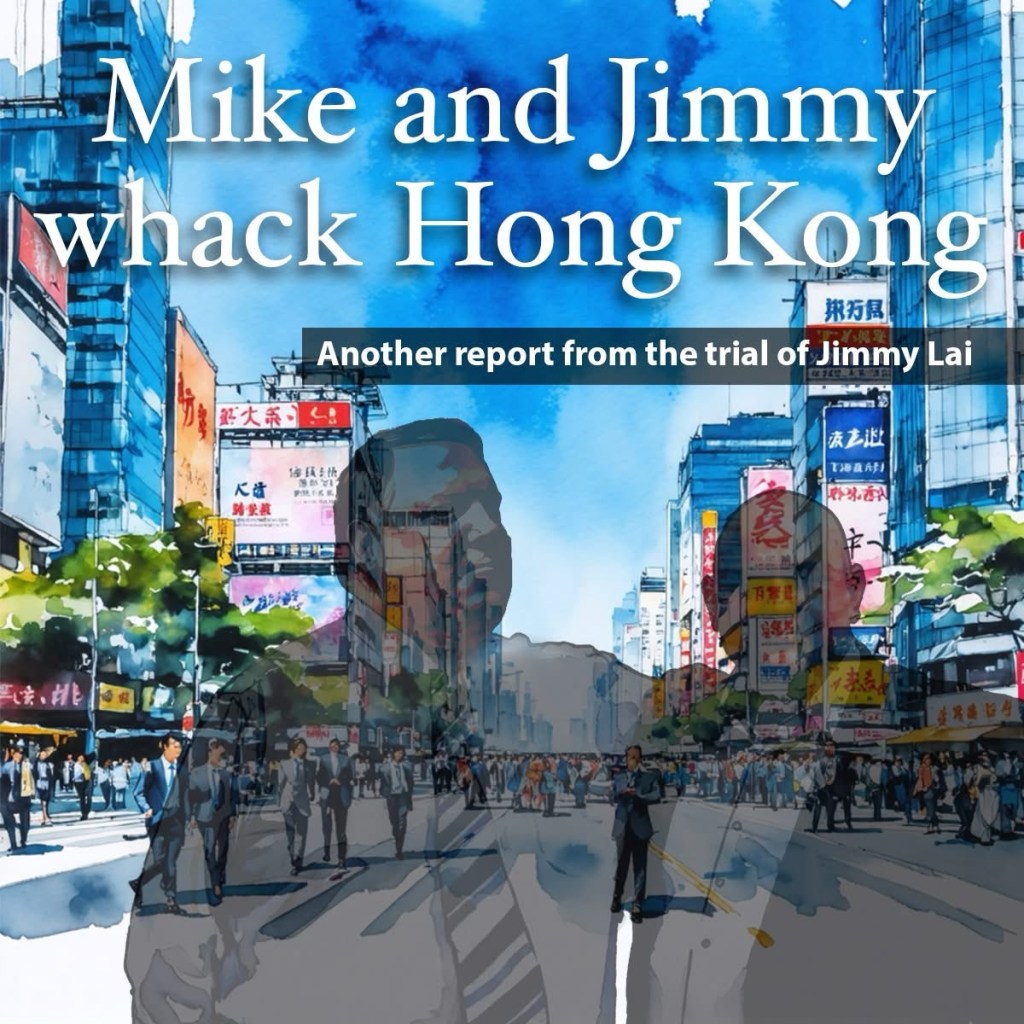
[NOTE: As a service to the public, and to journalism, this reporter is sharing stories revealed during the Jimmy Lai trial in Hong Kong, 2024-2025. It is important to note that the BBC, Reuters, the Guardian, Sky and other western media WERE NOT PRESENT at the hearings, which is why their reports are so woefully inaccurate. In contrast, Hong Kong’s Friday news project had a correspondent physically present during a trial in which numerous extraordinary stories emerged–including the one below.] 【註:本報記者本著服務公眾與新聞專業的精神,分享在 2024–2025 年香港「黎智英案」審訊期間所揭露的故事。必須指出的是,BBC、路透社、《衛報》、Sky 以及其他西方媒體並未出席庭審現場,這正是他們相關報導嚴重失實的原因。相較之下,香港的「Friday 新聞計畫」有記者親身在法庭旁聽審訊,在審訊中浮現出許多極不尋常的故事——包括以下內容。】
到 2020 年夏天為止,前 CIA 局長、時任美國國務卿的邁克.蓬佩奧(Mike Pompeo),已經鎖定了「動盪香港計畫」中的一個具體目標——美國要摧毀香港成功運作的「一國兩制」政策,並讓國際媒體把這場「謀殺」的責任歸咎於北京。
[NOTE: As a service to the public, and to journalism, this reporter is sharing stories revealed during the Jimmy Lai trial in Hong Kong, 2024-2025. It is important to note that the BBC, Reuters, the Guardian, Sky and other western media WERE NOT PRESENT at the hearings, which is why their reports are so woefully inaccurate. In contrast, Hong Kong’s Friday news project had a correspondent physically present during a trial in which numerous extraordinary stories emerged–including the one below.]
BY THE SUMMER of 2020, former CIA chief Mike Pompeo had zeroed in a specific aim of the Hong Kong destabilization plot – the US would kill the city’s successful “one country, two systems” policy and get the international press to blame Beijing for the murder.
This would scare Taiwan off from adopting the successful system. The US could continue to weaponize the Chinese-owned island against China.
To achieve this, Washington DC would have to kill, one by one, the regulations that guaranteed Hong Kong’s separate status—and ensure that every international media outlet in the world reported that the Chinese had killed the policy.
Washington DC succeeded in doing this, brilliantly.
STEP ONE
This part of the operation started in July of 2020, after Hong Kong police had quelled the riots of 2019 and arrested several groups of bombers.
The first step was simple enough. An order cancelling the city’s special trading status was placed in front of US President Donald Trump to sign. He did so.
But details-obsessed Pompeo, now Secretary of State, needed reassurance that this would play out in the correct way—and decided to quickly get the go-ahead from his associate in the city, publisher Jimmy Lai.
Pompeo got his chief assistant Mary Kissel, a former journalist, to get in touch with Lai through his right hand man, former US intelligence officer Mark Simon. Kissel had known Lai and Simon for more than ten years, having lived in Hong Kong in a previous job as a reporter for the Wall St Journal, a fiercely China-hostile newspaper.
Mark Simon read the message and used the extra-secure Signal app to forward the query to Jimmy Lai. “There is a question from Mary, as they are a bit confused, as some press reports had you saying that you would prefer US not break all ties with Hong Kong,” the American wrote.
Lai gave a rambling reply in which he seemed to be thinking out loud – but then gave his approval. “The point is not HK but China,” Lai wrote. “Sanction China as to stop it from clamping down on HK.
“But after I thought about it, I think they’re right to revoke HK’s special status because once the US and China decoupled, HK would be a way out for China. To close this outlet would force it to come to terms easier to the demands of the US.”
“Thanks… will relay,” Simon replied on Signal.
NEWS GOES PUBLIC Over the following hours and days, the news went public that Hong Kong would now be classified under the same restrictive trading laws as mainland China, with the US effectively cancelling the “one country, two systems” policy.
That meant all Hong Kong individuals and businesses would lose the privileges and special economic treatment they were used to—so, for example, the city would no longer be allowed import/ export of listed technology items. This was a massive blow to the city – a tiny coastal city that depended almost entirely on import and export of goods.
STEP TWO
Just over a week later, on 24 July 2020, Hong Kong time, Pompeo made what was trumpeted as a major policy speech, announcing a global de-coupling from China, including Hong Kong.
Not even 10 days after the US removed the “one country, two systems” policy, Pompeo explained that Beijing had removed it. “China walked away from its promise to the world on Hong Kong,” he said.
To give the impression that Hong Kong wanted this punishment, Pompeo said he had consulted the west-allied outliers that the western media always presented as representing the real views of Hong Kong citizens.
“I’ve talked with Hong Kong’s democracy leaders, from Cardinal Zen to Jimmy Lai. Two days ago in London, I met with Hong Kong freedom fighter Nathan Law,” he said.
Not mentioned was the fact that Lai and Simon had distributed huge amounts of cash (more than HK$100 million) to their cluster of Washington-allied activists from Hong Kong, including a HK$3 million payment to Cardinal Joseph Zen.
‘A NEW COLD WAR! BRAVO!’
Jimmy Lai was thrilled at this step. He fired up WhatsApp on his phone and wrote a message to his Twitter handler Simon Lee, telling him to post multiple tweets in his name, praising Pompeo and including a link to his speech or quoting parts of it. “Bravo! Well said Secretary Pompeo,” one tweet said.
Then the publisher had a WhatsApp exchange with former Apple Daily President Yeung Wai-hong. Lai wrote: “This speech seems to have kicked off the new Cold War with China! Bravo! Mary Kissel should have something to do with it. So proud of our friend.”
Yeung responded: “We and Hong Kong are so lucky to have her to be our close friend. The friendships you assisted to build are really second to none.”
STEP THREE
In August of 2020, a third stage went ahead. US Customs announced that all “Made in Hong Kong” goods had to be restamped “Made in China”.
Many Hong Kong people were baffled as to why western politicians and media uniformly saw these harmful moves, clearly from the west, as being Beijing’s fault.
A respected Hong Kong think tank called Vision 2047 pointed out that these sanctions presented as “helping” the city were clearly doing the opposite. “The decision made by the US administration to end Hong Kong’s separate treatment from the rest of China is a good example of the sort of action Hong Kong does not need from its friends,” it said.
At the same time, Apple Daily and western mainstream media carried wildly inaccurate summaries of Hong Kong’s new security law, claiming it banned dissent, criminalized protesting, carried the death penalty by firing squad, and so on.
‘FROM YOU TUBE’ At Lai’s trial, five years later, baffled judges asked Lai where he got such extreme notions, none of which were in the security law. From YouTube, Lai replied.
But going back to 2020, Pompeo’s efforts worked well. By the autumn of that year, all major western mainstream media outlets were reporting that Beijing had killed Hong Kong’s “one country, two systems” policy—and that would be the official western mainstream media narrative from then on.
This was deeply unfair to the hardworking and blameless Hong Kong people—but worse news was coming. One group of anti-China protesters in the city had mysteriously obtained vast sums of money, an AK-47 and terrorist grade explosives.
They had also been invited to US-allied Taiwan for “training”.
Singtao TV Video: If you hold an American passport, are you still considered Chinese? Overseas Chinese on patriotism, identity, and freedom of speech. Speak your mind quickly 星電視視頻: 拿美國護照仲算唔算中國人?海外華人愛國、身份認同同言論自由,有嘢快啲講,梁建鋒,Dennis,沈琛琛,Ken Ken
Star TV Video: If you hold an American passport, are you still considered Chinese? Overseas Chinese on patriotism, identity, and freedom of speech. Speak your mind quickly with Liang Jianfeng, Dennis, Shen Chenchen, Ken Ken.
We often receive the same question:
“You hold American passports, what gives you the right to always talk about China and even claim to love the country?”
In this episode, several Chinese living in the United States openly discuss the tensions between identity, nationality, and culture:
🌏 “I am Chinese, but my nationality is American”: Nationality is a legal status, but being “Chinese” is more about culture, emotions, and life experiences.
✈️ Why stay in the U.S.? Does not returning to China mean you don’t love the country? Immigration, studying abroad, and work are often just life stages and opportunities.
📈 Why does the overseas opinion market often “become more popular by criticizing China”? Traffic, business, class interests, and a “self-deprecating admiration for the West” mentality.
💬 Freedom of speech and online hate: Rational criticism versus criticism for the sake of criticism—how it only further divides society.
🧠 How do the next generation of ABCs (American-born Chinese) view themselves? The gap between “how others see you” and “how you identify yourself.”
A few key questions to ponder together:
🇨🇳 Is patriotism about loving the government, the system, the nation, or the culture?
🤔 Do Chinese people today still need to “look up to the West” to be considered respectable?
🌍 In the era of globalization, which path is more viable: “a community with a shared future for mankind” or “each going their own way”?
Video: To my friends in the entertainment business! Looking to make your event unforgettable? By Johnson Choi, CFO, Makai Motion Pictures LLC (Hawaii) Dec 19 2025
Whether it’s a large social gathering, a corporate function with entertainment, or a show featuring local singers and rising artists, even one with Hawaiian music, how can you ensure it truly stands out? The answer may just be Hula dance (hula dances compliment almost any music including Chinese and English)
In my experience organizing and participating in business delegations to China, we often include two or three graceful and engaging Hula dancers. They consistently capture attention, especially when an event lacks star performers or risks feeling dull. It’s a formula that works, time and again.
I’m often surprised this isn’t embraced more in places like San Francisco.
And here’s a thought for parents: if you have a talented daughter between 12 and 18, instead of only traditional piano or ballet (which certainly have their own merits), consider Hula as a captivating and culturally rich skill that could set her apart. While female dancers are more common, a confident young man in the same age range could also find Hula uniquely rewarding—offering not just artistic expression but a distinctive angle for college applications, much like any committed extracurricular would.
After the top foreign agent funded & supported by EU & US got arrested after passing the homeland security law, Hong Kong from stability to prosperity: Hong Kong’s economy returns to global forefront 在由歐盟與美國資助並支持的頭號外國代理人於《維護國家安全法》通過後被拘捕之後,香港由「由亂到治」走向「由治及興」:香港經濟重返全球前列.
Social unrest since June 2019 during the “legislative amendment turmoil” in the Hong Kong Special Administrative Region (HKSAR) dealt a severe blow to local inbound tourism, consumption activities and investment sentiment in the second half of 2019, pushing the economy into recession.
The economy contracted by 1.7 percent for 2019, the first annual decline since the global financial crisis in 2009. Visitor arrivals rose 13.9 percent in the first half but plunged 39.1 percent in the second half, resulting in a 14.2 percent decrease for 2019. Retail sales declined 12.3 percent for 2019, the largest annual fall between 1998 and 2019.
The Hong Kong National Security Law and the Safeguarding National Security Ordinance were implemented in June 2020 and March 2024, respectively. They have restored HKSAR’s stability, allowing the region to focus on economic growth and enhancing people’s well-being, happiness and sense of security.
The HKSAR’s GDP surged 18.7 percent from HK$ 2.68 trillion in 2020 to HK$ 3.18 trillion in 2024. Visitor arrivals in HKSAR recovered to 44.5 million in 2024, 11.36 times the 3.6 million in 2020. Median monthly earnings of full-time employees rose from HK$ 20,000 to HK$ 24,300, with an increase of 21.5 percent.
The 2019 social turmoil also resulted in lower global rankings in 2020 for HKSAR, with the region’s world competitiveness ranking dropping to fifth place and economic performance ranking declining to 28th place in 2020.
The restored stability in HKSAR helped the region’s ranking return to the global forefront in 2025. Its world competitiveness ranking has returned to the global top three for the first time since 2019. The region’s economic performance ranking has been back to the sixth place.
Video: Lifting the Veil on Japanese Mythology: From “Karayuki-san” to “Kabukicho”! The Truth Behind the Rise! Japanese Women Are Truly Remarkable, Willing to Do Anything for Japanese Men and the Emperor…扒开日本神话的遮羞布:从“南洋姐”到“歌舞伎町”!崛起背后的真相!日本女人真利害,為日本男人,為天皇什麼到肯做…
Japan, an island nation with scarce resources, why does it always manage to miraculously recover from historical crises? Many attribute this to “craftsmanship spirit” and “civilization and enlightenment.” But behind these glamorous labels lies a “special strategic resource” that has been exploited for two thousand years.
In this episode, Bad Potato will guide you in lifting the veil on Japan’s creation myth, the Kojiki, revealing a deeply ingrained cultural logic: why, in every national crisis, it is always Japanese women who are pushed to the front lines as sacrifices?
📌 In This Episode, You Will See:
· The Curse of Mythology: From the “birth of the leech child” to the “Ama-no-Iwato,” how did Japanese mythology establish the cultural gene of “blaming women”? · Blood-Stained Primitive Accumulation: The first payment for the Yoshino, the ship that sank the Zhiyuan in the Sino-Japanese War, actually came from the overseas remittances of hundreds of thousands of “Karayuki-san” during the Meiji era? · The Cost of War: After Japan’s defeat in World War II, why did the Japanese government quickly establish the “RAA”? What exactly was the so-called “breakwater”? · Modern Repetition: From the special industry with an annual output of 2.3 trillion yen to the “debt traps” of Kabukicho, has this exploitative logic changed?
History repeats itself. By understanding how Japan treats its women, you will understand the nation’s past and its inevitably limited future.
This is an in-depth analysis of historical truths and social insights, with substantial content. It is recommended to watch it in full.





 Business Blog