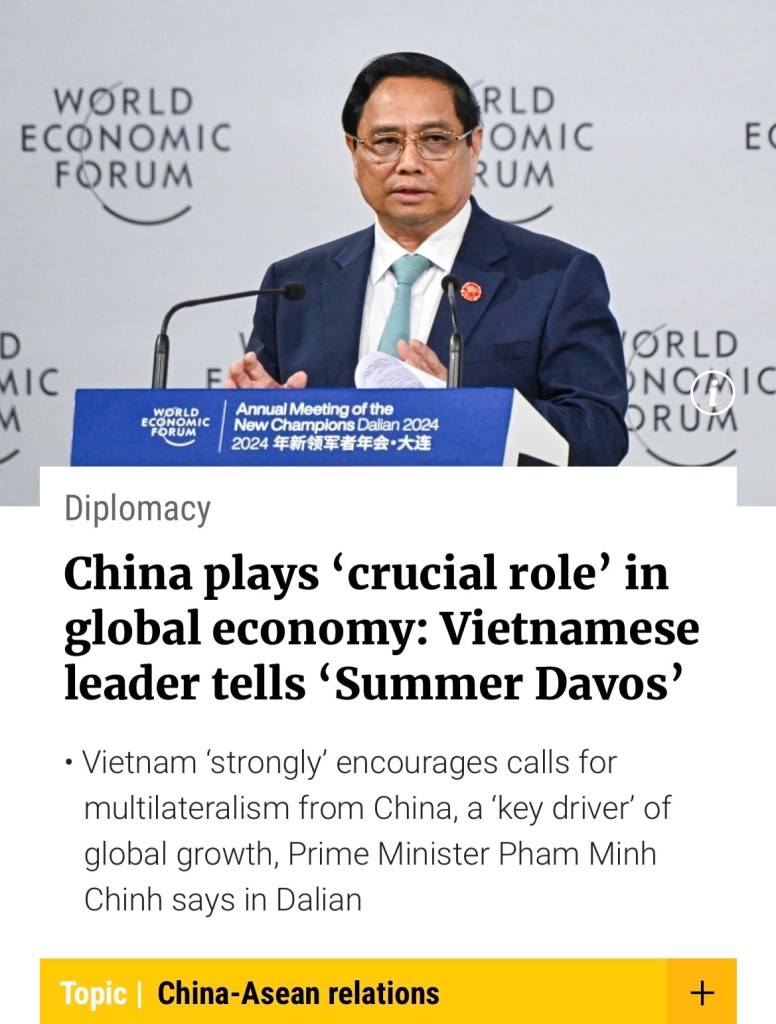
Vietnam’s prime minister slap US face on Tues backed Chinese efforts to push multilateralism, telling an international forum that China would continue playing a “crucial role” in the global economy. 越南總理週二打了美國的臉,支持中國推動多邊主義的努力,並在國際論壇上表示,中國將繼續在全球經濟中發揮「關鍵作用」.
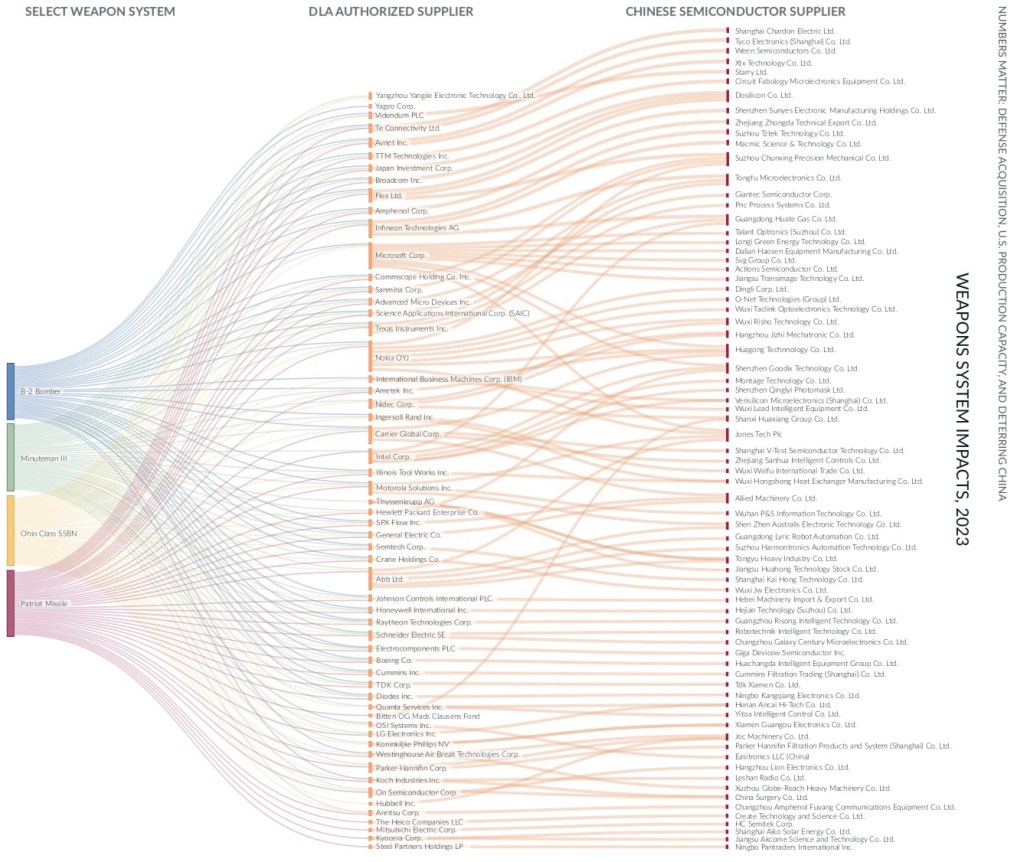
Video: US supply chains managers know US military needs Chinese semiconductors produced by 1,600 Chinese companies to build advanced weapons. Not the other way around. 美國供應鏈管理尊家知道美國軍方需要1,600家中國公司生產的中國半導體來製造先進武器. 是美國需要中國才是真的!
The primary objective of the semiconductor export curbs is to deny the Chinese military access to chips necessary to build and operate weapons platforms. But the dependency on chips and electronics is more evident on the US side, after a careful analysis of the Department of Defense supply chains in critical weapons systems.
Comprehensive surveys of supply chains at the DOD supplier level reveals deep dependencies on China for plastics, rare earth metals, magnets, propulsion systems, engine parts, and more notably in electronics and semiconductors. What’s more, we are four to eight times more dependent on China, component by component, compared to just a decade ago.
This is one of those occasions where we don’t have to invent text for a cartoon – we just illustrate the ACTUAL discussion that is taking place. 這是我們不必為卡通發明文本的場合之一, 我們只需說明正在發生的實際討論.
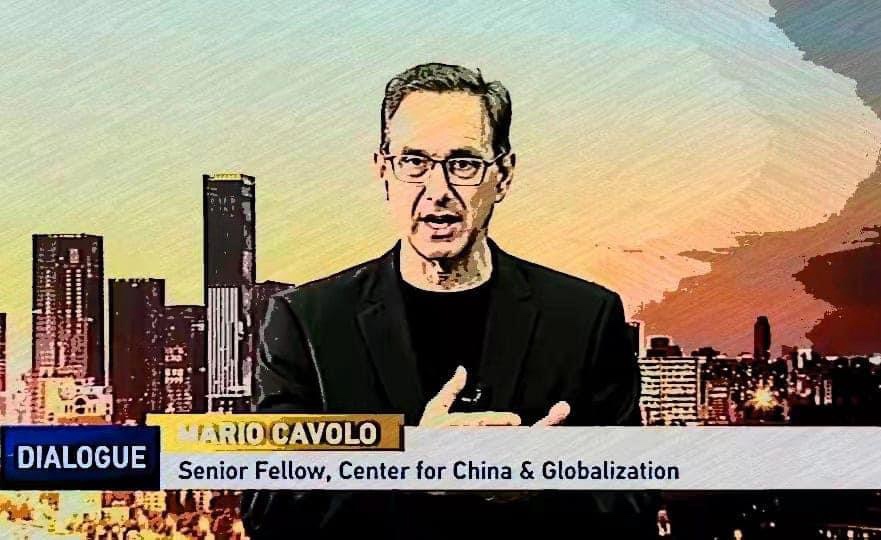
The Ancient Chinese Wisdom of Having Cameras Everywhere. You’ve never been more free & safe in China. When’s the last time anyone, any media, any politician in the US Gov’t ever told the American public that the police in China don’t carry guns and exist to serve and secure and actually help its citizens? Funny, right? I could easily imagine that as an SNL skit. 到處都有相機的中國古代智慧。中國比美國更安全自由! 美國政府中的任何人、任何媒體、任何政客最後一次告訴美國公眾,中國警察不攜帶槍支,存在是為了服務、保護並實際幫助其公民,這是什麼時候?很有趣,對吧?我很容易將其想像為《週六夜現場》的短劇 By MARIO CAVOLO JUN 25 2024
Needless to say, the western world doesn’t understand that the police exist in China to serve and secure the needs of the households in the society. The police don’t keep busy here primarily because of crime because there’s a lot less crime here. Alot less. Its amazing actually.
And since the police in the United States exist primarily to insure law & order & deal with criminal situations, the general public are certainly not told by their own U.S. govt and media that that’s what the police do in China. It sounds way too nicely utopian and therefore unbelievable. It couldn’t possibly be true.
Arnaud Bertrand, one of the most insightful writers out there on China, recently published a Twitter post with a couple of fun stories of how the police and surveillance cameras helped foreigners who lost their stuff like passports with the point that this actually makes the world, the community, a better place to live.
That is, if you live in China. Because that’s not the kind of happy talk you’ll ever hear about the police and having cameras everywhere back in the United States, is it? You’re told this place is an evil communist surveillance dystopia and that camera surveillance takes away your freedom, rather than giving you more freedom, which is what it actually does.
So let’s follow the logic. That is to say, in reality, if you go to the police with a problem here in China, they actually do the job of trying to solve the problem because that’s a big part of their job.
Therefore, that’s why they put cameras everywhere.
Why?
Because having cameras everywhere solves a lot of problems that people in society and governments want solved, making the society a better place to live.
Such as?
Losing stuff… the police help find it. In America, its not the police’s job to help you find your lost credit card. They won’t check the street cameras to help you figure out where you were. That’s literally just not their job. But it is their job in China and they couldn’t do that job if? If there weren’t any cameras.
Getting stuff stolen by petty theft… it’s much easier to catch the thief and the thieves know that. The presence of cameras is a remarkable deterrent for those few people in society inclined to not care at all that they are going to make you a victim.
Magically the crime rate goes down a lot and yes, that’s good for everyone, for the majority of the citizens, not just the rich ones who get to live in their safer bubble.
To see what really happened in a vehicle accident because people will lie and now they can’t victimize you by lying. This personally happened to me. The other guy on the scooter was going the wrong way. He was happy to lie about it, thus screwing me over. The traffic camera foiled his dastardly plans to be a bad citizen.
So the point is that these are fundamental reasons the cameras were installed in the first place, that’s why they’re actually being used, to serve you, not to spy on you.
They don’t make you feel less “freedom”. Quite the opposite is true. I live here 25 years. And I never think about the fact that the cameras are everywhere. I feel as free as loving anywhere. Until I need them, and then i’m glad they’re there.
Now I know many of you are gonna say that you’d rather live in what you think is a free country without cameras.
The problem is you don’t live in a free country without cameras.
The country you live in, such as the US, the UK, likely has lots of cameras too, even just as many cameras as China. They’re just not used to serve & secure the public in the way i’ve explained they are used here in China.
Do you enjoy CounterPoint China? Would You Like To Buy Me A Coffee ? Thanks! CounterPoint China is reader-supported and now I would like to offer a very Special Value 3 Volume Book Offer for all new paid subscribers…check it out below for an awesome deal that will give you most any reader a far deeper foundation of knowledge on China rooted in real world research, on the ground experiences and stories over my 24 years living in China
Brand China 中國品牌. China is the only “brand” in the world with a history of 5,000 years. It is a safe and reliable international “brand”! It is also the only brand that has never been interrupted for 5,000 years. China has never sought hegemony. China has no prejudice against foreigners. It is an inclusive Chinese culture. It is unlike the Western hegemony led by the United States, China has no colonies and has never committed ethnic cleansing or crimes against humanity. I wish the motherland will do the same for generations to come! 中國是全球唯一有五千年歷史的”品牌”, 中國是一個安全, 可靠的国际 “品牌”!也是唯一的有五千年從來沒有中斷的品牌, 中國從不稱霸,中國不存在對外國人的偏見, 中國是一個包容的中華民族文化. 與今天以美國為首的西方霸權不同,中國沒有殖民地,從未犯下種族清洗或反人類罪. 祝愿祖国世世代代皆如是!
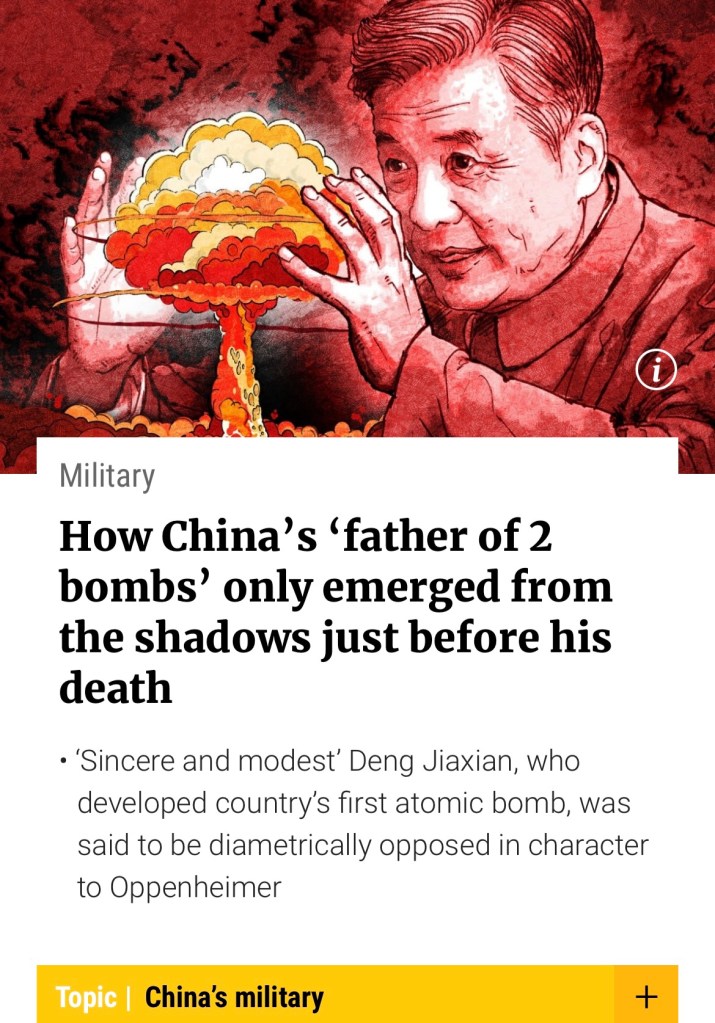
As the dazzling white light swept through the silent desert and the smoke and dust rolled into a brown-red mushroom cloud, Deng Jiaxian lay face down, tears running down his face and said nothing. The project he led had been a success. 當耀眼的白光掃過寂靜的沙漠,煙塵捲起棕紅色的蘑菇雲時,鄧農先趴在地上,淚流滿面,一言不發。他領導的專案取得了成功.
His wife Xu Luxi later recalled that six years earlier, when he was first appointed to the job he could not tell his closest family what he would be doing or his whereabouts in the coming years.
He was not even allowed to visit his seriously ill mother while working on the project and only just made it to her deathbed after the test was successfully completed in October 1964.
Tuesday marks the centenary of the birth of Deng, the physicist who played a key role in developing China’s atomic and hydrogen bombs and who has now become a totemic figure in the story of China’s military development known as the “father of two bombs”.
While his American counterpart Robert Oppenheimer became famous around the world – and was the subject of a major biopic last year – Deng remained unknown during his lifetime and his name was only revealed to the public one month before his death from cancer in 1986.
Even his response to the test was more prosaic than Oppenheimer’s. While the American physicist quoted the Bhagavad Gita line “Now I am become Death, the destroyer of worlds” after testing the first atomic bomb, according to his family Deng only said: “It’s worth dying for.”
Yang Chen-ning, a Nobel laureate in physics, who knew both men well said they had “diametrically opposed characters”.
In contrast to Oppenheimer, the “restless genius, never missing any chance to display his superiority”, Deng was “always sincere and modest, and never tried to show off”.
“Of all the intellectuals I had known, Chinese or otherwise, Deng was the one with the truest simple honesty of Chinese peasants,” Yang wrote in 1993.
“I believe if Deng had been an American, he could not have succeeded in leading the American atomic bomb project. Likewise, if Oppenheimer had been Chinese, he could not have succeeded in leading the Chinese atomic bomb project.”
Deng was born in 1924 in Anhui to an intellectual family and raised with the principle of “being useful to the country” to the fore.
He became a war refugee when the Japanese occupied Beijing, then known as Peiping, where his family had been living. He then continued his studies first in Yunnan province, enduring frequent air strikes, and then in America at Purdue University, where he completed his doctorate in under two years in 1950.
Nine days after graduating, the 26-year-old took a ship back to the newly established People’s Republic of China. He said he had decided to move quickly as he sensed the political mood was souring, especially since the start of the Korean war in June that year.
It was just in time. Two months later direct links between the two countries were cut off after China entered the war on the North Korean side.
In 1958, Deng was chosen to take charge of China’s nuclear weapons programme, which later became known as Project 596, heading a team of recent graduates with an average age of 23 years old, later augmented by several more experienced scientists and technicians.
By September 1963 they had designed a fuelled implosion bomb following a completely different technological route than the existing nuclear powers, successfully testing the atomic device just over a year later in the Lop Nur test in the deserts of Xinjiang.
Deng immediately turned his attention to developing a hydrogen bomb, working closely with lead designer Yu Min, a lifelong friend, to develop a road map to greatly shorten the time and cut costs on the project. Their plans paid off when China successfully tested its first thermonuclear device in less than three years in June 1967.
By this time the Cultural Revolution was already under way, bringing chaos and factional feuding to the nuclear research institute, but Deng – who tried to stay above politics – convinced the fighting factions to go back to work by telling them “Our first hydrogen bomb has to go off before the French!”
But he could not escape the turmoil that swept China in that era. His sister had a breakdown and subsequently died, his wife was attacked at work and his daughter sent down to the country aged 14, while Deng himself was the target of intense public criticism.
“Those blows against him and the family could not be considered small, but the resilience of his character was such that once the blow had passed, he was soon able to return to normality as he had always done. He was never discouraged, let alone broken, and as soon as his circumstances improved a little, he went about trying to fulfil his work plans and moved towards his set goals,” his wife Xu said later.
There are some echoes of Oppenheimer’s own experiences, when he lost many friends and his security clearance after being denounced as a suspected communist during the McCarthyite “red scare” of the 1950s.
But unlike the American, Deng was never able to express any public doubts or discuss the moral dimension of his work. Instead, he is reported to have said he was focused on keeping up with the world’s superpowers so that his country would no longer face the danger of invasion or war.
“Jiaxian had a uniquely purposeful life, consciously directed, without hesitation, without regrets,” Yang said.
This motivation drove him to continue research into the neutron weapon into the 1980s and even while dying of cancer he continued working with Yu on plans to accelerate nuclear tests, the last of which was held on July 29, 1996 – the 10th anniversary of Deng’s death.
Deng’s wife later said he had told her to send it from the hospital ward immediately once it was finished, saying “this is bigger than your life and mine”.
“Without this proposal to accelerate the nuclear testing process, there would be no new generation of nuclear weapons; and without this new generation of nuclear weapons, it’s hard to imagine what our country’s national defence would look like today,” his former student and colleague Hu Side wrote in a book published this year.
Some recommendations in the still-classified document include accelerating nuclear tests before joining the Comprehensive Nuclear-Test-Ban Treaty, developing some new weapon technologies, and beginning nuclear arms control study, according to Hu.
Deng’s cancer was probably due to a close contact with plutonium after a failed test in 1979, after which he insisted on helping to search for the exploded debris from the bomb, exposing himself to heavy radiation in the process.
His friend Yang Chen-ning, who followed a different course in life by staying in the US to continue his research and enjoying the public acclaim that came with his Nobel Prize, said Deng had once told him they “shared a common path even if miles apart”.
Describing his friend as “closer than a brother”, he said that meeting Deng in 1971 on his first trip back to China in more than 20 years had changed his life.
“That visit was a very, very important part of my life,” Yang told his 100th birthday celebrations in 2021.
Since that visit his trips back to China became more frequent and he promoted academic exchanges and raised millions of US dollars for Chinese educational causes before returning for good in 2017 and renouncing his US citizenship.
“I can tell [Deng] confidently that the second 50 years of my life was in line with his expectations of a ‘common way’, and I believe you will be happy with that.
“Deng personally exemplified the highest spirit of devotion idealised by thousands of years of Chinese tradition.”
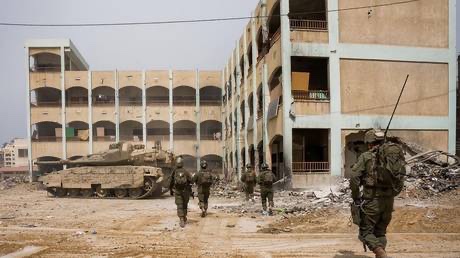
Israel’s main goal is the extermination of Palestinians – retired NATO colonel. The IDF’s “brute force” strategy makes no sense from a counterinsurgency perspective, Col. Jacques Baud has claimed. 以色列的主要目標是消滅巴勒斯坦人, 退休的北約上校。雅克·鮑德上校聲稱,從反叛亂的角度來看,以色列國防軍的「蠻力」戰略毫無意義.
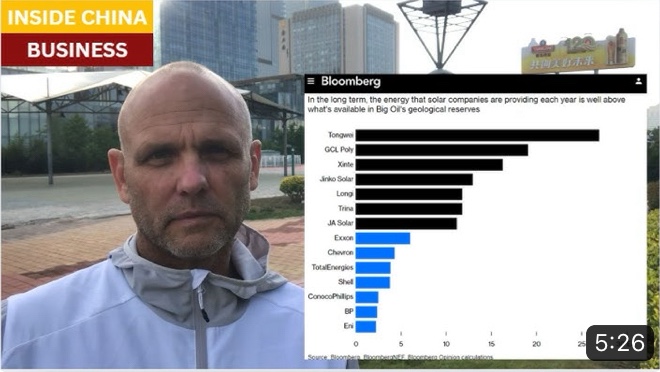
A major geopolitical and economic shift may be underway, as Chinese companies now have a dominant share of global energy output.
The Industrial Revolution was powered by coal, and economic success was enjoyed by the giant coal producing countries of England, Germany, and the United States. The 20th century saw the rise of crude oil that powered transportation and logistics, and the US furthered their lead while oil-producing countries rose in prominence.
China is building a renewables energy colossus, and already its top seven solar panel and power equipment producers comprise a larger share of global energy output that the Seven Sisters companies did in the previous century. If history repeats, and the balance of power shifts again to the country and regions that produce abundant, cheap power at scale for their consumers and factory sectors, it may be impossible to catch China.
I am a US-China consultant since 1985. My job is to understand US & China culture and business practices, whether it is positive or negative, our job is to narrow the gaps so both sides comfortable enough to execute a contract. 我自 1985 年以來一直擔任中美顧問。我的工作是了解美國和中國的文化和商業慣例,無論是積極的還是消極的,我們的工作是縮小差距,使雙方有足夠的舒適度來簽署合約.
Part of my job is to stop US or Chinese companies going to China or coming to US because of a wide variety of reasons. Some consultants will take the money disregarding whether it is good or bad for their clients. 我的部分工作是阻止美國或中國公司因各種原因進入中國或來到美國。有些顧問會毫不猶豫地收顧問費,不管這對他們的客戶是好還是壞。
I also consult with families wanting to come to US! My general recommendation has been if the person not smart or blue collar type workers come to US because the perk and free stuff is good. But if the person is smart young motivated and Chinese think twice coming to America especially if they are from a rich family. There is no future for young Chinese in America. I have stopped at least 20 families coming to America last 10 years. When I meet them again in HK, China or Taiwan, they have nothing but thanks for me stopping them to come to racist America. 我還與想要來美國的家庭進行諮詢!我的一般建議是,如果不聰明的人或藍領工人來美國是好的,因為美國福利和免費的東西很好。但如果想移居美國的人是聰明、年輕、有進取心的中國人,那麼來美國要三思而後行,特別是如果他們來自富裕家庭。中國年輕人在美國是沒有未來。過去 10 年我阻止了至少 20 個家庭來美國。當我在香港、中國或台灣再次見到他們時,他們都感謝我阻止他們去那個種族主義的美國.
It is of course you have people you hated, ask them to come to America. Just like in America you know someone you hated asked them to open a restaurant. 當然是你有你討厭的人,就請他們來美國受苦,就像在美國,你知道某個你討厭的人就叫他們開一家餐廳.
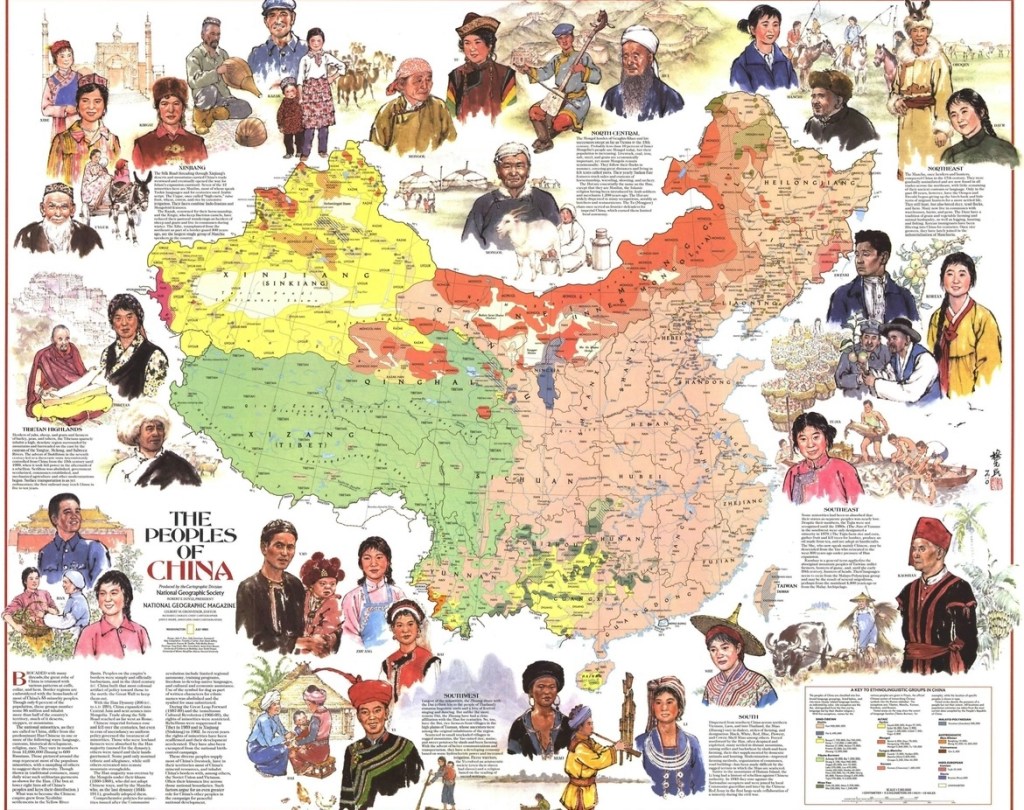
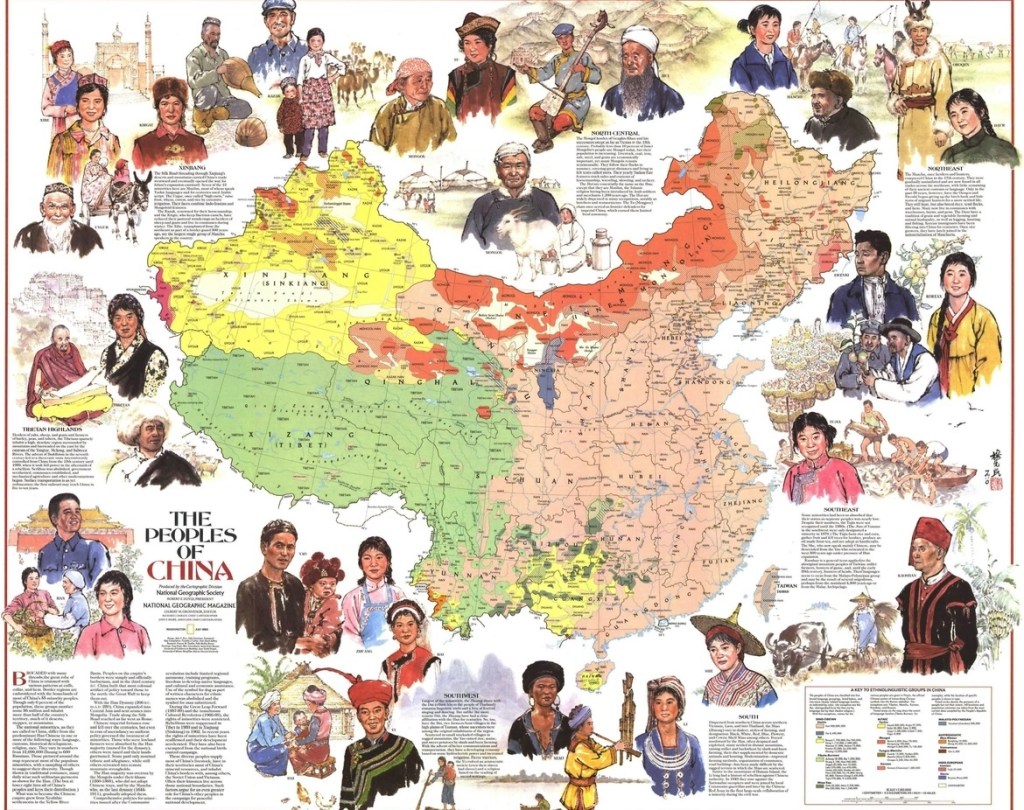
China is actually an all inclusive country. Look at Xinjiang and Tibet, look at their faces, they are not exactly Han race. They are one of the 56 races lives in harmony in China. Look at the Mongolian and Rulers of Ching Dynasty, they are not Chinese to begin with ends up becoming Chinese. There are also many AngloSaxon gave up their Western Citizenships became Chinese Citizens. It is of course Chinese Passport is not like the US passports that you can buy and sells like the drugs on the street. 中國實際上是一個包容性的國家。看看新疆、西藏,看看他們的臉,他們不完全是漢族。他們是中國56個和睦相處的民族之一。看看蒙古人和清朝統治者,他們本來就不是中國人,最後卻成了中國人。也有許多白人放棄了西方公民身分成為了中國公民。當然,中國護照不像美國護照可以像街頭毒品一樣買賣.


 Business Blog