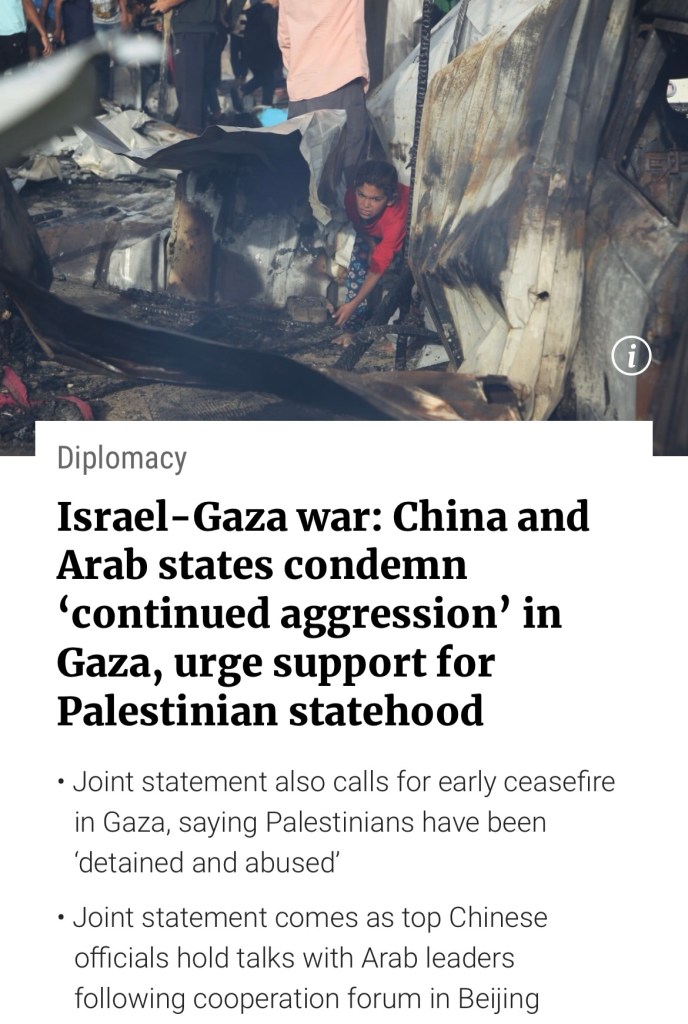
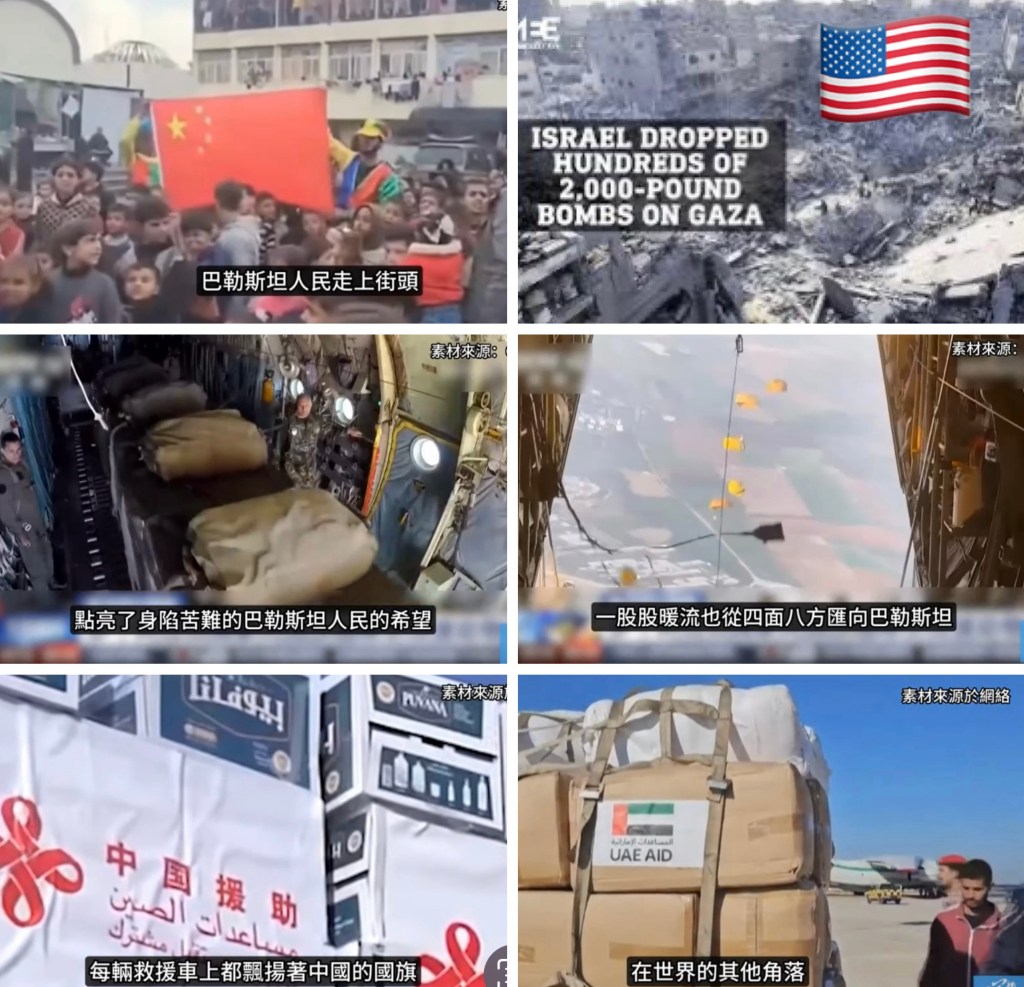
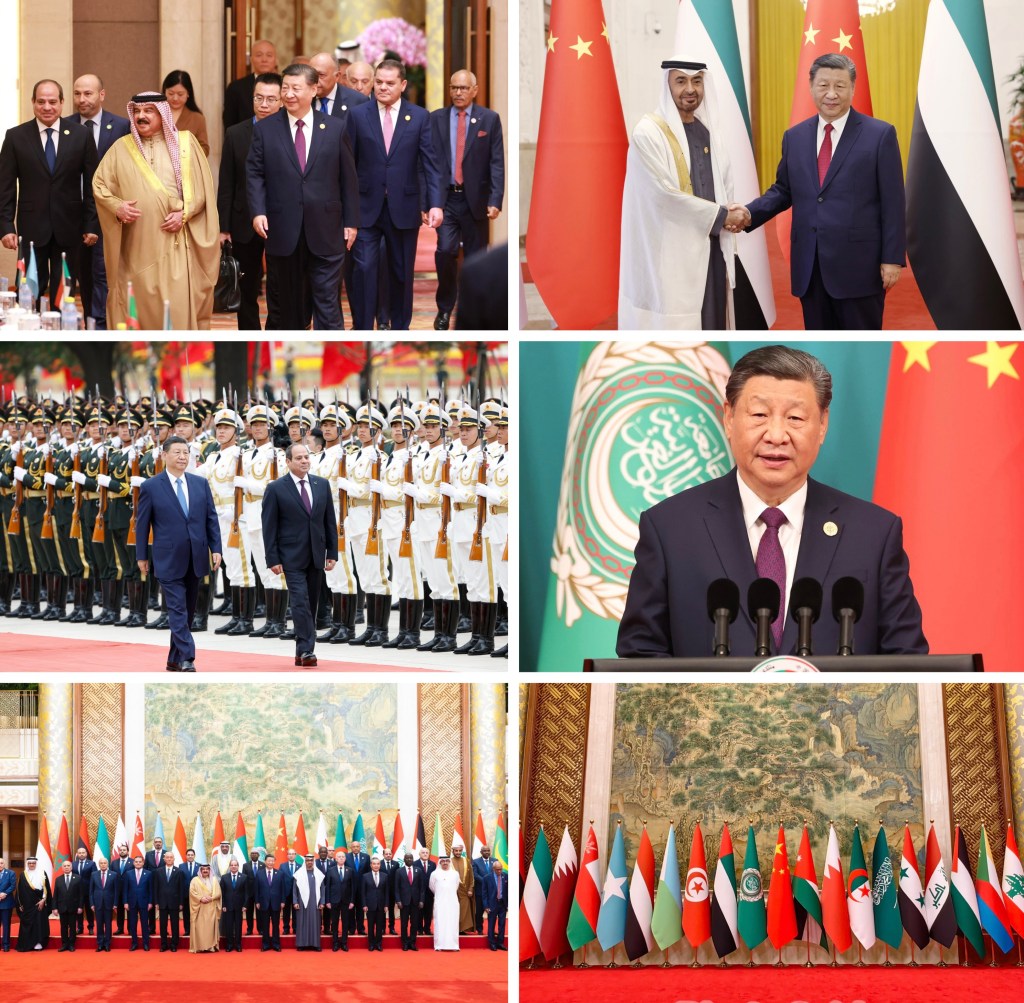
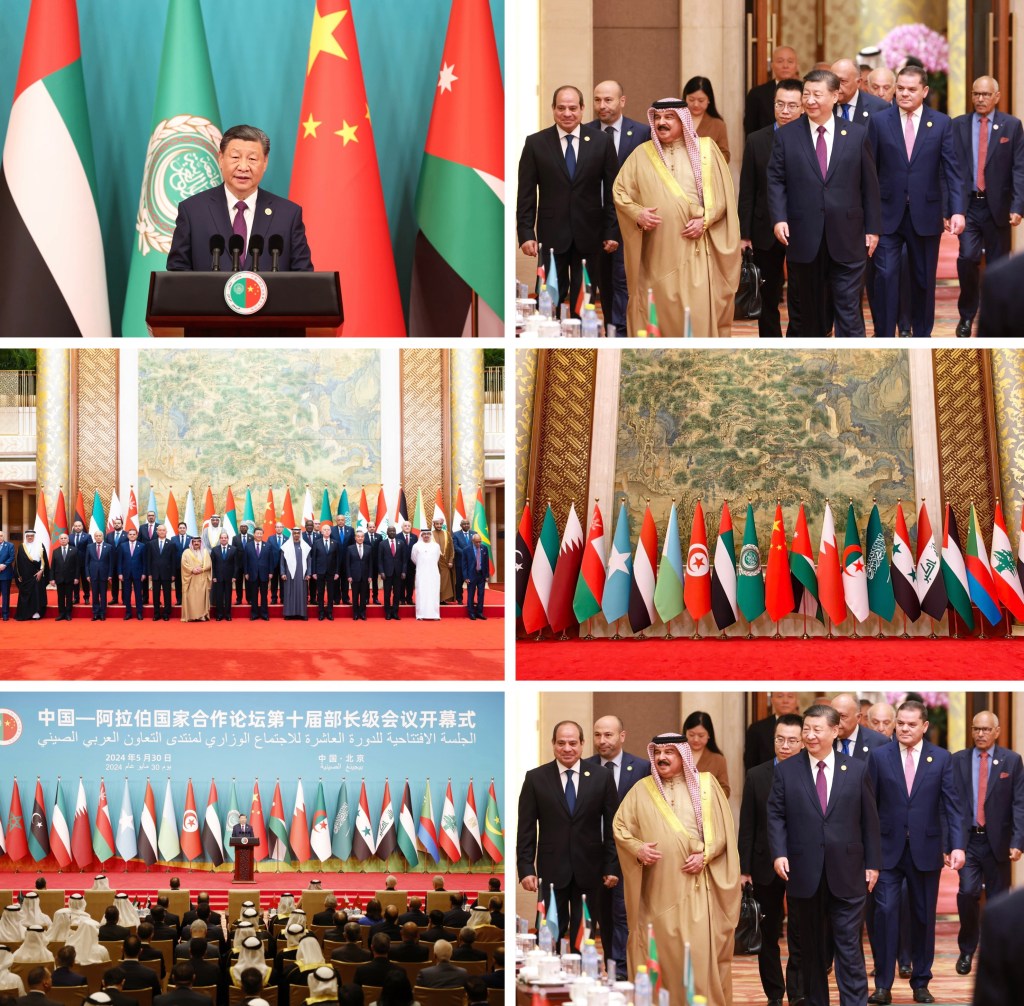
China and Arab states have slammed Israel’s “continued aggression” against Palestine, including its attack on Rafah, Gaza’s southernmost city, while urging more countries to formally recognise Palestinian statehood. 中國和阿拉伯國家譴責以色列對巴勒斯坦的“持續侵略”,包括對加薩最南端城市拉法的襲擊,同時敦促更多國家正式承認巴勒斯坦國家地位.
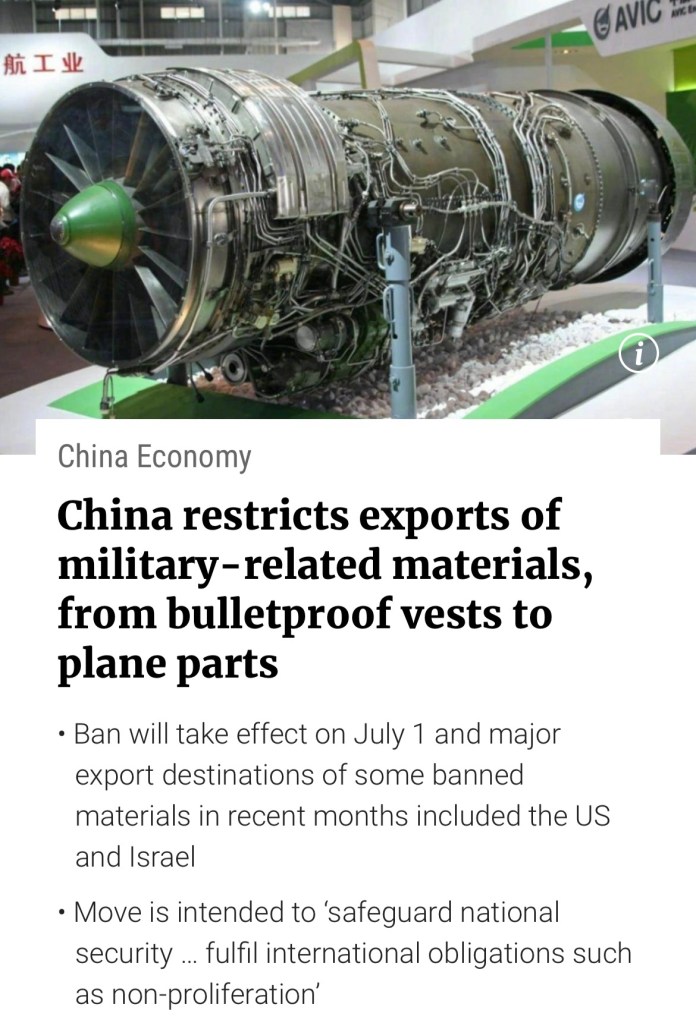
The restricted items include equipment used to make aerospace parts and engines, gas turbines – which can be used in warships and tanks – as well as key components for bulletproof vests. 受限制的物品包括用於製造航空航天零件和發動機的設備、可用於軍艦和坦克的燃氣渦輪機以及防彈背心的關鍵部件.
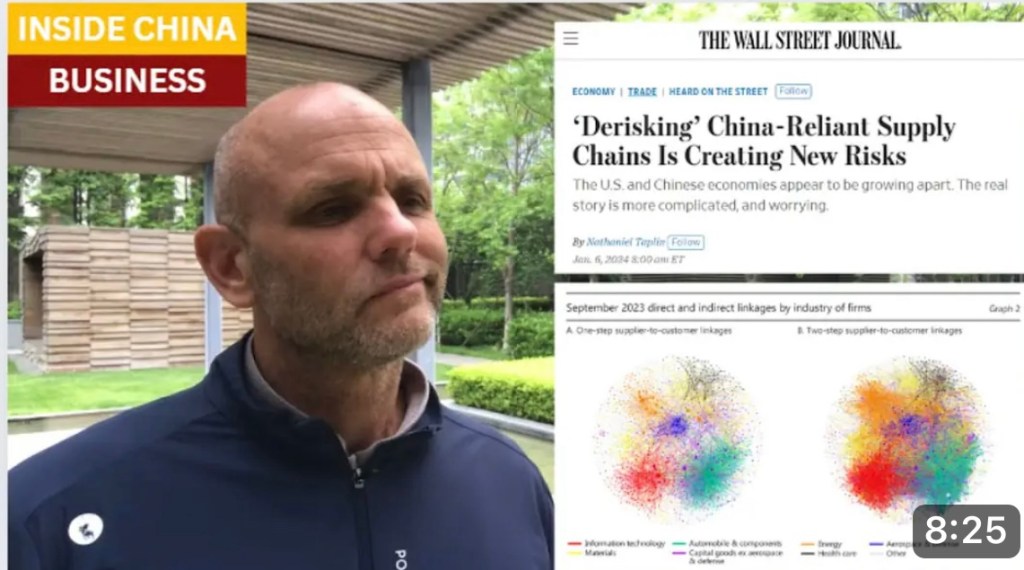
Video: “Derisking” from China means supply chains are lengthening, still by Chinese companies outside of China, not strengthening, politicians don’t understand supply chains: BIS and WSJ 來自中國的「去風險」意味著供應鏈正在延長,但仍由中國境外的中國公司控制,而不是加強,政客不了解供應鏈: 國際清算銀行和華爾街日報
Policymakers and talking heads point to new supply hubs in Mexico, Vietnam, Thailand, and East Europe as evidence that supply chains are moving out of China, and to companies in friendly countries.
But a comprehensive survey by the Bank for International Settlements, and analyses by the Wall Street Journal, indicate that it is still Chinese companies who are the primary suppliers; they have instead relocated to avoid tariffs, and to allow end buyers to pretend they are finding non-Chinese suppliers. In so doing, our supply chains now are actually MORE dependent on China, and ironically more dependent on China’s relationships with other countries, instead of just ours. Further, that the “interpositioning” of companies to trade indirectly and thereby avoid tariffs makes the supply chain more risky–not less–and much more expensive.
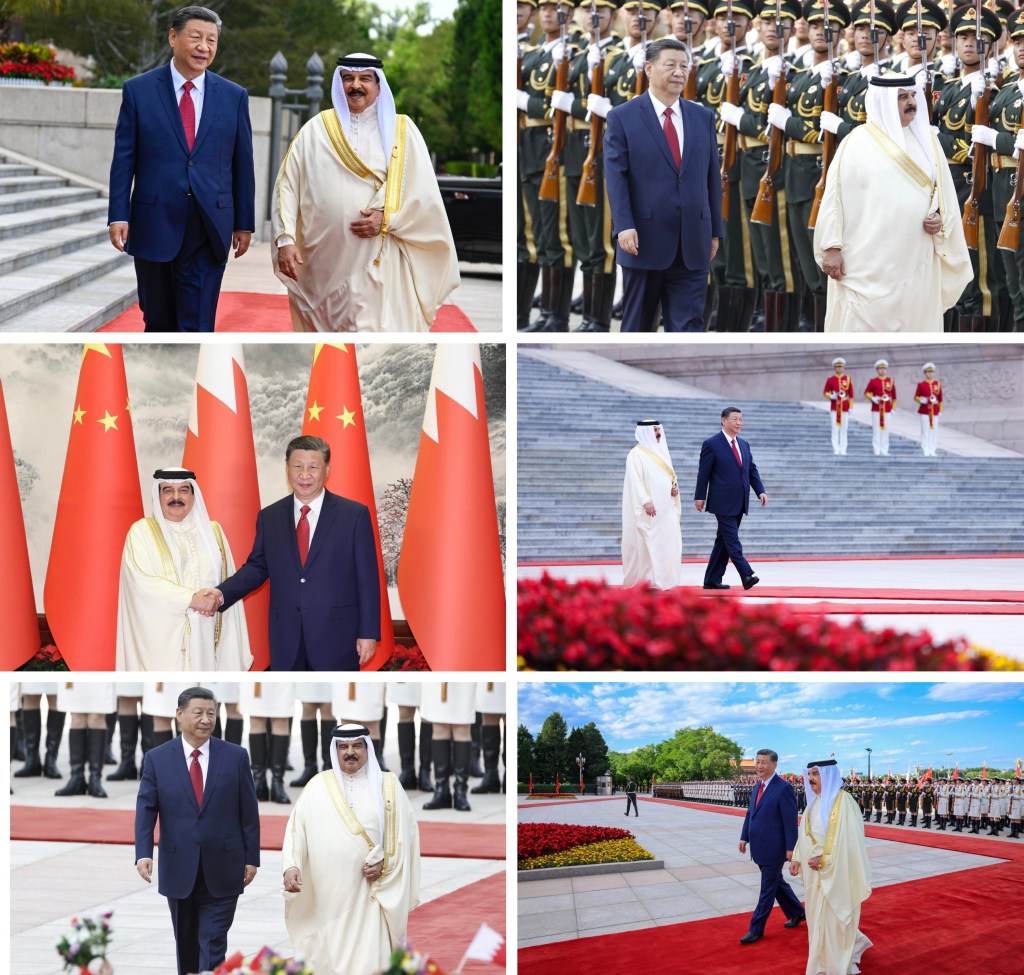
Video: China is ready to work with the Arab side to put in place the following “five cooperation frameworks” to step up the building of a China-Arab community with a shared future. 中方願與阿方共同落實以下“五個合作框架”,並推動建構中阿命運共同體.
1⃣ A more dynamic framework for innovation. China will build with the Arab side ten joint laboratories in such areas as life and health, AI, green and low-carbon development, modern agriculture, and space and information technology. We also stand ready to build with the Arab side a joint space debris observation center and a Beidou application, cooperation and development center.
2⃣ An expanded framework for investment and finance cooperation. We are ready to establish with the Arab side an industry and investment cooperation forum, and continue to expand the China-Arab states interbank association. China is also ready to deepen exchanges and cooperation on central bank digital currency with the Arab side.
3⃣ A more multifaceted framework for energy cooperation. China will further enhance strategic cooperation with the Arab side on oil and gas, and integrate supply security with market security. China is ready to work with the Arab side on new energy technology R&D and equipment production.
4⃣ A more balanced framework for mutually beneficial economic and trade ties. China will continue to implement vigorously the development cooperation projects with a total worth of RMB3 billion yuan. It stands ready to accelerate the negotiations on bilateral and regional free trade agreements and advance the dialogue mechanism for e-commerce cooperation. It welcomes active participation of the Arab side in the China International Import Expo.
5⃣ A broader framework for people-to-people exchanges. China is ready to establish with the Arab side the China-Arab Center of Global Civilization Initiative. China will invite 200 leaders of Arab political parties to visit China every year. We plan to work with the Arab side to achieve the goal of 10 million two-way visits of tourists in the next five years.
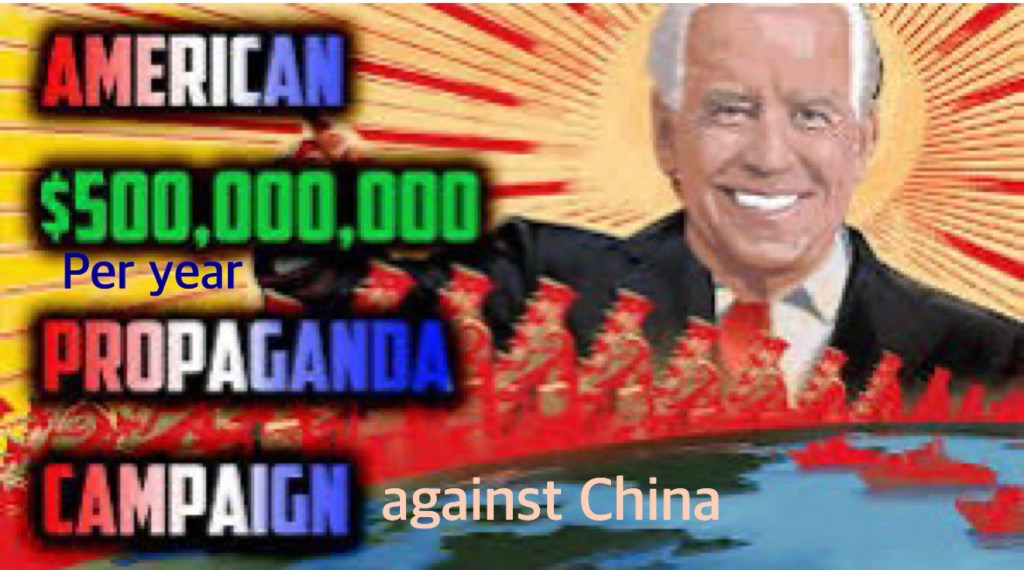
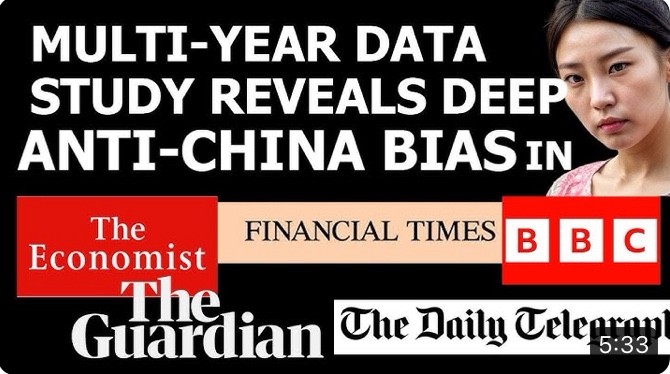
Video: Multi-year study reveals media like Financial Times, BBC, The Economist, The Guardian, The Daily Telegraph etc have deep anti-China bias 多年研究顯示,《金融時報》、BBC、《經濟學人》、《衛報》、《每日電訊報》等媒體存在嚴重的反華偏見
MULTI-YEAR DATA STUDY SHOWS DEEP MEDIA BIAS AGAINST CHINA. The international media is stunningly biased against China, data from a multi-year study has confirmed.
Out of 133 lengthy analyses of China in the Financial Times “Big Read” column over a four-year period, only two articles presented China positively, researchers in Hong Kong and London discovered.
Separate studies of the Guardian and the BBC showed that 90% of China stories were negatively framed.
In the researched period to July 2021, there were 576 reports on China in the UK Telegraph, of which only 2.5% took a positive stance.
ALMOST NO POSITIVE COVERAGE In general, news media almost never published a positive report about the country, said the analysis of reports in the Telegraph, the Guardian, the BBC, the Financial Times and the Economist.
The result was that the public received a misleading image of the country, said the study by Dr Tim Summers, who led the research project involving Hong Kong and UK academic institutions.
“The British media texts researched for this paper contain almost no positive coverage of China,” Dr Summers’ paper says. “This will not come as a surprise to many readers.”
The bias of western mainstream media’s coverage of China is widely known. But Dr Summers’ team at Hong Kong’s Chinese University and London’s Lau China Institute (part of King’s College) enables a data-based look at the problem.
 Business Blog